
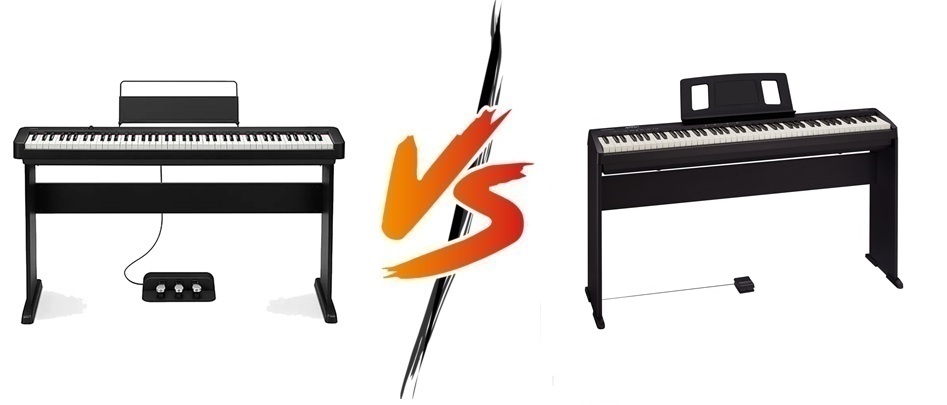
If you’re shopping for an affordable digital piano, chances are you’ve narrowed your search down to the Casio CDP-S160 and the Roland FP-10. They’re two of the most recommended entry-level models on the market, and for good reason. Both offer fully weighted 88-key keyboards, realistic piano sounds, compact designs, and prices that won’t make your wallet cry.
On paper, they look remarkably similar. They’re both aimed at beginners, students, hobbyists, and even experienced pianists who need a compact instrument for home practice. But once you start digging deeper, the differences become much more noticeable.
After spending time comparing both instruments, it’s clear that neither piano is objectively better in every category. Instead, each excels in different areas. The Roland FP-10 delivers one of the most realistic playing experiences you’ll find under its price point, while the Casio CDP-S160 focuses on portability, simplicity, and overall practicality.
This review breaks down every important aspect of both pianos, from keyboard feel and sound quality to speakers, connectivity, features, build quality, and long-term value. By the end, you should have a clear idea of which model best suits your playing style and budget.
Casio CDP-S160 vs Roland FP-10 Comparison Chart
If you click the links below, under the product images, you will be redirected to Amazon.com. In case you then decide to buy anything, Amazon.com will pay me a commission. This doesn’t affect the honesty of this review in any way though.
| Specification | Casio CDP-S160 | Roland FP-10 |
|---|---|---|
 |  | |
| Check the best price on Amazon | Check the best price on Amazon | |
| Keyboard | 88-key Scaled Hammer Action II | 88-key PHA-4 Standard |
| Key Surface | Smooth matte keys | Ivory Feel textured keys |
| Escapement Simulation | No | Yes |
| Touch Sensitivity | 3 levels + Off | 5 levels + Fixed |
| Sound Engine | Stereo sampled grand piano | SuperNATURAL Piano |
| Polyphony | 64 notes | 96 notes |
| Built-in Sounds | 10 tones | 15 tones |
| Speaker System | 2 × 8W | 2 × 6W |
| Maximum Output | 16W | 12W |
| Headphone Outputs | 1 × 3.5 mm stereo mini jack | 1 × 3.5 mm stereo mini jack |
| USB Connectivity | USB to Host | USB to Host |
| Bluetooth MIDI | Optional (via adapter) | Yes (built-in) |
| Bluetooth Audio | No | No |
| Recording Function | MIDI Recorder | MIDI Recorder |
| Metronome | Yes | Yes |
| Dual (Layer) Mode | Yes | Yes |
| Split Mode | No | No |
| Duo/Twin Piano Mode | Yes | Yes |
| Transpose | Yes | Yes |
| Fine Tuning | Yes | Yes |
| Included Pedal | SP-3 Footswitch Sustain Pedal | DP-2 Footswitch Sustain Pedal |
| Optional Furniture Stand | CS-46P | KSCFP10 |
| Optional Triple Pedal Unit | SP-34 (with stand) | KPD-70 (with stand) |
| Companion App | Casio Music Space | Roland Piano App |
| Power Supply | AC Adapter (AD-A12150LW) | AC Adapter (PSB Series) |
| Battery Operation | Yes (6 × AA batteries) | No |
| Dimensions (W × D × H) | 1,322 × 232 × 99 mm | 1,284 × 258 × 140 mm |
| Weight | 10.5 kg (23.1 lbs) | 12.3 kg (27.1 lbs) |
| Available Colors | Black, Red, White (varies by region) | Black |
| My individual reviews | Casio CDP-S160 review | Roland FP-10 review |
Quick Take
| Category | Winner |
|---|---|
| Keyboard Action | Roland FP-10 |
| Piano Sound | Roland FP-10 |
| Polyphony | Roland FP-10 |
| Built-in Speakers | Casio CDP-S160 |
| Portability | Casio CDP-S160 |
| Bluetooth Connectivity | Roland FP-10 |
| Battery Operation | Casio CDP-S160 |
| Ease of Use | Casio CDP-S160 |
| Long-Term Playing Experience | Roland FP-10 |
| Overall Performance | Roland FP-10 |
| Best Value for Beginners | Tie (depends on priorities) |
Design & Build Quality
The design of a digital piano is often one of the first things buyers notice, but it’s also one of the easiest aspects to underestimate. While keyboard action and sound quality tend to dominate the conversation, the overall design has a significant impact on how enjoyable the instrument is to own and use over the long term. Factors such as size, weight, portability, construction quality, control layout, and even the finish of the cabinet all contribute to the day-to-day experience.
The Casio CDP-S160 and Roland FP-10 take noticeably different approaches in this department. Both are compact, entry-level digital pianos designed primarily for home use, but each has its own priorities. Casio has focused on creating one of the slimmest and most portable fully weighted digital pianos on the market, while Roland has opted for a slightly larger and heavier design that feels more substantial and robust.
Neither approach is inherently better. Instead, the right choice depends on how and where you plan to use the instrument.
Overall Appearance
At first glance, both pianos look clean, modern, and understated. Neither tries to imitate a traditional upright piano, and that’s a positive thing. Their minimalist styling makes them blend easily into almost any environment, whether that’s a living room, bedroom, home office, or music studio.
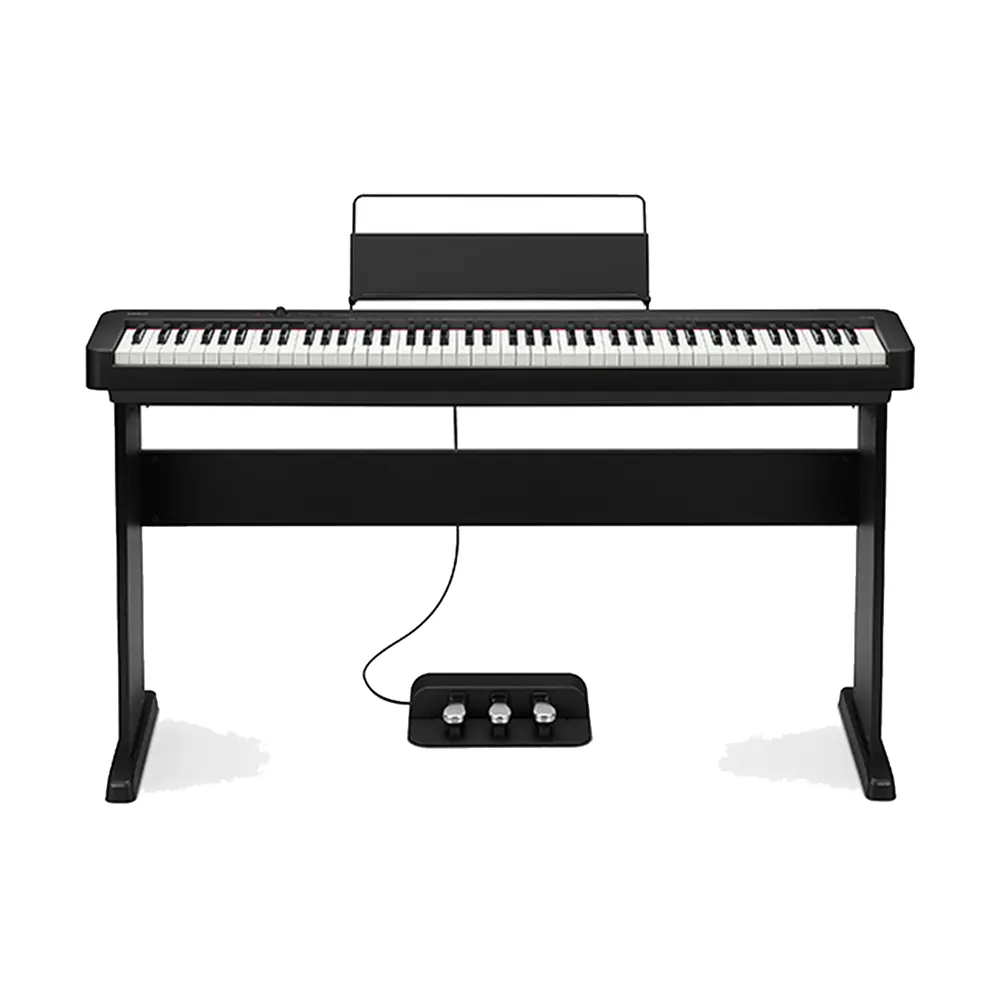
The Casio CDP-S160 immediately catches your attention because of its remarkably slim profile. Measuring just over nine inches deep, it looks surprisingly compact for an 88-key instrument. If you’ve only ever seen traditional digital pianos with bulky cabinets, the CDP-S160 can be genuinely surprising in person. It almost resembles a long keyboard rather than a conventional piano.
Its simple matte black finish gives it a modern appearance without drawing unnecessary attention. The rounded edges soften the overall look, making it feel approachable rather than overly technical or industrial. Casio has clearly designed it with contemporary living spaces in mind, and it wouldn’t look out of place in a small apartment or minimalist home.
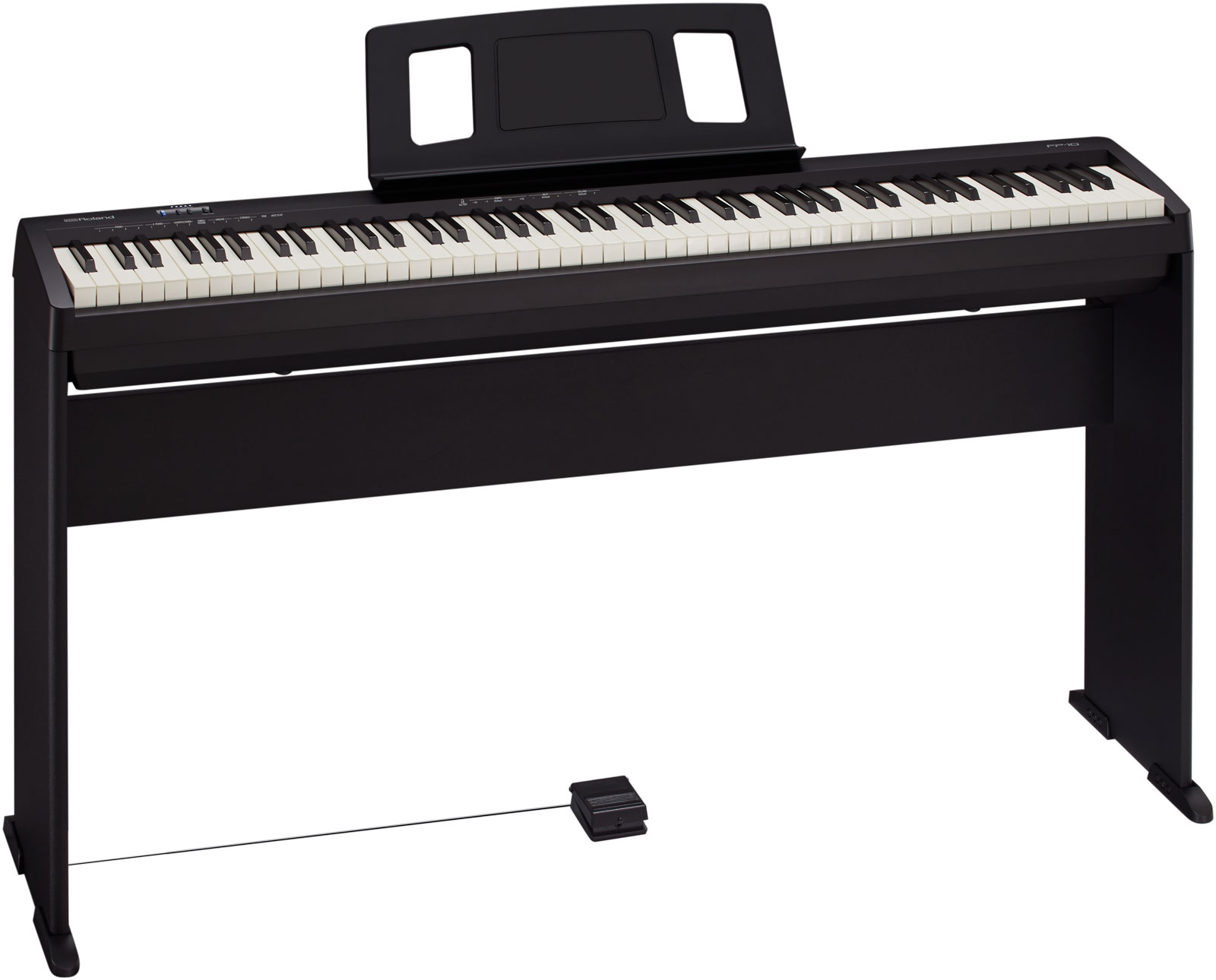
The Roland FP-10 follows a similarly clean aesthetic but appears noticeably more substantial. It has a deeper body and a thicker overall profile, giving it a more traditional digital piano appearance. While it’s still compact compared to furniture-style models, it doesn’t have quite the same sleek visual impact as the Casio.
That said, many buyers may actually prefer Roland’s design. The extra bulk gives the FP-10 a sense of permanence and solidity. It looks like a serious musical instrument rather than a portable keyboard, which may appeal to players who intend to keep it in one location for years.
Ultimately, appearance is subjective, but both manufacturers have produced instruments that look far more expensive than their respective price tags would suggest.
Size and Portability
This is where the differences become much more obvious.
One of the Casio CDP-S160’s biggest selling points is portability. Weighing approximately 10.5 kilograms (23 pounds), it’s light enough for one person to carry comfortably without much effort. Whether you’re moving it between rooms, taking it to lessons, or transporting it to a rehearsal, the relatively low weight makes a real difference.
The slim body also makes storage much easier. If you don’t have a dedicated music room, the CDP-S160 can be placed against a wall, stored in a closet, or tucked into a corner when not in use. This flexibility is particularly valuable for students or apartment dwellers where space is limited.
The Roland FP-10, by comparison, weighs around 12.3 kilograms (27 pounds). While the difference of less than two kilograms might not sound significant on paper, it’s noticeable when carrying the instrument. The larger body also makes it slightly more awkward to transport, especially over longer distances.
Neither piano is particularly difficult to move, but if portability is one of your top priorities, the Casio clearly has the advantage.
For gigging musicians who need a lightweight rehearsal instrument or teachers who frequently travel between students, those few kilograms saved can become surprisingly important over time.
Build Quality
Both pianos are primarily constructed from high-quality plastic, which is completely expected at this price point.
You won’t find real wood cabinets, aluminum chassis, or premium luxury materials here, but neither instrument feels cheap.
The Casio feels well assembled despite its lightweight construction. The plastic casing doesn’t creak during normal use, and the instrument remains stable even during energetic playing. The finish resists fingerprints reasonably well, helping it maintain a clean appearance without constant wiping.
Because the body is so slim, some buyers initially worry that it may feel fragile. In practice, that isn’t really the case. The chassis feels rigid enough for everyday home use, and the overall construction inspires confidence.
That said, it’s worth remembering that portability sometimes comes with compromises. The thinner housing inevitably feels a little less substantial than Roland’s thicker cabinet. It’s not that the Casio feels poorly made, but rather that its lightweight design naturally conveys a different impression.
The Roland FP-10 immediately feels denser when you lift it. The heavier construction gives the impression of greater durability, even if both instruments are likely to withstand years of normal use.
The cabinet feels solid, with very little flex anywhere on the body. Pressing firmly on different areas of the chassis doesn’t produce unwanted movement or creaking noises, reinforcing the sense that Roland has prioritized structural rigidity.
For buyers who associate weight with quality, the FP-10 leaves an excellent first impression.
Control Layout
The control panels reflect each company’s overall design philosophy.
Casio has opted for simplicity.
The CDP-S160 features clearly labeled buttons positioned neatly above the keyboard. Power, volume, and essential functions are immediately accessible without requiring much thought. Even someone completely new to digital pianos can usually start playing within minutes.
This straightforward layout makes the piano feel welcoming rather than intimidating.
Roland has taken almost the opposite approach.
The FP-10 features very few visible buttons, creating an exceptionally clean appearance. While this minimalist approach certainly looks elegant, it also means that many functions are accessed through combinations of keys and buttons.
Changing sounds, adjusting settings, or activating certain features often requires consulting the owner’s manual, at least during the first few weeks of ownership.
Once you’ve memorized the shortcuts, the process becomes much easier. However, beginners may initially find Roland’s interface less intuitive than Casio’s.
Neither approach is wrong.
Casio prioritizes convenience.
Roland prioritizes visual simplicity.
Which one you’ll prefer largely depends on whether you value immediate accessibility or a cleaner overall appearance.
Music Stand and Accessories
Both pianos include a detachable music rest that serves its purpose well.
The Casio’s music stand is lightweight but stable enough for most sheet music books and beginner method books. It also accommodates tablets without feeling unstable, provided they’re not enclosed in unusually heavy protective cases.
Roland’s stand is similarly functional and feels slightly sturdier thanks to the piano’s more substantial construction. In everyday use, there’s little meaningful difference between the two.
Both instruments also include a basic sustain pedal in the box.
As is common with entry-level digital pianos, these are simple footswitch-style pedals rather than full-sized piano pedals. They’re perfectly adequate for getting started, but many players eventually upgrade to higher-quality sustain pedals for improved feel and better stability.
Fortunately, both Casio and Roland support optional upgrades.
Long-Term Practicality
One of the most important questions to ask isn’t simply which piano looks better today, but which one you’ll enjoy owning several years from now.
The Casio excels because it adapts easily to changing circumstances. If you move house, rearrange your furniture, or need to store the piano temporarily, its compact size becomes a genuine advantage.
The Roland, meanwhile, feels like an instrument designed to stay in one place. Its extra weight and larger footprint make it slightly less convenient to relocate, but they also contribute to a more stable and confidence-inspiring playing experience.
Both pianos are built to withstand years of regular home practice, provided they’re treated with reasonable care. Neither exhibits obvious weaknesses in construction, and both manufacturers have strong reputations for producing reliable digital instruments.
Verdict
When it comes to design and build quality, there isn’t a clear universal winner because both manufacturers have optimized their instruments for different priorities.
The Casio CDP-S160 stands out for its exceptionally slim dimensions, lightweight construction, and user-friendly layout. It’s one of the easiest fully weighted digital pianos to transport, store, and integrate into smaller living spaces, making it an excellent choice for students, apartment dwellers, and anyone who values portability.
The Roland FP-10 counters with a chassis that feels more substantial and premium. Although it’s heavier and occupies slightly more space, that added weight contributes to an overall impression of durability and stability. Players looking for a digital piano that feels more like a permanent instrument may appreciate Roland’s approach.
If portability and convenience are your top priorities, the Casio CDP-S160 takes this category. If you prefer a more solid, substantial instrument that inspires confidence every time you sit down to play, the Roland FP-10 has the edge.
Keyboard Action
If there’s one category that should carry more weight than any other when choosing a digital piano, it’s the keyboard action. You can always connect better speakers, use high-quality headphones, or even add external software instruments if you want to improve the sound later on. The feel of the keys, however, is something you’re stuck with every time you sit down to play.
For beginners, the keyboard action plays a huge role in developing proper technique. For experienced pianists, it’s often the deciding factor between a digital piano that feels satisfying and one that feels like a compromise. A good action encourages expressive playing, allows for greater dynamic control, and makes transitioning to an acoustic piano much easier.
Both the Casio CDP-S160 and the Roland FP-10 feature fully weighted 88-key keyboards with hammer action, meaning they’re designed to replicate the feel of an acoustic piano rather than a lightweight electronic keyboard. However, while the specifications may appear similar on paper, the playing experience is quite different.
After spending time with both instruments, it’s clear that this is the area where Roland establishes its strongest advantage.
Casio Scaled Hammer Action II
The CDP-S160 uses Casio’s Scaled Hammer Action II keyboard, which has become a familiar sight across several of the company’s entry-level digital pianos.
The “scaled” part of the name refers to the fact that the keys are heavier in the bass and gradually become lighter as you move toward the treble, just like an acoustic piano. This subtle variation in weight makes the instrument feel far more natural than keyboards that use identical resistance across the entire range.
From the first few minutes of playing, the action feels smooth and approachable. The keys move freely without feeling overly loose, and the resistance is light enough that beginners can quickly become comfortable.
One thing Casio deserves credit for is avoiding the overly springy feel that plagued some older budget digital pianos. The keys return smoothly after each press, making repeated notes and faster passages feel controlled rather than bouncy.
For someone learning piano for the first time, the action is unlikely to feel intimidating. Younger students and adults with little previous experience often appreciate that the keyboard doesn’t require excessive finger strength. Long practice sessions also tend to be less fatiguing, especially during the first few months of learning.
That lighter touch can actually encourage beginners to practice more frequently. Instead of feeling like they’re wrestling with the keyboard, they’re free to focus on reading music, rhythm, and coordination.
Where the Casio Falls Short
While the CDP-S160’s action is enjoyable, it does reveal some limitations as your playing becomes more advanced.
The most noticeable is the relatively short pivot length. On an acoustic piano, and on higher-end digital actions, the pivot point sits farther back inside the instrument, allowing the key to maintain a more consistent feel regardless of where your finger lands.
On the Casio, playing near the backs of the keys requires slightly more effort than playing near the front. This is most apparent when tackling difficult classical repertoire with frequent black-key passages or close hand positions.
It’s not something beginners are likely to notice immediately, but intermediate and advanced players often pick up on it quite quickly.
The overall weighting is also on the lighter side. While this makes the piano comfortable to play, it sacrifices a little realism compared to an acoustic instrument.
Fast passages are easy, but slower, expressive playing sometimes lacks the sense of resistance that helps shape dynamics with greater precision.
Again, these aren’t deal-breakers. Considering the CDP-S160’s price and portability, the keyboard performs very well. It’s simply not among the very best actions available in this price range.
Roland PHA-4 Standard
The Roland FP-10 features the company’s highly regarded PHA-4 Standard keyboard, and it’s widely considered one of the biggest reasons to buy the instrument.
In fact, many players specifically choose the FP-10 because it offers the same basic key action found in some of Roland’s more expensive digital pianos.
From the first note, the difference is immediately noticeable.
The keys have a more substantial weight, a smoother travel, and a more refined sense of balance throughout their movement. They don’t feel excessively heavy, but they offer enough resistance to resemble the touch of a well-maintained acoustic upright.
Unlike some budget digital pianos that simply add weight to the keys, Roland has managed to create an action that feels remarkably natural throughout the entire keystroke.
There’s a subtle sense of momentum as each key moves downward, followed by a controlled return that feels predictable and consistent.
It’s one of those details that’s difficult to describe but easy to appreciate once you experience it.
Escapement and Ivory Feel
Another advantage of Roland’s keyboard is the inclusion of escapement simulation.
On an acoustic grand piano, escapement is the slight mechanical sensation felt near the bottom of the key travel as the hammer mechanism disengages. Digital pianos obviously don’t use the same mechanism, but higher-quality actions often recreate this subtle tactile feedback.
Roland’s implementation is convincing without being exaggerated. It’s not something you’ll consciously notice while playing simple songs, but during slower passages and expressive classical pieces, it contributes to a more authentic experience.
The keys also feature Roland’s Ivory Feel surface.
Rather than using a completely smooth glossy finish, the keys have a lightly textured coating that provides a bit more grip. During long practice sessions, especially in warm environments, this helps prevent your fingers from feeling as though they’re sliding across polished plastic.
It’s a small touch, but one that contributes to the premium feel of the instrument.
The Casio, by comparison, uses standard smooth plastic keys. They’re perfectly comfortable, but they don’t offer quite the same tactile refinement.
Dynamic Control
Perhaps the biggest difference between these two keyboards lies in their ability to translate your playing into expressive sound.
When you play softly on the Roland, the response feels exceptionally nuanced. Tiny differences in finger pressure produce audible changes in volume and tone, making it easier to shape musical phrases naturally.
As you increase your playing intensity, the keyboard continues to respond predictably without sudden jumps in volume.
This level of control makes expressive playing much more rewarding.
The Casio performs well in this regard, but it isn’t quite as sensitive to subtle changes in touch. Dynamic transitions are still possible, but they require slightly more effort and don’t feel quite as refined.
For beginners learning simple pieces, the difference may seem relatively minor.
For intermediate players working on expressive repertoire, however, Roland’s superior control becomes increasingly valuable.
Repetition and Fast Playing
Fast note repetition is another area where the FP-10 impresses.
Repeated notes feel crisp and controlled, allowing trills, ornaments, and rapid passages to flow naturally.
The keyboard recovers quickly between keystrokes, maintaining consistency even during demanding sections.
The Casio also handles repeated notes competently, but the lighter action can occasionally feel less substantial during rapid playing.
Some pianists actually enjoy this lighter touch for contemporary styles, pop music, and extended practice sessions because it requires less physical effort.
Others will find Roland’s greater resistance provides more confidence and precision.
Neither approach is objectively right or wrong.
It largely depends on your playing style and personal preference.
Noise and Mechanical Feel
Every digital piano produces some degree of mechanical noise as the keys move.
Fortunately, both instruments are relatively quiet.
The Casio’s action produces a soft thud that’s unlikely to disturb others unless you’re playing aggressively in a very quiet room.
The Roland is similarly quiet, although some individual keys may produce slightly more audible mechanical feedback depending on the instrument and playing technique.
In normal home environments, the difference is negligible.
Neither keyboard should create significant distractions during practice.
Which Keyboard Is Better for Beginners?
Interestingly, the answer isn’t as straightforward as many reviews suggest.
The Roland PHA-4 Standard is unquestionably the more realistic action. If your goal is to develop proper technique and eventually transition to an acoustic piano, it provides a stronger foundation.
However, realism isn’t the only factor that matters.
Some beginners genuinely find heavier actions discouraging during the early stages of learning. Finger independence, hand strength, and coordination all take time to develop, and a lighter keyboard can make those first few months feel less demanding.
The Casio’s lighter action may actually help complete beginners build confidence before moving on to more demanding repertoire.
That said, students planning to take formal piano lessons over several years will likely benefit more from Roland’s closer approximation of an acoustic instrument.
Verdict
Both the Casio CDP-S160 and Roland FP-10 deliver keyboard actions that are impressive considering their affordable price points, but they target slightly different audiences.
The Casio Scaled Hammer Action II is comfortable, responsive, and approachable. Its lighter touch makes it easy to play for extended periods and particularly welcoming for beginners, younger students, and casual players who value comfort and portability. While it lacks some of the refinement found in more advanced actions, it remains a solid performer within its class.
The Roland PHA-4 Standard, however, operates on another level. Its more authentic weighting, superior dynamic control, textured key surfaces, escapement simulation, and overall realism make it one of the standout keyboard actions available in an entry-level digital piano. It’s the kind of action that continues to satisfy even as your skills improve, reducing the likelihood that you’ll feel the need to upgrade purely for a better playing experience.
If keyboard feel is your highest priority, and for many pianists it should be, the Roland FP-10 is the clear winner. Its action offers a level of realism that’s difficult to match at this price, making it an outstanding choice for serious beginners, advancing students, and experienced players alike.
Sound Engine & Playing Feel
While the keyboard action determines how a digital piano feels beneath your fingers, the sound engine determines how the instrument responds to every note you play. These two elements work together, and it’s difficult to evaluate one without considering the other. A great keyboard can feel wasted if the piano sound lacks expression, while an excellent sound engine can only shine if the keys allow you to control it effectively.
Fortunately, both the Casio CDP-S160 and the Roland FP-10 perform well in this department. Neither sounds like a cheap keyboard, and both deliver piano tones that are enjoyable enough to encourage regular practice. However, they achieve those results in different ways, and once you spend some time playing both instruments side by side, the differences become much easier to hear.
The Casio aims for a bright, pleasing sound that’s immediately satisfying, while Roland focuses on realism, subtle dynamics, and natural tonal changes. Neither approach is inherently wrong, but one will likely suit your preferences better depending on the kind of music you play and the experience you’re looking for.
Casio’s Piano Sound
The CDP-S160 centers around a stereo grand piano sound that is designed to be versatile. It’s clear, balanced, and pleasant from the moment you switch the instrument on. There isn’t much tweaking required because the default sound works well across a wide variety of musical styles.
The first thing many people notice is the brightness of the tone. Compared to some competing digital pianos, the Casio has a slightly more forward character. Individual notes are well defined, making melodies easy to hear even when playing with both hands.
For beginners, this can actually be an advantage. Clear note separation makes it easier to identify mistakes and follow the music while practicing. Chords remain articulate, and the piano cuts through nicely if you’re playing alongside backing tracks or other instruments.
The overall sound also feels polished. Casio has done a good job creating a piano voice that remains enjoyable during everyday practice without becoming harsh or fatiguing.
That said, the tone occasionally prioritizes clarity over realism. While it captures the general character of an acoustic piano, it doesn’t always recreate the subtle complexity that develops as notes interact with one another.
During simple pieces, this isn’t particularly noticeable. As the music becomes more expressive or harmonically dense, the sound begins to reveal its digital origins a little more clearly.
Roland SuperNATURAL Piano Engine
Roland takes a different approach with the FP-10.
Instead of relying solely on traditional stereo sampling, Roland uses its well-known SuperNATURAL Piano engine, which combines samples with modeling techniques to create a more dynamic and responsive instrument.
Without diving too deeply into technical terminology, the important point is that the piano doesn’t simply play back the same recording every time you press a key.
Instead, the sound changes more naturally depending on how you play.
Strike a key softly, and the tone feels warm and rounded.
Play with greater force, and the sound becomes brighter and more energetic without suddenly jumping between obvious sample layers.
The transition feels smooth, almost as though the piano is reacting to your playing rather than merely reproducing recordings.
This is one of the reasons the FP-10 feels more expressive than many competing entry-level digital pianos.
Even after extended practice sessions, the sound continues to feel engaging because small variations in your touch produce equally subtle variations in tone.
Dynamic Expression
One of the biggest differences between these two pianos is how they respond to changes in dynamics.
The Casio certainly supports soft and loud playing, but the transitions can sometimes feel slightly less gradual. Moving from pianissimo to fortissimo produces noticeable changes in volume, yet the tonal evolution isn’t quite as rich.
Roland excels here.
As you gradually increase your playing intensity, the sound doesn’t simply become louder. It also becomes brighter, more resonant, and more harmonically complex, much like an acoustic piano would.
This creates a stronger connection between your fingers and the sound coming from the speakers.
Expressive phrasing feels more rewarding because every subtle variation in touch produces an equally subtle musical response.
If you enjoy classical repertoire, jazz ballads, or emotionally expressive solo piano music, this additional level of control becomes one of the FP-10’s greatest strengths.
Tone Character
Neither piano attempts to recreate exactly the same acoustic instrument.
The Casio generally leans toward a brighter, cleaner presentation.
The Roland sounds slightly warmer and fuller.
Neither description tells the whole story, of course, because tone is highly subjective.
Some players immediately gravitate toward Casio’s crisp character because it feels lively and modern. Pop music, worship music, and contemporary arrangements often benefit from that extra clarity.
Others prefer Roland’s richer tonal balance because it feels closer to sitting at an acoustic piano.
Personally, I found the Roland slightly more enjoyable during longer practice sessions. The warmth of the sound makes extended playing feel less fatiguing, particularly through headphones.
The Casio remains pleasant throughout, but its brighter presentation occasionally becomes a little more clinical by comparison.
Sustain and Resonance
An acoustic piano is a remarkably complex instrument.
Whenever you play a note, dozens of strings and wooden components interact in subtle ways. Nearby strings vibrate sympathetically, the soundboard amplifies harmonics, and sustaining notes blend together into a rich sonic texture.
Replicating all of that digitally is no easy task.
Both the Casio CDP-S160 and Roland FP-10 include effects designed to simulate these acoustic characteristics, but Roland generally does a more convincing job.
When holding the sustain pedal on the FP-10, chords bloom naturally rather than simply lingering longer. Individual notes interact more smoothly, producing a fuller and more realistic overall sound.
The Casio also provides satisfying sustain, but the effect feels slightly more straightforward. Notes decay cleanly and predictably, though they don’t develop quite the same depth of resonance.
This isn’t something every player will notice immediately, but experienced pianists often appreciate these finer details.
Playing Through Speakers
The sound engine can only perform as well as the speakers allow.
Through their built-in speaker systems, both instruments sound impressive considering their size.
The Casio’s more powerful speakers give its piano sound a greater sense of presence in medium-sized rooms. The extra volume helps create an engaging practice experience without requiring external amplification.
The Roland’s speakers are slightly less powerful, which can make its otherwise excellent sound engine seem more restrained.
This is worth remembering when comparing the two in a music store.
At moderate volumes, the Casio may initially appear to sound “better” simply because it projects more confidently.
That doesn’t necessarily mean the sound engine itself is superior.
Playing Through Headphones
Headphones tell a different story.
Remove the limitations imposed by the built-in speakers, and the Roland’s strengths become even more apparent.
The piano sound feels wider, deeper, and more detailed.
Soft passages reveal delicate harmonic textures that are harder to appreciate through the onboard speakers.
The Casio also benefits significantly from headphone use. Its stereo image becomes more spacious, and the overall sound gains clarity.
Even so, the Roland maintains a noticeable advantage in realism.
If you expect to practice primarily with headphones, the FP-10 offers one of the most satisfying listening experiences available in this price range.
Additional Instrument Sounds
Although both pianos are primarily designed as digital pianos rather than stage keyboards, they include several additional instrument voices.
The Casio offers a broader selection.
Alongside its main piano sound, you’ll find electric pianos, strings, organs, harpsichords, vibraphones, and several other useful voices.
Not every sound is equally impressive, but having extra options can make practice more enjoyable and provide variety for different musical styles.
The Roland includes fewer sounds overall, yet the available voices tend to be consistently high in quality.
The electric pianos are particularly enjoyable, offering warm vintage tones that work well for jazz, blues, and pop music.
Ultimately, however, most buyers will spend the overwhelming majority of their time using the main grand piano voice.
That remains the most important sound on either instrument.
Does the Sound Inspire You to Play?
This may sound like an unusual question, but it’s one of the most important considerations when buying a digital piano.
A technically accurate instrument isn’t necessarily an inspiring one.
The Casio succeeds because its sound is immediately accessible. You switch it on, begin playing, and everything feels straightforward. The bright tone encourages confidence, and the simplicity of the instrument allows you to focus entirely on practicing.
The Roland succeeds in a different way.
Its sound engine responds so naturally to your touch that it often encourages you to keep playing just to explore its expressive range. Quiet passages become more delicate, dramatic crescendos feel more satisfying, and familiar pieces reveal subtle details that might otherwise go unnoticed.
It’s one of those qualities that’s difficult to quantify on a specification sheet but becomes obvious after spending an hour with the instrument.
Verdict
Both the Casio CDP-S160 and Roland FP-10 deliver piano sounds that are excellent for their price category, and neither will disappoint the average beginner or hobbyist. The Casio’s bright, clear tone is versatile, easy to enjoy, and pairs well with its approachable keyboard action. It offers enough realism to support years of learning while providing a pleasant listening experience through both speakers and headphones.
The Roland FP-10, however, goes a step further. Its SuperNATURAL Piano engine provides smoother dynamic transitions, richer resonance, and a level of expressiveness that makes the instrument feel remarkably close to an acoustic piano. Combined with the FP-10’s superior keyboard action, the sound engine creates a playing experience that continues to reward you as your skills develop.
If your primary goal is simply to own a reliable digital piano with a pleasing sound, the Casio CDP-S160 does an admirable job. If you’re looking for an instrument that responds more naturally to your touch and offers greater musical expression over the long term, the Roland FP-10 earns the advantage in this category.
Speakers & Headphone Performance
When people compare digital pianos, the conversation usually revolves around keyboard action and sound engines. While those are undoubtedly the two most important factors, the speaker system also deserves careful consideration. After all, the speakers are responsible for delivering every note you hear when you’re not using headphones, and they can significantly influence your overall impression of the instrument.
At the same time, it’s important not to overemphasize built-in speakers. Many digital piano owners, particularly beginners and students, spend a large portion of their practice time using headphones. Whether it’s to avoid disturbing family members, practice late at night, or simply enjoy a more immersive listening experience, headphone performance is just as important as speaker quality for many players.
The Casio CDP-S160 and Roland FP-10 approach audio reproduction in different ways. Casio equips its piano with slightly more powerful onboard speakers, while Roland relies on a more refined sound engine to produce an impressively natural listening experience, particularly through headphones.
Neither instrument has poor audio quality. In fact, both perform remarkably well considering their compact size and affordable price. However, each has its own strengths depending on how and where you intend to play.
Casio CDP-S160 Speaker System
The Casio CDP-S160 features a pair of 8-watt speakers, giving it a total output of 16 watts.
For an entry-level digital piano, that’s a respectable amount of power. More importantly, Casio has made good use of that power by producing a sound that feels surprisingly open considering the instrument’s slim profile.
The first thing you’ll notice is that the piano gets comfortably loud without requiring the volume control to be pushed to its limit. Whether you’re practicing in a bedroom, living room, classroom, or small rehearsal space, there’s usually more than enough volume available.
Even at moderate listening levels, the piano fills the room nicely.
The stereo image is reasonably wide, helping the instrument feel larger than its physical dimensions might suggest. Lower notes maintain enough presence to support the overall sound, while the upper register remains clear and articulate.
This makes the CDP-S160 particularly enjoyable for casual home playing, where convenience often matters more than perfect acoustic realism.
The speaker system also complements Casio’s naturally bright piano tone. Individual notes remain well defined, making melodies easy to hear without becoming muddy.
For beginners working through lesson books or practicing scales and exercises, this clarity is especially welcome.
Roland FP-10 Speaker System
Roland takes a different approach with the FP-10.
Its dual 6-watt speaker system delivers a total output of 12 watts, making it slightly less powerful than the Casio on paper.
This doesn’t automatically mean it sounds worse, but it does influence the overall presentation.
The FP-10 produces a balanced, refined sound with excellent tonal accuracy, yet it doesn’t project quite as confidently into larger rooms.
In small practice spaces, this isn’t much of an issue.
The piano sounds warm, controlled, and pleasant.
However, as you increase the volume or move farther away from the instrument, the limitations of the smaller speaker system become more noticeable.
The bass loses some authority, and the overall sound doesn’t spread throughout the room quite as effectively as the Casio.
For players expecting room-filling sound during family gatherings or informal performances, this can be a slight disappointment.
That said, it’s worth remembering that Roland clearly prioritized sound quality over sheer volume.
Rather than emphasizing loudness, the speakers aim to reproduce the nuances generated by the SuperNATURAL Piano engine as faithfully as possible.
Volume and Projection
One area where the Casio establishes a fairly clear advantage is maximum output.
Its additional speaker power allows it to reach higher volumes without sounding strained.
This can make a surprising difference in everyday situations.
If you’re practicing while someone else is cooking, watching television in another room, or simply dealing with normal household background noise, the Casio has a little more headroom available.
The Roland remains perfectly usable under the same conditions, but you may find yourself turning the volume close to maximum more frequently.
Neither instrument is intended to replace a dedicated PA system or stage amplifier.
For performances beyond a small room, external amplification is still the better solution.
However, for purely home use, Casio’s extra volume provides a practical advantage.
Sound Balance
Raw volume isn’t everything.
How the speakers reproduce different frequencies is equally important.
The Casio emphasizes clarity.
Its brighter overall tonal character helps melodies stand out clearly, particularly in the middle and upper registers.
The lower notes remain present, although they don’t possess the deep resonance you’d expect from a much larger digital piano or an acoustic instrument.
Roland’s speakers present a warmer tonal balance.
The midrange feels slightly richer, allowing expressive piano passages to sound natural and musical.
Although the speakers themselves aren’t as powerful, they pair exceptionally well with the FP-10’s sound engine.
The result is an instrument that sounds refined rather than aggressive.
Neither approach is objectively superior.
Players who enjoy pop, worship music, or contemporary arrangements may appreciate Casio’s crisp presentation.
Those who primarily perform classical repertoire may lean toward Roland’s smoother tonal balance.
Playing at Low Volumes
Many people underestimate how often they’ll practice quietly.
Late-night practice sessions, shared living spaces, or simply wanting background music while relaxing often mean playing with the volume turned down considerably.
Both pianos perform well under these circumstances.
The Casio retains good clarity even at lower settings.
Individual notes remain distinct, and the piano doesn’t suddenly sound muffled as the volume decreases.
Roland performs equally well, perhaps even slightly better.
Its richer sound engine continues to reveal subtle tonal detail even at modest listening levels.
This makes quiet practice particularly enjoyable, as expressive phrasing remains intact despite the reduced volume.
Headphone Performance
For many buyers, this is arguably the most important part of the entire category.
Headphones remove the limitations imposed by compact speaker systems and allow the sound engine to shine.
Both pianos offer a dramatically improved listening experience when connected to a good pair of headphones.
The Casio immediately gains depth and spaciousness.
The stereo image becomes wider, subtle reverberation becomes easier to hear, and the overall piano tone feels more polished.
If your first experience with the CDP-S160 is through headphones, you’ll likely come away with an even more favorable impression than if you only heard its onboard speakers.
The Roland, however, takes another step forward.
The FP-10’s SuperNATURAL Piano engine truly comes alive through headphones.
The transitions between soft and loud dynamics become smoother, sustained notes develop greater richness, and harmonic overtones emerge with impressive realism.
The difference isn’t merely about sound quality.
It’s about immersion.
Playing with headphones on the Roland often creates the feeling that you’re sitting in front of a much larger and more expensive instrument.
That sensation is difficult to quantify, but it’s something many players notice within minutes.
Long Practice Sessions
Comfort during extended practice is another consideration that’s often overlooked.
Harsh speakers or overly bright headphones can become tiring after an hour or two of playing.
Fortunately, neither piano suffers from this problem.
The Casio’s sound remains pleasant during long sessions, although its brighter tonal balance may become slightly more fatiguing for particularly sensitive listeners.
The Roland’s warmer presentation tends to encourage longer practice sessions.
Combined with its realistic keyboard action, the overall experience feels remarkably natural.
It’s one of those instruments that invites you to keep playing long after you originally intended to stop.
External Speakers
Although this section focuses on built-in audio, it’s worth mentioning that neither instrument locks you into its onboard speakers forever.
Both pianos can be connected to external amplification if you eventually outgrow the internal speaker systems.
This is especially relevant for musicians who begin performing in public, teaching lessons, or recording at home.
Once connected to quality studio monitors or a PA system, the differences between the onboard speakers become much less important.
At that point, the quality of the underlying sound engine takes center stage once again.
Which Matters More: Speakers or Headphones?
This depends entirely on how you plan to use your piano.
If you’ll spend most of your time practicing during the day without headphones, the Casio’s louder speaker system is a genuine advantage.
It projects more confidently, fills a room more easily, and creates a satisfying playing experience straight out of the box.
If you expect to practice primarily with headphones, the Roland becomes much more compelling.
Its superior sound engine reveals far greater nuance once freed from the limitations of compact speakers.
Many experienced pianists actually recommend judging digital pianos primarily through headphones for this very reason.
The speakers matter, but they’re only one part of the overall listening experience.
Verdict
The Casio CDP-S160 and Roland FP-10 each perform well in this category, but they excel in different areas.
The Casio’s dual 8-watt speaker system delivers greater volume, stronger projection, and a room-filling sound that suits everyday home practice exceptionally well. If you rarely use headphones and value convenience above all else, the CDP-S160 offers one of the better speaker systems in its class.
The Roland FP-10, meanwhile, prioritizes refinement over raw power. Its onboard speakers are slightly less impressive in terms of loudness, but they faithfully reproduce the expressive capabilities of Roland’s SuperNATURAL Piano engine. When paired with quality headphones, the FP-10 provides a noticeably richer, more immersive listening experience that rivals digital pianos costing considerably more.
For buyers who mostly play through the built-in speakers, the Casio earns a narrow victory thanks to its stronger output and broader projection. For those who practice regularly with headphones and value the most realistic piano sound possible, the Roland ultimately delivers the more rewarding long-term experience.
Features & Functions
When shopping for a digital piano, it’s easy to get caught up comparing keyboard actions and piano sounds while overlooking the features that shape your day-to-day experience. For many players, especially beginners, these extra functions can make practicing more enjoyable, simplify learning, and add a level of flexibility that an acoustic piano simply can’t provide.
That said, it’s also important to keep expectations realistic. Neither the Casio CDP-S160 nor the Roland FP-10 is designed to compete with feature-packed arranger keyboards or professional workstations. These are digital pianos first and foremost. Their primary goal is to provide an authentic piano-playing experience, with additional functions acting as useful extras rather than the main attraction.
Both instruments succeed in that regard, but they take noticeably different approaches. Casio focuses on simplicity and accessibility, while Roland leans toward a more streamlined interface supported by software integration. Which approach you prefer will largely depend on whether you value immediate ease of use or don’t mind relying on a companion app to unlock additional functionality.
Keeping Things Simple
One of the first things you’ll notice about both pianos is that neither overwhelms you with buttons.
Unlike many portable keyboards covered in switches, displays, and hundreds of built-in sounds, both the CDP-S160 and FP-10 keep the control panel remarkably clean.
This minimalist design has several advantages.
First, it encourages you to focus on playing rather than endlessly scrolling through menus or experimenting with hundreds of sounds you’ll rarely use.
Second, it makes the instruments much less intimidating for beginners.
Someone buying their first piano doesn’t usually want to spend half an hour reading a manual before playing their first scale. They want to switch the instrument on and start making music.
Both Casio and Roland understand this, although they execute the idea differently.
Piano Sounds and Instrument Voices
The primary purpose of either instrument is, unsurprisingly, to reproduce the sound of an acoustic piano.
Still, it’s nice to have a little variety.
The Casio CDP-S160 includes several additional instrument voices alongside its main concert grand piano sound. These typically include electric pianos, organs, strings, harpsichord, vibraphone, and a handful of other useful sounds.
None of these are intended to replace a dedicated stage piano or synthesizer, but they provide enough variety to keep practice sessions interesting.
For example, switching to an electric piano can make repetitive scale practice feel less monotonous, while layering strings underneath the piano creates a fuller sound that’s enjoyable for slower ballads and film music.
The Roland FP-10 takes a more restrained approach.
It offers fewer sounds overall, but the available voices are consistently well produced. Roland clearly prioritized quality over quantity, ensuring that every included sound feels polished and musically useful.
For most buyers, this difference won’t be a deciding factor.
Realistically, the vast majority of owners will spend most of their time using the default grand piano sound.
Still, having a few alternative voices available is always welcome.
Dual Mode
Both pianos support Dual Mode, sometimes referred to as layering.
This feature allows you to combine two instrument sounds simultaneously.
For example, you can layer piano with strings to create a richer, more cinematic sound. Piano and choir combinations also work well for worship music, while piano and electric piano can produce interesting textures for contemporary arrangements.
The implementation is straightforward on both instruments.
Although layering isn’t something most beginners use every day, it’s a surprisingly enjoyable feature once you begin experimenting.
It also demonstrates that these entry-level pianos are capable of more than simply reproducing a grand piano.
Metronome
The built-in metronome is one of the most valuable practice tools included on either instrument.
It may not sound particularly exciting, but developing a solid sense of rhythm is one of the most important aspects of learning piano.
Having a metronome built directly into the instrument means you don’t need a separate device or smartphone app every time you practice.
Both the Casio and Roland allow you to adjust the tempo easily, making them suitable for everything from slow technical exercises to faster performance practice.
Whether you’re working on scales, Hanon exercises, or difficult passages that require gradual speed increases, the metronome quickly becomes one of the most frequently used functions.
Touch Sensitivity
Both pianos allow you to adjust the keyboard’s touch sensitivity.
This feature changes how the instrument responds to your playing, making it easier or harder to produce louder notes.
For example, younger students or players with a naturally lighter touch may prefer a more sensitive setting that requires less force.
Conversely, experienced pianists sometimes choose a heavier response to more closely resemble an acoustic piano.
Although many players eventually settle on the default setting, having the ability to customize the keyboard response adds useful flexibility.
Transpose and Tuning
Transpose is another feature that often proves more useful than expected.
It allows you to shift the keyboard up or down in semitone increments without changing your fingering.
This can be particularly helpful when accompanying singers who need a song performed in a different key.
Instead of relearning the piece, you simply transpose the instrument.
Both the Casio and Roland implement this function smoothly, making it easy to adapt to different musical situations.
Similarly, tuning adjustments allow you to fine-tune the instrument’s overall pitch.
While most casual players will rarely need this feature, it’s useful when performing alongside acoustic instruments that may not be perfectly tuned to concert pitch.
Recording Functions
Both pianos include simple recording capabilities that allow you to capture your own performances.
This isn’t intended to replace professional recording software, but it’s incredibly useful for practice.
Listening back to your playing often reveals mistakes that are difficult to notice while performing.
Timing inconsistencies, uneven dynamics, or awkward phrasing become much more obvious when you’re no longer concentrating on pressing the keys.
For students, recording practice sessions can also provide a valuable record of long-term progress.
Even simple recordings made months apart can demonstrate how much your playing has improved.
Companion Apps
This is one area where the two manufacturers begin to diverge.
Casio offers compatibility with its educational applications, allowing users to access additional settings and learning features through a mobile device.
The integration works well, but it isn’t quite as central to the overall experience.
Roland, on the other hand, places much greater emphasis on its companion app ecosystem.
The Roland Piano App effectively expands the FP-10’s functionality by providing a more intuitive interface for adjusting settings, selecting sounds, accessing rhythm features, and exploring educational tools.
Instead of memorizing button combinations, many functions become available through a clean graphical interface on your smartphone or tablet.
For users comfortable incorporating technology into their practice routine, this significantly improves the overall experience.
Ease of Use
Interestingly, the simpler-looking instrument isn’t necessarily the easiest to operate.
The Casio’s physical controls are generally more straightforward.
Essential functions are clearly labeled, and accessing common features rarely requires consulting the manual.
This makes the CDP-S160 particularly welcoming for first-time buyers.
The Roland’s minimalist control panel looks elegant, but it hides many secondary functions behind combinations of buttons and keys.
During the first few weeks of ownership, you’ll probably find yourself referring to the manual more often than you’d like.
Fortunately, once the shortcuts become familiar, daily operation becomes much quicker.
Even so, Casio’s interface remains the more intuitive of the two.
Educational Value
Both instruments are excellent learning tools.
Their weighted keyboards naturally take center stage, but the supporting functions also contribute to an effective practice environment.
The metronome encourages proper rhythm.
Recording functions promote self-evaluation.
Transpose simplifies accompaniment.
Layer mode introduces creative possibilities.
Companion apps provide additional guidance and customization.
Importantly, neither piano buries the player beneath unnecessary distractions.
Unlike feature-heavy keyboards packed with hundreds of rhythms, accompaniment styles, and novelty sounds, both the Casio and Roland maintain a strong focus on learning proper piano technique.
For many teachers, this is actually a significant advantage.
Students spend more time practicing and less time browsing menus.
Everyday Practicality
After living with either instrument for several months, you’ll likely discover that only a handful of functions become part of your regular routine.
Most owners primarily use the grand piano sound, the metronome, the sustain pedal, occasional recording, and perhaps the transpose function from time to time.
Both manufacturers clearly understand this.
Instead of chasing long specification lists filled with rarely used features, they’ve concentrated on refining the essentials.
That design philosophy helps both pianos age well.
Years down the line, they still feel like focused musical instruments rather than outdated electronic gadgets.
Verdict
When it comes to features and functions, both the Casio CDP-S160 and Roland FP-10 strike an excellent balance between capability and simplicity. Neither tries to overwhelm the player with endless menus or hundreds of gimmicky sounds. Instead, both provide the practical tools most pianists actually use, including multiple instrument voices, layering, a metronome, recording, transpose, and adjustable touch sensitivity.
The Casio CDP-S160 earns praise for its straightforward operation. Its clearly labeled controls and user-friendly interface make it especially appealing to beginners who simply want to sit down and play without constantly referring to the owner’s manual. It delivers all the essential features expected from a modern entry-level digital piano while keeping everything easy to access.
The Roland FP-10 takes a more modern approach by extending many of its capabilities through its companion app. While the physical interface isn’t quite as intuitive at first, the software integration opens up a more polished and flexible user experience for players who don’t mind using a smartphone or tablet alongside their piano.
In the end, neither instrument wins by offering dramatically more features than the other. Instead, the difference lies in how those features are presented. If you prefer simplicity and immediate accessibility, the Casio has the advantage. If you’re comfortable using mobile apps and appreciate a more connected experience, the Roland feels slightly more sophisticated without losing its focus as a true digital piano.
Connectivity
Connectivity isn’t always the first thing people consider when buying a digital piano, especially if it’s their very first instrument. Most beginners are understandably focused on how the keyboard feels and how realistic the piano sounds. However, as your playing develops, the ability to connect your piano to other devices often becomes far more important than you initially expected.
Whether you want to practice with educational apps, record your performances, compose music on a computer, use virtual piano software, or simply practice silently with headphones, modern connectivity options can greatly expand what a digital piano is capable of.
Fortunately, both the Casio CDP-S160 and the Roland FP-10 include the essential connections that most players will need. Neither instrument is intended to function as a professional stage piano packed with audio outputs and MIDI ports, but both provide enough flexibility for home practice, online learning, and basic music production.
That said, the two pianos differ in a few key areas, particularly when it comes to wireless functionality and software integration.
USB Connectivity
Perhaps the most important connection on either instrument is the USB port.
Both the Casio CDP-S160 and Roland FP-10 feature USB connectivity that allows the piano to communicate directly with computers, tablets, and smartphones.
It’s important to understand what this connection actually does.
Rather than transmitting audio, USB primarily sends MIDI data. MIDI is essentially digital performance information. It records which notes you play, how hard you press the keys, when you release them, and other performance details.
This opens up a surprising number of possibilities.
For example, you can connect either piano to music notation software and have your performance automatically converted into written sheet music. You can use virtual instruments that recreate the sound of concert grand pianos costing hundreds of thousands of dollars. You can also record performances directly into digital audio workstations for composing or arranging music.
For many players, USB connectivity transforms an affordable digital piano into the center of a small home music studio.
Both Casio and Roland handle USB MIDI reliably, and neither presents significant compatibility issues with modern computers.
Setup is generally straightforward, particularly with current versions of Windows, macOS, iPadOS, and many Android devices.
Compatibility with Music Software
Once connected via USB, both pianos work well with a wide range of music software.
If you’re learning piano, educational applications can display sheet music, provide instant feedback on your playing, and guide you through interactive lessons.
For aspiring composers, digital audio workstations such as Logic Pro, Cubase, Ableton Live, FL Studio, or Reaper recognize both instruments as MIDI controllers, allowing you to control thousands of software instruments.
This dramatically increases the long-term value of either piano.
Instead of being limited to the built-in sounds, you gain access to an almost limitless library of virtual pianos, orchestral libraries, synthesizers, and cinematic instruments.
Even if you never plan to become a composer, experimenting with software instruments can be both educational and enjoyable.
Audio Connections
Unlike professional stage pianos, neither the Casio CDP-S160 nor the Roland FP-10 includes a wide range of dedicated audio outputs.
This shouldn’t come as a surprise.
Both models are designed primarily for home use rather than live performance.
For most buyers, this isn’t a significant limitation.
The built-in speakers are sufficient for everyday practice, while headphones provide excellent private listening.
If you eventually decide to perform publicly or record at a higher level, there are several ways to integrate either piano into a larger audio setup.
Some users choose to record through the headphone output, while others rely entirely on MIDI and software instruments instead of the piano’s internal sounds.
Although dedicated line outputs would certainly have been welcome, their absence is understandable given the price category.
Headphone Connections
One of the most frequently used connections on any digital piano is the headphone jack.
For many owners, headphones quickly become an essential part of daily practice.
They allow you to practice late at night, avoid disturbing family members, eliminate background noise, and hear far greater detail than the built-in speakers can provide.
Both the Casio and Roland perform very well in this regard.
The headphone outputs produce clean, low-noise signals that allow the internal sound engines to shine.
As discussed in the previous section, the Roland particularly benefits from headphone use, where its SuperNATURAL Piano engine reveals additional depth and realism.
The Casio also sounds excellent through headphones, offering improved clarity and a wider stereo image compared to its onboard speakers.
If private practice is likely to become part of your daily routine, both instruments provide a satisfying experience.
Sustain Pedal Connection
Every serious digital piano should support an external sustain pedal, and thankfully both instruments do.
Although each piano includes a basic footswitch-style sustain pedal in the box, many players eventually upgrade to a more substantial pedal that more closely resembles those found on acoustic pianos.
Both Casio and Roland make this process simple.
Connecting a higher-quality sustain pedal improves comfort, stability, and overall playing confidence.
More importantly, it allows the instrument to grow with you as your technique develops.
It’s one of the first upgrades many owners make, and both pianos support it without issue.
Mobile Device Integration
Today’s piano students increasingly rely on smartphones and tablets as part of their learning process.
Interactive lessons, digital sheet music, backing tracks, metronome apps, and recording software have become everyday practice tools.
Both pianos integrate well with modern mobile devices.
Connecting to an iPad or Android tablet opens up numerous educational opportunities that simply didn’t exist a decade ago.
For beginners, this can make practice more engaging.
Instead of repeating exercises from a printed method book, students receive immediate visual feedback and structured lesson plans.
This combination of traditional piano practice and modern technology has proven particularly effective for self-taught players.
Bluetooth Connectivity
This is arguably the biggest difference between these two instruments.
The Roland FP-10 includes built-in Bluetooth MIDI.
While it’s important to note that this isn’t Bluetooth audio, meaning it won’t stream music through the piano’s speakers, Bluetooth MIDI is still an extremely useful feature.
It allows the piano to communicate wirelessly with compatible apps and devices.
The convenience of simply opening an educational app and having the piano connect automatically cannot be overstated.
There’s no need for USB cables stretched across the room or constantly reconnecting hardware every time you practice.
For players who regularly use learning apps, notation software, or composition tools, Bluetooth quickly becomes something you wonder how you ever lived without.
The Casio CDP-S160 approaches wireless connectivity differently.
Depending on your configuration, wireless functionality may require an optional Bluetooth adapter rather than being built directly into the piano.
While this certainly isn’t a major obstacle, it does represent an additional expense and one more accessory to purchase.
For buyers who value convenience, Roland clearly offers the more complete solution.
Companion Apps
Connectivity isn’t only about hardware.
Software support also plays a major role in the ownership experience.
Casio provides access to its educational applications and settings management tools, allowing users to adjust various piano parameters through compatible mobile devices.
The system works well and provides useful functionality for both beginners and intermediate players.
Roland’s Piano App, however, feels slightly more polished and deeply integrated.
Rather than relying solely on the piano’s limited physical controls, the app provides an intuitive graphical interface for selecting sounds, adjusting settings, controlling metronome functions, and exploring additional educational features.
This makes the FP-10 feel like a more modern connected instrument.
Although some players prefer avoiding apps altogether, others appreciate having almost every function available on a familiar touchscreen interface.
Future-Proofing
One aspect of connectivity that’s often overlooked is longevity.
A digital piano purchased today will likely remain in use for many years.
During that time, your musical needs may change considerably.
A beginner who initially practices simple exercises may later begin recording original compositions, taking online lessons, or experimenting with virtual instruments.
Having strong connectivity ensures that your piano continues to serve those evolving needs.
Fortunately, both the Casio CDP-S160 and Roland FP-10 perform well in this respect.
Their USB MIDI implementation provides access to an enormous ecosystem of educational software and recording tools.
The Roland gains an additional advantage through built-in Bluetooth MIDI, which adds convenience without changing your overall workflow.
Everyday Use
In daily practice, most owners won’t constantly think about connectivity.
The piano will spend much of its life simply being switched on and played.
However, the moment you decide to connect to a lesson app, compose on your computer, or record a performance, these features suddenly become invaluable.
That’s why it’s worth considering them before making a purchase.
You may not need every connection today, but having those options available tomorrow can significantly extend the usefulness of your instrument.
Verdict
Both the Casio CDP-S160 and Roland FP-10 provide the essential connectivity features expected from a modern entry-level digital piano. USB MIDI support, headphone connectivity, sustain pedal compatibility, and integration with computers and mobile devices ensure that either instrument can comfortably support years of learning, practice, and creative exploration.
The Casio keeps things straightforward and reliable. It offers everything most home users need while maintaining the instrument’s emphasis on simplicity and ease of use. For players who mainly intend to practice, take lessons, and occasionally connect to a computer, its connectivity options are more than sufficient.
The Roland FP-10, however, takes a small but meaningful step ahead thanks to its built-in Bluetooth MIDI and excellent companion app integration. These additions don’t radically change what the piano can do, but they make everyday interactions smoother and more enjoyable, particularly for players who regularly use educational apps, notation software, or digital recording tools.
Neither instrument is designed to satisfy professional performers requiring extensive stage connections, but that isn’t their purpose. Within the context of affordable home digital pianos, both offer strong connectivity, with the Roland earning a slight advantage for its more modern wireless capabilities and seamless integration with today’s increasingly digital learning environment.
Conclusion
After comparing the Casio CDP-S160 and the Roland FP-10 across every major category, one thing becomes clear: both are excellent entry-level digital pianos, but they excel in different areas. Rather than asking which instrument is objectively better, it’s more useful to ask which one best matches your priorities, playing style, and long-term goals.
The Casio CDP-S160 impresses with its incredibly slim design, lightweight construction, louder built-in speakers, and straightforward operation. It’s a piano that’s easy to live with, whether you’re practicing in a small apartment, moving it between rooms, or simply looking for an instrument that lets you switch on and start playing without any fuss. For beginners, casual players, and anyone who values portability and simplicity, it’s an outstanding choice that delivers excellent value for money.
The Roland FP-10, on the other hand, focuses on delivering the most authentic playing experience possible at this price point. Its outstanding PHA-4 Standard keyboard action remains one of the best you’ll find in an entry-level digital piano, while the SuperNATURAL Piano engine provides a level of expression and realism that continues to reward you as your playing improves. Although its speakers aren’t quite as powerful and its interface has a slightly steeper learning curve, those compromises are easy to overlook once you sit down and play.
If your budget allows for either model and your primary goal is developing solid piano technique with an instrument that closely resembles an acoustic piano, the Roland FP-10 is the one I’d recommend to most buyers. The superior keyboard action and more expressive sound engine make it a piano that you’ll be less likely to outgrow over time.
That said, the Casio CDP-S160 remains an excellent alternative, especially if portability, ease of use, and affordability are at the top of your list. Whichever model you choose, you’ll be getting a capable, well-built digital piano that offers far more quality than its modest price tag might suggest.