
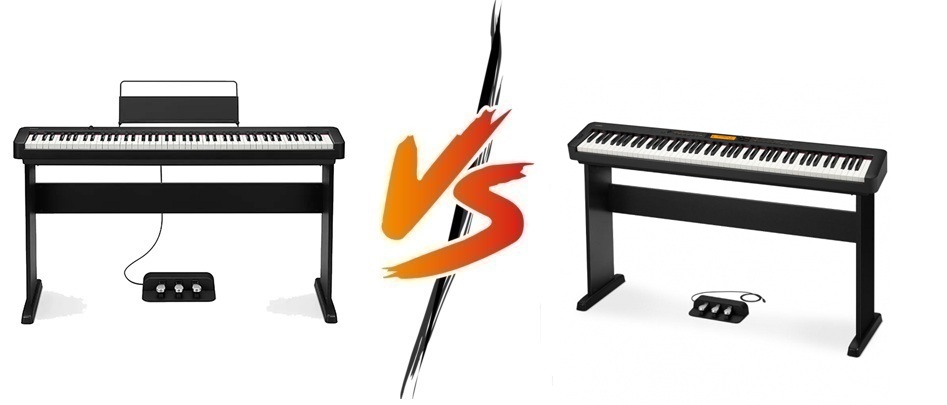
If you’re looking for a cheap 88-key electronic piano, then you’ve probably already seen the Casio CDP- S160 and the CDP-S360. They appear to be essentially the same thing, they have the same small body, the same way the keys feel when you play them, and even the same sort of thing inside that makes the piano sounds. You might think they are essentially the same thing, but with a different name. But they’re actually made for different people.
The CDP- S160 just gives you a good, simple, and portable piano that sounds like a real one. It also doesn’t have any fancy features. The CDP-S360 takes what the CDP- S160 does and adds a bunch of extra things, such as many more sounds, some auto-play back features, more options for playing along with a metronome, and ways to record yourself playing. Which one is better? Not necessarily one, it all depends on what you want to do with it.
I’ve checked out a lot of different electronic pianos and these two are special because Casio didn’t just make a fancier version of the CDP-S160. Instead, they made two different instruments for two different groups of people. I’m going to go over all the main points about these two, including the case, the feel of the keys, the sounds, the built-in speakers, all the features, how they connect to other things, how easy they are to take around, how well made they are, and whether or not they’re a good deal. By the time I’m done, you should know which one is worth your money.
Casio CDP-S160 vs Casio CDP-S360 Comparison Chart
If you click the links below, under the product images, you will be redirected to Amazon.com. In case you then decide to buy anything, Amazon.com will pay me a commission. This doesn’t affect the honesty of this review in any way though.
| Specification | Casio CDP-S160 | Casio CDP-S360 |
|---|---|---|
 |  | |
| Check the best price on Amazon | Check the best price on Amazon | |
| Type | Portable Digital Piano | Portable Digital Piano / Arranger |
| Keyboard | 88-key Smart Scaled Hammer Action Keyboard | 88-key Smart Scaled Hammer Action Keyboard |
| Key Weighting | Graded Hammer Action | Graded Hammer Action |
| Touch Sensitivity | 3 levels + Off | 3 levels + Off |
| Key Surface | Matte textured keys | Matte textured keys |
| Sound Source | Casio Stereo Sampling Sound Engine | Casio Stereo Sampling Sound Engine |
| Maximum Polyphony | 64 notes | 64 notes |
| Built-in Tones | 10 | 700 |
| Acoustic Piano Sounds | Yes | Yes |
| Electric Piano Sounds | Yes | Yes |
| Organ Sounds | Yes | Yes |
| Strings | Yes | Yes |
| Synth Sounds | No | Yes |
| Drum Kits | No | Yes |
| Built-in Rhythms | No | 200 |
| Auto Accompaniment | No | Yes |
| Registration Memory | No | Yes |
| Layer Mode | Yes | Yes |
| Split Mode | No | Yes |
| Twin Piano (Duet) Mode | Yes | Yes |
| Transpose | Yes | Yes |
| Fine Tuning | Yes | Yes |
| Metronome | Yes | Yes |
| Reverb | Yes | Yes |
| Chorus | Yes | Yes |
| Recording Function | Basic MIDI Recorder | Enhanced MIDI Recorder |
| Lesson Functions | Via Casio Music Space app | Via Casio Music Space app |
| Display | No | Yes (LCD Display) |
| Control Interface | Minimal button layout | LCD with expanded controls |
| Speakers | 2 × 8W | 2 × 8W |
| Speaker Configuration | Stereo | Stereo |
| Headphone Jack | Yes | Yes |
| USB Connectivity | USB to Host (MIDI) | USB to Host (MIDI) |
| Audio Output | Yes | Yes |
| Sustain Pedal Input | Yes | Yes |
| Compatible with Casio Music Space | Yes | Yes |
| Optional Furniture Stand | Yes (CS-46P) | Yes (CS-46P) |
| Optional 3-Pedal Unit | Yes (SP-34 with stand) | Yes (SP-34 with stand) |
| Power Supply | AC Adapter or 6 AA Batteries | AC Adapter or 6 AA Batteries |
| Battery Operation | Yes | Yes |
| Weight | Approx. 23.1 lbs (10.5 kg) | Approx. 23.1 lbs (10.5 kg) |
| Dimensions (W × D × H) | 52.0 × 9.1 × 3.9 in (1,322 × 232 × 99 mm) | 52.0 × 9.1 × 3.9 in (1,322 × 232 × 99 mm) |
| Best For | Beginners, students, home practice | Players wanting arranger features, songwriting, live performance |
| My individual reviews | Casio CDP-S160 review | Casio CDP-S360 review |
At a glance
| Category | Winner | Reason |
|---|---|---|
| Design & Build | Tie | Identical chassis and portability |
| Keyboard Action | Tie | Same Smart Scaled Hammer Action |
| Piano Sound | Tie | Same sound engine and piano samples |
| Speakers | Tie | Same 2 × 8W stereo speaker system |
| Features | CDP-S360 | 700 tones, 200 rhythms, arranger functions, LCD display |
| Ease of Use | CDP-S160 | Simpler interface with fewer distractions |
| Creativity | CDP-S360 | Extensive sound library and accompaniment features |
| Value for Piano Players | CDP-S160 | Lower price with the same core piano experience |
| Overall Versatility | CDP-S360 | Far more capable beyond traditional piano playing |
Design & Build Quality
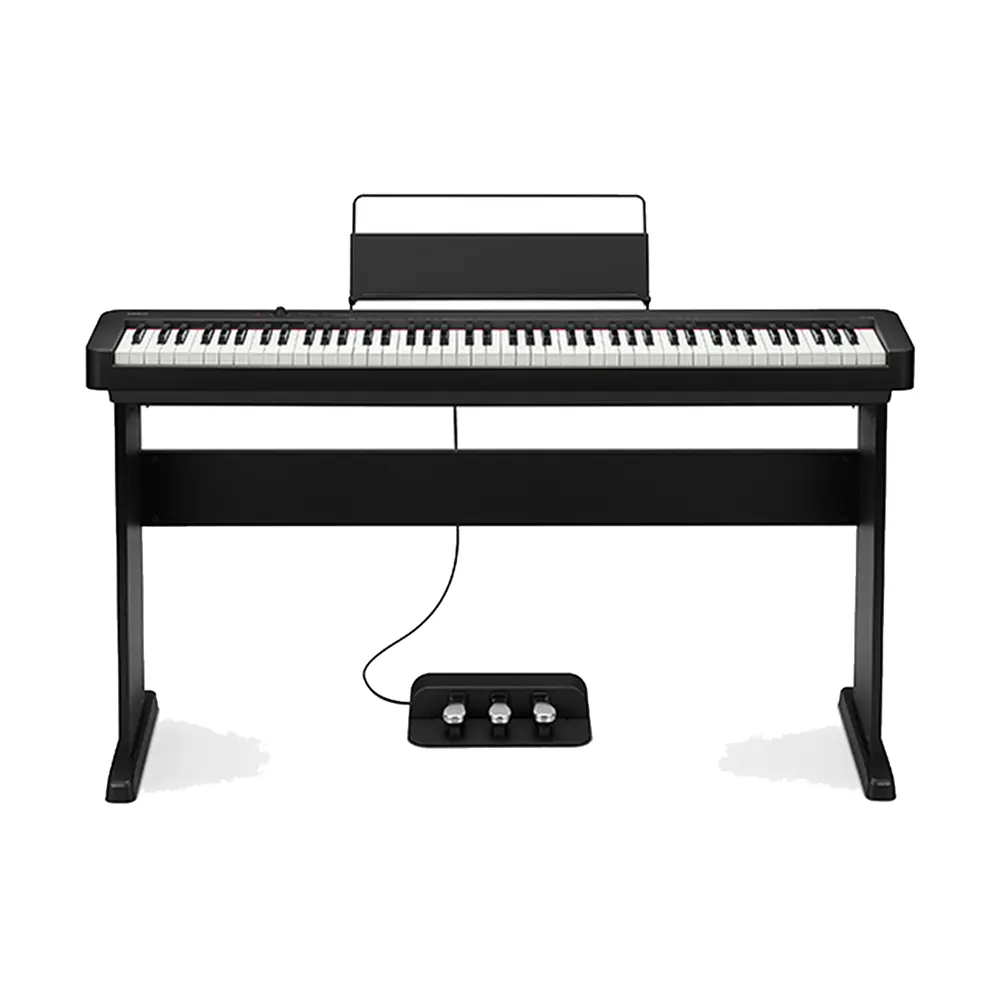
Casio’s CDP-S series has remained popular for a number of years because its makers made sure it looks as good as it plays. Most entry-level digital pianos are all about how well they sound and then think about how they look afterwards, but Casio took the opposite approach. They spent a lot of time making the CDP-S160 and CDP-S360 look and feel modern. And they’ve succeeded in making two very similar-looking and feeling instruments. You’d have trouble telling them apart if you just looked at them without turning them on.
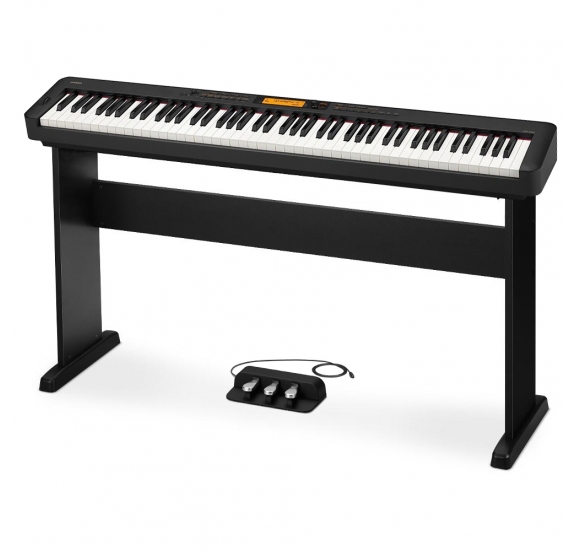
Both have the same size, same thin case, same keyboard base and basically the same overall build. But the only real difference is on the control panel, the CDP-S360 has a small display and some more buttons to go with its extra features. So essentially, when you choose between these two, you’re not choosing which one is better-made. They’re both well-made. What you’re choosing is whether you want the simple version or the one with the extra features. They’re both very, very thin for full 88-key digital pianos.
For a long time, the idea was that you couldn’t get a full 88-key digital piano unless you were willing to take up a lot of space. Many portable stage pianos were also big and took up a lot of space. But Casio came along and made the CDP-S series by making one of the thinnest 88-key digital pianos around.
From the side, they actually look a bit like a big keyboard rather than a traditional digital piano. Which is a big plus. If you have a small space, you don’t want a big, clunky instrument taking up all the room. The CDP-S160 and CDP-S360 can both be leaned up against a wall or on a small stand without looking out of place. You can even leave more room for a chair, a music stand, or other things if your “music nook” is also used as a home office or a bedroom. And having a slim design is not just about looks. It also makes it easier for people who have to move the piano around a lot.
Weighing in at just over 10 and a half kg, both of them are a lot easier to move than other similar models. And that’s especially good for people who teach piano and have to carry their instrument from one student’s house to another, or for people who are in a band and have to drag the thing from their car to a gig. Even if you just like to switch around the furniture from time to time, you’ll appreciate not having to get someone to help you when you want to move the piano. They’re also great for students who live in a dorm or an apartment, or for anyone else who doesn’t have a dedicated room for their piano. You can just pick up the CDP-S160 or CDP-S360 and move it to wherever you want without too much hassle.
And then when you’re done, you can easily tuck it away. And although they’re light, that doesn’t mean they’re not robust. They’re made from a mix of plastic, but they don’t feel like they’re made from the cheap stuff. I mean, these are entry-level digital pianos, not high-end pieces of furniture. You won’t get a fancy wooden cabinet or a metal case or any of those sorts of things. But within their class, they’re made quite nicely. When you pick one up, it doesn’t wobble or feel like it might break if you drop it. The keys are attached too and they don’t move around when you press them. Over a long practice session, the whole keyboard stays in one piece and that makes for a more enjoyable playing experience. The controls aren’t super nice, but they work okay and you can tell when you press them. Overall, Casio made a good job of creating a product that feels like it will last without it being too expensive.
Both of these pianos look pretty much like a good compromise between being new and classic. They don’t try to look like the real thing, a real, non-digital upright piano. Instead, they have clean lines, a plain finish, and a simple style that will fit in almost anywhere, whether it’s in a living room, a home office, or even a bedroom. Often people choose one of these because it doesn’t take up too much room and doesn’t look like some other, bulkier, digital pianos do.
They also won’t show fingerprints and other small scratches as easily as ones with a shiny finish. However, after you play for a while, there will still be some fingerprints around the control buttons. But, overall, they’re not too hard to keep clean. In a way, this is the right choice for an instrument that should appeal to so many different people. It’s just a practical design, not one that’s trying to impress you.
The control panels are where these two differ most. The CDP-S160 is very straightforward. Most of the buttons only control the basics, on and off, volume, and a metronome, and a couple of other things. The result is a very uncluttered experience that a lot of beginners will really like. Of course, some more advanced features need you to press a couple of keys at the same time or use some special key combinations. Still, since most people don’t usually go in and change those settings, it’s no big deal.
On the other hand, the CDP-360 has a lot more built-in options. So, it has a small screen and some extra buttons. With all the different sounds, and the various ways you can play along with others and record yourself, it was a bit of a challenge for Casio to make it all easy to use. They’ve done a good job, though. Now, instead of having to remember lots of button combinations, you can just use the menu to find and adjust the different sounds and settings.
The display on the CDP-360 isn’t huge or super clear, but it does its job. What’s more important, though, is that it stops the vast number of features from being overwhelming. For those who like to try out all the various sounds and use the special functions, they’ll really like this. In addition to other good things about these pianos, they’re also very handy. They come with a music rest that can hold most of your music books and sheets.
And it’s not flimsy, it doesn’t wobble when you’re playing. Also, the back is set up in a neat way, so you can get to the different plugs without having any trouble. Anyone who has struggled with getting cables into a keyboard where they didn’t want them to go will understand how nice this is. You can also buy a special stand for each one. It’s meant to match the piano and will let you move from taking it with you to setting it up at home. This is one of the best things about the CDP-S series: you can start by carrying it around and then later set it up like a full, at-home piano without having to get a new one.
All in all, I think Casio did a great job with the design and how well they put the parts together. They’re making one of the most useful and good-looking low-cost digital pianos available. They take up a small amount of space and are light enough for easy transport. Plus, all the parts feel solid and are connected well. Really, the main difference is whether you prefer a simple, distraction-free playing experience or if you plan on using a lot of the extra features and functions.
Keyboard Action
So, what really matters when you’re choosing a digital piano? I’d say it’s the type of keyboard it has. You can always add better speakers, new software, or more sounds later, but you’ll always end up playing on the same keyboard. And that’s the part you’ll use every day, and it makes a big difference in how much you enjoy playing and how close it feels to the real thing.
Luckily, the Casio CDP-S160 and CDP-S360 are identical in this department. Both have Casio’s Smart Scaled Hammer Action, which basically means there’s no difference at all in how they feel to play. So, whether you get the more basic CDP-S160 or the more feature-rich CDP-S360, you’ll get the same action, the same weight, the same feel, and the same overall feel. And that’s a good thing because it means you don’t have to settle for a lower-quality keyboard just to save some money.
The extra cost of the CDP-S360 goes towards extra sounds and other features, not to an improved keyboard. Casio developed the Smart Scaled Hammer Action to replace its old way of doing things, and it’s a definite step up. It’s not as good as the high-end actions in very expensive pianos, but for the price, it’s pretty convincing. Essentially, a good weighted keyboard tries to make playing feel as much like an actual piano as possible. Most cheap keyboards just use simple springs and don’t really resist your fingers at all. But a hammer action imitates the feel and movement of a real piano key.
When you press a key on either of these Casio models, you’ll notice there’s some actual resistance. The keys aren’t too loose or too flimsy. They take a bit of force to press, but not so much that your hands will get tired if you practice for a long time. It’s a happy medium. Digital pianos, like these two, also have what’s called “graded” hammer weighting. On a real piano, the low notes are heavier than the high ones because the low notes have bigger hammers. So, a digital or electronic piano copies this effect to make the experience more like the real thing. Casio does it in a way that feels pretty accurate. If you pay close attention, you can tell that the lower notes need a bit more oomph, and the higher notes are a bit lighter and faster.
Some cheap digital pianos make the bass feel way too heavy, but not Casio. The transition from one part of the keyboard to another feels smooth and natural, which makes the whole instrument feel more like a single, complete piece. It may not be something you’re even aware of, but it all adds to the overall sense of realism.
So, is it similar to a real piano? Well, it’s about as good as you’d expect for the price. Compared to an acoustic piano, it does a pretty good job. The keys have enough weight to help you develop good playing habits, and you can control the volume and speed of your playing. But it’s not perfect. If you compare it to higher-end digital pianos from brands like Roland, Yamaha, or Kawai, you’ll notice that those have more advanced features like different sized key pivots and better ways to detect when a key is being pressed. These things make it possible to play even faster and more like an actual piano. The Casio models aren’t trying to compete in that league, and they shouldn’t have to. Within its price range, though, this is one of the better keyboards out there.
Grooves and what they expect from their keyboard can tell us about them. When you press a key gently, it should sound quiet and smooth. Hit it harder, and it should get louder and brighter. Both of these Casios do just that. They can also change how much they respond to different amounts of pressure, so if you’re a beginner, you might like a softer feel, or if you’re an experienced player, you might want it to feel more like an actual piano. You can adjust this to your taste. Fast and repeated key presses are no problem for these.
Most people who play at an intermediate level won’t have any issues with playing fast parts in their music. But, if you’re a pro who’s used to top-of-the-line keyboards or acoustic pianos, you might notice that really fast notes don’t feel as easy as they do on those. Also, because the keys don’t move as far back when you press them, they can feel a bit more difficult to play near the back. That being said, this doesn’t usually cause any problems in day-to-day playing, especially if you’re a casual player or a student. Every now and then, you will hear a small noise when you press a key. This is just the part under the keyboard moving. Fortunately, it’s not very loud. If you’re using the internal speakers, you probably won’t even notice it. And even with headphones, it’s not too bad. So, if you live with others and you’re playing late at night, they might hear a bit of a clickety-clack, but it’s unlikely to be a big deal.
In terms of its overall feel, the action does a great job considering it’s a relatively light keyboard. It’s also been made so that it doesn’t make too much noise, which is a nice touch. Who would like this keyboard? basically anyone! It’s a great way for newbies to learn the right way to play. They can practice developing the strength, independence of their fingers, and how to play with different volumes on a real-feeling keyboard, rather than one where every key feels the same.
Intermediate players will also like it, it’s good for all sorts of music, including classical, jazz, and movie soundtracks. It’s also not too demanding, so you can express yourself without it feeling like it’s pushing back.
Advanced players might be a bit divided. While it’s fine for regular practice and can even be a good choice as a travel partner, it’s not as good as the best high-end acoustic or digital pianos. It doesn’t have some of the more advanced features like a more realistic ‘let-off’ when your fingers lift off the keys. Still, many pros like it as a low-maintenance, portable alternative.
In short, the two Casio models are essentially the same when it comes to the keyboard. So, if you’re trying to decide between them, you can just focus on other things. The Smart Scaled Hammer Action is a big part of what makes these two models worth a look. It’s a great all-rounder, it’s a step up from the very basic, super-light action on most beginner keyboards, but still easy for new players to get on with. It’s also very good for those who already know the basics and are looking for a new, more fun and expressive way to play. It may not be as good as the very best, but for most people, it’s more than good enough.
Piano Sound
Digital pianos come in two types: the action and the sound. After the action, the way a digital piano sounds is probably the second most important thing to think about. If you have the best-feeling keys in the world but the one you choose sounds unconvincing or fake, then the overall experience of playing will soon get old. Happily, the Casio CDP-S160 and CDP-S360 are on a level playing field when it comes to how they sound.
They both use the same sound chip and essentially the same type of piano sound. Therefore, in terms of the main sound of an acoustic piano, there’s little to choose between them, either one will give you the same experience. Of course, the CDP-S360 has many more instrument sounds, but if the main thing you want from a piano is for it to sound like a real one, then you can buy either one without any worries.
The default grand piano is the highlight of both of these. Over the last few years, Casio has gotten better at taking the actual sound of a real grand and putting it into their digital pianos. The previous ones were a bit too bright and not very natural, especially in the high end. But the CDP-S160 and CDP-S360 are a big step up. They have a nice, balanced sound which is neither too bright nor too mellow. The low notes are deep and clear without being too rich and soggy, the middle sounds full and the high notes clear and not harsh. This is a great sound for a lot of different types of music, from classical to jazz, pop and even worship songs. I like that the sound doesn’t jump out at you. Some digital pianos try to grab your attention by making a lot of noise when you first start playing them, but then after about 5 minutes they start to wear on your ears. But not the CDP-S. It’s a very nice, easy sound that you can play for a long time.
To start with, the samples used in the CDP-S are made up of several different levels of volume. Casio hasn’t gone for a huge, expensive set of samples like some high-end stage pianos. But what they do have does a great job and the notes change from one part of the keyboard to another without any big gaps. Some cheaper digital pianos have a very obvious change in the way they sound when you move between different groups of notes. Not the CDP-S, though. It does a really good job of keeping the same overall sound all the way up and down the 88 keys. When you play a chord, the individual notes don’t just stop suddenly and the held notes fade away in a way that makes you think of a real piano.
In reality, this is all most people will ever need. If you’re a complete beginner or just an average player, you’ll be happy with what the CDP-S gives you. Even more experienced players might be pleasantly surprised at how good the sound is. How the piano reacts to how hard or softly you play is also important. If you play a part of a piece very quietly, the piano should produce a soft, gentle sound. Play it louder and it should get brighter and more powerful. It shouldn’t sound like it’s been squashed or it’s trying too hard to be like a real one.
Both the CDP-S160 and CDP-S360 do this in a way that seems very natural and not like you’re forcing it. Being able to go from quiet to very loud without any problems is especially useful for playing pieces that have a lot of parts that are either very soft and some that are very loud. It makes the whole thing sound a lot more real.
Another advantage of a good range of volume is that it lets you express yourself. When you can show the difference between the soft and the loud bits, your music is a lot more interesting. It also happens when you press the sustain pedal and the sound doesn’t just cut off the oldest notes to make room for the new ones. Instead, it fades away in a way that sounds like a real instrument. It’s worth noting that some people like their pianos to project, to be very clear and stand out. Others like a more mellow, softer sound. The CDP-S is somewhere in the middle. It’s not too bright and in-your-face like a Yamaha, nor is it as dark as a Roland.
What it is, though, is a good all-rounder. It will work with most types of music and won’t sound out of place, whether you’re playing a piece by Chopin, playing with a singer or doing a worship song.
Something else to think about is how many notes the piano can play at the same time. In particular, if you often use the sustain pedal or have lots of things going on in a piece, then this will become an issue. Most people will never run out of room, but if you’re playing a complex piece and using the sustain or have a lot of different sounds going on, you might find the 64 notes you get here just aren’t enough. Some other, similar, digital pianos now come with 128 or 192 notes. Although this wouldn’t be a deal-breaker for me, it would be something I’d ask for in any future versions of the CDP-S.
Hear this, the part about the sound of the piano is also affected by the speakers that play it. It’s hard to talk about just the piano sound without mentioning the speakers, since they were obviously made to work with the type of sound that comes from the piano. Casio has done a great job of getting the best out of the small speakers. They make a full and clear sound. The lower notes don’t sound too muffled and the middle part of the sound is clear, so you can easily hear the melody. The piano doesn’t sound too deep and rumbly or too thin and weak. Of course, there are limits to what the small speakers can do. They can’t produce the same sense of space around the sound or the same wide, 3D effect that bigger digital pianos with larger cases have. But still, Casio has done a pretty good job of getting a lot out of a small space.
When you use good quality studio-style headphones, the piano sound gets even better. It becomes wider and more detailed, and the whole experience of hearing it is more like being at a live performance. You’ll notice all the small differences in the piano sound, especially when the music is played quietly. Most people who buy one of these will end up using headphones a lot, especially if they live in a small place or share a house. Happily, both the CDP-S160 and CDP-S360 give you a much richer sound through headphones than they do from the built-in speakers. In many ways, the best way to hear the sound of the sound engine inside is with headphones.
There are other types of piano sounds on the instrument, which can be useful if you play different styles of music. Some of these alternative pianos are mellow and soft, which is good for when you want to play solo. Others have a brighter attack, which is better for when you’re playing with others. None of the other pianos change the main sound in a big way, but they do offer some variety. It would take some close listening to notice how one is different from another. Casio has taken a cautious approach to designing the different sounds. You shouldn’t expect this to sound exactly like a really expensive, top-of-the-line acoustic piano. If you’re used to playing on one of those, you’ll notice the differences in the way it feels and sounds.
A lot of high-end digital pianos have special computer programs that copy the small noises and the way the strings vibrate and the way all the different parts of the sound mix together. The CDP-S series doesn’t try to do that. What it does is give you a nice, easy-to-play, and always-pleasing piano sound at a low price. That may not be the most exciting thing to hear, but it’s a good one.
In the end, since the two models have the same inside, the only difference in the sound of the piano is because of the way it’s presented. Both of these have a warm, expressive, and very satisfying sound that’s perfect for any kind of music. They’re not trying to be too fancy or overdo things. They just give you a natural and fun sound that you can enjoy. While the 64 note limit might seem a bit old-fashioned in comparison to some other options, it doesn’t usually cause any problems. Paired with good, responsive keys and clean and clear sample sounds, this is actually a lot better than you’d normally get from an instrument at this price. All in all, from a sound point of view, both of these are doing a lot better than you might expect, and should be at the top of your list.
Speakers
Your hands might play the keys and your ears might be used to the sound of the keys themselves, but the built-in speakers in your digital piano are just as important. Unless you use a pair of headsets or plug in some external speakers every time, it’s the inbuilt ones that you’ll be listening with during every practice.
The Casio CDP- S160 and CDP-S360 are basically the same in this department, they each have a standard, built-in, two-channel speaker system. So, in terms of the actual sound coming out of them, there’s not much difference between the two. You’ll get the same volume level, and the same overall sound from either one. Don’t assume that because the CDP-S360 costs more, its speakers have been improved. They haven’t, the extra cash just gets you more features, not a better way of producing the sound. As a result, both of these pianos perform in the same way in this area. And that’s a good thing, because you’d expect that because of their small size, they would do worse. But they actually do a bit better than you might think.
Getting a good speaker system inside one of these very compact pianos was essentially a problem for Casio. Larger digital pianos have a lot more room inside for the electronics and the speakers. They can then use bigger speakers and make them fit in with the natural resonance of the bigger box. But Casio had to squeeze everything into a tiny space with the CDP- S160 and CDP-S360. They did a pretty good job, though. The speakers fit in and project the sound at you well. They’re not trying to make too much of a big deal out of the bass, they know the cabinet can’t really take it. Instead, they aim for a balanced sound that works across a lot of different types of music.
It’s this approach that stops them from having some common problems that other very small digital pianos often have. They don’t sound too “tinny” and that’s because they’re not trying too hard to push out a lot of sound. They’re just providing a nice, even sound. Whether you’re in a normal home, a small room, or a one-room apartment, the answer to whether the built-in speakers are loud enough is yes. You have plenty of volume for most people. Even at about half or two-thirds of the top volume, you’ve got enough. At full blast, they can fill a typical-sized room.
However, keep in mind that these aren’t meant to replace a proper PA system or amp. If you’re going to preform in a larger venue or with other amplified instruments, you’ll still need something more. But for home practice, the in-built ones are fine. Also, since they’re not meant for large performances, Casio made sure you can add an external amp if you need to. Overall, the speakers do a great job. They give a good balance between the lower and higher notes. The base has some presence to make the left hand play-alongs sound like they should, but it’s not too much. The middle sounds crisp and clear. And the higher notes are clear but not too harsh.
This kind of balance is good for a wide variety of music. Classical has a warm and real feel. Jazz and pop and other kinds of music all benefit from the way the sound is spread out and not too heavy on any one part. I much prefer this over those that make too many high notes and start to get on my nerves after a short while. Some digital pianos overdo the high end and that’s not what you want in a long practice. Also, the CDP-S360 has some extra sounds that are also nice and clear and not fuzzy. That’s because they just give you a straight, honest sound and don’t try to make up for it with some special effects.
First of all, the sound from the top end is really good. It doesn’t have that tinny or overly bright quality that some digital pianos can get. The Casio CDP-S models don’t do that. Even when you play at a decent volume, the high notes stay nice and clear without getting too harsh. This makes the sound of the piano more realistic, especially when you’re playing those quiet, delicate parts in classical pieces that are up high. Compared to using a good pair of headphones or special studio speakers, there’s a bit less detail in the sound from the built-in speakers.
But that’s pretty much true of all the pianos in this class. They all have some loss of detail when you use their own in-built speakers. But one thing that did surprise me was how well the speakers handle being turned up to their limit. At a volume that’s not too high, there’s almost no distortion. And even when you get to the point where the speakers are working at their most extreme, the sound stays relatively clear. Of course, you do start to notice that the low end gets squashed a bit and the different parts of the music start to get a bit jumbled. But like I said, this only happens when the speakers are really pushed. Most people will probably play at a lower level than that.
Using the built-in speakers is fine for practicing at home, but the complete sound is even better when you use a good pair of headphones. The speakers are good, though, they’re not what you’d call bad. It’s just that the actual sound from the piano itself has more detail, which the small speaker can’t quite bring out. When you use ‘phones, there are a few things that you notice. The overall picture of the soundstage gets a lot wider, so it sounds like you’re in front of the real thing. You can more easily hear the small differences between the different parts of the music. The way each note sustains is more obvious. And each note sounds more separate from the others. There’s also a sense of more depth to the sound, especially in the lower part of the range.
If you have to practice late at night or live in a flat where keeping the noise down is a priority, you’ll likely spend most of your time with the ‘phones on. Happily, both the CDP-S160 and the CDP-S360 sound great with them. Essentially, using a good pair of ‘phones shows off how good the Casio’s sound chip is. You can connect the CDP-S160 and CDP-S360 to any old external speakers or a big PA if you want. This is a big plus. It means you can use them in a broader range of situations.
For example, you could practice at home on the in-built speakers and then plug into a bigger amp or PA for a bigger event. That’s especially useful for people who are going to use the more advanced features on the CDP-S360 and all the extra sounds it comes with. In short, the internal speakers are perfect for home or lesson practice. They’re not trying to compete with big, proper concert pianos. They’re made for home players, students, and songwriters. And within those limits, they work really well. You can just sit down and start playing without any additional gear. That’s especially good news for beginners. It’s nice to have an instrument that’s good to go without all the additional stuff.
Functions & Features
The only real difference between the Casio CDP-S160 and the CDP-S360 is in the additional features and sounds they offer. If you just want to learn to play the piano, the CDP-S160 has all the necessary features and nothing more. It’s essentially a no-frills, straightforward digital piano. On the other hand, the CDP-S360 is more like a full-fledged music machine. It’s got all the features and sounds to make it a sort of hybrid between a digital piano and an arranger keyboard. Which one is better? Not really, it just depends on what you plan on using it for.
If you don’t think you’ll ever use more than the basic features and sounds, then the CDP-S160 makes more sense. But if you like coming up with new ideas and playing around with different styles, the CDP-S360 will give you a lot more to work with. I like the way the CDP-S160 does things. Casio didn’t go for the usual tactic of adding lots of average sounds and a bunch of random features that most people won’t even use. That would just make the menu system too complicated and take away from the point of learning to play the piano. Instead, it sticks to the essentials and doesn’t include anything that isn’t actually going to get used.
One of the best practice tools on both of these keyboards is the built-in metronome. At first, a metronome might not sound like the most interesting thing in the world but it’s actually very helpful. It’s great for getting a steady beat and working on your timing and general technique. All piano teachers will tell you that doing this is one of the best ways to get better at the piano. And since it comes with the keyboard, you don’t have to buy a separate one. It’s also a good way to teach kids from the start and for experienced players to use for tricky pieces or when preparing for a performance.
Layer mode is also a handy feature. You can use it to combine two different sounds and play them at the same time over the whole keyboard. A common thing to do is put a string part under the main piano sound. This makes for a more epic, or at least, more film-like sound which is good for movie scores and other similar music. Casio does this in a fairly simple and effective way. However, you will only use this occasionally. Both of these keyboards let you change how the keys respond to the force at which you hit them. Some people like a light touch and bigger sound from less pressure, others a more serious effort needs to be made before it gets loud. You get a few options on this one so it can suit your own style. Most people will stick with the standard setting though because it is already pretty good. But it is good that it is there if you need it.
Also on both of them, you can add some reverb and a type of echo called a chorus. Reverb makes the sound of the piano seem like it is in a smaller or larger room. Adding a bit of this makes the sound more alive and is especially good for home practice. Chorus is more like a special effect and it makes certain sounds like electric and string sounds slightly fatter. They’re not super fancy, but they do the job and are not overdone. Lastly, the CDP-S360 is the one that really turns this into something like a mini home music center. You get over 700 different sounds which is basically an endless choice of what you can play. Some of them are going to be a bit of a disappointment as there just aren’t enough to go around and some of them will not be as good. But for coming up with new ideas and making complete songs, this is a dream come true.
If you’re going to buy the CDP-S360 or the CDP-S160, the thing that really sets the CDP-S360 apart is its automatic accompaniment. Essentially, this gives you a virtual group of musicians who play along with you. You choose a style, play chords with your left hand, and the keyboard plays the rest, the drums, bass, and other supporting instruments, in real time. It sounds a lot like having a full band, and it’s a big plus, especially for people who are just starting out or who want to make their own music without having to have other musicians around.
The CDP-S360 comes with about 200 built-in rhythms. That’s a huge range of styles, from simple and straightforward to more complicated ones like jazz and world music. Not all of them sound great, but you should be able to find something that works for you. Even if you don’t use all the auto-accompaniment features, just working with the different drumbeats will make you sound more musical, and it’s also a great way to get a better sense of the beat. You can also save and call up different settings all at once with the CDP-S360’s registration memory. This is one of those things that most people who just want a decent piano won’t notice or care about, but if you’re going to be performing in front of an audience, it can be a big help. With this feature, you can save a bunch of different settings and then bring up the one you want with just one touch. That can make a big difference when you’re on stage. For people who do a lot of gigs, this feature could end up saving you a lot of time.
The CDP-S360 also lets you record yourself. And that’s one of the best ways to get better at the piano, by hearing yourself play. It’s a lot easier to see where you’re going wrong if you’re listening back than if you’re trying to play through it. Songwriters will also appreciate being able to grab down their ideas before they disappear. Even a simple start can be the basis for a new song.
The CDP-S360 has another feature called “Split” which the CDP-S160 doesn’t. With it, you can have different sounds in different parts of the keyboard. So, you could have a low sound in the lower part of the keyboard and a grand piano in the upper part. That’s especially useful if you’re a solo act who wants to do multiple things at once. And when you combine this with the auto-accompaniment, there are lots of new and interesting things you can do.
Finally, the CDP-S360 has a display on it. Without it, you’d have a hard time figuring out how to use all the various sounds and options. The screen makes it all a lot simpler. It’s not fancy, but it works and it makes using the thing a lot less confusing. Which one is the better deal? It depends. If what you want is to work on your piano skills, learn some classical pieces, or just practice in general, the CDP-S160 might actually be a better bet.
It’s had most of the non-essential stuff taken out, which means you can just concentrate on the playing. But if you’re a composer, performer, or just someone who likes to try out new ideas, the CDP-S360 does a lot more and is probably worth the extra cost. It has more sounds, a more advanced auto-accompaniment, more ways to record, and more ways to do things in performance. It’s essentially not just a piano, but a whole studio.
Connectivity
Actually, when you’re in the market for a new digital piano, its ability to connect to other things probably isn’t the first thing on your mind. But over the last 10 years, it has become more and more important. People who play the digital piano now expect it to do a lot more than just make sound.
For instance, they might want to plug it into their computer, use special learning apps, record their playing, or connect it to external speakers in their home studio. Lucky for you, the Casio CDP-S160 and CDP-S360 both have great connectivity. Although they’re not the same, in terms of what they can do on their own, they both offer a lot of the same options when it comes to connecting to other gear.
So, unless you really want all the unique features of the CDP-S360, you can get by with the more basic model. Most people will only need to use the same few connections regardless of which one they choose. The most important connection on these two instruments is the USB port. Instead of using the old five-pin MIDI connection, which was once the standard, most new and low-cost digital pianos now use a USB connection. This essentially gives you the power to do a lot more with your instrument. Hooking either of these up to a computer is pretty simple. When they’re connected, the keyboard can talk to music-making software, education programs, and even collections of digital instruments.
However, the piano itself doesn’t actually send any audio through the USB. It sends a type of data called MIDI, which basically says which keys you’re playing, how hard you’re hitting them, and how long you hold them down. And that’s about it. This is a big deal because it opens up a ton of possibilities.
For example, you could use one of these Casio keyboards to run music-making software on your computer. Or, if you want to use more realistic-sounding “instruments” that aren’t already built in, you can use ones from other companies like Pianoteq or Native Instruments. In effect, the digital piano becomes a very good controller, and it still does everything it did on its own. If you ever start making music, the USB connection will be super helpful. Both of these pianos work with popular programs like Logic Pro and Ableton.
Also, because of the way they record by sending data rather than actual sound, you can always go back and change whatever you’ve done. If you hit a wrong note? Just move it. Need to adjust the timing? Easy. Want to try out a new sound? No problem. Being able to do this is one of the main benefits of having a modern digital piano.
Even if you’re not a musician yet and don’t plan on making music now, it’s still nice to know that you can do this if you ever decide to. A lot of people learn the piano by using special learning software. This kind of program shows them exactly where their fingers should go and gives them instant feedback and a way to track their progress. These are more fun and engaging than just watching YouTube videos. The CDP-S160 and CDP-S360 both work well with this kind of software. After all, once they’re connected, the piano can tell the program which notes you’re playing. That makes for a more hands-on and fun experience, especially for younger students.
Casio also made a special app just for the CDP-S series. It’s a remote control for the instrument. You can make some of the same adjustments on the app that would take a few steps to do on the piano itself. The app even has some study tools and a clean, simple way to view and play back your scores. It’s not required, but it does make it a bit easier to use your piano every day. People who got the CDP-S160 might find it especially useful since it makes it simpler to get to some of the settings they’d otherwise have to use a key combination for.
Digital pianos and their ability to hook up to other things are two very big parts of what makes them so useful. Both of these Casios do a great job in this department. Playing the piano with your head phones on is especially convenient because it lets you play at any time without disturbing others around you. This is a huge plus for people who live in apartments or share a small space with others. Wearing headphones also brings out a lot of the nuance in the sound. Essentially, you get a wider soundstage and can pick up on a lot more of the subtleties. It basically feels like the sound is coming at you from all around. You’ll really get the full effect of the sound engine. If you’re someone who plans on doing a lot of practice, then getting a good, closed-back set of studio cans is a must. It will make a big difference and let you take advantage of all that this thing can do.
Both of these two have a spot for a sustain pedal which you can use the one that comes with them or the one that you buy. Using a sustain pedal is a must if you want to play properly on the piano. The one that comes with it is fine, but for a more authentic feel, you can get a bigger, more like a real piano one. Swapping to the bigger one is pretty easy. When you are, it makes a big difference, especially when you’re playing more complex pieces or when you want to express yourself in your own unique way. If you plan on getting the special stand and the extra foot pedal, then it’ll start to feel and act like a real home digital piano.
These two Casios also have a few different ways for you to connect to other gear. Mainly, this is because the built-in speakers aren’t super powerful. So, you might need to use an external amp or a larger home sound system. This makes them a lot more versatile and not just for home use. Obviously, this is especially good for people who perform in front of a group. Rather than just using the built-in speakers, you can plug the piano straight into a keyboard amp or a PA system. This gives you a lot more oomph and still keeps the original sound.
Recording the actual sound of the piano is pretty easy. Since it sends out a signal through the USB, all you have to do is go through an interface and you can record with your computer or a handheld recorder. If you just want to make some simple home recordings, this will work just fine. But for a more realistic sound, you could send the MIDI info and then use some better software. Either way, this is one of the best things about a modern electric piano. How well the Casio connects to other stuff is very important. Happily, Casio makes good, solid, and consistent connections. They’re quick to set up and rarely have any problems. This is a big help when you’re in the middle of a long practice or a live show.
Getting a Casio is not hard to do, and you don’t need to be a tech expert. Most folks will find it a piece of cake. This is also a major reason why it’s worth buying one of these over an older model. Even if you change what kind of music you like or what you want to do with your piano, it can still do it. You might start out using it just for lessons, but then move on to making software demos. Later on, you might even get some extra instruments or a home studio. Because the Casio does everything via USB-MIDI, it can grow with you. That’s one of the main perks of choosing a new, modern piano over a used one.
Conclusion
So, basically, there’s not a lot that sets the Casio CDP-S160 and CDP-S360 apart. They have the same small and lightweight design, the same type of key action, the same inner workings of the piano sound, the same speakers, and almost the same ways to connect to other equipment. From a player’s point of view, they essentially give the same playing experience. So, instead of thinking about which one is the better digital piano, you should think about how you will actually be using it. If you just want to learn and practice on a piano, or if you want to have a very realistic playing experience at home, then the Casio CDP-S160 is the best choice. It keeps things simple and doesn’t have any extra features that you might not even use. For the price, it’s a great deal because most of your money goes towards what really matters: the keys, the sound, and the overall feel of the thing. The Casio CDP-S360 is made for people who want more from their instrument. It still has all the good stuff from the CDP-S160, but it also has a huge variety of sounds, lots of pre-set styles to follow along with, and other features that let you record and change up the settings. This makes it perfect for people who write their own music, perform in front of others, or like to try out many different types of music and sounds. It really comes down to this: do you want something simple or something that can do a lot? If you basically just want a digital piano, then save some cash and go with the Casio CDP-S160. But if you want an instrument that will grow with you and can do both piano stuff and more, like an electronic keyboard, then the Casio CDP-S360 is the way to go. Either way, though, you’ll end up with a great, portable, and pretty reasonably priced piece of gear.