
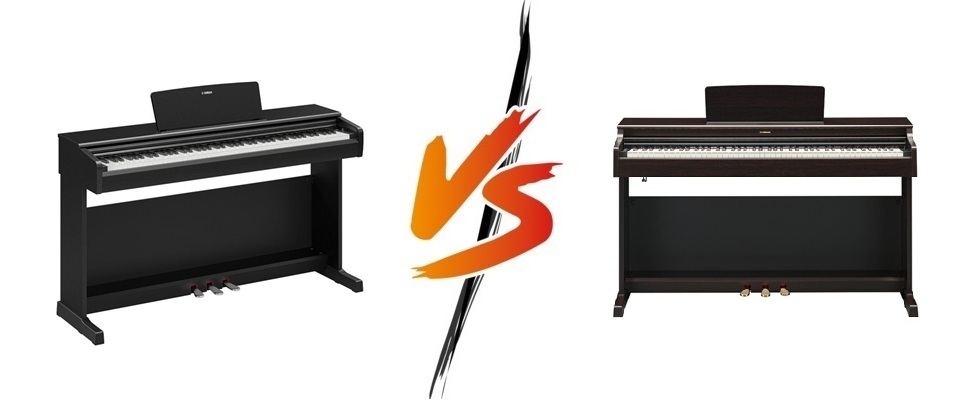
Yamaha’s Arius range is a sensible place to start when shopping for a digital piano for home use. These instruments are designed to deliver the experience of playing a traditional piano without the tuning, maintenance, noise restrictions, or space requirements of an acoustic instrument. They look like proper furniture, offer weighted 88-key keyboards and provide enough functionality for beginners, returning pianists, and many intermediate players.
Choosing between two Yamaha models can be confusing, especially when the older piano seems to offer much of the same functionality as the newer one. This is the case with the Yamaha YDP-146 and Yamaha YDP-165.
At first glance, they’ve a lot in common. Both are part of Yamaha’s Arius family, intended for domestic practice, and focused on reproducing the essential feel and sound of an acoustic piano, rather than offering hundreds of instrument sounds and elaborate production features.
The important question is whether the YDP-165 represents a meaningful improvement over the YDP-146, or whether the older model is still the smarter buy if you can find one at a substantially lower price.
The newer YDP-165 is more compelling for most buyers, especially those who care about keyboard feel, tonal expression, and the overall playing experience. The YDP-146 can still make sense as a budget-conscious alternative, if you find a well-maintained example at the right price.
There are a few caveats. The YDP-146 is an older model, so condition, availability, and second-hand pricing matter a lot. Also, a newer model number doesn’t mean every component has been radically redesigned. Some differences are practical upgrades, while others are subtle improvements that different players may value differently.
Let’s look at both instruments in detail, from construction and keyboards to sound engines, speakers, connectivity, everyday usability, and long-term value.
Yamaha YDP-146 vs Yamaha YDP-165 Comparison Chart
If you click the links below, under the product images, you will be redirected to Amazon.com. In case you then decide to buy anything, Amazon.com will pay me a commission. This doesn’t affect the honesty of this review in any way though.
| Specification | Yamaha YDP-146 | Yamaha YDP-165 |
|---|---|---|
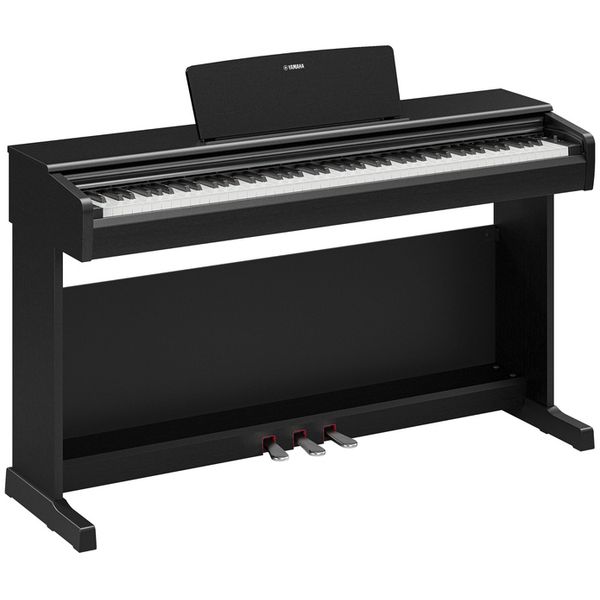 | 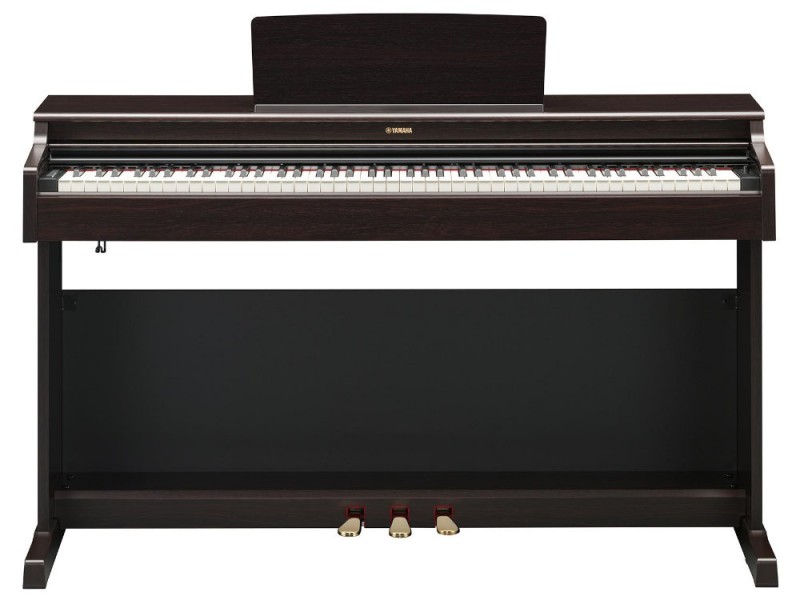 | |
| Check the best price on Amazon | Check the best price on Amazon | |
| Product range | ARIUS | ARIUS |
| Type | Home digital piano | Home digital piano |
| Keyboard | 88-key GHS (Graded Hammer Standard) | 88-key GH3 (Graded Hammer 3) |
| Key surfaces | Matte black keytops | Synthetic ebony and ivory keytops |
| Touch sensitivity | Hard, Medium, Soft, Fixed | Hard, Medium, Soft, Fixed |
| Main piano sound | Yamaha CFX grand piano | Yamaha CFX concert grand piano |
| Resonance modelling | No VRM Lite listed in standard specs | VRM Lite |
| Maximum polyphony | 192 notes | 192 notes |
| Number of instrument voices | 10 | 10 |
| Built-in songs | 353 | 353 |
| Reverb | 4 types | 4 types |
| Dual mode | Yes | Yes |
| Duo mode | Yes | Yes |
| Metronome | Yes | Yes |
| Built-in recording | Yes | Yes |
| Smart Pianist app | Compatibility should be checked for the specific device and version | Yes, compatible |
| USB-to-host | Yes | Yes |
| Headphone sockets | 2 | 2 |
| Pedals | 3: damper, sostenuto, soft | 3: damper, sostenuto, soft |
| Half-pedal support | Yes | Yes |
| My individual reviews | Yamaha YDP-146 review | Yamaha YDP-165 review |
Sound system and physical specifications
| Specification | Yamaha YDP-146 | Yamaha YDP-165 |
|---|---|---|
| Amplifier power | 8 W × 2 | 20 W × 2 |
| Speakers | 12 cm × 2, with diffuser | 12 cm × 2 |
| Intelligent Acoustic Control (IAC) | Yes | Yes |
| Stereophonic Optimizer | Yes | Yes |
| Headphone optimisation | Standard headphone practice features | Enhanced headphone listening features |
| Width | Approx. 135.7 cm | Approx. 135.7 cm |
| Height | Approx. 81.5 cm | Approx. 84.9 cm |
| Depth | Approx. 42.2 cm | Approx. 42.2 cm |
| Weight | Approx. 38 kg | Approx. 42 kg |
| Key cover | Sliding | Sliding |
| Music rest | Yes | Yes |
| Auto power-off | Yes | Yes |
Key differences at a glance
Keyboard action — YDP-165 wins
Its GH3 action is designed to offer more responsive repetition than the YDP-146’s GHS action. Synthetic ebony and ivory keytops also provide a different playing surface.
Sound and speakers — YDP-165 wins
VRM Lite adds resonance modelling, and its 20 W × 2 amplifier provides more power than the YDP-146’s 8 W × 2 system.
App compatibility — YDP-165 wins
It officially supports Yamaha’s Smart Pianist app, which offers a more visual way to access supported functions.
Core practice features — broadly equal
Both offer 10 voices, 353 built-in songs, 192-note polyphony, three pedals, a metronome, and lesson-oriented functions.
Which one should you choose?
- Choose the Yamaha YDP-146 if you find one in good condition at a substantially lower price and mainly need a dependable piano for learning and home practice.
- Choose the Yamaha YDP-165 if you want the more capable keyboard action, stronger built-in amplification, VRM Lite, and Smart Pianist compatibility.
Overall, the YDP-165 is the stronger all-round choice, while the YDP-146 can be the better value when buying used. Since the YDP-146 is an older model, condition, maintenance history, and the price difference are especially important.
Design & Build Quality
When comparing the Yamaha YDP-146 and Yamaha YDP-165, design and build quality might not seem like the most exciting aspects to consider. After all, these are digital pianos designed primarily for home use, and most buyers will probably spend more time thinking about keyboard feel and sound quality than the appearance of the cabinet. However, design matters more than you might expect. These instruments are intended to remain in one place for years, often in a living room, bedroom or dedicated practice space. Construction, layout, materials, and practicality affect ownership experience.
Both models follow Yamaha’s Arius design philosophy, with traditional upright-piano styling, a full-size keyboard, integrated pedals and a furniture-like cabinet. The YDP-165 builds on the established formula, without introducing a completely new design. So, the differences are relatively subtle, but still worth considering before buying.
Overall appearance and cabinet design
The Yamaha YDP-146 looks like a conventional upright piano, with a simple cabinet, protective key cover and integrated music rest. Its design is understated rather than particularly modern or decorative. Depending on the finish, it can fit comfortably into a traditional home or a more contemporary interior without drawing too much attention.
This design makes the piano feel like a room fixture. Unlike portable digital pianos on metal stands, the YDP-146 looks cohesive. The keyboard, pedals and cabinet form a single unit, like an upright piano.
This approach also makes the instrument convenient for everyday practice. No need to set up a stand, attach pedals or worry about the keyboard shifting. Once set up, it’s ready to use.
The YDP-165 follows much the same design philosophy. It retains the furniture-style construction and traditional layout, so it’s recognizable as part of the same family. It looks refined and practical, not dramatically different.
This seems reasonable. Digital pianos don’t need elaborate exteriors to be attractive. What matters is the cabinet feeling right, providing stability and comfortable controls.
Neither model is flashy, appealing to buyers who want a piano that blends in.
Materials. And build quality of the cabinet
Both instruments use a furniture-style cabinet constructed from manufactured wood-based materials rather than the solid acoustic structure of a traditional upright piano. This is normal for digital pianos in this category. The cabinets support the keyboard and pedal assembly, protect internal components, and provide a stable enclosure without the expense and weight of an acoustic piano.
Expectations should be realistic. Neither model is built like a premium acoustic grand, and the exterior finish shouldn’t be mistaken for evidence of an acoustic soundboard or a traditional hammer-and-string mechanism.
A well-assembled cabinet can feel solid for domestic use. Key considerations include stability, fit and finish, assembly quality, and secure panels during play.
The YDP-146 can provide a satisfactory experience when maintained properly. But as an older model, the instrument’s condition matters a lot. A used example may have scratches, chipped edges, loose fittings or signs that it has been dismantled and moved several times.
These cosmetic issues aren’t necessarily serious, but they should be distinguished from structural problems. A small mark on a side panel is usually unimportant, but a loose keyboard assembly or unstable pedal unit is different.
The YDP-165 has an advantage when bought new, as you can inspect the finish before delivery and get a warranty and support from the seller. That doesn’t mean every YDP-165 is better assembled than every YDP-146. The newer instrument generally has less uncertainty about wear and handling.
Key cover and dust protection
Both have a key cover, an important feature for a piano in a shared space.
Keys can accumulate dust over time, particularly when the instrument is positioned near a window, in a busy room or close to an area where people regularly walk past. The cover reduces dust accumulation and protects the keyboard from casual contact when not in use.
This is useful for families with kids or pets. Although a key cover can’t prevent every accident, it provides extra protection against dust, small objects, and incidental contact.
That cover also affects the instrument’s appearance. When closed, the keyboard is less prominent, making the piano look like a conventional piece of furniture.
Neither has a clear advantage here. The key cover is practical and shared by both, so its condition matters more than the model difference. On a used YDP-146, check that it opens and closes smoothly, and its hinges or sliding mechanism aren’t loose or damaged.
Keyboard layout and playing position
Both pianos have a straightforward layout. Each has 88 keys, a music rest positioned above the keyboard and three pedals arranged beneath the cabinet.
The Arius range benefits from this conventional arrangement. No unusual keyboard angle or separate pedal board is needed. So the player can focus on playing. Daily practice is easier with the integrated design.
Although the YDP-146 and YDP-165 keyboards differ mechanically, they’re placed similarly within the cabinet. The YDP-165’s more advanced action improves functionality without changing the external layout.
Players can develop familiar piano techniques, like two-handed playing and pedal coordination, on either piano.
Comfort also depends on the bench and how the player sits at the keys. Neither piano should be judged in isolation from its seating arrangement. A poorly sized bench can cause poor posture, shoulder tension, and discomfort.
If you purchase either model, make sure you’ve a suitable bench that allows you to sit comfortably with relaxed shoulders and your forearms in a natural position.
Music rest and control layout
The music rest is a small but valuable feature. You can place sheet music or a device in front of you without a separate stand.
This is convenient for students with printed scores. The music rest keeps sheet music in sight and maintains a consistent setup.
Both pianos have restrained controls. Yamaha avoided cluttering the cabinet with buttons and displays. This instruments look cleaner and the main area stays focused on the keyboard.
Some functions require button and keyboard combinations, not a dedicated display. This is manageable for occasional changes. For players who regularly adjust settings, it can take a little time to remember the relevant combinations.
The YDP-165’s compatibility with the Smart Pianist app helps with this limitation. The app provides a more visual way to access functions when supported. This is a convenience advantage that contributes to the YDP-165’s usability.
Pedal assembly and cabinet stability
Both pianos have an integrated three-pedal assembly with damper, sostenuto, and soft-pedal functions.
This design is preferable to a lightweight external sustain pedal. The integrated pedal unit is easier to position and looks better on a home piano.
The cabinet provides a stable base for playing. Unlike a portable keyboard, the instrument stays in place during practice.
Correct assembly is important, though. If the cabinet isn’t assembled securely or the floor is uneven, the piano may move, rattle, or be unstable. These problems aren’t unique to either model and can make a good instrument feel less substantial.
Check the pedal assembly when buying a used YDP-146. Check if the pedals operate smoothly, return properly, and make any unusual noises. Inspect the cabinet around the pedal unit for damage.
These checks are also sensible for a YDP-165, especially for ex-display or second-hand models.
Size, weight and placement in the home
These instruments combine a full-size keyboard with an integrated cabinet, which is a main benefit. However, neither should be considered a portable piano.
Both models need a permanent location and are less convenient to move than a compact keyboard. The cabinets need clearance for the player, bench, pedals, and music rest.
Measure the space carefully before buying. Consider the width of the instrument, the available depth, the position of nearby furniture and whether you can access a suitable electrical socket without trailing cables across a walkway.
Delivery and assembly also deserve attention. Check delivery arrangements and assembly instructions if the piano needs to be carried upstairs or through narrow doorways.
That integrated cabinet is a big advantage for a dedicated practice area. A portable digital piano may be better for someone who moves frequently or attends rehearsals.
Durability and long-term ownership
This most important difference in long-term ownership isn’t necessarily the design itself, but the age and condition of the instrument.
As the YDP-146 is older, you’ll want to exercise more caution when buying used instruments. Check all keys, test pedals, and verify working speakers, headphone sockets, and USB connections. Also, examine the cabinet for damage and check that the power supply is included.
A well-maintained YDP-146 can be a useful home piano for years. But transport costs, replacement parts, or repairs can cut into the savings of a low purchase price.
The YDP-165 is generally the more straightforward choice for someone buying new. You receive a newer instrument, and you may benefit from a manufacturer’s or retailer’s warranty, depending on where and how you purchase it.
Neither piano needs routine tuning like acoustic instruments do. But digital pianos have parts that can wear out or fail. Keeping the instrument away from liquids, excessive humidity and extreme temperatures will help protect it.
Design and build quality verdict
The YDP-146 and YDP-165 have similar external designs. Both have traditional styling, a three-pedal unit, key cover, and practical layout for home use.
The YDP-165 is more attractive for new buyers, mainly because it combines the Arius design with a better keyboard and updated features. Its exterior, however, isn’t such a substantial departure from the YDP-146 that design alone should determine your choice.
The YDP-146 remains a sensible option if you find a well-maintained example at a lower price. In that case, the condition of the cabinet, pedals, and internal parts matters more than the design’s age.
Neither piano clearly wins on appearance or construction. You should favour the YDP-165 for its internal improvements, not its exterior.
Keyboard & Playing Feel
The keyboard is crucial in a digital piano. A slightly different piano sound can be gotten used to. And the volume can be adjusted to suit the room, or headphones can be connected if the built-in speakers are not impressive. Keys feeling unnatural under your fingers, however, affects enjoyment. And technique development.
The Yamaha YDP-146 and Yamaha YDP-165 differentiate themselves here. They share a full-size, 88-key weighted keyboard, meant to feel like an acoustic piano. Key action is where they diverge; the YDP-146 has Graded Hammer Standard. And the YDP-165 features Graded Hammer 3. Despite similar names, the mechanisms, responsiveness, and key surfaces differ.
Regular practice or a desire to move beyond basic pieces makes these differences more important, though they may not be immediately clear to a complete beginner.
Overall, the Yamaha YDP-146 features a dependable GHS keyboard.
Yamaha’s GHS keyboard action is used in the YDP-146, and it’s also found in other entry-level and budget-friendly digital pianos from Yamaha. This mechanism helps replicate the graded resistance of an acoustic piano, and it does so without the complexity and cost of a more advanced action.
Weighted keys provide physical resistance, unlike the lightweight keys on inexpensive electronic keyboards. Players develop finger control and get used to the effort needed for different dynamics because of this resistance.
GHS has a key characteristic, graded weighting. Heavier in the lower keys, lighter in the upper ones. An acoustic piano behaves similarly, with different mechanical needs in the bass and treble registers, and GHS follows this pattern.
Weighted keyboards offer a big advantage for beginners. Developing habits on one makes it easier to play other piano instruments. It’s possible to practise scales, arpeggios, chords, and basic classical repertoire without compensating for an unweighted keyboard.
The YDP-146 can handle many different musical styles, including pop accompaniment and simple jazz arrangements. It’s also great for classical exercises and recreational playing.
GHS is relatively basic. It provides the essential characteristics of a piano keyboard, but doesn’t match the GH3 mechanism in the YDP-165 for repeated-note response.
Playing fast passages, especially those with repeated notes or rapid finger alternation, makes this difference more noticeable. To trigger the next note reliably, the keys may need to return more fully.
It’s not a significant issue when learning simple pieces, but this can become a limitation as the repertoire becomes more complex and demanding.
Yamaha’s YDP-165 features the more advanced GH3 action
Yamaha’s GH3 keyboard action is used in the YDP-165, and it gives a more refined playing response than GHS.
GH3’s most notable upgrade is probably its ability to register repeated notes quickly. You can play rapid repetitions more easily because it can recognize a repeated note before the key is all the way back to its normal position, so you don’t have to move your fingers as much.
A less responsive action requires releasing the key more completely between strikes when the same note is played several times in quick succession. Fast passages feel slightly less fluid with this type of action, especially when precise timing is necessary. The music demands a certain level of precision, and a less responsive action can compromise this.
GH3’s mechanism is designed to handle fast playing more effectively, giving you greater flexibility with quicker passages and a more responsive feel on the keyboard.
Classical music benefits from this improvement. Composers like Beethoven, Chopin and Mozart wrote pieces with repeated notes, rapid ornamentation and passages that need carefully controlled articulation. It’s more comfortable to practise these techniques on a keyboard that responds consistently to repeated movements.
The GH3 action doesn’t transform the YDP-165 into an acoustic grand piano. It’s still a digital-piano action and the response won’t be the same as every acoustic instrument. However, it’s a useful upgrade from GHS.
As technique develops over several years, that extra responsiveness can make the instrument feel less limiting.
Weight and resistance are key
Both keyboards provide graded weighting, but don’t assume that the YDP-165 will necessarily feel heavier in every register.
GHS and GH3 aren’t just about one being heavier and the other lighter. Their mechanisms differ, and the playing experience depends on key movement, repetition, and how physical action relates to the sound engine.
Some players may find the YDP-146’s GHS action perfectly comfortable, especially if they’re accustomed to entry-level Yamaha keyboards. Others may prefer GH3’s more refined response right away.
Keyboard feel is also subjective. Two pianists playing the same instrument can have different impressions. Hand size, finger strength, experience, and musical preferences influence keyboard feel.
Try both instruments in person if you can. Play the same scales, chords and short passages on each, rather than judging the keyboard after pressing only a few keys.
Touch sensitivity and control
Both models offer adjustable touch sensitivity, so you can change the piano’s response to your playing force.
This is important because a piano shouldn’t simply produce the same volume regardless of how gently or forcefully you press a key. Dynamic control is key to expressive playing; a digital piano should translate your touch into changes in volume and tone.
For example, when playing a soft melody with a quiet accompaniment, you need to control the force in each hand. When building to a louder section, you should be able to increase intensity gradually, not jump abruptly from quiet to loud.
Touch-response settings let you tailor the relationship between your input and the sound. A lighter setting can make the piano easier to play for someone with a gentle touch, while a heavier setting can provide more resistance to changes in volume.
But there’s an important distinction between touch sensitivity and physical key weight. Changing the sensitivity setting doesn’t change the mechanical action. The keys won’t physically become heavier or lighter in the same way that switching to a different keyboard mechanism might affect the playing experience.
For beginners, adjustable sensitivity can make either instrument easier. For intermediate players, GH3’s physical characteristics may matter more than the sensitivity settings.
Key surfaces: GHS versus synthetic ivory and ebony
The keys have a different finish.
The YDP-146 has matte black keytops; the YDP-165 features synthetic ebony and ivory keytops, similar to those on acoustic pianos.
The YDP-165 has a more premium look and feel. The textured surfaces provide a comfortable grip for fingers during long playing sessions.
Key surfaces may seem like a minor detail, but they can influence how confident your fingers feel during longer practice sessions. Smooth keys can become slippery for some players, particularly when their hands become warm or slightly damp.
The YDP-165’s synthetic surfaces aim to fix this issue and look like traditional piano keys.
But the difference shouldn’t be overstated. The YDP-165 doesn’t use real ivory or ebony, and its keys won’t drastically change the playing experience. This more significant upgrade remains the GH3 action underneath them.
Most buyers will see the improved surfaces as a nice refinement, not a main reason to choose the YDP-165.
Repeated notes, trills and fast passages
This is where the YDP-165 has its clearest practical advantage.
Fast repeated notes demand precise finger movement, timing, and key release. Trills and ornaments also require precise control, especially at higher tempos.
The YDP-146’s GHS action can handle many passages, but its limited repetition may need more attention to key release.
The GH3 action responds better to partial key returns. That can make rapid repetitions feel more natural and reduce the need to exaggerate finger movements.
The difference may not matter much for beginners playing simple melodies. But for students moving to intermediate classical repertoire, it’s more relevant.
It’s also worth remembering that keyboard action is only one part of the equation. Technique, practice, and familiarity are still essential. The GH3 won’t automatically improve speed or accuracy, but it pretty helps develop those skills.
Comfort during long practice sessions
A good keyboard should feel comfortable over extended periods, not just during quick demonstrations.
Both the YDP-146 and YDP-165 provide a full-size keyboard with conventional piano spacing. This is important for accurate hand positioning and getting familiar with the distance between notes.
The YDP-165’s more responsive action may feel more satisfying during demanding passages, while the YDP-146’s simpler mechanism remains adequate for many everyday practice routines.
However, neither keyboard can compensate for poor posture or an unsuitable bench. If you’re sitting too low, or your wrists are strained, or your shoulders are tense, even a high-quality keyboard can become uncomfortable.
For longer sessions, sit at a suitable height and keep your shoulders relaxed; avoid excessive tension in your hands. You want the keyboard to support your technique, not force your fingers to work against it.
Which keyboard is better for beginners?
Both are suitable for beginners and there’s no reason to believe that a student cannot learn proper piano technique on the YDP-146.
Its GHS action provides what beginners need from a weighted piano keyboard: finger control, coordination, and dynamic awareness.
The YDP-165 is a stronger long-term choice, if budget allows. The GH3 action offers a better repeated-note response; the improved key surfaces also contribute to a more refined playing experience.
If the buyer is a child taking lessons, an adult learning from scratch or someone returning to the piano after many years, either instrument can serve as a good starting point. The deciding factor may be how much the YDP-165 costs compared with a used YDP-146.
For someone expecting to study seriously for several years, I would lean towards the YDP-165. For someone who just wants to learn a few songs and play recreationally, the YDP-146 may be all they need.
Which keyboard is better for intermediate and advanced players?
The YDP-165 is the clear winner for intermediate players.
As repertoire gets more challenging, the keyboard’s response matters more and more. Repeated notes, trills, rapid passages, and subtle dynamic changes all benefit from a consistent response to the player’s movements.
The GH3 action gives the YDP-165 an advantage in these situations, too. It’s still a home-oriented digital piano, however, and very advanced players may eventually want an instrument with a more sophisticated action.
The YDP-146 isn’t incapable of supporting advanced repertoire, but its GHS action is more likely to become a compromise for someone who practises demanding music regularly.
If you’re an advanced pianist, compare both models with other digital pianos in your budget before deciding. The YDP-165 is better than the YDP-146 in keyboard responsiveness; that doesn’t automatically make it the best action at every price.
Keyboard and playing feel verdict
The Yamaha YDP-165 wins this category because its GH3 action offers a meaningful improvement over the YDP-146’s GHS mechanism.
This difference is most apparent during repeated notes, trills, and faster passages, where the newer action provides a more accommodating response. The synthetic ebony and ivory keytops are also a welcome refinement, although less important than the mechanical differences.
The YDP-146 remains capable for beginners and casual players. Its weighted keys provide a proper foundation for learning, and it’s perfectly suitable for everyday practice when purchased at the right price.
However, if your budget stretches to the YDP-165 and you expect to continue playing for several years, I would choose the newer model. The keyboard is the part of a digital piano you interact with most directly, and investing in the better action is one of the most sensible reasons to spend more.
Piano Sound
This sound of a digital piano is one of the most important factors to consider when comparing two instruments. A keyboard can have a realistic playing feel and a solid cabinet but if the piano tone sounds thin, artificial, or unresponsive, it hurts the overall experience. This is especially important for beginners who are developing their musical ear, and more experienced players who need an expressive instrument for classical pieces, contemporary music, and everyday practice.
Yamaha’s YDP-146 and YDP-165 aim to replicate an acoustic grand’s sound in a home-friendly digital instrument. Both use Yamaha’s piano sampling approach with similar core features, though the YDP-165 has newer tech, like VRM Lite. Their amplification systems differ which affects the sound experience in a room.
These pianos aren’t meant to replace high-end concert grands in every respect. However, both can deliver a convincing piano sound for home practice, learning, and casual performance. The question is whether the YDP-165’s updates make a difference over the YDP-146, and if those updates are worth the extra cost.
Yamaha YDP-146: A Clear and Traditional Piano Tone
Yamaha’s YDP-146 uses CFX concert grand samples. Sampling records an acoustic instrument’s sound to reproduce the tone when the player presses a key. This approach gives the YDP-146 a familiar Yamaha character: clear and balanced, with bright notes.
The CFX grand is known for projecting well and being clear. This sampled sound provides a useful base for various music, including beginner exercises and classical pieces to pop and simple film arrangements. The YDP-146’s piano voice generally provides a defined attack, so notes sound distinct, not blended.
This clarity sort of helps when learning. Beginners need to hear if they’re playing evenly, and if the melody is louder than the accompaniment, and if chords are balanced. A clear tone makes it easier to notice those details. So the YDP-146 provides a suitable sound for building basics and awareness.
Its tone can also work well for players who prefer a relatively direct piano sound. Some pianos offer a lot of sound shaping, but many home players just want to start playing. The YDP-146 gives a standard piano voice with little adjustment needed.
The YDP-146 is an older model, though, with a less advanced sound system than the YDP-165. Though the CFX character is still appealing, it lacks the YDP-165’s VRM Lite. So the note interaction and resonance simulation are less developed.
This difference doesn’t make the YDP-146 sound bad. It means the tone is straightforward. For practice, lessons, and recreational playing, that may be entirely sufficient.
Yamaha YDP-165 offers a more refined piano sound
The Yamaha YDP-165 also uses samples of Yamaha’s CFX concert grand piano, giving it a related tonal foundation to the YDP-146. The resemblance between them matters: the newer model doesn’t mean a completely new piano character. Yamaha builds on the sound with improvements to make it more expressive and immersive.
One key addition is Virtual Resonance Modeling Lite, or VRM Lite. On an acoustic piano, pressing a key can make other strings vibrate too, depending on the notes, pedal use, and playing style. This soundboard and other parts also add to the complex resonance.
A digital piano can’t replicate every interaction of an acoustic instrument, but resonance modelling can simulate some relationships. VRM Lite adds resonance to the YDP-165’s sound, making notes feel more connected, especially with chords or the sustain pedal.
The effect isn’t always dramatic. A beginner playing individual notes at moderate volume may not notice a big difference right away. But with complex arrangements, the extra resonance can make the sound fuller and more natural.
Consider a slow piece with sustained chords under a melody. On an acoustic piano, notes don’t exist alone; their harmonics and resonances overlap as the sound changes. The YDP-165’s modelling can create a more convincing interaction than a simple sampled sound.
The YDP-165 is better for expressive playing as pianists develop. Its advantages are subtle rather than magical, but they can become more noticeable when playing music that makes extensive use of sustained notes, pedal work, and rich harmonies.
Differences in Tonal Character
Because both models draw on Yamaha’s CFX concert grand, it would be misleading to describe the YDP-146 as having a really inferior type of piano sound. Their tonal identities are related, and both aim for a clear acoustic-piano sound.
The distinction is between a direct sampled voice and a newer one with resonance modelling. The YDP-146 provides the basic sound, while the YDP-165 tries to recreate the complexity of an acoustic piano.
Players should remember that words like warm, bright, rich, and natural are subjective. One pianist’s clear sound may be too bright for another. Room acoustics, speaker placement, volume, headphones, and preferences can influence the sound.
Neither model should be assumed to sound universally better for every listener. Someone who plays simple melodies or likes a straightforward tone may be happy with the YDP-146. A player who values nuanced resonance may prefer the YDP-165.
Polyphony and Complex Passages
Both instruments offer up to 192-note polyphony. Polyphony refers to the number of notes a digital piano can produce simultaneously before older notes may need to be cut off to make room for new ones.
192 notes are enough for most home-piano playing. Beginners playing scales. And simple songs won’t hit polyphony limits. Even many intermediate players can play comfortably within this capacity.
Polyphony becomes more relevant when using the sustain pedal extensively, playing dense chords, layering sounds, or performing passages in which many notes continue ringing while new notes are added. In those situations, a digital piano must manage the accumulated notes and their decays.
The YDP-146 and YDP-165 have the same polyphony capacity, so the newer model doesn’t have an edge just because of that. The YDP-165’s advantage is its resonance modelling and amplification system.
A polyphony figure doesn’t tell you everything about sound quality. Two instruments can support the same number of notes while differing in their samples, processing, resonance behaviour, and speakers. So the YDP-165’s better sound isn’t just about its 192-note spec.
Sustain Pedal and Resonance
The sustain pedal is crucial for a lot of piano music. It lets notes keep sounding after you release the keys, making the music smoother. The way a digital piano handles sustained notes has a considerable effect on how realistic it feels and sounds.
Both models support half-pedaling, which lets you control the sustain effect. This can help a player control resonance more precisely than a simple on/off pedal action.
The YDP-165’s VRM Lite feature is also helpful. When notes overlap under sustain, its resonance modelling can contribute to a richer impression of interaction between the notes. This is especially useful for expressive passages in classical music, where pedal control and the natural decay of chords matter.
But don’t overstate the difference. VRM Lite is a simpler version of Yamaha’s Virtual Resonance Modeling tech. The YDP-165 is still a home digital piano, but it handles resonance better than the YDP-146.
Speaker System and the Sound You Hear
Sound generation is only one part of the listening experience. The speakers and amplifiers deliver the sound, and the two models differ here.
The YDP-146 has two 12 cm speakers powered by 8-watt amplifiers on each channel, while the YDP-165 uses two 12 cm speakers with 20-watt amplification per channel. Both have stereo speakers, but the YDP-165 has more amp power.
More power doesn’t mean the YDP-165 sounds twice as loud or good. Loudness depends on several factors, including speaker design and room acoustics. Nevertheless, the higher-powered system gives the YDP-165 more headroom, which can help it deliver a fuller sound without needing to operate as close to its limits.
For quiet practice in a small room, the YDP-146’s speakers may be perfectly adequate. A beginner doesn’t need a powerful amp. But the YDP-165’s system can deliver a stronger sound when playing complex music.
This speaker difference can be particularly relevant when practising without headphones. A tone that sounds good through headphones may not sound as good through built-in speakers. The YDP-165’s more powerful amplification basically helps make it a stronger choice for players who expect to use the built-in speakers most of the time.
Neither instrument should be confused with a high-powered stage piano or a dedicated external sound system. Both are for home use, and performance depends on the room. The YDP-165 has better built-in amplification.
Sound Through Headphones can change the comparison considerably. With headphones, the built-in speakers don’t matter as much.
Headphones are great for quiet practice. Headphones help you focus on your playing.
The YDP-146 is still good for headphone practice. The YDP-146’s sound is clear and suitable for practice. The YDP-165, however, retains the advantage of its newer sound features, including VRM Lite, which can contribute to a more convincing resonance effect even when the built-in speakers aren’t being used.
The listening experience depends on the headphones. Basic headphones may not reveal every subtle difference, while better-quality models can reproduce a wider range of frequencies and make tonal details easier to hear. Comfort matters for long practice sessions.
If a buyer expects to practise almost exclusively through headphones, the YDP-165’s stronger speakers are less important to the purchasing decision. Its sound-generation refinements may still be worthwhile, but the improvement over the YDP-146 may feel less significant than it does when listening through the built-in speakers.
Which Piano Sounds Better for Different Styles of Music?
Both pianos work well for beginner exercises and simple songs. The CFX piano character provides a clear sound, making it easy to distinguish notes and hear mistakes. At this level, regular practice and good technique will usually matter far more than the difference between the two sound systems.
The YDP-165 has a modest advantage for classical music. CFX sampling and VRM Lite combine to convey the sense of resonance that supports sustained chords and expressive pedal work. As skills improve, players learning pieces with richer harmonies may appreciate this extra depth.
For pop ballads and contemporary piano arrangements, both models can deliver the necessary clarity. The YDP-165’s stronger amplification can help its sound feel fuller in a living room, particularly when the player uses a broad dynamic range. Neither model is automatically better for every pop style; the desired tone and playing style matter.
For jazz, chord voicings and sustained harmonies can benefit from a convincing sense of note interaction. The YDP-165’s resonance modelling may appeal, but the playing feel and control over dynamics are equally important.
The YDP-146 is practical for casual playing and family use. It produces a recognizable piano sound with enough polyphony for ordinary playing. If it is available at a lower price, its sound quality may be more than sufficient for the intended use.
YDP-146 vs YDP-165 piano sound verdict
The Yamaha YDP-146 delivers a clear, familiar CFX grand piano sound for learning, practice, and recreational playing. It has 192-note polyphony and a stereo speaker system, making it suitable for home use and a sensible choice for those who want a straightforward digital piano.
The Yamaha YDP-165 builds on that foundation. The YDP-165’s VRM Lite resonance modelling gives notes a more developed sense of interaction, and its 20-watt-per-channel amplification provides more power than the YDP-146’s 8-watt-per-channel system. These improvements make the YDP-165 more appealing for players who want expressive sound and listen through the built-in speakers.
This difference isn’t about sounding like a real piano or not. Both are digital instruments using Yamaha’s CFX piano sound. The YDP-165 offers a more refined presentation, especially for sustained chords, sustain pedal use, or fuller sounds.
The Yamaha YDP-165 wins the piano sound comparison. Its resonance modelling and stronger amplification give it the edge for most home players, particularly those who expect to keep the instrument for several years as their technique develops. The YDP-146 remains a respectable alternative, and can be excellent value when bought used at a lower price.
If sound quality is the main reason for upgrading, the YDP-165 is more attractive. If the goal is a reliable piano sound for lessons and practice on a budget, the YDP-146 gets the job done.
Speakers & Amplification
Speakers and amplification are crucial for a digital piano. An instrument with good-quality piano samples can still sound weak if its speakers aren’t up to the task. They need to reproduce the tone clearly and with enough power. A good speaker system brings out the depth of bass notes and the clarity of higher ones. It also changes volume, making piano playing more expressive.
The Yamaha YDP-146 and Yamaha YDP-165 are for home use, so they don’t have a powerful sound system like a professional stage piano with external speakers. Their built-in audio systems are what set these two models apart.
The YDP-146 has two 12 cm speakers, each powered by an 8-watt amplifier. It’s a stereo setup.
The YDP-165 also uses two 12 cm speakers, but they’re powered by 20-watt amplifiers per channel, and it’s also a stereo arrangement; that’s more than twice the amplification power of the YDP-146.
The YDP-165 has the edge on paper, especially for those practising without headphones and wanting a fuller sound. But it’s not just amplifier power that determines sound quality. What also sort of matters is speaker design and sound processing, as well as room acoustics, the volume at which you’re listening, and the type of music being played; these all affect the sound.
Everyday use is where the two instruments differ the most, which is what we’re looking at now.
Adequate amplification is provided by the Yamaha YDP-146 for home practice.
The Yamaha YDP-146 has two 12 cm speakers, each with an 8-watt amplifier, making a stereo system. It’s designed to be loud enough for home use, like practicing, beginner lessons, or regular playing.
The YDP-146’s amplification suffices for a bedroom, study, or small living room setup. It’s clear that the instrument’s sampled CFX concert grand piano sound comes through intact, no additional equipment needed. Practising scales, learning songs, and working through exercises should be fine at moderate listening levels, with the piano sound being clear enough.
Convenience is a major advantage of built-in speakers. Sit down, switch on, and start playing, no need to connect headphones, an amplifier, or external speakers. For beginners, this is especially helpful, as they can focus on learning instead of figuring out audio settings.
The two-speaker setup on the YDP-146 gives you stereo playback. Room layout and where you’re sitting affect the sound, but stereo can make music seem more spacious than a single speaker. It’s more engaging to play with both hands because of this.
The limitations of the YDP-146 become more obvious when the player needs more from it. It’s the 8-watt-per-channel amplification that’s the issue, the YDP-165 has more power, which sort of means the YDP-146 can’t handle loud passages or complex musical textures as well.
The YDP-146’s sound quality at high volume isn’t necessarily bad, it’s just that the system doesn’t have as much amplification power and may struggle to maintain a good sound when it’s pushed hard.
That limitation won’t be a big deal for quiet practice or simple arrangements. But for players needing a fuller sound in a bigger space, the newer model has an edge with its specs.
Yamaha YDP-165: More Powerful Built-In Sound
Yamaha YDP-165 has two 12 cm speakers, each powered by a 20-watt amplifier. The YDP-165’s speaker diameter is the same as the YDP-146’s. But it has much more amplification power.
This means the YDP-165 can reproduce the sound with more power. It can handle passages with powerful chords, pronounced bass notes, or big dynamic changes, and it’s got more headroom.
This extra amplification can be useful when playing classical music with dramatic contrasts between quiet and loud passages. It can also help when performing pop ballads, where the left hand may provide a substantial accompaniment beneath a melody in the right hand.
The YDP-165’s speaker system is attractive to those who use the instrument’s built-in audio most of the time. If you prefer to practise in a living room or play for family members without wearing headphones, having more amplification power can make the experience more satisfying.
But it’s also important to understand what the specification means. The YDP-165 won’t necessarily sound two and a half times louder just because its amplifier rating is two and a half times higher. Loudness doesn’t increase directly with amplifier wattage; it also depends on speaker efficiency, frequency response, distortion, and other design factors.
The higher power rating should instead be viewed as additional capability. It gives the YDP-165 more resources to handle demanding passages and reach useful listening levels without relying so much on its maximum output.
The speaker diameter is also identical between the two models. Therefore, it would be inaccurate to assume that the YDP-165 automatically has dramatically deeper bass just because it has a higher amplifier rating. This overall presentation may feel fuller, but speaker size, enclosure design, and sound processing also play a role.
The YDP-165 packs 40 watts of combined rated amplifier power, while the YDP-146 has 16 watts. That is a substantial difference in available power. But it doesn’t mean the sound will be proportionally louder. So what’s the big deal? An amplifier needs to deliver enough power to play music at the right volume. As the signal gets tougher, a system with more available power may be better able to reproduce it without running out of headroom.
Piano music can be particularly challenging. Because of its wide dynamic range. A passage may begin with delicate notes and build into forceful chords. This sound system has to do both softly and loudly well.
For gentle playing at low volume, the YDP-146 may perform perfectly well. When a player moves into more powerful passages, however, the YDP-165’s additional amplification may become more useful.
Neither instrument should be judged by wattage alone. A good lower-powered system can sound better than a bad more powerful one. Here, the YDP-165’s higher power rating gives it an edge, but you should really hear both pianos in the same setup to compare them.
Bass and Fullness
Bass is important for the piano sound, even if you don’t care about super deep or powerful sound. Lower notes add harmony, rhythm, and weight to the music. If they sound too weak, the piano can feel thin. If they’re poorly controlled, they may become boomy or muddy.
Both pianos have two 12 cm speakers, so they’re even on speaker size. Their ability to reproduce bass depends on more than that measurement, including the speaker system’s design and the way the instrument processes the sound.
The YDP-146 works for usual home practice, like left-hand bass, chords, and basic classical pieces. Its sound should provide enough low-frequency information for practice, but it won’t feel like a big acoustic grand piano.
The YDP-165’s more powerful amplification can help it deliver a more substantial presentation when the music demands additional output. Bass notes may feel more present at higher listening levels, and the overall piano sound can be more satisfying when playing full chords.
Nevertheless, neither model should be expected to produce the powerful sub-bass associated with a dedicated subwoofer or a large external sound system. Acoustic pianos make complex vibrations with their strings, soundboard, and body. Small digital piano speakers can’t replicate all that.
Most home players don’t need to feel like they’re next to a concert grand piano. It’s to produce a balanced sound that makes practice enjoyable and allows musical details to be heard clearly. Both pianos can do this, but the YDP-165 has extra power for when you want more sound.
Clarity at Different Volumes
A good digital piano should sound good at low and moderate volumes too. This is important because many people practise in the evening or share their home with other people.
At low volume, the YDP-146 is good for solo practice. It can play piano sound without extra gear, which is convenient for short practice and exercises.
The YDP-165 also works well for quiet practice, and you don’t have to play it loudly just because it’s more powerful. You can adjust the volume to fit the room.
At moderate volumes, the YDP-165’s extra headroom may be more noticeable. When playing a piece with big volume changes, a more powerful system can help with the loud parts and keep it comfortable to listen to.
However, amplifier power doesn’t guarantee that every note will be clearer. Clarity depends on the instrument’s sound, speaker design, and room too. A reflective room with hard floors and bare walls may produce more audible reflections than a room with carpets, curtains, and upholstered furniture.
Where you put the speakers basically matters too. Positioning the piano too close to a wall or in a corner can affect how the sound is perceived, particularly in the lower frequencies. A little experimentation with the instrument’s placement can sometimes improve the listening experience without requiring any additional equipment.
Playing Classical, Pop and Contemporary Music
The differences between the two speaker systems can be more noticeable in some musical styles than in others.
Both instruments work well for beginner exercises and simple melodies. The music generally doesn’t demand much amplification power, and players are more likely to benefit from consistent practice than from a more powerful speaker system.
For classical music, the YDP-165’s stronger amplification can be useful when performing dramatic passages, full chords, or pieces that move between delicate and forceful playing. Its newer piano sound features also contribute to the overall presentation, separate from the amplifier specs.
Pop ballads often combine sustained chords with a melody in their accompaniment patterns. The YDP-165’s greater power may make the sound feel more substantial, especially when playing at moderate volume in a living room.
Jazz and other styles with rich chords require the speaker system to reproduce several notes at once without making the sound feel congested. The YDP-165’s more amplification may help, but it doesn’t guarantee superior note separation in every situation.
The YDP-146 is a practical option for casual playing and family entertainment. That built-in speakers provide a simple way to enjoy the piano without external audio equipment.
What About External Speakers?
Most buyers considering these models will probably use the built-in speakers or headphones. Neither instrument requires an external sound system for ordinary practice.
Check the connectivity requirements before buying, though. The YDP-146 and YDP-165 have USB-to-host connectivity for communicating with a computer or compatible device, but that connection should not be confused with a conventional audio output. USB-to-host doesn’t provide a direct analogue signal for connecting the piano to powered speakers.
To connect a digital piano to external speakers, you may need an audio interface or another signal path, depending on the equipment and model connections. Check the specs and manual for the exact routing options before buying additional audio equipment.
This isn’t a major concern for most people. Both pianos are designed as self-contained home instruments, with built-in systems for everyday practice.
Headphones Versus Built-In Speakers
Headphones are useful when practising in a shared household or when you want to concentrate without disturbing others. Both models support headphone practice, which bypasses the built-in speakers.
This changes the comparison because amplifier power is less important when listening through headphones. The headphone quality and the piano’s sound-generation system become more relevant to the listening experience.
If you plan to use headphones almost exclusively, the YDP-165’s stronger speakers shouldn’t be the main reason to choose it. That newer piano features may still make it appealing, but the more powerful speaker system is less relevant during headphone practice.
The YDP-165 offers a more versatile built-in audio system for players who switch between headphones and speakers. It provides quiet practice convenience and greater amplification power when you want to hear the instrument in the room.
Final Verdict: Speakers and Amplification
The YDP-146 has a capable built-in stereo speaker system for home practice. The two 12 cm speakers and 8-watt-per-channel amplification are adequate for beginners, casual players, and those who play at moderate volume in a small room.
The Yamaha YDP-165 is the stronger option for players who want more power from their built-in speakers. Its two 12 cm speakers are supported by 20-watt-per-channel amplification, giving it considerably more available power and headroom. This can be particularly useful for fuller chords, stronger dynamic passages, and playing in a living room without headphones.
More amplifier power doesn’t automatically mean greater loudness or better sound. Speaker design, room acoustics, volume, and music all affect the result. The YDP-165’s specs give it a clear advantage in amplification capability.
The YDP-165 wins this category overall. Its more powerful speaker system makes it the better choice for players who expect to rely on built-in audio and want a fuller, more capable sound for everyday home playing. The YDP-146 remains serviceable for quieter practice, especially if it’s available at a lower price.
The difference matters less if you primarily use headphones. But if you want to play through the piano’s speakers without needing an external sound system, the YDP-165 is the more appealing long-term choice.
Functions, Practice Tools and Build-In Songs
A digital piano is about more than its keyboard action and piano sound. And functions, practice tools and built-in songs can make a big difference to the everyday playing experience, especially for beginners learning on their own or taking lessons at home.
Both the Yamaha YDP-146 and Yamaha YDP-165 are designed primarily as home digital pianos rather than feature-packed arranger keyboards. The goal is to give a realistic piano experience, and they don’t have extensive accompaniment styles or deep music production tools. They focus on basic functions that help with practice, help players try different sounds and make it easy to use every day.
The two models share many core features, like instrument voices, built-in songs, recording, a metronome, and tools for lessons. The YDP-165 has a newer design and works with the Smart Pianist app, which can make accessing and adjusting certain settings more convenient.
But the YDP-146 is still good for structured practice. When choosing between these pianos, consider if the newer one’s conveniences and compatibility are worth the extra cost, or if the older one already has what you need.
Instrument Voices
The YDP-146 and YDP-165 both have 10 instrument voices. You get more than just the main acoustic piano sound, allowing players to try different tones without needing another instrument.
The acoustic piano voice is naturally the main attraction. Most owners will use it mostly for lessons, exercises, and playing. But other voices can add some variety and make practice more fun.
Depending on the voice, you can try electric piano, organ, harpsichord, strings, and more. These can be useful for trying different styles or learning pieces that sound good on another instrument.
For example, an electric piano voice can suit pop, soul, and jazz-inspired arrangements, and a harpsichord tone can give a different view of Baroque music. A string voice may be useful for exploring layered musical textures, although neither model should be mistaken for a workstation with extensive orchestral sounds.
This thing to know is that both instruments have similar voice selections. The YDP-165 doesn’t have a big advantage just because it has more sounds. Buyers should focus on the main piano experience, not expect the newer model to be a more versatile synthesizer.
For beginners, 10 voices are usually sufficient. Most learners benefit from getting used to one main piano sound, not switching between many. For experienced players who want a lot of sound editing or synthesizer features, these models are pretty basic.
Songs and Listening Examples
Both models have a lot of built-in songs, 353 in total. This collection has preset piano pieces and songs to help with learning and listening.
Built-in songs can be useful in a few ways. First, they let players hear examples of musical phrasing and expression without needing other recordings. Listening to a piece before attempting to play it can help a learner understand its overall structure and character.
Second, built-in songs can help with guided practice. Depending on the selected song and lesson function, a player may be able to work on the left-hand or right-hand part separately, making a hard piece easier to handle. This can be particularly helpful for beginners who are still developing coordination between their hands.
Third, the collection makes it easy to explore music from the instrument. You don’t need to connect a phone or computer to hear a preset example.
But a lot of songs doesn’t mean it’s a full teaching course. Built-in songs provide practice and examples, but not a teacher or full lesson program.
The YDP-146 and YDP-165 are similar in this area. Their built-in song libraries are similar, so the newer instrument doesn’t provide a decisive advantage through song quantity alone.
Lesson Functions and Hands-Separate Practice
One of the most useful features for beginners is the ability to practise musical parts separately. Playing with both hands can be difficult at first. Because each hand may have a different rhythm, melody, or role in the music.
Lesson-oriented functions can help by allowing players to focus on the left-hand or right-hand part of supported built-in songs. Players can concentrate on one part, build confidence, and then combine both hands.
This approach is useful as it breaks down complex tasks into smaller steps. Instead of struggling through an entire piece, players can isolate the part needing the most attention.
For instance, a beginner learning a classical piece might practise the right-hand melody until it’s familiar. They could then work on the left-hand accompaniment before attempting the complete arrangement. Advanced players can also use this principle when learning tough passages.
The YDP-146 and YDP-165 both offer lesson functions, making the basic learning approach similar. Neither instrument provides the depth of feedback found in some dedicated interactive learning systems, but both offer practical tools for independent practice.
These features are effective if used consistently. A built-in lesson function can’t identify every technical issue or replace a piano teacher’s feedback. However, it can encourage organised practice and help learners avoid trying to master everything at once.
Metronome and Rhythm Practice
A metronome is one of the simplest and most valuable practice tools available on a digital piano. It produces regular beats at a selected tempo, helping players develop consistent timing.
Both the YDP-146 and YDP-165 include a built-in metronome. This means players can practise without a separate metronome app or device.
For beginners, the metronome can help establish a steady pulse while learning scales, basic exercises, and short pieces. For intermediate players, it can be used to improve rhythmic accuracy, develop evenness between the hands, and gradually increase the tempo of difficult passages.
A useful technique is to start at a speed that allows accurate playing. Once the notes and rhythm feel secure, increase the tempo gradually. This is generally more productive than immediately attempting to play at the final performance speed.
The metronome can also reveal unevenness that might go unnoticed when playing freely. If a passage consistently speeds up or slows down at a point, practising with a steady beat can help identify the issue.
Both instruments provide the necessary functionality for this practice. There is no major reason to choose the YDP-165 over the YDP-146 solely for metronome use.
Recording and Reviewing Your Playing
Recording your own performance can be an effective way to improve. As you play, it’s easy to miss issues with timing, dynamics, or phrasing. Because you’re focusing on the notes. Listening to a recording afterwards gives you another perspective.
The two models have built-in recording for practice performances. This can be useful for tracking progress, reviewing a difficult passage, or checking whether a piece sounds as intended.
A beginner can track improvement by recording a short piece weekly. A tough passage may sound smoother after a few weeks of practice. Hearing that progress can be encouraging.
More experienced players can also use recording to evaluate musical details. You may notice that the melody isn’t prominent enough, that the tempo changes unintentionally, or that the ending feels rushed. These are issues that can be difficult to recognise while performing.
However, the built-in recording function should not be confused with a full digital audio workstation. The instruments are designed for simple practice recording rather than detailed multitrack production or professional audio editing.
If you want to produce music, arrange multiple tracks, or save performances in a particular format, you should check the specific recording and connectivity capabilities in the relevant model’s manual. The pianos have different documentation. And support, so don’t assume the recording workflows are the same.
Smart Pianist App Compatibility
A key difference is the YDP-165’s compatibility with Yamaha’s Smart Pianist app. When used with a compatible smart device and the appropriate connection method, the app can provide a more visual way to access supported settings and functions.
This can be more convenient than relying entirely on combinations of piano keys and button presses. Digital pianos often use keyboard shortcuts to control settings because their physical interfaces are deliberately simple. Those shortcuts work well once you memorize them, but may be less intuitive for new players.
An app-based interface can make supported controls easier to understand and navigate. Depending on the model, device, and app version, Smart Pianist may provide access to instrument settings, voice selection, and other useful functions. Compatibility details should be checked before purchasing cables or accessories.
The YDP-146 is older and has limited integration with newer app-based workflows. Its core functions are still accessible, but the YDP-165 is more appealing for those who prefer a modern mobile interface.
An app is optional, not required, for learning piano. You can practise scales, learn songs, and develop technique on either instrument without a smartphone or tablet.
Controls and Everyday Ease of Use
Both models follow the ARIUS range’s simple design philosophy. They’re intended to be approachable home pianos, not complex workstations requiring users to navigate many menus.
That main advantage is that playing is the focus. Once you’ve selected a voice and adjusted the volume, you can focus on playing.
But some functions may require key combinations or specific procedures. Players who frequently change settings may need to consult the owner’s manual until they become familiar with the controls.
The YDP-165’s Smart Pianist compatibility can make some supported adjustments more convenient, but it doesn’t transform the instrument into a completely different class of keyboard. That philosophy remains focused on straightforward piano practice.
Either model is fine for someone who just wants to play. The newer model has an advantage for those who like exploring settings and app-based control.
Final Verdict: Functions, Practice Tools and Built-In Songs
The YDP-146 and YDP-165 are closely matched on core practice features. Both have 10 voices, 353 built-in songs, lesson functions, a metronome, and recording. These tools cover many needs of beginners and home players without being too complicated.
The YDP-165’s main advantage is its compatibility with Yamaha’s Smart Pianist app, which can make supported functions easier to access and control. It’s a useful modern convenience, especially for people who prefer a visual interface on a compatible phone or tablet.
However, the YDP-146 shouldn’t be dismissed as inadequate. Its practice tools are still useful, covering the essentials for developing piano skills. That core learning experience is similar on both instruments, so buyers shouldn’t expect the newer model to offer a dramatically larger collection of lessons or songs.
Overall, it’s a close draw, with a slight advantage for the YDP-165. Its app compatibility adds convenience, but both models provide the essential functions most home pianists need. The YDP-146 is still capable for straightforward lessons and practice. If you prefer newer app integration and the YDP-165’s improvements, it’s the more future-friendly choice.
Connectivity and App Compatibility
Connectivity is becoming more important when buying a digital piano. While the main purpose of an instrument is still to provide a satisfying playing experience, many pianists now want to connect their keyboards to smartphones, tablets, computers, recording software, and digital learning tools. These connections can make practice more convenient, help players record their performances. And also open up new ways to learn music.
The Yamaha YDP-146 and Yamaha YDP-165 both offer basic connectivity for home use, including USB-to-host connections. However, they belong to different generations of Yamaha’s ARIUS range, and they don’t work equally well with modern apps. The YDP-165 is more appealing for those who want to use the Smart Pianist app with their piano, while the YDP-146 focuses on conventional onboard controls and basic digital connectivity.
These instruments aren’t professional music workstations, so it’s key to know what you can and can’t do with them. Both work for everyday practice. For someone who wants to use a digital piano with modern apps and computer software, the YDP-165 is better, depending on the device and what you’re doing.
USB-to-Host Connectivity
One of the most important connections on both instruments is USB-to-host. This lets the piano talk to a compatible computer or device, and you can do more than just play through the speakers.
You can send MIDI data to music software. MIDI records note information like which notes are played, and when they start and stop, and how they’re played. MIDI data describes the performance, not an audio recording and compatible software can use it.
For example, a pianist could connect the YDP-146 or YDP-165 to a computer and capture a performance as MIDI with music software. That performance could then be edited, transposed, or played back using different virtual instruments, depending on the software.
This can be useful for students who want to review their playing, and composers who sketch ideas at the keyboard, and hobbyists who arrange songs on a computer. It can also support notation workflows when used with compatible applications.
But MIDI and audio are different. Sending MIDI data doesn’t send the piano’s sound as an audio recording. If you want to record the sound from the instrument, you need a way to record audio that your equipment and software support.
This distinction is important because buyers sometimes assume that a USB connection handles every kind of recording. In practice, it depends on whether you want to capture performance data or audio.
Both the YDP-146 and YDP-165 work with MIDI workflows, so neither has a big advantage for this. The YDP-165 is the newer instrument, but the older YDP-146 can still integrate with compatible computer-based music applications.
Yamaha Smart Pianist App Compatibility
The clearest app-related advantage of the YDP-165 is its compatibility with Yamaha’s Smart Pianist app. Smart Pianist gives a graphical interface for some Yamaha instruments, and makes some settings easier to access from a mobile device.
On a piano with few controls, some settings may require combinations of keys and buttons. These procedures are practical once you memorize them, but can be less intuitive for beginners or those who change settings often.
An app can make it more visual. Instead of remembering key presses, users can access options through an interface on their phone or tablet. Depending on the instrument and app version, this may include functions such as selecting voices and adjusting supported settings.
For those who experiment with their piano, this convenience can make it easier to manage. It can also help new players learn the functions without always checking the manual.
The YDP-165 is therefore a stronger choice for people who value a modern app-based interface. Its compatibility gives an extra way to interact with the instrument, not just the onboard controls.
That said, you don’t need Smart Pianist to play the piano. You can learn songs, practice scales, use the metronome, and explore the core features without a mobile device. The app should be regarded as a convenience rather than a requirement.
What About the Yamaha YDP-146?
The YDP-146 is an older model, and buyers should be cautious about assuming newer Yamaha apps will support it like the YDP-165.
The USB-to-host connection is still useful for compatible MIDI applications, but it doesn’t mean every Yamaha mobile app will work. App support depends on the instrument, connection method, operating system, and software version.
When considering a used YDP-146 for a particular app, check the documentation and compatibility info before buying cables or accessories. This is important if you use a newer tablet or smartphone without traditional USB ports.
The YDP-146 can still be an excellent choice for someone who wants a conventional digital piano and doesn’t require extensive app integration. Its playing functions don’t become less useful just because it’s an older model.
But if mobile-device integration is important, the YDP-165 is a safer starting point. It has a clearer advantage with Smart Pianist compatibility, depending on the app’s supported devices.
Connecting to a smartphone or tablet
Connecting a digital piano to a mobile device can be useful for practice, recording, and accessing music applications. But the procedure isn’t always as simple as plugging in a charging cable.
Depending on the piano, device, and app, you may need a compatible USB cable, adapter, or other connection method. Some setups may also depend on the device’s operating system and available ports.
Before buying accessories, figure out what you want to achieve. Connecting to Smart Pianist, sending MIDI to an app, and recording audio are different tasks that may require different configurations.
For the YDP-165, check Yamaha’s Smart Pianist info and the owner’s manual for the connection procedure. Confirm your phone or tablet is supported and any adapters are compatible.
For the YDP-146, verify the connection options and app support for your device, as YDP-165 instructions may not apply.
This is particularly relevant when buying a used piano. The piano may work well, but the included accessories may not suit your current phone or tablet. A quick compatibility check can prevent unnecessary spending.
Using the pianos with computer software
Both pianos can be useful in a computer-based music setup as MIDI controllers for compatible software.
A DAW allows users to record, arrange, and edit music. When a compatible piano sends MIDI data to a DAW, the software can record the notes played and use them to trigger virtual instruments.
This makes it possible to experiment with sounds beyond the piano’s built-in voices. You might record a melody with the YDP-146 or YDP-165, then use software to play it back as an electric piano, strings, or another instrument.
MIDI editing can help correct timing, change note lengths, transpose a passage, or try out arrangements. These capabilities can be valuable for composers, music students, and hobbyists who enjoy creating music at home.
The two models are similar in their usefulness for this workflow. The YDP-165’s app compatibility is a benefit for mobile workflows, but it doesn’t make the piano a more powerful MIDI controller for every computer app.
If you want to compose music or use virtual instruments, compare your software with the piano’s MIDI functions. You should also check if you need to record audio, which may require extra equipment.
Recording and sharing music
Pianists can preserve performances and share progress with connectivity. Both models include onboard recording functions, which are useful for capturing practice sessions without setting up a computer.
For more flexibility, a computer-based MIDI recording can offer more flexibility. MIDI performances can be edited and replayed, which is useful for analysing timing or developing arrangements.
Audio recording is different; it captures sound, not just musical instructions. To produce a finished recording of the YDP-146 or YDP-165’s piano tone, make sure your chosen recording method can capture that audio. USB-to-host alone should not be assumed to provide a direct audio feed.
Onboard recording features may be enough for casual players. For people who want to produce polished recordings, create online performances, or work with multiple tracks, a computer and suitable audio equipment may be more appropriate.
The YDP-165’s newer app compatibility may make some supported interactions more convenient, but neither instrument should be regarded as a complete recording studio by itself.
Connectivity limitations
Both pianos have useful digital connections, but not all features of advanced stage pianos and production keyboards.
USB-to-host isn’t a conventional audio output. Buyers who intend to connect directly to powered speakers, a mixer, or an audio interface should check the actual connectors listed in the relevant model’s specifications and manual.
Similarly, not every mobile application will support every instrument. Compatibility can change as apps and operating systems are updated, and older models may have more limited support for newer software features.
There is also a practical consideration: connectivity is only valuable if you use it. A player who mainly practises classical pieces and occasionally plays songs at home may never need to connect the piano to a computer. In that situation, the difference in app compatibility may have little effect on daily enjoyment.
On the other hand, a learner who uses mobile learning resources or a hobbyist who regularly records MIDI performances may appreciate having more options available. It’s worth thinking about your intended workflow before deciding whether the newer model’s more convenience matters.
Final verdict on connectivity and app compatibility
The Yamaha YDP-146 and YDP-165 provide useful connectivity for home practice and computer-based music. Their USB-to-host connections can support MIDI workflows with compatible devices, and both instruments include onboard functions that allow users to practise and record without more equipment.
The YDP-165 has an advantage with modern app integration due to its Smart Pianist app compatibility. For users who prefer a visual interface for supported settings and functions, this can make everyday operation more convenient.
The YDP-146 is capable for traditional piano use and MIDI apps, but buyers should verify support.
Overall, the Yamaha YDP-165 wins this category for app compatibility and convenience, while the two models remain broadly comparable for basic MIDI use. If you plan to connect your piano to a phone or tablet regularly, the YDP-165 is the more appealing option. If you mainly want to play, practise, and occasionally connect to a computer, the YDP-146 may provide everything you need at a lower used-market price.
Before making a purchase, check the official specifications and current app compatibility details for your exact device. That small step can help ensure that the piano you choose fits the way you actually intend to use it.
Conclusion
The Yamaha YDP-146 and Yamaha YDP-165 are both capable digital pianos designed for home practice, learning and everyday playing. The YDP-165 benefits from a more modern design, improved keyboard action, more powerful amplification, and more sound technology, though they share several core features. For most buyers, it’s the stronger overall instrument.
The YDP-146 remains a worthwhile option, particularly for beginners and budget-conscious buyers. The YDP-146 has 88 weighted keys, a CFX concert grand piano sound, 192-note polyphony, built-in songs, a metronome, and lesson functions, which provide a solid foundation for learning. If you find one in good condition at a lower price, it can offer excellent value, especially if you primarily want a dependable piano for regular practice.
The YDP-165 offers several upgrades, though, and they’re meaningful. The GH3 keyboard action on the YDP-165 provides a more refined playing experience, and the synthetic ebony and ivory keytops improve grip. The YDP-165’s VRM Lite technology adds resonance to the piano sound; it also has 20-watt-per-channel amplification, which is more powerful than the YDP-146’s 8-watt-per-channel system. And the YDP-165 is compatible with Smart Pianist, which is an advantage for players who like app-based control.
The right choice depends on your budget, playing experience, and expectations, ultimately. Beginners can learn successfully on either instrument, but those planning to practise regularly for years may appreciate the YDP-165’s improvements as their technique develops. Experienced players looking for an affordable home piano may find the YDP-146 adequate, too.
I recommend the Yamaha YDP-165 for most buyers. The YDP-165 offers a more complete package and will likely remain satisfying longer as you improve. If the lower price of the YDP-146 makes a difference and it’s in good condition, choose that one. And when comparing prices, consider the age, wear, servicing needs, and included accessories, not just the original specs.