
Two approaches to designing a digital piano exist.
You can build a keyboard that happens to have weighted keys, throw in hundreds of sounds, a pile of rhythms, a screen and enough buttons to make it look impressive in a shop.
Or you can start with a much simpler question: What does someone actually need if they want to sit down at home and play the piano?
Yamaha’s YDP-146 takes this approach.
As part of Yamaha’s ARIUS range, its purpose is straightforward. This is a home digital piano built around the fundamentals of piano playing: an 88-key weighted action, a convincing acoustic-piano sound, proper three-pedal control, a furniture-style cabinet and enough modern connectivity to work comfortably with phones, tablets and learning software.
If you click the button above you will be redirected to Amazon.com. In case you then decide to buy anything, Amazon.com will pay me a commission. This doesn’t affect the honesty of this review in any way though.
It doesn’t aim to be a workstation. It isn’t trying to replace a synthesizer. It doesn’t have hundreds of novelty sounds for experimentation.
Instead, Yamaha has put most of the attention on the thing that matters most: what happens when you sit down and play.
This makes the YDP-146 interesting, especially for beginners and intermediate players. Yamaha targets beginners, intermediate players, and home practice, and the specs make sense for these uses. The specs include an 88-key GHS keyboard, Yamaha CFX sound, 192-note polyphony, Virtual Resonance Modeling Lite, ten voices, 353 songs, Bluetooth Audio/MIDI, two headphone outputs, and 12 cm speakers with 8-watt amplifiers.
On paper, this is a sensible package.
But there’s a catch: the market is crowded, and specs alone don’t indicate how enjoyable an instrument is to use. A piano can have a convincing sound but feel lifeless to play. It can have Bluetooth and an app, but be frustrating to use. It can look great in a store, but take up more space at home than expected.
Let’s consider the YDP-146 as a whole instrument, not just its specs.
The short version
Its biggest strength is that the Yamaha YDP-146 is a piano-first digital piano.
The GHS action is familiar. And dependable, also weighted appropriately for serious study. It’s the Yamaha CFX piano sound that gives this instrument a more sophisticated voice. You get a three-pedal system, which includes half-pedaling, and that’s particularly important for classical repertoire study. This cabinet doesn’t look like a keyboard on a stand, it looks and feels like furniture.
The piano packs a lot into its simple interface, including 192-note polyphony and ten voices. Dual and Duo modes are also available, and it has four reverb types. A metronome, transpose and tuning controls, and MIDI recording are included too. It’s also equipped with Bluetooth Audio/MIDI and is compatible with Yamaha’s Smart Pianist ecosystem.
Weaknesses generally relate to refinement, not the overall quality itself.
Yamaha’s GHS action is considered entry-level, so pianists with more experience might find it lacks nuance compared to higher-end actions from the company. For home practice, the built-in speakers are fine, but they don’t have the power to match a larger acoustic piano or a high-end digital piano with a stronger amplification system. The instrument’s controls and sound selection are also intentionally basic, despite having modern connectivity features.
In other words, the YDP-146 isn’t the piano for someone who wants everything.
This piano is for people who want to play piano.
That’s an important distinction.
Design & Build Quality
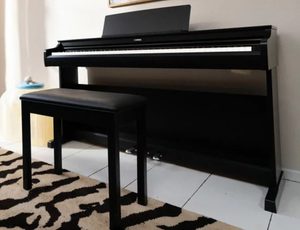
One of the first things that stands out about the Yamaha YDP-146 is that Yamaha has made a deliberate decision not to make it look like a keyboard. But this is a key characteristic. Many digital pianos, especially at the lower end, are just portable keyboards with a stand. They work fine. But look like electronics. The YDP-146 takes a different approach. And it’s designed to fit in a room like an acoustic piano.
That makes it considerably more attractive for home use.
The YDP-146 is part of Yamaha’s ARIUS family, with a conservative style that works well. There are no unnecessary visual flourishes, oversized displays or dozens of buttons spread across the front panel. The cabinet has clean lines, a discreet control section, and a shape that says piano.
Yamaha offers the YDP-146 in traditional finishes like black, white, and dark rosewood, depending on the market and finish. The exact finish availability can vary by region, but the overall design philosophy remains the same: this is meant to look like a permanent musical instrument rather than something that belongs on a keyboard stand.
And I think that’s an important advantage.
If you’re buying a piano for your home, appearance matters more than it might initially seem. A portable keyboard can be pushed against a wall or put away when you’re finished. A cabinet digital piano is going to be visible every day. You’re effectively buying a piece of furniture as well as an instrument, so it needs to be something you’re comfortable having in your living room or music room.
The YDP-146 does a good job of walking that line.
A traditional look without feeling old-fashioned
The cabinet is deliberately understated. There’s something quite pleasant about the fact that the YDP-146 doesn’t advertise its digital nature from across the room.
When the keyboard cover is closed, it looks much closer to a compact upright piano than a conventional electronic keyboard. Open the cover and the electronics become more apparent, but even then, Yamaha hasn’t filled the front of the instrument with controls.
That restraint pretty works particularly well in a domestic environment.
You can put the YDP-146 against a wall, add a small bench and a lamp or piece of sheet music, and it looks like it belongs there. It doesn’t demand that the room be redesigned around it.
That’s a surprisingly important quality for an instrument that you may own for many years.
The design is also unlikely to age badly. Yamaha hasn’t followed a fashionable styling trend that could look dated in five years. The conventional upright shape is about as safe a design choice as you can make for a digital piano.
Some buyers may find it boring.
I don’t.
A piano doesn’t need to look exciting. I’d rather Yamaha spend its design budget making the keyboard and sound system better than adding decorative elements that have no effect on the playing experience.
The key cover is more useful than it appears
The sliding key cover is another small but worthwhile feature.
When the piano is not in use, the cover protects the keyboard from dust. This is especially useful at home where the instrument might sit unused for a few days between practice sessions.
It also makes the piano look cleaner when closed.
There’s a practical psychological benefit here, too. A closed keyboard looks like furniture. Open it and the piano is immediately ready to play.
That may seem insignificant, and convenience affects whether people use their instruments.
A major problem with music equipment is friction. If you’ve to unpack, connect, adjust, and put away something each time you use it, you’re less likely to practice spontaneously. The YDP-146 avoids most of that.
You sit down, lift the cover, and play.
The cabinet makes it feel more substantial
The fixed cabinet also contributes to the physical impression of the instrument.
It’s around 53 inches wide and over 16 inches deep, the YDP-146 occupies a fairly substantial footprint. Yamaha’s published specifications put its weight at roughly 83 pounds, depending on the exact market configuration.
It’s not lightweight, but the weight feels reasonable for this instrument.
In fact, some weight is desirable.
A digital piano that moves around while you’re playing can feel cheap and distracting. You don’t want the instrument to shift when using the pedals or playing vigorous chords.
The cabinet provides a stable base for the YDP-146.
That stability becomes particularly noticeable when you’re using the pedals. With a portable keyboard and separate pedal, the pedal can sometimes move around on the floor. The YDP-146’s integrated pedal assembly stays in place.
It’s a small thing, but it makes the YDP-146 feel like an actual piano.
That three-pedal assembly enhances the design
The integrated three-pedal unit is one of the more important physical features.
You get the familiar soft, sostenuto, and damper arrangement instead of attaching a small external sustain pedal.
This isn’t just about looks.
The pedals are part of playing piano, and having them under the keyboard makes the instrument more natural to use.
This arrangement also makes the YDP-146 suitable for long-term learning. A beginner starting with a single plastic sustain pedal will need to learn the other pedals and develop precise pedal technique. The YDP-146 has a complete three-pedal setup.
The damper pedal supports half-pedaling, which shows Yamaha didn’t overlook the pedal system.
That music rest is simple, which is fine
This integrated music rest follows the same philosophy as the rest of the cabinet.
It does the job without being elaborate.
For sheet music, lesson books, and a tablet, having a permanent music rest is more convenient than balancing material on a portable keyboard.
This is another area where the design makes sense.
It’s designed around the idea that somebody will sit down in front of it and spend an hour practicing.
Everything is in roughly the place you’d expect it to be.
Where the design isn’t perfect
Some trade-offs are obvious.
Size is the biggest one.
There’s no getting around the fact that the YDP-146 takes up considerably more space than a portable 88-key digital piano. That cabinet makes it attractive. But also less flexible.
If you live in a small apartment or expect to move frequently, this is worth thinking about before buying.
You won’t want to dismantle the YDP-146 every few weeks.
It’s also not easy to carry around. At roughly 83 pounds, moving it’s a two-person job in most situations, particularly once you’re dealing with stairs or narrow doorways.
That’s not a design flaw, exactly. It’s a consequence of building a stable, furniture-style instrument.
Buyers sometimes underestimate the space a digital piano occupies. This keyboard itself may be only 88 keys wide, but you also need room for the bench, space to sit comfortably, and enough clearance to operate the pedals.
Measure the location before ordering.
Don’t just measure width.
Check the depth as well, and think about how far the bench will extend into the room when somebody is sitting at the piano.
Build quality is solid, not luxurious
The YDP-146 feels like a well-made mainstream digital piano, not a premium instrument.
That’s important.
Yamaha’s construction is reassuring; the instrument has the solidity you want for something that will stay in one place for years. The cabinet doesn’t seem designed to be as cheap and light as possible.
At the same time, don’t expect high-end materials or finish quality.
There are limits to what you can achieve at this price.
The YDP-146 is a well-built consumer instrument. It’s designed to be reliable and practical, not a heirloom.
I think that’s the right target.
In Yamaha’s more expensive models, you’ll find details that add luxury, like sophisticated actions and higher-grade materials.
The YDP-146 doesn’t need those to do its job.
The design features minimal controls
One of my favorite things about the YDP-146 is also something that some users might initially dislike: no huge control panel.
That keyboard isn’t cluttered with knobs and buttons.
Yamaha wants you to think of this as a piano. And that’s clear.
Some functions are less accessible than they would be with a display and buttons. You may need to learn certain button combinations or use Yamaha’s Smart Pianist application to access settings more conveniently.
For beginners, this could initially feel less intuitive.
But once you understand the basic controls, I think the minimalist approach makes sense.
It doesn’t look like computer gear in your living room.
It looks like a piano.
That’s the right focus for this product.
How durable is it likely to be?
Digital pianos aren’t immune to aging.
The mechanical parts of the keyboard can eventually wear, pedals can develop problems, and electronic components can fail. But unlike acoustic pianos, there’s no constant tuning or many mechanical parts.
That’s a practical strength of the YDP-146.
Routine ownership is relatively straightforward.
Keep it dry, clean the keyboard, don’t put drinks on it, and use the pedals and keys normally.
Not much else to do.
That makes it appealing to families buying their first serious piano.
No regular tuning bills.
The design verdict
The YDP-146 won’t win innovation awards, and that’s fine.
Yamaha knows what a home digital piano needs.
It needs to look good. It needs to be stable. It needs integrated pedals. It needs a useful music rest and key cover. And it shouldn’t look complicated.
The YDP-146 does all that.
The cabinet is solid, not huge. The style is conservative, not cheap. The integrated pedals feel authentic. The key cover protects the keyboard and keeps it tidy. And the overall construction gives the impression of an instrument intended to last rather than a temporary beginner product.
The biggest drawback is it’s a furniture-style piano. You give up portability and some placement flexibility in exchange for stability, appearance and a more authentic home-piano experience.
That’s a good trade for the right buyer.
If I were buying the YDP-146 primarily as a home instrument, I would have very few complaints about the physical design. It’s not luxurious, and it doesn’t try to be. It’s practical, understated, and solid.
Most, the design supports the instrument’s purpose.
You don’t look at the YDP-146 and think, “That’s an electronic keyboard.”
You look at it and think, “That’s my piano.”
For a digital piano intended to encourage regular practice and remain part of the home for years, that’s probably the best compliment its design can receive.
Keyboard
If you’re shopping for a digital piano, the keyboard itself should be near the top of your list of priorities. Sounds, Bluetooth, recording functions and built-in songs are all useful, but none of them can compensate for a keyboard that feels wrong under your fingers.
The Yamaha YDP-146 has a strong case.
It uses Yamaha’s Graded Hammer Standard action with 88 keys. The keys are weighted, with the lower register designed to feel heavier and the upper register progressively lighter, broadly reflecting the behavior of an acoustic piano. And it has adjustable touch sensitivity and matte black keytops.
GHS isn’t the most advanced action, but it’s not poor either. Quite the opposite. It’s an entry-level hammer action that provides a solid foundation for developing technique.
But how does it feel in everyday playing.
Weighted keys are a good starting point
Let’s begin with the basics.
It has 88 keys, covering the traditional piano range.
That may sound like a specification that’s hardly worth mentioning, but it kind of matters enormously if you’re buying the instrument for serious piano study.
There are inexpensive keyboards with 61 or 76 keys that can be perfectly enjoyable for casual playing. They can also be excellent for certain kinds of music production. For classical piano or technique development, a full range is better.
You won’t need to worry about running out of notes when a piece moves into the bass or treble registers.
More, you don’t have to adapt your technique to a smaller keyboard.
So the YDP-146 starts from a good place. It feels like a piano keyboard.
What “weighted” actually sort of means
For someone new to digital pianos, weighted keys can sound like a marketing term.
They’re not just that.
On an acoustic piano, pressing a key moves a mechanical system. It’s not just an electronic switch. There’s physical resistance, and that resistance is part of the playing experience.
A good pianist learns to work with that resistance.
The YDP-146 recreates that sensation with its GHS action.
When you press a key, you feel substantially more resistance than you would on an ordinary unweighted keyboard. You need to apply controlled pressure.
It’s a big reason for beginners to choose a digital piano like the YDP-146.
You’re learning to control an instrument that behaves like a piano.
The GHS action isn’t identical to an acoustic mechanism. It’s not the same. But the physical experience is closer.
Graded weighting
The “Graded” part of Graded Hammer Standard is particularly useful.
Keys aren’t all weighted the same.
Bass keys feel heavier; upper keys feel lighter.
That makes intuitive sense when you think about an acoustic piano. Lower strings are larger and need larger hammers; treble is lighter.
Yamaha’s action recreates the difference in key resistance.
You notice this when moving around the keyboard.
Playing a high melody is easier than playing heavy chords low. The difference makes the keyboard feel more natural.
It makes the YDP-146 better for preparing to play an acoustic piano.
How does it feel?
The YDP-146 feels reasonably firm. And traditional.
If you’re moving from an inexpensive portable keyboard, it can initially feel quite heavy.
But that’s not a bad thing.
And that’s what you should expect.
Playing a weighted keyboard is a bit different. You pay more attention to finger strength and pressure. And you start to notice how pressing a key harder or softer affects the volume.
This relationship is key to playing the piano.
You don’t want every note to come out at roughly the same volume. You want to play melodies gently, accent notes, and change intensity throughout a phrase.
A weighted, velocity-sensitive action provides the physical tools for that.
The YDP-146 isn’t a premium grand-piano simulation, but it gives beginners enough feedback to develop their skills.
Sensitivity
Yamaha offers four touch-response settings:
Hard
Medium
Soft
Fixed
I’d start with the default Medium setting.
It offers a sensible relationship between force and volume.
The Hard setting needs more force for higher volumes. This can be useful for players who have a naturally strong touch or who prefer a keyboard that feels less sensitive.
The Soft setting is the opposite. It lets you reach higher volumes with less pressure.
Fixed mode removes velocity response, making keys produce set volume levels.
I wouldn’t recommend Fixed mode for normal practice when learning piano. The point of practicing on a piano-style keyboard is to develop touch control.
But adjustable sensitivity is still useful.
Different players have different techniques, and the ability to make the keyboard more or less responsive can help you find a comfortable starting point.
Playing expressively
This is where the YDP-146 becomes more interesting than its specifications might initially suggest.
A keyboard is not just about key weight.
The question is whether you can express yourself.
The YDP-146 responds to velocity, changing piano sound based on how hard you play.
This means beginners can learn basic piano dynamics:
piano, forte, crescendos, accents, soft accompaniment, and strong melodies.
The keyboard alone won’t make you more expressive.
But it provides a physical interface to develop those skills.
This is especially important for classical music.
A piece with correct notes and rhythms can sound bad if all notes have the same force. A responsive weighted keyboard makes you pay attention to phrasing and touch.
GHS limitations
This is where it’s important not to oversell the YDP-146.
GHS is good for entry-level.
This isn’t premium.
Yamaha offers more sophisticated mechanisms in its higher-end range. More expensive Yamaha instruments provide a closer approximation of grand-piano behavior, with more refined response. And better repetition.
You can feel the difference if you spend enough time with both.
An experienced pianist will generally notice that the YDP-146’s action doesn’t have the same level of subtlety as a more expensive Yamaha.
Differences matter during delicate playing.
Advanced pianists want to make small changes in finger pressure and hear small changes in sound when playing softly.
They also care about how quickly a key can repeat, how the key returns beneath the finger and how the action behaves during rapid passages.
The YDP-146 is capable, but not exceptional here.
For a beginner, these limitations are unlikely to matter much.
For an experienced concert-level pianist, they could matter a great deal.
So advanced players should try the YDP-146 before buying, rather than relying on specs.
Key surfaces
YDP-146 keytops are matte black.
The key surface affects the keyboard feel during long sessions.
Glossy plastic can become slippery, particularly if your hands become warm during extended practice.
Matte surfaces provide a more controlled feel.
White keys are smooth.
Nothing exotic here, which is fine. That goal is a familiar piano-key experience.
Repetition and fast play
More experienced players may notice the YDP-146’s entry-level status in rapid repetition.
On an acoustic grand, the action is carefully designed so that a note can be repeated rapidly without necessarily requiring the key to return completely to its original position.
More advanced digital actions try to reproduce that behavior.
YDP-146’s GHS action lacks sophistication.
For ordinary scales, chords, arpeggios and most beginner-to-intermediate repertoire, that’s unlikely to be a problem.
But advanced pieces with rapid repeated notes may require a premium action.
Again, this isn’t a criticism that should scare away the intended buyer.
Spending more money here produces tangible improvements.
Acoustic piano comparison
How close is the YDP-146 to an acoustic upright?
The honest answer is: close enough for learning, but not identical.
That’s the standard I think makes the most sense.
The YDP-146 has weighted keys, graded resistance, velocity sensitivity, and proper pedals. These characteristics give it the physical behavior of a piano.
An acoustic piano, however, has a lot of mechanical complexity.
When you press an acoustic key, you’re interacting with a system of levers, felt, hammers, dampers and strings. The weight and inertia of these components produce a sensation that no entry-level digital mechanism can perfectly duplicate.
So, the YDP-146 shouldn’t be judged against a concert grand as if Yamaha claimed it’s the same thing.
It isn’t.
Ask if it gives students enough physical information to develop useful technique.
Yes, it does.
Is it suitable for classical music?
It’s.
For beginners learning scales, chords, and pieces from a method book, the keyboard is adequate.
For an intermediate player working through sonatinas, easier Chopin, Bach, Beethoven or contemporary classical repertoire, it remains capable.
As a player’s technique advances, the limitations become more apparent.
This means the YDP-146 has a sensible lifespan.
You can start learning on it, make substantial progress, and then the action becomes the main limiting factor.
That’s what you want from an entry-level digital piano.
It’s suitable for pop and accompanying?
It’s arguably even more comfortable in these contexts.
Pop piano often relies on chords, repeated patterns, rhythmic accompaniment and melodic lines rather than the extreme technical demands of advanced classical repertoire.
The GHS action works well for that.
Weighted keys make chord playing feel more substantial than on a lightweight keyboard.
As a cabinet instrument, the YDP-146 gives you a stable playing position and proper pedals.
The learning advantage
Perhaps the most important thing about the YDP-146’s keyboard is that it doesn’t force a beginner to relearn piano technique later.
It’s easy to make this mistake when buying a first keyboard.
Someone buys a cheap instrument because they’re unsure about sticking with piano. The keyboard is easy to play, and initially that feels like an advantage.
After a year of lessons, the player encounters an acoustic piano with heavier keys and a different response.
The technique they’ve developed doesn’t transfer perfectly then.
A properly weighted digital piano avoids much of this problem.
The YDP-146 isn’t just more realistic for realism’s sake. It’s a better educational tool.
Is the keyboard tiring?
It can be tiring at first.
This is worth mentioning because some beginners think the heavier feel kind of means something’s wrong.
That’s not true.
If you’re new to weighted piano actions, your hands and fingers need time to adapt.
You shouldn’t try to overpower the keyboard, though.
Good technique isn’t about brute force. This weighted action should encourage controlled movement, not excessive tension.
Most players find the resistance becomes natural after adjusting.
Verdict on the keyboard
That keyboard is one of the strongest reasons to consider the YDP-146.
It has everything that matters: 88 keys, graded weighting, velocity sensitivity, adjustable touch response, and a proper piano-oriented action.
The GHS mechanism isn’t revolutionary; experienced pianists can find more sophisticated actions elsewhere. The key response isn’t as nuanced as Yamaha’s premium mechanisms; advanced players may notice limitations in delicate playing and rapid repetition.
But this instrument isn’t designed for that.
The GHS action is good enough for beginners.
It remains capable and enjoyable for intermediate players.
For advanced pianists, it’s a matter of personal preference and expectations.
Yamaha put the money in the right place, which is important.
Yamaha built the YDP-146 around an authentic piano-playing experience, rather than a lightweight keyboard with many electronic features.
That’s what I’d want from a digital piano.
If you’re buying the YDP-146 to learn piano, I would consider the keyboard a major positive. It gives you a full 88-note range, realistic resistance, useful dynamic control and a physical experience that should remain relevant well beyond the absolute beginner stage.
It won’t fool concert pianists into thinking they’re playing a hand-built acoustic grand.
It doesn’t need to do that.
It provides a credible, enjoyable, and serious foundation for learning and playing piano at home.
That’s the more important achievement for this class of instrument.
Sound
The keyboard action is only half of the equation for a digital piano. A beautifully weighted keyboard can be disappointing if the piano tone sounds artificial, thin, or lifeless. This is especially important with the Yamaha YDP-146, since the ARIUS concept aims to recreate the experience of sitting down at a real piano, not just giving you a collection of keyboard sounds.
Sound is one of the YDP-146’s stronger areas, fortunately.
The YDP-146 comes with a CFX concert-grand piano voice, supported by Virtual Resonance Modeling Lite technology and a 192-note polyphony specification. That result isn’t intended to fool a concert pianist into believing they’re sitting at a nine-foot acoustic grand, but it’s considerably more sophisticated than the basic piano samples found on inexpensive keyboards.
What matters most is that the YDP-146 sounds like a piano, not an electronic imitation.
That’s a distinction you start to appreciate after spending some time with the instrument.
The CFX piano voice from Yamaha’s CFX concert-grand piano voice is at the heart of the YDP-146’s sound system.
The CFX is Yamaha’s flagship concert grand; its digital instruments use recordings and modeling based on this instrument to create their main piano tones. Yamaha describes the YDP-146’s CFX sound as offering a broad dynamic range and expressive control.
The CFX is an impressive source instrument for a digital piano in this category.
Having a CFX-derived voice doesn’t automatically make the YDP-146 sound like a real CFX, of course. The final result depends on more than just the source piano. The tone generator, velocity response, resonance processing, speakers, cabinet, and listening position all affect what you hear.
Yamaha has started with a very good foundation, still.
The basic character is clearly Yamaha: clear, focused, and articulate, with enough brightness in the upper register to keep individual notes distinct.
Some players will love that right away.
Others may find the default piano tone a bit bright compared to the warmer, darker sound of certain acoustic uprights or European-style grands.
That’s largely a matter of taste.
The YDP-146 isn’t a particularly mellow digital piano. The piano sound has enough attack and clarity to make the instrument feel responsive, especially when playing rhythmic passages or music with prominent melodic lines.
This clarity is useful for students.
When learning a piece, you want to hear what your fingers are doing. If the piano sound becomes muddy when playing chords, it can be harder to identify mistakes.
The YDP-146 generally avoids that problem.
Dynamic range
One of the most important characteristics of a digital piano is how well it handles dynamics.
Pianos shouldn’t just have “quiet” and “loud” versions of a sound. There needs to be a convincing range between the two.
The YDP-146’s keyboard is velocity-sensitive. So it allows the CFX voice to respond to how forcefully you play.
You can play a phrase gently, then increase the intensity, accent notes, and back off.
This teaches beginners a key aspect of piano technique: volume comes from touch.
You don’t just select a volume and play.
You control the expression with your fingers.
The YDP-146 lacks the finesse of Yamaha’s higher-end instruments, especially at low volumes, but it has enough dynamic range to make expressive playing worth it.
This becomes especially noticeable when you play simple music slowly.
A basic melody can sound surprisingly musical when you deliberately vary the pressure from note to note.
Conversely, if you play every key with roughly the same force, the YDP-146 will expose that habit rather than hiding it.
That’s a positive quality for a learning instrument.
The sound character
The YDP-146’s tone is relatively clean and modern.
That bass has enough weight for low chords to feel substantial, and the middle register is where most pianists focus. The treble cuts through without disconnecting from the lower registers.
The balance across the keyboard is important.
Cheap digital pianos sometimes make the bass sound disproportionately large while the treble becomes thin and synthetic. Others have a pleasant middle register but lose realism at the extreme ends of the keyboard.
The YDP-146 maintains a coherent piano sound across its range.
There’s still an obvious difference between listening through the built-in speakers and listening through good headphones, but that’s true of almost every digital piano.
VRM Lite and the resonance
The YDP-146’s VRM Lite system is important when using the sustain pedal.
On an acoustic piano, sound doesn’t just disappear when a key is released.
Strings interact with each other. That soundboard vibrates. Other strings can resonate sympathetically. This dampers influence the decay of notes. The sustain pedal changes the instrument’s behavior.
Simple digital pianos can play the notes but struggle with the interactions.
VRM Lite is Yamaha’s way to make it sound more natural.
That system models string resonance and other interactions for more continuity in sustained chords and overlaps. Yamaha describes VRM Lite as recreating resonance effects from string and instrument interactions.
You don’t necessarily sit down and think, “I’m hearing VRM Lite now.”
Good sound processing doesn’t work that way.
That benefit is subtle.
The piano sounds less sterile.
When you hold the damper pedal and play a chord, the sound develops and overlaps, not like isolated samples.
That makes a difference in classical music.
Sustain and decay
An unnatural decay can make a digital piano sound obviously electronic.
An acoustic piano has a very particular way of fading away. The initial attack is strong, then it decays slowly and complexly, changing with pitch, playing force, and the acoustic environment.
Sustained passages on the YDP-146 don’t sound like a basic synthesizer patch, thanks to its convincing approximation.
The sustain pedal is particularly important here.
When you’re playing a slow piece and allowing chords to ring together, the sound has more depth than you would get from simply playing isolated notes.
This is one of the reasons I think the YDP-146 works better as a piano than its relatively modest feature list might suggest.
Yamaha focused the available technology on the main instrument sound.
192-note polyphony
The YDP-146 provides 192-note polyphony, which is unusually generous for an instrument aimed at this segment.
Polyphony is basically the number of notes the instrument can handle simultaneously, although the actual calculation can become more complicated when layering sounds and using sustain and resonance effects.
Why does it matter?
Piano playing can involve a lot of overlapping sounds, which is surprising.
If you play a piece with the sustain pedal down, Previous chords are still fading as you play the next one. Resonance processing may also generate additional sound components.
If polyphony is too low, older notes can be cut off to make room for new ones.
This is especially unpleasant in classical music.
With 192 notes available, this isn’t something I’d worry about with the YDP-146.
Players using a lot of sustain should still have enough headroom.
In practical terms, I’d classify the polyphony as more than sufficient for the instrument’s intended use.
I wouldn’t use polyphony to distinguish the YDP-146 from other pianos with 128 or 256 notes. At this level, the sound engine’s quality matters more than the number.
The other piano sounds
There are ten voices on the YDP-146.
This isn’t a lot by digital-keyboard standards.
A modern arranger keyboard might advertise hundreds of voices, rhythms and accompaniment styles.
I don’t think the YDP-146 should be criticized too much for this.
It isn’t an arranger keyboard.
It’s meant to be a piano.
This extra sounds are for variety and occasional use, not to make it a production workstation.
There are electric piano, organ and string-oriented sounds among the available voices, giving you enough variety to play around with layered textures and different musical styles.
For pianists, ten voices is enough.
In fact, a smaller selection might be better.
You don’t buy a digital piano to browse 600 sounds. You buy it to play.
Dual voice combinations
Layering voices adds another dimension.
You can combine two sounds, such as piano and strings, to create a thicker texture.
It’s especially enjoyable when playing pop arrangements or experimenting with compositions.
This strings can provide a sustained background behind the piano attack, making simple chord progressions sound larger.
But I wouldn’t buy the YDP-146 just for its layering capabilities.
These are useful extras, not central features.
This piano voice is substantially better than the secondary sounds, as it should be.
Reverb
The YDP-146 has four reverb types.
This may seem basic compared to expensive keyboards, but reverb matters for a digital piano.
The instrument is played in a physical room, but the sound is generated electronically.
A completely dry piano sound can feel unnaturally close and flat.
Some reverb creates the impression of a larger acoustic environment.
Different settings can make the piano feel like it’s being played in a room, hall or other reverberant space.
Restraint is important.
Too much reverb can make a digital piano sound impressive for thirty seconds and unpleasant after an hour.
For serious practice, I would generally use a modest amount.
Speakers versus headphones
The YDP-146 sounds depend on how you’re listening.
With headphones, you hear more detail.
That sound is more intimate, and subtle aspects of the piano voice are easier to pick out.
That can be useful for practice because you can hear small differences in attack and decay.
With the built-in speakers, the experience is more physical.
You hear the sound interacting with the room and cabinet, and it feels more like sitting at a conventional home piano.
Neither is better.
Headphones give detail and privacy.
Speakers give a more natural room experience.
If possible, I recommend spending time with both.
Is it similar to an acoustic piano?
The answer is simple.
It’s a good digital piano, but not an acoustic one.
This difference matters.
If you sit in front of a well-maintained acoustic grand and then immediately switch to the YDP-146, you’ll hear the difference.
Acoustic instruments have a complexity that digital pianos at this price can’t fully replicate.
Tiny changes in hammer impact, string vibration, and soundboard response give an acoustic instrument its character.
The YDP-146 can’t replicate all these aspects.
But it gets the important parts right, so the difference won’t hinder practice.
Beginners will find it sounds like a piano.
Intermediate players will also find it enjoyable and expressive.
Professional pianists used to high-end acoustic grands will notice the limitations.
This progression is reasonable.
Will the sound become boring?
This question is often overlooked.
One of the dangers of buying a digital piano with only a handful of voices is that you might get bored with it.
I don’t think that’s likely to happen with the main piano sound.
A good piano voice offers a lot of range, as the player’s touch changes the sound.
The same CFX voice can sound completely different depending on whether you’re playing softly, aggressively, legato, staccato, with the sustain pedal or without it.
This gives you room to explore.
If you’re bored after a few weeks, it’s probably not due to the number of sounds.
You may simply want an instrument designed for a different purpose.
The sound’s suitability for different styles
The YDP-146’s piano sound is well-suited for classical, solo, pop, and home playing.
Classical pieces benefit from clean articulation and dynamic response.
Pop benefits from the clarity in the middle and upper registers.
Ballads work well with sustain and resonance effects.
Jazz players may like the clear attack, but personal preference affects whether the Yamaha character suits their style.
For songwriting, the ability to layer piano with another voice provides enough variety to sketch out ideas without requiring an external keyboard.
The focus is on being useful, not exhaustive.
The sound quality overall
That sound system is a strong point for the YDP-146.
The CFX voice provides a strong foundation. 192-note polyphony eliminates concerns about running out of voices. VRM Lite makes sustained notes and chords feel natural. This dynamic response rewards expressive technique. The limited more sounds make sense for a piano-focused instrument.
Some compromises exist.
Not everyone will like the CFX voice. Some players will find it too bright. That built-in speakers lack power and depth compared to more expensive models. The action and sound engine lack the nuance of Yamaha’s premium models.
In context, the YDP-146 gets the basics right.
That’s what’s important.
A digital piano doesn’t need every possible sound.
It needs to produce a great piano sound and respond to the player’s touch convincingly.
The YDP-146 comes close to achieving this.
If I were evaluating it purely on the quality and usefulness of its principal piano voice, I’d have little hesitation recommending it to beginners and intermediate home players.
It’s clear, expressive, detailed enough for serious practice and supported by enough resonance processing to avoid the sterile character that can undermine cheaper digital pianos.
Most, the sound and keyboard work together well.
The weighted GHS action allows physical control, and the CFX voice responds with a useful dynamic range. This relationship is more important than any specific spec.
The YDP-146 isn’t a replacement for a great acoustic grand.
It doesn’t have to be.
For a home digital piano in this class, it delivers the part of the experience that matters most: when you sit down, press a key and play a phrase, it sounds and feels enough like piano playing that you can forget about the electronics and concentrate on the music.
Speaker System
The Yamaha YDP-146’s built-in speaker system is straightforward, with two 12 cm speakers. And 8-watt amplifiers. It may not seem impressive on paper, especially compared to larger digital pianos. However, Yamaha tuned the system for a home piano, not a small entertainment system, which makes a big difference.
The speakers work well for everyday piano practice. They’re loud enough for a typical room without making the piano sound weak or thin. With moderate listening levels, the CFX piano voice sounds fairly full. And it has a good balance of bass. And upper register clarity, making the keyboard fun to play even without headphones.
Yamaha’s speaker design incorporates a diffuser. This helps spread sound more naturally, so it doesn’t feel like the audio is coming from two small points. The diffuser, according to Yamaha, helps keep treble clear at a distance and creates a more balanced sound field.
Sitting at the piano, the difference is noticeable, as opposed to listening from directly in front of the speakers. What’s more, the sound doesn’t come across as aggressively directional, a common issue with compact keyboards. Though it’s still a digital piano with relatively small speakers, Yamaha’s consideration of how those speakers work with the cabinet and the room is evident.
How loud is the YDP-146?
Most home users will find that’s the case, yes.
The 8W × 2 amplification limits the YDP-146’s use in large rooms, it’s not meant to fill a hall. This instrument is for home use, mainly. You can practice, learn, and play casually with it.
In small to medium-sized rooms, like a bedroom or study, volume isn’t usually a concern and you can turn it up for more energetic playing; for normal practice, though, it’s not necessary to have it near maximum volume.
Moderate volume is where the YDP-146 makes the most sense, I think. When you push the speakers hard, refinement is lost, and the bass feels less controlled. The sound becomes more obviously generated by the speakers. This isn’t a serious criticism, though, because nearly every digital piano in this class has this same limitation.
With regular use, power isn’t an issue, and the speakers have enough headroom, so you don’t always wish you had more.
Bass and treble, what about them?
The YDP-146’s two-speaker setup provides a reasonable sense of frequency range, and it’s best to have realistic expectations about what it can deliver.
When you’re sitting right at the piano, the lower notes have enough weight to make it sound substantial. Clarity matters, and the higher notes deliver, which is especially important for classical pieces or anything that requires detailed right-hand playing, so they remain relatively clear.
You’re missing the physical depth of a larger speaker system with the YDP-146. It’s because an acoustic piano creates sound with a large soundboard and complex structure, but the YDP-146 reproduces piano sound through two relatively compact speakers. This means less air is being moved.
Left-hand playing, especially when it’s powerful, or music with large chords and low-frequency resonance, really highlights this. The YDP-146 does a decent job of reproducing these sounds for practice purposes. However, it can’t match the deep physical impact of a larger digital piano or an acoustic instrument.
Headphones are useful for one key reason. They let you practice privately, which is helpful when you want to hear more detail or play late at night, and Yamaha includes two standard stereo headphone jacks for this purpose.
Speakers vs Headphones
The YDP-146 is quite enjoyable with headphones. You get a much more intimate presentation of the piano sound. And it’s easier to notice subtle differences in dynamics, sustain, and resonance.
That built-in speakers have one advantage though: they make the instrument feel like a piece of furniture that produces sound in the room. You aren’t listening to the piano exclusively inside your head. The sound exists in the space around you, which can make longer practice sessions feel more natural.
I’d use both for serious practice. Speakers are better for daytime playing and getting a sense of the instrument in the room. Headphones are useful for maximum detail, quiet practice, or when you don’t want to disturb others.
Overall Verdict on Speakers
The Yamaha YDP-146’s speakers aren’t a headline feature, but that’s okay. The 12 cm drivers, 8W × 2 amplification, and diffuser design provide a balanced setup that suits the instrument’s purpose.
They’re loud enough for home use, clear enough for practice, and well matched to the YDP-146’s sound engine. That limitations become obvious only when you expect the kind of power and physical bass response associated with a much larger system.
For a home digital piano in this class, the speaker system is a solid part of the overall package, not a weakness. If practicing piano is your priority, not filling a large room with sound, the built-in speakers should do what you need.
Features & Functions
Functions & Features
The Yamaha YDP-146 doesn’t compete with a workstation keyboard packed with hundreds of sounds, recording tools, effects and performance controls. Its approach is much simpler. It focuses on giving you a convincing piano experience, while still including enough useful features to make practicing, learning, and playing more enjoyable.
That simplicity is actually a key strength of the YDP-146. You won’t spend an afternoon learning menus before you can start playing. At the same time, Yamaha hasn’t stripped it down. So far that it feels restrictive. There are enough tools here for a beginner to grow into the piano, while more experienced players can largely ignore the features they don’t need.
Piano Voices and Other Sounds
The YDP-146 has 10 built-in voices. This isn’t a huge number by today’s standards, but this isn’t really a keyboard designed around sound variety. Yamaha emphasizes the right thing: on the piano voices.
The main attraction is the CFX concert grand piano sound. It’s designed to provide the character of Yamaha’s flagship CFX concert grand, making the YDP-146’s piano voice more serious than you’d expect from a basic entry-level instrument.
The other voices are useful for changing things up, but the 10 sounds aren’t the reason to buy the YDP-146. If you want hundreds of instruments and sounds, there are better products for that.
The YDP-146 is a piano first and foremost.
This influences almost every design decision. Yamaha doesn’t overload the front panel with unused controls. It encourages you to play instead.
VRM Lite Resonance
Yamaha’s VRM Lite system is interesting.
VRM means Virtual Resonance Modeling. In an acoustic piano, strings don’t operate alone. When you play a note, other strings and parts of the instrument can resonate sympathetically. The sound changes depending on the notes, pedals, and string interaction.
The YDP-146 uses VRM Lite to recreate some of those interactions digitally. Yamaha describes VRM Lite as modeling piano string resonance.
You won’t necessarily sit down and think, “I’m hearing VRM Lite now.” It doesn’t work that way. It’s valuable for making the sound less static, especially with the sustain pedal.
This basically matters because resonance is one of those details that can make a digital piano feel more convincing. A simple sampled piano can sound good when you play individual notes, but sustained chords can quickly expose the fact that you’re listening to a recording being triggered by keys. More modeling makes the sound behave naturally.
For a piano-focused instrument, this feature is genuinely useful.
Touch Sensitivity
The YDP-146 has four touch settings: Hard, Medium, Soft, and Fixed.
Most players will start with the default setting, and alternatives are useful.
A player with a heavy touch may prefer the harder setting, while someone who struggles with volume might find the softer setting comfortable. Beginners can experiment with these settings to learn about velocity.
The Fixed setting is less relevant because it removes the relationship between key pressure and sound. Still, it can be useful for particular situations where consistent output matters more than natural dynamics.
Most people will start with Medium and leave it alone.
Reverb
The YDP-146 includes four reverb types, allowing you to change the sense of acoustic space around the piano sound.
You won’t spend hours adjusting this. But it can make a significant difference to how the piano feels.
A relatively dry sound can be useful for detailed practice because you hear exactly what your fingers are doing. A little more ambience can make slow pieces feel more spacious and musical.
Don’t overdo it. Too much reverb can make mistakes harder to hear and can blur fast passages. For learning and serious practice, I’d generally keep the effect fairly restrained.
Intelligent Acoustic Control
Yamaha also includes Intelligent Acoustic Control (IAC).
It helps maintain a balanced sound at lower volumes. This is especially useful for home pianos, as you won’t always want to play loudly.
At low volume, bass and treble can sometimes feel less balanced, making a piano sound smaller or less natural. IAC compensates for this and preserves clarity and balance as the volume changes.
It’s the kind of feature that doesn’t look exciting on a specification sheet, but can be useful in everyday life. When practicing quietly in the evening, you want the piano to remain enjoyable, not sound weak just because the volume is down.
Dual and Duo modes
The YDP-146 has Dual and Duo modes.
Dual mode lets you layer two voices together. For example, you can combine a piano sound with another instrument to create a thicker or more atmospheric tone.
It won’t turn the YDP-146 into a production keyboard, but it’s a fun feature to experiment with. You can use it when you want a different sound than the standard piano.
Duo mode is more useful for teachers and students. It divides the keyboard into two sections with the same pitch range, so a teacher and student can play the same notes in their areas.
This is handy for lessons. A teacher can show a passage, and the student can follow along without needing another piano.
It’s also useful for parents helping kids learn. Both players can work in their own section, rather than one person reaching across the keyboard to show.
Built-in songs and lesson material
The YDP-146 has a generous collection of built-in music, considering it’s a straightforward piano.
It comes with 10 voice demo songs, 50 classical pieces, and 303 lesson songs, a total of 353 built-in songs.
The 50 classical pieces are useful for beginners, as they provide material to listen to and practice. The 303 lesson songs make the YDP-146 more useful as a learning instrument, compared to a piano with just an 88-key keyboard and a few sounds.
For first-time digital piano buyers who plan to learn on their own, this library adds value.
Built-in lesson material won’t replace a good teacher or a modern learning platform, of course. But it gives you something to work with right away, making the instrument feel more like a learning tool.
Recording functions
The YDP-146 includes a basic MIDI recorder. You can record one song with two tracks, with Yamaha specifying storage for about 11,000 notes per song.
This is one of those features that sounds modest but can be extremely useful.
For beginners, recording yourself helps identify timing problems and mistakes that aren’t obvious while playing. You might think a passage sounds fine in the moment, only to listen back and realize that the rhythm isn’t as consistent as you thought.
For more experienced players, the two-track system allows recording separate parts and listening back to them together.
The limitation is that it’s not a modern multitrack production system. It’s not designed for audio recording, extensive editing, dozens of tracks, or sophisticated sequencing.
It’s a practice recorder, which makes sense for its role.
That piano can also play back SMF files, while recording is handled in SMF format.
Metronome and Practice Controls
The basics are what matter in a digital piano, not a huge collection of practice features.
The YDP-146 includes a built-in metronome with a tempo range from 5 to 280 BPM. You can also transpose the keyboard by six semitones in either direction and adjust the tuning across a useful range.
For beginners, the metronome is especially important. It’s easy to practice a difficult passage slowly and gradually speed it up, which is usually far more productive than repeatedly trying to play it at full speed.
Transpose is also useful when playing with another instrument or a backing track. If a song’s original key is uncomfortable, you can shift the keyboard without needing to relearn the notes in a new position.
These features may not be glamorous, but they’re useful once you’ve spent serious time with the instrument.
Pedal Features
The YDP-146 features an integrated three-pedal system, consisting of damper, sostenuto, and soft pedals. And the damper pedal supports half-pedaling.
This makes the YDP-146 more suitable for traditional piano study than a basic digital keyboard with a simple sustain pedal.
As your playing improves, half-pedaling becomes particularly valuable. Instead of treating the damper pedal as simply “on” or “off,” you can control how much sustain is applied. This allows for cleaner transitions and more expressive phrasing.
You may not notice the difference right away, but you’ll appreciate this feature more as your technique improves.
Smart Pianist and Modern Connectivity
The YDP-146 is also compatible with Yamaha’s Smart Pianist ecosystem, and it has USB connectivity, as well as Bluetooth Audio and MIDI, depending on the market.
This gives the instrument more flexibility than its traditional appearance might suggest. The YDP-146 can be part of a broader digital setup, rather than being completely isolated from modern devices.
If it’s supported in your region, Bluetooth Audio can be especially convenient. You can use the piano’s speaker system to play audio from a compatible device, so you can listen to music or other material through the instrument while sitting at the piano.
Bluetooth MIDI is potentially even more useful for learning and music applications, as it lets the piano communicate with compatible devices without needing a physical MIDI cable.
One important thing to note is that Yamaha says Bluetooth availability can vary by region.
If wireless connectivity is a major reason you’re interested in the YDP-146, check the model’s exact specs in your country before buying.
Headphone Outputs
The YDP-146 includes two standard stereo headphone jacks.
Having two outputs is a small but thoughtful touch. It sort of means a teacher and student can both use headphones, useful for quiet lessons or shared practice.
For those living in an apartment or sharing a home, headphones are almost essential. You can practice late at night without turning the room into a concert hall.
The YDP-146’s piano engine produces more detail than its speakers can reveal, headphones can also be useful when you want to concentrate on the sound itself.
Feature Verdict
The YDP-146 has focused features.
You get the important piano-related functions: an 88-key weighted action, multiple touch settings, three pedals with half-pedaling, CFX piano sound, VRM Lite resonance modeling, reverb, a metronome, recording, built-in songs, lesson material, Dual and Duo modes, and useful connectivity.
What you don’t get is the huge feature list of a workstation or arranger keyboard. There aren’t hundreds of voices competing for your attention, or a large control panel with many buttons.
For the intended buyer, I think that’s a good thing.
The YDP-146 is designed to make you want to sit down and play piano, without spending a lot of time scrolling through menus. Its strongest features directly support that goal, and the extras provide enough flexibility for lessons and practice.
That makes the YDP-146 feel well judged. Yamaha didn’t add features just to make the spec sheet longer. Most of what’s included has a practical purpose, and the features you’ll use most improve the playing experience.
Connectivity
Connectivity isn’t usually the first thing people think about when shopping for a digital piano. Most buyers are understandably more interested in the keyboard action, piano sound, pedals and speakers. But connections become more important when you use the piano with learning apps, headphones, computers, tablets, or other music gear.
The Yamaha YDP-146 has a fairly modern approach. It lacks the many professional connections found on stage pianos or workstations, but it has the important ones for a home digital piano. It includes USB connectivity, Bluetooth Audio and MIDI, two headphone outputs, and compatibility with Yamaha’s Smart Pianist ecosystem.
That combination makes the YDP-146 considerably more flexible than its traditional furniture-style appearance might suggest.
USB TO HOST
The main connection is a USB TO HOST port. It lets the YDP-146 communicate with compatible computers and devices.
If you just want to play piano, you may not use this connection. But for anyone interested in music software, recording, digital sheet music, or learning applications, it can become one of the most useful features on the instrument.
The key thing is that the YDP-146 isn’t meant to be a traditional audio interface. The USB connection is for linking the piano to modern devices and apps, not for making it a recording workstation.
Yamaha also specifies a USB Audio Interface with 44.1 kHz, 24-bit stereo audio.
This addition gives the instrument more potential in a computer-based music setup. Instead of thinking of the YDP-146 as an isolated digital piano, you can treat it as a controller and sound source that can interact with other digital equipment.
For a beginner, this might mean using a learning application. For a more experienced player, it could mean working with music software or recording ideas into a computer.
Bluetooth Audio
Bluetooth is a convenient addition to the YDP-146.
In supported regions, the piano has Bluetooth Audio, which lets devices send audio wirelessly.
This pretty means you can play music from a phone or tablet through the piano’s speakers.
That might sound like a relatively minor feature, but it can be surprisingly useful.
You can play along with a backing track, listen to a song, practice with an accompaniment, or use the piano’s speakers to listen to music.
It also makes the YDP-146 convenient for informal learning. You can have digital sheet music on a tablet and send audio through the piano at the same time.
The main limitation is that Bluetooth Audio and Bluetooth MIDI are different. Audio streaming just sends sound to the piano. It doesn’t make the piano a wireless controller for every music app.
The YDP-146 also supports Bluetooth MIDI, where available.
Bluetooth MIDI
For musicians who want to connect the piano to modern apps, Bluetooth MIDI is arguably more interesting.
MIDI doesn’t transmit recorded sound in the same way Bluetooth Audio does. It communicates musical information, like which key you pressed. And how hard. And also when you released it.
That means a compatible app can recognize what you’re playing on the YDP-146.
This opens up possibilities for learning software and other tools, like notation programs and music production applications.
You could connect the piano to a tablet, for example, and use software that honestly shows notes as you play. You could also use the keyboard as a MIDI controller for virtual instruments on a computer.
This is one area where the YDP-146 has an advantage over very basic digital pianos. And you’re not stuck with Yamaha’s built-in sounds.
If you get into software instruments, the YDP-146’s 88-key keyboard can control them.
There’s an important qualification, though. Yamaha states that Bluetooth Audio and MIDI availability varies by area.
So don’t assume all YDP-146 models will have the same wireless features. If Bluetooth is important to your buying decision, check the specification for the exact regional model you’re purchasing.
Smart Pianist Compatibility
The YDP-146 can also work with Yamaha’s Smart Pianist application, which adds another layer of control and functionality.
This is useful because the piano’s control panel is simple by design. Yamaha kept the cabinet clean, without covering it in buttons.
It looks good, but some settings are harder to access from the piano.
An app can provide a more visual way to manage them.
This can make the instrument easier for beginners to understand. You can use a device as a more intuitive interface, instead of memorizing key and button combinations.
It also fits naturally with how many people learn piano today. A tablet on the music rest can provide sheet music, lessons, and more, without needing a big display on the piano.
The result is a nice balance of traditional design and modern functionality.
Headphone Connectivity
The YDP-146 has two headphone jacks.
I think this is particularly important for a home digital piano.
One obvious benefit is quiet practice. Headphones let you play without disturbing others, whether you live in an apartment, share a house, or want to practice late.
And two headphone connections make the YDP-146 more useful for lessons.
A teacher and student can both use headphones and play together, without disturbing others. That’s a small feature, but it makes the instrument more practical for home teaching.
Headphones also let you hear more detail in the piano’s sound. The built-in speakers are fine for everyday playing, but headphones can reveal nuances in the sound that the speakers might not.
For serious practice, that can be valuable.
Connecting to a Computer
The YDP-146 has enough connectivity for computer-based music, making it part of a basic digital setup.
The keyboard communicates with a computer via USB. And MIDI support lets you use compatible software.
You’re not limited to Yamaha’s internal piano sounds. With a computer, you can access virtual pianos, orchestral libraries, synthesizers, notation software and digital audio workstations.
The YDP-146 isn’t a professional studio controller, though. Its controls are still designed around piano playing, and you don’t have the knobs, sliders, pads, and extensive control assignments found on dedicated MIDI controllers.
The 88-key weighted keyboard is useful as a MIDI input device, too.
It can grow with you, in other words.
A beginner can use it solo. Later, you can connect it to a computer and explore a larger software ecosystem without needing a new piano.
Connecting to Tablets and Phones
The YDP-146’s modern connectivity is most useful with mobile devices, probably.
You can put a tablet on the music rest for sheet music, lessons, tutorials, or compatible Yamaha apps. Bluetooth can reduce cable clutter when the regional model supports the required wireless functions.
It makes the setup feel simpler, too.
And there’s a practical benefit for families. A child might use it as a regular piano one day and connect it to a learning app the next.
It doesn’t force technology on you, but gives you the option.
I prefer connectivity to work that way on a digital piano.
What the YDP-146 Doesn’t Have
The connectivity is useful, though not extensive.
Don’t expect the rear panel of a professional stage piano from the YDP-146. This is still primarily a home digital piano.
There aren’t many traditional professional outputs and inputs for complex live rigs. The instrument’s connections are centered around headphones, USB, wireless device communication, and practical home use.
That’s fine for most buyers.
This people most likely to be disappointed are musicians who already know they need a more advanced connection panel for studio or live performance work.
A dedicated stage piano makes more sense for a professional setup with external MIDI hardware and multiple audio outputs.
The YDP-146 is deliberately simpler.
Is the Connectivity Good Enough?
I’d say yes, for its target audience.
The YDP-146 covers the main scenarios most home players are likely to encounter. You can connect headphones, use two headphone outputs for lessons, connect via USB, and use Bluetooth Audio and MIDI where available. Yamaha also offers Smart Pianist compatibility for a more modern experience.
The strongest part is that these connections aren’t just for show. They support realistic uses.
A beginner can connect a tablet to learn. A parent and child can practice together using headphones. A more advanced player can connect a computer and use MIDI. Someone who simply wants to play along with music can use Bluetooth Audio.
That’s a good range of possibilities for a piano that otherwise keeps things deliberately straightforward.
Connectivity Verdict
The Yamaha YDP-146 gets the balance about right.
It isn’t a connectivity monster, and it doesn’t need to be. The instrument is built around piano playing, so Yamaha has concentrated on the connections that make sense for that role.
The USB TO HOST connection links to modern devices, and Bluetooth Audio and MIDI add convenience on some models. Two headphone outputs are great for quiet practice and teaching, and Smart Pianist offers another way to interact with the piano.
Remember, Bluetooth availability varies by market, so check the version before buying if you need wireless connectivity.
Overall, it’s not for someone who wants a complicated studio or live-performance setup. But for a home player who wants a traditional digital piano that can communicate with modern devices, the connectivity is sufficient.
That’s probably the right approach. It doesn’t let technology overshadow the experience. It gives you enough modern connectivity to make it useful at home.
Conclusion
The Yamaha YDP-146 gets the fundamentals right, making it an appealing instrument. Yamaha focused on what matters most when playing, rather than overwhelming you with features: an 88-key weighted keyboard, a convincing CFX-based piano sound, useful resonance modeling, three pedals, solid speakers. And connectivity for modern devices.
The GHS keyboard isn’t Yamaha’s most advanced action; experienced pianists seeking an acoustic-piano feel may prefer a higher-end model. The speaker system is designed for home use, not large rooms, and the limited voices make it unsuitable for a workstation-style keyboard.
These limitations make sense given the YDP-146’s purpose.
For beginners, the YDP-146 is strong; the weighted 88-key action provides a foundation for developing technique, and features like adjustable touch settings and lesson songs are useful. Experienced players can appreciate the instrument’s straightforward design and focused sound, too.
The YDP-146 also makes a strong case as a long-term home piano. You don’t need to tune it, it takes up considerably less maintenance than an acoustic instrument, and its USB, Bluetooth, and app compatibility give you room to incorporate modern learning and music software as your needs develop.
The Yamaha YDP-146 is best for beginners, intermediate players, families, and those seeking a piano-focused instrument without complexity. It’s not Yamaha’s most advanced digital piano, but that’s not necessary. If you prioritize learning, practicing, and enjoying playing piano at home, the YDP-146 is a well-rounded choice.