
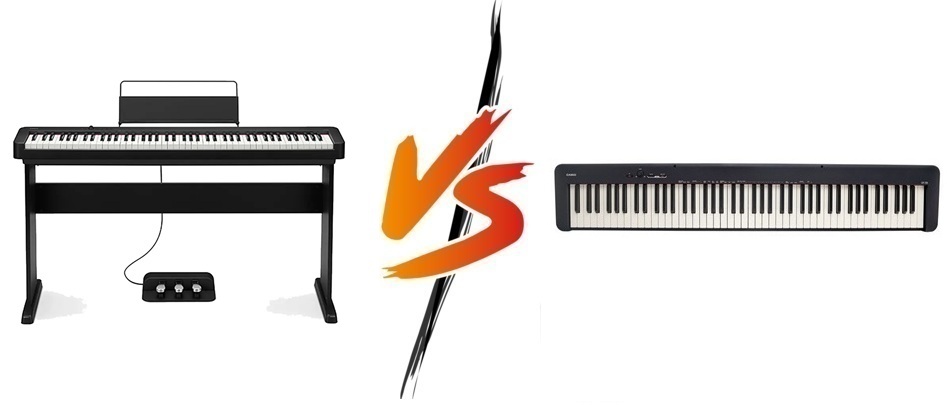
If you’re shopping in the entry-level digital piano range, you’ve probably come across the Casio CDP-S series. Two models that often confuse buyers are the Casio CDP-S110 and the Casio CDP-S160. On paper, they look almost identical. Same slim body, same key count, same general features. But the price difference (depending on region) makes people wonder if the S160 is actually an upgrade or just a marketing variation.
The short answer is that these two instruments are extremely close in terms of the actual piano inside. The real differences are more about packaging, included accessories, and how “ready to play” the instrument is when you take it out of the box.
But that short answer doesn’t help much when you’re trying to decide where to spend your money. So in this review, we’ll go deep into design, keyboard feel, sound, speakers, features, connectivity, usability, and value for money. By the end, you should have a clear idea of which one makes sense for you.
Here’s a clear side-by-side specification comparison of the Casio CDP-S110 vs Casio CDP-S160.
Since both models share the same internal keyboard and sound engine, most of the technical specs are identical. The main differences are in packaging and included accessories rather than core performance.
Casio CDP-S160 vs Casio CDP-S110 Comparison Chart
If you click the links below, under the product images, you will be redirected to Amazon.com. In case you then decide to buy anything, Amazon.com will pay me a commission. This doesn’t affect the honesty of this review in any way though.
| Feature | Casio CDP-S110 | Casio CDP-S160 |
|---|---|---|
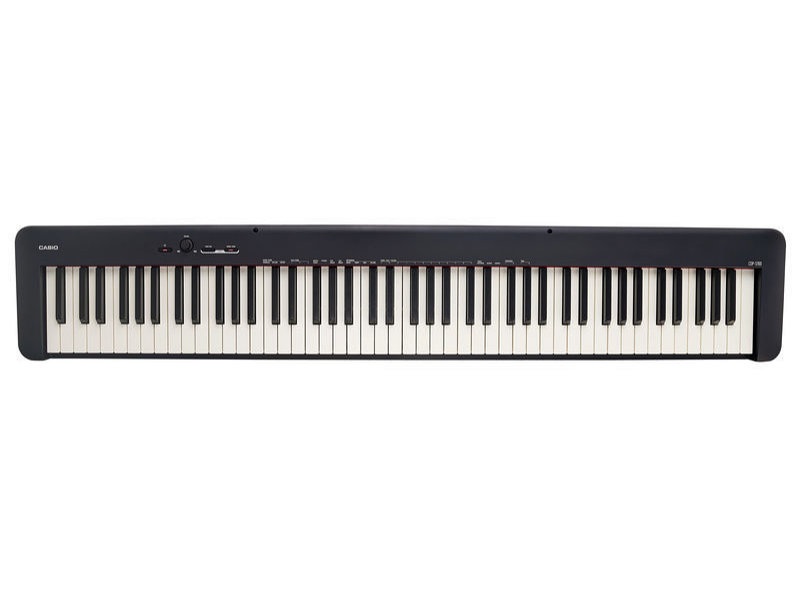 | 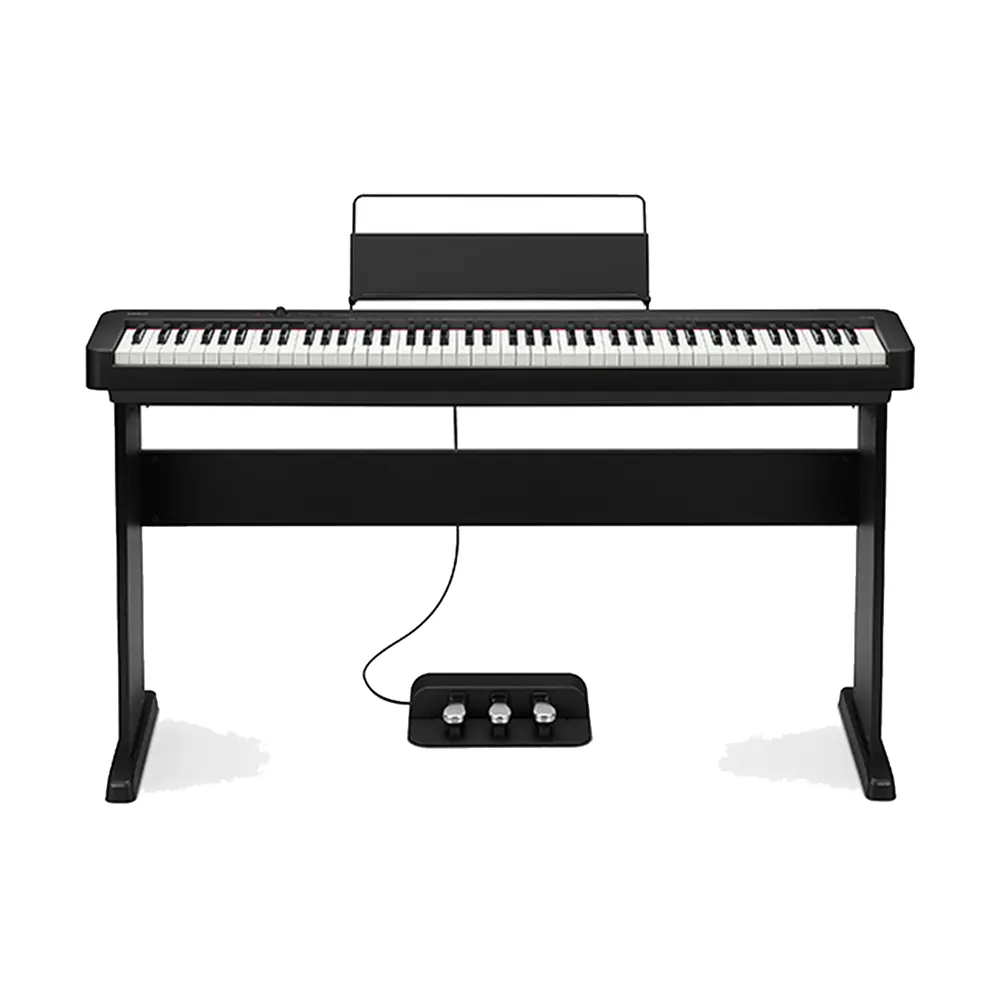 | |
| Check the best price on Amazon | Check the best price on Amazon | |
| Keyboard | 88 keys, Scaled Hammer Action II | 88 keys, Scaled Hammer Action II |
| Touch Response | 3 sensitivity levels | 3 sensitivity levels |
| Sound Engine | Casio AiR Sound Source | Casio AiR Sound Source |
| Maximum Polyphony | 64 notes | 64 notes |
| Built-in Tones | ~10 tones (piano, EP, organ, strings, etc.) | ~10 tones (piano, EP, organ, strings, etc.) |
| Effects | Reverb | Reverb |
| Layer Function | Yes | Yes |
| Split Function | Yes | Yes |
| Metronome | Yes | Yes |
| Transpose | Yes | Yes |
| Tuning Control | Yes | Yes |
| Recording | Basic MIDI recording | Basic MIDI recording |
| Speakers | 8W + 8W stereo speakers | 8W + 8W stereo speakers |
| Audio Output | Headphone/line out (1/4”) | Headphone/line out (1/4”) |
| USB Connectivity | USB to Host (MIDI) | USB to Host (MIDI) |
| Bluetooth | No | No |
| Pedal Input | Sustain pedal input | Sustain pedal input |
| Included Pedals | Usually basic sustain pedal only (varies by region) | Triple pedal unit (in most bundles) |
| Stand Included | No | Yes (matching furniture-style stand) |
| Weight (keyboard only) | ~10.5 kg | ~10.5 kg |
| Portability | High | Medium (once assembled with stand) |
| Target Use | Portable / budget flexible setup | Home setup / full piano package |
Key Takeaway
The table makes the main point very clear: there are no internal differences between the two models. The keyboard, sound engine, speakers, and features are identical.
The real distinction is practical:
- The Casio CDP-S110 is the “bare instrument” you build around.
- The Casio CDP-S160 is the “ready-to-play home setup” with stand and pedals included.
If you ignore accessories, they are the same piano.
Design & Build Quality
One of the first things you’ll notice when comparing the Casio CDP-S110 and the Casio CDP-S160 is that they look almost identical. In fact, unless you know exactly what to look for, it’s difficult to tell them apart. That’s because both models share the same chassis, dimensions, materials, and overall design philosophy. Casio didn’t set out to redesign the instrument for the CDP-S160. Instead, the company focused on offering the same compact digital piano in a package that better suits home use.
That means the discussion around design isn’t really about choosing between two different-looking instruments. It’s about understanding how the same physical piano can fit into different environments and whether the included accessories on the CDP-S160 make a meaningful difference in everyday use.
A Compact Design That Stands Out
The defining characteristic of both pianos is their slim profile. Casio has done an impressive job of making a full-sized, 88-key weighted digital piano much thinner than many competing models in the same price range.
Traditional digital pianos often have bulky cabinets or thick bodies to accommodate the speaker system and key action. Casio took a different approach with the CDP-S series. Both the CDP-S110 and CDP-S160 have a sleek, minimalist body that looks modern without trying too hard to be flashy.
For anyone living in a small apartment, student accommodation, or shared home, this immediately becomes one of the biggest selling points. These pianos don’t dominate a room in the same way that many furniture-style digital pianos do. They can sit comfortably against a wall, on a desk, or on a keyboard stand without making the space feel crowded.
Even if space isn’t a concern, there’s something refreshing about the understated design. It feels practical rather than decorative, and that’s very much in line with the audience Casio is targeting.
Portability Is a Major Strength
One area where the CDP-S series genuinely shines is portability.
Both models weigh just over 10 kilograms (around 23 pounds), making them among the lightest fully weighted digital pianos available. That’s an impressive achievement considering they feature 88 weighted keys.
If you’ve ever had to move a traditional digital piano, you’ll know how quickly they become awkward. Many models in this category weigh well over 15 kilograms, while furniture-style instruments can easily exceed 35 kilograms. By comparison, the CDP-S110 feels remarkably manageable.
This makes it an excellent choice for musicians who:
- Take lessons outside the home.
- Play at small events or church services.
- Need to move the piano between rooms.
- Store the piano when it’s not being used.
You can realistically carry either piano with one hand while opening doors or carrying accessories with the other. That level of portability isn’t something every 88-key digital piano can offer.
The CDP-S160 technically offers the same portability because the keyboard itself is identical. However, the situation changes once it’s assembled with its matching stand. At that point, it’s much more likely to remain in one location as a permanent practice instrument. You can still remove it from the stand if necessary, but most owners probably won’t bother unless they’re moving house.
So while both keyboards are equally portable on paper, the CDP-S110 naturally lends itself more to musicians who value mobility.
Simple, Modern Styling
Casio deserves credit for resisting the temptation to over-design these pianos.
The overall appearance is clean and understated. There aren’t any chrome accents, glossy surfaces, or unnecessary decorative elements. Instead, both instruments feature a matte finish with subtle curves and straight lines that give them a contemporary look.
Because the design is so neutral, it fits into almost any environment. Whether you’re placing it in a living room, bedroom, studio, classroom, or office, it never feels out of place.
This also means the piano doesn’t immediately scream “electronic keyboard.” From a distance, especially when paired with the matching stand, it presents itself as a serious musical instrument rather than a toy or casual entertainment device.
That understated appearance has another practical benefit: it ages well. Flashier designs often look dated after a few years, but minimalist products tend to remain visually appealing for much longer.
Build Quality and Materials
Neither the CDP-S110 nor the CDP-S160 uses premium materials, but that’s exactly what you’d expect at this price point.
The outer casing is constructed primarily from durable plastic. While plastic sometimes carries a negative reputation, it’s actually the right material choice here. It keeps the weight low while still providing enough rigidity for everyday use.
Pressing down on the top panel doesn’t produce excessive flex, and the keyboard doesn’t feel fragile during normal playing. You won’t mistake it for a high-end wooden cabinet, but you also don’t get the impression that corners have been cut to an unacceptable degree.
The plastic has a slightly textured matte finish that resists fingerprints better than glossy surfaces. That’s a welcome detail because glossy black instruments tend to show every smudge, dust particle, and scratch almost immediately.
Over time, the matte finish also tends to hide minor wear much better, making the piano continue looking presentable after years of regular use.
Of course, neither model is designed to survive rough transportation without protection. If you’re frequently moving the piano between venues, investing in a padded gig bag is still highly recommended.
Attention to Everyday Practicality
One thing Casio has clearly prioritized is usability.
The edges are rounded enough to avoid feeling sharp while still maintaining a modern aesthetic. The control panel is integrated neatly into the top surface rather than protruding awkwardly.
Every design choice feels intentional. There isn’t much visual clutter, and there aren’t dozens of buttons competing for your attention.
For beginners especially, this is refreshing.
Some entry-level keyboards overwhelm new players with countless controls, LCD screens, flashing lights, and hundreds of functions that may never be used. The CDP-S110 and CDP-S160 go in the opposite direction.
When you sit down to play, your attention naturally focuses on the keyboard itself.
That makes the learning experience feel much more like sitting at an acoustic piano.
Control Layout
The minimalist design extends to the controls.
Instead of dozens of dedicated buttons, Casio keeps everything very simple.
You’ll find:
- A power button.
- A volume control.
- A few touch-sensitive control buttons.
- Function access through key combinations.
This contributes significantly to the clean appearance, but it does come with one compromise.
Without a display, changing certain settings requires remembering keyboard shortcuts or referring to the manual. Adjusting transpose, touch sensitivity, tuning, or selecting sounds isn’t difficult, but it isn’t immediately obvious either.
For someone who changes settings frequently, this can become mildly frustrating.
On the other hand, once you’ve settled on your preferred configuration, you probably won’t need to access these functions very often.
For the average beginner who simply turns the piano on and starts practicing, the simplified interface is arguably the better approach.
The Difference the Stand Makes
This is where the CDP-S160 begins to separate itself from the CDP-S110.
Again, the keyboard itself hasn’t changed. What changes is the overall presentation once the included stand is assembled.
A keyboard sitting on a basic X-stand works perfectly well from a functional standpoint. Millions of musicians use this setup every day.
However, there’s no denying that it still feels like a portable keyboard.
The matching stand included with many CDP-S160 packages transforms the experience.
Visually, it resembles a traditional digital piano far more closely. The instrument feels integrated into the room instead of looking temporary.
There’s also a noticeable improvement in stability. Furniture-style stands generally eliminate the slight movement or wobble that inexpensive X-stands sometimes introduce during energetic playing.
For beginners, this might not seem like a major issue at first.
But after months or years of practice, having a stable instrument that stays firmly in place becomes surprisingly important. It allows you to focus entirely on playing rather than unconsciously compensating for movement beneath the keyboard.
The stand also creates a cleaner overall appearance by reducing exposed metal hardware and giving the piano a more finished, home-friendly aesthetic.
Long-Term Durability
Neither model is built as a professional touring instrument, but both appear capable of lasting many years if treated with reasonable care.
The key action has proven reliable across the CDP-S series, and the outer shell doesn’t feel prone to cracking or excessive wear under normal household conditions.
As with any digital piano in this price range, longevity depends more on how it’s used than on inherent weaknesses in the design.
Keeping the instrument away from excessive moisture, direct sunlight, and physical impacts will go a long way toward preserving both its appearance and functionality.
The lightweight construction should not be mistaken for fragility. While you wouldn’t want to drop it or transport it without protection, both the CDP-S110 and CDP-S160 feel reassuringly solid during everyday practice.
Design & Build Quality Verdict
Since the actual keyboard chassis is identical, neither model wins outright in terms of construction quality. Both offer an impressively compact, lightweight, and modern design that stands out in the entry-level digital piano market.
Where the CDP-S160 gains an advantage is in the complete playing experience. The included stand gives the instrument a more permanent, furniture-like appearance while also improving stability during practice. If you plan to leave your piano in one location for years, that added refinement is genuinely worthwhile.
The CDP-S110, meanwhile, remains the better choice for players who prioritize flexibility and portability. Without the dedicated stand, it’s easier to move, easier to store, and simpler to transport to lessons or performances.
Ultimately, the build quality of both instruments is very good for their price range. Casio has struck an excellent balance between portability, durability, and practicality, creating digital pianos that feel thoughtfully designed without driving up the cost through unnecessary luxury materials or cosmetic extras.
Keyboard Action and Playing Feel
For most people shopping for a digital piano, the keyboard action is the single most important factor. You can always connect external speakers if you’re unhappy with the sound, and features like Bluetooth or recording functions are nice bonuses rather than necessities. But if the keys don’t feel satisfying to play, no amount of extra functionality will make up for it.
Fortunately, this is an area where both the Casio CDP-S110 and the Casio CDP-S160 perform remarkably well for their price range. Since both models use the exact same key action, there’s no outright winner here. Instead, the real question is whether Casio’s keyboard mechanism meets your expectations and how it compares to other entry-level digital pianos.
The good news is that it delivers a convincing piano-playing experience, especially for beginners and intermediate players. The less encouraging news is that it also has a few compromises that become more noticeable as your playing becomes more advanced.
The Same Scaled Hammer Action II Keyboard
The CDP-S110 and CDP-S160 both feature Casio’s Scaled Hammer Action II keyboard.
Despite the different model numbers, there is no difference whatsoever in how the keys feel. If someone blindfolded you and placed your hands on each piano one after the other, you wouldn’t be able to distinguish between them based on the keyboard alone.
This consistency is actually reassuring. It means you’re choosing between different packages rather than different playing experiences.
Casio designed the Scaled Hammer Action II mechanism to imitate the feel of an acoustic piano by making the lower keys feel heavier than the upper keys. This gradual change in resistance reflects the way hammers work inside a real acoustic instrument.
It’s a feature that has become standard across most quality digital pianos, but it’s still worth mentioning because cheaper keyboards often use the same spring resistance across every key, creating an unrealistic and somewhat artificial playing experience.
On both the CDP-S110 and CDP-S160, the transition from bass to treble feels natural rather than exaggerated.
First Impressions at the Keyboard
When you first sit down to play either piano, the action feels surprisingly substantial considering how slim the instrument is.
This is one of Casio’s biggest engineering achievements with the CDP-S series.
Looking at the compact body, you might assume the keyboard would feel shallow or toy-like. Instead, the keys have a reassuring amount of travel and resistance. They don’t feel exactly like an acoustic grand piano, but they also don’t remind you of a lightweight synthesizer.
For complete beginners, this is important because it encourages proper finger strength and technique from the very beginning.
Switching later to an acoustic piano won’t feel like learning an entirely different instrument.
Weight and Resistance
The overall weighting falls somewhere in the middle of the spectrum.
Some digital pianos have noticeably heavy actions that require considerable finger strength, while others feel almost effortless to press.
Casio has chosen a middle ground that works well for a broad range of players.
The keys aren’t so heavy that beginners become fatigued after twenty minutes of practice.
At the same time, they aren’t so light that experienced players feel disconnected from the instrument.
This balance makes the keyboard versatile enough for different musical styles.
Whether you’re playing beginner classical pieces, pop ballads, jazz standards, or contemporary worship music, the action generally feels appropriate.
That said, pianists coming from high-end acoustic grands may initially find the keys slightly lighter than expected.
It’s not an unrealistic action, but it doesn’t quite reproduce the substantial resistance and mechanical complexity of premium acoustic instruments.
Of course, expecting that at this price would be unfair.
Key Travel and Return
One aspect that often gets overlooked in reviews is how the keys return after they’re pressed.
Fast key return is essential for repeated notes, trills, and technically demanding passages.
The CDP-S action performs well here.
The keys rebound quickly enough for most beginner and intermediate repertoire, and they don’t feel sluggish or overly damped.
Rapid note repetition remains comfortable, although advanced classical players tackling works by composers like Liszt or Rachmaninoff may eventually notice the limits of the mechanism.
For the majority of users, however, the response feels smooth and dependable.
There’s also a satisfying consistency across the keyboard.
Every key offers nearly identical movement and resistance within its respective register.
That may sound like a basic expectation, but it’s an area where some inexpensive digital pianos occasionally disappoint.
Dynamic Control
One of the strengths of Casio’s Scaled Hammer Action II keyboard is its ability to translate different playing intensities into meaningful changes in volume.
Play softly, and the piano responds with gentle, quieter notes.
Dig into the keys with more force, and the sound becomes noticeably louder and brighter.
This dynamic response makes practicing expressive playing much more rewarding.
Beginners often underestimate how important this is.
Learning to control dynamics is just as fundamental as learning the correct notes. A keyboard that doesn’t respond accurately to different touch levels can encourage poor playing habits over time.
Thankfully, neither the CDP-S110 nor the CDP-S160 falls into that trap.
The response feels musical rather than mechanical.
That said, experienced pianists may notice that the dynamic transitions aren’t quite as nuanced as on more expensive digital pianos with additional velocity layers and more sophisticated sound engines.
The instrument communicates changes in touch effectively, but it doesn’t capture every subtle variation with the same realism found in higher-end models.
Touch Sensitivity Options
Casio allows players to adjust the keyboard’s touch sensitivity to better suit their preferences.
This feature can be surprisingly useful.
Children with smaller hands may appreciate a lighter response, while stronger players may prefer settings that require more force before reaching maximum volume.
Most owners will probably settle on the default setting, which feels well balanced for everyday playing.
Still, it’s nice to have the option to customize the response rather than being locked into a single feel.
The settings are easy enough to change once you’ve learned the appropriate function key combinations.
Key Surface and Texture
Unlike some more expensive digital pianos, the CDP-S110 and CDP-S160 do not feature synthetic ivory or ebony keytops.
Instead, the keys use a smooth matte plastic finish.
At first glance, this may seem like a drawback.
However, in everyday practice, the experience is better than you might expect.
The matte texture provides more grip than glossy plastic keys, helping your fingers stay in place during longer practice sessions.
Even after an hour or two of playing, the keys generally remain comfortable.
If your hands become particularly sweaty, you’ll eventually notice the difference compared to textured ivory-feel surfaces found on higher-end instruments.
But for most players, this won’t be a major issue.
Considering the price category, Casio’s choice of materials feels entirely reasonable.
Noise During Playing
Every digital piano produces some mechanical noise as the keys move.
The CDP-S110 and CDP-S160 are no exception.
Fortunately, the action remains relatively quiet during normal use.
You’ll hear the gentle sound of the keys returning after each note, but it’s not distracting during practice.
If you’re wearing headphones, the mechanical noise becomes slightly more noticeable simply because the piano itself is quieter.
Even then, it’s unlikely to bother most users.
Late-night practice in shared households should be perfectly manageable.
Playing Different Musical Styles
A good keyboard action should adapt comfortably to different genres rather than favoring one particular style.
In this respect, Casio has done a commendable job.
For classical music, the weighted action supports proper finger technique and dynamic expression.
For pop and contemporary music, the slightly lighter feel actually becomes an advantage, allowing for longer playing sessions without excessive fatigue.
Jazz players will appreciate the responsive action during chord voicings and improvisation, while worship musicians and singer-songwriters should find the keyboard expressive enough for accompanying vocals.
It’s a versatile action that doesn’t particularly excel in one genre but performs consistently across many.
That’s exactly what most buyers in this price range need.
Long Practice Sessions
Comfort matters more than many buyers realize.
An action that initially feels impressive can become tiring after ninety minutes of continuous playing.
The CDP-S110 and CDP-S160 avoid this problem rather well.
Because the resistance isn’t excessively heavy, longer practice sessions remain enjoyable.
At the same time, there’s enough weight to encourage proper finger strength development.
This balance makes the keyboard particularly suitable for students who may spend several hours each week practicing scales, exercises, and repertoire.
Parents purchasing a piano for children will also appreciate that the action doesn’t demand unnecessary physical effort while still teaching correct technique.
Comparison with Competing Entry-Level Actions
Within this price range, Casio competes primarily with models from Yamaha, Roland, and Kawai.
Compared with Yamaha’s entry-level Graded Hammer Standard (GHS) action, the Casio feels slightly lighter and, to many players, a little faster.
Some players prefer Yamaha’s slightly firmer resistance because it more closely resembles certain acoustic uprights.
Others enjoy Casio’s smoother feel, particularly for contemporary styles.
Against Roland’s PHA-4 Standard action, however, Casio falls slightly behind.
Roland’s action generally feels more refined, offering better escapement simulation, textured key surfaces, and slightly greater realism.
The trade-off is price, as Roland instruments featuring PHA-4 action usually cost noticeably more.
Compared to other budget competitors, the Casio keyboard comfortably holds its own.
It doesn’t dominate the category, but it also doesn’t have any glaring weaknesses.
Limitations for Advanced Pianists
No review would be complete without acknowledging where the keyboard begins to show its limits.
Advanced players accustomed to premium acoustic grands or high-end stage pianos may eventually find themselves wanting more.
The action lacks escapement simulation, which recreates the subtle notch felt when pressing keys on many grand pianos.
The repetition speed, while perfectly adequate for most music, isn’t as effortless during extremely demanding passages.
The mechanical complexity also doesn’t quite match the nuanced feel of more expensive hybrid wooden actions.
These aren’t deal-breakers.
They’re simply reminders that the CDP-S110 and CDP-S160 are entry-level instruments designed to provide excellent value rather than replicate a concert grand in every detail.
Keyboard Action and Playing Feel Verdict
Since both pianos use the exact same Scaled Hammer Action II keyboard, there’s no meaningful difference between the CDP-S110 and CDP-S160 in terms of how they play.
What Casio offers is a well-balanced action that feels authentic enough to support proper piano technique while remaining comfortable for players of all skill levels. The weighting is convincing, the dynamic response is expressive, and the overall consistency across the keyboard inspires confidence during practice.
There are certainly more sophisticated actions available if you’re willing to spend significantly more, but within the entry-level market, Casio has struck an excellent balance between realism, comfort, and affordability.
If keyboard feel is your primary concern, you can confidently choose either model knowing that you’re getting the same dependable playing experience. Your decision should ultimately come down to the accessories, intended setup, and overall value of the package rather than any difference in the keyboard itself.
Sound Engine and Tone Quality
After the keyboard action, the sound of a digital piano is arguably the next most important consideration. Even the most realistic key action can only take you so far if the piano itself sounds artificial or uninspiring. Fortunately, the Casio CDP-S110 and Casio CDP-S160 avoid that problem. Since both instruments use the same internal sound engine, they produce virtually identical audio, meaning there is no winner between the two in this category.
Instead, the real question is whether Casio’s sound engine is good enough for your needs and how it compares to other entry-level digital pianos. The answer is largely positive. While neither model delivers the breathtaking realism of premium digital pianos costing two or three times as much, both provide a satisfying and expressive piano sound that is more than capable of supporting practice, lessons, and casual performance.
The AiR Sound Source
At the heart of both pianos is Casio’s AiR (Acoustic and Intelligent Resonator) sound engine.
Casio has been refining this technology for years, and although the implementation in the CDP-S series is simplified compared to the company’s higher-end Celviano and Privia models, it still delivers an impressive result considering the price.
The AiR engine uses high-quality samples of an acoustic grand piano and combines them with digital processing designed to produce natural note decay and dynamic response.
Unlike very inexpensive keyboards that often rely on obviously synthetic piano sounds, the CDP-S110 and CDP-S160 produce a tone that immediately feels recognizably “piano-like.” There’s enough depth and realism that beginners won’t quickly outgrow it, and even more experienced players can appreciate its musicality.
That doesn’t mean it’s perfect, but it certainly avoids sounding cheap.
The Main Grand Piano Voice
The primary acoustic piano sound is undoubtedly the reason most people buy either of these instruments, and thankfully, it’s a solid one.
The overall character leans slightly toward the brighter side of the tonal spectrum.
Rather than emphasizing deep, dark bass frequencies or exceptionally warm mids, Casio has opted for a balanced, clear sound with enough brightness to help melodies stand out.
This makes the piano particularly well suited to modern genres like pop, worship music, contemporary classical, film music, and singer-songwriter accompaniment.
Individual notes remain well defined even when playing dense chords.
The upper register sparkles without becoming overly harsh, while the middle range maintains clarity and warmth.
The bass register isn’t as rich or powerful as you’ll hear on more expensive digital pianos, but it remains full enough for satisfying everyday practice.
Overall, the tonal balance feels carefully judged.
It’s pleasant to listen to for extended periods without becoming fatiguing.
Dynamic Expression
One area where Casio deserves genuine praise is dynamic responsiveness.
The sound engine reacts naturally to differences in playing intensity.
Press the keys gently, and the resulting notes sound soft and delicate.
Play with greater force, and the tone becomes brighter, louder, and more energetic.
This responsiveness encourages expressive playing instead of simply rewarding volume.
For students learning phrasing and musical interpretation, this is extremely valuable.
Digital pianos that produce nearly identical sounds regardless of touch make expressive playing much more difficult to develop.
Fortunately, the CDP-S110 and CDP-S160 avoid that trap.
While advanced players may notice that the transitions between velocity layers aren’t completely seamless, the changes are subtle enough that most beginners and intermediate players will never find them distracting.
The overall experience remains convincingly musical.
Tone Across the Keyboard
Consistency across the entire keyboard is another strength.
Some budget digital pianos suffer from uneven sampling, where certain notes or octaves sound noticeably different from neighboring ones.
That isn’t the case here.
Moving gradually from the lowest bass notes to the highest treble feels smooth and natural.
The tonal character evolves realistically across the keyboard without sudden changes in timbre or volume.
Lower notes carry sufficient weight for left-hand accompaniment, while higher notes maintain clarity without becoming thin or piercing.
This consistency contributes significantly to the overall playing experience because it allows you to focus on the music rather than noticing inconsistencies in the instrument itself.
Note Decay and Sustain
One area where the AiR engine performs better than many similarly priced competitors is note decay.
When you strike a key and allow it to ring naturally, the sound fades away in a reasonably convincing manner.
The decay isn’t perfectly identical to a real acoustic grand piano, of course.
Premium instruments reproduce subtle resonances, sympathetic vibrations, and continuously evolving harmonics that simply aren’t present here.
Instead, the CDP-S110 and CDP-S160 produce a simplified version of that experience.
Fortunately, the decay remains smooth rather than abruptly cutting off.
This creates a much more pleasant listening experience, especially during slower, lyrical pieces where sustained notes play an important musical role.
Polyphony Limitations
Both models offer 64-note maximum polyphony.
This specification is perfectly adequate for most beginners and many intermediate players.
You’ll rarely encounter limitations while practicing scales, learning songs, or playing typical pop arrangements.
However, there are situations where 64-note polyphony begins to show its limits.
For example:
- Playing with heavy sustain pedal usage.
- Performing dense classical repertoire.
- Layering multiple instrument sounds.
- Recording complex arrangements through MIDI.
Under these conditions, older notes may occasionally be cut off to make room for newer ones.
In practice, this happens less often than many buyers fear.
Most casual players may never notice it.
Still, it’s worth acknowledging that several competing digital pianos now offer 128-note or even 192-note polyphony within similar price ranges.
It’s one of the few specifications where Casio appears slightly behind current market trends.
Additional Instrument Voices
Although these are primarily digital pianos, Casio includes several additional sounds for variety.
These typically include:
- Electric pianos
- Strings
- Pipe organ
- Jazz organ
- Harpsichord
- Vibraphone
The selection isn’t enormous, but it’s practical.
Rather than overwhelming users with hundreds of mediocre sounds, Casio focuses on a smaller collection of instruments that most players are actually likely to use.
The electric piano voices are particularly enjoyable.
They capture the mellow character associated with classic stage pianos reasonably well and work nicely for jazz, soul, gospel, and pop music.
The organ sounds are competent without being especially memorable.
They provide enough realism for occasional use but lack the complexity and drawbar control found on dedicated organ keyboards.
The string voices are useful for layering beneath the piano to create fuller, more cinematic textures.
They won’t fool anyone into believing they’re listening to a real string orchestra, but they add warmth that can make slower pieces sound surprisingly rich.
Layer Mode
Both the CDP-S110 and CDP-S160 allow two sounds to be layered together.
The most obvious combination is piano and strings.
This classic pairing works exceptionally well.
The strings sit gently beneath the piano without overpowering it, making ballads, worship music, and film-inspired arrangements sound more expansive.
Because the sound engine maintains good clarity, layered sounds rarely become muddy.
Of course, layering does increase polyphony demands, making the 64-note limit slightly more noticeable during complex passages.
Still, for typical home playing, this isn’t likely to cause significant problems.
Reverb and Ambience
Casio includes several reverb settings designed to simulate different acoustic environments.
These effects help prevent the piano from sounding overly dry when played through headphones or external speakers.
The reverbs are tastefully implemented.
Rather than flooding every note with excessive ambience, they add just enough spaciousness to make the instrument feel more natural.
Many players will probably leave the default setting unchanged, and that’s perfectly understandable.
The factory balance sounds quite convincing for everyday practice.
If anything, Casio deserves credit for showing restraint here.
Some manufacturers use exaggerated reverb to disguise limitations in their samples.
Casio instead lets the piano sound remain the focus.
Listening Through the Built-in Speakers
The internal sound engine is naturally influenced by the quality of the speakers.
Through the built-in speaker system, the piano sounds clear but understandably limited in bass response.
This isn’t necessarily the fault of the sound engine itself.
The slim cabinet simply doesn’t leave much room for larger speaker drivers.
As a result, the piano sounds pleasant but somewhat compact.
The overall tonal balance remains good, yet the instrument lacks the room-filling presence of larger cabinet-style digital pianos.
Listening Through Headphones
Connecting a good pair of headphones reveals what the AiR sound engine is truly capable of.
Immediately, several improvements become apparent.
The stereo image becomes wider.
Individual notes gain more detail.
The bass sounds fuller.
Subtle dynamics become easier to appreciate.
For anyone planning to practice regularly with headphones, both the CDP-S110 and CDP-S160 become significantly more enjoyable instruments.
This is one reason many owners report being happier with the piano than showroom demonstrations might initially suggest.
In busy music stores, it’s easy to judge an instrument primarily through its built-in speakers.
At home with quality headphones, the overall experience is noticeably richer.
Recording and MIDI Performance
Since both pianos transmit MIDI via USB, the internal sound engine isn’t your only option.
Many users eventually connect these keyboards to virtual piano software such as Pianoteq, Garritan CFX, or other software instruments.
The good news is that the keyboard action works well with external sounds.
Velocity response translates accurately enough that virtual instruments remain expressive and enjoyable to play.
This flexibility effectively future-proofs the instrument.
Even if you eventually desire more sophisticated piano sounds, you don’t necessarily need to replace the keyboard itself.
Comparison with Competitors
Compared with Yamaha’s entry-level digital pianos, Casio’s main piano voice tends to sound slightly brighter and more modern.
Some players prefer Yamaha’s warmer, more rounded tone for classical repertoire.
Others enjoy Casio’s extra clarity, particularly for pop and contemporary music.
Roland’s entry-level SuperNATURAL sound engine generally provides more detailed note transitions and greater tonal complexity.
However, Roland models featuring that technology usually come at a noticeably higher price.
Within its own price bracket, Casio remains highly competitive.
The piano sound is expressive, balanced, and pleasant enough that most beginners and intermediate players will feel little desire to upgrade immediately.
Sound Engine and Tone Quality Verdict
Because the CDP-S110 and CDP-S160 share the same AiR sound engine, there is no meaningful difference in sound quality between them. Both deliver a clean, expressive, and enjoyable piano tone that comfortably exceeds expectations for this price range.
The bright yet balanced character works well across a wide variety of musical styles, while the dynamic response encourages expressive playing and proper technique. Although the 64-note polyphony and relatively simple sample structure reveal the instruments’ budget-friendly nature in certain situations, these limitations are unlikely to affect the majority of home users.
Ultimately, Casio has prioritized musicality over flashy specifications. The result is a sound engine that may not rival premium digital pianos costing significantly more, but one that consistently provides an enjoyable and inspiring playing experience. Whether you’re practicing scales, learning your first pieces, accompanying a singer, or simply playing for relaxation, both the CDP-S110 and CDP-S160 offer a piano sound that feels satisfying, dependable, and remarkably mature for an entry-level instrument.
Speakers and Built-In Amplification
The built-in speaker system is one of those areas in digital pianos that often gets overlooked at first, especially by beginners. Most people tend to focus on keyboard feel or sound engine quality, assuming that speakers are just a way to “hear the piano out loud.” But in practice, the speakers and amplification system have a huge impact on how the instrument actually feels to play day to day.
With the Casio CDP-S110 and Casio CDP-S160, this becomes even more relevant because both models use a very slim body design. That compact chassis brings clear advantages in portability and aesthetics, but it also puts real physical limits on how large or powerful the speaker system can be.
Since both models share the exact same internal hardware, there is no difference in speaker performance between the CDP-S110 and CDP-S160. Any observations about sound projection, clarity, or volume apply equally to both. The only real distinction comes from how the instrument is used: standalone on a basic stand versus mounted on a dedicated furniture-style stand in the case of many CDP-S160 bundles.
Compact Design and Its Impact on Sound
To understand the speaker performance of these pianos, it helps to start with the physical reality of the design.
Both the CDP-S110 and CDP-S160 are extremely slim for 88-key weighted instruments. That slimness is one of their biggest selling points, especially for people with limited space. However, inside that thin body, there is only so much room for speaker cones, resonance chambers, and amplification hardware.
This immediately sets expectations. You are not dealing with a large cabinet piano with deep internal resonance or powerful speaker drivers. You are dealing with a compact, portable instrument where efficiency matters more than raw acoustic power.
Casio has clearly prioritized keeping the instrument lightweight and portable over building a physically larger and more powerful speaker system. That trade-off makes sense for the target audience, but it does define what you can expect from the sound output.
Speaker Configuration and Output
Both models feature a basic stereo speaker setup built into the body of the keyboard. The speakers are positioned to project sound outward from the instrument, and the amplification is designed primarily for near-field listening rather than room-filling performance.
In practical terms, this means the piano is intended to be heard clearly by the player sitting directly in front of it, not to act as a full-room sound system.
At moderate volumes, the speakers perform their job well. The sound is clear enough for practice, lessons, and casual playing. Notes are distinguishable, chords remain readable, and the overall tonal balance of the AiR sound engine is preserved reasonably well.
However, there is a limit to how far that clarity extends once you push the volume higher or move further away from the instrument.
Volume and Headroom
One of the first things players notice when using the CDP-S110 or CDP-S160 is that the volume range is intentionally controlled.
At lower to mid volume levels, the sound is balanced and pleasant. You can comfortably practice in a quiet room without feeling like the piano is too loud or too quiet.
As you increase the volume, the sound does become louder, but not dramatically so. There is a point where the speakers reach their practical limit, and instead of continuing to scale cleanly in volume and fullness, the sound begins to feel slightly compressed.
This is not unusual in slim digital pianos. Small speakers can only move so much air, and once they approach their maximum output, they struggle to maintain bass depth and tonal richness.
In the CDP-S series, this shows up as a slight thinning of the lower register and a bit of sharpness in the upper mids when played at maximum volume.
It is worth noting that this behavior is most noticeable when trying to use the instrument as a performance piano without external amplification. For normal home practice, most users will never push the volume to this point.
Bass Response and Low-End Limitations
If there is one area where the built-in speakers clearly show their limitations, it is bass response.
The lower register of a piano is naturally demanding on speaker systems. Deep, resonant bass notes require either large speaker drivers, a substantial resonance chamber, or both. The CDP-S110 and CDP-S160 simply do not have the physical space for that kind of hardware.
As a result, the bass notes are present and accurate in pitch, but they lack physical depth and weight.
You hear the notes clearly, but you do not feel them in the same way you might on a larger digital piano or acoustic instrument. This can make left-hand passages sound slightly lighter than intended, especially in classical or cinematic pieces where bass richness plays a major role.
That said, the tuning of the sound engine compensates reasonably well. Casio has balanced the EQ so that the bass does not disappear entirely, but rather sits at a controlled level that avoids distortion or muddiness through small speakers.
Midrange Clarity and Presence
Where the speaker system performs better is in the midrange.
This is the core area of piano sound, where most melodies, chords, and harmonic content live. The CDP-S series handles this region with decent clarity.
When playing simple chord progressions or melodic lines, the sound remains intelligible and well defined. You can easily distinguish individual notes within a chord, and the overall tone remains stable even during faster passages.
This clarity is particularly helpful for beginners. It allows students to hear what they are doing without being distracted by overly colored or muddy sound output.
It also means that lessons and practice sessions translate well when switching to headphones or external speakers, since the core tonal information is already present in the speaker output.
Treble Response and Brightness
The upper register of the CDP-S110 and CDP-S160 is where the sound becomes most prominent and sometimes slightly exaggerated.
High notes tend to come through clearly, sometimes with a bit more brightness than you might hear on higher-end digital pianos. This is partly due to the sound engine’s tonal design and partly due to the limitations of small speaker drivers, which naturally emphasize higher frequencies.
At moderate volumes, this brightness can actually be helpful. It gives the piano a sense of clarity and helps melodies stand out, especially in pop or contemporary music contexts.
At higher volumes, however, the treble can start to feel slightly sharp or thin. This is especially noticeable when playing dense chords in the upper register or when layering sounds.
It is not harsh enough to be uncomfortable in normal practice situations, but it is something you notice if you push the speakers to their limits.
Stereo Imaging and Spatial Feel
Despite the physical limitations of the speaker system, Casio has done a respectable job with stereo imaging.
When sitting directly in front of the instrument, you can perceive a basic left-right separation that gives the piano a sense of width. Higher and lower notes are distributed across the stereo field in a way that roughly matches their position on the keyboard.
This helps create a more natural listening experience, especially when using headphones or sitting at an optimal distance from the speakers.
However, the stereo field is not particularly wide or immersive. This is not a piano that fills a room with complex spatial reflections or detailed acoustic modeling through its speakers alone.
Instead, it provides a functional stereo image that supports practice and basic musical enjoyment.
Real-World Practice Experience
In everyday use, the speakers are more than adequate for their intended purpose.
For home practice, the CDP-S110 and CDP-S160 perform comfortably in small to medium-sized rooms. You can play without needing headphones and still get a clear sense of your dynamics, timing, and expression.
They are especially well suited to quiet environments where you are not competing with background noise or other instruments.
In a typical bedroom or living room setting, the speakers provide enough volume to practice without strain.
Where they struggle is in louder environments or situations where you need to project sound to an audience. In those cases, external amplification becomes necessary.
Headphone vs Speaker Experience
One of the most important things to understand about both models is the difference between speaker sound and headphone sound.
Through the built-in speakers, you get a simplified version of the AiR sound engine. It is clear, functional, and pleasant, but somewhat constrained by physical hardware limitations.
Through headphones, however, the same sound engine opens up significantly.
You gain:
- Wider stereo image
- Greater bass depth
- More detailed note decay
- Improved dynamic nuance
This contrast is significant enough that many players end up doing most of their serious practice through headphones, using the speakers primarily for casual playing or quick sessions.
This is not a weakness unique to Casio. It is a common trait across many slim digital pianos in this category. Still, it is worth acknowledging because it shapes how you will actually experience the instrument over time.
External Amplification Options
Both the CDP-S110 and CDP-S160 include standard audio output options that allow connection to external speakers, amplifiers, or audio interfaces.
When connected to a proper external system, the limitations of the built-in speakers become irrelevant.
A good pair of studio monitors or a keyboard amplifier can dramatically improve bass response, volume headroom, and overall presence.
In fact, many users who plan to perform or record seriously eventually rely on external amplification as their primary sound source, treating the built-in speakers as a secondary convenience feature.
This flexibility is an important strength of both models. While the internal speakers are modest, the instrument does not lock you into their limitations.
Build-In Amplification Verdict
The built-in speaker system of the CDP-S110 and CDP-S160 is best understood in context. It is not designed to impress in a showroom or compete with larger cabinet-style digital pianos. It is designed to provide a clear, functional, and lightweight way to hear the instrument during everyday practice.
Within that scope, it succeeds.
The mids are clear, the treble is articulate, and the overall balance is suitable for learning and casual playing. The limitations in bass depth and maximum volume are real, but they are also predictable given the slim design.
Between the CDP-S110 and CDP-S160, there is no difference in speaker performance. The choice between them does not affect how the instrument sounds through its built-in amplification. Instead, it affects how you integrate the piano into your space and whether you rely more heavily on headphones or external speakers.
In the end, both models deliver exactly what they promise: a practical, portable digital piano with speakers that are good enough for home use, but not meant to replace a dedicated sound system.
Functions and Features
When you look at the Casio CDP-S110 and CDP-S160, it becomes clear very quickly that these are not “feature-heavy” digital pianos. They are not trying to compete with arranger keyboards, workstations, or even mid-range stage pianos packed with effects and deep editing options. Instead, both models take a very stripped-down approach, focusing on the core essentials needed for learning and playing piano.
Since both instruments share the same internal platform, their functions and features are identical. There is no extra sound bank, no additional effects engine, and no expanded control system in the CDP-S160. The difference between them lies entirely in physical accessories, not internal capability.
This makes it easier to evaluate them honestly: you are essentially choosing a simple, focused practice instrument rather than a multifunctional digital workstation.
A Minimalist Design Philosophy
The first thing you notice when exploring the features of either piano is how intentionally minimal everything feels.
There is no display screen. No deep menu system. No rows of labeled buttons. Instead, Casio uses a combination of a few physical controls and key-based shortcuts to access different functions.
This design choice may feel limiting at first, especially if you are used to modern devices with visual interfaces. But it serves a clear purpose. These instruments are designed to behave more like acoustic pianos than electronic gadgets. You turn them on, select a basic setting if needed, and start playing.
For beginners, this simplicity can actually be an advantage. It reduces distractions and forces attention onto playing rather than tweaking settings endlessly.
Core Piano Functions
At the heart of both models are the basic functions you would expect from an entry-level digital piano.
These include:
- Changing instrument voices
- Adjusting touch sensitivity
- Using a metronome
- Transposing keys
- Fine tuning pitch
- Layering sounds
- Splitting the keyboard
None of these features are groundbreaking on their own, but together they provide enough flexibility for learning and casual performance.
The important thing is that Casio has chosen to include only what is genuinely useful in a piano-focused context. There is no attempt to overwhelm users with hundreds of sounds or complex accompaniment systems.
Voice Selection and Simplicity
Both models include a small but practical selection of instrument voices.
The primary focus is, of course, the acoustic piano sound, but additional voices such as electric piano, organ, strings, and a few others are included for variety.
Switching between sounds is done through function key combinations rather than a dedicated interface. This keeps the design clean, but it does mean you will occasionally need to refer to the manual until the shortcuts become familiar.
In practice, most users end up spending the majority of their time on the main piano sound anyway. The other voices are useful for experimentation or casual playing, but they are not the main reason people buy this instrument.
Layer Mode
Layer mode allows you to combine two sounds at the same time.
A common example is piano and strings. This combination is especially popular because it adds a soft, cinematic texture beneath the piano tone without changing how you play.
The feature is simple but effective.
You don’t get advanced blending controls or detailed mixing options. Instead, the two sounds are combined at preset levels that are designed to work musically out of the box.
This simplicity again reflects Casio’s overall philosophy with this model: functional rather than complex.
In most real-world situations, layer mode is used sparingly but appreciated when needed. It is not something that defines the instrument, but it does add emotional depth in certain pieces.
Split Mode
Split mode divides the keyboard into two separate zones, allowing different sounds to be assigned to the left and right hands.
This is useful for practice scenarios where you want to simulate a bass instrument in the left hand and a piano or lead sound in the right hand. It can also be used for educational purposes, such as teacher-student demonstrations or basic arrangement work.
However, split mode on these models is fairly basic.
There are no detailed controls for adjusting split points beyond simple selection. You also cannot create complex layered-and-split combinations the way you might on more advanced keyboards.
Still, for most beginners, the function does its job without complication.
Metronome Function
The built-in metronome is one of the most important features for practice, and it is included in both models.
It allows you to set a steady beat at different tempos, helping you develop timing and rhythm accuracy.
The sound of the metronome is simple and clear. It is not intrusive or overly sharp, which makes it suitable for long practice sessions.
You can adjust tempo using function controls, and while the process is not as immediate as turning a physical dial, it is still straightforward once you learn the steps.
For beginners, this feature alone makes the instrument significantly more valuable as a learning tool.
Transpose Function
Transpose allows you to shift the pitch of the entire keyboard up or down in semitone steps.
This is particularly useful in a few common situations:
- Playing with singers who need a different key
- Practicing pieces in different tonal centers
- Simplifying difficult key signatures during early learning
For example, if a song is written in a difficult key like B major, you can shift it down to a more manageable key while still playing the correct finger patterns.
This is a practical feature that adds flexibility without requiring any advanced music theory knowledge to use.
Tuning Adjustment
Both models also allow fine tuning of the overall pitch.
This is useful when playing alongside other instruments that may not be tuned to standard concert pitch (A440 Hz). It can also be helpful in ensemble settings or when matching older instruments.
The tuning adjustment is typically done in small increments and is more of a technical feature than something most beginners will actively use.
Still, its inclusion shows that Casio has considered real-world musical situations beyond solo practice.
Touch Sensitivity Settings
One of the more important features for learning is the ability to adjust touch sensitivity.
This setting changes how the keyboard responds to playing strength.
In practical terms:
- A lighter setting produces louder sound with less force
- A heavier setting requires more force to reach higher volume
- A medium setting balances both extremes
This flexibility is particularly useful for younger players or those transitioning from non-weighted keyboards.
It also allows more experienced players to tailor the feel slightly to match their preference.
While it does not change the physical weight of the keys, it does influence the dynamic response of the sound engine, which can subtly affect playing comfort.
Basic Effects
Both models include simple built-in effects, primarily reverb.
Reverb simulates the natural echo you would hear in different acoustic environments, such as a small room or concert hall.
The effect is subtle rather than dramatic. It is designed to enhance realism rather than create obvious artificial soundscapes.
There are usually a few preset types to choose from, but no deep editing or customization options.
This keeps the interface simple but limits creative sound design possibilities.
For a piano-focused instrument, this is generally a sensible trade-off.
Recording and Playback (Limited Functionality)
The CDP-S110 and CDP-S160 include very basic recording functionality.
This is not a full multitrack recorder or production tool. Instead, it is a simple way to capture your playing for review.
In many cases, the recording is limited to a single track with basic playback.
This can be useful for:
- Listening back to practice sessions
- Checking timing accuracy
- Tracking progress over time
However, if you are looking for serious recording capabilities, you will quickly outgrow this feature and likely turn to external software via USB MIDI.
USB MIDI Connectivity as an Extension of Features
While technically part of connectivity rather than internal functions, USB MIDI effectively expands the feature set significantly.
By connecting the piano to a computer, tablet, or smartphone, you can access:
- Music learning apps
- Virtual instruments
- Recording software (DAWs)
- Interactive tutorials
This transforms the CDP-S110 and CDP-S160 from simple practice instruments into controllers for a much larger digital ecosystem.
In this sense, the built-in features are intentionally minimal because Casio expects more advanced functionality to come from external devices.
Lack of Advanced Features (By Design)
It is also important to understand what is not included.
You will not find:
- Auto accompaniment styles
- Drum patterns
- Synth editing tools
- Advanced sequencing
- Onboard display navigation
- Bluetooth connectivity
For some users, this may feel like a limitation. But for others, it is exactly what makes these instruments appealing.
By removing unnecessary features, Casio keeps the interface focused and the learning experience straightforward.
There is less to explore, but also less to confuse.
Functions and Features Verdict
The CDP-S110 and CDP-S160 take a very intentional approach to functionality. Instead of trying to be all-in-one keyboards, they focus on providing a clean set of essential tools for piano practice.
Every feature included serves a clear purpose: improving learning, supporting basic musical expression, or enabling simple customization of the playing experience.
There is no difference between the two models in this category, which reinforces the idea that the CDP-S160 is not a more advanced instrument, but simply a more complete physical setup.
For beginners and casual players, the simplicity is often a strength rather than a weakness. It removes distractions and keeps the focus where it belongs: on actually playing the piano.
Connectivity
Connectivity is one of those areas that doesn’t always feel important when you first buy a digital piano, especially if you’re a beginner. Most people start by simply turning the instrument on and playing through the built-in speakers or headphones. But over time, connectivity becomes more relevant than you might expect. It affects how you practice, how you record, how you learn, and even how long the instrument stays useful before you feel the need to upgrade.
With the Casio CDP-S110 and Casio CDP-S160, connectivity is simple, stable, and fairly limited. That simplicity is intentional. These are entry-level digital pianos designed primarily for playing, not for serving as full-featured production hubs. Since both models share the same internal hardware, their connectivity options are identical. There is no advantage in this category for either model.
What you get is a focused set of essential connections that cover the basics very well, even if they don’t go much beyond that.
USB to Host (MIDI Connection)
The most important connectivity feature on both the CDP-S110 and CDP-S160 is the USB to Host port. This is the primary way the instrument communicates with external devices.
In practical terms, this means you can connect the piano directly to:
- Computers (Windows or Mac)
- Tablets (iOS or Android with adapters)
- Smartphones
- Music production software (DAWs)
- Learning apps
This connection sends MIDI data, which represents your playing in digital form. It does not transmit audio. Instead, it records information like which keys you press, how hard you press them, and when you release them.
This is a crucial distinction. Many beginners expect USB to automatically send sound, but in reality it’s about control data, not audio.
Once connected, the piano effectively becomes a MIDI controller. This opens up a much wider world of possibilities than the built-in sounds alone.
For example, you can:
- Play high-quality virtual piano instruments on a computer
- Record MIDI performances in software like Ableton Live, Logic Pro, or FL Studio
- Use learning apps that listen and respond to your playing
- Trigger orchestral or synth sounds far beyond the built-in voices
This is arguably the most powerful feature in the entire connectivity system, even though it is very simple on the surface.
One of the strengths here is stability. USB MIDI connections are generally more reliable than wireless options, especially in budget instruments. You don’t have to worry about latency issues or dropouts during practice.
No Bluetooth Connectivity
One notable limitation is the absence of Bluetooth MIDI or Bluetooth audio.
Some modern digital pianos include wireless connectivity that allows you to:
- Connect to apps without cables
- Stream audio from your phone through the piano speakers
- Control software wirelessly
The CDP-S110 and CDP-S160 do not offer any of this.
At first glance, this might feel like a drawback, especially if you’re used to wireless convenience in other devices. But in practice, it is less of a limitation than it seems.
USB MIDI is still the more stable and widely supported standard, especially for music production and structured learning. Bluetooth MIDI, while convenient, can sometimes introduce latency or connection instability depending on the device and app.
Casio’s decision to omit Bluetooth helps keep costs down and ensures a more consistent performance experience. It also fits the overall philosophy of these instruments, which prioritize simplicity and reliability over modern gadget-like features.
Audio Output Through Headphone Jack
Both models include a standard 1/4-inch headphone output, which doubles as the main audio output for the instrument.
This is an important point: while it is labeled as a headphone jack, it also functions as a line output. That means you can connect the piano to a wide range of external equipment.
Common uses include:
- Plugging in headphones for silent practice
- Connecting to external speakers for louder sound
- Feeding audio into an audio interface for recording
- Connecting to a PA system for live performance
This flexibility makes the instrument much more versatile than its simple design might suggest.
For home practice, headphones are probably the most common use case. This allows you to practice at any time without disturbing others. It also significantly improves sound quality compared to the built-in speakers, as discussed earlier in the review.
When used with headphones, the sound becomes more detailed, more spacious, and more immersive.
Audio Quality Through External Output
When you route audio through headphones or external speakers, you are still hearing the internal AiR sound engine. The difference is that you are bypassing the limitations of the built-in speaker system.
This means:
- Fuller bass response
- Wider stereo image
- Better dynamic clarity
- More natural decay perception
In other words, the same instrument sounds noticeably better simply because it is no longer constrained by small internal speakers.
This is one of the reasons many owners of the CDP-S110 and CDP-S160 eventually prefer headphone practice. It provides a more accurate representation of the sound engine’s capabilities.
Compatibility with Audio Interfaces
Because the output is standard analog audio, both models integrate easily with audio interfaces.
This is particularly useful if you plan to:
- Record piano performances into a DAW
- Produce music using live keyboard input
- Create YouTube or social media content
- Layer piano with vocals or other instruments
In a typical setup, you would connect the headphone output to an audio interface using a standard cable. From there, the signal is recorded or processed on a computer.
While this is not as streamlined as having built-in USB audio (which some higher-end keyboards offer), it is a very common and reliable workflow in home studios.
Latency Considerations
When using USB MIDI with software instruments, latency becomes an important factor.
Latency refers to the delay between pressing a key and hearing the sound produced by the computer.
With the CDP-S110 and CDP-S160, the keyboard itself introduces very little latency. The main variable is your external setup: computer performance, audio drivers, and software configuration.
In a properly configured system, latency can be kept very low, making the instrument feel responsive even when controlling complex virtual instruments.
For beginners using basic learning apps or simple DAWs, this is rarely an issue. For advanced users producing music, optimizing audio settings becomes more important, but that is true for any MIDI keyboard.
No Dedicated Line Outputs
One limitation worth noting is the lack of dedicated stereo line outputs.
Some stage pianos include separate L/Mono and R outputs designed specifically for connecting to mixers or live sound systems.
The CDP-S110 and CDP-S160 do not include these. Instead, they rely on the headphone output for all external audio connections.
In most home and beginner setups, this is not a problem. The headphone output is perfectly capable of delivering usable signal quality.
However, in professional live performance environments, dedicated line outputs would be preferable. They offer better signal consistency and reduce the risk of accidental volume changes affecting output levels.
This is one area where the CDP-S series clearly shows its entry-level positioning.
Pedal Connectivity (Indirect but Important)
Although not traditionally grouped under connectivity, pedal input is an important part of how the instrument interacts with external hardware.
Both models include a standard pedal input jack that supports sustain pedals.
Depending on the setup, you can use:
- Simple sustain pedals
- Triple pedal units (especially with CDP-S160 bundles)
The input is straightforward and compatible with most universal piano pedals on the market.
The CDP-S160 often benefits here because its bundled stand setups usually include a fixed triple pedal unit, which connects cleanly and feels more integrated.
The CDP-S110, on the other hand, typically requires you to purchase pedals separately, giving you more flexibility but also more decisions to make.
Integration with Learning Apps
One of the most practical uses of connectivity on both models is integration with music learning apps.
Popular apps can connect via USB MIDI and provide interactive feedback, such as:
- Note recognition in real time
- Lesson tracking
- Practice exercises
- Song tutorials
This turns the piano into part of a guided learning system rather than just a standalone instrument.
For beginners, this can significantly improve motivation and learning speed.
Because the CDP-S series uses standard MIDI over USB, compatibility with most major apps is generally excellent.
Simplicity as a Design Choice
Overall, the connectivity approach in both the CDP-S110 and CDP-S160 reflects a clear design philosophy: keep things simple, stable, and focused on essential use cases.
There is no attempt to compete with workstation keyboards or high-end digital pianos that include audio interfaces, Bluetooth streaming, onboard recording systems, and advanced networking features.
Instead, Casio has chosen to provide:
- Reliable USB MIDI
- Standard headphone/line output
- Basic pedal input
And nothing more.
For the target audience, this is usually enough.
Connectivity Verdict
The CDP-S110 and CDP-S160 offer a straightforward and functional connectivity setup that prioritizes reliability over complexity. USB MIDI provides a strong foundation for modern music learning and production, while the headphone/line output ensures compatibility with headphones, speakers, and recording equipment.
The lack of Bluetooth and dedicated line outputs may feel limiting to more advanced users, but in exchange, you get a stable, predictable system that works without complication.
Since both models are identical in this category, the decision between them does not depend on connectivity at all. Instead, it comes down to whether you want a standalone portable keyboard or a more complete furniture-style setup.
For most beginners and home players, the connectivity options provided here are more than sufficient to support years of learning and casual playing.
Conclusion
The Casio CDP-S110 and CDP-S160 end up being much closer to each other than most buyers expect. Once you break everything down, there is no difference in how they sound, how they feel to play, or what they can actually do. The keyboard action is identical, the sound engine is identical, the speakers are identical, and the feature set is identical. In practical terms, you are choosing the same instrument in two different purchase formats.
The CDP-S110 is the straightforward option. It gives you the keyboard and lets you build your setup however you want. That makes it a good choice if you already own a stand, if you’re trying to keep costs as low as possible, or if portability matters more than having a fixed home setup. It’s flexible, simple, and easy to grow around.
The CDP-S160, on the other hand, is about convenience and completeness. In most bundles, you get a matching stand and a proper pedal unit, which turns the keyboard into a more traditional piano setup right away. It feels more stable, more permanent, and more like a “real piano” in a home environment. You don’t have to think about additional purchases or assembly choices.
If you strip away packaging and accessories, neither model is objectively better. The decision really comes down to how you want to live with the instrument. One is a modular starting point, the other is a ready-made setup.
For most beginners who are serious about learning, the CDP-S160 tends to be the more practical long-term choice. But for anyone prioritizing flexibility or already owning accessories, the CDP-S110 makes just as much sense.