
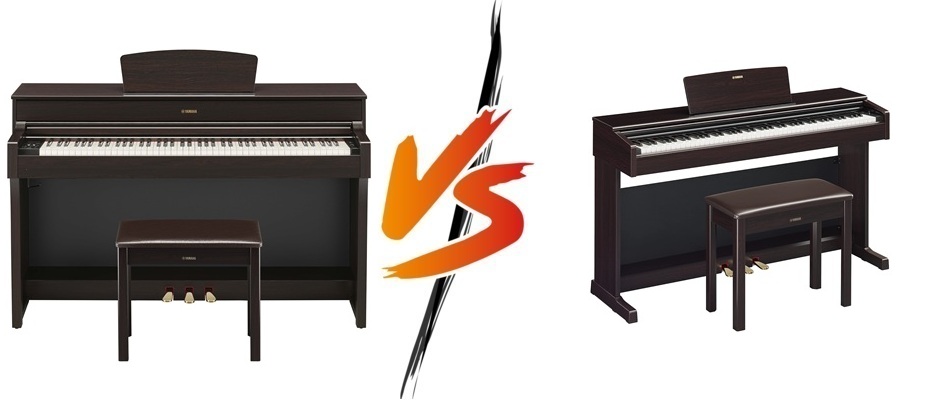
Choosing a home digital piano can be surprisingly difficult, especially when you’re comparing two models from the same brand that seem, at first glance, very similar. Yamaha’s Arius YDP series is a good example of this. It’s designed specifically for home players who want an authentic piano feel without the size, maintenance, or cost of an acoustic instrument. Within that lineup, the Yamaha YDP-145 and the Yamaha YDP-184 sit at two different price and performance levels, but both promise Yamaha’s well-known build quality and piano sound.
On paper, they share a lot in common: 88 weighted keys, a traditional console cabinet, Yamaha’s CFX concert grand piano sample, and a focus on realistic practice at home. In practice, though, they’re aimed at different types of players. This comparison looks closely at where they overlap, where they differ, and which one actually makes more sense depending on your experience level, space, budget, and long-term goals.
Yamaha YDP-184 vs Yamaha YDP-145 Comparison Chart
If you click the links below, under the product images, you will be redirected to Amazon.com. In case you then decide to buy anything, Amazon.com will pay me a commission. This doesn’t affect the honesty of this review in any way though.
| Specification | Yamaha YDP-184 | Yamaha YDP-145 |
|---|---|---|
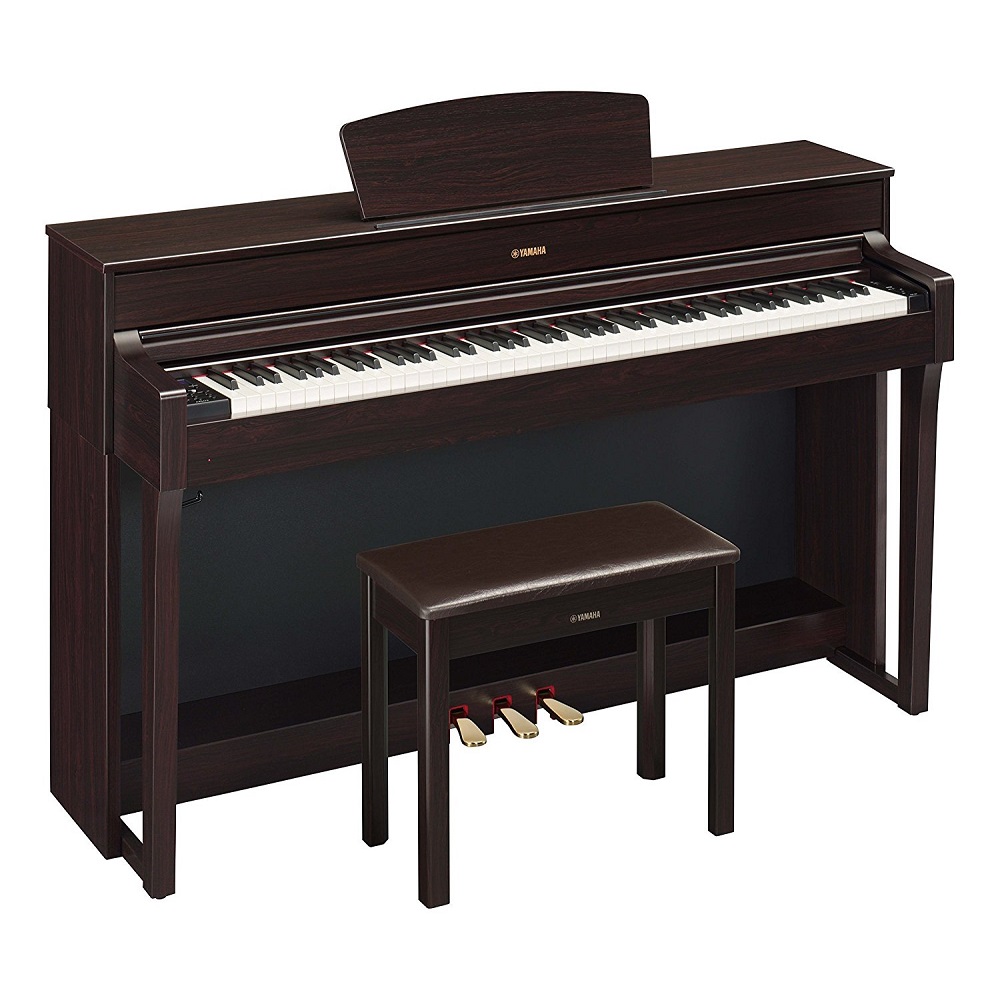 | 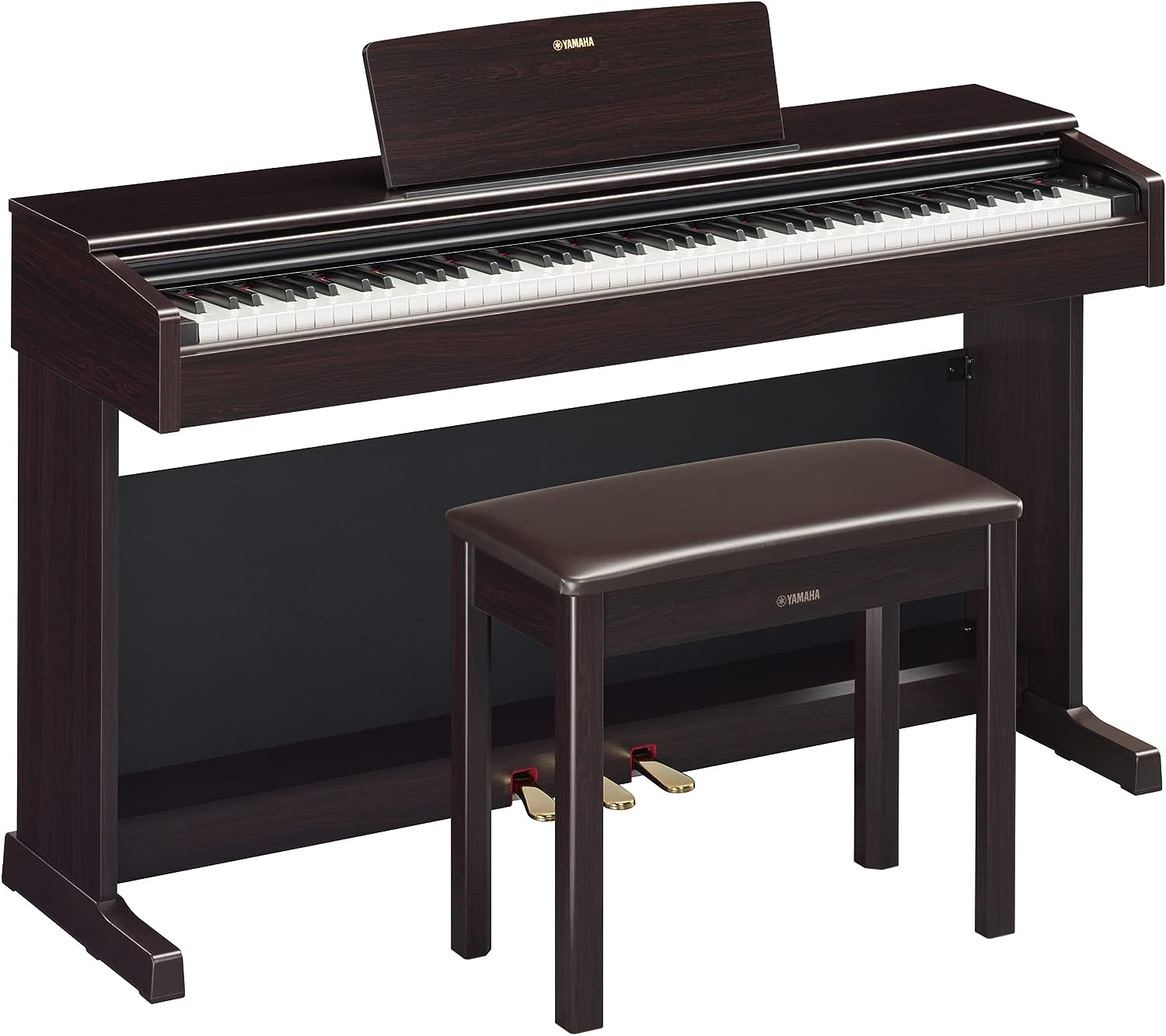 | |
| Check the best price on Amazon | Check the best price on Amazon | |
| Keyboard Action | GH3 (Graded Hammer 3) with synthetic ebony and ivory keytops. Heavier, more realistic feel with better repetition. | GHS (Graded Hammer Standard). Lighter action, easier for beginners. |
| Number of Keys | 88 full-size keys | 88 full-size keys |
| Maximum Polyphony | 256 notes | 192 notes |
| Piano Sound Engine | Yamaha CFX concert grand with Virtual Resonance Modeling (VRM) | Yamaha CFX concert grand sampling |
| Preset Voices | Approx. 24 voices | Approx. 10 voices |
| Effects | Reverb, chorus, brilliance, master effects, Intelligent Acoustic Control | Reverb, Intelligent Acoustic Control |
| Recording Capability | Advanced internal MIDI recorder (up to 16 tracks) | Basic internal MIDI recording |
| Speaker System | 2 × 30 W amplifiers with larger cabinet-mounted speakers | 2 × 8 W amplifiers with compact speakers |
| Headphone Jacks | 2 × 1/4″ stereo jacks | 2 × 1/4″ stereo jacks |
| Audio Outputs | Dedicated line outputs | No dedicated line outputs (headphone output only) |
| Audio Input | Auxiliary input for external audio | Auxiliary input for external audio |
| USB Connectivity | USB to Host and USB to Device | USB to Host |
| Bluetooth Support | Bluetooth MIDI / Audio (region dependent or optional) | Bluetooth MIDI (region dependent or optional) |
| Pedals | 3 pedals: damper with half-pedal, sostenuto, soft | 3 pedals: damper with half-pedal, sostenuto, soft |
| Keyboard Modes | Dual, Split, Duo (teacher/student mode) | Dual, Split, Duo (teacher/student mode) |
| Metronome | Yes | Yes |
| Transpose & Tuning | Yes, with advanced tuning and temperament options | Yes, standard transpose and tuning |
| Display | Built-in LCD screen | No display |
| Cabinet Size | Larger, more substantial console cabinet | More compact console cabinet |
| Dimensions (W × D × H) | Approx. 146 × 46 × 93 cm | Approx. 136 × 42 × 82 cm |
| Weight | Approx. 56 kg | Approx. 38 kg |
| App Compatibility | Yamaha Smart Pianist and related apps | Yamaha Smart Pianist and related apps |
| Target Player | Intermediate to advanced players, long-term home use | Beginners to intermediate players, casual home use |
| Typical Price Range | Higher mid-range | Entry to lower mid-range |
| My individual reviews | Yamaha YDP-184 review | Yamaha YDP-145 review |
Design & Build Quality
When you stand in front of either the YDP-145 or the YDP-184, the first impression is the easiest — these are furniture-style instruments. Yamaha designed them to sit in living rooms, not on stage stands, and that intention shows in everything from the proportions to the hardware. But “furniture-style” covers a lot of ground: the YDP-184 leans toward the imposing, traditionally piano-like end of the spectrum; the YDP-145 aims for an elegant, restrained presence that’s easier to live with in a small apartment. Below I’ll walk through the details that actually matter day-to-day: cabinet, finishes, keybed housing and lid, pedals, bench integration, hardware, and the practicalities of moving, installing and living with each instrument.
Cabinet and visual presence
The YDP-184 is noticeably larger in depth and height. It reads as a proper console — taller music desk, a deeper top, a thicker cabinet where the speakers and electronics have room to breathe. That extra physical volume isn’t just about looks; it supports stronger internal acoustics and gives the instrument a weighty, “permanent” feel. Because of this, the 184 tends to anchor a room visually: put it against a wall and it becomes part of the furniture rather than something you tuck away.
The YDP-145 keeps the same clean Yamaha lines but trims the bulk. It’s slimmer front-to-back and slightly less tall, which makes it much easier to fit into a narrow space or under a window ledge. The effect is a piano that still looks grown-up, but with less visual dominance. If you live in a small flat or want your piano to coexist with a bookshelf and a sofa without taking over, the 145 is more practical.
Finishes and surface materials
Both instruments are offered in traditional finishes — dark satin or polished to mimic classic wood tones — and Yamaha’s finishing work is solid: panels meet cleanly, paint and wood veneers are evenly applied, and resistances to fingerprints and light scuffs are reasonable for daily home use. The 184 sometimes ships with slightly more premium-looking veneers or a textured finish on the music desk that reduces glare; you’ll notice that in brighter rooms. The 145’s surfaces tend to be simpler and more utilitarian, which also makes them easier to keep looking fresh when kids and coffee cups are nearby.
Keyboard surround and keytop feel are part of the build story too. The 184 often uses synthetic “ivory/ebony” textured keytops on higher-spec variants, which not only look nicer but offer better grip when your fingers get damp. The 145 comes with fine-quality matte plastic keytops that work well for most players, but they’re not textured in the same way and have a slightly different tactile character. It’s a small thing in isolation, but over months of practice the difference between textured and matte keytops becomes noticeable to anyone who values fingertip control.
Lid, music rest and ergonomics
Small ergonomic details are where a piano proves its thoughtfulness. The 184’s music rest is typically a bit larger and more solid, giving you room for bigger scores or multiple books. The lid (the top) is thicker and the hinges feel more substantial; this means opening and closing the top is steadier and there’s less chance of sag or misalignment over years. The 145’s music rest and lid are perfectly functional, but they feel lighter — not flimsy; just simpler. If you frequently use heavy, large-format scores or like placing page-turn devices and metronomes on the music desk, the 184’s more robust desk inspires more confidence.
Pedal assembly and mechanical robustness
Pedals matter more than many buyers expect. The 184’s pedal unit is integrated into the heavier cabinet and feels solid underfoot. The three pedals sit in a metal assembly that has less play and a firmer return action, which translates to more reliable half-pedaling and consistent response — especially for repeat practice of repertoire that uses nuanced damper technique. The 145 includes a three-pedal unit too, and it supports half-pedaling where implemented, but the mechanism is lighter and sometimes a little springier. For beginners and casual players the 145 pedal unit is fine, but for players working on subtle pedaling technique you’ll appreciate the 184’s sturdier feel.
Internal engineering: speakers, bracing and access
One of the often-overlooked parts of “build quality” is how the internal space is used. The 184’s cabinet has intentional bracing and dedicated speaker cavities. That not only gives better low-frequency response but reduces panel vibration and sympathetic rattles. The 145 has less internal volume, so the speaker drivers have smaller enclosures and the cabinet flex can be more perceptible at high volumes. Yamaha does a good job of damping and isolation on both models, but when you push the volume the 184 maintains composure better.
Maintenance and longevity
Both instruments are built for long life. Yamaha uses consistent manufacturing tolerances, decent fasteners, and standardized parts that are easy to service. Real-world durability will depend less on initial materials and more on how the piano is treated: humidity control, avoiding direct sunlight, and keeping liquids well away. The 184’s heavier cabinet gives it a slight edge in long-term robustness — the thicker panels and stronger internal fittings age better when moved or when children subject the instrument to frequent use. The 145, being lighter, can show edge wear sooner if it’s bumped or dragged regularly.
Practicalities of moving and placement
If you move apartments every year, the 145 is the friendlier instrument. It’s lighter, less awkward to maneuver through doorways, and you’ll have an easier time fitting it into elevators and narrow corridors. The 184, because of its size and weight, usually requires two or three people and careful protective wrapping to move without cosmetic damage. Also think about placement in a room: the 184 benefits from a wall that reflects sound back into the room; the 145 can sit comfortably in a corner without overpowering the space.
Assembly and out-of-box experience
Both arrive mostly assembled in most retail channels — they’re not box-of-parts projects. Expect to attach the music rest and the pedal assembly and maybe connect a few cables. The 145’s lighter parts make this a single-person job in many cases; the 184 may require assistance to set the cabinet pieces together safely. Yamaha’s included instructions are clear and the hardware is standardized, so setup is straightforward.
Aesthetics vs. user needs — where to compromise
Here’s a practical way to think about it: if appearance and tactile permanence are priorities — you want an instrument that looks, sounds and feels like it belongs in the heart of your home — the 184’s design and build reward those expectations. If you prioritize footprint, cost and simple elegance, the 145 gets you most of the same Yamaha DNA without the bulk. Neither model feels cheap; the choice is about how much cabinet and mechanical refinement you want to pay for.
Small extras that matter over time
Minor details matter: the 184’s lid often hides dust better, the bench options for the 184 are usually a hair more substantial, and the routing for cables is neater in the bigger cabinet — useful if you connect pedals, sustain units or a desktop audio interface. The 145’s simplicity makes it forgiving — fewer fiddly parts to break — but you’ll sacrifice a small amount of refinement.
In short: both are well-built instruments from a reliable manufacturer. The YDP-184 is the one that feels engineered to be a long-term fixture — heavier panels, stronger pedal hardware, more internal space for acoustic balance. The YDP-145 is the clever compromise: genuinely solid, compact and perfectly suited to most home practice needs, but it gives up the last increments of heft and finesse that cost more to produce. Choose the one whose tradeoffs match how you live, how seriously you plan to practice, and how permanent a presence you want your piano to be.
Keyboard & Action
If there’s one area where the difference between the YDP-145 and the YDP-184 really matters, it’s the keyboard. Sound, speakers, and features all contribute to the experience, but the action is what you physically interact with every time you sit down to play. It shapes how you phrase a melody, how confidently you play fast passages, and how tiring long practice sessions feel. Yamaha positions these two models at different levels primarily because of the key action they use, and that choice has real, noticeable consequences.
The Yamaha YDP-145 uses the GHS (Graded Hammer Standard) action, while the YDP-184 steps up to the GH3 (Graded Hammer 3) action. Both are weighted, both are graded from heavier bass keys to lighter treble keys, and both are designed to feel “piano-like.” But they are not interchangeable, and understanding the differences will help you decide which one fits your playing style and goals.
GHS action on the YDP-145: what it feels like
GHS is Yamaha’s entry-level fully weighted action, and it has been around for many years in everything from portable digital pianos to home consoles. Its core strength is consistency. Every key behaves predictably, the resistance is even, and the transition from bass to treble is smooth. For beginners, this predictability is a huge advantage. You don’t fight the keyboard; it lets you focus on reading music, hand position, and basic dynamics.
In terms of weight, GHS is on the lighter side compared to an acoustic upright or grand. The bass keys are weighted enough to suggest the feel of a real hammer mechanism, but they don’t require as much effort to depress. The treble keys are noticeably lighter, which makes scales and fast passages easier for new players. If you’re coming from a semi-weighted keyboard or synth, GHS will feel like a serious upgrade without being intimidating.
However, the lighter action has tradeoffs. Because the keys return slightly faster and with less mass behind them, very soft playing can feel less controllable. Pianissimo passages are still possible, but they require a more careful touch. Advanced players may notice that dynamic gradations between very soft and moderately soft aren’t as nuanced as on heavier actions. That doesn’t make GHS “bad,” but it does place a ceiling on expressive control.
Key travel and surface feel on the YDP-145
The key travel on the YDP-145 is typical for Yamaha’s GHS designs: not shallow, but not especially deep either. The downward motion feels smooth, with a soft landing at the bottom. There’s no pronounced “notch” or escapement simulation. This makes the action forgiving and comfortable for long practice sessions, especially for children or adults with smaller hands.
The keytops themselves are matte plastic. They’re not glossy, which is good — glossy keys tend to show fingerprints and feel slippery — but they lack the subtle texture found on higher-end Yamaha actions. In dry conditions, this makes little difference. In warm rooms or longer sessions where your hands might sweat slightly, the keys can feel a bit slick compared to textured synthetic ivory. Again, this is a comfort and control issue rather than a functional one.
GH3 action on the YDP-184: a clear step up
The YDP-184’s GH3 action is where Yamaha starts to aim more seriously at acoustic piano realism. GH3 is heavier overall than GHS, particularly in the lower octaves, and it incorporates a third sensor per key. That third sensor doesn’t change the feel of the key as much as it changes how the instrument interprets repeated keystrokes.
On a two-sensor action like GHS, a key typically needs to return close to its resting position before it can retrigger a note. On GH3, the third sensor allows the piano to detect repeated strikes even if the key hasn’t fully returned. In practical terms, this means faster note repetition, cleaner trills, and more reliable control in passages where your fingers don’t fully release the keys between strikes. If you play classical repertoire with repeated notes, ornaments, or fast articulation, this difference is immediately noticeable.
The added weight of the GH3 action also contributes to a more grounded feel. When you press a key, there’s a stronger sense of inertia, closer to what you feel on an acoustic piano. This helps with dynamic control: you can lean into the keys for louder passages and feather them more confidently for soft playing. The action encourages you to play “into” the instrument rather than skating over the surface.
Keytops and tactile feedback on the YDP-184
Many YDP-184 units feature synthetic ivory and ebony keytops. These aren’t just cosmetic. The texture absorbs a bit of moisture and provides subtle friction, which improves grip and reduces finger slip during long sessions. Pianists who practice for an hour or more at a time often notice less fatigue and better control on textured keys.
The key travel on the GH3 action feels slightly deeper than GHS, and the bottom of the key press is firmer. This can initially feel heavier or more demanding, especially for players moving up from GHS. After a short adjustment period, though, most players find the action more satisfying and more precise. It rewards good technique and makes sloppy playing more obvious, which is exactly what serious students need.
Escapement and realism
Neither the GHS nor the GH3 action includes a true mechanical escapement simulation like Yamaha’s higher-end grand actions. However, GH3 comes closer in spirit by allowing note repetition without full key release. For upright-style practice, this is more than sufficient. While advanced pianists might still notice the difference compared to a real grand action, GH3 does a good job of bridging the gap without dramatically increasing cost.
Fatigue and long-term practice
Action weight affects fatigue. The lighter GHS action is easier on the hands during long beginner practice sessions. This is one reason teachers often recommend it for young students. The heavier GH3 action can be more physically demanding, especially at first, but it also builds finger strength and control that translate better to acoustic pianos.
If you primarily play for relaxation, casual pop arrangements, or light classical pieces, the GHS action may actually feel more enjoyable day to day. If you’re practicing advanced repertoire, preparing for exams, or planning to transition to an acoustic piano regularly, the GH3 action will better support those goals.
Who should choose which action
The YDP-145’s GHS action makes sense for beginners, hobbyists, and households where multiple players of different skill levels will use the piano. It’s forgiving, comfortable, and easy to adapt to. It’s also well suited to players who prefer a slightly lighter touch or who spend a lot of time playing non-classical styles.
The YDP-184’s GH3 action is aimed at serious students and experienced players who care deeply about touch and control. It’s not just “better” in an abstract sense; it’s more demanding, more expressive, and closer to what you’ll encounter on an acoustic instrument. That makes it a stronger long-term practice tool, even if it takes a bit more effort to master.
Final thoughts on keyboard and action
In the end, the keyboard is where the price difference between these two models is most justified. The YDP-145’s GHS action is good, reliable, and well suited to its role as a mid-range home piano. The YDP-184’s GH3 action elevates the playing experience in a way that experienced pianists will immediately appreciate. If your budget allows and your playing goals are ambitious, the GH3 action alone can make the YDP-184 worth the upgrade. If you want an approachable, comfortable instrument that still feels like a real piano, the YDP-145 delivers exactly that.
Sound Engine & Piano Samples
The sound engine is the heart of any digital piano. You can have a beautiful cabinet and a good keyboard, but if the sound doesn’t inspire you, the instrument will eventually feel flat and uninvolving. With the YDP-145 and YDP-184, Yamaha uses the same core piano source but processes and presents it in noticeably different ways. On paper, both rely on samples from Yamaha’s flagship CFX concert grand. In practice, how those samples are handled, layered, and enhanced is where the two instruments begin to separate.
The Yamaha CFX as a starting point
The CFX is Yamaha’s modern concert grand, known for a clear, powerful tone with a slightly bright top end and a strong, focused midrange. It’s designed to project in large halls without losing clarity, which is why Yamaha uses it so heavily across its digital lineup. Both the YDP-145 and YDP-184 use stereo samples of this instrument, meaning multiple microphones captured the piano from different positions to create a sense of width and realism.
The basic tonal character is therefore shared. If you play a simple scale or chord progression on both instruments at moderate volume, you’ll immediately recognize the same Yamaha voice: clean attack, controlled sustain, and a clear separation between registers. This is important because it means the cheaper instrument isn’t saddled with an inferior piano tone. Yamaha has done a good job of bringing its best concert grand sound down into more affordable models.
Where the sound engines diverge
The difference lies in what happens after the sample is triggered. The YDP-145 uses a more straightforward sound engine. When you press a key, a sample plays at a volume and timbre determined by velocity, and basic effects such as reverb and chorus are applied. This approach is efficient and musical, but it’s relatively static. The piano sounds good, but it behaves more like a high-quality recording being played back than a complex, interactive instrument.
The YDP-184, by contrast, layers additional modeling on top of the sample. Depending on region and firmware, this includes Yamaha’s Virtual Resonance Modeling or a related resonance system. This technology simulates how strings, soundboard, and cabinet interact in a real acoustic piano. When you hold the damper pedal, for example, the 184 doesn’t just let notes ring longer; it introduces sympathetic resonances between strings, subtle harmonic bloom, and changes in decay behavior. The result is a sound that evolves more naturally over time.
Attack and initial tone
Attack is one of the most critical aspects of piano sound. On the YDP-145, the attack is clean and well-defined. Soft notes sound gentle, loud notes sound bright, and the transition between dynamic levels is smooth. However, the attack tends to sound similar each time you strike a note at a given velocity. Over repeated playing, especially in expressive passages, this can feel slightly predictable.
On the YDP-184, the attack has more complexity. Even when striking the same note at the same dynamic level, the sound can feel subtly different depending on how you approach the key and what other notes are resonating. This is partly due to the more advanced modeling and partly due to the closer integration between the action and the sound engine. It gives the impression that the instrument is “responding” to you rather than simply playing back samples.
Sustain and decay behavior
Sustain and decay are areas where digital pianos often reveal their limitations. On the YDP-145, sustained notes decay smoothly but relatively quickly. This is fine for practice and most repertoire, but if you listen closely, you’ll notice that the tail end of a note fades in a fairly linear way. There’s less variation in how overtones linger, especially when using the damper pedal.
The YDP-184 handles decay more realistically. Notes don’t just fade; they change character as they decay. Overtones drop out at different rates, and the interaction between notes held with the pedal creates a richer harmonic field. This is particularly noticeable in slow, expressive music where you allow chords to ring. The sound feels more alive and less mechanical.
Sympathetic resonance and pedaling
One of the biggest sonic differences between these two models shows up when you use the damper pedal extensively. On the YDP-145, pressing the pedal sustains notes and applies a generalized resonance effect. It works, and it sounds pleasant, but it doesn’t fully capture the complexity of an acoustic piano’s resonance.
On the YDP-184, sympathetic resonance is more detailed. When you play a chord and hold the pedal, you can hear subtle interactions between notes, especially in the mid and lower registers. This makes legato playing feel more connected and encourages more expressive pedaling. Advanced players, in particular, will appreciate how the instrument rewards careful pedal technique instead of blurring everything together.
Dynamic range and expressiveness
Both instruments offer a wide dynamic range, but they differ in how finely that range is divided. The YDP-145 responds well to changes in velocity, but the steps between very soft and moderately soft playing can feel slightly compressed. This isn’t a flaw so much as a limitation of the simpler sound engine.
The YDP-184 offers more gradations within the dynamic range. Pianissimo passages can be whisper-soft without losing clarity, and fortissimo playing has more weight without becoming harsh. This makes expressive phrasing easier and more satisfying, especially in classical and jazz repertoire where dynamic nuance is critical.
Additional piano-related sounds
Beyond the main grand piano voice, both instruments include variations and secondary piano sounds. These might include a mellow grand, a bright pop piano, or an electric piano. The YDP-184 typically offers a slightly broader selection and more detailed versions of these sounds. However, neither instrument is designed to be a sound designer’s playground. The focus is clearly on acoustic piano realism rather than sheer variety.
What matters more than the number of sounds is their quality. On both models, the non-piano voices are serviceable and musically useful, but they don’t reach the same level of realism as the main CFX piano. The 184’s advantage here is subtle rather than dramatic.
Headphones versus speakers
Sound engines behave differently through headphones than through speakers. Through good headphones, the difference between the YDP-145 and YDP-184 becomes more apparent. The 184’s modeling shines here, because the stereo field and resonance effects are easier to perceive without room acoustics interfering. The 145 still sounds very good, but it can feel flatter by comparison.
Through the built-in speakers, cabinet and amplification play a role, and some of the sound engine’s advantages are masked. Even so, the 184’s richer processing tends to come through, especially at moderate volumes.
Long-term listening fatigue
An often overlooked aspect of sound quality is how it holds up over long sessions. The YDP-145’s sound is clean and pleasant, but its relative uniformity can become a bit tiring over hours of play. The YDP-184’s more complex sound tends to stay engaging longer, because there’s more variation and depth for your ears to latch onto.
Final thoughts on sound engine and samples
The key takeaway is that both instruments start from a strong foundation: Yamaha’s CFX concert grand. The YDP-145 delivers that sound in a straightforward, cost-effective way that works extremely well for its target audience. The YDP-184 takes the same core sample and adds layers of realism through resonance modeling, dynamic nuance, and more expressive decay. If sound realism and expressive depth are top priorities for you, the 184’s sound engine justifies its higher price. If you want a beautiful, reliable piano sound without paying for the last layer of detail, the 145 more than holds its own.
Speakers & Amplification
Speakers are one of the most underestimated parts of a digital piano. Many buyers focus on sound engines and keyboard action, assuming the built-in speakers are just there to “make noise.” In reality, the speaker system plays a huge role in how convincing and enjoyable the piano feels in a real room. It determines how the sound fills the space, how the bass is perceived, and whether the instrument feels alive or boxed in. This is an area where the YDP-145 and YDP-184 differ in very practical, audible ways.
General speaker philosophy
Both pianos are designed as self-contained home instruments. Yamaha expects most owners to play through the built-in speakers rather than external amps. That means speaker placement, cabinet design, and amplifier tuning are all carefully considered. The YDP-145 is engineered to deliver clean, balanced sound in a compact form. The YDP-184 is designed to take advantage of a larger cabinet to produce a fuller, more room-filling experience.
Speaker size and configuration
The YDP-145 uses a modest two-speaker system mounted inside its slimmer cabinet. The drivers are smaller, and their placement is optimized to project sound forward and slightly upward. This setup works well in small to medium rooms. At moderate volumes, the sound is clear and focused, and it’s easy to hear individual notes. However, because the speakers are relatively small, low-frequency response is limited. Bass notes are audible, but they don’t have much physical presence.
The YDP-184, on the other hand, benefits from a larger cabinet that allows for bigger speaker drivers and more internal air volume. This alone makes a noticeable difference. The bass register feels more grounded, and chords have more body. Even at lower volumes, the sound carries a sense of weight that the YDP-145 struggles to match. This isn’t about loudness; it’s about fullness and depth.
Amplification power and headroom
Amplification power isn’t just about how loud a piano can get. It’s also about headroom — the ability to handle sudden dynamic peaks without distortion or compression. The YDP-145’s amplifiers are tuned for efficiency and clarity at home-friendly volumes. Push the volume high, and the sound remains controlled, but you’ll start to hear the limits of the system: bass notes lose definition, and the overall sound can feel slightly constrained.
The YDP-184’s amplification has more breathing room. When you play a big, loud chord or dig into the lower octaves, the system responds with authority instead of strain. This makes dynamic playing more satisfying, especially for classical and jazz repertoire that relies on wide dynamic contrast. You don’t have to turn the volume up as high to feel immersed, which also reduces listening fatigue.
Cabinet resonance and sound projection
One of the biggest advantages of the YDP-184’s larger build is cabinet resonance. Yamaha uses the cabinet itself as part of the sound-shaping system. The extra mass and internal bracing allow the cabinet to resonate in a controlled way, reinforcing certain frequencies rather than fighting them. This gives the impression that the sound is coming from a larger instrument.
The YDP-145’s cabinet is more inert by comparison. That’s not a flaw — it’s a design choice. A lighter cabinet vibrates less, which helps keep the sound clean and prevents unwanted rattles. The downside is that the sound feels more localized, as if it’s coming from a box rather than filling the room. For close-up practice, this is perfectly fine. For performance-style playing, it can feel a bit restrained.
Room interaction and placement
How a digital piano interacts with a room matters a lot. The YDP-184’s sound benefits from being placed against a wall, where reflected sound adds to the sense of depth. In a medium-sized living room, it can feel surprisingly close to an upright piano in terms of presence. The YDP-145 also benefits from wall placement, but its smaller speakers mean reflections don’t add as much richness.
In very small rooms, the difference narrows. The YDP-145 can sound perfectly balanced in a bedroom or study, while the YDP-184 might feel almost oversized. This is an important consideration: bigger isn’t always better if your space can’t support it acoustically.
Volume consistency and balance
Both models are well-balanced across the keyboard, but the YDP-184 maintains that balance better as volume increases. On the YDP-145, higher volumes can exaggerate the midrange, making the sound feel a bit forward. The 184’s system stays more even, with bass, mids, and treble remaining proportionate.
This balance also affects how forgiving the piano is to your playing. On the 184, uneven touch is less likely to sound harsh because the speaker system smooths things out. On the 145, touch variations are more exposed, which can be a positive or negative depending on your perspective.
Headphones versus speakers
It’s worth noting that many differences between these two models diminish when you use headphones. Through good headphones, you’re hearing the sound engine more than the speakers. Still, when you switch back to speakers, the YDP-184 immediately feels more immersive. If you plan to play mostly through speakers, this section should weigh heavily in your decision. If you practice mostly with headphones, the speaker advantage of the 184 is less critical.
External amplification options
Neither piano is designed primarily for stage use, but both can be connected to external amplification. The YDP-184 generally offers more flexible output options, making it easier to integrate into a home studio or small performance setup. The YDP-145 can also be connected externally, but its internal speakers are clearly intended to be the main listening method.
Long-term listening comfort
Over long practice sessions, speaker quality affects comfort. The YDP-145’s speakers are clear but can sound a bit thin at higher volumes, which may lead you to lower the volume more often. The YDP-184’s fuller sound allows comfortable listening at moderate levels, which is better for your ears and more satisfying musically.
Final thoughts on speakers and amplification
The difference in speakers and amplification between the YDP-145 and YDP-184 isn’t subtle, but it’s also not about sheer loudness. The YDP-145 delivers clean, focused sound that works well in small spaces and for everyday practice. The YDP-184 offers a more immersive, piano-like presence, with better bass, more headroom, and a cabinet that contributes positively to the sound. If you rely on built-in speakers and want your digital piano to feel as close to an acoustic as possible, the YDP-184 clearly has the edge.
Functions, Features & Usability
Functions and features are where digital pianos quietly reveal who they’re made for. Some instruments are designed to disappear and let you focus entirely on playing. Others invite you to explore sounds, settings, recording, and learning tools. The YDP-145 and YDP-184 sit at different points on that spectrum. Both are meant to be straightforward home pianos, but the 184 offers noticeably more depth and flexibility, while the 145 prioritizes simplicity and ease of use. Neither approach is inherently better; the right choice depends on how you plan to use the instrument day to day.
Control layout and interface
Both models keep visible controls to a minimum. Yamaha clearly assumes that most owners want a clean piano look, not a control panel full of buttons. On both instruments, the main controls are discreetly placed, usually on the left side of the keyboard or beneath the keybed. Power, volume, and a handful of function buttons are all you see at first glance.
The YDP-145’s interface is extremely simple. Many functions are accessed through key combinations, where you hold down a button and press certain keys to change settings. This keeps the piano looking uncluttered, but it does mean you’ll need the manual nearby during the first few weeks. Once learned, though, it becomes second nature. For beginners and casual players, this simplicity is actually a strength. There’s very little to distract you from playing.
The YDP-184, while still visually restrained, offers more direct access to features. It typically includes additional buttons or menu navigation options, making it easier to adjust settings without memorizing key combinations. This is particularly helpful when you want to fine-tune sound or switch modes frequently.
Voices and sound selection
Both pianos focus on acoustic piano sounds first and foremost. The YDP-145 includes a modest selection of voices: a main concert grand, a brighter or mellower variation, a few electric pianos, organs, strings, and a handful of other standard sounds. The selection is intentionally limited. Yamaha assumes that if you buy an Arius piano, you’re here to play piano, not scroll through hundreds of presets.
The YDP-184 expands on this with a broader voice set and more refined versions of those sounds. The electric pianos tend to have more depth, and the string and pad sounds blend more smoothly when layered. This doesn’t turn the 184 into a workstation, but it does make it more enjoyable for casual composition, accompaniment, or experimentation.
Dual, split, and duo modes
Both models support dual mode, allowing you to layer two sounds at once. This is useful for combining piano with strings or pads to create a fuller sound. On the YDP-145, dual mode works well but offers limited control over balance and individual effects. It’s simple and effective but not deeply customizable.
The YDP-184 offers more control in dual mode. You can usually adjust balance more precisely and fine-tune how the layered sounds interact. This makes the feature more usable for performance or recording rather than just casual experimentation.
Split mode, which assigns different sounds to the left and right hands, is also available on both. It’s particularly useful for teachers or for playing bass lines with the left hand. Again, the 184 offers more control, but the core functionality is present on both.
Duo mode is especially important for teaching. It splits the keyboard into two identical ranges, allowing teacher and student to sit side by side and play in the same register. Both the YDP-145 and YDP-184 include this feature, and it works reliably on both. For families with children learning piano, this alone can be a deciding factor.
Recording functions
Recording capabilities differ more noticeably. The YDP-145 typically offers basic recording functionality, allowing you to capture your playing and play it back. This is mainly for practice and self-evaluation. You can listen back, identify mistakes, and track progress. The recording is usually limited in scope, but it does its job.
The YDP-184 offers more advanced recording options. Depending on configuration, you may be able to record multiple parts or tracks, making it easier to build simple arrangements or layer hands separately. While it’s not a substitute for a full DAW, it’s much more useful for serious practice, composition, and teaching scenarios.
Metronome, transpose, and tuning
Both pianos include standard practice tools: a built-in metronome, transpose function, and tuning adjustments. The metronome on both is straightforward and reliable, with adjustable tempo and time signatures. Transpose is useful if you’re playing with other instruments or singers in different keys.
The YDP-184 often offers finer control over tuning and temperament. You may be able to select historical temperaments or adjust tuning in smaller increments. These features appeal mostly to advanced players, teachers, and those interested in classical performance practice.
Pedal behavior and customization
Pedal support is a key part of usability. Both instruments support half-pedaling on the damper pedal, allowing more expressive control. On the YDP-145, pedal behavior is largely fixed: it works well, but there’s little room for customization.
The YDP-184 allows more nuanced pedal response and may let you adjust how the pedal interacts with resonance and decay. This level of control isn’t essential for beginners, but advanced players will appreciate the ability to fine-tune the feel.
Learning tools and app integration
Neither piano includes built-in interactive lessons in the traditional sense, but both integrate well with Yamaha’s apps via USB or Bluetooth (depending on region). Apps can display scores, track progress, and provide guided lessons. The YDP-145 supports these features just as reliably as the 184, making it a solid choice for app-based learning.
The difference is that the 184’s additional sound and recording features make it more versatile when paired with apps or a computer. If you plan to use notation software, DAWs, or advanced learning tools, the 184 integrates more smoothly into that workflow.
Day-to-day usability
In daily use, the YDP-145 shines by getting out of your way. You turn it on, set the volume, and play. There’s very little friction. For many people, especially beginners and casual players, this is ideal. The piano feels approachable and unintimidating.
The YDP-184 invites more exploration. You can spend time shaping sound, adjusting resonance, experimenting with layers, and recording ideas. This makes it more engaging for experienced players but also slightly more complex. It’s still easy to use, but it assumes you’re willing to invest time in learning its features.
Final thoughts on functions and usability
The YDP-145 and YDP-184 both succeed at being home digital pianos, but they succeed in different ways. The YDP-145 prioritizes clarity, simplicity, and ease of use. It’s a piano you can sit down at and enjoy immediately, with just enough features to support learning and practice. The YDP-184 adds depth, flexibility, and refinement. Its expanded functions support serious study, teaching, and creative use without overwhelming the user. Choosing between them comes down to whether you value simplicity or depth — and how much you want your digital piano to do beyond simply sounding and feeling good.
Connectivity
Connectivity is one of those topics that doesn’t feel important until you actually start using a digital piano in the real world. At first, you might think you’ll just turn it on and play. Then, over time, you realize you want to connect headphones, use learning apps, record into a computer, or play along with backing tracks. In that sense, connectivity defines how well a piano fits into your broader musical life. The Yamaha YDP-145 and YDP-184 both offer solid, modern connectivity, but the YDP-184 is more flexible and future-proof, especially for players who plan to go beyond basic practice.
Core philosophy behind connectivity
Yamaha treats the Arius line as home instruments first. These are not stage pianos or production workstations, so connectivity is designed to be clean, stable, and discreet rather than extensive. There are no banks of audio outputs or MIDI ports on the back like you’d find on pro gear. Instead, Yamaha focuses on the connections most home players actually use: USB, headphones, and basic audio input/output. Both the YDP-145 and YDP-184 follow this philosophy closely, but the 184 pushes it a bit further.
USB to Host: the backbone of modern use
Both models include a USB to Host port, and this is arguably the most important connection on either instrument. USB to Host allows the piano to send and receive MIDI data directly to and from a computer, tablet, or smartphone. In practical terms, this means you can connect the piano to a DAW, notation software, or learning app with a single cable.
On both the YDP-145 and YDP-184, USB MIDI is stable and low-latency. You can use the piano as a MIDI controller to trigger virtual instruments, record MIDI performances, or interact with apps that provide real-time feedback. For beginners using apps like flowkey or Simply Piano, this is essential. For more advanced users, it opens the door to high-quality piano libraries and recording workflows.
The YDP-184 sometimes adds a USB to Device port as well, depending on region. This allows you to connect a USB flash drive for data storage or song playback. While not essential, it’s a nice quality-of-life feature if you like to manage recordings without a computer.
Audio output options
Audio output is where the two models start to differ more meaningfully. The YDP-145 typically relies on its headphone jack(s) for audio output. This works fine for silent practice and casual recording, but it’s not ideal if you want to connect to external speakers or a mixing console. Using a headphone output for line-level audio can introduce noise or require careful volume management.
The YDP-184 usually includes dedicated line outputs or at least more flexible audio routing. This makes it much easier to connect the piano to external amplification, studio monitors, or an audio interface. If you plan to record audio directly from the piano rather than MIDI, this is a significant advantage. The signal is cleaner, more consistent, and easier to integrate into a recording setup.
Headphone connectivity and silent practice
Both pianos are well suited to silent practice. They include standard stereo headphone jacks, often two, allowing two people to listen at the same time. This is great for lessons or shared practice in a household. Yamaha’s headphone amplification is clean and well-matched to the sound engine, so you don’t need a dedicated headphone amp for good results.
On the YDP-184, headphone listening tends to feel more immersive due to better sound modeling and spatial effects. Some players report that the transition from speakers to headphones is smoother on the 184, with less of a “flat” sensation. This isn’t strictly a connectivity issue, but it’s part of how the connections are implemented and tuned.
Audio input for external devices
Both models typically include an auxiliary input, allowing you to connect an external audio source such as a phone, tablet, or media player. This lets you play along with backing tracks, lessons, or recordings through the piano’s speakers or headphones. It’s a simple but extremely useful feature, especially for practice.
The YDP-145 handles this well, but the input level and mixing are usually fixed. You control the balance between the piano and the external audio at the source device. The YDP-184 sometimes offers more refined mixing or better signal handling, making it easier to balance playback and live playing.
Bluetooth and wireless considerations
Bluetooth connectivity varies by region and production year. Some YDP-145 and YDP-184 units support Bluetooth MIDI or Bluetooth audio, while others require an optional adapter. When available, Bluetooth MIDI is especially convenient for connecting to tablets without cables. Latency is generally low enough for practice and learning apps, though serious recording still benefits from a wired connection.
The YDP-184 is more likely to support Bluetooth features or at least integrate more smoothly with Yamaha’s wireless ecosystem. This makes it a better choice if you value cable-free setups or plan to use tablets extensively.
Integration with Yamaha apps
Both pianos work with Yamaha’s suite of apps, which extend their functionality significantly. Apps can display digital scores, adjust settings, manage voices, and provide interactive learning tools. The USB connection is the primary method here, and it works reliably on both models.
Where the YDP-184 pulls ahead is in how much control these apps can offer. With more internal parameters and features, the apps can expose deeper customization options on the 184. On the 145, the apps still add value, but they mainly act as a convenient remote control rather than unlocking new capabilities.
Recording workflows
For recording, there are two main approaches: MIDI and audio. Both pianos support MIDI recording via USB, which is ideal for editing and using virtual instruments. Audio recording is more dependent on outputs.
The YDP-145 can be recorded by connecting its headphone output to an audio interface, but this is a workaround rather than an ideal solution. The YDP-184’s cleaner outputs make audio recording simpler and more professional. If you plan to record performances for sharing, teaching, or personal archiving, this difference matters.
Future-proofing and expandability
Connectivity also determines how well an instrument ages. As learning tools, apps, and recording workflows evolve, having flexible, modern connections becomes more important. The YDP-145 covers the essentials and will remain usable for many years. The YDP-184, with its broader I/O and potential wireless options, is better positioned to adapt to changing needs.
Final thoughts on connectivity
Both the Yamaha YDP-145 and YDP-184 offer connectivity that meets the needs of modern home pianists. The YDP-145 gives you everything you need for practice, learning, and basic recording in a clean, no-nonsense package. The YDP-184 goes further, offering more robust audio output options, better integration with external gear, and greater flexibility for advanced use. If you see your digital piano as part of a larger musical setup — involving apps, recording, or external sound systems — the YDP-184’s connectivity is a clear advantage.
Pedals
Pedals are often treated as an afterthought in digital piano discussions, but they play a huge role in how expressive and realistic an instrument feels. For many styles of music, especially classical and romantic repertoire, pedaling is just as important as finger technique. The Yamaha YDP-145 and YDP-184 both include three pedals in a traditional piano layout, but the quality, feel, and responsiveness of those pedals differ in ways that become more obvious as your playing level increases.
Standard three-pedal configuration
Both models come with the full three-pedal setup: damper (sustain) on the right, sostenuto in the middle, and soft (una corda) on the left. This immediately places them above entry-level digital pianos that only include a single sustain pedal. For students working through graded exams or classical repertoire, having all three pedals available is essential. Yamaha has kept the placement and spacing close to that of an acoustic upright, so transitioning between digital and acoustic instruments feels natural.
Damper pedal and half-pedaling
The damper pedal is by far the most important of the three, and both pianos support half-pedaling. This allows you to control how much the dampers are lifted, rather than treating the pedal as an on/off switch. On the YDP-145, half-pedaling works reliably, but the response curve is relatively simple. You can achieve basic gradations, but the transition between half and full sustain can feel slightly abrupt.
The YDP-184 handles damper response with more nuance. The pedal has a firmer resistance and a more gradual response curve, which makes it easier to fine-tune sustain length. This pairs well with the more advanced sound engine, as subtle pedal movements actually result in audible changes in resonance and decay. For advanced players, this makes pedaling feel more musical and less mechanical.
Sostenuto pedal behavior
The sostenuto pedal, which sustains only the notes held at the moment the pedal is pressed, is often ignored by beginners but becomes important in more advanced repertoire. On both models, the sostenuto function works as expected. The difference is less about functionality and more about feel. On the YDP-145, the sostenuto pedal has a lighter action and can feel slightly springy. It works, but it doesn’t invite frequent use.
On the YDP-184, the sostenuto pedal feels more solid and predictable. This encourages experimentation and practice with sostenuto techniques, which can be useful in modern classical pieces and advanced arrangements. The pedal’s interaction with the sound engine also feels more integrated, making sustained notes blend more naturally with newly played ones.
Soft pedal realism
The soft pedal on both instruments reduces volume and slightly alters tone. On the YDP-145, this effect is fairly straightforward: the sound becomes quieter and a bit softer in character. It’s useful for dynamic contrast but doesn’t dramatically change the timbre.
The YDP-184’s soft pedal implementation is more refined. In addition to reducing volume, it subtly changes the tonal color, closer to the effect of shifting hammers on an acoustic piano. This makes the soft pedal more expressive and musically useful, especially in delicate passages.
Pedal build quality and physical feel
Physical build matters. The YDP-145’s pedal assembly is functional and stable, but it’s lighter and has more flex. For casual use, this is perfectly fine. Over time, however, you may notice slight movement or noise if you play aggressively.
The YDP-184’s pedals are integrated into a heavier cabinet with a sturdier metal assembly. There’s less lateral movement, and the pedals return more smoothly. This contributes to a more confident playing experience, particularly for players who rely heavily on pedal technique.
Noise and reliability
Both models are quiet mechanically, which is important for late-night practice. The YDP-184’s more robust construction tends to remain quieter over long-term use, while the YDP-145 may develop minor squeaks or looseness after years of heavy use, especially in busy households.
Final thoughts on pedals
Both the Yamaha YDP-145 and YDP-184 offer proper three-pedal setups with half-pedaling support, making them suitable for serious piano study. The YDP-145’s pedals are perfectly adequate for beginners and intermediate players, providing all the essential functions without complication. The YDP-184’s pedals feel more substantial, respond more gradually, and interact more naturally with the sound engine. If expressive pedaling is a priority for you, the YDP-184 offers a noticeably more satisfying experience.
Conclusion
Choosing between the Yamaha YDP-145 and the Yamaha YDP-184 ultimately comes down to how far you want your digital piano to take you. Both instruments deliver what Yamaha does best: dependable build quality, a clear and musical piano sound, and a design that fits naturally into a home environment. There is no bad choice here, only a better match for your needs.
The YDP-145 is a smart, sensible piano. It focuses on the essentials and executes them well. The lighter GHS action, compact cabinet, and straightforward feature set make it especially well suited to beginners, casual players, and families. It’s easy to live with, easy to learn on, and affordable enough to feel like a confident investment rather than a risky one. For many players, it will be more than enough for years of enjoyable practice.
The YDP-184, on the other hand, is for those who want more realism and room to grow. Its heavier GH3 action, richer sound modeling, stronger speakers, and more refined pedals create a playing experience that feels closer to an acoustic piano. It rewards good technique and encourages expressive playing. If you’re an advancing student, a returning pianist, or someone who values nuance and long-term satisfaction, the higher price is easier to justify.
In the end, think about your space, your budget, and your musical goals. If you want simplicity and value, the YDP-145 delivers. If you want depth, realism, and a piano that will challenge and inspire you over time, the YDP-184 is the more fulfilling choice.