

Choosing between the Yamaha DGX-670 and the Yamaha PSR-SX600 isn’t as simple as picking the “better” keyboard. They’re built for different kinds of players, and the strengths of each depend heavily on how you plan to use them. The DGX-670 leans toward the world of digital pianos: full-sized, weighted keys, expressive acoustic piano samples, and a layout that feels familiar if you’ve spent time on a real piano. The PSR-SX600 takes a different path. It’s an arranger keyboard designed for performers who want hundreds of voices, flexible style accompaniments, and quick access to live controls.
Both instruments sit in a similar price range, which leads a lot of buyers to compare them directly. But the real question isn’t “which one is better?” It’s “which one fits the way you actually play?” This review breaks everything down so you can make that decision with confidence.
Yamaha DGX-670 vs Yamaha PSR-SX600 Comparison Chart
| Category | Yamaha DGX-670 | Yamaha PSR-SX600 |
|---|---|---|
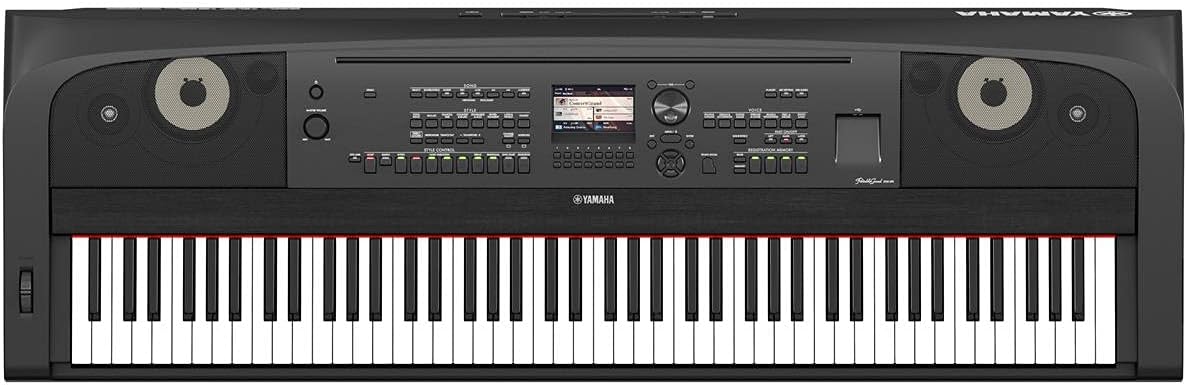 | 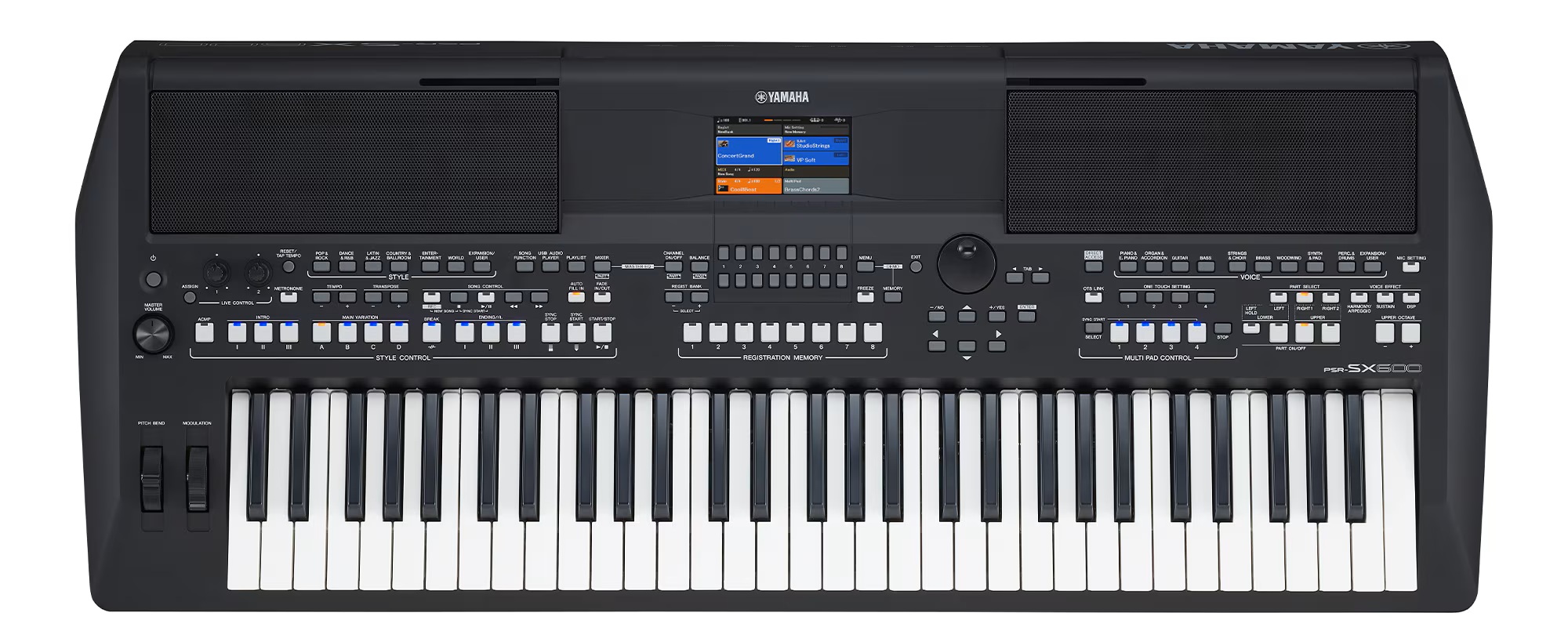 | |
| Check the best price on Amazon | Check the best price on Amazon | |
| Instrument Type | Digital piano with arranger features | Arranger keyboard |
| Keyboard | 88 keys, GHS weighted action | 61 keys, organ/synth-style action |
| Touch Sensitivity | Soft, Medium, Hard, Fixed | Soft, Medium, Hard, Fixed |
| Tone Generator | Yamaha CFX or Pure CF samples + VRM | AWM sampling with Super Articulation & MegaVoice |
| Voices | ~600 voices | ~850 voices |
| Piano Focus | High: deep modeling, damper resonance, VRM | Medium: good but less detailed |
| Styles | 263 accompaniment styles | 415 accompaniment styles |
| Polyphony | 256 notes | 128 notes |
| Internal Songs | 100+ lessons + demos | 100+ preset songs |
| Display | 4.3″ color LCD | 4.3″ color LCD |
| Speakers | 12W total (6W x 2), 2-way system | 30W total (15W x 2) |
| Onboard Sound Character | Warm, piano-centric, fuller low end | Bright, punchy, mid-focused for live use |
| Bluetooth | Yes (audio) | No |
| Audio Recording | WAV to USB | WAV to USB |
| MIDI Recording | 16-track MIDI | 16-track MIDI with deeper editing |
| USB Audio Interface | Yes | Yes |
| Line Outputs | No (uses headphone out) | Yes (L/L+R, R) |
| MIDI Ports (DIN) | No | Yes (In/Out) |
| Microphone Input | Yes | No |
| Pedal Inputs | Sustain + optional 3-pedal unit (LP-1) | Sustain + assignable + expression |
| Expansion Packs | Limited | Supported via Yamaha Expansion Manager |
| Weight | ~21.4 kg (47.2 lbs) | ~8.4 kg (18.5 lbs) |
| Dimensions (W x H x D) | 1,397 × 151 × 445 mm | 1004 × 134 × 410 mm |
| Best For | Pianists, learners, home players | Performers, arrangers, live musicians |
| My individual reviews | Yamaha DGX-670 review | Yamaha PSR-SX600 review |
Design & Build Quality
When you set the Yamaha DGX-670 and the Yamaha PSR-SX600 side by side, the first thing you notice is that they come from two different design philosophies. Yamaha isn’t simply offering two keyboards at different price points. They’ve built two instruments that speak to different needs, playing environments, and ways of interacting with music. Design and build quality are where those differences become obvious long before you turn either keyboard on.
Physical footprint and overall presence
The DGX-670 is the larger of the two by a wide margin. It carries the visual identity of a “portable grand,” meaning it looks like a slimmed-down digital piano rather than a typical keyboard. Its long chassis exists to house all 88 graded hammer keys, so it stretches across a stand in a way that feels familiar to anyone who has used an acoustic piano. Depending on where you plan to put it, this can be a blessing or a challenge. It’s stable, reassuring, and substantial, but it’s also wide enough that you’ll need a dedicated stand or a sturdy piece of furniture. For many home users, it becomes a semi-permanent fixture in a room rather than something you haul around often.
The PSR-SX600, in contrast, takes up far less space. With only 61 keys and a more compact shell, it fits comfortably on a small keyboard stand or even a desk if needed. Its footprint makes it easy to carry between rehearsals, gigs, or lessons. While the DGX-670 gives off the vibe of a home piano, the PSR-SX600 looks ready to travel, plug in, and start working. You can tell Yamaha designed it for mobility and setup flexibility.
Aesthetics and layout
The DGX-670 has a clean, modern look with a modest color display and an uncluttered control area. The buttons, knobs, and navigation cluster are placed in a way that doesn’t overwhelm you. This matches the intended audience: pianists who want a mostly piano-like experience without layers of technical distraction. The interface leans toward simplicity. You get enough controls to access accompaniments, voices, and recording features, but nothing about it feels busy. It’s the kind of keyboard that invites you to sit down and play without thinking too hard about menus.
The PSR-SX600, on the other hand, embraces a more professional, feature-rich layout. Its wider array of buttons, category controls, assignable knobs, multi pads, and performance features tells you right away that this is an arranger keyboard. There’s more going on visually. To someone unfamiliar with arrangers, it might look crowded; to someone who performs live or works with styles and layers, it looks like home base. Everything is placed within quick reach so you can make changes mid-song without diving into submenus.
Build materials and durability
Neither keyboard feels fragile, but they’re designed for different environments. The DGX-670 uses solid plastics and a structure that supports the weight and length of an 88-key mechanism. It’s built to stay put, withstand years of practice, and more or less function as an alternative to an upright piano. The keys have a solid-feeling mechanism underneath, and the top surface has a clean matte finish that resists fingerprints well. You won’t mistake it for a premium wooden cabinet digital piano, but for a portable model, it feels dependable and well-assembled.
The PSR-SX600 feels slightly more rugged in the sense that it’s built for musicians who pack up often. The chassis is firm, the buttons are tight, and the wheels and knobs feel ready to take repetitive day-to-day use. The plastic casing is the standard Yamaha arranger type: lightweight but sturdy, with just enough flex to suggest portability without feeling cheap. The pitch bend wheel and assignable knobs feel responsive, which is important when you’re performing and relying on physical controls.
Portability and weight considerations
Portability is where the two keyboards split dramatically. Even though Yamaha calls the DGX-670 “portable,” that’s relative to full digital pianos, not to typical gigging keyboards. It’s manageable if you’re moving it around your home, but carrying it across town isn’t fun unless you have a case and a car with enough room. The weighted keybed adds significant weight, which is part of what makes it feel like a real instrument but also what makes it less ideal for regular transport.
The PSR-SX600 is genuinely portable. One person can pick it up decisively, tuck it under an arm, and move it around without much fuss. Its lighter weight also makes it easier to mount on any standard stand without worrying about stability or load-bearing capacity. If your work involves frequent travel or setup changes, this matters.
Controls and user interface ergonomics
The DGX-670’s interface is designed to be friendly. You get a color screen that’s bright enough to read from a comfortable seated distance and navigation buttons that behave predictably. Yamaha clearly expects most users to spend their time on the piano voice, with occasional forays into styles or settings. Everything is arranged around that expectation. You can adjust key settings and access accompaniment features without feeling like you’re piloting a complex machine.
The PSR-SX600 expects you to be hands-on and busy. The larger number of buttons and controls can look intimidating at first, but they’re organized around performance priorities: fast access to styles, quick tone switching, real-time effects, and registration banks. Yamaha’s arranger keyboards also tend to have logically grouped controls, so once you spend some time with it, you start to appreciate how quick the workflow becomes. The touchscreen-like navigation on some higher PSR models doesn’t appear here, but the SX600’s screen is still detailed and easy to read.
Stand options and optional accessories
The DGX-670 pairs well with Yamaha’s matching furniture-style stand and optional three-pedal unit. This combination turns it into a more permanent piano-like station, giving it a more classic appearance and offering proper pedal ergonomics. While you can put it on a generic stand, the piano feels more complete when paired with Yamaha’s dedicated hardware.
The PSR-SX600 works best on a standard X-stand or Z-stand, depending on your stability preference. It’s flexible: you can perform seated, standing, or tucked into a home studio desk. Its footprint fits into smaller workspaces, making it easier to integrate into computer-based setups. Pedals and accessories are optional and easy to swap out based on your needs.
Day-to-day experience
Living with the DGX-670 feels like living with a digital piano. You have a dedicated instrument that looks inviting, stable, and ready to play at any moment. It encourages long practice sessions and gives you a familiar seated posture similar to an acoustic piano. It’s a home tool meant to support consistent, serious playing.
Living with the PSR-SX600 feels more like having a workstation that adapts to your tasks. One evening you might rehearse with backing styles, the next you might take it to a gig, and the next day you might integrate it into a DAW setup. It’s versatile and mobile, which appeals to the practical musician who needs flexibility above all.
Final thoughts on design and build
Both keyboards are well made, but their design choices are intentional and specific. The DGX-670 is built around the experience of playing the piano. Everything — from its shape to its layout — revolves around making you feel at home at the keys. The PSR-SX600 is built around performance, portability, and versatility. Neither is better across the board; they simply serve different musicians.
If your musical life is built around piano playing, the DGX-670’s design will feel natural. If your musical life is built around performing, switching sounds, and working with styles, the PSR-SX600 will feel like the right tool.
Keyboard & Action
The way a keyboard feels under your fingers shapes your entire playing experience. It’s not just about weight or resistance. It’s about how naturally you can move between dynamics, how much control you have over articulation, and whether the instrument helps or hinders your technique. In this category, the Yamaha DGX-670 and the Yamaha PSR-SX600 couldn’t be more different. Yamaha designed them with two very different use cases in mind, and you can feel that the moment you start playing.
The DGX-670: an 88-key, fully weighted, graded hammer action
The DGX-670 is built for players who want a real piano feel in a portable form. Yamaha uses a graded hammer system that mimics the mechanical behavior of an acoustic piano: heavier in the bass, lighter in the treble. This isn’t just a marketing detail. You feel the weight shifting subtly as you move up the keyboard, and that gives your hands useful feedback when playing classical repertoire, jazz voicings, or expressive passages that rely on nuanced touch.
The action sits in the familiar range of Yamaha’s GHS/GH3-style mechanisms, depending on the regional configuration. While it’s not as refined as Yamaha’s high-end wooden actions, it’s remarkably capable for the price. The keys return quickly enough for repeated-note techniques, and they provide enough resistance to let you shape dynamics without fighting the instrument.
For students, this matters more than it might seem. Practicing on a semi-weighted or synth-action keyboard can make transitioning to an acoustic piano feel awkward. The DGX’s action helps develop strength, timing, and finger independence in a way that translates well to any real piano you might play later.
Natural feel and expressive control
One strength of the DGX-670 is how naturally it responds to soft and loud playing. It’s easier to control a pianissimo phrase or a gradual crescendo when the weight of the keys helps guide your hands. The heavier lower register gives you a firm base for left-hand patterns, and the lighter high register lets you phrase melodic lines without extra tension.
Players who come from acoustic pianos often say the DGX-670 feels familiar within minutes. It’s not trying to be a luxury grand, but it nails the essential qualities: a consistent downweight, a predictable key return, and enough heft to keep your technique honest.
Another detail that matters is the key surface. Yamaha uses a matte finish that helps grip your fingers slightly. This may sound small, but during long sessions it prevents slipping and reduces fatigue. The full 88-key span also means you can practice extended pieces, wide classical passages, and proper two-hand independence without compromise.
Repetition and response
Repeated notes, ornaments, and fast passages are a good way to test how well a key action handles real-world playing. The DGX-670 holds up surprisingly well. The keys rebound quickly and consistently. While the DGX doesn’t have the triple-sensor repetition system found in Yamaha’s pricier digital pianos, it still responds fast enough for most classical and jazz repertoire. You won’t feel limited unless you’re playing very advanced material where ultra-fast repetition matters.
For most players — beginners, intermediates, hobbyists, and even many advanced pianists — the DGX’s action feels more than capable.
The PSR-SX600: 61 keys, lightweight synth-style action
Switch over to the PSR-SX600 and you walk into a completely different world. The keybed is light, quick, and optimized for arranger-style playing rather than piano technique. It responds instantly to touch, which is perfect for synth leads, organ glides, brass stabs, and fast comping. The keys don’t have the depth or weight of a hammer action, so playing long classical pieces or expressive ballads feels less natural. But that’s not what this keyboard is built for.
The PSR-SX600’s action supports velocity, but without the graded feel you get on the DGX. When you play it, you notice how easy it is to execute fast runs, trills, or patterns that would feel tiring on a weighted keyboard. For performers who need agility above realism, this is a plus. It’s especially handy for long sets where fatigue is a factor. Weighted keys are rewarding but they can wear you out when you’re playing a three-hour gig full of upbeat songs.
Adaptability for different styles
The PSR-SX600 shines when you step outside the piano voice category. Organ parts feel natural because the lighter keybed makes it easy to repeat notes rapidly and hold chords without tension. Synth leads benefit from the effortless glide across keys. Guitar strumming articulations, brass swells, ethnic instrument riffs — these all feel better on a lighter action because they’re designed for speed and flexibility.
If your playing leans toward pop, electronic, world music, or situations where you switch voices constantly, the PSR’s action helps rather than gets in the way. It’s an instrument meant to be played like a workstation keyboard, not like a digital piano.
Limitations for piano-focused players
You can play piano pieces on the PSR-SX600, but the experience doesn’t compare to the DGX-670. The lack of graded weight means you lose the tactile feedback that helps you shape dynamics. It’s harder to play long, expressive lines without feeling like you’re floating above the keys. Octave passages, repeated-note etudes, and classical repertoire simply don’t feel grounded.
If you’re a pianist first and a performer second, the PSR-SX600’s action may feel like a compromise. It’s functional, and you can certainly practice basics on it, but it won’t develop or support proper piano technique as well as a weighted action.
Key count and musical range
The key count difference — 88 keys on the DGX vs. 61 on the PSR — is more important than people initially realize. With 88 keys, you can play extended classical literature, wide-range jazz voicings, and contemporary pieces that rely on the full span of the piano. You can also practice exactly what you would perform on an acoustic piano.
With 61 keys, you lose the lowest and highest registers. For arranger playing this isn’t usually a problem because styles and left-hand accompaniments rarely require more than a certain range. For pianists, though, it feels restrictive. Certain pieces become impossible or require awkward octave adjustments. This limitation doesn’t hurt the PSR’s role as a performance keyboard, but it does cap its usefulness as a dedicated piano substitute.
Fatigue and long-term comfort
Weighted keys like those on the DGX-670 offer realism, but they also require more physical effort. For long practice sessions or expressive playing, this is a good thing — it builds strength and supports proper technique. For long live gigs, though, it can become tiring. This is where the PSR-SX600 earns points. Its light action lets you play for hours, repeat patterns rapidly, and shift between voices without straining.
If you spend most of your musical time gigging at restaurants, community events, or weddings, the lighter action can actually be kinder to your hands.
Choosing based on your playing identity
Your choice here says a lot about what you value as a player:
- If you see yourself primarily as a pianist, the DGX-670 makes sense. It lets you practice properly, build technique, and enjoy expressive playing.
- If you see yourself as a performer, arranger, or multi-genre musician, the PSR-SX600 gives you the flexibility and ease you need.
Neither action is “better.” They’re simply built for different musical lives.
Final thoughts on keyboard and action
This category is where the divide between the two instruments is clearest. The DGX-670 offers a true piano playing experience — weighted keys, graded hammer response, and the full 88-key range. It’s the right choice if you want real technique development and expressive control.
The PSR-SX600 offers a fast, light, flexible action built for performance and variety. It’s the right choice if you rely on speed, agility, and constant voice switching.
Sounds & Tone Engine
Sound is the heart of any digital instrument. You can forgive a bulky design or a slightly awkward menu system, but if the tones don’t inspire you, you won’t want to play. Yamaha knows this, and both the DGX-670 and the PSR-SX600 come loaded with impressive sound technology. Still, the two keyboards approach sound from almost opposite angles. One focuses deeply on a handful of high-quality, expressive voices — mainly piano. The other prioritizes variety, versatility, and a broad sonic palette that lets you cover almost any genre.
Understanding how each keyboard sounds, how the tone engines behave, and how the instruments respond to your playing style will help you decide which one better supports the kind of music you make.
The DGX-670: built on Yamaha’s acoustic piano heritage
The DGX-670 is, at its core, a digital piano. Everything about its tone engine serves that identity. Yamaha uses samples from its concert grand lineup, and depending on region and firmware, the DGX includes Pure CF or CFX samples — both of which are known for warmth, dynamic clarity, and the kind of singing sustain Yamaha grands are famous for.
What makes the DGX-670 stand out is how much attention Yamaha gives to the nuances of a real piano. It’s not just about having a good recording of a grand; it’s about recreating the behavior of the instrument as you play. That’s where features like Virtual Resonance Modeling (VRM) come in. VRM simulates the complex interactions that happen inside an acoustic piano: how strings vibrate sympathetically when others are struck, how the soundboard resonates, and how the pedals affect the timbre and overtones. Even subtle pedal half-positions influence the brightness and decay, and that makes a huge difference if you’re playing expressive pieces.
The result is a piano tone that feels “alive.” Notes blend into each other naturally, especially when playing with lots of sustain or moving from soft to loud passages. Pianists will appreciate how these details come through during slow ballads or classical pieces. It’s not a sterile, looped sample; it breathes.
Variations within piano voices
Yamaha includes multiple piano presets in the DGX-670, and while they share the same sampling base, they differ in character. Some lean toward a bright, modern pop sound with strong attack and clarity. Others are more mellow, intended for jazz, soft solo playing, or intimate recordings. You’ll also find grand piano variations that emphasize hall ambience, cinematic depth, or practice-friendly neutrality.
Having these options matters because it broadens the DGX’s usefulness beyond “just” a home piano. You can create recordings, practice multiple genres, or switch to different flavors depending on the mood of your playing.
Non-piano voices on the DGX-670
While the DGX-670 is piano-focused, Yamaha doesn’t neglect the other categories. You get hundreds of additional voices including strings, electric pianos, organs, pads, guitars, brass, and various ensemble patches. These aren’t as detailed or as deeply programmed as what you’d find on a workstation, but they’re good enough for practice, casual recording, and accompaniment.
Electric pianos are particularly strong. Yamaha’s EP voices tend to have warm tine, reed, and FM-based patches that respond well to dynamics. For blues, jazz, and retro pop styles, these voices add flavor without feeling synthetic.
Some solo instruments — especially winds, strings, and guitars — sound expressive when layered or combined with accompaniment styles. They won’t fool a pro performer used to arranger-grade realism, but they do a respectable job within the DGX price range.
The DGX approach to sound shaping
Yamaha includes a range of effects and tone-shaping tools: reverb, chorus, EQ, and DSP options that add amp simulations, rotary speaker effects, and subtle enhancements to certain voices. You can tweak parameters in a way that’s easy to understand, and the interface encourages experimentation without overwhelming you.
Still, the DGX doesn’t pretend to be a sound designer’s machine. The depth is enough for personal customization but not for heavy editing or intricate layering.
The PSR-SX600: versatility first, realism across a spectrum of instruments
If the DGX-670 is a specialist, the PSR-SX600 is a generalist — but it’s a highly capable one. This keyboard is designed for performing musicians who need access to a wide variety of instrument sounds. Its tone engine prioritizes breadth and articulation rather than deep piano modeling.
The PSR-SX600 includes around 850 voices, which is a huge collection covering virtually every instrument family you can imagine. This includes:
- Super Articulation voices
- MegaVoice instruments
- World/ethnic instruments
- Pads, synths, and electronic textures
- Multiple drum and percussion kits
- Layered and ensemble voices for orchestral work
- Realistic guitars with performance articulations
This variety makes the PSR-SX600 extremely flexible. If you’re playing a live set that moves from pop ballads to Latin rock, then into jazz, Arabic music, EDM, and classic rock, the PSR won’t flinch. You can find tones for all of it.
Super Articulation and MegaVoice technologies
The real magic in the PSR’s tone engine comes from Yamaha’s articulation systems. Super Articulation voices add realistic performance details depending on how you play. For example:
- Guitar squeaks or slide noises
- Breath noise on wind instruments
- Bow change sounds on strings
- Specific articulations triggered by velocity or button presses
These subtle details help a solo instrument feel more convincing in a mix.
MegaVoice is another performance-oriented system. These voices are designed to interact with the arranger styles, adding nuanced playing patterns, strums, or articulations that sound much more natural than simple MIDI playback.
This is one of the biggest advantages the PSR-SX600 has over the DGX-670: if your musical world includes many instrument types, the PSR offers far more authenticity and character.
Piano voices on the PSR-SX600
The piano sounds on the PSR-SX600 are good, but they’re not the main attraction. They lack the depth, resonance, and dynamic layering of the DGX-670’s grand piano samples. You can absolutely play piano pieces on the PSR, and for band settings or accompaniment, the piano voices hold up well. But for solo piano work, they don’t offer the same emotional range or expressive capability.
They sound clean and usable — especially in a mix — but they lack the presence and complexity that VRM provides on the DGX.
Synths and electronic textures
The PSR-SX600 provides a decent range of pads, leads, basses, arpeggiated textures, and electronic voices useful for modern genres. While it’s not a synthesizer in the true sense, the variety helps performers cover EDM, pop, electronic worship, and R&B styles.
You also get DSP effects that can dramatically change the character of these voices. Combined with the multi pads and style engine, the PSR offers enough sonic tools to create full, modern-sounding arrangements on the spot.
Style engine integration
One of the defining features of the PSR tone engine is how the sounds integrate with Yamaha’s style system. Each style includes professionally arranged backing parts — drums, bass, and various comping instruments. The tone engine works closely with these styles so that instrument articulations, drum samples, and accompaniment layers blend into something that feels like a live band.
This is where the PSR truly shines. The realism doesn’t rely solely on individual samples but on how the whole band plays together.
Sample expansion and customization
The PSR-SX600 also allows users to load new voice packs and styles. This expands the keyboard’s lifespan significantly because you can tailor it to different musical cultures or performance needs. The DGX-670 doesn’t offer the same level of expandability.
Final thoughts on sound
Both keyboards sound great, but in completely different ways:
- The DGX-670 is unmatched in this comparison for acoustic piano quality and expressive depth.
- The PSR-SX600 is unmatched for variety, versatility, and performance-oriented articulation.
Your choice should follow your musical priorities:
- If piano tone is your anchor, choose the DGX-670.
- If you need a broad palette for performance and arrangement, choose the PSR-SX600.
Speakers & Onboard Amplification
Speakers are easy to overlook when comparing keyboards on paper. Most buyers focus on sound engines, key actions, and features. But speakers have a big influence on how a keyboard feels while you’re playing it. You can have incredible samples and clever modeling, but if the speakers can’t deliver that detail, you won’t hear the real quality of the instrument. They also affect the “in the room” character of the instrument, which matters if you’re practicing at home or performing in a small venue without external amplification.
The Yamaha DGX-670 and PSR-SX600 take noticeably different approaches to their speaker systems. One aims to sound like a piano in a living room. The other aims to sound like an arranger keyboard used in rehearsals or small gigs. Understanding these differences will help you pick the keyboard that best matches your environment and your expectations.
The DGX-670: a fuller, more immersive sound by default
The DGX-670 has a 2-way speaker system rated at 6 watts per side. On paper, 12 watts total doesn’t look especially powerful, but real-world performance depends on much more than wattage: cabinet size, the type of drivers, the orientation, and the tuning all influence the final experience.
Here’s the important part: the DGX-670 has a physically larger body than the PSR-SX600, and that extra cabinet space gives its speakers more room to breathe. Low frequencies especially benefit from a larger enclosure. The DGX-670 can push out a warmer, fuller sound, particularly when you’re playing acoustic piano voices. When you’re practicing solo piano at home, this fullness makes the instrument feel more convincing, especially if you’re used to hearing sound radiate from a real piano.
The DGX-670’s piano-focused tone engine pairs nicely with these speakers. Technologies like VRM and damper resonance don’t just affect the samples; they affect how the cabinet vibrates and carries the reverb. You can hear that “bloom” in the midrange, which gives long notes a satisfying sustain.
Is it loud? Loud enough for home use, small gatherings, and casual performances. You won’t compete with a full band using just the built-in speakers, but that’s not really the goal. It’s meant to feel satisfying at normal playing volumes, and in that sense, Yamaha delivers.
Detail and stereo field
The DGX-670’s speakers provide a clear stereo image, which helps with piano realism because acoustic pianos naturally spread different frequency ranges across the keyboard. Higher notes lean right, lower notes lean left. Some digital pianos blur this effect due to speaker placement, but the DGX does a fine job keeping the stereo separation without feeling artificial.
This becomes even more noticeable when using headphones, but the onboard speakers still give you enough width to appreciate the depth of the samples. Layered voices—like piano plus strings—come through with decent clarity, though complex arrangements can start to feel a little crowded. That’s expected in this price range.
The “live” tone at moderate volumes
One thing players notice is how the DGX-670 seems to sound better at mid-level volume than at very low volume. At low levels, the speakers feel a bit thinner, especially in the bass. Once you raise the volume slightly, the body of the sound fills out. This is typical for smaller amps and speakers, and once you find the sweet spot, the DGX projects nicely without sounding harsh.
When external amplification helps the DGX
If you plug the DGX into studio monitors or a PA, its piano samples sound notably richer and more detailed. The speakers are good for practice, but external speakers reveal just how much nuance is in the tone engine. If you expect to record or perform, consider this part of your setup.
Still, it’s nice to know the onboard speakers hold up well enough that you don’t have to use external gear unless you want to.
The PSR-SX600: cleaner highs, punchier mids, less low-end weight
The PSR-SX600 uses a 15-watt-per-side system, for a total of 30 watts. That’s more than double the power of the DGX-670 on paper, and yes, the SX600 does get louder. But louder doesn’t always mean fuller, and the difference in cabinet size shows.
The SX600 is more compact, which naturally limits how much bass the speakers can produce. The sound tends to favor clarity over warmth. This matches the instrument’s purpose as an arranger keyboard: you want styles, drums, guitars, synths, and various solo instruments to cut through cleanly without getting muddy. The PSR-SX600 is tuned to be punchy, bright, and easy to hear in a mix.
If you’re using the keyboard for singing, rehearsing with a duo, or performing in a café or small venue, that extra power helps. You won’t feel like the keyboard is fighting to be heard.
Strong mid and high articulation
Arranger keyboards rely heavily on articulation—little performance details in guitars, strings, and wind instruments. The PSR-SX600’s speakers are designed to highlight these details. The mids and highs are very clear, so things like guitar hammer-ons or sax bends stand out. Drums in the accompaniment styles sound crisp, especially snare hits and hi-hats.
For many performers, this clarity is more important than deep bass. Most of the musical “information” in midrange instruments sits above the low end anyway. In that sense, the SX600 does well.
When the low end feels light
The trade-off is bass response. Compared to the DGX-670, the SX600 feels thinner in the low frequencies. Piano voices sound good but not as full. Bass guitar voices don’t hit with the same weight. Kick drums lose some body. None of this ruins the experience, but if you like a deep, rich sound, you may wish the SX600 had a bit more cabinet space to support that.
This is where external amplification comes in.
The SX600 shines with external speakers
If the DGX-670 improves with external speakers, the PSR-SX600 transforms. Because so much of its sound engine is built around full-band arrangements and modern, punchy tones, piping it through powered speakers or a PA really opens it up. Drums hit harder, bass lines fill out, and the overall band sound becomes much more believable.
If you’re performing live, the SX600’s line outputs make this process simple. The DGX-670 doesn’t have dedicated line outs, so the SX600 has a big practical advantage here.
Sound projection and live usefulness
The SX600’s more powerful onboard speakers help it project farther into a room. If you’re used to playing at family gatherings, weddings, or social events, you’ll appreciate the volume headroom. You don’t need to worry about maxing out the speakers and hearing distortion.
That said, even though it’s louder, it doesn’t feel as “full” as the DGX-670 at the same volume. The DGX sounds more natural and piano-like; the SX600 sounds more direct and sharper.
Two different purposes. Two different results.
Practical comparison
Here’s how the two keyboards compare in real-world use:
- Home piano practice:
DGX-670 is richer, warmer, and more satisfying. - Arranger performance in small rooms:
PSR-SX600 is clearer, louder, and better suited to full-band mixes. - Solo piano recordings:
DGX-670 is better through speakers; much better through monitors. - Live performance with a PA:
PSR-SX600 integrates more easily and sounds more complete. - Low-volume late-night playing:
DGX-670 is nicer to listen to quietly, though both ultimately sound best through headphones at low volumes. - High-volume family gatherings or informal gigs:
PSR-SX600 has more volume headroom.
Final thoughts on onboard sound
The DGX-670’s speakers benefit its role as a digital piano. They create a warm, immersive sound that makes acoustic piano pieces feel satisfying right out of the box. You can feel the natural body of the instrument even without external speakers.
The PSR-SX600, meanwhile, prioritizes power and clarity. It’s meant for performers who rely on accompaniments and need their sound to cut through a mix. It’s not as warm, but it is noticeably louder and more performance-ready.
Neither system is “better” in a general sense. Each one simply supports the identity of the keyboard it belongs to. The question is which identity matches your needs.
Functions & Features
When you compare the Yamaha DGX-670 and the Yamaha PSR-SX600, their feature sets reveal just how different their goals are. The DGX-670 is built for players who want the experience of a digital piano with a bit of arranger flavor on top. The PSR-SX600 is built for musicians who rely heavily on arrangement features, live controls, performance flexibility, and quick access to a wide palette of musical tools. Both offer deep functionality, but they serve different types of users. This section breaks down the most important features and explains how they matter in day-to-day use.
Arranger capabilities
Both keyboards include Yamaha’s arranger system, but the power and flexibility differ.
The DGX-670 includes a full set of accompaniment styles with intros, endings, variations, and fills. These styles sound good, respond well to chord changes, and can add a sense of “ensemble” even when you’re just practicing. They’re especially useful for beginners who want a more engaging practice session or for hobbyists who like playing with backing tracks.
That said, the DGX-670’s arranger features are more of an extra than the main attraction. You get enough control to create lively accompaniments, but the workflow is simpler and not as performance-oriented.
The PSR-SX600’s arranger section is the opposite: this is the heart of the instrument. Yamaha includes high-quality styles built with MegaVoice guitars, expressive drum kits, and performance articulations that make the backing sound like a real band. The variations are tighter, the transitions are smoother, and the entire system feels ready for professional use.
If you’re a performer who uses styles on stage, the PSR-SX600 clearly has the stronger arranger engine.
Live control options
This is another area where the differences are big.
The DGX-670 provides some useful features such as registrations, quick access buttons, and an easy-to-navigate style control layout. It’s enough for home use, simple performance setups, or recording ideas without fuss. But it lacks the deeper real-time control that live players often need. You can tweak tones, switch layers, and adjust settings, but not with the same speed or granularity.
The PSR-SX600 includes dedicated assignable knobs that let you control effects, filters, envelopes, or other parameters on the fly. This is a huge advantage when you want to shape the sound while performing. Want to open up a filter for a synth lead? You can do that. Want to adjust reverb depth without digging through menus? Easy.
The SX600 also includes more flexible registration memory options, letting you save detailed setups and recall them instantly. This matters a lot when you need smooth transitions from one song to the next.
If you’re someone who performs live or plays in a worship band, these controls make the PSR-SX600 feel far more responsive and adaptable.
Display and interface
Both keyboards have color screens, but they feel different to use.
The DGX-670’s display is bright and clear. The menus feel familiar to anyone who has used Yamaha’s home digital pianos in the past. You’ll find what you need without much hunting, though some advanced features require a few extra clicks. It’s functional without feeling overloaded.
The PSR-SX600’s display is designed for performance use, meaning information is grouped in a way that makes sense mid-song. Style sections, voices, tempo, and real-time features are easy to access. The layout emphasizes quick navigation over detailed editing. This helps when you’re adjusting settings during rehearsals or playing gigs.
While neither display is touchscreen, both are good in their own way. The DGX feels relaxed and home-oriented. The PSR feels focused and efficient.
Recording and sequencing
Both keyboards offer ways to record your playing, but again, the depth differs.
The DGX-670 includes audio recording, which means you can record your performance directly to a USB drive. This is perfect for players who want to capture piano pieces or simple arrangements without setting up a DAW. MIDI recording is available too, letting you edit your performance or change voices later.
The PSR-SX600 includes similar recording options but goes further with its built-in MIDI sequencer. You can build multi-track arrangements, tweak individual tracks, and refine your performance like a mini-workstation. While it’s not as advanced as Yamaha’s flagship arrangers, it still gives you far more editing power than the DGX-670.
If you enjoy creating polished arrangements or producing backing tracks, the SX600 gives you more tools.
Effects and sound shaping
Both keyboards include a strong selection of effects such as reverb, chorus, DSP blocks, and EQ options. But they’re applied differently.
The DGX-670’s effects focus on enhancing the piano tone and providing a natural, acoustic feel. You get damper resonance, key-off samples, and VRM modeling. DSP effects can be applied to other voices, but the system is built around making the piano sound great.
The PSR-SX600’s effects serve performance variety instead. You can apply effects to individual parts, assign DSP blocks to specific voices, and experiment with more unusual textures. The assignable knobs let you shape these effects in real time, which is especially helpful for synths, guitars, and solo instruments.
The DGX gives you refinement.
The PSR gives you control.
Pedals and articulation options
The DGX-670 uses pedal functions that mirror an acoustic piano. You can use half-pedaling, assign pedal modes, and take advantage of realistic damper behavior. This is essential for expressive solo piano playing.
The PSR-SX600 supports pedals too, but its focus is different. You can assign pedals to functions like:
- triggering fills
- switching variations
- starting or stopping styles
- toggling articulation states
- advancing registrations
For performers, this is gold. You can control your arrangement without lifting your hands from the keys.
Learning and practice tools
The DGX-670 includes Yamaha’s Smart Chord, Style Recommender, built-in lessons, and a score display system. These tools help beginners and intermediate players develop skills without feeling overwhelmed. The Style Recommender is especially fun: play a few notes, and the keyboard suggests styles that might match the mood.
The PSR-SX600 includes learning tools too, but they’re not the emphasis. It’s built for players who already have some experience and want to expand into performance and arrangement.
Bluetooth and multimedia features
This is an area where the DGX-670 pulls ahead in convenience. It includes Bluetooth audio, so you can stream music from your phone and play along. This is handy for practice, casual jamming, or simply using the keyboard as a speaker.
The PSR-SX600 doesn’t include Bluetooth. It focuses more on professional connectivity: line outputs, MIDI, USB, audio over USB, and compatibility with expansion packs.
Style expansion and customization
The DGX-670 includes a strong set of built-in styles, but expansion is limited.
The PSR-SX600 supports Yamaha Expansion Manager, letting you load voice packs, world instruments, regional styles, and custom content. This hugely increases its lifespan because you can keep updating it with new material.
If you play culturally specific music or need specialized sounds, the SX600 is the better choice.
Final thoughts on features
The DGX-670 offers a blend of digital piano fundamentals and approachable arranger features. It feels like a musical companion for home players, songwriters, and anyone who wants a realistic piano that also inspires creativity.
The PSR-SX600 is a performance machine. It’s packed with tools for live control, arrangement, sequencing, and customization. Its feature set is meant for players who need flexibility and variety more than deep piano authenticity.
Connectivity
Connectivity often gets buried beneath more glamorous features like sound engines and key actions, but it determines how well a keyboard fits into the rest of your musical world. Whether you want to record, perform, stream audio, hook up pedals, or integrate with software, the ports on the back (and sometimes the front) of the instrument decide what’s possible. The Yamaha DGX-670 and Yamaha PSR-SX600 both offer solid connectivity options, but they’re built to support different kinds of players. The DGX-670 leans toward home use and simplicity, while the PSR-SX600 leans toward versatility and professional setups.
This section walks through each connection type, what it lets you do, and how the two keyboards differ in practice.
Audio outputs
This is one of the clearest differences between the two instruments.
The DGX-670 does not have dedicated line outputs. This doesn’t mean you can’t use it with external speakers or a PA system — you can — but you’ll have to use the headphone jack as the audio out. This works fine at home or in rehearsal, but if you’re performing regularly, running through a headphone jack can be limiting. You’ll need the right cable (usually an adapter to dual 1/4-inch or whatever your system accepts), and you might pick up some noise or lose a little bit of headroom. The sound quality is still good, but not as clean or reliable as a proper line-level output.
For a home digital piano, this setup is perfectly acceptable. For regular gigging, it’s a compromise.
The PSR-SX600, on the other hand, includes dedicated line outputs. These give you a clean, stable signal directly into mixers, speakers, or audio interfaces. If you perform in cafés, weddings, band rehearsals, or anywhere outside your house, this alone might be a deciding factor. You can keep separate volume control between your onboard speakers and the house system, and you avoid the pitfalls of using a headphone output for live sound.
For performers, the SX600’s line outs are a major advantage.
Headphone connections
Both keyboards include a headphone jack for silent practice.
On the DGX-670, this connection pairs especially well with the realistic piano samples. When using headphones, you get the full richness of the VRM modeling and resonance effects without relying on the onboard speakers. Many players report that the DGX becomes noticeably more expressive when heard through good headphones.
The PSR-SX600 also benefits from headphone use, especially if you’re practicing late at night or working through arrangements in detail. But because its sound engine isn’t built around deep piano realism, the improvement feels different. It’s more about clarity and stereo detail rather than added emotional depth.
Both keyboards work fine with headphones, but the DGX-670 gains more from the experience.
USB audio and MIDI
Modern keyboards often reduce the need for traditional MIDI ports by offering USB audio and USB MIDI. Both the DGX-670 and PSR-SX600 include USB-to-host connections, allowing you to:
- record MIDI directly into a computer
- use the keyboard as a controller for virtual instruments
- play software sounds through the keyboard
- interact with notation programs
- record audio (depending on the instrument)
The DGX-670 handles both MIDI and audio over USB. This means you can send actual audio output directly into your computer without needing an audio interface. It’s incredibly handy for beginners or hobbyists who want to record piano performances quickly. You plug in a cable, open your software, and you’re ready.
The PSR-SX600 also offers USB audio and MIDI, and it often integrates more deeply with software setups because of its arranger-focused architecture. If you’re building full arrangements or using a DAW for production, the SX600 gives you clean, direct audio and MIDI control without extra gear.
Overall, both keyboards score high here. The DGX-670 makes recording simple. The PSR-SX600 makes integration flexible.
USB-to-device ports
Both keyboards include USB-to-device ports that let you:
- plug in a USB flash drive
- save performances
- load styles
- store registrations
- play back audio files
The DGX-670’s USB-to-device functions focus more on saving recordings, loading backing tracks, and managing settings. You can play WAV files from a USB drive, which is useful if you’re practicing with pre-recorded accompaniments.
The PSR-SX600 uses USB-to-device for everything above but also for style expansion. You can import new styles, voices, and world-instrument packs, which extends the keyboard’s capabilities over time. This modularity gives the SX600 a longer lifespan if you rely on variety.
If you enjoy updating your keyboard with fresh material, the PSR-SX600 is the stronger choice.
Bluetooth
This is an area where the DGX-670 has a clear advantage: it includes Bluetooth audio. You can stream music from your phone or tablet directly into the keyboard’s speakers. It’s convenient when you want to play along with a song, use YouTube tutorials, rehearse with backing tracks, or just enjoy music through the speakers.
The Bluetooth implementation is simple and reliable. You can’t send MIDI over Bluetooth, but that’s a limitation shared by many keyboards in this price range.
The PSR-SX600 does not include Bluetooth audio. If you want to play along with songs from your phone, you’ll need a cable or an external speaker with Bluetooth capability.
For casual players or anyone who practices with music regularly, DGX-670’s Bluetooth is a nice quality-of-life feature.
MIDI ports (traditional DIN)
The PSR-SX600 includes standard 5-pin DIN MIDI ports. This is important if you use older gear, hardware synths, MIDI foot controllers, or stage equipment that still relies on DIN connections.
The DGX-670 does not include traditional MIDI ports. It relies solely on USB for MIDI communication. For most modern users, this won’t be an issue. But if you use vintage or hardware-based MIDI gear, the SX600 has the clear edge.
Microphone inputs
The DGX-670 includes a microphone input, which is a pleasant surprise for a digital piano. You can plug in a dynamic mic, sing along, add effects, and route everything through the keyboard’s speakers or USB audio. This makes it easy to record simple vocal + piano performances or rehearse without extra equipment.
The PSR-SX600 does not include a microphone input. If you want to sing along or route vocals through effects, you’ll need external gear.
This is a rare case where the DGX-670 is more performance-friendly than the more performance-oriented SX600 — at least for singers.
Pedal connections
Pedal connectivity reflects the different purposes of the two keyboards.
The DGX-670 supports:
- full damper pedal functionality
- half pedaling
- optional three-pedal units
- assignable functions
It’s built to replicate the feel of an acoustic piano pedal setup.
The PSR-SX600 supports:
- standard sustain pedals
- expression pedals
- assignable footswitches
The SX600 pedals aren’t about realism — they’re about performance control. You can trigger fills, control volume sweeps, switch voices, or toggle effects.
If you’re a pianist, the DGX-670 gives you better pedaling control.
If you’re a performer, the PSR-SX600 gives you more flexibility.
Final thoughts on connectivity
The DGX-670 keeps things simple and focused on home use:
- Bluetooth audio streaming
- USB audio and MIDI
- microphone input
- piano-friendly pedal options
Its biggest drawback is the lack of dedicated line outputs and traditional MIDI ports.
The PSR-SX600 is the better-connected instrument for performers and producers:
- proper line outs
- USB audio and MIDI
- DIN MIDI ports
- expansion support
- flexible pedal assignments
Its omission of Bluetooth and a microphone input are minor drawbacks depending on your goals.
Ultimately:
- The DGX-670 excels in recording convenience and casual practice connectivity.
- The PSR-SX600 excels in professional and performance-based connectivity.
Conclusion
Choosing between the Yamaha DGX-670 and the Yamaha PSR-SX600 comes down to what kind of player you are and how you plan to use the instrument day to day. Both keyboards are strong in their own ways, but they’re aimed at different goals.
If you’re primarily a pianist — or you want to become one — the DGX-670 is the more satisfying choice. Its weighted action feels closer to an acoustic piano, its grand piano samples are richer and more expressive, and its onboard speakers do a better job delivering a warm, immersive sound. It’s also easier for beginners to live with. Bluetooth streaming, simple recording options, and piano-focused features make the DGX-670 feel like a well-rounded home instrument that still offers room to explore styles and light arranging.
If you’re a performer or a songwriter who wants flexibility, the PSR-SX600 gives you more tools. Its arranger engine is far more advanced, its live controls make a noticeable difference on stage, and its connectivity options cater to gigging musicians. You get dedicated line outs, traditional MIDI ports, style expansion, and real-time controls that help you shape your sound in the moment. It may not deliver the same depth in its piano voices, but it compensates with variety, punch, and performance readiness.
Neither keyboard is objectively “better.” They simply serve different needs.
Choose the DGX-670 if you want an expressive digital piano with a comfortable learning curve and enough extra features to keep things interesting.
Choose the PSR-SX600 if you want a performance-focused arranger with strong connectivity, deep control, and a wide sound palette for live or studio use.
If you match the instrument to your playing style, either one can be a long-term, satisfying partner.