
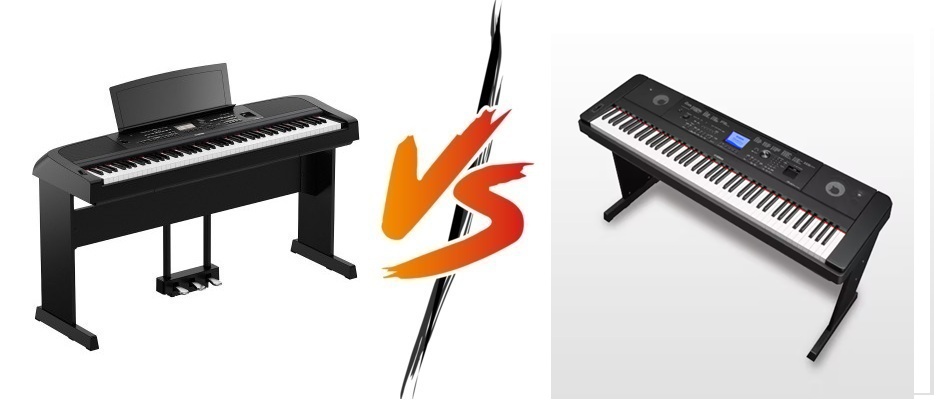
If you’re looking for a digital piano that goes beyond basic practice and gives you room to grow, Yamaha’s DGX series is hard to ignore. These instruments sit in that sweet spot between a straightforward home piano and a full arranger workstation. They’re designed for players who want solid piano feel, rich sounds, built-in accompaniment styles, recording features, and modern connectivity — all in one package.
The Yamaha DGX-660 has been a popular choice for years. It earned a reputation as a reliable, feature-packed instrument that delivers strong value for the price. Then Yamaha released the DGX-670, positioning it as the next evolution rather than a complete redesign.
At first glance, they look very similar. Same key action. Same overall concept. But once you start digging into the details — sound engine, connectivity, interface, and workflow — meaningful differences appear.
This comparison breaks everything down clearly so you can decide which one truly fits your needs.
Yamaha DGX-670 vs Yamaha DGX-660 Comparison Chart
If you click the links below, under the product images, you will be redirected to Amazon.com. In case you then decide to buy anything, Amazon.com will pay me a commission. This doesn’t affect the honesty of this review in any way though.
| Feature | Yamaha DGX-660 | Yamaha DGX-670 |
|---|---|---|
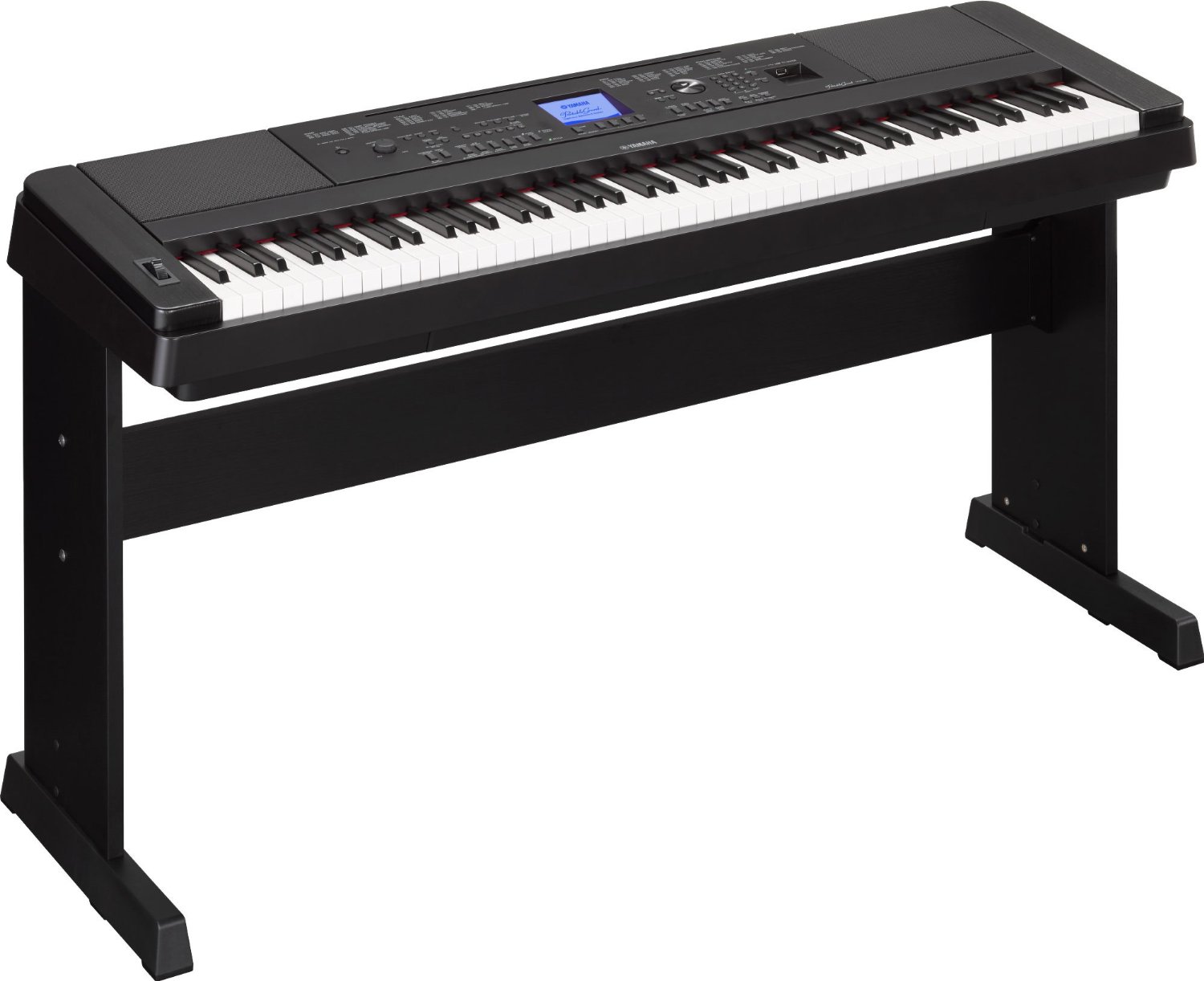 | 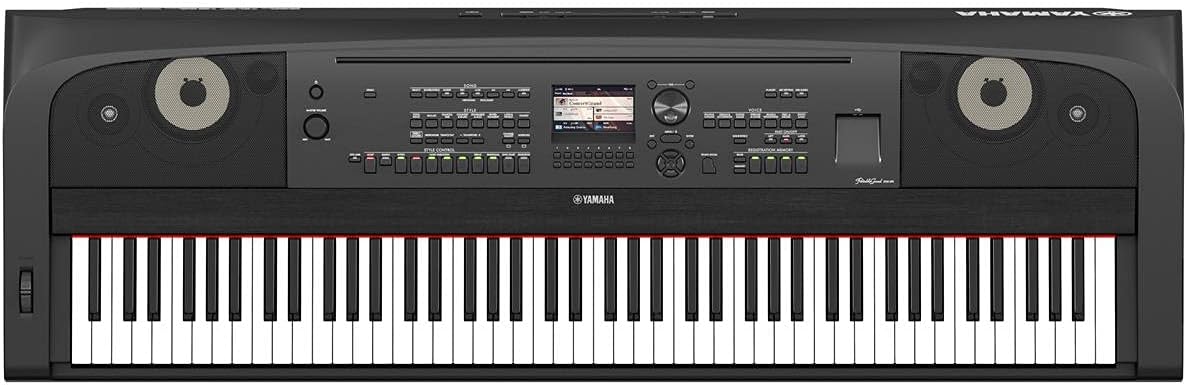 | |
| Check the best price on Amazon | Check the best price on Amazon | |
| Keys | 88 | 88 |
| Key Action | Graded Hammer Standard (GHS) | Graded Hammer Standard (GHS) |
| Touch Sensitivity | Hard / Medium / Soft / Fixed | Hard / Medium / Soft / Fixed |
| Sound Engine | AWM Stereo Sampling | Pure CF Sound Engine + AWM |
| Polyphony | 192 notes | 256 notes |
| Number of Voices | 554 | 630+ |
| Number of Styles | 205 | 263+ |
| Effects | Reverb, Chorus, DSP | Reverb, Chorus, DSP (expanded control) |
| Recording | MIDI (multi-track) | MIDI (multi-track) + USB Audio recording |
| Bluetooth Audio | No | Yes |
| Bluetooth MIDI | No | Yes |
| USB to Host | Yes | Yes (MIDI + Audio) |
| USB to Device | Yes | Yes |
| Line Outputs | L/Mono, R | L/Mono, R |
| Headphone Outputs | 1 | 1 |
| Pedal Inputs | Sustain (optional 3-pedal unit) | Sustain (optional 3-pedal unit) |
| Speakers | 2 x 12 cm | 2 x 12 cm |
| Amplifier Power | 6W + 6W | 6W + 6W |
| Display | Monochrome LCD | Improved monochrome LCD (higher resolution) |
| App Compatibility | Smart Pianist (limited) | Smart Pianist (enhanced integration) |
| Dimensions (approx.) | 1397 x 445 x 151 mm | 1397 x 445 x 151 mm |
| Weight (approx.) | 21.4 kg | 21.4 kg |
| My individual reviews | Yamaha DGX-660 review | Yamaha DGX-670 review |
Key Takeaways from the Specs
- The keyboard action is identical on both models.
- The DGX-670 increases polyphony from 192 to 256 notes.
- The sound engine upgrade (Pure CF) is one of the biggest improvements.
- The DGX-670 adds Bluetooth Audio and Bluetooth MIDI, which the 660 lacks.
- USB audio functionality is improved on the 670.
- Speaker hardware is the same, but the 670 benefits from better sound processing.
Design & Build Quality
When you’re comparing two digital pianos like the Yamaha DGX-670 and the Yamaha DGX-660, design might not seem like the most important factor at first. Most people focus on sound and key feel. That makes sense. But after spending real time with an instrument, you realize design and build quality matter more than you think. They affect how the piano fits into your home, how comfortable it feels to use, and even how inspired you feel sitting down to play.
Both models come from the same DGX line, so they share a family resemblance. Still, there are meaningful differences in refinement, layout, and overall polish that are worth discussing in detail.
Overall design philosophy
The DGX series sits in an interesting middle ground. These are not ultra-minimalist stage pianos. They are also not full cabinet-style home pianos like Yamaha’s Clavinova line. Instead, they’re “portable grand” style instruments. That means:
- Full 88-key layout
- Built-in speakers
- Large control panel
- Auto-accompaniment features
- Designed for both home use and light performance
The Yamaha DGX-660 follows a more traditional arranger-style layout. It has a prominent control panel filled with buttons, a central LCD screen, and clearly labeled sections for voices, styles, and songs. It looks functional. It’s very obviously an instrument designed to do a lot.
The Yamaha DGX-670 refines this concept. It still has a wide control surface, but the layout feels more modern and slightly less busy. The screen is better integrated, and the spacing between controls feels more intentional. It looks like a newer generation product, because it is.
Materials and construction
Neither piano uses premium hardwood or metal chassis construction. These are primarily high-quality plastic builds, as expected in this price range. That said, Yamaha generally does plastic well.
The DGX-660 feels sturdy. The casing doesn’t flex under normal use. The buttons have a firm, reliable click. The knobs feel stable and don’t wobble. When you move the instrument slightly or adjust its position on a stand, it doesn’t creak or feel fragile. For a large portable keyboard, that’s reassuring.
The DGX-670 feels slightly more solid. Not dramatically heavier-duty, but more refined. The seams between panels are tighter. The finish feels smoother. The button action is a bit more consistent and quieter. It gives off the impression of better quality control and incremental improvement.
One subtle but important detail is surface texture. The 660 has a slightly more matte, utilitarian finish. The 670’s finish feels a bit more premium and resistant to fingerprints. That may sound minor, but over time, it makes the instrument look cleaner and better maintained with less effort.
Size and footprint
Both models are substantial instruments. These are not compact keyboards you toss into a backpack. They require space.
Width-wise, they’re comparable. Depth and height are also very similar. When placed on a stand or with their optional matching furniture stands, they take up about the same room footprint.
However, the DGX-670’s slightly cleaner control layout makes it feel less bulky visually. The DGX-660 has more of that “arranger keyboard” look, with clearly separated button clusters and a slightly more crowded panel. The 670 appears more integrated and cohesive.
If your piano will live in a living room or shared space, the DGX-670 blends in just a bit more elegantly. It still looks like a digital piano, but it doesn’t scream “workstation” quite as loudly.
Control panel layout
This is where the generational difference becomes clearer.
On the DGX-660, the control panel is very direct. There are physical buttons for most functions. Voice selection, style control, recording, and accompaniment settings are clearly labeled. The LCD screen is functional but basic. It displays information clearly enough, but it’s not especially modern-looking.
The advantage of this design is immediacy. If you like physical buttons and straightforward access, the 660 delivers. Everything is labeled and accessible. There’s a bit of a learning curve because there are many functions, but nothing feels hidden.
The DGX-670 updates this approach. The screen is sharper and more refined. The interface design inside the screen feels more modern. Navigating voices, styles, and settings feels more fluid.
Button placement is more ergonomic. Related functions are grouped more intuitively. The labeling is cleaner. The result is less visual clutter and slightly faster navigation once you’re familiar with it.
In everyday use, this matters. When you’re adjusting split points, layering sounds, or changing accompaniment styles, the DGX-670 simply feels smoother to operate.
Display and visual feedback
The screen difference deserves its own attention.
The DGX-660 uses a monochrome LCD that is perfectly readable but basic. It does the job. You can see what voice is selected, which style is active, and your current settings. For many players, that’s enough.
The DGX-670’s display feels more contemporary. It’s clearer and easier on the eyes, especially during longer sessions. Menu navigation feels more intuitive, and the layout of information is more organized.
If you plan to use advanced features like recording, style editing, or deeper sound adjustments, the improved display on the 670 reduces friction. You spend less time squinting or double-checking what you’ve selected.
Button and knob quality
On the DGX-660, the buttons are solid and responsive. They don’t feel cheap. The knobs turn smoothly, though they are relatively lightweight.
On the DGX-670, the tactile experience is slightly improved. The buttons feel more consistent in resistance. The knobs feel more deliberate when turning. It’s subtle, but it adds up to a more polished feel.
When you’re performing live or adjusting parameters quickly, that consistency builds confidence. You don’t worry about accidental presses or imprecise adjustments.
Keybed integration
Since both models use the same Graded Hammer Standard action, the physical key feel is identical. But how the keybed integrates into the body is part of build quality too.
Both pianos have well-mounted keybeds with minimal side-to-side movement. There’s no excessive rattling or looseness. The keys return cleanly and evenly.
The DGX-670 feels slightly more insulated in terms of internal noise. Key return noise is modest on both, but the 670 seems just a bit quieter mechanically.
Optional stand and pedal unit
Both models can be paired with matching Yamaha furniture-style stands and triple pedal units. With these accessories attached, the instruments transform from portable keyboards into more furniture-like home pianos.
Visually, both look good in this configuration. However, the DGX-670’s updated aesthetic gives it a slightly more modern furniture appearance. It blends more naturally into contemporary interiors.
Durability over time
Yamaha has a strong reputation for reliability. The DGX-660 has proven itself over years of use in homes, schools, and churches. It holds up well under regular practice and light gigging.
The DGX-670, being newer, hasn’t had as many years in the field, but it follows the same construction philosophy. There’s no sign that durability has been compromised. If anything, small refinements suggest improved longevity.
Neither instrument feels fragile. With normal care, both should last many years without structural issues.
Final thoughts on design and build
If you compare these two strictly on build quality, both are solid and trustworthy. The Yamaha DGX-660 feels dependable and practical. It looks and behaves like a serious home instrument.
The Yamaha DGX-670 feels like a refined evolution. It’s not radically different, but it’s more polished. The control layout is cleaner. The screen is better. The tactile elements feel slightly upgraded. The overall aesthetic is more modern.
If design matters to you, if the piano will sit prominently in your home, or if you value a smoother interface experience, the DGX-670 has the edge.
If you’re primarily focused on function and don’t mind a slightly more utilitarian look, the DGX-660 still delivers a sturdy, well-built instrument that feels reliable and ready for years of use.
Keyboard Action & Feel
If you strip away all the features, screens, Bluetooth functions, and extra sounds, what really matters in a digital piano is the keyboard. It’s the one thing you physically interact with every second you’re playing. You can tolerate average speakers. You can work around limited features. But if the key action doesn’t feel right under your fingers, the experience never fully clicks.
Both the Yamaha DGX-660 and the Yamaha DGX-670 use Yamaha’s Graded Hammer Standard action, commonly referred to as GHS. On paper, that means they are identical in terms of mechanical design. In practice, the experience is very similar, but there are nuances worth discussing in detail.
What GHS actually means
Graded Hammer Standard is Yamaha’s entry-to-mid-level weighted key action. The term “graded” means the keys are heavier in the bass and lighter in the treble, mimicking the feel of an acoustic grand piano. Lower notes require slightly more force to depress, and the resistance gradually decreases as you move upward across the keyboard.
This is important for building proper finger strength and technique. If you’re transitioning from or planning to move to an acoustic piano, graded weighting helps maintain that familiarity.
However, GHS is not Yamaha’s top-tier action. Higher-end Yamaha models use actions like GH3 or NWX, which provide additional sensors and more refined mechanical simulation. So it’s important to set expectations correctly. GHS is good. It’s reliable. It’s realistic enough for serious practice. But it’s not premium-level.
Initial touch and resistance
When you first sit down at either the DGX-660 or the DGX-670, the keys feel moderately weighted. They’re not extremely heavy. They’re also not light like semi-weighted synth keys. The resistance is balanced in a way that works well for beginners and intermediate players.
Compared to an acoustic upright, the action feels slightly lighter overall. Compared to a concert grand, it feels noticeably lighter. That’s typical in this category.
For new players, this is actually a benefit. A very heavy action can be discouraging in the early stages. GHS provides enough resistance to develop strength and control, but not so much that your hands tire quickly.
For intermediate players, the action is responsive enough to handle dynamic expression, fast passages, and moderate classical repertoire without feeling limiting.
Key texture and surface feel
Both models use the same keytops. They are smooth plastic with a slight matte finish. They are not textured like Yamaha’s synthetic ivory key surfaces found on higher-end instruments.
The feel is comfortable and familiar. The keys don’t feel slippery under normal conditions. However, if your hands get sweaty during long practice sessions, you might notice a bit less grip compared to textured key surfaces.
This isn’t a deal-breaker, but it’s one of the areas where you’re reminded that this is a mid-range action, not a premium one.
Key travel and return
Key travel depth is consistent across the keyboard. The downward motion feels controlled, not springy. When you press a key slowly, you can feel a gradual increase in resistance before the sound triggers.
Key return speed is good for most styles of music. Fast repetitions are possible, though not as effortless as on triple-sensor actions found in higher-end pianos. Both the DGX-660 and DGX-670 use a two-sensor system typical of GHS.
In practical terms, this means that extremely fast note repetitions without fully releasing the key may not trigger as reliably as on more advanced actions. For most players, especially outside advanced classical repertoire, this will not be a noticeable limitation.
Dynamic control and expressiveness
One of the biggest concerns players have is dynamic range. Can you play soft and get a true pianissimo? Can you dig in and get a powerful fortissimo?
On both the DGX-660 and DGX-670, dynamic response is solid. The velocity sensitivity is adjustable, allowing you to choose different touch curves to match your playing style.
Soft playing requires intention, but it’s achievable. Loud playing feels responsive and satisfying. The graded weighting helps with shaping phrases, particularly in classical and ballad-style playing.
That said, compared to higher-end Yamaha actions, the dynamic transition between soft and loud is slightly less nuanced. There are fewer layers of subtle control. For most home players, that won’t be an issue. For highly advanced pianists, it may feel somewhat limited.
Consistency across the keyboard
Consistency is important. You don’t want uneven resistance or unpredictable triggering.
Both models perform very well here. The keys feel even from left to right. The grading from bass to treble is smooth and gradual. There are no noticeable dead spots or uneven zones.
This consistency builds confidence. You don’t have to compensate for strange behavior in specific areas of the keyboard.
Mechanical noise
All digital pianos produce some mechanical sound when played without amplification. The DGX-660 has a moderate level of key thump and return noise. It’s not excessive, but in a very quiet room with headphones on, you’ll hear the physical action.
The DGX-670 feels slightly quieter in terms of internal mechanical noise. This may be due to small refinements in construction or internal damping. The difference isn’t dramatic, but it’s noticeable during late-night headphone practice.
Suitability for different playing styles
For classical players, the GHS action supports most beginner to intermediate repertoire well. Scales, arpeggios, and expressive phrasing are manageable and satisfying.
For jazz and pop players, the slightly lighter feel can actually be an advantage. It allows for smoother chord voicings and faster runs without fatigue.
For players who use layered sounds or organ patches, the fully weighted action may feel heavier than ideal compared to semi-weighted keyboards. But that’s part of choosing a digital piano over a synth.
Learning and skill development
If you’re a beginner deciding between the DGX-660 and DGX-670, the key action will not influence your choice because they’re the same. What matters is that GHS is a legitimate weighted action that supports proper technique development.
You won’t outgrow it immediately. Many intermediate players continue using GHS instruments for years before feeling the need to upgrade.
However, if you already play at an advanced level and are highly sensitive to key nuance, you may eventually want something with a more sophisticated action. That’s not a flaw specific to these two models. It’s simply the tier they occupy.
Long-term comfort
Over extended practice sessions, the GHS action remains comfortable. It doesn’t cause unusual strain. The moderate resistance strikes a good balance between realism and playability.
Some players report slight finger fatigue compared to premium actions, mainly because the rebound and repetition system is simpler. But for most players practicing one to two hours at a time, this is not an issue.
Final judgment on keyboard action
Since both the Yamaha DGX-660 and Yamaha DGX-670 use the same Graded Hammer Standard action, there is no winner between them in this category.
The action is:
- Realistically weighted
- Graded across the keyboard
- Reliable and consistent
- Suitable for beginners and intermediate players
- Good for expressive playing within its limits
It is not:
- A high-end concert simulation
- Triple-sensor
- Textured keytop
- Designed for elite-level performance nuance
If keyboard feel is your number one priority and you’re deciding strictly between these two models, you can treat them as equal. Your decision should then focus on sound engine, features, connectivity, and long-term value.
But taken on its own, the GHS action in both instruments does what it’s supposed to do. It gives you a solid, dependable piano experience that supports real musical growth without pretending to be something it isn’t.
Sound
If the keyboard is the part you touch, the sound is the part that touches you back. It’s what inspires you to keep playing. It’s what makes a simple C major chord feel warm and full instead of flat and lifeless. When comparing the Yamaha DGX-660 and the Yamaha DGX-670, sound is where the most meaningful evolution happened.
Both instruments are capable. Neither sounds cheap or toy-like. But once you spend time with each one, especially side by side, you start to hear the generational gap.
Let’s break it down properly.
Sound engine differences
The Yamaha DGX-660 uses Yamaha’s AWM (Advanced Wave Memory) stereo sampling engine. This system has been used across many of Yamaha’s digital instruments for years. It relies on high-quality recorded samples of real instruments, layered and mapped across the keyboard.
The Yamaha DGX-670 builds on that foundation but adds the Pure CF Sound Engine for its primary acoustic piano tones. That’s a key difference.
The Pure CF sound is based on samples from Yamaha’s CFIIIS 9-foot concert grand piano. That’s a serious acoustic instrument. Yamaha captured it in detail and integrated it into the 670’s architecture.
In practical terms, the 670’s main piano tone has more depth, more harmonic complexity, and a more natural decay compared to the 660.
Main acoustic piano tone
On the DGX-660, the default grand piano sound is clean and pleasant. It’s bright in a way Yamaha pianos often are. The attack is clear. The sustain is smooth. It works well for pop, worship, and general practice.
But when you listen closely, especially with headphones, you can hear that the sample layers are slightly less detailed. The tonal transitions between soft and loud playing are good, but not especially nuanced. The decay feels somewhat compressed compared to higher-end instruments.
On the DGX-670, the difference is noticeable almost immediately. The Pure CF piano has more body in the midrange. When you play softly, the tone blooms gently rather than just getting quieter. When you dig in, the brightness increases in a more organic way.
The sustain feels more natural. Notes ring out with more harmonic movement instead of flattening out quickly. Chords feel fuller and more dimensional.
This isn’t a subtle marketing tweak. It’s a real upgrade.
Dynamic expression
Dynamic response is partly about the key action, but mostly about how the sound engine interprets velocity.
On the DGX-660, dynamic layers are well implemented but somewhat limited. You can play soft, medium, and loud with clear differences. However, the transitions between those layers can feel slightly stepped if you’re listening carefully.
On the DGX-670, dynamic transitions are smoother. There are more velocity layers in the Pure CF engine, and they blend more seamlessly. Pianissimo passages have more tonal character. Fortissimo playing doesn’t just get brighter, it gets richer and more complex.
For expressive classical pieces or cinematic-style playing, the 670 simply responds more musically.
Polyphony and layering
Polyphony refers to how many notes can sound at once. The DGX-660 offers 192-note polyphony. The DGX-670 increases that to 256 notes.
For many players, 192 is already plenty. But when you start layering sounds, using sustain pedal heavily, or engaging accompaniment styles, higher polyphony ensures notes don’t cut off unexpectedly.
The 670 feels more comfortable in dense arrangements. Big sustained chords layered with strings and pad sounds remain smooth and uninterrupted.
Instrument voices beyond piano
Both models include a large selection of instrument voices: electric pianos, organs, strings, brass, guitars, synths, and more.
The DGX-660’s voices are solid and usable. Electric pianos have a nice bite. Organs are serviceable. Strings are decent for layering. For casual performance and home recording, they work well.
The DGX-670 expands the library slightly and improves overall quality. The updated AWM samples feel more refined. Electric pianos have more character and dynamic response. Strings sound less synthetic. Pads have more texture.
The difference isn’t night and day in every category, but across the board, the 670 sounds more polished.
Electric pianos and stage sounds
This is an area where many players spend time. Rhodes-style electric pianos, for example, are crucial for jazz and pop.
On the 660, EP sounds are clean and bright. They sit well in a mix but can feel slightly two-dimensional when played solo.
On the 670, the EP tones feel warmer and more detailed. There’s a better sense of velocity-based timbre change. Soft playing gives you that mellow bark. Harder playing produces that classic bite without sounding harsh.
If you rely heavily on electric piano sounds, the 670 is noticeably more satisfying.
Accompaniment styles and realism
Both instruments include Yamaha’s well-known accompaniment styles. These allow you to play chords with your left hand while the keyboard generates full backing tracks in real time.
On the DGX-660, styles are well programmed and fun to use. Drums are punchy. Bass lines are solid. It’s a powerful tool for solo performers.
The DGX-670 refines the style engine with slightly more realistic drum samples and improved mix balance. The overall sound of styles feels more contemporary and less “arranger keyboard” in character.
If you plan to use auto-accompaniment heavily, the 670 sounds more modern and less mechanical.
Headphone experience
Through headphones, differences become even clearer.
The DGX-660 sounds good and clean, but slightly flatter in spatial depth.
The DGX-670 delivers a wider stereo image and more nuanced resonance. Quiet passages feel more intimate. Sustained chords have more dimensionality.
If you practice mostly with headphones, the 670’s sound engine upgrade is especially worthwhile.
Speaker projection and tonal shaping
While both instruments have similar speaker configurations, the internal processing in the 670 enhances the tonal output. The 670’s piano tone feels better matched to its speakers.
The 660 sounds clear and balanced. The 670 sounds slightly fuller in the low mids and smoother in the highs.
It’s not a dramatic speaker hardware change. It’s more about how the sound engine interacts with amplification.
Resonance and realism
One of the areas where digital pianos vary significantly is resonance modeling.
The DGX-660 includes basic sustain resonance simulation. It adds realism when the pedal is pressed, but it’s relatively simple.
The DGX-670 improves this behavior. Sustain resonance feels more natural. Chords blend better when the pedal is down. There’s a more convincing sense of strings interacting.
It’s still not full physical modeling like Yamaha’s highest-end instruments, but it’s a clear step forward.
Overall sound character
If I had to describe the DGX-660 in one sentence, I’d say it sounds clean, reliable, and slightly bright.
The DGX-670 sounds richer, more expressive, and more modern.
Neither one sounds bad. The 660 remains a strong performer. But the 670 gives you a more immersive experience, especially if you’re sensitive to tonal detail.
Final judgment on sound
This is the category where the Yamaha DGX-670 clearly wins.
The Pure CF Sound Engine alone elevates the main piano tone significantly. Add improved dynamic response, higher polyphony, more refined instrument voices, and better resonance behavior, and the difference becomes hard to ignore.
If sound quality is your top priority and you’re choosing between these two models, the DGX-670 justifies its higher price. The improvement isn’t cosmetic. It’s audible, practical, and musically meaningful.
The DGX-660 still delivers solid performance and remains perfectly usable for home practice and casual performance. But once you hear and feel the added depth and realism of the 670, it’s difficult to go back.
In short, both instruments sound good. The DGX-670 sounds better in almost every measurable way.
Speakers
When people compare digital pianos, speakers often get less attention than sound engines or key action. That’s understandable. If you plan to use headphones or external monitors most of the time, built-in speakers might seem secondary.
But for many players, especially home users, the built-in speaker system is what defines the everyday experience. It determines how the piano fills a room, how inspiring it feels without extra gear, and whether you can comfortably perform for family and friends without plugging into anything else.
The Yamaha DGX-660 and the Yamaha DGX-670 share similar hardware specifications on paper. Both feature dual 12 cm speakers and built-in amplification designed for home use. But in practice, there are some meaningful differences in sound projection, tonal balance, and overall refinement.
Let’s dig into it properly.
Speaker configuration and power
Both models use a two-speaker stereo system. The speakers are mounted within the body of the instrument, facing upward and slightly outward. This design helps project sound toward the player while also dispersing it into the room.
The amplification power is comparable between the two models. These are not high-wattage stage speakers. They are designed primarily for:
- Home practice
- Small gatherings
- Informal performances
- Teaching environments
In both cases, the speakers are more than capable of filling a medium-sized living room with clear, balanced sound.
However, numbers don’t tell the whole story. The way the sound engine interacts with the speaker system matters just as much.
Overall volume capability
In terms of raw loudness, both the DGX-660 and DGX-670 can get surprisingly loud for built-in systems. At maximum volume, they are more than adequate for:
- Practicing without headphones
- Playing for a small group
- Backing up a singer in a home setting
Neither instrument struggles with volume at typical use levels. You’re unlikely to push either to the point of distortion under normal conditions.
That said, the DGX-670 feels slightly more controlled at higher volume levels. When you push it toward the top of its range, the sound remains clearer and more balanced. The DGX-660 can sound a little strained at extreme volume settings, especially in dense arrangements with accompaniment styles engaged.
Bass response and low-end clarity
Bass response is often where built-in speakers reveal their limitations.
On the DGX-660, low notes are present and defined, but not especially deep. When you play full left-hand octaves or low-register chords, the sound is clear but somewhat lean. It doesn’t produce a room-shaking bass presence, which is expected at this size and price point.
The DGX-670 improves slightly in this area. The low end feels fuller and more rounded. It’s not dramatically more powerful, but it has better tonal balance. The bass feels more integrated into the overall sound rather than sitting underneath it.
Part of this improvement comes from the upgraded sound engine. The Pure CF samples are richer in the low-mid frequencies, which translates into a fuller perceived bass response even with similar speaker hardware.
Midrange and clarity
The midrange is crucial for piano realism. This is where most of the instrument’s character lives.
On the DGX-660, midrange clarity is good. Chords are distinct. Melodies cut through clearly. But there can be a slightly narrow feel to the sound image, especially at moderate volumes.
The DGX-670 feels more open in the midrange. There’s better separation between notes in complex chords. When playing layered sounds, like piano with strings, the blend feels smoother and less congested.
This makes a noticeable difference when playing expressive pieces. The 670 simply feels more spacious and less compressed.
High frequencies and brightness
Yamaha instruments are known for their bright tonal character, and both of these models reflect that to some degree.
The DGX-660 has crisp highs. Treble notes sparkle, sometimes bordering on sharp at higher volumes. For pop and contemporary music, this can be appealing. But in certain settings, especially reflective rooms, the brightness can feel slightly pronounced.
The DGX-670 handles high frequencies more smoothly. The brightness is still there, but it’s more refined. Upper-register notes feel cleaner and less brittle. The transition from midrange to treble is more natural.
This subtle improvement makes longer playing sessions more comfortable on the ears.
Stereo image and room presence
Stereo imaging is an area where small improvements can make a big difference in perceived quality.
On the DGX-660, the stereo field is adequate. You can hear left-hand notes slightly separated from right-hand notes. But the overall sound feels somewhat centered.
On the DGX-670, the stereo image feels wider. The piano sound has more depth and lateral spread. When you play large chords or arpeggios across the keyboard, the spatial distribution is more convincing.
This creates a more immersive experience, especially when sitting directly in front of the instrument.
Accompaniment and full arrangements
Both models support auto-accompaniment styles with drums, bass, and backing instruments. This is where speaker performance becomes critical.
On the DGX-660, accompaniment styles sound good at moderate volumes. Drums are punchy but can feel slightly compressed at higher levels. When you combine drums, bass, piano, and layered instruments, the mix can feel a bit crowded.
The DGX-670 handles dense arrangements more gracefully. Drums have better clarity. Bass lines feel more controlled. The overall mix retains definition even when multiple parts are active.
This makes the 670 more satisfying for solo performers who rely heavily on built-in styles.
Headphone comparison vs speakers
Interestingly, the gap between the two models becomes more noticeable through speakers than through headphones.
Through headphones, both instruments benefit from their internal sound engines directly, bypassing speaker limitations. The DGX-670 still sounds better, but the difference feels more incremental.
Through built-in speakers, the 670’s improved tonal balance and stereo spread are more obvious. It feels like the sound was tuned more carefully to the speaker system.
Room interaction
How a digital piano sounds depends partly on the room it’s in.
In smaller rooms, both models perform very well. The sound reflects naturally and fills the space without requiring high volume.
In larger rooms, the DGX-670 holds up slightly better. Its fuller midrange and improved projection make it feel less thin when the space absorbs some frequencies.
Neither model replaces a proper PA system for large venues, but for home use and small gatherings, both are competent.
Practical usability
For most home players, the biggest question is simple: do I need external speakers?
With either the DGX-660 or DGX-670, the answer is usually no for casual use. The built-in system is strong enough for daily practice and small performances.
However, if you’re serious about recording or gigging, external monitors will always provide better depth and accuracy. In that context, the difference between the built-in systems becomes less critical.
Final judgment on speakers
On paper, the Yamaha DGX-660 and DGX-670 appear nearly identical in speaker hardware. In real-world use, the DGX-670 sounds more refined and balanced.
The improvements are not dramatic in raw power. Instead, they show up in:
- Fuller bass response
- Smoother high frequencies
- Wider stereo image
- Better handling of dense arrangements
- More controlled sound at higher volumes
The DGX-660 still performs well. It’s capable, clear, and more than sufficient for most home players.
But the DGX-670 feels like the speaker system and sound engine were tuned together more carefully. The result is a more immersive, room-filling experience that feels closer to a small home digital piano rather than a large portable keyboard.
If you plan to rely heavily on built-in speakers and want the most polished sound possible without external gear, the DGX-670 has the edge. If speakers are secondary because you mostly use headphones or monitors, the difference becomes less decisive.
Either way, both instruments deliver strong performance in this category, with the DGX-670 simply offering a more refined listening experience.
Features & Functions
This is where the Yamaha DGX line really separates itself from simpler digital pianos. If you only need a basic instrument with good keys and a solid grand piano sound, there are cheaper options out there. The DGX series exists for players who want more. More sounds. More creativity. More flexibility. More tools for learning and performing.
Both the Yamaha DGX-660 and the Yamaha DGX-670 are feature-rich instruments. But the 670 takes what the 660 started and pushes it further. Some upgrades are small refinements. Others noticeably change how you use the piano day to day.
Let’s go through this carefully.
Core piano functionality
At the foundation, both instruments include essential digital piano features:
- Dual mode (layer two sounds together)
- Split mode (different sounds for left and right hand)
- Adjustable touch sensitivity
- Transpose and tuning controls
- Metronome
- Sustain pedal compatibility
- Built-in song playback
For many players, this is already enough. You can layer piano and strings for a fuller sound. You can split bass and piano for jazz. You can adjust touch sensitivity to match your playing style.
In this core piano category, both models perform similarly. The interface differs slightly, but the functional depth is comparable.
Voice library and instrument variety
The DGX-660 already includes a large voice library, covering acoustic pianos, electric pianos, organs, guitars, strings, brass, synths, and more. It’s more than most casual players will ever fully explore.
The DGX-670 expands the voice selection and improves overall sound quality. The variety feels slightly more modern. Pads are richer. Orchestral sounds are smoother. Synth tones feel more current.
For players who like experimenting with different textures or composing across genres, the 670 provides a bit more creative flexibility.
Auto-accompaniment styles
One of the defining features of the DGX series is its arranger functionality. These are not just digital pianos. They are interactive accompaniment instruments.
Both models include hundreds of accompaniment styles. You play chords in your left hand, and the keyboard generates full backing arrangements with drums, bass, and additional instruments.
On the DGX-660, styles are fun and surprisingly capable. There are intros, endings, fills, and multiple variations per style. For solo performers or hobbyists, it can feel like having a backing band.
The DGX-670 improves both the sound quality and the organization of styles. The styles feel more contemporary and polished. Navigating them is easier thanks to the improved interface. Adjusting tempo, switching variations, and controlling fills feels more intuitive.
If you plan to use arranger features heavily, the 670 is noticeably smoother in operation.
Recording capabilities
Both instruments allow recording your performances. This is essential for:
- Tracking practice progress
- Writing songs
- Creating backing tracks
- Sharing ideas
The DGX-660 supports MIDI recording with multiple tracks. You can record right hand, left hand, and accompaniment parts separately. It’s a solid practice tool.
The DGX-670 expands recording flexibility. It supports multi-track MIDI recording with more intuitive track management. Additionally, audio recording via USB storage is more streamlined.
The improved interface makes reviewing and editing recordings easier. For anyone who plans to compose or experiment with arrangements, the 670 feels more capable and less clunky.
Lesson and learning tools
Both models include Yamaha’s built-in lesson system. You can practice one hand at a time, slow down songs, and work through internal pieces step by step.
For beginners, this is extremely helpful. It turns the piano into a structured learning device rather than just a sound source.
The DGX-670 integrates more seamlessly with Yamaha’s Smart Pianist app. This app allows you to control voices, styles, and settings visually from a tablet. It also enables chord recognition from audio tracks and score display functions.
While the DGX-660 supports some app connectivity, the 670 feels much more integrated into the modern app ecosystem. If you like learning with a tablet nearby, the difference matters.
Bluetooth integration
This is one of the biggest feature upgrades.
The DGX-660 does not include built-in Bluetooth audio. You can connect devices via cable, but it’s not wireless.
The DGX-670 includes Bluetooth Audio and Bluetooth MIDI.
Bluetooth Audio allows you to stream music from your phone or tablet directly through the piano’s speakers. This is extremely convenient for:
- Playing along with backing tracks
- Practicing with YouTube tutorials
- Jamming with Spotify tracks
Bluetooth MIDI allows wireless connection to apps and software. No cables required.
This alone makes the 670 feel much more modern and flexible.
Live performance controls
If you perform live, even casually, control layout matters.
The DGX-660 has physical buttons for style control, variation changes, and registration memory. It works, but it feels slightly old-school.
The DGX-670 refines the layout and improves real-time control. Switching sounds, adjusting accompaniment, and navigating settings feels smoother. The screen gives clearer visual feedback.
It’s not a dramatic redesign, but it makes live use less stressful.
Registration memory
Both models include registration memory, allowing you to save specific setups:
- Selected voices
- Split points
- Tempo
- Style
- Effects
This is extremely useful if you perform multiple songs and need to switch setups quickly.
The 670’s improved interface makes saving and recalling registrations easier to manage.
Effects and sound shaping
Both instruments include reverb, chorus, and various DSP effects.
The DGX-660 offers solid effect control, but the editing depth is somewhat limited.
The DGX-670 expands effect flexibility slightly. You get more refined control over DSP settings, which allows deeper customization of sounds.
For casual users, this may not matter much. For creative players who enjoy shaping tones, it adds value.
User interface and navigation
This might not sound like a “feature,” but it affects how you use all the other features.
The DGX-660 interface works, but it can feel button-heavy and menu-driven.
The DGX-670’s improved screen and layout make everything feel more accessible. Less menu diving. Better visual organization. Clearer category grouping.
Over time, that ease of use becomes more important than you expect.
Overall functionality comparison
In terms of raw feature count, both instruments are impressive. The DGX-660 is already a powerful and versatile digital piano.
But the DGX-670 feels like a matured version of the concept.
It offers:
- Improved sound engine integration
- Better app connectivity
- Bluetooth audio and MIDI
- More polished style library
- Higher polyphony
- Smoother navigation
- Expanded recording flexibility
The DGX-660 still covers the essentials very well. If you primarily need solid piano sounds, arranger styles, and recording for practice, it remains capable.
However, if you want an instrument that feels future-ready, integrates easily with modern devices, and provides smoother workflow across all features, the DGX-670 is clearly the stronger choice.
In short, both are feature-rich. The DGX-660 is comprehensive. The DGX-670 is comprehensive and refined.
Connectivity
Connectivity is one of those areas that used to be an afterthought on digital pianos. A USB port, maybe MIDI in and out, and that was enough. But the way people use instruments has changed. Today, a digital piano is often part of a larger setup that includes laptops, tablets, smartphones, recording software, learning apps, and sometimes live sound systems.
This is where the difference between the Yamaha DGX-660 and the Yamaha DGX-670 becomes much more noticeable. Both offer solid connection options, but the 670 feels designed with modern workflows in mind.
Let’s break this down carefully.
USB to Host
Both the DGX-660 and DGX-670 include a USB to Host port. This allows you to connect the piano directly to a computer using a standard USB cable.
Once connected, the instrument can function as a MIDI controller. That means:
- You can record MIDI data into a DAW like Logic, Cubase, or Ableton.
- You can use virtual instruments on your computer and trigger them from the piano.
- You can use notation software and learning apps that rely on MIDI input.
In this basic sense, both models perform equally well. The MIDI transmission is stable and reliable. For many users, this alone is enough to integrate the piano into a home studio environment.
The DGX-670 does add improved USB audio functionality. It supports audio over USB more seamlessly, allowing you to send digital audio directly to your computer without needing an external audio interface in some cases. This simplifies recording, especially for beginners who don’t want extra hardware.
USB to Device
Both models also include USB to Device ports. This allows you to plug in a USB flash drive.
With this, you can:
- Save MIDI recordings
- Load songs
- Back up registration settings
- Record performances as audio files
On the DGX-660, this feature works well but feels slightly dated in terms of workflow. File browsing is functional but not especially intuitive.
On the DGX-670, file management feels more polished. Navigating folders and saving recordings is smoother thanks to the improved screen interface.
If you regularly transfer recordings to a computer or share performances, the 670 simply makes the process more pleasant.
Traditional MIDI ports
The DGX-660 includes standard 5-pin MIDI ports (MIDI In and MIDI Out). This is useful if you have older hardware modules or external keyboards that rely on traditional MIDI cables.
The DGX-670 continues to support robust MIDI functionality, though Yamaha has increasingly focused on USB MIDI as the primary connection method.
If you own legacy MIDI gear, the DGX-660 may feel slightly more traditional in its connectivity layout. For most modern users, USB MIDI covers everything.
Bluetooth Audio
This is one of the biggest differences between the two models.
The Yamaha DGX-660 does not have built-in Bluetooth audio. If you want to play music from your phone through the piano’s speakers, you’ll need a cable connection.
The Yamaha DGX-670 includes Bluetooth Audio. This means you can pair your smartphone or tablet wirelessly and stream audio directly through the piano’s speakers.
In practical terms, this is incredibly convenient.
You can:
- Play along with songs from Spotify.
- Follow YouTube tutorials without cables.
- Practice with backing tracks instantly.
- Use music apps without worrying about adapters.
There’s something freeing about sitting down at the piano, opening a playlist, and hearing everything through the built-in speakers without plugging anything in.
For modern home use, this feature alone makes the DGX-670 feel far more current.
Bluetooth MIDI
The DGX-670 also includes Bluetooth MIDI. This allows wireless MIDI communication with compatible apps.
For example, you can connect to Yamaha’s Smart Pianist app or other learning software without a USB cable. Your tablet can sit on the music stand, and everything communicates wirelessly.
The DGX-660 requires a wired USB connection for MIDI communication.
For tech-savvy users or those who prefer a clean setup with minimal cables, Bluetooth MIDI is a meaningful upgrade.
Smart Pianist app integration
Both models support Yamaha’s Smart Pianist app to some degree, but the integration is smoother and more complete on the DGX-670.
With the app, you can:
- Select voices visually.
- Adjust settings.
- View chord charts for songs.
- Control accompaniment styles.
- Display scores.
On the DGX-660, the app works but feels more limited.
On the DGX-670, the experience feels designed around the app. It’s more stable, more responsive, and clearly part of the instrument’s intended workflow.
For students and teachers who rely on tablet-based learning, this difference is significant.
Audio outputs
Both instruments include line outputs for connecting to external speakers or a PA system.
This is essential if you plan to:
- Perform live in larger spaces.
- Connect to studio monitors.
- Record into an external audio interface.
The DGX-660 provides standard left and right outputs. The DGX-670 offers similar connectivity, but with improved routing flexibility in combination with USB audio.
In practical use, both perform well when connected to external amplification. The 670’s upgraded sound engine becomes even more noticeable through high-quality external speakers.
Headphone outputs
Both models include headphone jacks for silent practice.
The quality of the headphone output is good on both. However, the DGX-670 benefits from its improved sound engine and stereo processing, which makes headphone listening more immersive.
For players who practice late at night, this matters more than you might think.
Pedal connectivity
Both models support sustain pedal input. With the optional three-pedal unit and matching stand, you get soft, sostenuto, and sustain functionality similar to an acoustic piano.
Pedal response is consistent on both. The difference is not in connectivity here, but in overall integration. The DGX-670’s improved resonance modeling makes pedal use feel slightly more realistic.
Computer and DAW integration
For home studio users, connectivity is about simplicity.
The DGX-660 integrates well via USB MIDI. You can use it as a controller and record performances easily. However, you often need an external audio interface if you want to record high-quality audio directly.
The DGX-670’s enhanced USB audio functionality simplifies this. It can function more directly as an audio interface for basic recording setups.
For beginners building their first home studio, this reduces cost and complexity.
Overall connectivity comparison
The Yamaha DGX-660 offers solid, reliable connectivity for its time. It covers the essentials:
- USB MIDI
- USB storage
- Line outputs
- Pedal inputs
- Traditional MIDI
The Yamaha DGX-670 takes everything the 660 does and modernizes it:
- Bluetooth Audio
- Bluetooth MIDI
- Enhanced USB audio
- Better app integration
- Smoother file management
If you plan to use your piano strictly as a standalone home instrument, the connectivity differences may not feel critical.
But if you plan to:
- Use learning apps regularly
- Stream backing tracks wirelessly
- Record into a DAW
- Keep a clean, cable-free setup
- Integrate with modern devices
The DGX-670 clearly provides more flexibility and future-proofing.
Final judgment on connectivity
Connectivity is one of the clearest upgrade areas between these two models.
The DGX-660 still functions well in traditional setups. It’s reliable and fully usable for most basic needs.
The DGX-670 feels designed for the way people use instruments today. Wireless streaming, wireless MIDI, improved app integration, and smoother USB audio workflows make it more adaptable.
If you value simplicity, wireless convenience, and integration with modern tech, the DGX-670 has a decisive edge.
If you’re comfortable with cables and mainly need traditional MIDI and USB functionality, the DGX-660 remains capable.
But in terms of long-term flexibility and ease of integration, the DGX-670 is the more forward-thinking choice.
Conclusion
After spending serious time comparing the Yamaha DGX-660 and the Yamaha DGX-670 from every angle, the big picture becomes clear: these two instruments share the same foundation, but they do not offer the same long-term experience.
The DGX-660 is still a very capable digital piano. It delivers solid key action, dependable piano tone, useful arranger features, and enough connectivity for most traditional setups. If you find it at a significantly lower price, it remains a practical and sensible choice. For beginners and intermediate players who primarily want a home piano with accompaniment features, it absolutely gets the job done.
But the DGX-670 feels like a true evolution rather than a minor refresh.
The upgraded Pure CF piano sound is richer and more expressive. The improved speaker tuning gives it more depth. The Bluetooth audio and MIDI connectivity make everyday use easier and more modern. The interface is cleaner. The integration with apps feels intentional rather than secondary. Small refinements across sound, recording, and workflow add up to a noticeably smoother experience.
None of these changes alone are revolutionary. Together, they create a more polished instrument that feels current and better prepared for how people actually use digital pianos today.
If budget is tight and you find a great deal on the DGX-660, you won’t regret owning it. But if you can stretch for the DGX-670, it’s the smarter long-term investment. It simply does more, sounds better, and feels more aligned with modern practice, performance, and recording needs.
Between the two, the DGX-670 is the one most players will grow into rather than grow out of.