
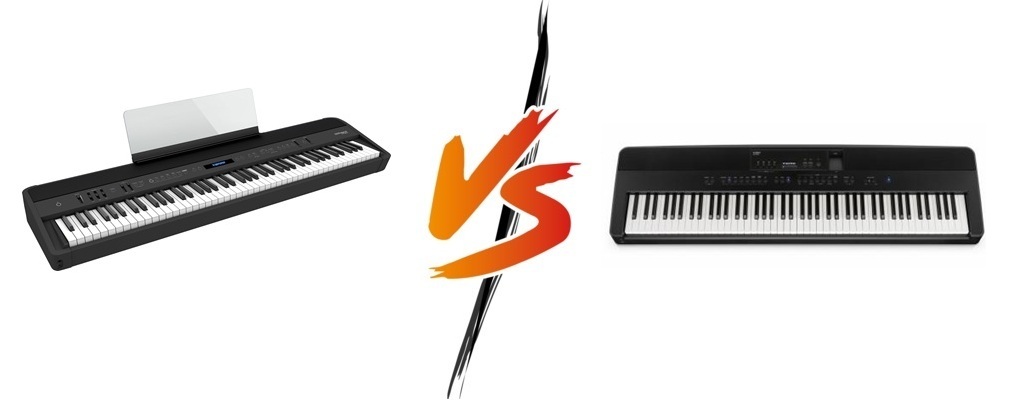
If you’re shopping for a high-end portable digital piano, two models consistently appear near the top of the shortlist: the Roland FP-90X and the Kawai ES920. Both are professional-grade instruments aimed at serious pianists, gigging musicians, teachers, and advanced students who want a realistic piano experience without moving a full acoustic piano into their living room.
The challenge is that these instruments are excellent in very different ways.
The Roland FP-90X focuses heavily on power, modern technology, deep customization, and an exceptionally robust playing experience. The Kawai ES920, meanwhile, aims for elegance, portability, and an acoustic piano feel that many players find remarkably authentic.
After spending significant time evaluating the specifications, design philosophies, keyboard actions, sound engines, speaker systems, and overall user experience of both instruments, it’s clear that neither piano is universally better. Instead, each excels in particular areas and appeals to different types of players.
In this detailed comparison, I will examine every major aspect of these two premium digital pianos to help you determine which one deserves your money.
Roland FP-90X vs Kawai ES920 Comparison Chart
If you click the links below, under the product images, you will be redirected to Amazon.com. In case you then decide to buy anything, Amazon.com will pay me a commission. This doesn’t affect the honesty of this review in any way though.
| Specification | Roland FP-90X | Kawai ES920 |
|---|---|---|
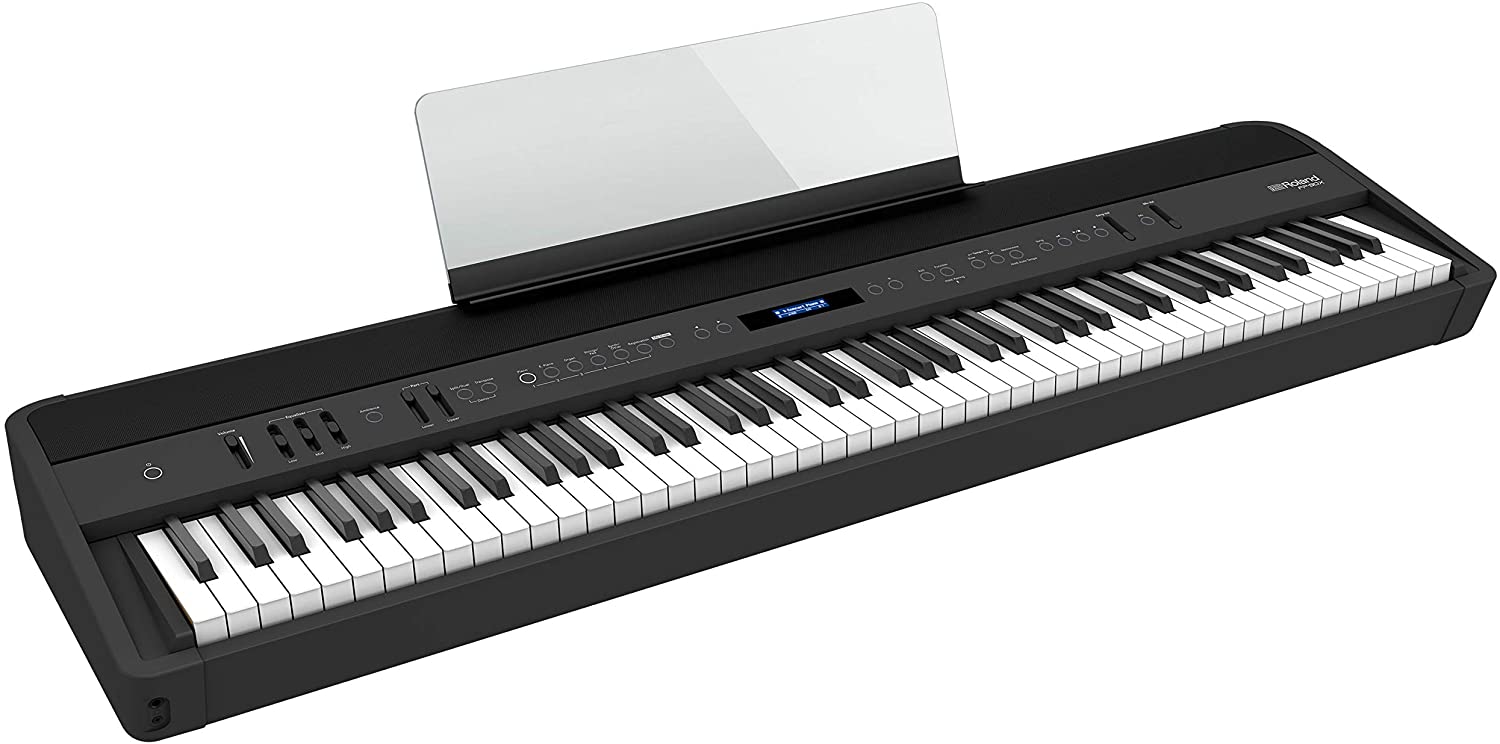 | 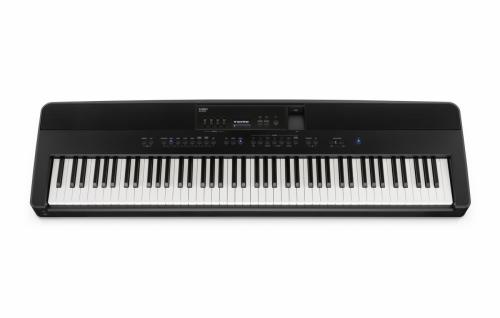 | |
| Check the best price on Amazon | Check the best price on Amazon | |
| Piano Type | Portable Digital Piano | Portable Digital Piano |
| Keyboard Action | PHA-50 Hybrid Keyboard (Wood and Molded Composite Construction) | Responsive Hammer III (RHIII) Action |
| Number of Keys | 88 | 88 |
| Key Surface | Ivory Feel with Ebony Feel Black Keys | Ivory Touch Key Surfaces |
| Escapement Simulation | Yes | Yes |
| Triple Sensor Keys | Yes | Yes |
| Sound Engine | PureAcoustic Piano Modeling | Harmonic Imaging XL |
| Main Concert Piano Sound | Roland European Concert Grand | Kawai SK-EX Concert Grand |
| Polyphony | Unlimited (Piano Sounds) / 256 Notes (Other Sounds) | 256 Notes |
| Number of Sounds | Over 350 Sounds | 38 Sounds |
| Piano Sound Customization | Extensive Piano Designer Functions | Virtual Technician Functions |
| Speaker Configuration | 4 Speakers | 2 Speakers |
| Speaker Power | 25W × 2 + 5W × 2 (60W Total) | 20W × 2 (40W Total) |
| Maximum Output Power | 60W | 40W |
| Bluetooth Audio | Yes | Yes |
| Bluetooth MIDI | Yes | Yes |
| USB Audio Interface | Yes | Yes |
| USB MIDI | Yes | Yes |
| Line Outputs | Stereo Line Out (L/Mono, R) | Stereo Line Out (L/Mono, R) |
| Line Inputs | Yes | Yes |
| Headphone Outputs | 2 | 2 |
| Recording Function | MIDI Recorder | MIDI Recorder and Audio Recording via USB |
| Metronome | Yes | Yes |
| Rhythm Accompaniments | Yes | Yes |
| Layer Mode | Yes | Yes |
| Split Mode | Yes | Yes |
| Dual/Split Combinations | Extensive | Available |
| Four-Hand Mode | Yes | Yes |
| Pedal Included | DP-10 Sustain Pedal | F-10H Sustain Pedal |
| Half-Pedaling Support | Yes | Yes |
| Optional Triple Pedal Unit | KPD-90 | GFP-3 |
| Dedicated Furniture Stand Available | KSC-90 | HM-5 |
| Display | LCD Display | OLED Display |
| Built-In Songs | Yes | Yes |
| Transpose Function | Yes | Yes |
| Tuning Adjustment | Yes | Yes |
| Temperament Options | Yes | Yes |
| Weight | 23.6 kg (52.0 lbs) | 17.0 kg (37.5 lbs) |
| Width | 1,340 mm (52.8″) | 1,345 mm (53.0″) |
| Depth | 390 mm (15.4″) | 375 mm (14.8″) |
| Height | 136 mm (5.4″) | 145 mm (5.7″) |
| Available Finishes | Black, White | Black, White |
| Typical Use Case | Home, Studio, Stage Performance | Home, Teaching, Gigging, Practice |
| Launch Year | 2021 | 2020 |
| My individual reviews | Roland FP-90X review | Kawai ES920 review |
Key Specification Advantages
| Category | Winner |
|---|---|
| Keyboard Action Realism | Kawai ES920 (subjective) |
| Speaker System Power | Roland FP-90X |
| Sound Customization | Roland FP-90X |
| Number of Sounds | Roland FP-90X |
| Portability | Kawai ES920 |
| Weight | Kawai ES920 |
| Piano-Focused Experience | Kawai ES920 |
| Stage Performance Features | Roland FP-90X |
| Overall Versatility | Roland FP-90X |
| Value for Money | Kawai ES920 |
At a Glance
| Best For | Recommended Piano |
|---|---|
| Classical Pianists | Kawai ES920 |
| Home Practice | Kawai ES920 |
| Teachers | Kawai ES920 |
| Frequent Gigging | Kawai ES920 |
| Stage Performers | Roland FP-90X |
| Sound Tweakers & Power Users | Roland FP-90X |
| Recording & Production | Roland FP-90X |
| Strongest Built-In Speakers | Roland FP-90X |
| Most Acoustic-Like Playing Experience | Kawai ES920 |
| Best Overall Value | Kawai ES920 |
The Roland FP-90X wins on features, speaker performance, sound customization, and overall versatility, while the Kawai ES920 stands out for its lighter weight, natural keyboard action, piano-focused design, and value for money. For most dedicated pianists, the ES920 is often the more compelling purchase, while performers and users who want maximum functionality may prefer the FP-90X.
Design & Build Quality
When comparing premium digital pianos, design and build quality often receive less attention than keyboard action or sound. That is understandable. Most buyers naturally focus on how a piano feels under their fingers or how closely it reproduces the sound of an acoustic instrument. However, design and construction play a much bigger role in long-term satisfaction than many people realize.
A digital piano is not something most people replace every couple of years. It is an instrument that may become part of a practice routine, teaching studio, recording setup, or performance rig for many years. The quality of the materials, the durability of the chassis, the portability of the instrument, and even the layout of the controls can significantly influence the ownership experience over time.
The Roland FP-90X and Kawai ES920 approach design from very different angles. While both belong to the premium portable piano category, they reflect distinct philosophies about what a high-end digital piano should be. Roland prioritizes solidity, substance, and a professional-grade feel, while Kawai emphasizes elegance, practicality, and portability. Neither approach is inherently better, but each will appeal to a different type of player.
Roland FP-90X Design
The Roland FP-90X immediately makes a strong first impression. From the moment you unpack it, the instrument feels substantial. There is a sense of density and robustness that communicates quality before a single note is played.
Physically, the FP-90X is a large instrument by portable piano standards. It is wider, deeper, and heavier than many competitors in its class. The cabinet design is clean and modern, with understated styling that avoids unnecessary visual flourishes. Roland has clearly designed the FP-90X to look professional in a wide range of environments, whether that is a home studio, a music school, a church, or a concert stage.
One thing that stands out immediately is the overall rigidity of the chassis. There is very little flex anywhere on the instrument. Pressing down on different areas of the top panel reveals a structure that feels exceptionally solid. This is important because a flimsy cabinet can negatively affect the playing experience, especially during energetic performances.
The finish quality is also excellent. The materials feel premium throughout, and the piano has the kind of refined appearance you would expect from a flagship model. Nothing about the FP-90X feels cheap or rushed. Buttons, knobs, and connections all feel securely mounted and capable of withstanding years of regular use.
The control panel follows Roland’s typical design philosophy. Rather than overwhelming users with a large number of visible controls, the interface remains relatively clean and organized. Essential functions are easily accessible, while deeper editing options are handled through menus and navigation buttons.
This creates a professional appearance, but there is a tradeoff. Some users may find that accessing certain advanced settings requires more menu navigation than they would like. The FP-90X offers tremendous flexibility, but the learning curve is slightly steeper as a result.
From a purely visual standpoint, the Roland has a commanding presence. It feels like a serious instrument designed for serious musicians. That may sound like a small detail, but many pianists appreciate sitting down at an instrument that inspires confidence before they even begin playing.
Roland FP-90X Portability
Portability is where opinions about the FP-90X often become divided.
At roughly 23.6 kilograms (52 pounds), the piano is significantly heavier than many competing portable models. While Roland technically markets it as a portable digital piano, carrying it regularly can become challenging.
For musicians who primarily keep their piano in one location, this weight may not matter much. In fact, some players appreciate the added mass because it contributes to the instrument’s feeling of stability and durability.
However, gigging musicians who transport their instruments frequently may feel differently. Loading the FP-90X into a vehicle, carrying it into venues, and setting it up repeatedly can become tiring, especially for solo performers.
The weight is not necessarily a flaw, but it is an important consideration. Roland chose to prioritize robustness and speaker performance over maximum portability, and that decision is reflected in the final product.
Kawai ES920 Design
The Kawai ES920 takes a noticeably different approach.
While the Roland impresses through sheer substance, the ES920 impresses through refinement and practicality. The instrument looks elegant without drawing attention to itself. Kawai’s industrial design team has done an excellent job creating a piano that feels sophisticated and modern while maintaining a classic musical aesthetic.
The cabinet is slimmer and lighter than the Roland’s, giving it a more streamlined appearance. This immediately contributes to a feeling of portability and convenience.
Despite the reduced size and weight, the ES920 never feels fragile. The construction quality remains excellent throughout. The chassis feels sturdy, the controls are well assembled, and the overall fit and finish are consistent with what buyers expect from a premium instrument.
One aspect many owners appreciate is the simplicity of the design. The control panel is intuitive and uncluttered. Buttons are clearly labeled, and important functions are easy to access without digging through layers of menus.
This straightforward approach enhances the day-to-day user experience. Players can spend less time learning the instrument and more time actually playing it.
The overall appearance is arguably more elegant than the Roland. While aesthetics are subjective, many users find the ES920 slightly more attractive in a home environment. Its cleaner lines and lighter visual footprint allow it to blend naturally into living rooms, studios, and teaching spaces.
Kawai ES920 Portability
Portability is one of the ES920’s biggest strengths.
At approximately 17 kilograms (37 pounds), it is dramatically lighter than the Roland FP-90X. On paper, the difference may seem modest. In practice, it is substantial.
Anyone who has carried digital pianos regularly knows that every kilogram matters. The ES920 is simply easier to move.
This advantage becomes especially important for gigging musicians, music teachers, and performers who transport their instrument frequently. A lighter piano means easier setup, faster teardown, and less physical strain.
The reduced weight also makes the instrument more practical for home users. Even if the piano stays in one room most of the time, there may be occasions when it needs to be relocated. The ES920 makes those situations far less cumbersome.
Importantly, Kawai achieves this weight reduction without making the piano feel compromised. The instrument still feels premium and well built, which is an impressive engineering accomplishment.
Attention to Detail
Both manufacturers demonstrate a high level of attention to detail, but they focus on different priorities.
Roland emphasizes durability and a professional-grade feel. The FP-90X feels like a piece of equipment designed to endure years of demanding use. Every component contributes to an impression of strength and reliability.
Kawai focuses more on usability and elegance. The ES920 feels thoughtfully designed for real-world musicians who value convenience alongside performance.
Even small details reflect these philosophies. Roland’s heavier construction creates a sense of permanence and authority. Kawai’s lighter design encourages flexibility and mobility.
Neither approach is objectively superior. They simply serve different audiences.
Design & Build Quality Verdict
Both pianos demonstrate the level of craftsmanship expected in the premium digital piano market. There are no obvious weaknesses in either instrument’s construction, and both should provide years of reliable service when properly cared for.
The Roland FP-90X feels more substantial, more rugged, and arguably more luxurious from a purely physical standpoint. It gives the impression of a flagship instrument built without major compromises.
The Kawai ES920 counters with superior portability, elegant styling, and a design that many users will find easier to live with on a daily basis.
If build solidity is your highest priority, the Roland FP-90X earns the edge. It is one of the most robust portable digital pianos available today.
If overall design practicality is the goal, however, the Kawai ES920 emerges as the more balanced package. It combines premium construction with significantly better portability and a cleaner, more user-friendly design.
For most buyers, that balance makes the ES920 the slight winner in the Design & Build Quality category, though the margin is narrow and largely dependent on individual needs.
Keyboard Action and Playing Feel
If there is one category that has the power to make or break a digital piano, it is keyboard action. While sound quality, speakers, features, and connectivity are all important, the keyboard is the part of the instrument that you physically interact with every time you play. It is the bridge between the pianist and the sound, and no amount of technology can fully compensate for an uninspiring playing experience.
This is especially true in the premium digital piano market, where buyers are often looking for an instrument that can replicate the feel of an acoustic grand piano as closely as possible. Advanced students, experienced hobbyists, teachers, and professional musicians all tend to have strong opinions about keyboard action because it directly affects technique, expression, and overall enjoyment.
The Roland FP-90X and Kawai ES920 are both positioned near the top of the portable digital piano market, and both manufacturers have invested heavily in creating realistic key actions. However, they have approached the challenge from different directions.
Roland emphasizes innovation, precision, and advanced engineering. Kawai focuses on recreating the organic feel of an acoustic piano through decades of expertise in piano manufacturing.
As a result, these two instruments deliver distinctly different playing experiences despite targeting the same audience.
Roland FP-90X Keyboard Action
The FP-90X is equipped with Roland’s flagship PHA-50 keyboard action, which is widely regarded as one of the company’s finest achievements in digital piano design.
PHA stands for Progressive Hammer Action, and the PHA-50 represents the most advanced version of this technology. What makes this action particularly interesting is its hybrid construction. Instead of using purely plastic keys, Roland combines wooden side panels with a durable molded internal structure.
The goal is to capture some of the tactile qualities associated with wooden keys while maintaining the consistency and durability that modern synthetic materials can provide.
From the moment you place your hands on the keyboard, the action feels substantial. The keys have a reassuring weight that immediately communicates quality. There is no sense of flimsiness or excessive lightness. Every key press feels deliberate and controlled.
The key surfaces themselves deserve mention. Roland uses an ivory-feel texture that provides a subtle amount of grip. During long practice sessions, this can make the keyboard feel more comfortable, especially for players whose hands tend to become slightly sweaty under stage lights or during intense practice.
One of the first characteristics many pianists notice is the weight of the action. The FP-90X tends to feel slightly heavier than many competing digital pianos. This is not necessarily a criticism. In fact, some players actively seek out a heavier action because it encourages proper finger technique and offers a greater sense of control.
For classical repertoire in particular, the action feels highly capable. Fast scales, intricate passages, and dynamic phrasing are handled with confidence. The keyboard responds accurately to subtle changes in touch, allowing experienced players to shape musical phrases with precision.
The key return speed is another strength. Repeated notes feel fast and responsive, making advanced pieces easier to execute. Trills, rapid repetitions, and complex rhythmic passages are reproduced accurately without the keyboard feeling sluggish or delayed.
There is also a remarkable sense of consistency across the entire keyboard. The transition from bass to treble feels smooth and predictable, which helps create a cohesive playing experience.
However, the PHA-50 action is not universally loved.
Some pianists describe it as feeling slightly mechanical compared to certain competitors. This is not because the action is unrealistic or poorly designed. Rather, it is a consequence of Roland’s engineering-focused approach.
The action feels incredibly precise, but some players perceive a certain level of artificiality beneath that precision. It can occasionally remind you that you are playing a highly sophisticated digital instrument rather than an acoustic piano.
For some musicians, this is irrelevant. They appreciate the consistency, responsiveness, and reliability of the action.
For others, particularly those who spend significant time on acoustic grand pianos, the difference is noticeable.
Kawai ES920 Keyboard Action
The ES920 features Kawai’s Responsive Hammer III action, often abbreviated as RHIII.
Kawai occupies a unique position in the piano industry because the company has a long history of manufacturing acoustic pianos as well as digital instruments. This heritage strongly influences the design of its keyboard actions.
Rather than focusing primarily on technological innovation, Kawai tends to concentrate on recreating the natural feel of an acoustic piano as closely as possible.
The result is an action that many pianists immediately find familiar.
The first impression of the RHIII action is often its smoothness. The keys move with an effortless fluidity that feels remarkably natural. There is a subtle refinement to the motion that many players associate with quality acoustic instruments.
Unlike some digital piano actions that feel slightly spring-loaded or mechanical, the RHIII tends to disappear beneath the fingers. You stop thinking about the keyboard and simply focus on the music.
This quality is difficult to quantify, but it is one of the reasons the ES920 has earned such a strong reputation among piano-focused players.
The weighting is exceptionally well balanced throughout the keyboard. Lower notes feel appropriately heavier, while higher notes become progressively lighter, mirroring the behavior of an acoustic piano. Importantly, the transitions between these zones feel seamless.
Some digital pianos reveal obvious changes in key resistance as you move across the keyboard. The ES920 largely avoids this issue.
The triple-sensor system contributes significantly to the responsiveness of the action. Notes are detected accurately even during fast repetitions and complex passages. This helps advanced pianists maintain control during technically demanding performances.
One area where the RHIII action particularly excels is dynamic expression.
The keyboard makes it easy to control volume and tone through touch alone. Soft passages feel nuanced and expressive, while powerful fortissimo sections retain clarity and control.
This dynamic flexibility encourages musical phrasing and rewards careful technique.
Another advantage is comfort during extended practice sessions. Some heavier actions can become fatiguing after several hours of playing. The ES920 strikes an impressive balance between realism and playability, allowing long practice sessions without excessive strain.
Of course, no action is perfect.
While the RHIII is highly regarded, some players may find it slightly lighter than they prefer. Pianists who enjoy the substantial resistance of heavier acoustic grands might gravitate toward the Roland’s firmer feel.
Additionally, while the RHIII is exceptionally realistic, it lacks the hybrid wood-and-composite construction found in Roland’s flagship action. For some buyers, the presence of real wood components contributes to a greater sense of luxury.
Comparing the Two Actions
Directly comparing the FP-90X and ES920 reveals just how subjective keyboard action can be.
The Roland feels engineered, powerful, and precise.
The Kawai feels organic, fluid, and natural.
Neither description implies superiority. They simply reflect different philosophies.
When playing demanding classical repertoire, both instruments perform at a very high level. Fast passages, dynamic contrasts, and technical challenges are handled confidently by each keyboard.
The difference lies more in the character of the experience than in the capability of the action.
The Roland encourages confidence through precision. It feels dependable, solid, and incredibly responsive.
The Kawai encourages immersion through realism. It feels natural, comfortable, and closely connected to the traditions of acoustic piano playing.
Interestingly, many players report that their preference becomes stronger during longer sessions. Initial impressions can be misleading. A pianist might be impressed by the Roland’s substantial feel during a brief showroom test, only to discover that the Kawai feels more comfortable after an hour of continuous playing.
Conversely, some players grow to appreciate the Roland’s weight and precision over time, particularly if they value technical control and consistency.
This is why keyboard action remains one of the most personal aspects of digital piano selection.
Acoustic Piano Comparison
Since both instruments aim to replicate acoustic pianos, it is worth considering how closely they succeed.
The Roland PHA-50 action arguably feels more technologically advanced. The hybrid construction, impressive repetition speed, and substantial weight create a highly refined experience.
The Kawai RHIII action arguably feels more acoustically authentic. The smooth motion, natural weighting, and organic response often remind players of traditional acoustic pianos.
Neither action perfectly replicates a concert grand. No portable digital piano currently achieves that goal completely.
However, both come remarkably close, and the differences between them are relatively small when compared to the gap separating either instrument from lower-tier digital pianos.
Keyboard Action and Playing Feel Verdict
This is the category where many buyers will ultimately make their decision.
The Roland FP-90X offers one of the most advanced and impressive actions available in a portable digital piano. Its PHA-50 keyboard delivers precision, consistency, and responsiveness at a truly professional level. Players who enjoy a substantial action and appreciate modern engineering will likely find it deeply satisfying.
The Kawai ES920 takes a slightly different approach. Its RHIII action prioritizes natural movement, acoustic realism, and long-term playing comfort. For many pianists, especially those with a strong acoustic piano background, it simply feels more authentic.
Both actions are excellent and comfortably belong among the best in their class.
If your priorities lean toward precision, solidity, and technical performance, the Roland FP-90X may be the better fit.
If your priorities center on realism, musicality, and the feeling of sitting at an acoustic piano, the Kawai ES920 earns the edge.
By a narrow margin, the Kawai ES920 wins this category. Not because the Roland action is less capable, but because the RHIII action manages to create a slightly more natural and convincing piano-playing experience for a wider range of pianists. The difference is small, but for an instrument that will be played thousands of hours over its lifetime, small differences matter.
Piano Sound Quality
For many pianists, sound quality is the single most important factor when choosing a digital piano. A keyboard can feel fantastic under the fingers, but if the sound lacks depth, realism, or emotional character, the playing experience will never feel completely satisfying. Conversely, a beautiful sound can inspire longer practice sessions, more expressive performances, and a stronger connection with the instrument.
The good news is that both the Roland FP-90X and Kawai ES920 perform exceptionally well in this area. In fact, they represent two of the best piano sound experiences currently available in the portable digital piano category.
What makes this comparison particularly interesting is that Roland and Kawai pursue realism through very different technological philosophies. Roland has invested heavily in piano modeling technology, while Kawai continues to refine high-quality sampling techniques based on its world-class acoustic pianos.
Neither approach is inherently superior. Both can produce stunning results. However, they create noticeably different musical experiences, and understanding those differences is essential for anyone trying to decide between these two instruments.
Roland FP-90X Sound Engine
The FP-90X features Roland’s PureAcoustic Piano Modeling technology, which represents one of the company’s most advanced digital piano sound systems.
Unlike traditional sample-based instruments, a modeled piano does not rely solely on recordings of individual notes. Instead, the sound is generated in real time through complex algorithms designed to recreate the behavior of an acoustic piano.
This distinction may sound technical, but it has significant implications for how the instrument responds during actual performance.
One of the biggest advantages of piano modeling is continuity. On many sample-based instruments, dynamic transitions can occasionally reveal the fact that you are moving between different recorded layers. While modern sampling technology has become extremely sophisticated, those transitions still exist beneath the surface.
With Roland’s modeling system, the sound evolves continuously. Every note responds naturally to changes in velocity, pedal use, and playing style. The result is a remarkably fluid experience.
When playing softly, the piano produces delicate tones filled with subtle detail. As you gradually increase your touch, the sound develops naturally without obvious jumps or tonal inconsistencies. This contributes to an impressive sense of realism.
The flagship concert grand sound is powerful and expressive. It possesses a clear, modern character that cuts through a mix exceptionally well. Notes remain defined even during complex passages, and the instrument maintains clarity across the entire dynamic range.
The bass register deserves particular praise. Low notes feel rich and substantial without becoming muddy. Chords retain definition, allowing individual notes to remain audible even during dense arrangements.
The middle register is equally strong. This area of the keyboard is where most piano music spends its time, and Roland’s sound engine delivers excellent balance, warmth, and detail.
The treble register remains clear and articulate without becoming harsh. High notes sing beautifully and provide plenty of projection during melodic passages.
Another major strength of the FP-90X is its responsiveness to expression.
Small changes in touch produce noticeable variations in tone and character. This encourages nuanced playing and rewards good technique. Advanced pianists can shape phrases with remarkable precision, while less experienced players benefit from an instrument that responds naturally to their musical intentions.
Sound Customization on the Roland
One area where Roland clearly distinguishes itself is customization.
The FP-90X offers extensive editing capabilities that allow players to shape the piano sound in considerable detail. Users can adjust elements such as string resonance, cabinet resonance, hammer noise, duplex scaling, tuning characteristics, and various other acoustic parameters.
For some players, these options may seem excessive.
Others will absolutely love them.
If you enjoy tailoring an instrument to your personal preferences, the FP-90X provides a level of control that few competitors can match.
You can create a brighter concert grand sound for performance situations, a warmer and more intimate tone for solo practice, or even specialized setups for particular musical genres.
This flexibility is one of Roland’s greatest strengths.
Roland’s Tonal Character
Every digital piano has a sonic personality, and Roland’s personality tends to lean toward clarity, precision, and modernity.
The sound is polished and refined.
It projects confidently.
It feels contemporary.
For jazz, pop, worship music, recording work, and live performance, these characteristics can be extremely attractive.
However, some traditional classical pianists occasionally describe Roland’s sound as slightly less organic than certain competitors. While the realism is impressive, there can be a subtle sense of perfection that reminds you of the technology behind the instrument.
Whether this matters will depend entirely on personal taste.
Many musicians actually prefer Roland’s clarity and consistency.
Kawai ES920 Sound Engine
The Kawai ES920 approaches piano sound reproduction from a different perspective.
Rather than relying primarily on modeling technology, Kawai uses carefully recorded samples taken from its prestigious acoustic grand pianos, including the highly respected SK-EX concert grand.
Kawai’s acoustic pianos enjoy an excellent reputation among pianists worldwide, and much of that character has been successfully captured in the ES920.
The first impression many players have when hearing the ES920 is warmth.
The sound feels rich, inviting, and naturally musical.
There is a certain emotional quality to the piano tone that immediately encourages expressive playing.
The bass register is full and resonant without becoming overpowering. Chords have depth and complexity, creating a satisfying foundation for both classical and contemporary repertoire.
The middle register is arguably the highlight of the instrument.
This range contains the heart of most piano music, and the ES920 reproduces it beautifully. Notes blend naturally together while maintaining clarity and definition. There is a sense of richness that makes simple melodies feel rewarding to play.
The upper register is smooth and lyrical. Treble notes sing with elegance rather than brilliance, contributing to the overall warmth of the instrument.
Where the Roland often feels powerful and precise, the Kawai frequently feels expressive and organic.
Neither approach is better. They simply emphasize different aspects of piano tone.
Acoustic Authenticity
One of Kawai’s greatest strengths is the way its sound evokes the experience of playing an acoustic piano.
The tonal balance feels familiar.
The decay characteristics feel natural.
Sustained notes fade gradually and musically.
Chords bloom and evolve in a convincing manner.
Many pianists describe the ES920 as having a sound that feels less processed than some competitors. Whether or not this perception is objectively measurable, it is a common reaction among players who spend significant time with the instrument.
The sound invites you to sit down and play for long periods.
That may sound subjective, but emotional connection is an important part of any musical instrument.
Dynamic Range and Expression
Both pianos offer excellent dynamic capabilities, but they achieve them differently.
The Roland’s modeled sound engine excels at providing seamless transitions across the dynamic spectrum. Changes in touch are translated immediately into corresponding changes in tone and volume.
The Kawai relies on exceptionally well-crafted samples and sophisticated processing to achieve a similarly expressive result.
In practical terms, both instruments allow players to perform nuanced musical phrases with confidence.
Soft passages retain detail and character.
Medium dynamics feel balanced and natural.
Loud passages produce impressive power without losing clarity.
Neither instrument feels limited in this regard.
Advanced players will find plenty of expressive potential regardless of which model they choose.
Genre Performance
Different tonal philosophies can influence how well an instrument suits particular musical styles.
The Roland’s clear, focused character often works exceptionally well for contemporary genres. Pop, jazz, gospel, worship, and stage performance all benefit from the instrument’s ability to project clearly and maintain definition in complex musical environments.
The Kawai’s warmer tonal profile often appeals strongly to classical pianists, solo performers, and players who prioritize acoustic realism.
That does not mean either instrument is restricted to specific genres.
Both are versatile enough to handle virtually any style of music.
The distinction is more about character than capability.
Listening Fatigue
An often-overlooked aspect of sound quality is how enjoyable an instrument remains during long playing sessions.
Some digital pianos initially impress with bright, attention-grabbing tones but become fatiguing after extended use.
Both the FP-90X and ES920 perform well here, though in slightly different ways.
The Roland’s detailed and articulate sound remains engaging for hours, particularly when customized to suit personal preferences.
The Kawai’s warmer voicing often feels immediately comfortable and relaxed, making long practice sessions particularly enjoyable.
This is another area where personal taste plays a significant role.
Comparing the Overall Sound Experience
When directly comparing the two instruments, it becomes clear that this is not a contest between a good piano sound and a bad one.
It is a contest between two outstanding interpretations of what a digital piano should sound like.
The Roland FP-90X delivers a technologically sophisticated experience characterized by precision, flexibility, and responsiveness. Its modeled sound engine provides impressive realism and nearly limitless expressive potential.
The Kawai ES920 delivers a more traditional piano experience characterized by warmth, musicality, and acoustic authenticity. Its sampled grand pianos possess a natural beauty that many players find immediately appealing.
Some listeners will prefer Roland’s clarity and modern character.
Others will prefer Kawai’s richness and warmth.
There is no universally correct answer.
Piano Sound Quality Verdict
This is one of the closest categories in the entire comparison.
The Roland FP-90X offers cutting-edge piano modeling, exceptional responsiveness, and an extraordinary degree of sound customization. It feels like a glimpse into the future of digital piano technology.
The Kawai ES920 counters with beautifully captured acoustic piano samples, a warm and emotionally engaging tonal character, and a sound that many pianists find instantly familiar and inspiring.
Both instruments rank among the very best portable digital pianos available today.
If you enjoy customizing sounds, value modern technology, and appreciate a clear, articulate tonal profile, the Roland FP-90X may be the better choice.
If you prioritize warmth, acoustic authenticity, and a piano sound that feels naturally musical straight out of the box, the Kawai ES920 may be more appealing.
Ultimately, this category ends in a tie.
The Roland wins on flexibility and technological sophistication.
The Kawai wins on warmth and acoustic character.
Both provide professional-level piano sound quality capable of satisfying even demanding pianists, and personal preference will play a far larger role than any objective measurement in determining which one sounds better to your ears.
Speaker System
The speaker system is one of the most overlooked aspects of a digital piano purchase. Many buyers spend hours comparing keyboard actions and piano sounds, yet pay relatively little attention to how those sounds are actually reproduced. In reality, the quality of the speaker system has a huge impact on the overall playing experience.
Even the most sophisticated sound engine can only perform as well as the speakers that deliver its output. A great piano sample played through weak speakers can sound flat and uninspiring. Conversely, a well-designed speaker system can bring an instrument to life, creating a more immersive and satisfying experience.
This becomes particularly important for players who spend most of their time practicing without headphones or external amplification. If the digital piano will primarily be used at home, the built-in speaker system may determine how enjoyable the instrument feels on a daily basis.
The Roland FP-90X and Kawai ES920 are both premium digital pianos, and both feature speaker systems that significantly outperform those found in entry-level and mid-range instruments. However, there are notable differences between them, and this is one category where the Roland establishes one of its clearest advantages.
Why Speaker Quality Matters
Before examining each instrument individually, it is worth understanding what separates an average digital piano speaker system from an excellent one.
The goal is not simply to produce volume.
A good speaker system should reproduce the full tonal range of a piano accurately, from the deepest bass notes to the highest treble frequencies. It should maintain clarity at different volume levels, preserve dynamic expression, and create a convincing sense of space.
An acoustic piano generates sound from a large wooden soundboard that fills a room with complex vibrations and harmonics. Digital pianos obviously cannot replicate this process perfectly, but the best speaker systems attempt to create a similarly immersive listening experience.
Several factors contribute to this goal:
- Overall power output
- Number of speakers
- Speaker placement
- Frequency response
- Stereo imaging
- Bass reproduction
- Dynamic headroom
- Cabinet design
Both Roland and Kawai have invested heavily in these areas, but their results reflect different priorities.
Roland FP-90X Speaker System
The Roland FP-90X features one of the most impressive speaker systems available in a portable digital piano.
In many ways, it feels more like a home digital piano speaker system that has somehow been squeezed into a portable instrument.
The FP-90X uses a four-speaker configuration designed to create a wide, detailed, and powerful sound field. Rather than simply projecting sound directly at the player, the system works to fill the surrounding space in a way that feels more natural and immersive.
The first thing most players notice is the sheer authority of the sound.
When you strike a large chord in the lower register, the instrument responds with genuine presence. Bass notes feel substantial and powerful without becoming muddy or overwhelming. There is a physical quality to the sound that smaller speaker systems often struggle to achieve.
This characteristic is particularly noticeable when performing pieces that rely heavily on the lower half of the keyboard. Romantic-era classical works, jazz arrangements, and cinematic piano music all benefit from the FP-90X’s ability to reproduce deep frequencies convincingly.
The middle register is equally impressive.
This is the range where most melodies and harmonies live, and Roland’s speaker system reproduces it with excellent clarity and detail. Notes remain distinct even during complex passages, allowing individual voices within chords to remain audible.
The treble range is crisp and articulate without sounding harsh. High notes project clearly and retain their character even at higher volume levels.
One of the biggest strengths of the FP-90X is its ability to maintain balance across the entire keyboard.
Some digital pianos excel in one frequency range but struggle in another. The Roland avoids this problem remarkably well.
Volume and Projection
Volume is another area where the FP-90X excels.
This piano can get surprisingly loud.
For home use, many players will never need to push the volume anywhere near its maximum setting. Even moderate volume levels provide enough power to fill a large room comfortably.
This additional headroom is valuable because it allows the speakers to operate without strain. Rather than sounding compressed or distorted when the music becomes demanding, the system remains composed and controlled.
For small performances, rehearsals, teaching environments, and intimate venues, the built-in speakers may even eliminate the need for external amplification.
That is a significant advantage for musicians who value simplicity and convenience.
While serious stage performers will still prefer dedicated amplification systems for larger venues, the FP-90X offers more self-contained performance capability than most portable digital pianos.
Immersion and Room Presence
Perhaps the most impressive aspect of the FP-90X speaker system is how immersive it feels.
The sound seems to surround the player rather than simply emanating from a pair of speaker grills.
This creates a more engaging playing experience because the instrument feels alive beneath your hands.
The piano responds dynamically to your touch, and the speakers reproduce those changes with convincing depth and realism.
As a result, the FP-90X often feels larger than it actually is.
Many players are surprised by how closely the instrument approaches the room-filling presence of much larger home digital pianos.
Kawai ES920 Speaker System
The Kawai ES920 approaches the speaker system challenge differently.
Where Roland prioritizes power and authority, Kawai focuses on balance, efficiency, and musicality.
The ES920’s speaker system is impressive in its own right, especially considering the instrument’s lighter weight and slimmer design.
The first thing that stands out is how refined the sound feels.
Rather than emphasizing raw power, the ES920 emphasizes clarity and tonal accuracy. The piano’s warm sound engine is reproduced faithfully, creating a pleasant and natural listening experience.
Bass frequencies are well controlled and musical.
While they do not possess the same physical impact as the Roland, they remain satisfying and appropriately balanced.
The middle register sounds particularly beautiful through the ES920’s speakers. Melodies emerge clearly, and the overall presentation feels smooth and cohesive.
The treble range remains clean and detailed, contributing to an overall sound that feels elegant rather than aggressive.
Efficiency and Design
One of the most impressive aspects of the ES920 is how much performance Kawai has extracted from a relatively lightweight instrument.
Considering that the ES920 weighs significantly less than the FP-90X, its speaker performance is genuinely remarkable.
Kawai’s engineering team has clearly worked hard to maximize efficiency without sacrificing sound quality.
The result is a piano that sounds larger than its physical dimensions might suggest.
For home use, the speaker system provides more than enough volume for most situations.
Practice sessions, lessons, family gatherings, and casual performances are handled comfortably.
Only when directly compared with the Roland does the difference become obvious.
Stereo Imaging and Detail
The ES920 excels at creating a convincing stereo image.
The sound spreads naturally across the keyboard, helping the instrument feel spacious and realistic.
This contributes significantly to the overall playing experience, especially during solo piano performances.
Complex chords retain definition, and individual notes remain easy to distinguish.
The speaker system does an excellent job preserving the tonal nuances generated by Kawai’s piano samples.
As a result, the instrument feels expressive and musical even at relatively low volume levels.
Direct Comparison
Comparing these two speaker systems side by side reveals their different priorities.
The Roland sounds bigger.
The Kawai sounds lighter and more refined.
The Roland projects more authority into the room.
The Kawai prioritizes balance and musicality.
The Roland creates a stronger sense of physical presence.
The Kawai focuses on delivering a clean and natural representation of its piano sounds.
For many players, the Roland’s advantages become most apparent during energetic performances and higher volume levels.
Large classical works, dramatic film scores, jazz arrangements, and contemporary repertoire benefit from the FP-90X’s greater dynamic capability and low-frequency power.
The Kawai, meanwhile, shines during intimate playing sessions. Its refined presentation complements its warm piano tone beautifully, creating a highly enjoyable home practice experience.
Home Use Considerations
For home pianists, both instruments provide excellent built-in sound quality.
The Roland delivers a more immersive and powerful experience that often feels closer to playing a larger cabinet-style digital piano.
The Kawai delivers a more restrained but still highly satisfying listening experience.
Many buyers will be perfectly happy with either system.
However, players who place a high value on room-filling sound may find themselves gravitating toward the Roland.
Performance Use Considerations
For musicians who occasionally perform without external amplification, the Roland’s advantage becomes more significant.
Its additional power and projection provide greater flexibility in real-world situations.
The Kawai can certainly handle small performances, but it lacks some of the authority and headroom that make the FP-90X particularly impressive.
This does not make the ES920 unsuitable for performance. It simply means that Roland has designed its speaker system with greater emphasis on versatility and projection.
Speaker System Verdict
Both the Roland FP-90X and Kawai ES920 feature speaker systems that outperform the vast majority of portable digital pianos on the market.
The Kawai ES920 delivers clear, balanced, and musical sound reproduction that complements its warm piano tone beautifully. It is an impressive achievement, especially considering the instrument’s relatively lightweight design.
The Roland FP-90X, however, operates on another level.
Its four-speaker system produces greater depth, stronger bass, higher volume, superior projection, and a more immersive listening experience. The instrument feels larger, more powerful, and more capable of filling a room with convincing piano sound.
The difference is not subtle.
While the ES920 offers an excellent speaker system by any reasonable standard, the FP-90X delivers one of the finest built-in speaker experiences available in a portable digital piano today.
For that reason, the Roland FP-90X earns a clear victory in the Speaker System category. It provides a level of power, realism, and room presence that few competitors can match, making every playing session feel more engaging and acoustically satisfying.
Features and Functions
When comparing premium digital pianos, it is easy to focus almost exclusively on the keyboard action and piano sound. After all, those are the two elements that most directly affect the playing experience. However, once you move into the upper tier of the market, features and functionality become increasingly important differentiators.
Modern digital pianos are no longer just electronic substitutes for acoustic instruments. They are often practice tools, recording devices, performance workstations, educational platforms, and home entertainment systems all rolled into one. The quality and usefulness of the available features can have a major impact on how enjoyable and versatile an instrument feels over the long term.
The Roland FP-90X and Kawai ES920 are both feature-rich instruments aimed at serious musicians, but they approach functionality from different perspectives. Roland tends to emphasize flexibility, customization, and technological depth. Kawai, meanwhile, focuses on providing practical tools that enhance the piano-playing experience without overwhelming the user.
Neither philosophy is inherently better. Some players enjoy having endless options to explore, while others prefer a simpler instrument that stays focused on the essentials. Understanding these differences is important because the piano that looks best on a specification sheet is not always the piano that will fit your personal workflow.
Roland FP-90X Feature Set
The FP-90X is one of the most capable portable digital pianos currently available, and much of that reputation comes from its extensive feature set.
Roland has clearly designed this instrument to appeal not only to traditional pianists but also to performers, composers, educators, and musicians who work across multiple genres.
At its core, the FP-90X is a digital piano, but it often feels closer to a professional music workstation.
One of its greatest strengths is the sheer number of sounds available. While the primary focus remains the acoustic piano voices, Roland includes a large collection of additional instruments. Electric pianos, organs, strings, synthesizers, pads, choirs, basses, and various ensemble sounds are all available.
For musicians who perform live, this versatility can be extremely valuable.
Instead of carrying multiple keyboards to a performance, players can access a wide variety of sounds from a single instrument.
The quality of these sounds is generally very good. Roland has long been known for producing excellent electric pianos and synth-based tones, and that expertise is evident throughout the FP-90X.
Sound Editing and Customization
One area where the Roland clearly separates itself from the Kawai is customization.
The FP-90X allows users to modify a wide range of piano parameters. Rather than being limited to a handful of preset sounds, players can shape the instrument to suit their individual preferences.
Examples of adjustable parameters include:
- String resonance
- Damper resonance
- Cabinet resonance
- Key-off effects
- Hammer noise
- Ambience settings
- Tuning characteristics
- Temperament options
- Brightness adjustments
For some players, these options may seem excessive.
Others will absolutely love them.
The ability to fine-tune the piano’s behavior can be especially useful for advanced musicians who have very specific tonal preferences.
A classical pianist may want a warm, mellow concert grand sound.
A jazz performer may prefer a brighter and more articulate voice.
A recording musician may require a customized setup tailored to a particular project.
The FP-90X makes all of this possible.
Piano Designer
Roland’s Piano Designer system deserves special mention because it significantly expands the instrument’s flexibility.
Rather than simply choosing between factory presets, users can build their own piano personalities.
This level of customization is relatively uncommon in portable digital pianos and helps the FP-90X stand out from many competitors.
For players who enjoy experimenting with sound, the Piano Designer can become a feature that continues to provide value years after purchase.
It encourages exploration and allows the instrument to evolve alongside the player’s preferences.
Layering and Splitting
The FP-90X also offers sophisticated performance modes.
Layer mode allows two sounds to be combined simultaneously. For example, a pianist can blend a grand piano with strings to create a richer and more cinematic texture.
Split mode divides the keyboard into separate sections, each assigned a different sound. This can be useful for live performance situations where a bass sound is needed in the left hand while a piano or electric piano occupies the right hand.
These functions are not unique to Roland, but the implementation is polished and easy to use.
For gigging musicians, they add considerable flexibility.
Rhythm Accompaniments
Another useful feature is Roland’s built-in rhythm accompaniment system.
A selection of drum patterns and backing rhythms can be used for practice or casual performance.
While these features are unlikely to replace a dedicated arranger keyboard, they can add variety to practice sessions and help develop timing skills.
For beginners and intermediate players, they can also make playing more engaging and enjoyable.
Kawai ES920 Feature Set
The Kawai ES920 takes a more focused approach.
Rather than attempting to be a multifunction music workstation, it remains firmly centered on the piano-playing experience.
That does not mean it lacks features. Far from it.
The ES920 includes a strong collection of tools designed to support practice, performance, and musical development. However, the emphasis is generally on usefulness rather than quantity.
One of the first things many users notice is how straightforward the instrument feels.
The feature set is comprehensive, but it rarely feels overwhelming.
Most functions are easily accessible, and the interface encourages immediate use rather than extensive menu exploration.
Sound Selection
The ES920 includes over 30 high-quality instrument sounds.
While this number is smaller than what Roland provides, Kawai has focused on quality rather than volume.
The acoustic pianos remain the centerpiece of the instrument, but the supporting sounds are well chosen.
Electric pianos are particularly strong.
Strings, organs, pads, vibraphones, harpsichords, and other traditional keyboard sounds are also included.
Most players will find everything they need for everyday use.
The difference is that Kawai avoids overwhelming users with hundreds of additional sounds that may rarely be used.
Virtual Technician
Kawai’s Virtual Technician system serves a similar purpose to Roland’s Piano Designer, although it is generally somewhat simpler and more piano-focused.
This feature allows players to adjust numerous characteristics of the piano sound and response.
Users can modify:
- Touch sensitivity
- Voicing
- String resonance
- Damper resonance
- Key-off effects
- Temperament
- Tuning
The adjustments are meaningful and effective without becoming excessively technical.
Many pianists appreciate this balance.
The system provides enough flexibility to personalize the instrument while remaining approachable for users who may not be interested in deep sound design.
Practice Features
Kawai places considerable emphasis on educational functionality.
The ES920 includes a collection of practice-oriented tools designed to support skill development.
The metronome is highly configurable and easy to access.
Lesson songs and practice exercises are available for developing technique and timing.
The recorder function allows players to capture performances for later review.
These features may seem simple, but they can be extremely valuable for students and teachers.
The ability to record and evaluate one’s own playing is often one of the most effective practice tools available.
Four-Hand Mode
A particularly useful feature for teachers is Four-Hand Mode.
This function divides the keyboard into two identical pitch ranges, allowing teacher and student to sit side by side and play in the same register.
It is a simple feature, but one that many piano instructors use regularly.
The implementation is smooth and practical, reinforcing Kawai’s focus on real-world piano education.
User Experience and Workflow
Perhaps the most important difference between these two instruments lies in how their features are presented.
The Roland often feels like an instrument designed for exploration.
There is always another setting to adjust, another sound to discover, or another parameter to customize.
This can be exciting and rewarding for musicians who enjoy technology and experimentation.
The Kawai feels more focused.
The available features support the core experience rather than expanding beyond it.
Instead of encouraging endless tweaking, the ES920 encourages playing.
Neither philosophy is wrong.
They simply cater to different personalities.
Long-Term Use
Over time, feature implementation often matters more than feature quantity.
An instrument with hundreds of rarely used functions may ultimately feel less useful than one with a smaller number of thoughtfully designed tools.
The FP-90X excels at providing flexibility. It rewards users who enjoy customization and exploration.
The ES920 excels at simplicity. Its features are practical, accessible, and easy to integrate into daily playing.
Many buyers underestimate how much this difference affects long-term satisfaction.
Features and Functions Verdict
Both instruments offer excellent functionality, but they target slightly different users.
The Kawai ES920 provides a carefully curated collection of features that support practice, performance, teaching, and personal enjoyment. Everything feels purposeful, intuitive, and centered around the piano-playing experience.
The Roland FP-90X takes a broader approach. It offers more sounds, deeper editing options, greater customization, and enhanced performance flexibility. For musicians who want a digital piano capable of adapting to a wide range of situations, it delivers significantly more possibilities.
If your primary goal is simply to sit down and enjoy playing the piano, the Kawai’s streamlined approach may be more appealing.
If you value versatility, sound design, live performance flexibility, and extensive customization, the Roland offers substantially more depth.
For that reason, the Roland FP-90X wins the Features and Functions category. The margin is not enormous, and many pianists may never use its more advanced capabilities, but from a purely functional standpoint, it provides more tools, greater flexibility, and a higher overall level of versatility than the Kawai ES920.
Connectivity
Connectivity may not be the most exciting aspect of a digital piano, but it has become one of the most important. Twenty years ago, a digital piano was largely a self-contained instrument. You turned it on, played it, and perhaps connected headphones when you wanted to practice quietly. Today’s musicians, however, often expect much more.
Modern digital pianos frequently serve as the center of larger musical setups. They connect to computers for recording, tablets for educational apps, smartphones for audio playback, external speakers for performance, and software instruments for music production. Even players who primarily use their instrument at home often rely on digital connectivity in ways that would have seemed unusual a decade ago.
For this reason, a piano’s connectivity options can have a significant impact on its long-term usefulness. An instrument may sound fantastic and feel wonderful to play, but limited connectivity can become frustrating as a musician’s needs evolve.
Fortunately, both the Roland FP-90X and Kawai ES920 are well-equipped in this area. Each offers a modern selection of connections designed to support practice, recording, performance, and integration with digital devices. While there are differences in implementation and emphasis, both instruments meet the expectations of contemporary players.
Why Connectivity Matters
Before examining the individual features of each piano, it is worth considering why connectivity has become such an important category.
Many musicians today use software alongside their hardware instruments. A pianist might record performances into a computer, use educational applications on a tablet, stream backing tracks from a smartphone, or control virtual instruments through MIDI.
Even players who have no interest in music production often benefit from modern connectivity options.
For example:
- Practicing with online lessons
- Using notation software
- Recording performances
- Playing along with backing tracks
- Connecting to external sound systems
- Using learning apps
- Integrating with home studios
A digital piano that supports these workflows effectively becomes much more versatile over time.
Roland FP-90X Connectivity Overview
The FP-90X is clearly designed with versatility in mind.
Roland has equipped the instrument with a comprehensive range of modern connectivity options that support both traditional piano use and more advanced musical applications.
Whether you are a home pianist, a gigging performer, a music producer, or a teacher, the FP-90X provides the tools necessary to integrate the piano into a larger musical ecosystem.
One of Roland’s strengths has always been its understanding of modern musicians’ workflows, and that expertise is evident throughout the FP-90X.
USB Audio and MIDI
Perhaps the most significant connectivity feature on the FP-90X is its USB Audio and MIDI functionality.
Many digital pianos offer USB MIDI, which allows the keyboard to communicate note information to a computer. The FP-90X goes further by also supporting USB audio transmission.
This means the instrument can send both MIDI data and digital audio directly to a computer through a single USB connection.
The practical benefits are substantial.
Recording becomes much simpler because there is no need for a separate audio interface in many situations. A musician can connect the piano to a computer and capture high-quality digital audio directly into recording software.
For home studios and content creators, this feature can streamline the entire recording process.
Teachers and students may also appreciate the convenience when creating lesson recordings or practice materials.
Bluetooth Audio
Bluetooth audio has become one of the most useful modern digital piano features, and Roland implements it particularly well.
With Bluetooth audio, users can stream music directly from a smartphone, tablet, or computer through the piano’s built-in speakers.
This opens up numerous possibilities.
Players can perform alongside backing tracks, play with recorded accompaniments, follow online lessons, or simply enjoy listening to music through the piano’s speaker system.
Because the FP-90X features such a powerful speaker system, this functionality becomes especially valuable.
Rather than relying on small smartphone speakers or separate Bluetooth devices, users can take advantage of the piano’s superior sound quality.
For casual practice sessions, this can be incredibly convenient.
Bluetooth MIDI
In addition to Bluetooth audio, the FP-90X also supports Bluetooth MIDI.
This allows the piano to communicate wirelessly with compatible apps and software.
The benefits are considerable.
No cables are required.
Setup is faster.
The playing environment remains cleaner and less cluttered.
Modern educational applications, notation software, virtual instruments, and music production tools can often connect directly to the piano through Bluetooth MIDI.
For players who regularly use tablets or mobile devices, this feature quickly becomes part of the daily workflow.
Audio Inputs and Outputs
The FP-90X includes dedicated audio inputs and outputs, providing flexibility for both home and professional use.
The audio outputs are particularly important for performers.
These connections allow the piano to be connected directly to:
- PA systems
- Mixing consoles
- Recording interfaces
- External speaker systems
- Stage monitors
This capability makes the FP-90X highly suitable for live performance environments.
Rather than relying solely on the built-in speakers, musicians can easily integrate the instrument into professional sound systems.
The audio inputs are equally useful.
External audio sources can be connected directly to the piano, allowing users to play along with backing tracks or other audio material.
Headphone Connections
Roland provides multiple headphone outputs, which may seem like a minor detail but can be surprisingly useful.
Teachers and students can practice together.
Two performers can listen simultaneously.
Family members can share the instrument without disturbing others.
The headphone sound quality itself is excellent, further enhancing the overall experience.
Kawai ES920 Connectivity Overview
The Kawai ES920 is similarly well-equipped, although its connectivity philosophy feels slightly more focused on practicality than maximum flexibility.
Kawai has included the features most musicians genuinely need while avoiding unnecessary complexity.
The result is a connectivity package that feels modern, efficient, and easy to use.
USB Audio and MIDI
Like the Roland, the ES920 supports both USB audio and USB MIDI functionality.
This is an important advantage because it allows the piano to function effectively within modern recording environments.
Connecting the instrument to a computer is straightforward.
Players can record performances digitally, use virtual instruments, or integrate the piano into music production software without requiring complicated setups.
For many users, this feature alone will satisfy the majority of their connectivity needs.
The implementation is reliable and user-friendly, reflecting Kawai’s focus on simplicity.
Bluetooth Audio
The ES920 also includes Bluetooth audio support.
This functionality works much like Roland’s implementation.
Music can be streamed from smartphones, tablets, and computers directly through the piano’s speakers.
For practice purposes, this is enormously useful.
Students can play along with lesson videos.
Performers can rehearse with backing tracks.
Casual players can enjoy playing alongside favorite songs.
The feature has become increasingly important in recent years, and Kawai’s implementation works well.
Bluetooth MIDI
Bluetooth MIDI is also included.
This allows wireless communication with compatible software and educational applications.
Many modern piano-learning platforms rely heavily on Bluetooth MIDI connectivity.
The ability to connect wirelessly enhances convenience and encourages regular use of educational tools.
For teachers and students in particular, this feature can add significant value.
Audio Outputs
One area where the ES920 performs especially well is live performance connectivity.
Kawai includes dedicated stereo outputs that allow the instrument to connect directly to professional sound systems.
This is an important feature for gigging musicians.
Some lower-priced digital pianos omit dedicated outputs, forcing performers to rely on headphone connections as a workaround.
The ES920 avoids this issue entirely.
Professional audio integration is straightforward and reliable.
Pedal Connectivity
Both instruments support advanced pedal functionality, but it is worth mentioning because pedals are a critical part of serious piano performance.
The ES920 supports triple-pedal systems and advanced half-pedaling functionality.
This allows players to achieve a more realistic and expressive performance experience.
For classical pianists especially, proper pedal support is essential.
Real-World Use Cases
When examining actual day-to-day use, the similarities between these instruments become more apparent.
Both pianos can:
- Connect to recording software
- Communicate with educational apps
- Stream audio wirelessly
- Interface with external sound systems
- Support professional performance environments
- Integrate with modern music production setups
For the majority of users, either instrument will provide all the connectivity they require.
The differences become more noticeable only in specialized workflows.
Ease of Integration
One of the strongest aspects of both instruments is how seamlessly they fit into modern musical environments.
A pianist can move from traditional acoustic-style practice to computer recording, online lessons, live performance, or music production without changing instruments.
This flexibility greatly enhances long-term value.
As a player’s interests evolve, the piano remains relevant.
Connectivity Verdict
Unlike some other categories in this comparison, connectivity does not produce a clear winner.
The Roland FP-90X offers a highly comprehensive collection of modern connectivity features, supported by Roland’s strong emphasis on technological integration and workflow flexibility.
The Kawai ES920 provides a similarly capable set of connections while maintaining a simpler and more focused user experience.
Both instruments include:
- USB Audio
- USB MIDI
- Bluetooth Audio
- Bluetooth MIDI
- Professional audio outputs
- Headphone connectivity
- Support for modern software ecosystems
The Roland may offer slightly more flexibility for users who frequently work in complex recording or performance environments, while the Kawai emphasizes simplicity and ease of use.
For most musicians, however, the practical differences are relatively small.
Both pianos are fully equipped for modern music-making, recording, teaching, and performance applications. Neither instrument feels outdated or limited in any meaningful way.
As a result, the Connectivity category ends in a draw. Both the Roland FP-90X and Kawai ES920 provide the modern connectivity options that today’s musicians expect, ensuring that either instrument can serve as the centerpiece of a contemporary musical setup for years to come.
Conclusion
After spending time examining every major aspect of the Roland FP-90X and Kawai ES920, one thing becomes clear: there is no wrong choice here. Both instruments sit comfortably among the best portable digital pianos available today, and either one is capable of satisfying the needs of serious pianists for many years.
The challenge is not determining which piano is objectively better. The challenge is determining which piano better aligns with your priorities.
The Roland FP-90X is the more feature-packed and technologically ambitious instrument. Its powerful speaker system, extensive sound customization options, impressive sound engine, and professional performance capabilities make it one of the most versatile digital pianos in its class. It feels like an instrument designed to handle almost any situation, whether that means home practice, recording, teaching, or live performance. Players who enjoy tweaking settings, exploring different sounds, and maximizing flexibility will find a lot to appreciate here.
The Kawai ES920 takes a more focused approach. Rather than overwhelming the user with features, it concentrates on delivering an exceptional piano-playing experience. Its excellent RHIII keyboard action, warm and natural piano sound, lighter weight, and intuitive operation make it a joy to sit down and play. The ES920 feels less like a piece of technology and more like a musical instrument, which is something many pianists value highly.
If your primary goal is to own the most versatile and feature-rich piano of the two, the Roland FP-90X is probably the better choice. If your primary goal is to recreate the feel and sound of an acoustic piano as closely as possible in a portable format, the Kawai ES920 has a slight advantage.
For most piano-focused players, I would give the overall edge to the Kawai ES920. Its combination of realistic touch, beautiful piano tone, portability, ease of use, and strong value for money makes it an incredibly compelling package. However, the margin is narrow, and there are plenty of musicians who will ultimately prefer the power, flexibility, and stage-ready nature of the Roland FP-90X.
Whichever model you choose, you will be investing in a genuinely high-quality instrument. The key is understanding your own needs and selecting the piano whose strengths align most closely with the way you play, practice, and perform.