
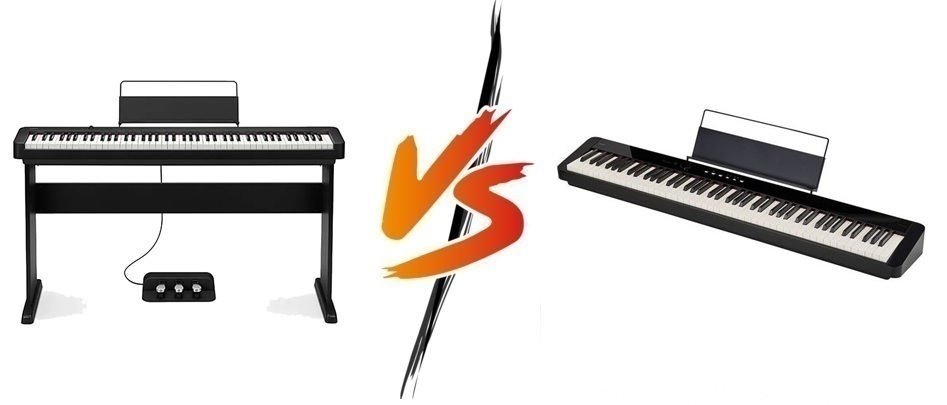
When you’re on the hunt for an 88-note digital piano and your budget is a major consideration, you’ll likely have come across the Casio CDP-S160 and the Casio PX-S1100. At a quick look, these two seem like pretty much the same thing. They’re both small and portable, with real feel from their keys and they have acceptable piano sounds. Plus, neither will break the bank. But, when you take a closer look, you see that they are after different people.
The CDP-S160 is essentially an entry level piano that just has the basics. It’s one of the least expensive realistic feeling and playing digital pianos from a well known brand which is probably why it appeals to newbies, people taking lessons, and those who just want a low-maintenance practice tool.
On the other hand, the PX-S1100 is part of Casio’s higher end Privia line. It does cost a bit more, but it claims to sound even better, has built in blue tooth, plus it looks like a high-end item. Overall, its idea is that it will give you a more like actually playing a real piano experience. So, if you’re wondering, is it worth the extra cash, or can the CDP-S160 do all you really want?
After checking both out, the answer isn’t a simple yes or no.
Casio CDP-S160 vs Casio PX-S1100 Comparison Chart
If you click the links below, under the product images, you will be redirected to Amazon.com. In case you then decide to buy anything, Amazon.com will pay me a commission. This doesn’t affect the honesty of this review in any way though.
| Specification | Casio CDP-S160 | Casio PX-S1100 |
|---|---|---|
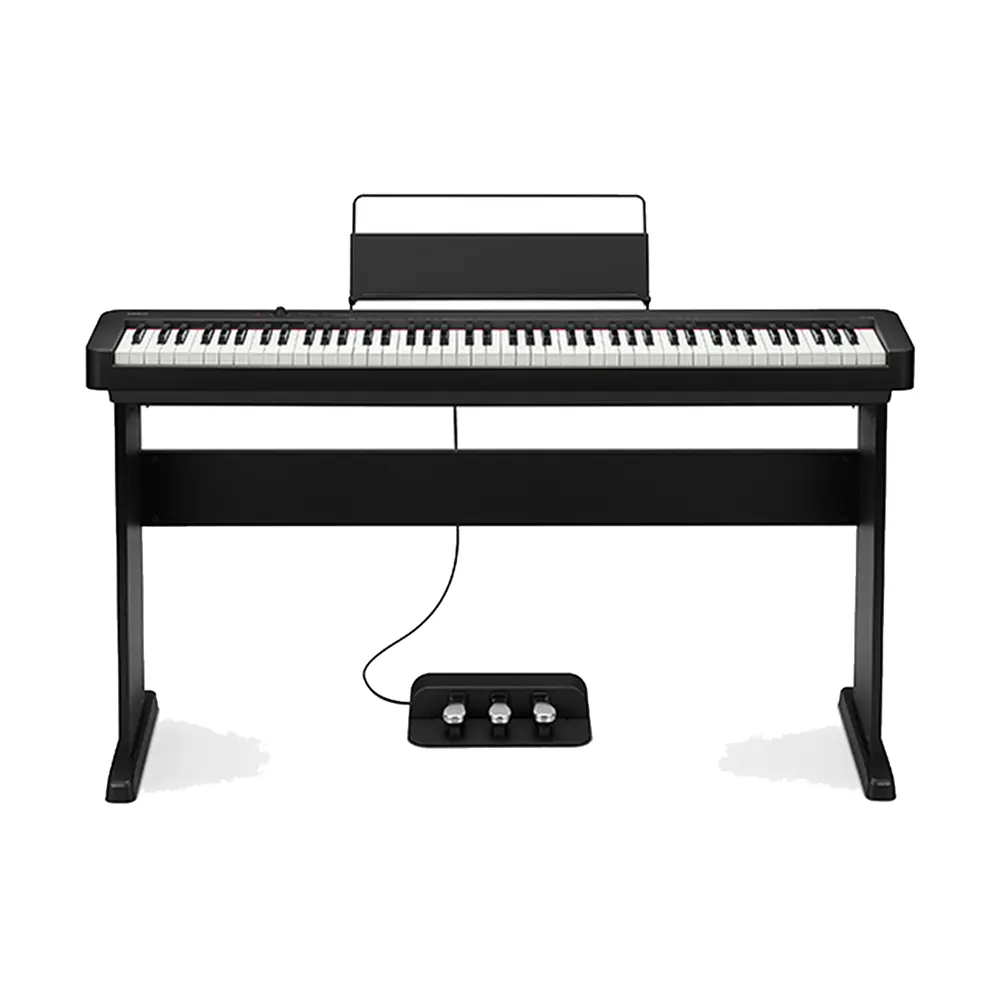 | 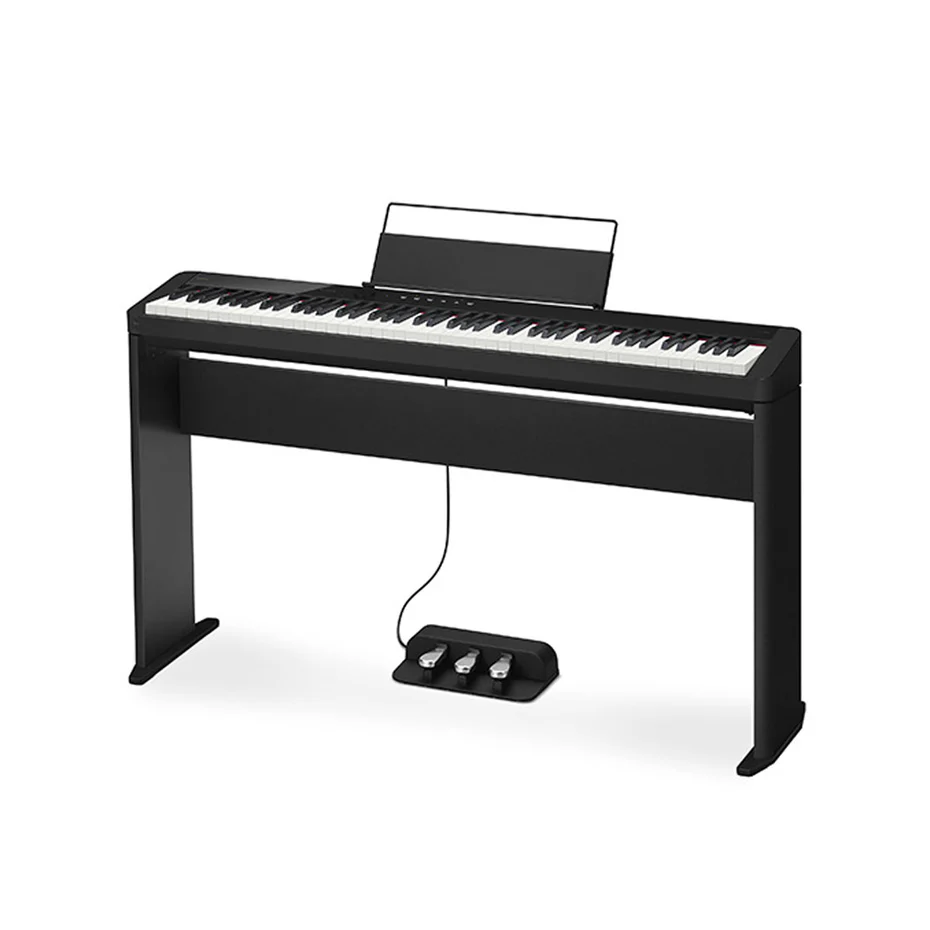 | |
| Check the best price on Amazon | Check the best price on Amazon | |
| Piano Type | Portable digital piano | Portable digital piano |
| Number of Keys | 88 | 88 |
| Keyboard Action | Smart Scaled Hammer Action Keyboard II | Smart Scaled Hammer Action Keyboard |
| Touch Sensitivity | 3 levels + Off | 5 levels + Off |
| Key Surface | Matte finish | Matte finish |
| Sound Source | Casio proprietary sound engine | Multi-Dimensional Morphing AiR Sound Source |
| Maximum Polyphony | 64 notes | 192 notes |
| Built-in Tones | 10 | 18 |
| Grand Piano Tones | 2 | 4 |
| Layer Mode | Yes | Yes |
| Split Mode | No | No |
| Duet Mode | Yes | Yes |
| Reverb | 4 types | 4 types |
| Chorus | Yes | Yes |
| Brilliance Control | No | Yes |
| Hall Simulator | No | Yes |
| Metronome | Yes | Yes |
| Transpose | ±12 semitones | ±12 semitones |
| Fine Tuning | Yes | Yes |
| Recorder | MIDI Recorder (1 song, 2 tracks) | MIDI Recorder (1 song, 2 tracks) |
| Demo Songs | 2 | 1 |
| Lesson Functions | Basic | Basic |
| Speakers | 2 × 8 W | 2 × 8 W |
| Speaker Size | 12 cm × 6 cm (Oval) × 2 | 16 cm × 8 cm (Oval) × 2 |
| Headphone Outputs | 1 × 3.5 mm stereo | 2 × 3.5 mm stereo |
| USB Port | USB Type-B (MIDI) | USB Type-B (MIDI & Audio support with app integration) |
| Audio Input | Stereo mini jack | Stereo mini jack |
| Audio Output | Headphone/Line Out combo | Dedicated Line Out (L/Mono, R) |
| Pedal Input | Sustain pedal | Sustain pedal / SP-34 (optional with stand) |
| Included Pedal | SP-3 Sustain Pedal | SP-3 Sustain Pedal |
| Bluetooth MIDI | No | Via optional adapter (WU-BT10) |
| Bluetooth Audio | No | Via included WU-BT10 adapter (region dependent) |
| Casio Music Space App | Yes | Yes |
| Power Supply | AC adapter or 6 × AA batteries | AC adapter or 6 × AA batteries |
| Battery Life | Up to 13 hours | Up to 4 hours |
| Dimensions (W × D × H) | 1,322 × 232 × 99 mm | 1,322 × 232 × 102 mm |
| Weight | Approx. 10.5 kg (23.1 lbs) | Approx. 11.2 kg (24.7 lbs) |
| Available Colors | Black | Black, White, Red |
| Matching Furniture Stand | CS-46P | CS-68 |
| Optional Three-Pedal Unit | No | Yes (SP-34 with CS-68 stand) |
| Intended User | Beginners, students, budget-conscious players | Beginners to intermediate players, home pianists, gigging musicians |
| My individual reviews | Casio CDP-S160 review | Casio PX-S1100 review |
Design & Build Quality
Both the Casio CDP-S160 and the Casio PX-S1100 are essentially small. They’re not like other digital pianos that try to look like a real, old-fashioned upright one. Instead, they’re meant to be taken from place to place. And you can do that without them feeling like a full-size 88-key keyboard is missing anything. But, while they’re similar in what they want to say, they don’t really feel like they go together. The CDP-S160 is basically just a no-frills, get-the-job-done kind of machine. It’s not trying to show off. It just gets the basics done. On the other hand, the PX-S1100 seems like Casio saying “hey, our portable keyboard can also be fancy and high-end.” And that’s not just about looks. It affects how you end up using and living with each one.
Casio CDP-S160 one is all about being simple. It doesn’t try to be flashy or have the latest style. It just gives you what you need in the least complicated way. The body is made from a plain, non-reflective black plastic with some curved edges to make it not so bad to look at. I think a lot of people who buy this will like that it doesn’t have a super “techy” or in-your-face look. Also, since it’s really thin, it doesn’t take up much more space than a lot of other digital pianos.
So, if you live in a small place, like an apartment or a small home office, that’s a big plus. I was also surprised by how light it is. Weighing in at just over 10kg, one person can easily move it around. If you have to put the piano away after every practice or carry it to and from lessons, that makes a big difference. It’s also not flimsy. You won’t hear any creaks or wobbles when you pick it up. And, unlike some cheap keyboards, it doesn’t feel like a toy. It feels like something you can count on.
They got one thing right, making the controls easy to use. Many new keyboard players get overwhelmed by all the buttons, sliders, and screens on some lower-end models. It can be too much and makes them too nervous to just start playing. Not the CDP-S160, though. All the essential buttons are on the front. At first, you might think some things are missing because it looks so plain. However, most people who just want to play and not mess around with lots of settings will like that.
Of course, there’s a downside. Some features are hidden and can only be accessed by holding down the “Function” button and then pressing a key on the keys. After a while, you get used to it, but sometimes you still need to check the manual. To be honest, I thought a small display, even a basic one, would have been nice. But I see why Casio left it out to save on the cost. Day-to-day, it’s pretty easy to live with the CDP-S160. It’s not too big for a keyboard stand and is light enough to move from one room to another in under a minute. Another thing that’s a big plus is the battery option. Not having to be near an outlet is useful. You could practice in the backyard or at a gig where there isn’t a power source. People often overlook this until they really need it.
Casio’s PX-1100 is a bit of an oddball. On one hand, it has the same super-slim design as other Casios. But, in my opinion, it’s the most stylish and high-end looking digital piano for around this price. It doesn’t just look like an affordable keyboard, it has a clean, modern, and high end look that will fit right in with your living room furniture.
If you plan on displaying your piano in the room where you live, the PX-1100 is the clear winner. It’s basically as good looking when it’s off as it is when you’re using it. That being said, its most striking feature is probably its touch-sensitive control panel. When the piano is off, the controls are nearly invisible and the surface has a very sleek, high-gloss finish. When you turn it on, the controls light up and the effect is pretty cool. From a design perspective, it’s a success.
However, I’m a bit on the fence about how practical it is. The problem is that touch controls aren’t as satisfying as having actual buttons. If you’re setting things up in the dark, it’s harder to find the controls by feel. The touch panel works well and is fast, but I found myself missing the click of real buttons a few times. Still, most people won’t be messing around with the settings all that often, so that’s a relatively small complaint. The main part of the piano is made out of regular old plastic, but the way it’s made and finished makes it feel a lot more put together than you’d expect. It doesn’t creak or wobble when you pick it up. In fact, it’s even a bit heavier than the other one and that actually makes it feel more solid. This one doesn’t feel like it will fall apart after a few years. And, at 11 kg, it’s light enough for one person to carry around. A lot of other digital pianos that are similar are 15 kg or more so if you move around a lot, this is a big plus. Both of these are super portable. So, which one is built better? Actually, that’s a tough call.
The other one is a great value for the price, it’s not flimsy at all for how cheap it is. But, this one just feels like a more grown-up version. It’s got a higher quality finish, neater controls, it’s a bit more sophisticated and put together, and it looks like a really good quality instrument. Even a few years from now, it’ll still look modern and like a good instrument, rather than like some basic home keyboard.
All things considered, from a pure “does what it says on the tin” point of view, both of these are great. They’re small, light, easy to take with you and good and solid enough for home use. Neither one is rickety and they both make the most of the space they have without sacrificing any of the stability. Where they differ is in how polished they are.
The Casio CDP-160 is about doing its job without any frills. It’s a straightforward, well-made digital piano that does what it should but doesn’t have all the bells and whistles. If you’re on a tight budget then there’s not a lot to complain about.
The Casio PX-1100 on the other hand goes a bit further. It’s got a more stylish and high-class look and feel to it. Its controls are a bit of a letdown, though, they’re touch sensitive but some people will miss the click of actual buttons.
However, everything else about it is really good. If you want a more premium experience without sacrificing the portability that these two share, then this is the better choice. Winner: the Casio PX-1100. It may be that the other one is a great budget option, but this one feels like a more like a more expensive one.
Keyboard Action
The most important thing to consider when buying a digital piano is the type of keys it has. You can make a digital piano sound better by using headphones, special speakers, or a computer program that mimics a real piano, but the type of keys you’re pressing every time you play is what really matters. If the keys are not right, you’ll get frustrated, no matter how good the piano sounds.
On the other hand, if they do feel like a real piano, then you’ll enjoy playing and develop good playing habits. Fortunately, both the Casio CDP-160 and the Casio PX-1100 have pretty good key actions. They’re not like those flimsy, springy keys on some keyboards or low-cost electronic keyboards. They both use Casio’s “Smart Scaled Hammer Action”, which makes them feel more like a real piano than less expensive options. But even though they’re similar, there are some differences between the two. These become more obvious the more you use each one.
So, how does Casio’s Smart Scaled Hammer Action work? Essentially, it makes the keys on the bottom of the keyboard feel heavier, and the ones at the top feel lighter, just like an acoustic grand piano. This might not seem like a big deal, but it’s actually very important for developing good playing technique. People who have experience with both acoustic and digital pianos will find the feel of these keys familiar, and students who are just starting out will benefit from practicing on a keyboard that feels like a real piano. Both of the Casio’s do a great job of simulating the action of a real piano, but neither one is perfect.
The CDP-160 makes a good first impression. The keys have some resistance to them, but they don’t get too hard or tiring when you practice for a long time. Many people assume that the heavier the keys, the better, but that’s not always true. Very heavy keys can actually make it harder to learn to play.
Casio has found a good balance, the action is even, and you know what to expect from each key. Whether you’re doing scales, etudes, or just playing popular songs, the keys behave in a natural way and you hardly ever think about them. That’s the best thing you can say about a digital piano. It should let you focus on the music, not the keys. It also has good “dynamic range”. When you play softly, the notes are soft and quiet. If you play more forcefully, the volume gets louder. The transition from soft to loud is smooth, which is especially good for more complex pieces. This makes practicing different volumes and expressions much more effective than on a keyboard with very limited sensitivity. Students who want to learn to play with more feeling and expression will find this helpful. It’s not the most advanced action on the market, but it’s good enough that it won’t hold you back.
However, the CDP-160 is not perfect. After a while, a couple of things become clear. For one thing, the action is a bit slow to go back into its neutral position after you’ve played a rapid series of notes. That’s especially true for more challenging classical music. Experienced players will probably notice this, but most beginners won’t. Another issue is very quiet playing. Although the CDP-160 can play very softly, making very, very soft sounds takes a little more effort than on more expensive models.
Finally, because the CDP-160 is very thin, the part inside the key where it pivots is shorter than on other digital pianos. As a result, you have to press the keys a bit harder if you’re playing a lot in the middle or near the end of the keyboard. If you’re playing many chords or pieces that have your hands far down on the keys, you might notice this. It’s not a major problem, but it’s one of the trade-offs of fitting a full action into such a small case.
At first glance, you might think the Casio PX-S1100 and the CDP-S160 have the same kind of keyboard action. Both use Casio’s Smart Scaled Hammer Action, after all. But in practice, the PX-S1100 feels a bit more refined. For one thing, it’s more consistent. Every key responds precisely and in the same way, which makes the whole keyboard feel more connected. It’s not that the action is heavier or lighter, it just feels smoother. Fast passages sound more natural and repeating the same notes happens more quickly. You also have more control over how hard or soft you play. When you play very softly, your sound comes out more easily. And when you play more forcefully, the action doesn’t feel like it’s fighting against you. This makes it easier to play with different emotions and feelings in your music, which is especially true for styles like classical and jazz.
Again, these improvements are small, not huge. But after some time, you’ll start to notice the difference. I had a hard time telling which one I was playing after just a few minutes, but after longer practice sessions, I found myself preferring the PX-S1100 most of the time.
Both of these digital pianos have textured key surfaces. They’re designed to stop your fingers from sliding around while you play. They don’t feel exactly like the real thing, but they’re still okay. I didn’t get that slippery, shiny feeling that some lower-end keyboards can give you. Both of them work just fine in this way, and I don’t think one is any better than the other.
Rapidly repetitive passages and other similar things are the main features of classical and advanced digital pianos that both of these models are missing. If you’re a pro who used to play on a grand piano, you’ll probably notice these omissions. But it’s worth keeping in mind which kind of instrument each of these is meant to be.
If you’re a beginner or an intermediate player, you’ll be happy to know that the actions on both of these are very good. In fact, they’re one of the main reasons to choose one of these over the others in the same price range. When you’re trying out a new keyboard, it’s easy to get too caught up in how it feels at first. But what about after an hour of practice? A good keyboard should be comfortable to use for a long time. I’m glad to say that neither of these is a problem. They have just the right amount of resistance, which helps you build up your finger strength without getting too tired. I especially noticed this when I was doing scales and long, slow classical pieces. My hands didn’t get strained, which is what you want from a home piano. If you’re a complete beginner, you probably don’t need to worry about which one of these to choose.
The CDP-S160 is great for learning proper playing techniques. It has a weighted, or “graded,” hammer action and good touch and feel. Spending more on the PX-S1100 just for the keyboard isn’t really worth it if you’re just starting out. Experienced players will appreciate the small but nice improvements on the PX-S1100. It has a more even response and better control over the volume. This makes it feel like you’re playing on a real piano. If you practice for a couple of hours a week, you’ll likely notice and enjoy these changes. Intermediate and advanced players, take note.
Piano Sound
A real test for any digital piano is how it sounds. It makes people want to keep practicing. If the sound is good, then playing is a lot more fun. And that’s especially true for an instrument like a digital piano, which is essentially a copy of an acoustic one. Essentially, this is where the Casio CDP-S160 and the Casio PX-S1100 start to differ.
On the surface, they have a lot in common. Both come with a range of built-in sounds and a stereo grand piano sample. However, if you just look at their specs, you might think they sound the same. But in reality, one has a more mature and expressive sound, while the other has a simple but nice piano sound that won’t break the bank. They’re not in the same league as the high-end digital pianos that cost twice or three times as much. But one is still a more pleasing experience than the other.
The CDP-S160 comes with 10 built-in sounds. There are a few acoustics and electrics, plus some string and organ options. As with all digital pianos, the most important sound is the acoustic grand. And fortunately, it’s the best part. From the first notes, the CDP-S160 produces a warm and even sound. It’s not too bright, nor is it too mellow. Instead, it finds a middle ground that makes it suitable for a wide variety of music. Whether you’re playing classical, pop, or movie themes, the piano sounds nice and is easy on the ears. That’s one of its main strengths. Some digital pianos try too hard to be exciting by making the bass sound bigger or the high end more dominant. But that gets tiring after a while.
The CDP-S160 doesn’t do this. Its sound is smooth, steady, and easy on the player. This is especially good because it doesn’t get in the way of your playing. When you play loudly, the sound gets stronger and more energetic. When you play softly, it gets softer and more mellow. The sound doesn’t change suddenly from one to the other, but it does change in a way that feels natural. This makes it more fun to play expressively. Instead of just getting louder, the piano also changes in other ways when you play with different amounts of force. This helps you produce a more interesting and musical performance. In a few words, the CDP-S160’s sound is “nice and unobtrusive.” It doesn’t try to blow you away with its powerful sound or huge size. Rather, it gives a solid, all-around sound that suits almost any style. The low end has some weight, but it doesn’t get muddy. The middle stays clear and even. The high end doesn’t have that harshness that some cheaper digital pianos have.
Overall, the CDP-S160 is fun to play for a long time. However, this even, unremarkable sound also means it doesn’t have a strong character. Compared to the more expensive ones, it can sometimes sound a bit too tame. Individual notes don’t open up as much as they do on the pricier machines, and long notes and chords settle into a more steady sound rather than growing and changing.
No digital piano at this price point is perfect, and the CDP-S160 has its own set of limits. One thing that sticks out is what happens when you hold the sustain pedal down and play big chords. The sound then stops developing like it would on an acoustic. Instead, it basically becomes a single, steady sound. Another thing is that the individual notes and the samples they are based on aren’t very detailed. They are good, but when you play with a lot of feeling and nuance, the differences in the pitch and volume of the notes don’t come through as clearly as they do on more expensive models.
Experienced players who are used to acoustic pianos will probably notice that the CDP-S160 doesn’t do a great job of mimicking the way the strings of an acoustic piano vibrate and affect each other. This is something that all digital pianos at this price do, but the more you pay, the more accurately they do it. For students and less experienced players, these limitations won’t be a problem. More advanced players who are used to the real thing might find them harder to ignore.
The Casio PX-S1100’s sound quality is a big step up from the previous model. But it’s not just that the sound is louder or bigger, it actually has more detail. From low notes to high notes, the sound has a greater sense of depth. Low notes have more weight and don’t get too overpowering. They sound more defined, which makes playing along with a left hand pattern more satisfying. Most piano music happens in the middle range, and that’s where the PX-S1100 really excels. Melodies sound more natural, chords sound fatter and more full, and the sound of the notes changing is smoother. Even the highest notes have a nice sheen that makes them stand out without sounding too brash or too bright.
Overall, the piano just sounds more like a high-end one. What really sets the PX-S1100 apart, though, is how its sounds react to how you play. Small changes in how you press the keys make bigger differences in the sound, which means you have more control. This makes the piano feel like it’s more connected to you. Soft parts stay soft and cozy, and strong chords have the right amount of punch without sounding like they’ve been squished. As a result, it’s easier to express yourself through the music. And whether you’re playing a Chopin piece, some jazz standards, or working with a singer, the piano will respond in a more sensitive way than the CDP-S160.
Another area where the PX-S1100 is an improvement is in its way it simulates how the strings inside a real grand piano work. No digital piano in its class does this perfectly, but the PX-S1100 does a much better job. When you use the damper pedal, the notes seem more spread out and blend together in a more natural way, which adds to the overall sound. Essentially, you start to hear the whole instrument, not just a bunch of separate notes. This is one of those things that doesn’t sound like a big deal on paper but makes a difference when you’re actually playing.
Something that people often overlook is the number of notes the piano can play at the same time. The CDP-S160 can do 64, while the PX- S1100 does 192. For new players, 64 is plenty. Simple songs and easy backing up won’t hit that limit. But as you get more into playing, you might run into the limit and have some of the older notes cut off to make way for new ones. Depending on what you’re playing, this can cause small but noticeable breaks. Most people who buy the CDP-S160 probably won’t run into this problem. However, having 192-note polyphony in the PX-1100 gives you a sense of security. No matter how complex the music, there will be enough room for all the notes to sound naturally. Even when you listen through headphones, the difference is still there.
Both of these pianos basically remove any outside noises and the limitations of the speakers when used with good headsets. The CDP-S160 sounds clear and is fun to listen to. The PX-S1100, though, reveals even more of the small stuff and has a greater sense of distance. This makes long practice sessions in the evening less tiring and more like being in the actual performance hall. If you mostly practice in the late evening, this is not something to ignore.
Both of these models come with other sounds beyond just the piano. Electric pianos, a few string and organ sounds are good for trying out different types of music. The CDP-S160 does the basics okay. The PX-S1100 goes a bit further and has slightly better variations on those same sounds. But I don’t think that by itself should be the main reason you choose one over the other. Most people who buy a keyboard like this are really after a good piano experience, and that’s where both of these focus most of their effort.
So, which one sounds more like a real grand? The CDP-S160 is a good, if not great, digital piano. The PX-S1100 is a better one. It doesn’t perfectly capture the essence, the complexity, and the living, breathing nature of a real grand, but it does so better. With its new dynamic reaction, more even sound, more even reverb, and more detailed samples, the PX-S1100 just makes for a more fun and, in the end, a more rewarding playing experience. It may not make you a better player over night, but it will probably make a noticeable difference for someone with more experience.
In short, the CDP-S160 does a great job for its price. It’s a good choice for new and casual players. It’s not perfect, but it doesn’t sound bad either. The Casio PX-S1100 takes what the CDP-S160 does and makes it even better. It has a more complete and more pleasing piano sound. More low and high notes, smoother in-between bits, and much higher polyphony will all make your playing more like the real thing. If you’re serious about playing and plan on keeping this for a while, then the extra cost is worth it.
Verdict: the Casio PX-S1100 is the winner.
Speakers
Ringtones aren’t given as much thought when shopping for a digital piano as the keyboard or the sound generator. That makes sense since most makers like Casio shout about their sample sets, number of notes they can play at the same time (polyphony), and the type of “hammer” action they use. However, the speakers actually do a lot to affect your overall experience of playing the piano. Even the best set of samples can sound underwhelming if it’s being sent through a weak speaker system.
On the other hand, a less powerful sound engine can sometimes sound better than you’d expect if it’s paired with good-quality speakers that distribute the sound naturally. This is especially true when looking at the Casio CDP-S160 and the Casio PX-S1100. At first, it seems like they’re essentially the same, they both have 8-watt amplifiers, which is why some people think they’ll sound the same. But there’s more to it than just the wattage of the amps. The box that the speakers come in, where they’re placed, how they’ve been adjusted to work best with the other parts, and how the sound is processed all have an impact on what you actually hear.
I recently spent some time with both and it’s clear that even though they have the same specs on paper, the PX-S1100 has a fuller and more involving sound. Speakers, the details Let’s look at the numbers. Both the CDP-S160 and the PX-S1100 have a two-speaker system that puts out a total of 16 watts.
So, if you just look at the spec sheet, you might wonder if there’s any real difference between them. That’s one reason why some people are wondering if the PX-S1100 is worth its higher price, after all, it has the same power as the other one. But the thing is, the power of the amp doesn’t tell the whole story. It’s like comparing two cars with the same number of horsepower. One might go from 0-60 faster, handle better around corners, and be a smoother ride because of other things that the manufacturer did to make it better.
Essentially, two systems with the same power can still sound very different depending on how they were designed. The CDP-S160 gives you what I’d expect from a basic home piano: the speakers are clear and balanced, and they’re fine for most people who will just be playing in a small space. They don’t distort if you play at a normal volume. And when you play a low note, it stays distinct. Mid-range notes sound natural. High notes are bright without being too harsh.
For simple practice in a small room, I didn’t find myself wishing for more volume. They also fill a typical room without straining. Most people think they’ll need a lot more oomph than they really do. Most people just play at a reasonable level. The CDP-S160 does great in this situation. But where the CDP-S160 shows that it’s a more no-frills model is in how it projects the sound. The sound is nice, but it stays mostly around the piano. It doesn’t fill the room. If you’re right next to the keys, that’s not a big deal. But if you move a few feet back, the sound loses some of its presence. This is pretty standard for a budget piano.
Making speakers that send the sound out all over the room takes some special planning, which is something that some pricier models do better. Bass, how low notes sound In terms of the low end, the CDP-S160 does okay. The lower notes are warm, which works for most types of music. However, they lack the depth and the sense of physically happening that a bigger and/or more expensive speaker would give you.
Playing complex left-hand parts from jazz or big arrangements, the lowest group of notes can sometimes feel a bit shy. It’s not that it’s bad, it’s just that it’s limited by its small box and the relatively simple design. Most new players probably won’t even notice this unless they compare it to a more expensive option.
I was pleasantly surprised by how well the CDP-S160 handles increased volume. Some low-cost digital pianos start to sound thin or distorted when pushed to their maximum. But not this one! Even near the top of its volume range, the CDP-S160 stays in control and composed. There’s a small loss of clarity with complex chords, but it’s not a major issue. Most people who play at home won’t even need the full volume that often. The speakers in the PX-S1100 already sound more open and spacious.
At first, it might be hard to notice. Maybe you’d have to play some basic scales to hear the difference. But when you play more involved pieces, like a big, sustained chord or a slow, expressive piece, the sound seems to spread out and fill the room. It’s no longer like it’s just coming from the speakers, it sounds like you’re actually playing a real piano. The CDP-S1100 also has a better overall sound balance. Its lower notes have more punch, and the middle notes are fuller. The high notes stay clear and don’t get too shrill.
Overall, the sound is more even and not dominated by any one part. This makes for a more enjoyable practice session because it doesn’t get tiring or fatiguing. The way the speakers in each of these models interacts with the room is another key difference. The PX-S1100 gets the sound out into the room and around the walls and other surfaces. Even if you’re not right next to the piano, the sound still sounds good. This is especially important. When you play a digital piano, you’re hearing the speakers plus the bounces off the walls and other things.
A speaker system that spreads the sound out naturally is much more like the real thing. For someone who plays a lot of classical music, this is especially important. Classical music has a lot of different dynamics and long, held notes. It needs a good speaker system to handle that. Both of these pianos do a good job, but the CDP-S160 does it just okay.
The PX-S1100 does a bit better. The chords sound bigger and deeper, and the melody seems to sit on top of the other sounds more naturally. Long, sustained parts stay rich and don’t just fade away. When you’re playing more modern or simple tunes, the difference isn’t as big. These types of songs and music don’t have the same level of complex sound as the really fancy classical stuff.
Still, the PX-S1100 sounds a bit nicer. It has a fuller sound for the electric piano and the other sounds, which are a bit warmer. If you usually just wear headphones, then the difference between the two speaker systems won’t matter as much. You’re basically listening directly to the electronic part of the piano, not the built-in speakers. But most people don’t just use headphones. They practice at home, play for family and friends, or sing along. In those cases, the built-in speakers are a big part of the experience.
In that situation, the PX-S1100 gives you a better experience. In general, though, no. Both of these pianos come with good-enough speakers that can fill a normal-sized room. If you plan to perform in front of a large group or record, you might want to use separate speakers or a PA system. Otherwise, either one is ready to go right out of the box. You don’t need any extra equipment for a good sound.
It’s worth noting that the CDP-S160 is pretty good for its price. If you got one without ever hearing the PX-S1100, you’d probably be happy with the sound. However, the PX-S1100 shows what’s possible with a bit more work. It’s not just that it’s a tiny bit louder, it’s that the sound goes deeper, is more spread out, and has a more natural sense of where it’s coming from. That makes it sound more like an actual piano.
So, in the end, the winner is the PX-S1100. The CDP-S160 does a great job for a budget model, but it can’t compete with the way the PX-S1100 does its job. The PX-S1100 takes what the CDP-S160 does and makes it even better. It has a more complete and natural sound that’s more fun to practice with.
Features and Functions
The main thing that sets apart a basic and a more mid-range digital piano is not the type of keys or how good the sound is. Rather, it’s all about what else they can do. While a person just starting out with the piano probably won’t care about all the extra features, those who are already more experienced like to have some niceties that make playing, recording, or just enjoying the piano more convenient.
The Casio CDP-S160 and Casio PX-S1100 basically stick to the idea of giving the player a genuine piano experience. They don’t try to offer a lot of different sounds or a lot of complicated editing options like a big keyboard or a synthesizer would. Still, the PX-S1100 does come with some features that make owning one of these pianos a bit more enjoyable. It takes the CDP-S160 and adds some things that make a real difference to the daily experience, not just a bunch of extra bells and whistles. The good part is that neither of these pianos feels too fussy. You should be able to start playing after just a few minutes, even if you’ve never used a digital piano before.
Casio CDP-S160 Features
The CDP-S160 is really all about the basics. Instead of trying to compete with other types of keyboards or synthesizers, it includes the stuff that most people who play the piano actually use.
These are:
- several different kinds of piano sounds
- electric and organ sounds
- a metronome
- ability to change the key
- fine-tune the pitch
- some effect options like reverb and chorus
- the option to play two different parts at once (layer mode)
- the option to divide the keyboard so two people can play together (duet mode)
- the ability to adjust how sensitive the keys are
At first, it might seem like there’s not much here. But for most new players and casual players, this is all they will ever need. Many people who buy their first digital piano only end up using a few of these features. The rest is just a bonus.
Casio gets this. They didn’t want to overwhelm new players with a lot of complicated options. They made sure everything is simple and easy to use.
Piano Sounds
There are 10 different sounds on the CDP-S160. And they’re all actually useful. They’re not a bunch of weird sounds that nobody will ever use. The main focus is on the different types of acoustic pianos. The electric piano and organ sounds are great for playing jazz, soul, and pop. And the string sounds can be added to the piano to make a fuller sound for movie or church music. I would have liked a few more options, but I think it’s better to have 10 good sounds than 100 that aren’t as good.
Casio made a smart decision to keep things simple. Metronome and Practice Tools Any serious piano student uses a metronome. It’s one of the best ways to get better at the piano. Luckily, both of these pianos come with a built-in metronome. It’s easy to turn on and the speed is easy to adjust. This makes it perfect for doing slow and fast practice.
Duet mode is also a great tool for taking lessons. It divides the keyboard in half so a teacher and student can play together on the same piano. It’s not something you’ll use all the time, but it’s nice to have.
Layer Mode You can play two different voices at the same time with the layer mode. For example, you could play the acoustic piano with some strings for a bigger, more movie-like sound. This is not something you’ll do every day, but it’s fun to try and can make practice more interesting. Making the keys more or less sensitive to your touch is another feature. Some people like a light feel, while others want a bit more resistance. The CDP-S160 lets you adjust this to your liking. This may not seem like a big deal, but it’s actually pretty helpful. Beginners might prefer a lighter feel, while more experienced players might like a heavier feel that makes them play more precisely.
Casio PX-S1100 Features
The Casio PX- S1100 doesn’t just add a ton of new features. Instead, it builds on what the CDP- S160 already has. All the extras feel like they were added with a purpose, which is great because some other digital pianos try to pack in too many features that people never end up using. Not the case here.
You’ll mainly use the standard grand piano sound, but having more options can encourage you to experiment and try out different things. And, if you’re into jazz, funk, or contemporary music, the extra electric piano sounds are especially cool. They’re also more polished than the ones on the CDP- S160. You can now make more precise adjustments to the way the piano sounds. This isn’t super in-depth, and you don’t need to be a tech expert. It just lets you tweak the sound to your liking without getting lost in a sea of options. It’s a nice balance between being able to customize and not overcomplicating things.
The PX- S1100 has Bluetooth. At first, that might seem like a fancy but not very useful feature. But it’s actually really handy. You can stream music from your phone, tablet, or computer through the piano’s built-in speakers. That opens up a lot of possibilities. Want to play along with your favorite songs? Practice to your favorite songs. Take online lessons without needing extra speakers. Or just listen to music while you’re not playing. Once you start using it, you’ll wonder how you ever did without it. It makes the whole experience feel a bit more modern. It’s not essential for learning or playing the piano, but it’s one of those things you’ll soon get used to and won’t want to live without.
Both of these pianos come with Casio’s app, but the PX- S1100 gets even more out of it. With your phone or tablet, you can access a lot of the settings that were previously only reachable by using a combination of buttons. Digital pianos have really improved in this area over the years. Instead of adding more and more buttons, makers are now using apps to make it easier to adjust things. For many, this is a better way to do it, it keeps the piano looking tidy and makes more advanced changes a lot simpler.
You can also record yourself playing, which is one of the best ways to spot things like timing problems or uneven playing. Even more experienced players do this. The PX- S1100 is a bit better at this because of its wider range of features and how well it works with other devices. In general, these two are still easy to use, even with all the new stuff they can do. Some other digital keyboards get clunky as they add more and more features. Eventually, even small things become hard to do without looking at the manual. Not the CDP- S160 or the PX- S1100. The CDP- S160 is on the simple side and the PX- S1100 just adds a few extra things without making it feel overwhelming.
Of course, there are some things missing. Neither one has tons of pre-programmed patterns like an arranger keyboard. You can’t record directly to a memory stick. And there’s no serious sound editing like you’d find in a real stage piano. Other similar models have built-in lessons with a lot more teaching material. Whether or not that matters is up to you. I don’t think they’re deal breakers. Most people who are looking at these two are after a real-sounding digital piano, not a full-on music production machine. Adding all those other features would make it pricier and harder to use.
So, which one is more fun to live with on a daily basis? The CDP- S160 does the basics very well. It has everything a beginner or someone who wants a no-frills, no-hassle experience needs. And it’s a great choice. The PX- S1100 just takes that and adds a few thoughtful and actually useful things. It doesn’t feel like a bunch of fluff. The extra voices, better sound control, Bluetooth, and more are all things you’ll probably end up using. Streaming from your phone is one of those things you won’t realize how much you’ll miss it until you’ve had it for a bit.
Winner: the Casio PX- S1100. It’s essentially a more complete and more forward-looking digital piano. If you want something that just has the essentials, the CDP- S160 is perfect. But if you want one with a few more features that are actually going to make your life as a pianist easier, then the PX- S1100 is a better bet.
Connectivity
When you buy a new digital piano, there are some things that might not be at the top of your list, like how connected it is. You might be so focused on how the keys feel, or what it sounds like, or the type of speakers it comes with. But the more you use your digital piano, the more important connectivity becomes. If you’re going to take online lessons, record yourself, or use special teaching and practice apps, then the types of ports and the wireless features on your piano will really matter. They can make a big difference to your overall experience. Luckily, both the Casio CDP-S160 and the Casio PX-S1100 are made with people like you in mind. Neither one feels old-fashioned and both have all the basic connections that most people will need.
However, the PX-S1100 has a few more and better features, especially because of its wireless options. If all you’re ever going to do is sit and play with the built-in speakers, then you might not care too much about the differences. But if you want to connect your piano to other equipment or use apps and software for learning and recording, then you should think about the way it connects.
Both of these pianos has a special port that lets them talk to your computer, phone or tablet via a USB cable. This is essentially as important as having a sustain pedal for a lot of musicians. Unlike the old 5-pin MIDI connectors which need a separate box to join them to other gear, you just plug in and the two will start talking.
Once they’re connected, the digital piano sends messages to any program that can understand it. But it’s worth understanding that it doesn’t send the actual sound. It just sends a message about which keys you hit, how hard, the pedals, and other things. This is actually a great thing because it opens up a lot of possibilities. People who use virtual piano software love this.
Programs like Pianoteq, Garritan, and others can make very real-sounding piano sounds. Even if you eventually get tired of the sounds that come with the piano, you can still use it as a control panel for your computer. This basically extends the life of the piano. Many good players even practice on their computer with their digital piano and still like the portability and ease of their instrument.
Both of the Casio models work just fine in this way. Making a Home Recording Is Easier with a Casio Digital Piano Using a USB connection also makes it much simpler to record at home. You can use programs like GarageBand or Logic or any other music-making software. Both of the Casios will fit right in with these programs.
One of the big benefits of recording like this is that you can change anything you got wrong after the fact. You can also change the sound of the piano, or the timing. Composers and home producers find this super helpful. Both of these Casios do this job equally well. D recently, the way people learn piano has changed a lot. Now a lot of students use special apps that give them instant feedback on their timing, rhythm and how accurate they are.
Because both of the Casios have a USB connection, they can connect with many of these educational programs. Whether you’re using a tablet or a laptop, it’s not hard to set them up. So, if you’re a beginner and you’re going to use a lot of different tools, these are both good choices. They’re also a good idea because they let students do more than just look at a book, they get to do fun, interactive things that make practicing more enjoyable.
Let’s talk about the Casio digital pianos. Both models come with an external sustain pedal. If you haven’t used one before, it’s a game-changer for your playing. It’s actually pretty cool to have, and it doesn’t cost a lot. You can even get a better one later on if you want. If you want to connect your piano to an amp or a bigger sound system, you can. This is a big help for small shows or when you need more volume. They’re not really made for big performances, but they’re okay for those every now and then.
The Casio PX-S1100 has something the other one doesn’t: it can stream music from your phone or other device. At first, I thought this was a minor thing. But now I use it all the time. It’s great for a few reasons: you can play along with your favorite songs, follow online lessons, or practice with backing tracks. You can even use it as a speaker when you’re just relaxing. It’s easy to set up and the connection is very stable. Once you get used to this, using a wire will start to feel old-fashioned.
Also, with the PX-S1100, you can use any app you like. You don’t have to mess around with cables to start practicing. This is especially nice if you have a tablet. Just sit down and go, no fiddling with cables. It makes a big difference if you’re just having a casual practice session.
Another thing is that the CDP-S160 has a lot of cables to deal with if you’re using several things. There are three or four different ones. The PX-S1100 gets rid of most of this. Yes, you’ll still need some for special jobs, but day-to-day, it’s a lot simpler. If your piano is in your living room, it looks neater too. If you’re setting up a home recording studio, both will work fine. They send out the right info to your computer, and you can use them with many of the same programs.
So, if you’re not planning on using the built-in sounds, and are instead working with a lot of other software, then either one will do. And, essentially, this is what a lot of people who make music at home do. The PX-S1100 just makes it a bit less hassle. The PX-S1100 is the best choice if you’re new to all this. It’s got all the basics: a USB port, good for connecting to a computer, and a headphone jack. It also has a place for a sustain pedal. And, of course, it’s compatible with all sorts of learning apps. There’s really nothing you’re missing.
The PX-1100 just makes it a little more fun and a bit more accessible. It might make you practice more. And, of course, that has its own rewards. Lastly, one of the good things about both of these is that you can always add on more features in the future. Maybe you start out with just a pair of headphones and the sustain pedal. A year or two later, you could move on to using software and online lessons. Neither of these will ever become outdated. They’re not going to stop working as you get better.
The PX-S1100 is a bit more flexible from the start, but that’s essentially all. It doesn’t do anything the other one can’t. It just makes it a bit more pleasant to use. In the end, if you just need the basic connections, then the CDP-S160 has everything. It’s got the basic stuff: being able to connect to a computer and other things. And, of course, there are the essentials for playing and practicing. It’s perfect for a lot of people, especially those who are just starting out.
However, the PX-S1100 takes it a step further. It’s not that it does things that the other one can’t, but it does make everything a bit simpler and more enjoyable. So, if you plan on being part of this new, more connected world of music, it’s a better choice. That’s why the PX-S1100 is the winner here.
Conclusion
It basically comes down to how much you’re willing to spend, where you are on your piano journey, and how you plan on using the thing. Both of these have the same basic idea behind them but are really made for different people. The CDP-S160 is essentially a simple, no-frills digital piano that hits the basic marks. It has a good feel to the keys, a nice sound, and is built to last. It also doesn’t have a bunch of fancy features which is actually part of why people like it. If you want to get good at playing the piano without breaking the bank, then this is one of the best deals around.
The PX-S1100, though, is like a more complete package. What may not sound like a lot on its own is that when you put it all together, it makes a big difference. The better sound, improved speakers, a more upmarket design, higher number of notes at once, and being able to stream music from your phone are all part of what makes this a more fun and engaging instrument. It will grow with you as your skills get better.
Both options are a good choice, and that’s what makes this decision difficult. The CDP- S160 does the essential things right, whereas the PX- S1100 takes everything and makes it just that little bit nicer. If you can only spend a certain amount or are a complete beginner, go for the CDP- S160. But if you have the extra cash and see yourself playing for many years to come, then the PX- S1100 is the way to go. The small improvements might not be massive on their own, but all together they make a bigger, more satisfying and even more rewarding instrument.