
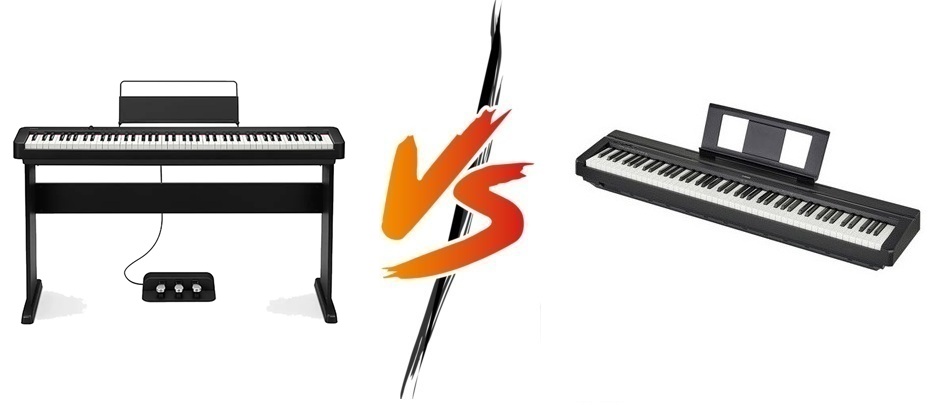
If you’re shopping for an affordable digital piano, chances are you’ve come across the Casio CDP-S160 and the Yamaha P45. These two models have been among the most popular beginner digital pianos for years, and for good reason. Both come from reputable manufacturers, both feature fully weighted 88-key keyboards, and both are designed to give aspiring pianists an authentic playing experience without stretching the budget.
At first glance, they appear remarkably similar. They’re compact, relatively lightweight, and aimed squarely at beginners, students, and casual players. But once you spend some time playing them, the differences become much more noticeable. Each piano has its own strengths, and choosing between them depends on what matters most to you.
The Yamaha P45 has earned a reputation for its realistic keyboard feel and warm, natural piano sound. It’s often recommended by piano teachers because it focuses on getting the fundamentals right without overwhelming new players with unnecessary features.
The Casio CDP-S160, on the other hand, takes a more modern approach. It’s slimmer, more portable, and offers more connectivity options while still delivering a convincing piano experience. Casio has also made significant improvements to its keyboard action over previous generations, making it a stronger competitor than ever.
After comparing these two pianos across every major category, it’s clear that neither is objectively better in every way. Instead, each one excels in different areas.
Let’s take a closer look.
Casio CDP-S160 vs Yamaha P45 Comparison Chart
If you click the links below, under the product images, you will be redirected to Amazon.com. In case you then decide to buy anything, Amazon.com will pay me a commission. This doesn’t affect the honesty of this review in any way though.
| Specification | Casio CDP-S160 | Yamaha P45 |
|---|---|---|
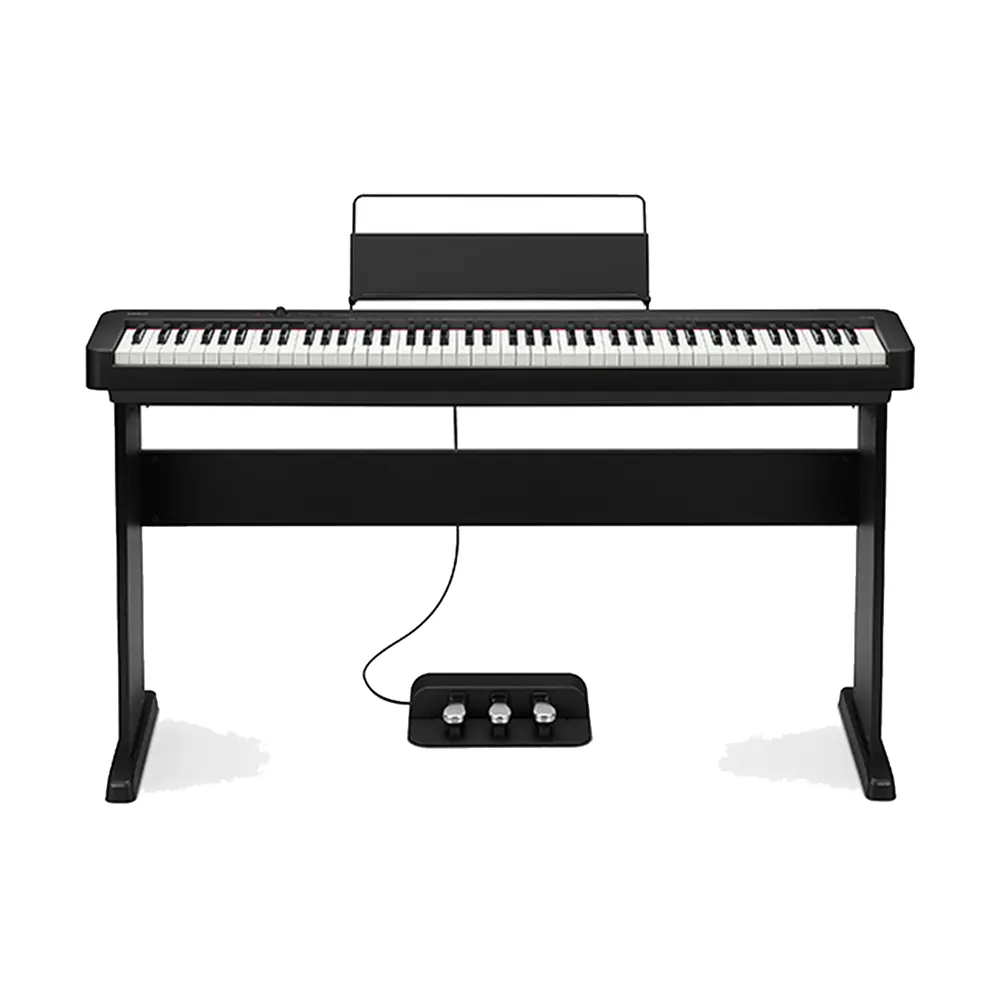 | 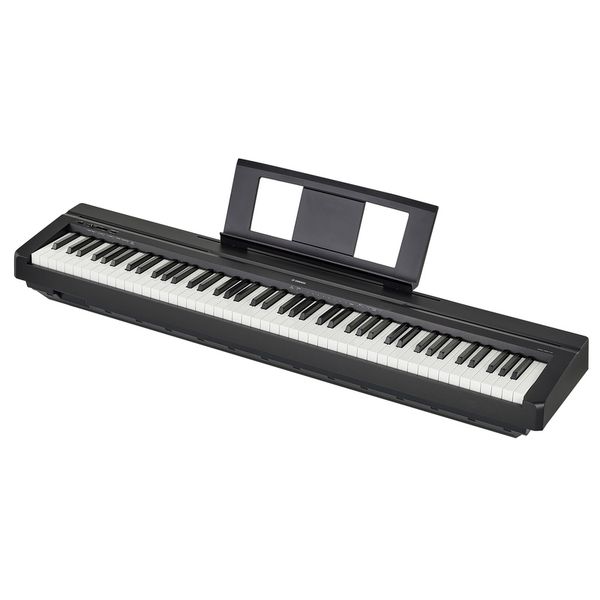 | |
| Check the best price on Amazon | Check the best price on Amazon | |
| Keyboard | 88-key Scaled Hammer Action Keyboard II | 88-key Graded Hammer Standard (GHS) |
| Key Weighting | Graded hammer action | Graded hammer action |
| Key Surface | Simulated ebony and ivory texture | Smooth matte finish |
| Touch Sensitivity | 3 levels + Off | 4 levels (Hard, Medium, Soft, Fixed) |
| Sound Engine | AiR (Acoustic and Intelligent Resonator) | Advanced Wave Memory (AWM) Stereo Sampling |
| Polyphony | 64 notes | 64 notes |
| Number of Built-in Tones | 10 | 10 |
| Main Piano Sound | Concert Grand Piano | Yamaha Grand Piano |
| Speakers | 2 × 8W | 2 × 6W |
| Speaker Size | Oval speakers | 12 cm speakers |
| Headphone Outputs | 1 × 1/4″ stereo | 1 × 1/4″ stereo |
| Sustain Pedal Input | Yes | Yes |
| Included Pedal | SP-3 Sustain Switch | FC5 Sustain Switch |
| Triple Pedal Support | Yes (with optional SP-34 and stand) | No |
| USB Connectivity | USB Type-B (MIDI) | USB Type-B (MIDI) |
| Bluetooth | No | No |
| Audio Outputs | No dedicated line outputs | No dedicated line outputs |
| Audio Inputs | No | No |
| MIDI | USB MIDI | USB MIDI |
| Recording Function | No onboard recorder | No onboard recorder |
| Metronome | Yes | Yes |
| Transpose | Yes | Yes |
| Fine Tuning | Yes | Yes |
| Layer Mode | Yes | Yes |
| Duo/Duet Mode | Yes | Yes |
| Compatible App | Casio Music Space | Yamaha Smart Pianist* (limited compatibility) |
| Power Supply | AC Adapter (AD-A12150LW) | AC Adapter (PA-150 or equivalent) |
| Dimensions (W × D × H) | 1,322 × 232 × 99 mm (52.0 × 9.1 × 3.9 in) | 1,326 × 295 × 154 mm (52.2 × 11.6 × 6.1 in) |
| Weight | 10.5 kg (23.1 lbs) | 11.5 kg (25.4 lbs) |
| Available Finish | Black | Black |
| Optional Furniture Stand | Yes (CS-46P) | Yes (L85) |
| Release Year | 2022 | 2015 |
| Best For | Beginners, portable use, modern features | Beginners, students, traditional piano feel |
| My individual reviews | Casio CDP-S160 review | Yamaha P45 review |
Design & Build Quality
The design and build quality of a digital piano often don’t get as much attention as the keyboard action or sound engine, but they can have a surprisingly big impact on your overall ownership experience. A piano that looks good in your home is one you’re more likely to keep out and play regularly, while a well-built instrument inspires confidence every time you sit down to practice. Durability, portability, ease of use, and even the placement of the controls all contribute to how enjoyable the instrument is to live with over the long term.
When comparing the Casio CDP-S160 and the Yamaha P45, it’s immediately clear that the two companies approached the design process from slightly different perspectives. Both pianos are aimed at beginners and intermediate players, but Casio prioritized portability and modern styling, while Yamaha stayed closer to the traditional digital piano formula. Neither approach is inherently better, but each will appeal to a different type of player.
Overall Appearance
At first glance, the Casio CDP-S160 stands out because of its remarkably slim profile. In fact, it’s one of the most compact full-size digital pianos available in its price range. Casio has done an impressive job of fitting an 88-key weighted keyboard into such a narrow chassis without making the instrument feel cramped.
The minimalist design gives the CDP-S160 a clean and contemporary appearance. There are no unnecessary curves or decorative elements, and the understated styling allows it to blend naturally into almost any environment. Whether it’s placed in a modern apartment, a bedroom, a home office, or a dedicated music room, it looks sleek without drawing too much attention to itself.
The Yamaha P45, by comparison, follows a more conservative design philosophy. It has a slightly thicker body with softer edges and a more conventional layout. It doesn’t feel outdated, but it certainly doesn’t have the same modern aesthetic as the Casio.
Some buyers actually prefer Yamaha’s approach because it resembles the appearance of many traditional digital pianos. The slightly larger body gives the instrument a more substantial presence, making it feel closer to a home piano than a portable keyboard. If you’re looking for an instrument that visually resembles what you might find in a music school or piano studio, the P45 fits that description well.
Ultimately, the choice comes down to personal taste. The Casio looks modern and space-efficient, while the Yamaha projects a more classic and familiar image.
Size and Portability
Portability is one of the biggest differences between these two instruments.
The Casio CDP-S160 was clearly designed with mobility in mind. It weighs just over 10 kilograms (around 23 pounds), making it light enough for one person to carry comfortably. Whether you’re taking it to piano lessons, rehearsals, church services, or small performances, transporting it isn’t particularly difficult.
Its slim depth also makes a noticeable difference in everyday use. Because the cabinet is so narrow, it occupies less floor space than many competing digital pianos. This may not seem important on paper, but in a small apartment or bedroom, every centimeter counts.
If you’re someone who plans to store the piano after each practice session, the CDP-S160 is significantly easier to move. It slides under a bed more easily, fits inside closets with less hassle, and generally feels like a product that was designed for flexible living spaces.
The Yamaha P45 is still considered portable, but it isn’t quite as convenient. At approximately 11.5 kilograms (25 pounds), it’s only a couple of pounds heavier, yet it somehow feels noticeably bulkier due to its larger dimensions.
This doesn’t make it difficult to transport, but if you’re frequently moving your piano between locations, you’ll likely appreciate the Casio’s more compact footprint.
For players who intend to leave their piano permanently on a stand, however, the size difference becomes much less significant. Once both instruments are set up, they occupy roughly the same amount of horizontal space, since both feature a full 88-key keyboard.
Build Quality and Materials
Neither of these instruments uses premium materials, which is perfectly understandable considering their affordable price points. Both pianos rely primarily on high-quality plastic construction, but neither feels cheap or poorly assembled.
The Yamaha P45 gives the impression of being slightly more rugged. The cabinet feels dense, the chassis exhibits very little flex, and the instrument remains stable during energetic playing sessions. Yamaha has built a strong reputation for producing durable entry-level instruments, and the P45 continues that tradition.
Even after years of regular use, many owners report that the P45 still feels solid, with few issues related to creaking panels or loose components. That kind of long-term reliability has contributed to Yamaha’s excellent reputation among piano teachers and music schools.
The Casio CDP-S160 also feels well constructed, though its lighter design inevitably makes it feel a little less substantial. This shouldn’t be mistaken for poor quality. The piano is well assembled, and there are no obvious weak points or flimsy sections. The reduced weight is largely a result of Casio’s engineering rather than thinner or inferior materials.
Still, if you play aggressively or simply enjoy the reassuring heft of a heavier instrument, the Yamaha may inspire a little more confidence.
Keyboard Housing and Stability
An often-overlooked aspect of digital piano design is how stable the instrument feels while playing.
The Yamaha P45’s slightly heavier frame helps it stay planted on most keyboard stands. Even during energetic performances involving large dynamic changes, the instrument remains stable and secure.
The Casio CDP-S160 performs well in this regard too, but because it’s lighter, the quality of the keyboard stand becomes slightly more important. On a sturdy X-style or furniture stand, there’s little to complain about. On cheaper, less stable stands, however, the lighter chassis can make small movements more noticeable.
This isn’t a fault of the piano itself, but it’s worth considering if you’re purchasing a stand separately.
Controls and User Interface
Both manufacturers have embraced simplicity, though they implement it differently.
The Yamaha P45 features an extremely clean control panel with very few visible buttons. On one hand, this contributes to its elegant appearance and makes the instrument feel less intimidating to complete beginners.
On the other hand, it also means that many functions are hidden behind keyboard shortcuts. To change voices, adjust touch sensitivity, or access various settings, you’ll often need to hold the Function button while pressing specific keys.
This system works well once you’ve memorized the shortcuts, but new users may find themselves referring to the manual more often than they’d like.
The Casio CDP-S160 offers a similarly uncluttered interface but feels slightly more user-friendly overall. The button layout is intuitive, and pairing the piano with Casio’s Music Space app makes adjusting settings considerably easier.
Instead of relying solely on keyboard combinations, users can access many functions through the app’s graphical interface, which feels much more approachable, especially for beginners who aren’t familiar with digital piano menus.
While neither piano includes an LCD display, Casio’s software integration helps compensate for its absence.
Finish and Everyday Practicality
Both pianos feature matte black finishes that do a respectable job of resisting fingerprints and minor scratches. They won’t remain pristine forever, but they hide everyday wear better than glossy surfaces.
The key covers are absent on both models, which isn’t unusual at this price point. If dust is a concern, you’ll probably want to invest in a simple keyboard cover.
Cleaning either instrument is straightforward, requiring little more than a microfiber cloth for the cabinet and a soft cloth for the keys.
One practical advantage of the Casio’s slim body is that it simply fits into more places. If your available space is limited or you frequently rearrange furniture, the smaller footprint can make daily life considerably easier.
The Yamaha’s larger body isn’t excessive by any means, but it does require slightly more dedicated space.
Which One Has the Better Design?
Both the Casio CDP-S160 and Yamaha P45 are well-designed digital pianos that reflect the priorities of their respective manufacturers.
The Yamaha P45 feels sturdy, dependable, and reassuringly traditional. It may not be the most visually exciting instrument on the market, but its solid construction and understated design have stood the test of time. It’s the kind of piano that quietly does its job year after year without drawing attention to itself.
The Casio CDP-S160, meanwhile, feels like a more modern interpretation of an entry-level digital piano. Its slim profile, lightweight construction, and minimalist styling make it especially attractive for players with limited space or those who expect to move their instrument regularly. Despite its compact dimensions, it never feels fragile or poorly built, which is an impressive achievement.
If portability, space-saving design, and contemporary aesthetics are high on your list of priorities, the Casio CDP-S160 clearly has the advantage. If you prefer a piano that feels slightly more substantial and traditional, the Yamaha P45 remains an excellent choice.
In the end, both instruments are built to a high standard for their price range, but Casio’s engineering gives the CDP-S160 a slight edge in this category. Its ability to combine a full-size weighted keyboard with such a compact and lightweight cabinet makes it one of the most practical entry-level digital pianos currently available.
Keyboard Action and Playing Experience
If there’s one area that should carry the most weight when choosing between the Casio CDP-S160 and the Yamaha P45, it’s the keyboard action. Sound quality, features, and connectivity are all important, but the keyboard is the part of the instrument you’ll interact with every single time you play. A realistic, responsive action not only makes practice more enjoyable but also helps develop proper technique that will transfer more naturally to an acoustic piano.
Both the Casio CDP-S160 and the Yamaha P45 feature fully weighted 88-key keyboards with graded hammer action. That means the keys are heavier in the lower register and gradually become lighter as you move toward the higher notes, mimicking the behavior of an acoustic piano. On paper, the two instruments seem evenly matched. In practice, however, they offer noticeably different playing experiences.
Neither keyboard is objectively superior in every respect. Instead, each reflects a different philosophy, and the better choice depends on your playing style, experience level, and long-term goals.
Casio’s Scaled Hammer Action Keyboard II
The CDP-S160 is equipped with Casio’s Scaled Hammer Action Keyboard II, an updated version of the action found on previous CDP models. Compared to older Casio entry-level pianos, this keyboard is a significant improvement.
One of the first things you’ll notice is how smooth and quiet the action feels. The keys move consistently throughout their travel, and mechanical noise is kept to a minimum. This may seem like a small detail, but if you frequently practice with headphones, quieter key action can make a noticeable difference. Instead of hearing loud mechanical thumps while playing softly, the experience feels more refined.
The action itself is moderately weighted, striking a balance between realism and comfort. It isn’t excessively heavy, nor does it feel overly light. As a result, the CDP-S160 is easy to play for extended practice sessions without causing unnecessary fatigue.
Beginners often appreciate this lighter touch because it makes learning basic scales, chords, and exercises feel less physically demanding. Younger students with smaller hands may also find the Casio slightly more approachable during the early stages of learning.
Casio has also included textured key surfaces that imitate the feel of ivory and ebony. The texture is subtle rather than dramatic, but it provides just enough grip to prevent your fingers from feeling slippery during longer sessions. It’s a thoughtful addition that helps the keyboard feel a little more premium than its price might suggest.
Yamaha’s Graded Hammer Standard Action
The Yamaha P45 uses the company’s well-known Graded Hammer Standard (GHS) action, one of the longest-running keyboard mechanisms in Yamaha’s entry-level lineup.
GHS has earned its reputation because it delivers a dependable and realistic piano feel without trying to imitate the complexity of Yamaha’s higher-end actions. It has been used in countless beginner instruments over the years and remains a common recommendation from piano teachers around the world.
Compared to the Casio, the Yamaha’s keys feel slightly heavier. There’s a firmer resistance when pressing each note, particularly in the lower octaves, and the overall action feels a bit more substantial.
For players transitioning from an acoustic upright piano, this added weight often feels more familiar. The resistance encourages stronger finger technique and can help build hand strength over time.
The graded weighting is also very natural. As you move from bass to treble, the transition in key weight is gradual and convincing rather than abrupt.
That said, GHS isn’t perfect. Some experienced pianists feel that the action is slightly sluggish during fast passages, particularly when playing advanced classical repertoire that requires rapid repetition of notes. While this won’t be an issue for beginners or intermediate players, advanced musicians may eventually outgrow the keyboard.
Still, within its price range, the Yamaha’s action remains one of the most respected options available.
Key Weight and Resistance
Perhaps the biggest difference between these two pianos comes down to key weight.
The Yamaha P45 has the heavier action of the two.
This creates a stronger impression of playing an acoustic piano, particularly for players who learned on traditional uprights. The keys require a bit more effort to depress, making dynamics feel slightly more deliberate.
Some players love this characteristic because it encourages proper finger control and helps prevent bad habits from developing.
Others find it tiring, especially during longer practice sessions or when playing pieces that involve continuous fast passages.
The Casio CDP-S160 takes the opposite approach.
Its action is lighter and feels more agile. Fast runs, repeated notes, and contemporary pieces often feel slightly easier to execute because the keys return more quickly and require less force.
For beginners, this lighter action can make practicing more enjoyable, particularly during the first few months when hand strength is still developing.
Neither approach is inherently right or wrong. It’s largely a matter of preference.
If your goal is to simulate the feel of a traditional acoustic piano as closely as possible, the Yamaha generally comes closer.
If comfort and ease of play are higher priorities, many players will prefer the Casio.
Responsiveness and Dynamic Control
A good digital piano should respond naturally to changes in playing intensity.
Both instruments perform well in this area.
The Yamaha P45 offers excellent dynamic control. Soft keystrokes produce gentle, expressive tones, while harder playing results in greater volume and brightness. The transition between different dynamic levels feels smooth and predictable.
This consistency makes expressive playing relatively easy, even for newer pianists.
The Casio CDP-S160 is also highly responsive, though its lighter action creates a slightly different feel. Because the keys require less force, subtle dynamic variations can sometimes feel easier to achieve.
Both keyboards include adjustable touch sensitivity settings, allowing players to customize how the piano responds to their playing style.
This is particularly useful if multiple family members use the same instrument or if younger students require a lighter touch.
Playing Different Musical Styles
While both pianos are designed primarily for classical practice, they perform well across a wide variety of musical genres.
The Yamaha P45 feels especially well suited to classical music and traditional piano repertoire. The firmer action encourages controlled finger technique and complements pieces by composers such as Bach, Mozart, Beethoven, and Chopin.
Jazz players may also appreciate the keyboard’s weight when performing expressive voicings and dynamic chord progressions.
The Casio CDP-S160 feels particularly comfortable for contemporary music, pop, worship, film scores, and singer-songwriter accompaniment.
Its lighter action allows fast chord changes and repeated rhythmic patterns to flow more effortlessly.
Of course, both instruments are perfectly capable of handling virtually any genre. These differences are subtle rather than dramatic, but experienced players will likely notice them.
Long Practice Sessions
Comfort becomes increasingly important the longer you play.
During shorter sessions of twenty or thirty minutes, the differences between the two keyboards aren’t especially noticeable.
After an hour or more of continuous practice, however, each action reveals its character.
The Casio’s lighter touch generally results in less hand fatigue, particularly for beginners or hobbyists who enjoy playing casually for extended periods.
The Yamaha requires a little more physical effort, which can actually be beneficial for developing strength and endurance, but some players may find it more demanding.
If you’re preparing for examinations or planning several hours of daily practice, the Yamaha’s realistic resistance may pay dividends over time.
If you’re playing primarily for enjoyment after work or school, the Casio’s comfortable action may prove more inviting.
Noise and Mechanical Feel
Mechanical noise is another small but important consideration.
Every digital piano produces some noise as the keys move, but the amount varies depending on the keyboard mechanism.
The Casio CDP-S160 performs particularly well here. The action is relatively quiet, with minimal mechanical clatter during normal playing.
This makes it an excellent option for late-night practice using headphones, especially if you live with family members or in an apartment.
The Yamaha P45 isn’t excessively noisy, but its heavier mechanism does produce a bit more audible movement, particularly when playing energetic passages.
For most players, this won’t be a significant issue, but it’s worth mentioning if silent practice is a priority.
Which Keyboard Feels More Like an Acoustic Piano?
This is perhaps the most common question buyers ask.
While neither instrument can fully replicate the complexity of a high-end acoustic grand piano, the Yamaha P45 generally comes closer to delivering that traditional experience.
Its heavier key weight, gradual grading, and slightly firmer resistance create a more authentic impression of playing an acoustic instrument.
That’s one reason many piano teachers continue to recommend it for students who eventually expect to perform on acoustic pianos.
The Casio CDP-S160, meanwhile, prioritizes playability over strict realism.
Its action is still weighted and expressive, but it feels more forgiving and accessible. Rather than trying to imitate every nuance of an acoustic piano, it delivers an enjoyable playing experience that encourages regular practice.
For many beginners, that can actually be the more valuable quality.
Final Thoughts on Keyboard Action
Both manufacturers deserve credit for producing keyboards that far exceed what entry-level digital pianos offered a decade ago.
The Casio CDP-S160 delivers a smooth, responsive, and comfortable playing experience that’s easy to enjoy from the first lesson onward. Its quieter action, textured keys, and lighter touch make it an excellent choice for beginners, casual players, and anyone who values comfort during long practice sessions.
The Yamaha P45, however, retains a slight advantage when it comes to realism. Its Graded Hammer Standard action remains one of the strongest selling points of the instrument, offering a firmer, more traditional feel that closely resembles an acoustic piano. It rewards good technique, supports expressive playing, and provides an excellent foundation for long-term musical development.
The difference between the two isn’t dramatic enough to make either keyboard a poor choice. In fact, many players would be perfectly happy with either one. But if keyboard feel is your single highest priority, the Yamaha P45 earns a narrow victory. Its action simply provides a slightly more authentic piano-playing experience, making it the stronger option for students who are serious about developing proper technique and eventually transitioning to an acoustic instrument.
Piano Sound Quality
While keyboard action is arguably the most important aspect of any digital piano, sound quality comes in a very close second. Even the most realistic keyboard can only do so much if the instrument itself doesn’t produce a satisfying tone. After all, the sound is what keeps you inspired to play. A rich, expressive piano voice can make practicing enjoyable, while an uninspiring one may leave you reaching for the power button less often than you should.
The good news is that both the Casio CDP-S160 and the Yamaha P45 deliver solid piano sounds for their respective price points. Neither instrument is designed to compete with premium digital pianos that cost well over $1,000, but both are capable of producing convincing acoustic piano tones suitable for learning, practicing, and casual performances.
That said, they have very different sonic personalities. Yamaha leans toward a warm, traditional piano sound that many players associate with acoustic instruments, while Casio opts for a brighter and slightly more modern character. Neither approach is objectively better, but depending on the style of music you enjoy playing, one may appeal to you more than the other.
Sound Engines
The Yamaha P45 uses Yamaha’s Advanced Wave Memory (AWM) Stereo Sampling sound engine. Although this technology has been around for quite some time, Yamaha has refined it over the years to produce a piano tone that feels natural and balanced.
Rather than relying on synthetic modeling, the P45 reproduces recordings of real acoustic piano samples. These samples are carefully layered so that the instrument responds differently depending on how softly or forcefully you play.
The Casio CDP-S160 is powered by Casio’s AiR (Acoustic and Intelligent Resonator) sound engine. Like Yamaha’s system, AiR is based on high-quality piano samples, but Casio has focused on creating a more vibrant and responsive tone with smoother note decay and improved resonance compared to older CDP models.
Both sound engines are mature, reliable technologies that have proven themselves over years of real-world use. The differences between them are more about tonal character than outright quality.
Main Piano Tone
The primary acoustic piano sound is the reason most people buy these instruments, so it’s also the area where the comparison matters most.
The Yamaha P45 immediately impresses with its warm, mellow tone. It has a rounded sound that feels refined and familiar, particularly if you’ve spent time playing traditional acoustic pianos.
The lower register has a pleasant depth without becoming muddy, while the middle range feels balanced and expressive. The upper octaves remain clear without sounding overly bright or piercing.
Overall, the Yamaha’s piano voice encourages expressive playing. It feels relaxed and musical, making it especially enjoyable for classical pieces, jazz standards, ballads, and slower contemporary music.
The Casio CDP-S160 approaches things differently.
Its primary piano voice is brighter, cleaner, and slightly more forward in the mix. Individual notes have a crisp attack that gives the instrument an energetic personality, particularly in the upper registers.
This brightness can actually work to the Casio’s advantage in certain musical styles. Pop songs, worship music, film scores, and contemporary arrangements often benefit from a piano sound that cuts through without becoming muddy.
Some players describe the Casio as sounding more “modern,” while the Yamaha feels more “traditional.” That’s a fairly accurate way to summarize the difference.
Neither piano sounds artificial, but they definitely have distinct identities.
Dynamic Expression
One of the biggest challenges for affordable digital pianos is reproducing the wide dynamic range of an acoustic instrument.
A real piano doesn’t simply become louder when you strike the keys harder. The tone itself changes, becoming brighter, richer, and more complex.
Both the Yamaha P45 and Casio CDP-S160 do a respectable job of capturing this behavior.
The Yamaha excels at gradual dynamic transitions. As your playing becomes more forceful, the sound grows naturally without abrupt jumps between sample layers.
This creates a convincing sense of musical expression, allowing players to shape phrases with confidence.
The Casio is similarly responsive, though its brighter tonal character makes dynamic changes feel a little more immediate.
Soft passages retain clarity, while louder playing produces an energetic sound that projects well through the built-in speakers.
Neither instrument offers the sophisticated multi-layer sampling found in high-end digital pianos, but for everyday practice, both deliver enough expressive range to keep performances engaging.
Sustain and Note Decay
Another area where digital pianos differ is how naturally notes fade after being played.
On an acoustic piano, every note gradually loses energy in a unique way depending on the register, pedal usage, and surrounding harmonics.
Digital instruments attempt to recreate this behavior through sampling and sound processing.
The Yamaha P45 handles sustain very gracefully.
Notes decay smoothly, maintaining their tonal character as they fade rather than disappearing abruptly.
This helps create a more organic playing experience, particularly when performing slower classical works or lyrical melodies.
The Casio CDP-S160 has improved significantly over previous generations.
Its AiR sound engine produces longer, smoother note decay than many older Casio entry-level models.
While some experienced pianists may still notice that the sustain isn’t quite as natural as Yamaha’s, the difference is relatively small during normal playing.
For most beginners and intermediate players, both instruments sound convincing enough that this won’t become a deciding factor.
Polyphony
Polyphony refers to the maximum number of notes a digital piano can produce simultaneously.
Both the Casio CDP-S160 and Yamaha P45 offer 64-note polyphony.
By today’s standards, this is considered entry-level, as many newer digital pianos now provide 128 or even 192 notes of polyphony.
In practical terms, however, 64 notes are sufficient for the vast majority of beginner and intermediate players.
You’ll be able to perform most classical pieces, use the sustain pedal naturally, and play layered sounds without immediately running into limitations.
Only advanced repertoire with extensive sustain or complex layered arrangements is likely to expose the limits of 64-note polyphony.
For the target audience of these instruments, it’s rarely an issue.
Other Instrument Voices
Although both pianos are primarily designed for acoustic piano playing, they also include a modest collection of additional sounds.
The Yamaha P45 offers several voices, including electric pianos, organs, strings, vibraphone, and harpsichord.
The sound quality across these voices is generally good, even if the selection isn’t extensive.
The electric pianos have a warm vintage character that works well for jazz and pop, while the strings provide pleasant accompaniment when layered with the piano sound.
The Casio CDP-S160 includes a similar collection.
Its electric pianos are slightly brighter than Yamaha’s, and the string voices have a more modern texture.
Neither instrument is intended to replace a workstation keyboard or synthesizer, so expectations should remain realistic.
These extra sounds are useful for variety but aren’t the primary reason to purchase either piano.
Playing Through Headphones
One of the biggest advantages of owning a digital piano is the ability to practice silently using headphones.
In fact, many players spend more time using headphones than the built-in speakers.
When connected to quality headphones, both instruments reveal considerably more detail than their internal speaker systems can reproduce.
The Yamaha P45 particularly benefits from headphone use.
Its warm piano tone gains additional depth, subtle nuances become easier to hear, and the stereo image feels wider and more immersive.
Practicing with headphones also makes the instrument sound closer to a much more expensive digital piano.
The Casio CDP-S160 performs very well in this scenario too.
Its brighter character becomes even more articulate, with crisp note definition across the keyboard.
Fast passages remain clear, and the improved detail helps players hear mistakes more easily during practice.
If you primarily practice with headphones, the overall sound quality gap between these two pianos becomes even smaller.
Built-In Speakers Versus External Audio
It’s important to remember that the piano sound you hear is influenced not only by the sound engine but also by the speaker system.
Through their built-in speakers, the Yamaha tends to sound fuller and warmer.
The Casio emphasizes clarity and brightness, though its smaller cabinet can make the lower frequencies feel slightly less substantial.
Once connected to external speakers or studio monitors, however, both instruments reveal more of what their sound engines are capable of.
The differences become more about tonal preference than speaker limitations.
Players who eventually perform through amplification or record using MIDI may find that both pianos exceed expectations for instruments in this price range.
Which Sound Is Better?
This is where personal taste plays a major role.
The Yamaha P45 appeals to players who want a classic piano sound.
Its warm, balanced tone feels comfortable from the moment you begin playing. It works beautifully for classical repertoire, jazz, romantic music, and solo practice sessions where richness and subtlety matter.
The Casio CDP-S160 offers a brighter voice with a little more sparkle and presence.
It feels lively and energetic, making it particularly enjoyable for contemporary worship music, pop songs, movie themes, and modern arrangements.
Neither sound is inherently more realistic than the other.
Instead, Yamaha aims for warmth and naturalness, while Casio focuses on clarity and immediacy.
If possible, this is one category where listening to both instruments before buying can be especially helpful, as tonal preferences are deeply personal.
Final Thoughts on Sound Quality
Both the Casio CDP-S160 and Yamaha P45 deliver piano sounds that comfortably exceed expectations for entry-level digital pianos. They are expressive enough for serious practice, enjoyable enough for recreational playing, and convincing enough that most beginners won’t feel the need to upgrade anytime soon.
The Casio impresses with its bright, articulate tone and improved AiR sound engine. Compared to earlier models in the CDP series, it represents a noticeable step forward, offering greater clarity, smoother note decay, and an energetic sound that suits a wide range of modern musical styles. Players who enjoy contemporary music or simply prefer a more vibrant piano voice are likely to appreciate what Casio has achieved here.
The Yamaha P45, however, continues to hold a slight advantage when it comes to overall realism. Its AWM stereo samples produce a warm, balanced piano tone that remains satisfying across the entire keyboard. Dynamic transitions feel natural, note decay is smooth, and the instrument encourages expressive playing in a way that closely resembles an acoustic piano. It’s a sound that rarely becomes fatiguing, even after hours of practice, and one that many players continue to enjoy years after purchasing the instrument.
The gap between the two is not enormous, and many listeners would struggle to identify a clear winner without hearing them side by side. Even so, if the goal is to recreate the familiar character of a traditional acoustic piano as closely as possible within this price range, the Yamaha P45 earns a narrow victory. Its mature, refined sound engine and consistently musical tone give it just enough of an edge to remain one of the strongest choices for aspiring pianists.
Speaker System
When comparing digital pianos, the speaker system is often overshadowed by discussions about keyboard action and sound engines. While those areas undoubtedly have a greater impact on the overall playing experience, the quality of the built-in speakers shouldn’t be overlooked. After all, unless you plan to use headphones or external speakers all the time, the onboard speaker system is what you’ll hear every time you sit down to practice.
A good speaker system does more than simply make the piano louder. It influences tonal balance, clarity, bass response, stereo imaging, and the overall sense of realism. Even two digital pianos with nearly identical sound engines can feel completely different if one has a better speaker system than the other.
The Casio CDP-S160 and Yamaha P45 both target the entry-level market, so neither is equipped with particularly powerful speakers. Instead, both manufacturers have focused on delivering enough volume and clarity for home practice while keeping the instruments compact and affordable.
Interestingly, despite having similar goals, they achieve slightly different results.
Speaker Configuration
The Yamaha P45 uses a dual-speaker system powered by two 6-watt amplifiers. The speakers are positioned underneath the keyboard, directing sound downward before it reflects off the surface beneath the instrument.
This is a common design among affordable digital pianos and helps Yamaha maintain a clean, minimalist appearance without large visible speaker grilles.
The Casio CDP-S160 also features a two-speaker configuration, powered by dual 8-watt amplifiers. On paper, the higher wattage suggests that the Casio should produce noticeably greater volume.
In reality, however, amplifier power tells only part of the story.
Speaker size, cabinet design, enclosure shape, and internal acoustic engineering all influence how loud and how full a digital piano ultimately sounds. Because of this, the Casio doesn’t dramatically outperform the Yamaha in terms of usable volume, despite its more powerful amplification.
Instead, the two instruments simply sound different.
Overall Volume
For everyday home practice, both pianos provide more than enough volume.
In a typical bedroom, apartment, or living room, you’ll rarely need to push either instrument to maximum output. Around 50 to 70 percent volume is usually sufficient for comfortable practice without overwhelming the room.
If you’re taking lessons in a small classroom or accompanying a single vocalist, both instruments also perform perfectly well.
The differences begin to appear only when you increase the volume significantly.
The Casio CDP-S160 has a slight advantage in outright loudness. Thanks to its more powerful amplifiers, it can produce a little more sound before reaching its limits.
However, maximum volume isn’t necessarily the most important measurement.
Sound quality at higher volumes often matters much more than absolute loudness.
Tonal Balance
One of the most noticeable differences between these two speaker systems is how they present the piano sound.
The Yamaha P45 emphasizes warmth.
Its speakers reproduce the lower and middle frequencies particularly well, giving chords a pleasing fullness and making solo piano performances sound rich and inviting.
Even though the speakers themselves aren’t especially large, Yamaha has done an excellent job tuning the system to produce a balanced listening experience.
The bass isn’t earth-shaking, but it feels natural rather than weak.
The Casio CDP-S160 takes a different approach.
Its speakers produce a brighter overall sound with excellent clarity in the middle and upper registers.
Individual notes stand out clearly, making the piano feel crisp and articulate.
The trade-off is that the lower register doesn’t have quite the same weight as the Yamaha.
Bass notes remain audible and defined, but they lack some of the warmth and depth that characterize the P45.
Neither approach is inherently better.
Players who enjoy classical repertoire may appreciate Yamaha’s fuller presentation, while those playing pop, worship music, or contemporary styles may prefer the Casio’s brighter projection.
Clarity and Detail
Both speaker systems reproduce individual notes cleanly during normal playing.
Simple melodies, scales, and chord progressions sound clear on either instrument.
As arrangements become more complex, however, subtle differences emerge.
The Yamaha P45 maintains good separation between notes, particularly in the middle register where much piano music takes place.
Dense chords retain their warmth without becoming muddy, allowing harmonies to remain distinct.
The Casio CDP-S160 excels in note definition.
Its brighter character helps individual notes cut through more easily, especially during faster passages or rhythmic accompaniment.
This can be particularly beneficial for beginners, who may find it easier to hear mistakes while practicing.
Fast scales and repeated note patterns also remain well articulated.
While Yamaha prioritizes richness, Casio emphasizes precision.
Performance at Higher Volumes
Affordable digital pianos often sound excellent at moderate listening levels but begin to struggle as the volume approaches maximum.
Fortunately, neither instrument performs poorly in this regard.
The Yamaha P45 retains its balanced tonal character even as the volume increases.
There’s very little audible distortion, although the sound naturally reaches a point where it can no longer become significantly louder without losing refinement.
The Casio CDP-S160 also handles higher volumes reasonably well.
Its brighter sound allows it to project effectively, making it feel slightly more energetic.
However, when pushed close to maximum output, the upper frequencies can become somewhat sharp.
This isn’t unusual for compact digital pianos, but it’s something sensitive listeners may notice.
For everyday practice, neither instrument needs to be played anywhere near full volume, so this limitation is unlikely to affect most users.
Stereo Imaging
Another factor influencing realism is stereo imaging.
Acoustic pianos naturally produce sound across a wide physical space, with bass strings positioned differently from treble strings.
Digital pianos attempt to recreate this effect through stereo sampling and speaker placement.
The Yamaha P45 produces a pleasant stereo image that gives the impression of a reasonably wide instrument.
The separation isn’t dramatic, but it contributes to a more immersive playing experience.
The Casio CDP-S160 performs similarly.
Its stereo field feels slightly narrower through the built-in speakers, though the brighter tonal balance often creates the impression of greater detail.
Neither piano can match the spaciousness of premium digital pianos equipped with four or six speakers, but both deliver convincing stereo reproduction within their price category.
Playing Different Musical Styles
The speaker systems also influence how different genres of music are perceived.
For classical music, Yamaha’s fuller sound tends to complement expressive dynamics and sustained harmonies particularly well.
Pieces by composers such as Beethoven, Debussy, or Schumann benefit from the richer lower register and warm tonal balance.
Jazz also sounds excellent on the P45, especially when playing solo arrangements that rely heavily on left-hand voicings.
The Casio CDP-S160 shines in contemporary music.
Pop songs, film scores, worship music, and modern arrangements often sound lively thanks to the piano’s brighter projection.
The enhanced clarity also helps rhythmic accompaniment remain well defined when playing alongside singers or other instruments.
Again, neither instrument is limited to a particular genre.
The differences are subtle preferences rather than hard limitations.
Using Headphones Instead
It’s worth mentioning that the importance of the built-in speakers decreases dramatically if you primarily practice with headphones.
Both the Casio CDP-S160 and Yamaha P45 sound considerably better through a quality pair of headphones than they do through their onboard speaker systems.
Fine details become easier to hear, stereo imaging improves, and both sound engines reveal greater depth.
In fact, many players who initially notice differences between the speakers find that those differences become much smaller during headphone practice.
Since many digital piano owners spend a large portion of their practice time wearing headphones, this is an important consideration.
If silent practice is your primary use case, the speaker comparison becomes less significant overall.
External Amplification
Neither of these digital pianos is intended to replace a stage piano with a powerful onboard sound system.
If you’re performing regularly for larger audiences, you’ll almost certainly want to connect the instrument to external amplification.
When paired with quality powered speakers, studio monitors, or a PA system, both pianos produce noticeably richer and more detailed sound than their internal speakers alone can provide.
The limitations imposed by compact cabinets largely disappear, allowing the sound engines themselves to become the primary factor.
This is reassuring for players who expect to perform occasionally or record their performances using external audio equipment.
Everyday Listening Experience
For the average beginner or hobbyist, the built-in speakers are more than capable of supporting daily practice.
They reproduce scales, exercises, classical repertoire, and popular songs with enough clarity and volume to keep practice enjoyable.
Neither instrument feels underpowered in a typical home environment.
The Yamaha creates a more relaxed listening experience that encourages extended practice sessions.
Its warm tonal balance remains pleasant even after an hour or two of continuous playing.
The Casio offers a slightly more immediate presentation.
Its brighter sound makes the piano feel lively and responsive, which some players find motivating, particularly when learning contemporary music.
Because both speaker systems have been carefully matched to their respective sound engines, each instrument feels cohesive despite their different personalities.
Final Thoughts on the Speaker System
Comparing the speakers of the Casio CDP-S160 and Yamaha P45 ultimately comes down to character rather than outright quality. Neither instrument features a particularly powerful sound system, nor are they intended to compete with higher-end digital pianos that use multiple speakers and significantly larger amplifiers. Instead, both manufacturers have done an admirable job of maximizing performance within the limitations of compact, affordable instruments.
The Casio CDP-S160 delivers slightly more output power and excellent clarity, producing a bright, articulate sound that works especially well for contemporary music and general home practice. Its speakers make individual notes easy to distinguish, and the piano projects confidently even in moderately sized rooms. While the lower frequencies aren’t as full-bodied as some players might like, the overall presentation is clean and enjoyable.
The Yamaha P45 takes a more balanced approach. Although its amplifiers are rated at a lower wattage, the speaker tuning creates a fuller, warmer listening experience with better bass presence and a more natural tonal balance. It feels a little closer to sitting in front of an acoustic upright piano, particularly when playing classical repertoire or expressive solo pieces.
Neither piano has a decisive advantage. The Casio offers slightly greater volume and sharper clarity, while the Yamaha counters with a richer, more mature sound that many players will find more pleasing over long practice sessions. Since both instruments sound even better through headphones or external speakers, the differences in their onboard systems become less critical over time.
For that reason, this category remains one of the closest in the entire comparison. Most buyers are unlikely to base their purchasing decision on the speaker system alone, and rightly so. Both pianos provide more than enough performance for home practice, lessons, and casual playing, making this one of the few categories where calling it a draw feels entirely justified.
Features and Functions
The Casio CDP-S160 and Yamaha P45 are both designed with a clear purpose in mind: to provide an authentic piano-playing experience without overwhelming the user with unnecessary complexity. Unlike arranger keyboards or workstation synthesizers, these instruments don’t come loaded with hundreds of sounds, accompaniment styles, or advanced recording tools. Instead, they focus on the features that matter most to beginner and intermediate pianists.
That doesn’t mean there aren’t meaningful differences between them. While both pianos cover the essentials, Casio has taken a more modern approach by incorporating additional functionality and better integration with mobile devices. Yamaha, meanwhile, has intentionally kept the P45 as simple as possible, appealing to players who want a digital piano that behaves much like an acoustic instrument.
For many buyers, the feature set won’t be the deciding factor. However, if you’re someone who enjoys learning through apps, experimenting with different voices, or customizing your instrument, these differences become much more significant.
Overall Philosophy
One of the first things you’ll notice when using these two pianos is how differently Casio and Yamaha approach usability.
The Yamaha P45 is built around simplicity. Turn it on, select a piano sound, and start playing. The interface is intentionally minimal, with very few buttons and almost no visual distractions. This makes the instrument approachable for beginners who simply want to practice piano without navigating complicated menus.
The downside is that many of the piano’s functions are hidden behind keyboard shortcuts. Changing settings often requires holding down the Function button while pressing one of the keys assigned to a particular feature.
While this keeps the control panel clean, it isn’t always the most intuitive system. Unless you memorize the shortcuts, you’ll probably find yourself referring to the manual from time to time.
The Casio CDP-S160 follows a similar minimalist design but feels more modern in execution. Its controls are slightly easier to understand, and many settings become much more accessible when paired with Casio’s companion app.
As a result, the Casio generally feels friendlier for users who like to explore their instrument beyond simply playing the default piano sound.
Piano Voices
Neither instrument offers an enormous collection of sounds, but both include enough variety to keep practice sessions interesting.
The Yamaha P45 provides ten built-in voices, including:
- Acoustic pianos
- Electric pianos
- Pipe organ
- Jazz organ
- Strings
- Harpsichord
- Vibraphone
Yamaha has focused on quality rather than quantity. Each sound is well-produced and usable, even if the selection is relatively modest.
The acoustic piano voices are naturally the highlight, but the electric pianos also sound particularly convincing and are enjoyable for jazz and pop music.
The Casio CDP-S160 expands the selection slightly, offering ten carefully chosen tones as well, including multiple acoustic piano variations, electric pianos, strings, organs, and other essentials.
Casio’s voices tend to have a brighter overall character compared to Yamaha’s warmer sound palette.
Although neither piano is designed for players who need hundreds of instrument sounds, both provide enough variety to explore different musical styles without feeling limited.
Layer Mode
Layer mode allows two instrument sounds to be played simultaneously.
For example, you can combine a piano with strings to create a fuller, more cinematic sound.
Both the Casio CDP-S160 and Yamaha P45 support this feature.
It’s particularly useful for worship music, film scores, ballads, and solo performances where a standard piano sound might feel slightly too exposed.
Both manufacturers implement layering effectively, and the feature is easy to activate once you’re familiar with the controls.
While neither piano offers extensive control over volume balancing between layered voices, the available implementation is perfectly adequate for their intended audience.
Duo Mode
Duo mode is one of the most useful features for beginners and piano teachers.
Instead of dividing the keyboard into bass and treble sections, Duo mode splits the keyboard into two identical playing areas with the same pitch range.
This allows a teacher and student to sit side by side and play exactly the same notes simultaneously.
It’s an excellent tool for demonstrations, lessons, and collaborative practice.
Fortunately, both pianos include this function.
For families with children taking piano lessons, this alone can make practice sessions much more productive.
Metronome
Every serious pianist should spend time practicing with a metronome, and both instruments include one as standard.
The built-in metronomes are straightforward but effective.
Players can adjust the tempo to suit different exercises, helping develop rhythmic accuracy and timing.
Neither piano includes particularly advanced metronome options, but the available functionality is sufficient for daily practice.
For beginners especially, having a metronome built directly into the instrument eliminates the need for a separate device or smartphone app.
Touch Sensitivity
Both the Casio CDP-S160 and Yamaha P45 allow users to adjust touch sensitivity.
This changes how the piano responds to the force of each key press.
For example, players with a lighter touch can select a more sensitive setting, while those who naturally play with greater force may prefer a heavier response.
This flexibility is particularly useful in households where multiple people use the same piano.
A young child, for instance, may require a different touch setting than an adult.
Although most players eventually settle on the default setting, it’s nice to have the option available.
Transpose and Tuning
Transpose and tuning functions are standard on both instruments.
Transpose allows players to shift the keyboard up or down in semitone increments without changing fingering.
This is particularly helpful when accompanying singers who need a song performed in a different key.
Instead of relearning the piece, you simply adjust the transpose setting.
Fine tuning allows the overall pitch of the instrument to be adjusted slightly.
While this isn’t something most beginners will use frequently, it’s valuable when playing alongside acoustic instruments that may not be perfectly tuned to concert pitch.
Both pianos perform these tasks reliably.
Reverb
Neither piano offers a large library of digital effects, but both include built-in reverb.
Reverb simulates the natural reflections of sound in different environments, helping the piano feel less dry.
The Yamaha’s implementation is subtle and tasteful.
Rather than drawing attention to itself, it simply adds a sense of space around the piano sound.
The Casio’s reverb is similarly effective, though it tends to complement the brighter piano tone by adding a little extra depth.
Neither instrument is intended for heavy sound design, but the available reverb settings are more than adequate for everyday playing.
Recording Features
This is one area where expectations should remain realistic.
Neither the Casio CDP-S160 nor the Yamaha P45 includes a sophisticated onboard MIDI recorder capable of storing multiple songs or editing performances.
These pianos are designed primarily for playing rather than composing.
If recording is an important part of your workflow, you’ll likely connect the instrument to a computer or tablet using USB MIDI instead.
Fortunately, both pianos make this process relatively straightforward.
For many beginners, however, the lack of advanced recording functions won’t be a significant drawback.
Casio Music Space
One of the CDP-S160’s biggest advantages is its compatibility with Casio Music Space.
This companion application transforms the experience of using the piano.
Instead of relying exclusively on button combinations and keyboard shortcuts, many settings can be adjusted through an intuitive graphical interface.
The app also includes educational tools, music scores, and learning features that make practicing more engaging.
For beginners who may feel intimidated by traditional digital piano interfaces, this is a genuine benefit.
Rather than memorizing complicated key combinations, users can simply tap options on their smartphone or tablet.
It makes the piano feel more modern and considerably easier to customize.
Ease of Learning
The feature set of each piano reflects its target audience.
The Yamaha P45 assumes you’ll spend most of your time practicing piano.
Its limited feature set encourages focus rather than experimentation.
Some teachers actually prefer this philosophy because students are less likely to become distracted by additional sounds or settings.
The Casio CDP-S160 takes a slightly more balanced approach.
It still prioritizes piano playing, but it also acknowledges that today’s learners often use mobile devices as part of their education.
The companion app enhances the learning experience without fundamentally changing the piano’s simplicity.
As a result, the Casio may feel slightly more welcoming to self-taught beginners.
Which Piano Offers More Features?
Looking strictly at the number of available functions, the Casio CDP-S160 comes out ahead.
Its integration with Casio Music Space, slightly more accessible interface, and more modern approach to usability give it an advantage over the Yamaha.
The Yamaha P45 isn’t lacking essential functions, but it deliberately avoids adding features that aren’t directly related to learning piano.
Some players will appreciate this minimalist philosophy.
Others may find it unnecessarily restrictive compared to what competing models now offer.
Final Thoughts on Features and Functions
Neither the Casio CDP-S160 nor the Yamaha P45 is intended to impress buyers with an endless list of features. Instead, both instruments focus on providing the essentials needed for learning, practicing, and enjoying the piano. They include the core functions most players expect, such as multiple instrument voices, layer mode, Duo mode, a metronome, touch sensitivity adjustments, transpose, tuning, and basic effects. For many beginners, that’s all that’s really necessary.
Where the two pianos begin to diverge is in their overall philosophy. The Yamaha P45 embraces simplicity to an almost uncompromising degree. Its uncluttered interface and straightforward functionality encourage players to focus on developing their technique rather than experimenting with settings. For students working closely with a teacher or anyone who simply wants a digital equivalent of an acoustic piano, this approach makes a lot of sense.
The Casio CDP-S160, however, feels like a product designed for today’s learning environment. While it remains easy to use, it also offers greater flexibility thanks to its compatibility with Casio Music Space. The companion app makes accessing features significantly easier, especially for beginners who may not enjoy navigating keyboard shortcuts or consulting the manual. It also adds educational value that extends beyond the instrument itself, making practice sessions more interactive and approachable.
Ultimately, neither piano overwhelms the user with unnecessary complexity, but Casio does a better job of balancing simplicity with convenience. The CDP-S160 offers everything the Yamaha provides while presenting those features in a more modern, accessible way. For that reason, it earns a well-deserved edge in this category, particularly for self-taught players and anyone who appreciates technology that enhances rather than complicates the learning experience.
Connectivity
Connectivity has become an increasingly important consideration when buying a digital piano. Years ago, most people simply wanted an instrument with a headphone jack and a sustain pedal input. Today, digital pianos are expected to interact with computers, tablets, smartphones, learning apps, recording software, and even online lessons.
For many beginners, connectivity may not seem like a priority at first. However, as your playing develops, you’ll likely discover new ways to use your piano beyond simply sitting down and practicing. You may want to record MIDI performances, connect to educational software, compose music in a digital audio workstation (DAW), or practice with interactive learning apps.
Fortunately, both the Casio CDP-S160 and Yamaha P45 cover the essentials. Neither is packed with professional studio connections, but both provide enough flexibility for most beginners and intermediate players.
That said, the Casio reflects a more modern approach to connectivity, while the Yamaha remains intentionally straightforward. The differences aren’t dramatic, but they could influence your decision depending on how you plan to use the instrument over the coming years.
USB-to-Host Connectivity
The most important connection on either digital piano is the USB-to-host port.
Both the Casio CDP-S160 and Yamaha P45 include USB connectivity, allowing the piano to communicate directly with a computer or compatible mobile device.
It’s important to understand that this connection transfers MIDI data rather than audio.
In simple terms, when you press a key, the piano sends information such as which note was played, how hard it was struck, and how long it was held. This data can then be interpreted by music notation software, virtual instruments, recording applications, or educational programs.
For beginners, this may sound overly technical, but it’s actually one of the most useful features available on modern digital pianos.
You can use MIDI to practice with interactive piano-learning software, create sheet music automatically, or record performances for later editing.
Both pianos perform this task reliably and without noticeable latency when connected properly.
Computer Integration
If you intend to connect your piano to a Windows PC or Mac, both instruments make the process relatively simple.
Most modern operating systems recognize the pianos automatically without requiring complicated driver installation.
Once connected, the piano can function as a MIDI controller for software instruments and music production applications.
This opens up a wide range of possibilities.
For example, instead of relying solely on the built-in piano sound, you can control premium virtual piano libraries that cost hundreds of dollars and reproduce concert grand pianos with astonishing realism.
Software such as GarageBand, Logic Pro, Cubase, FL Studio, Ableton Live, and countless others can all use the keyboard as a MIDI input device.
In this regard, neither instrument has a meaningful advantage.
Both provide dependable computer integration suitable for learning, recording, and composing.
Mobile Device Compatibility
This is where the Casio CDP-S160 begins to separate itself from the Yamaha P45.
Casio has clearly recognized that many modern musicians learn using tablets and smartphones rather than traditional desktop computers.
The CDP-S160 supports connection to compatible mobile devices through appropriate adapters, allowing users to take advantage of Casio Music Space and various third-party educational apps.
The experience feels surprisingly seamless.
Instead of navigating numerous keyboard shortcuts, many settings can be adjusted directly from your mobile device using an intuitive graphical interface.
This modern workflow makes the piano feel considerably more accessible, particularly for beginners.
The Yamaha P45 can also connect to mobile devices using compatible adapters.
However, Yamaha’s implementation feels somewhat more limited.
The instrument communicates perfectly well through MIDI, but it lacks the same level of integrated software support that Casio offers.
For users who expect to learn primarily through mobile apps, the Casio provides the smoother experience.
Learning Apps
One of the biggest advantages of USB MIDI connectivity is compatibility with educational software.
Interactive learning platforms have become increasingly popular because they provide immediate visual feedback while students practice.
Many apps display falling notes, evaluate timing accuracy, track progress, and even gamify the learning process.
Both pianos can communicate with these applications using MIDI.
Popular learning platforms generally recognize either instrument without difficulty.
The Casio gains a slight advantage thanks to its companion app, which extends functionality beyond basic MIDI communication.
Casio Music Space allows users to access settings, educational tools, and additional resources without needing to memorize complicated button combinations.
For beginners especially, this creates a friendlier overall experience.
Recording MIDI Performances
Although neither piano includes an advanced onboard recorder, both can easily record MIDI performances when connected to a computer or tablet.
This offers several benefits.
Students can review their performances objectively.
Teachers can receive MIDI files for evaluation.
Composers can create arrangements using notation software.
Producers can control virtual instruments while preserving every detail of the original performance.
Because MIDI records performance information rather than audio, mistakes can be corrected afterward without rerecording the entire piece.
Wrong notes can be edited, tempos adjusted, and even entire instrument sounds replaced.
This flexibility makes USB MIDI one of the most valuable features on both instruments.
Sustain Pedal Input
Every digital piano should include a sustain pedal connection, and fortunately both instruments do.
The sustain pedal is essential for developing proper piano technique.
Without it, countless pieces become difficult or impossible to perform as intended.
Both the Casio CDP-S160 and Yamaha P45 include sustain pedal inputs and are compatible with optional higher-quality pedals beyond the basic switches often included in entry-level packages.
Players planning to practice seriously will almost certainly want to upgrade to a more realistic pedal at some point.
Fortunately, both pianos accommodate this easily.
Headphone Connectivity
One of the greatest advantages of digital pianos is silent practice.
Whether you live in an apartment, share a home with family members, or simply enjoy practicing late at night, headphones make it possible to play without disturbing anyone else.
Both pianos include headphone outputs that automatically mute the built-in speakers when headphones are connected.
Sound quality through headphones is excellent on both instruments and often surpasses what the onboard speakers can reproduce.
Fine details become easier to hear, stereo imaging improves, and the piano feels significantly more immersive.
For many owners, headphones become the primary listening method.
As a result, reliable headphone connectivity is an essential feature, and both manufacturers deliver exactly what’s needed.
Audio Outputs
One area where both pianos show their entry-level positioning is the absence of dedicated line outputs.
Dedicated line outputs provide a clean audio signal for connecting directly to mixers, powered speakers, recording interfaces, or stage equipment.
Instead, both the Casio CDP-S160 and Yamaha P45 rely primarily on their headphone outputs if external amplification is required.
This solution works surprisingly well for casual performances and home recording.
However, it’s not quite as convenient or elegant as having separate line outputs.
Players who regularly perform live or work in recording studios may eventually find this limitation frustrating.
Still, considering the price range of these instruments, it’s a compromise that’s relatively easy to accept.
Bluetooth
Wireless connectivity has become increasingly common on newer digital pianos.
Bluetooth can be used either for MIDI communication or streaming audio from smartphones and tablets.
Unfortunately, neither the Casio CDP-S160 nor the Yamaha P45 includes built-in Bluetooth.
For some buyers, this won’t matter at all.
USB connections remain faster, more stable, and better suited for serious practice or recording.
Others, however, may wish they could stream backing tracks wirelessly or connect to learning apps without cables.
Given the age and market position of these instruments, the omission isn’t particularly surprising, but it’s worth mentioning nonetheless.
Everyday Practicality
For the average beginner, the available connectivity options are more than sufficient.
You’ll be able to practice silently with headphones, connect to a computer for MIDI recording, use learning software, and expand your musical possibilities well beyond what the piano itself provides.
Most owners never require anything more.
Where the Casio stands out is in how approachable those connections feel.
The addition of Casio Music Space transforms what could otherwise be a fairly technical experience into something much more intuitive.
Instead of searching through manuals to understand MIDI settings or keyboard shortcuts, users can often accomplish the same tasks through a simple graphical interface.
That convenience shouldn’t be underestimated.
Technology is most useful when it removes barriers rather than creating them.
Future-Proofing
Buying a digital piano is often a long-term investment.
Many players keep their first instrument for five years or more before considering an upgrade.
During that time, the way you use the piano will almost certainly evolve.
You may begin recording your performances.
You might start taking online lessons.
Perhaps you’ll experiment with virtual instruments or notation software.
Because both instruments support USB MIDI, they’ll remain useful even as your musical interests expand.
The Casio’s broader software ecosystem arguably gives it a little more room to grow alongside your skills, but neither piano feels outdated in terms of its essential connectivity.
Final Thoughts on Connectivity
Both the Casio CDP-S160 and Yamaha P45 provide the core connections that today’s digital piano players genuinely need. They support USB MIDI for computer and mobile device integration, include headphone outputs for silent practice, offer sustain pedal inputs for proper piano technique, and work well with music production software, notation programs, and educational applications. For beginners and intermediate players alike, these essential features ensure that either piano can become the center of a modern home practice setup.
The Yamaha P45 approaches connectivity with the same philosophy that defines the rest of the instrument: keep things simple, reliable, and focused on the essentials. It communicates effectively with computers and tablets, integrates well with MIDI software, and performs exactly as expected without unnecessary complications. If your needs are limited to practicing, taking online lessons, or occasionally recording MIDI performances, the Yamaha leaves very little to complain about.
The Casio CDP-S160, however, feels better prepared for the way many musicians learn today. Its compatibility with Casio Music Space makes adjusting settings, accessing educational features, and interacting with the instrument considerably more intuitive. Rather than treating connectivity as a technical afterthought, Casio has incorporated it into the overall user experience, making the piano feel more approachable for self-taught players and anyone who regularly uses a smartphone or tablet as part of their practice routine.
Neither instrument offers premium features such as dedicated line outputs or built-in Bluetooth, and buyers who require extensive studio or stage connectivity will eventually need to look further up the market. Within the entry-level category, though, both pianos cover the fundamentals exceptionally well.
If connectivity is a major factor in your purchasing decision, the Casio CDP-S160 earns a clear, though not overwhelming, advantage. Its stronger software integration and more modern approach to interacting with external devices make it the more versatile choice, particularly for players who expect technology to play an important role in their musical journey.
Conclusion
Choosing between the Casio CDP-S160 and the Yamaha P45 isn’t as straightforward as picking the piano with the longer feature list or the higher specifications. Both instruments have earned their place among the best entry-level digital pianos because they excel at the fundamentals. They offer fully weighted 88-key keyboards, convincing piano sounds, compact designs, and dependable performance from two of the most respected names in the industry.
The Yamaha P45 remains the stronger choice for players who value a traditional piano-playing experience above everything else. Its Graded Hammer Standard keyboard action feels slightly closer to an acoustic piano, and its warm, balanced piano tone makes it particularly enjoyable for classical music, jazz, and long practice sessions. If your primary goal is to develop solid technique with an instrument that closely resembles the feel of an acoustic piano, the P45 continues to be one of the safest recommendations in its price range.
The Casio CDP-S160, however, offers a more modern interpretation of the entry-level digital piano. Its slim, lightweight design makes it easier to transport and fit into smaller living spaces, while its brighter piano sound, user-friendly controls, and compatibility with Casio Music Space give it an edge in terms of convenience and everyday usability. For beginners who appreciate modern technology or anyone looking for a highly portable instrument, the CDP-S160 is an excellent alternative.
Ultimately, there isn’t a wrong choice here. Both pianos are capable of supporting years of learning, practice, and musical growth. Your decision should come down to what matters most to you. If you prioritize keyboard realism and a more traditional playing experience, the Yamaha P45 is likely the better fit. If portability, modern features, and greater flexibility are higher on your list, the Casio CDP-S160 offers outstanding value.
Whichever instrument you choose, you’ll be investing in a digital piano that provides a solid foundation for learning and enough quality to keep you motivated as your skills continue to improve.