
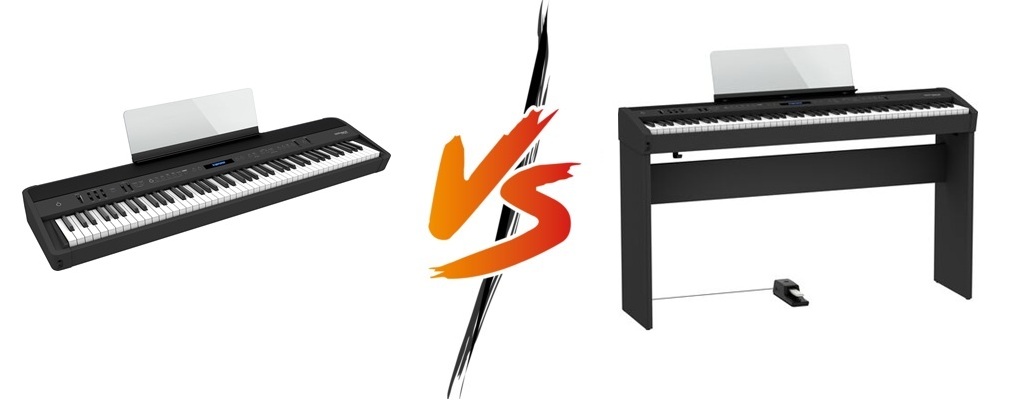
When Roland launched the FP-X series, it created one of the strongest portable digital piano lineups on the market. The FP-60X and FP-90X sit at the top of that range, and at first glance they look surprisingly similar. Both are portable 88-key digital pianos. Both offer Bluetooth connectivity, extensive sound customization, onboard speakers, and Roland’s excellent piano technology. Both can function equally well as home pianos or gigging instruments.
Yet once you spend time with them, you quickly realize these instruments are aimed at different buyers.
The FP-60X is Roland’s upper-midrange model, designed to deliver professional performance without the premium flagship price. The FP-90X is the company’s portable flagship, incorporating Roland’s best keyboard action, best sound engine, and most powerful speaker system.
The big question is whether the FP-90X is worth the substantial price increase.
After spending considerable time evaluating the specifications, listening to demonstrations, reading user experiences, and comparing Roland’s own design goals for both instruments, the answer is not as straightforward as you might think.
Roland FP-90X vs Roland FP-60X Comparison Chart
If you click the links below, under the product images, you will be redirected to Amazon.com. In case you then decide to buy anything, Amazon.com will pay me a commission. This doesn’t affect the honesty of this review in any way though.
| Specification | Roland FP-90X | Roland FP-60X |
|---|---|---|
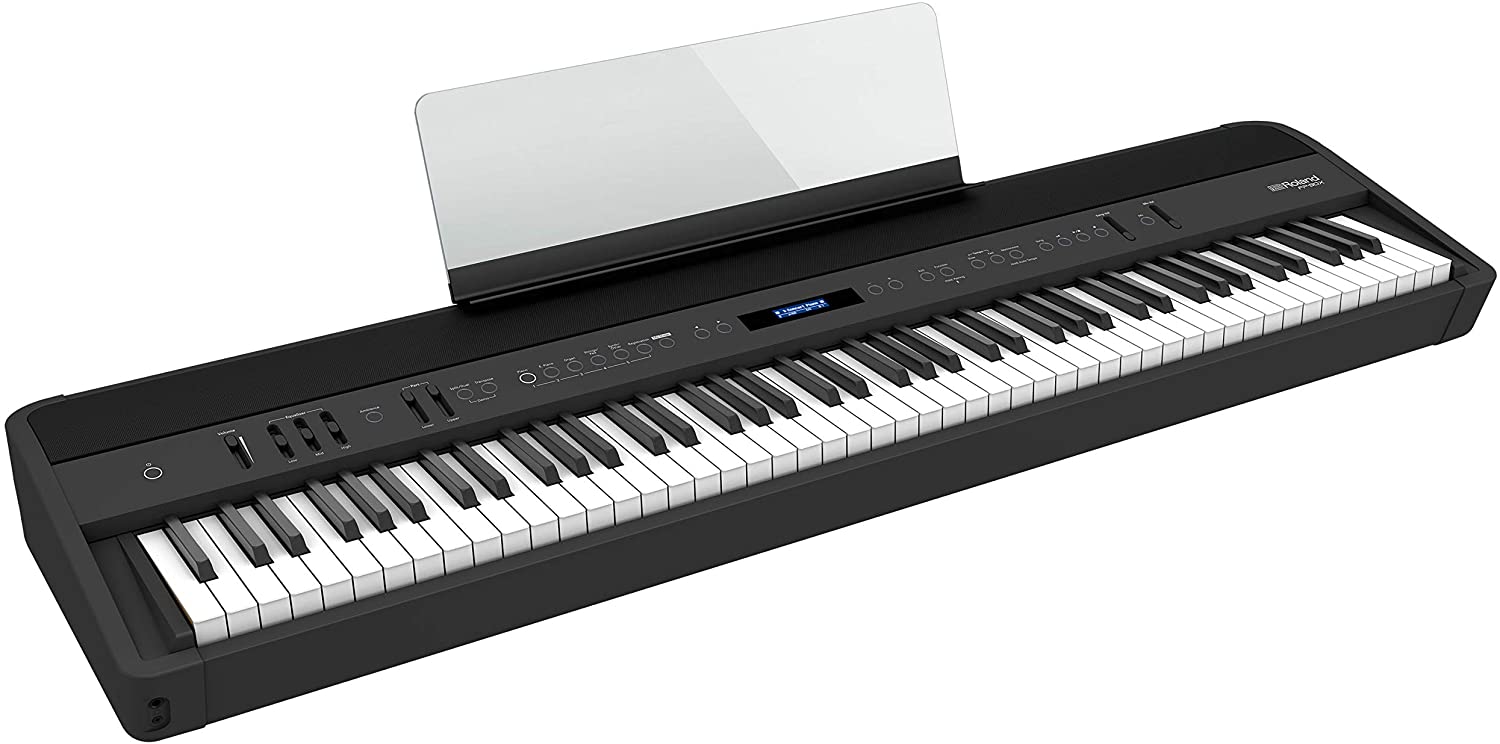 | 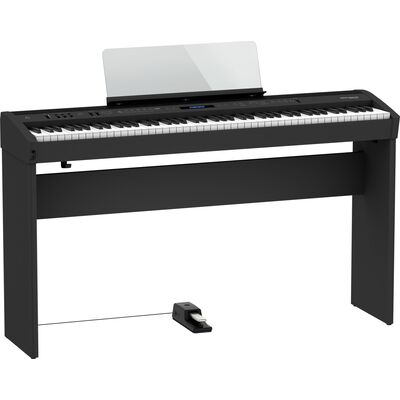 | |
| Check the best price on Amazon | Check the best price on Amazon | |
| Position in Lineup | Flagship FP-X Model | Upper Mid-Range FP-X Model |
| Keyboard | 88 Keys | 88 Keys |
| Keyboard Action | PHA-50 Hybrid Keyboard (Wood and Molded Materials) | PHA-4 Standard Keyboard |
| Escapement | Yes | Yes |
| Ivory Feel Keytops | Yes | Yes |
| Triple Sensor Detection | Yes | Yes |
| Sound Engine | PureAcoustic Piano Modeling + SuperNATURAL | SuperNATURAL Piano |
| Polyphony | Unlimited (Piano Tones), 256 Notes (Other Tones) | 256 Notes |
| Piano Sounds | PureAcoustic Piano Models | SuperNATURAL Piano Tones |
| Total Number of Tones | Over 350 | Over 350 |
| Speaker Configuration | 4 Speakers | 2 Speakers |
| Speaker Power | 60W Total (25W × 2 + 5W × 2) | 26W Total (13W × 2) |
| Headphones 3D Ambience | Yes | Yes |
| Bluetooth Audio | Yes | Yes |
| Bluetooth MIDI | Yes | Yes |
| USB Audio Interface | Yes | Yes |
| USB MIDI | Yes | Yes |
| Audio Recording | WAV and MP3 | WAV and MP3 |
| MIDI Recording | Yes | Yes |
| Microphone Input | Yes | Yes |
| Vocal Effects | Yes | Yes |
| Vocal Harmony | Yes | Yes |
| Registration Memory | Yes | Yes |
| Split Mode | Yes | Yes |
| Dual (Layer) Mode | Yes | Yes |
| Twin Piano Mode | Yes | Yes |
| Piano Designer Function | Advanced | Advanced |
| Ambience Effects | Yes | Yes |
| Equalizer | 3-Band EQ | 3-Band EQ |
| Display | Graphic LCD | Graphic LCD |
| Line Outputs | Stereo Output (L/Mono, R) | Stereo Output (L/Mono, R) |
| Headphone Outputs | 2 | 2 |
| USB Memory Port | Yes | Yes |
| Pedal Inputs | Damper, Pedal Unit Support | Damper, Pedal Unit Support |
| Optional Furniture Stand | KSC-90 | KSC-72 |
| Optional Three-Pedal Unit | KPD-90 | KPD-90 |
| Available Finishes | Black, White | Black, White |
| Weight | 23.6 kg (52 lbs) | 19.3 kg (42.5 lbs) |
| Width | 1,340 mm | 1,291 mm |
| Depth | 390 mm | 344 mm |
| Height | 136 mm | 126 mm |
| Best For | Advanced Pianists, Professionals, Recording, Home Use | Intermediate to Advanced Players, Gigging Musicians, Value Buyers |
| Main Strength | Superior Action, Sound Engine, and Speaker System | Excellent Value and Portability |
| Overall Performance | Premium / Flagship | Upper Mid-Range / Near-Flagship |
| My individual reviews | Roland FP-90X review | Roland FP-60X review |
*Pricing varies by country, retailer, finish, bundle options, and availability.
Key Advantages of the FP-90X
- Superior PHA-50 hybrid wood keyboard action
- PureAcoustic Piano Modeling engine
- More realistic piano tone and resonance
- Much more powerful four-speaker sound system
- Better dynamic expression and acoustic realism
- More immersive playing experience overall
Key Advantages of the FP-60X
- Lower purchase price
- Lighter and easier to transport
- Excellent PHA-4 Standard action
- Nearly identical connectivity options
- Strong feature set for live performance
- Outstanding value for money
Bottom Line
| Category | Winner |
|---|---|
| Keyboard Action | FP-90X |
| Piano Sound | FP-90X |
| Speaker System | FP-90X |
| Portability | FP-60X |
| Connectivity | Tie |
| Features | Tie |
| Value for Money | FP-60X |
| Overall Performance | FP-90X |
| Best Overall Value | FP-60X |
| Best Piano Experience | FP-90X |
Design & Build Quality
When comparing digital pianos, it’s easy to focus almost entirely on keyboard action, sound quality, and features. Those are certainly the areas that tend to generate the most discussion. However, design and build quality play a much bigger role in the ownership experience than many buyers initially realize. A digital piano is something you interact with every day. You touch the buttons, move it around the room, connect cables, adjust settings, and look at it sitting in your living space for years. A well-designed instrument can make practice more enjoyable, while a poorly designed one can become frustrating even if it sounds excellent.
The Roland FP-90X and Roland FP-60X share a great deal of DNA in terms of design philosophy. At first glance, they look remarkably similar. Both belong to Roland’s FP-X portable piano lineup and feature a modern, understated appearance that prioritizes functionality over flashy styling. They avoid the overly futuristic look that some manufacturers pursue, instead embracing a clean and professional aesthetic that feels equally appropriate in a living room, recording studio, music classroom, church, or on a concert stage.
That said, once you spend time with both instruments side by side, the differences become more apparent.
Overall Appearance
The FP-60X is an attractive instrument. Roland has done an excellent job creating a piano that looks more expensive than it actually is. The cabinet design is sleek, with smooth lines and a minimalist control layout that prevents the instrument from appearing cluttered. Unlike some digital pianos that overwhelm users with dozens of buttons scattered across the panel, the FP-60X strikes a good balance between accessibility and simplicity.
The FP-90X follows the same design language but elevates it in subtle ways. It has a more substantial presence. The cabinet appears slightly more refined, and the overall instrument carries a stronger sense of premium craftsmanship. It feels like Roland’s flagship portable piano from the moment you see it.
Neither piano is likely to become the centerpiece of your interior design, but both are attractive enough to fit comfortably into most home environments. If you install either instrument on Roland’s matching furniture stand, they can easily pass for semi-permanent home pianos rather than portable stage instruments.
One area where Roland deserves praise is restraint. Some manufacturers try to make their digital pianos look technologically advanced by adding excessive lighting, bright displays, or complicated control panels. Roland largely avoids these distractions. The result is a cleaner and more timeless design that will likely age well over the years.
Materials and Construction
The first thing many players notice when physically handling both instruments is that the FP-90X feels denser and more robust.
This isn’t simply a matter of weight. The entire instrument gives the impression of being engineered to a higher standard. The cabinet feels exceptionally solid, with very little flex or movement when lifting or repositioning the piano. The buttons, knobs, and controls feel durable and confidence-inspiring.
The FP-60X is also very well built. In fact, compared to many competitors in its price range, it feels exceptionally sturdy. There are no obvious weak points, creaks, or areas that feel cheaply constructed. The chassis feels capable of handling years of regular use, whether at home or on stage.
However, when placed next to the FP-90X, the difference becomes noticeable. The flagship model simply feels more substantial.
This is not unusual in premium product lines. Manufacturers often reserve slightly higher-grade materials, additional reinforcement, and more refined finishing details for their flagship models. Roland appears to have followed that approach here.
For buyers who prioritize long-term durability, both instruments inspire confidence. Roland has built a strong reputation for producing reliable digital pianos, and there is little reason to believe either model will struggle with normal use over many years.
Control Layout and Ergonomics
Good design is not just about appearance. It is also about usability.
One of the strengths of both the FP-60X and FP-90X is their logical control layout.
The controls are arranged in a way that makes sense even for first-time users. Essential functions are easy to access, and Roland avoids burying common adjustments deep within complicated menu systems. This becomes especially important for gigging musicians who may need to make quick changes during rehearsals or performances.
The FP-60X already offers a surprisingly professional interface. Dedicated controls for volume, sound selection, microphone functions, effects, and other features help streamline operation. Many users can perform most common tasks without ever opening the manual.
The FP-90X builds upon this foundation with a slightly more sophisticated interface and additional refinement. The overall experience feels a bit smoother and more polished. While the difference is not dramatic, it contributes to the premium impression of the instrument.
Importantly, neither piano feels intimidating. Roland has managed to include a large number of features without making either instrument difficult to navigate.
Portability Considerations
Although both pianos are classified as portable instruments, there is a meaningful difference between them when it comes to transportation.
The FP-60X is easier to move.
Its lower weight makes it more manageable for musicians who frequently transport their instruments between rehearsals, lessons, performances, and recording sessions. If you regularly load your piano into a vehicle, carry it up stairs, or move it between venues, every kilogram matters.
The FP-90X remains portable by digital piano standards, but it pushes closer toward the upper limit of what many musicians would consider comfortable for regular transport. The additional weight comes from its more advanced speaker system, more substantial cabinet construction, and premium internal components.
For home users, this difference may be largely irrelevant. Once the piano is placed in a room and connected, it may remain there for years.
For gigging musicians, however, the FP-60X’s lighter design becomes a genuine advantage.
In some ways, the FP-60X strikes a particularly attractive balance. It feels solid and professional without becoming burdensome to transport.
Stage Presence
For performing musicians, appearance can matter more than many people admit.
Neither audience members nor clients may consciously evaluate a performer’s instrument, but a professional-looking setup contributes to the overall impression of a performance.
Both pianos perform well in this regard.
The FP-60X looks professional on stage and avoids the toy-like appearance sometimes associated with entry-level digital pianos. It communicates seriousness and competence without drawing unnecessary attention.
The FP-90X goes a step further. It has a stronger visual presence and projects a premium image that aligns with its flagship status. Whether placed in a concert hall, church sanctuary, jazz club, or wedding venue, it looks entirely at home.
For solo pianists and performers whose instrument is highly visible to audiences, the FP-90X’s more substantial appearance may be appreciated.
Long-Term Ownership Experience
Perhaps the most important aspect of design and build quality is how the instrument feels after years of use.
This is where Roland’s attention to detail becomes particularly valuable.
Both pianos feel thoughtfully engineered. Nothing appears rushed or poorly considered. The controls are positioned logically, the cabinets feel durable, and the overall construction inspires confidence.
The FP-60X gives owners the sense that they purchased a serious musical instrument rather than a consumer electronic device.
The FP-90X takes that feeling even further. Everything about it feels slightly more refined, slightly more substantial, and slightly more premium.
These differences may seem minor during a brief demonstration in a music store. Over years of ownership, however, they become more meaningful. Small details such as the feel of controls, the solidity of the chassis, and the overall quality of construction contribute to the daily experience of using the instrument.
Final Thoughts on Design & Build Quality
The Roland FP-60X and FP-90X are both exceptionally well-designed digital pianos. Roland has clearly invested significant effort into creating instruments that are not only functional but also durable, attractive, and enjoyable to use.
The FP-60X stands out as one of the better-built instruments in its class. It feels professional, reliable, and thoughtfully designed while maintaining a level of portability that many musicians will appreciate.
The FP-90X, however, represents the more premium execution. Its superior materials, more substantial construction, enhanced presence, and flagship-level refinement give it a clear advantage in this category.
The gap is not enormous, and the FP-60X certainly never feels cheap. But if design quality, physical refinement, and overall construction are priorities, the FP-90X justifies its flagship status and earns the win.
Keyboard Action and Playing Feel
If there is one category that has the potential to make or break a digital piano purchase, it is keyboard action. Sound quality matters. Features matter. Speakers matter. But the keyboard is the part of the instrument you physically interact with every single time you sit down to play. It is the connection between the musician and the sound being produced. A great keyboard action encourages expression, supports proper technique, and makes practice enjoyable. A poor one can leave even an otherwise impressive instrument feeling uninspiring.
When comparing the Roland FP-90X and Roland FP-60X, keyboard action is arguably the most significant difference between the two models. In fact, for many pianists, this category alone may determine which instrument they ultimately choose.
The FP-60X features Roland’s respected PHA-4 Standard keyboard action, while the FP-90X is equipped with the more advanced PHA-50 hybrid action. Both are excellent by digital piano standards, but they target slightly different expectations and levels of performance.
The good news is that neither piano disappoints. The challenge is deciding whether the improvements offered by the FP-90X justify the considerable increase in price.
Understanding Roland’s Approach to Keyboard Action
Before discussing the individual actions, it helps to understand Roland’s philosophy.
Unlike acoustic pianos, digital pianos must simulate the physical behavior of hammers striking strings. The goal is not simply to create heavier keys in the bass and lighter keys in the treble. A truly convincing action must recreate the subtle mechanical nuances that pianists experience on an acoustic instrument.
This includes factors such as:
- Key resistance
- Key return speed
- Dynamic control
- Escapement feel
- Weight distribution
- Repetition performance
- Consistency across the keyboard
- Response to varying playing styles
Roland has long been regarded as one of the stronger manufacturers in this area. While players may debate the merits of different brands, Roland’s actions are generally respected for their durability, consistency, and realistic feel.
Both the FP-60X and FP-90X benefit from years of refinement in this department.
The PHA-4 Standard Action in the FP-60X
Let’s start with the FP-60X.
The PHA-4 Standard action has become one of Roland’s most widely used keyboard mechanisms. It appears in several highly regarded instruments and has earned a reputation for delivering impressive realism at a relatively accessible price point.
The first thing most players notice is the action’s balanced feel.
The keys offer enough resistance to feel substantial, but not so much that they become tiring during extended practice sessions. The weighting progresses naturally from the lower register to the upper register, mimicking the behavior of an acoustic piano. Bass notes feel appropriately heavier, while higher notes become gradually lighter.
This contributes significantly to the realism of the playing experience.
The action also incorporates escapement simulation, which recreates the subtle notch sensation experienced on many grand pianos when keys are pressed slowly. While not every pianist actively notices escapement during normal playing, its presence helps create a more authentic feel.
The synthetic ivory-textured key surfaces are another welcome feature. They provide a slightly textured grip that feels more natural than glossy plastic keys. During long practice sessions, especially under warm conditions or stage lighting, this can improve comfort and control.
One of the PHA-4’s strongest qualities is consistency.
Whether you’re playing scales, fast passages, chord progressions, or intricate classical repertoire, the action responds predictably. There are no obvious weak points, uneven sections, or distracting mechanical characteristics.
For beginner and intermediate pianists, the PHA-4 Standard already feels remarkably close to what many people expect from a high-quality acoustic instrument.
Even many advanced players would be perfectly comfortable practicing and performing on it.
Playing Fast Passages on the FP-60X
A keyboard action reveals a lot about itself during demanding musical passages.
Fast repetitions, trills, and rapid note sequences can expose weaknesses that may not be obvious during slower playing.
Fortunately, the FP-60X performs well in these situations.
The triple-sensor design helps ensure accurate note detection even when keys are not allowed to return fully to their resting position. This improves responsiveness and makes advanced techniques easier to execute.
Whether playing classical works from Chopin, Beethoven, or Liszt, or navigating complex jazz lines, the action generally keeps up with the player without issue.
The PHA-4 never feels sluggish or unresponsive.
That alone places it ahead of many lower-tier digital piano actions.
Enter the PHA-50 Action
The FP-90X takes things to another level.
Roland reserves the PHA-50 action for some of its most prestigious instruments, and it immediately becomes clear why.
While the PHA-4 Standard is excellent, the PHA-50 feels more sophisticated from the moment your fingers touch the keys.
The biggest difference is not necessarily weight. In fact, many first-time users struggle to identify exactly what has changed. The improvement is more subtle than dramatic.
The action simply feels more natural.
Everything about the movement of the keys appears more refined. The balance feels smoother. The transition between dynamic levels feels more nuanced. The connection between finger movement and sound production becomes more convincing.
Instead of feeling like a very good digital piano, the FP-90X begins to approach the experience of playing a high-quality acoustic instrument.
Hybrid Key Construction
One of the defining characteristics of the PHA-50 is its hybrid key design.
Rather than relying entirely on plastic construction, Roland combines wood and molded materials to create a more realistic key structure.
This approach offers several advantages.
The wooden components contribute to a more authentic tactile experience, while the synthetic materials help maintain durability and consistency over time. Traditional all-wood actions can sometimes be more vulnerable to environmental factors such as humidity and temperature fluctuations. Roland’s hybrid design seeks to capture the best aspects of both approaches.
The result is a keyboard that feels premium without sacrificing reliability.
When moving between the FP-60X and FP-90X, many pianists immediately notice the increased sense of substance beneath their fingers.
The keys feel slightly more substantial and more closely resemble those found on an acoustic grand piano.
Dynamic Control and Expression
This is where the FP-90X truly begins to separate itself.
A great piano action is not simply about realism. It is about expression.
The better an action responds to subtle differences in touch, the more expressive the instrument becomes.
With the PHA-50, it is easier to control very soft passages. Pianissimo playing feels more predictable and nuanced. Delicate phrasing becomes easier to shape.
At the opposite end of the spectrum, aggressive fortissimo passages feel powerful without becoming harsh or difficult to control.
The action provides a wider range of expressive possibilities.
This becomes particularly valuable for:
- Classical pianists
- Advanced jazz players
- Solo performers
- Recording musicians
- Serious students preparing for examinations
The more advanced your playing becomes, the more likely you are to appreciate these refinements.
Acoustic Piano Comparison
No digital piano action perfectly replicates a concert grand piano.
That remains true even at the highest price levels.
However, some actions come closer than others.
The FP-60X provides a highly convincing approximation of an acoustic piano experience. Most players transitioning from acoustic instruments will adapt quickly and comfortably.
The FP-90X narrows the gap further.
The longer key pivot, enhanced balance, hybrid construction, and improved responsiveness combine to create an experience that feels more organic and less mechanical.
During extended playing sessions, this difference becomes increasingly apparent.
The FP-90X simply feels more connected to the player’s intentions.
There is less sense of interacting with a machine and more sense of interacting with a musical instrument.
That distinction may sound abstract, but experienced pianists often understand exactly what it means after only a few minutes at the keyboard.
Practice Experience
An often-overlooked aspect of keyboard action is how it affects daily practice.
A realistic action encourages proper technique development.
Students benefit from learning on keyboards that accurately reflect acoustic piano behavior. Finger strength, dynamic control, articulation, and touch all develop more naturally when the action behaves realistically.
The FP-60X already performs extremely well in this regard. It is more than capable of supporting serious piano study.
The FP-90X simply provides an even better training environment.
Because it more closely approximates an acoustic piano, skills developed on the instrument transfer slightly more naturally to acoustic grands and uprights.
This can be particularly important for advanced students who regularly perform on acoustic instruments outside the home.
Is the Difference Worth the Price?
This is the question most buyers ultimately ask.
There is no doubt that the PHA-50 is superior.
The challenge lies in determining how much that superiority matters to your specific situation.
For beginners, casual hobbyists, and many intermediate players, the PHA-4 Standard may already exceed their needs. It is responsive, realistic, reliable, and enjoyable to play.
For these players, the FP-60X represents excellent value.
For advanced pianists, however, the calculation changes.
Once your technique reaches a certain level, subtle improvements become increasingly meaningful. The greater control, realism, and expressiveness of the PHA-50 begin to justify the additional investment.
Many FP-90X owners cite the keyboard action as the primary reason they chose the flagship model, and after spending time with both instruments, it is easy to understand why.
Final Thoughts on Keyboard Action and Playing Feel
The FP-60X and FP-90X both offer some of the strongest keyboard actions available in portable digital pianos.
The FP-60X’s PHA-4 Standard action is responsive, realistic, durable, and highly enjoyable to play. It comfortably exceeds the expectations of most players and remains one of the best actions available in its price category.
The FP-90X’s PHA-50 action, however, operates at a higher level. Its hybrid construction, enhanced realism, superior dynamic control, and greater expressive potential create a noticeably more refined playing experience.
The FP-60X provides an excellent keyboard.
The FP-90X provides a keyboard that many pianists fall in love with.
For players who prioritize touch above all else, this may be the single most important reason to choose the flagship model. In the end, while both instruments perform exceptionally well, the FP-90X earns a clear victory in the category of keyboard action and playing feel.
Piano Sound Quality
For many buyers, piano sound quality is the category that receives the most attention when comparing digital pianos. After all, regardless of how realistic the keyboard action feels or how impressive the feature set may be, the primary purpose of a digital piano is to reproduce the experience of playing an acoustic piano as convincingly as possible. If the sound fails to inspire, the rest of the instrument’s strengths become far less meaningful.
When comparing the Roland FP-90X and Roland FP-60X, piano sound quality represents one of the most important distinctions between the two models. Both instruments sound excellent. In fact, both rank among the better-sounding portable digital pianos in their respective price ranges. However, the FP-90X benefits from Roland’s most advanced piano technology and ultimately delivers a more sophisticated and realistic experience.
The interesting part is that the difference between them is not always immediately obvious.
A beginner playing simple scales might hear little distinction. An experienced pianist performing expressive classical repertoire through quality headphones may notice substantial differences within minutes. Understanding where these differences come from is key to deciding whether the FP-90X’s premium price is justified.
Roland’s Piano Sound Philosophy
Before comparing the two instruments directly, it helps to understand Roland’s overall approach to digital piano sound.
Unlike some manufacturers that focus heavily on large piano samples captured from specific acoustic instruments, Roland has spent many years developing a combination of advanced sampling and modeling technologies. The company’s goal has generally been to create instruments that respond dynamically to the player’s touch rather than simply replaying recorded sounds.
This philosophy places a strong emphasis on interaction.
When you play an acoustic piano, the sound is influenced by countless variables. The velocity of each note, the resonance of surrounding strings, the sustain pedal position, sympathetic vibrations, cabinet resonance, and countless other factors contribute to the final result.
Roland attempts to recreate these interactions digitally.
Both the FP-60X and FP-90X benefit from this philosophy, but the FP-90X pushes the concept considerably further.
The FP-60X and the SuperNATURAL Piano Engine
The FP-60X utilizes Roland’s SuperNATURAL Piano technology.
Although newer technologies have since emerged, SuperNATURAL remains one of the most respected digital piano sound engines available. For many years it served as the foundation of Roland’s premium instruments and helped establish the company’s reputation among serious pianists.
The most immediately noticeable characteristic of the FP-60X is its smooth dynamic response.
On some digital pianos, changes in playing intensity can feel somewhat artificial. You may hear obvious transitions between sampled velocity layers or notice abrupt changes in tone as you play louder or softer. SuperNATURAL was specifically designed to address this issue.
As a result, the FP-60X produces a sound that changes naturally as your touch changes.
Play softly and the tone becomes warm, intimate, and delicate.
Play aggressively and the sound opens up with greater brightness and projection.
The transitions feel smooth and convincing.
This contributes significantly to the realism of the instrument and helps players feel more connected to the music they are creating.
Tonal Character of the FP-60X
The FP-60X possesses a distinctly Roland character.
The piano sound is clear, balanced, and modern. It tends to emphasize clarity and articulation rather than excessive warmth or coloration.
This makes the instrument highly versatile.
Classical repertoire sounds refined and controlled. Jazz performances benefit from excellent note definition. Pop and contemporary music sit comfortably within a mix without becoming muddy or overly resonant.
The bass register is full without being overpowering.
The middle register remains clear and expressive.
The upper register is bright enough to cut through without becoming harsh.
One of the strengths of the FP-60X is that it rarely sounds exaggerated. Some digital pianos attempt to impress buyers during brief showroom demonstrations by emphasizing dramatic bass frequencies or extremely bright treble response. While these characteristics can initially sound impressive, they may become fatiguing over time.
The FP-60X takes a more balanced approach.
The result is a sound that remains enjoyable over long practice sessions and adapts well to a wide variety of musical styles.
Enter PureAcoustic Modeling
The FP-90X introduces one of its most significant upgrades: Roland’s PureAcoustic Piano Modeling technology.
This represents a substantial step forward from traditional sample-based sound generation.
Rather than relying primarily on recordings of individual piano notes, PureAcoustic Modeling simulates the behavior of an acoustic piano in real time. Various elements of the instrument’s response are calculated dynamically as you play.
This may sound like a technical distinction, but its musical impact can be surprisingly meaningful.
The piano feels less like a collection of recorded sounds and more like a living instrument responding to your touch.
Every note interacts with surrounding notes more naturally.
Resonance behaves more realistically.
Sustained harmonies develop with greater complexity.
The decay of notes feels smoother and more organic.
These improvements may not immediately jump out during casual testing in a noisy music store. However, during extended playing sessions, especially with headphones or quality speakers, the increased realism becomes increasingly apparent.
Greater Complexity and Detail
One of the defining advantages of the FP-90X is the amount of detail present in its piano tone.
Acoustic pianos are incredibly complex instruments.
A single note does not simply appear and disappear. It evolves continuously from the moment the hammer strikes the string until the sound fades completely. During that process, countless resonances and interactions occur.
The FP-90X captures more of this complexity.
When playing simple melodies, the difference may seem subtle.
When performing advanced repertoire involving layered harmonies, sustained pedal passages, or expressive dynamic contrasts, the advantage becomes easier to appreciate.
Chords feel richer.
Sustains feel more natural.
Individual notes seem to breathe more freely within the overall sound.
Many pianists describe the FP-90X as sounding more open and less constrained than the FP-60X.
That description is difficult to quantify but surprisingly accurate.
Dynamic Expression
A great piano sound is not simply about tone. It is also about responsiveness.
The FP-90X excels in this area.
Because the modeling engine responds continuously to changes in touch, it offers a broader range of expressive possibilities.
Very soft playing feels more nuanced.
Moderate dynamics contain greater tonal variation.
Powerful passages develop naturally without sounding compressed or artificial.
The instrument rewards careful control.
This becomes particularly valuable for advanced pianists who rely heavily on subtle dynamic shaping to communicate musical ideas.
The FP-60X remains highly expressive and responsive, but the FP-90X provides an additional layer of refinement that experienced players often notice and appreciate.
Resonance and Pedaling
Pedal behavior is one of the areas where digital pianos often reveal their limitations.
On an acoustic piano, pressing the sustain pedal creates a complex network of sympathetic vibrations and resonances. Strings influence one another, harmonics interact, and the entire instrument begins to resonate as a unified system.
The FP-60X recreates these effects quite effectively.
The sustain pedal produces convincing resonance, and pedaled passages sound rich and musical.
However, the FP-90X pushes this realism further.
The resonance feels deeper and more intricate.
Sustained harmonies develop more naturally.
Complex chord progressions retain clarity while still producing the richness expected from an acoustic piano.
For classical pianists in particular, this improvement can significantly enhance the playing experience.
Pieces that rely heavily on pedal technique often feel more authentic on the FP-90X.
Headphone Performance
Many digital piano owners spend a significant portion of their playing time using headphones.
This is especially true for apartment dwellers, students, and musicians practicing during late hours.
Both instruments perform exceptionally well in this environment.
Roland’s headphone implementation is among the best in the industry, and both pianos benefit from advanced spatial processing designed to create a more immersive listening experience.
The FP-60X sounds detailed, spacious, and satisfying through quality headphones.
The FP-90X sounds even more realistic.
Without room acoustics influencing the experience, the advantages of the modeling engine become easier to hear. Subtle resonances, tonal complexity, and dynamic interactions emerge with greater clarity.
For players who primarily practice with headphones, the gap between the two instruments may actually become more noticeable.
Recording Applications
For recording musicians, piano sound quality takes on additional importance.
Modern digital pianos are frequently used in home studios for composition, production, and performance recording.
The FP-60X performs very well in these situations.
Its sound is clean, professional, and mix-friendly.
Many musicians could produce excellent recordings using the instrument without any concerns.
The FP-90X, however, offers a more premium recording experience.
Its additional tonal complexity and realism translate well into solo piano recordings where every nuance is exposed.
When listening back through studio monitors or headphones, the sound retains a level of depth and authenticity that many serious pianists appreciate.
For dedicated recording artists, this may be one of the strongest arguments in favor of the flagship model.
Can Casual Players Hear the Difference?
This is an important question because not every buyer approaches digital pianos with the same level of experience.
The honest answer is that casual players may not immediately notice a dramatic difference between the FP-60X and FP-90X.
Both instruments sound excellent.
Both provide professional-level piano tones.
Both are capable of delivering highly satisfying musical experiences.
The FP-90X does not suddenly make the FP-60X sound poor.
Instead, it offers refinements that become increasingly meaningful as a player’s experience, technique, and listening skills develop.
Many beginners would be thrilled with the sound quality of either instrument.
Advanced pianists are far more likely to appreciate the additional realism provided by the FP-90X.
Final Thoughts on Piano Sound Quality
The Roland FP-60X delivers outstanding piano sound quality. Its SuperNATURAL Piano engine remains highly competitive, producing expressive, balanced, and musically satisfying tones that outperform many instruments in its price category. For the vast majority of players, it offers more than enough realism to support years of practice, performance, and enjoyment.
The FP-90X, however, represents the next level.
Its PureAcoustic Piano Modeling technology introduces greater realism, richer resonance, smoother dynamic transitions, and a more organic overall response. The instrument feels less like a digital recreation and more like an actual acoustic piano reacting to the player’s touch.
The difference is not night and day, but it is real.
The FP-60X sounds excellent.
The FP-90X sounds exceptional.
For players seeking the most realistic piano experience Roland can offer in a portable instrument, the FP-90X earns a clear victory in the category of piano sound quality.
Speaker System
The speaker system is one of the most overlooked aspects of a digital piano purchase. Many buyers spend hours comparing keyboard actions, piano samples, and feature lists, yet give relatively little attention to the speakers themselves. That is understandable to a degree. After all, the sound engine often receives most of the marketing attention, and many people assume that if two instruments share similar piano technology, they will sound roughly the same.
In reality, the speaker system can dramatically influence how a digital piano feels to play.
A great sound engine paired with mediocre speakers can leave an instrument sounding flat, constrained, and uninspiring. Conversely, a well-designed speaker system can bring a piano to life, creating a richer and more immersive playing experience. The speakers are ultimately responsible for delivering the sound to your ears, and no matter how sophisticated the internal technology may be, the quality of that final stage matters enormously.
This is one of the areas where the Roland FP-90X establishes a clear advantage over the FP-60X.
Both instruments offer built-in speaker systems that are among the best available in portable digital pianos. Neither model leaves the player feeling shortchanged. However, the FP-90X’s more powerful and sophisticated speaker design creates a noticeably larger, fuller, and more realistic sound.
For some buyers, this difference alone may justify the upgrade.
Why Built-In Speakers Matter
Before diving into the specific differences between these two pianos, it is worth discussing why speakers matter so much in the first place.
When playing an acoustic piano, sound does not come from a single point. It radiates throughout the instrument. Strings vibrate, the soundboard resonates, and the entire cabinet contributes to the projection of sound into the room.
This creates a physical experience as much as an auditory one.
You do not simply hear the piano.
You feel it.
The sound surrounds you, fills the space, and interacts with the room itself.
Digital pianos face the challenge of recreating this experience using speakers built into a relatively compact cabinet.
Some instruments succeed better than others.
The best digital piano speaker systems create the illusion that the sound originates from a larger and more complex source than is actually present. They help bridge the gap between digital and acoustic instruments.
This is precisely what Roland attempts to accomplish with both the FP-60X and FP-90X.
The FP-60X Speaker System
The FP-60X features a stereo speaker system delivering approximately 26 watts of total power.
On paper, that specification may not sound particularly impressive compared to larger home digital pianos or dedicated amplification systems. However, wattage figures alone rarely tell the entire story.
Roland has long been known for effective speaker tuning, and the FP-60X benefits greatly from this expertise.
The instrument produces a surprisingly robust sound considering its relatively compact design.
Immediately upon playing, most users will notice that the piano sounds larger than expected. The bass register possesses satisfying weight, the midrange remains clear and focused, and the treble cuts through without sounding overly sharp.
For home practice, lessons, and casual performances, the FP-60X provides more than enough volume.
In fact, many buyers are initially surprised by how powerful it sounds.
The speakers project effectively throughout medium-sized rooms, and the overall presentation feels balanced and musical.
There is no sense that Roland simply installed inexpensive speakers to meet a specification requirement. The system feels thoughtfully integrated into the instrument.
Tonal Balance and Clarity
One of the strongest aspects of the FP-60X’s speaker system is its tonal balance.
Some digital pianos struggle with overly boomy bass frequencies or excessively bright treble response. These issues can make the instrument sound impressive during a brief showroom demonstration but become tiring during longer practice sessions.
The FP-60X avoids these problems.
The bass remains controlled rather than overwhelming.
The middle register, where much of the musical content resides, stays articulate and expressive.
The upper register maintains clarity without becoming harsh.
This balanced presentation allows the underlying piano sounds to shine through naturally.
Whether playing classical repertoire, jazz standards, pop ballads, or contemporary worship music, the speakers remain composed and musical.
Many players could happily use the FP-60X for years without ever feeling the need for external amplification.
Room-Filling Capability
Another area where the FP-60X performs well is room coverage.
For a portable digital piano, it projects sound surprisingly effectively.
Small practice rooms pose no challenge whatsoever.
Medium-sized living rooms are handled comfortably.
Lessons, rehearsals, and informal performances can often be accommodated without external speakers.
Of course, there are limitations.
As room size increases, the FP-60X eventually reaches the limits of its available power. The sound remains clear, but the sense of physical presence begins to diminish.
This is not a flaw so much as a reality of speaker design.
Portable instruments simply have finite space available for amplification systems.
Even so, the FP-60X remains one of the stronger performers in its category.
The FP-90X Speaker System
The FP-90X approaches the challenge from a different angle.
Rather than simply improving the existing design, Roland significantly expands the speaker system.
The FP-90X features a four-speaker configuration delivering approximately 60 watts of power.
The difference is immediately noticeable.
This is not one of those upgrades that requires careful listening or direct side-by-side comparison to appreciate.
Most players recognize the improvement within moments.
The FP-90X sounds larger.
The piano feels larger.
The entire instrument seems to occupy more physical space.
It creates a stronger illusion of sitting in front of an acoustic piano rather than a portable digital instrument.
A More Immersive Experience
One of the most impressive aspects of the FP-90X speaker system is its ability to create immersion.
The sound extends beyond the physical boundaries of the instrument.
Instead of feeling like audio is emerging from two small speaker openings, the piano appears to project naturally into the room.
This contributes significantly to playing enjoyment.
When performing expressive music, the sound feels more engaging and emotionally satisfying.
The increased power allows notes to breathe more freely.
Sustained harmonies linger with greater authority.
Large chord progressions feel more impactful.
Delicate passages retain clarity even at low volumes.
Everything simply feels more effortless.
The speakers rarely sound strained or pushed beyond their comfort zone.
Bass Response
Bass reproduction is one of the most challenging aspects of digital piano speaker design.
Acoustic pianos generate substantial low-frequency energy, particularly in the lower octaves.
Many portable digital pianos struggle to recreate this convincingly.
The FP-60X performs admirably in this regard, but the FP-90X clearly goes further.
The lower register carries more weight and authority.
Bass notes feel more substantial.
Large left-hand accompaniments develop greater presence.
The sound remains controlled and musical, but there is an added sense of depth that helps anchor the overall piano tone.
This becomes particularly noticeable in classical repertoire, jazz piano, and cinematic music where the lower register plays a significant role.
The FP-90X simply sounds more complete.
Midrange Richness
The midrange is arguably the most important part of the piano spectrum.
It contains the majority of melodic content and contributes heavily to the instrument’s character.
The FP-90X excels here.
The additional speakers and increased power allow the midrange to develop greater richness and complexity.
Melodies sing more naturally.
Inner voices become easier to distinguish.
Chord voicings retain clarity even during dense passages.
The result is a more realistic and engaging musical experience.
The FP-60X already performs very well in this area, but the FP-90X offers a level of refinement that becomes increasingly noticeable during extended playing sessions.
Stereo Imaging and Soundstage
Another major advantage of the FP-90X lies in its stereo presentation.
Acoustic pianos produce sound across a wide physical area.
The lowest strings originate from one side of the instrument, while higher strings occupy another.
This creates a naturally spacious listening experience.
The FP-90X does a better job recreating this sensation.
Its wider and more sophisticated speaker arrangement produces a broader soundstage.
The stereo image feels larger and more convincing.
Notes seem to occupy distinct positions within the sound field rather than emerging from a single central point.
This may sound like a subtle improvement, but it contributes significantly to the realism of the instrument.
The FP-60X offers respectable stereo imaging.
The FP-90X creates a genuinely immersive listening environment.
Playing at Low Volumes
Interestingly, the FP-90X’s advantages are not limited to high-volume performance.
In fact, some of its strengths become particularly apparent at lower volume levels.
Many digital pianos lose tonal richness when played quietly.
Bass frequencies become less noticeable, and the overall sound can feel somewhat thin.
The FP-90X maintains its character remarkably well even at modest listening levels.
The sound remains full and balanced.
Detail remains intact.
The piano continues to feel substantial despite reduced volume.
For home users who frequently practice in shared living spaces, this can be a meaningful advantage.
Live Performance Considerations
Although both instruments offer professional audio outputs for connection to external amplification systems, many musicians occasionally rely on built-in speakers during rehearsals, small performances, or informal events.
In these situations, the FP-90X’s additional power becomes extremely useful.
The instrument can comfortably fill larger spaces without assistance.
The FP-60X remains capable, but the FP-90X inspires greater confidence when external amplification is unavailable.
That said, many gigging musicians still prefer the FP-60X because of its lower weight and easier transport.
The speaker advantage alone may not outweigh those practical considerations.
Final Thoughts on the Speaker System
The Roland FP-60X possesses one of the strongest built-in speaker systems available in its price range. It delivers impressive volume, excellent tonal balance, and a satisfying level of realism that will exceed the expectations of many players. For home practice, teaching, rehearsals, and casual performances, it performs admirably and rarely feels lacking.
The FP-90X, however, operates on a different level.
Its four-speaker, 60-watt system creates a larger, richer, and more immersive sound. The bass is deeper, the midrange is more expressive, the stereo imaging is wider, and the overall presentation feels significantly closer to that of an acoustic piano.
The FP-60X sounds very good.
The FP-90X sounds genuinely impressive.
For players who intend to rely heavily on built-in speakers and want the most realistic and room-filling experience possible, the FP-90X earns a decisive victory in the speaker system category.
User Interface and Controls
When people shop for a digital piano, user interface design is rarely at the top of their priority list. Most buyers focus on keyboard action, piano sound, speaker quality, and price. Those categories are certainly important, but after living with an instrument for months or years, the quality of the user interface can have a surprisingly large impact on the ownership experience.
A digital piano is more than a keyboard and a sound engine. It is also a piece of technology that must allow users to navigate sounds, adjust settings, save preferences, connect external devices, and access various performance features. If the interface is poorly designed, even an excellent instrument can become frustrating to use. Conversely, a well-designed control system can make an instrument feel intuitive, efficient, and enjoyable every time you sit down to play.
The Roland FP-60X and FP-90X both perform well in this area. Roland has spent years refining its approach to digital piano interfaces, and it shows. Both instruments offer considerably better usability than many competing models, particularly when compared to digital pianos that hide important functions behind complex button combinations or deep menu structures.
Interestingly, the gap between the FP-60X and FP-90X is smaller in this category than it is in areas such as keyboard action or speaker performance. The flagship model offers certain refinements, but the FP-60X already delivers a highly capable and professional user experience.
For many buyers, that is one of the most appealing aspects of the FP-60X.
Roland’s Philosophy on User Experience
One thing that becomes apparent when using both instruments is that Roland values practical functionality.
Some manufacturers design interfaces that prioritize simplicity above all else. While this can create a clean appearance, it often comes at the expense of accessibility. Common features become buried inside menus, and users are forced to memorize button combinations simply to perform routine tasks.
Other manufacturers take the opposite approach, covering the control panel with dozens of buttons and switches. This may improve direct access to functions, but it can also create an intimidating and cluttered experience.
Roland generally seeks a middle ground.
The company aims to provide enough physical controls to make important functions easily accessible while avoiding unnecessary visual complexity.
Both the FP-60X and FP-90X reflect this philosophy remarkably well.
First Impressions
The first thing most users notice is how approachable both instruments feel.
Neither piano presents an overwhelming control panel.
The layout is clean, organized, and logically structured.
Essential controls are positioned where users expect to find them, and there is a clear separation between different categories of functions. Sound selection, volume adjustment, recording features, effects, and performance settings are grouped in a way that feels intuitive.
This is particularly important for beginners and intermediate players.
Many musicians are interested primarily in playing rather than spending time learning complicated operating systems. A straightforward interface allows users to focus on making music rather than managing technology.
The FP-60X deserves special praise in this regard because it manages to provide access to a substantial number of features without feeling complicated.
Display Quality
Both instruments include onboard displays that help simplify navigation and parameter adjustment.
The display may not seem like a major feature on paper, but it plays an important role in day-to-day usability.
A good display reduces guesswork.
It provides clear feedback when changing sounds, adjusting settings, or saving registrations. Instead of relying entirely on button combinations and memorized procedures, users can visually confirm their actions.
The FP-60X features a functional and easy-to-read display that integrates well into the overall control panel design.
Information is presented clearly, and most adjustments can be made quickly without consulting the manual.
The FP-90X offers a slightly more refined experience. Navigation feels smoother, and the overall interaction between controls and display appears more polished.
The difference is not dramatic, but it contributes to the flagship model’s premium feel.
Importantly, neither instrument forces users to spend excessive time navigating menus. Both displays support the overall goal of efficient operation.
Physical Controls
One area where both pianos excel is the inclusion of dedicated physical controls.
Many digital pianos require users to access menus for even basic adjustments. Roland avoids this wherever possible.
Volume controls are immediately accessible.
Sound selection is straightforward.
Common performance functions can be reached quickly without interrupting practice or performance.
This becomes particularly valuable in live situations.
Imagine performing on stage and needing to adjust a sound, modify an effect, or change a registration. The last thing any musician wants is to navigate multiple menu levels while an audience waits.
Both the FP-60X and FP-90X make these tasks relatively painless.
The buttons themselves feel solid and responsive. They provide enough tactile feedback to inspire confidence without requiring excessive force.
The overall quality of the controls aligns well with the premium nature of both instruments.
Sound Selection and Navigation
Modern digital pianos often include hundreds of sounds.
While this variety can be useful, it also creates a potential usability challenge.
An instrument may offer a vast sound library, but if accessing those sounds becomes cumbersome, the feature loses much of its value.
Fortunately, Roland handles sound selection effectively.
The primary piano sounds are easy to access, which is appropriate given that most users spend the majority of their time using acoustic piano voices.
Additional sounds such as electric pianos, organs, strings, pads, and synth textures are organized logically.
Moving between sounds feels fast and efficient.
This encourages experimentation and allows musicians to explore the instrument’s capabilities without frustration.
The FP-90X and FP-60X perform similarly here, with neither model holding a significant advantage.
Registration Memory and Performance Workflow
One of the most useful features on both instruments is the registration system.
Registrations allow users to save complete instrument setups and recall them instantly.
This can include:
- Sound selections
- Layers
- Splits
- Effects
- Volume balances
- Various performance settings
For live performers, registrations can be invaluable.
Instead of manually adjusting multiple parameters between songs, musicians can switch configurations with a single action.
The implementation is straightforward and user-friendly on both models.
This is another example of Roland understanding the practical needs of musicians.
The feature is powerful enough for professional use while remaining accessible to less experienced players.
Split and Layer Controls
Many digital piano owners enjoy using layered sounds or keyboard splits.
For example, a player might combine piano and strings for a cinematic texture or assign bass sounds to the left hand while using piano in the right hand.
Some instruments make these features unnecessarily complicated.
Roland does not.
Both the FP-60X and FP-90X provide relatively straightforward access to split and layer functionality.
The process feels intuitive, and adjustments can be made quickly.
This encourages creative exploration and expands the musical possibilities available to the player.
The ability to experiment freely without fighting the interface is one of the strengths of both instruments.
Microphone Controls
An area where the FP-60X particularly stands out is its attention to performers who sing while playing.
The instrument includes microphone connectivity and related controls that are integrated thoughtfully into the interface.
Rather than treating microphone functions as an afterthought, Roland makes them accessible and practical.
This can be especially valuable for:
- Solo performers
- Worship musicians
- Entertainers
- Singer-songwriters
The FP-90X offers similar capabilities, maintaining the professional focus found throughout the lineup.
For musicians who regularly combine vocals with piano performance, these features add significant value.
Learning Curve
One of the best compliments that can be given to a user interface is that it disappears.
After a short period of use, the musician should stop thinking about the controls and focus entirely on making music.
Both the FP-60X and FP-90X achieve this goal remarkably well.
The initial learning curve is relatively gentle.
New users can become comfortable with the core functions quickly.
As familiarity grows, deeper features become easier to access and understand.
The interface supports both casual use and advanced exploration without overwhelming either group.
This flexibility is not easy to achieve, yet Roland manages it successfully.
Companion Apps and Modern Integration
The onboard controls are only part of the story.
Both pianos also benefit from Roland’s broader ecosystem of software integration.
Bluetooth connectivity allows communication with compatible mobile devices and applications.
This opens the door to additional control options, expanded customization, and learning tools.
For some users, particularly younger musicians accustomed to touchscreen interfaces, app-based control may feel more natural than traditional button-driven navigation.
The ability to combine physical controls with wireless software integration enhances the overall user experience and helps future-proof the instruments.
Day-to-Day Ownership Experience
Perhaps the most important measure of any interface is how it performs over time.
Many instruments seem intuitive during a brief store demonstration but reveal frustrations after months of regular use.
The FP-60X and FP-90X generally avoid this problem.
Common tasks remain easy.
Controls remain accessible.
The interface continues to support rather than hinder the musical process.
This consistency contributes significantly to long-term satisfaction.
Owners are less likely to feel limited by the instrument and more likely to take advantage of its full range of capabilities.
That is ultimately the mark of successful design.
Final Thoughts on User Interface and Controls
The Roland FP-60X and FP-90X both offer excellent user interfaces that balance functionality, accessibility, and professional capability. Roland has clearly invested considerable effort into making these instruments easy to operate while still providing access to a wide range of advanced features.
The FP-60X is particularly impressive because it delivers a highly professional workflow at a significantly lower price point. Its controls are intuitive, its display is clear, and its overall design supports efficient operation in both home and performance environments.
The FP-90X refines the experience further with a slightly more polished and premium implementation. Navigation feels a bit smoother, the overall presentation is more sophisticated, and the flagship status is reflected in subtle but noticeable usability improvements.
However, unlike categories such as keyboard action, sound quality, or speaker performance, the FP-90X does not establish a decisive advantage here.
The FP-60X already gets so much right that the practical difference between the two instruments is relatively small.
As a result, both pianos deserve high marks for user interface design, and this category ultimately remains one of the closest contests in the entire comparison.
Bluetooth and Connectivity
Connectivity has become one of the most important aspects of modern digital pianos. Twenty years ago, most buyers primarily cared about sound quality, keyboard action, and perhaps a handful of basic recording functions. Today, digital pianos exist within a much larger ecosystem of devices, software, learning platforms, recording systems, and mobile applications. As a result, the ability to connect seamlessly with external technology is no longer a luxury feature. For many musicians, it is an essential part of the ownership experience.
Whether you are a student using learning apps, a hobbyist streaming backing tracks, a content creator recording performances, or a professional musician integrating a piano into a studio setup, connectivity can significantly influence how useful an instrument becomes in day-to-day use.
Fortunately, both the Roland FP-60X and Roland FP-90X perform extremely well in this area.
Roland has made a clear effort to ensure that its premium portable pianos remain relevant in modern musical environments. Both instruments offer a wide range of wired and wireless connectivity options that satisfy the needs of most players. In fact, unlike categories such as keyboard action or speaker performance where the FP-90X establishes a noticeable lead, connectivity is one area where the two instruments are remarkably similar.
For many buyers, that is excellent news.
The FP-60X delivers almost the same level of connectivity as the flagship FP-90X, making it an especially strong value proposition.
Why Connectivity Matters More Than Ever
Before examining the specific features, it is worth considering why connectivity has become so important in recent years.
The way people learn, practice, perform, and record music has changed dramatically.
Students increasingly use mobile applications for lessons and practice.
Teachers frequently conduct online instruction.
Musicians collaborate remotely.
Home recording has become commonplace.
Streaming and content creation have become major parts of the music industry.
Many players now expect their digital piano to function as part of a larger technological ecosystem rather than as a standalone instrument.
A piano that integrates smoothly with modern devices can dramatically expand its usefulness.
This is one of the reasons Roland’s connectivity features deserve serious attention.
Bluetooth Audio
One of the most popular features on both the FP-60X and FP-90X is Bluetooth Audio.
At first glance, this may seem relatively simple.
After all, most people associate Bluetooth audio with wireless speakers or headphones.
However, its inclusion on a digital piano creates several practical benefits.
Bluetooth Audio allows users to stream music directly from a smartphone, tablet, or computer through the piano’s speaker system.
This makes practice sessions more enjoyable and productive.
For example, a student can play along with recorded lessons, backing tracks, or favorite songs without needing external speakers.
A jazz musician can stream accompaniment tracks for improvisation practice.
A performer can quickly reference recordings during rehearsals.
The process is straightforward and convenient.
Instead of dealing with cables and adapters, users simply pair their device and begin streaming audio wirelessly.
The implementation works well on both the FP-60X and FP-90X.
Connection stability is generally reliable, and the overall experience feels polished.
For many owners, Bluetooth Audio quickly becomes one of those features they use far more often than expected.
Bluetooth MIDI
While Bluetooth Audio is convenient, Bluetooth MIDI may be even more important for serious musicians.
This feature allows the piano to communicate wirelessly with compatible software applications.
Unlike Bluetooth Audio, which transmits sound, Bluetooth MIDI transmits performance data.
In simple terms, the piano can send information about which notes are being played, how hard they are struck, pedal movements, and various other performance parameters.
This opens the door to a huge range of possibilities.
Students can use interactive learning applications.
Composers can control virtual instruments.
Recording musicians can capture MIDI performances without connecting cables.
Teachers can integrate educational software into lessons.
The flexibility offered by Bluetooth MIDI significantly expands the capabilities of both instruments.
What makes this particularly appealing is the simplicity.
Historically, MIDI connections often required dedicated interfaces and complicated setup procedures.
Bluetooth MIDI eliminates much of that complexity.
The result is a cleaner and more accessible workflow.
Mobile Device Integration
Modern musicians increasingly rely on smartphones and tablets as part of their musical workflow.
Roland clearly understands this trend.
Both the FP-60X and FP-90X are designed to work effectively with mobile devices.
Once connected via Bluetooth MIDI, users can access a wide variety of applications for:
- Music education
- Ear training
- Notation
- Recording
- Performance
- Practice management
- Virtual instrument control
This integration helps transform the piano into a flexible musical workstation.
A student can practice with an educational app in the morning, a songwriter can record ideas in the afternoon, and a performer can prepare setlists in the evening, all using the same instrument.
The ability to move seamlessly between these activities adds significant value to both pianos.
USB Audio Functionality
One of the strongest connectivity features found on both instruments is USB Audio support.
This is particularly valuable for musicians involved in recording, streaming, or content creation.
USB Audio allows the piano to transmit high-quality audio directly to a computer without requiring an external audio interface.
This simplifies recording considerably.
Instead of connecting microphones or purchasing additional equipment, users can send the instrument’s audio directly into recording software.
For home studio owners, this convenience can be extremely valuable.
The setup process is typically faster, cleaner, and more reliable.
Whether recording piano performances, creating online lessons, producing music, or streaming live content, USB Audio provides a professional solution.
Both the FP-60X and FP-90X perform very well in this regard.
USB MIDI Connectivity
Although Bluetooth MIDI receives a great deal of attention, traditional USB MIDI remains important.
Many professional studio environments still rely on wired connections for maximum reliability and minimal latency.
Both pianos support USB MIDI communication, allowing them to function as high-quality MIDI controllers.
This capability is useful in a wide variety of situations.
A composer can control orchestral libraries.
A producer can trigger software instruments.
A performer can integrate the piano into a larger keyboard rig.
A student can connect directly to notation software.
The flexibility offered by USB MIDI ensures that both instruments remain relevant across a broad range of musical applications.
Studio Integration
For musicians who maintain dedicated recording setups, connectivity can often determine whether an instrument becomes a central part of the studio or simply another keyboard.
The good news is that both Roland models integrate exceptionally well into studio environments.
Their combination of USB Audio, USB MIDI, Bluetooth connectivity, and traditional audio outputs provides considerable flexibility.
Users can choose the workflow that best suits their needs.
Some may prefer direct USB recording.
Others may rely on MIDI control of software instruments.
Still others may use the piano’s internal sounds while recording through external audio interfaces.
The important point is that Roland provides multiple options rather than forcing users into a single workflow.
This versatility is one of the strengths of both instruments.
Audio Outputs
Wireless features are useful, but professional musicians still rely heavily on traditional audio connections.
Both the FP-60X and FP-90X include dedicated stereo outputs for connection to:
- PA systems
- Studio monitors
- Mixing consoles
- Recording interfaces
- Amplification systems
This is especially important for performers.
While built-in speakers may be sufficient for practice and small gatherings, larger performances typically require external amplification.
The inclusion of proper audio outputs ensures that both pianos can function comfortably in professional environments.
Whether performing in a church, theater, concert hall, wedding venue, or recording studio, connectivity is unlikely to become a limiting factor.
Headphone Connectivity
Silent practice remains one of the greatest advantages of digital pianos.
As a result, headphone connectivity deserves attention.
Both instruments provide dual headphone outputs, allowing two people to listen simultaneously.
This can be particularly useful for:
- Teacher-student lessons
- Parent-child practice sessions
- Collaborative learning
- Quiet rehearsals
The dual-output design demonstrates Roland’s understanding of real-world usage scenarios.
It is a relatively small feature, but one that many owners come to appreciate.
Microphone Connectivity
One of the standout features of both models is the inclusion of microphone inputs.
This is not something every digital piano offers, particularly within portable piano categories.
For singers and performers, this can be incredibly useful.
The ability to connect a microphone directly to the instrument simplifies live performance setups and practice sessions.
Singer-songwriters, worship leaders, and solo entertainers can benefit significantly from this capability.
Rather than requiring separate equipment for every situation, the piano becomes a more complete performance solution.
Reliability and Ease of Use
A long feature list is only valuable if the features actually work well.
Fortunately, Roland’s implementation is generally reliable.
Bluetooth pairing is straightforward.
USB connections are stable.
Audio routing is intuitive.
Most users can get up and running quickly without extensive technical knowledge.
This ease of use enhances the overall ownership experience.
Technology should support creativity rather than create obstacles, and Roland largely succeeds in maintaining that balance.
Future-Proofing Your Investment
One often-overlooked benefit of strong connectivity is future-proofing.
Technology evolves rapidly.
New applications, software platforms, and creative workflows continue to emerge.
An instrument with comprehensive connectivity options is more likely to remain useful as those technologies develop.
Both the FP-60X and FP-90X are well-positioned in this regard.
Their combination of wireless and wired connectivity ensures compatibility with a broad range of current and future musical environments.
For buyers planning to keep their piano for many years, this is an important consideration.
Final Thoughts on Bluetooth and Connectivity
The Roland FP-60X and FP-90X are both exceptionally well-equipped when it comes to connectivity. Bluetooth Audio, Bluetooth MIDI, USB Audio, USB MIDI, professional audio outputs, headphone connections, and microphone support combine to create two instruments that integrate seamlessly into modern musical workflows.
Whether you are a student, teacher, hobbyist, performer, content creator, or recording musician, both pianos provide the tools necessary to connect with today’s technology-driven music environment.
Perhaps the most impressive aspect of this category is how little buyers sacrifice by choosing the less expensive model.
Unlike keyboard action, sound quality, or speaker performance, connectivity is not an area where the FP-90X dramatically outclasses the FP-60X.
Both instruments offer an excellent range of modern connection options, both are easy to use, and both are capable of supporting professional-level applications.
As a result, this category remains one of the closest comparisons in the entire review, and for most users, it is effectively a tie.
Conclusion
After spending time examining every major aspect of the Roland FP-90X and Roland FP-60X, one thing becomes very clear: there is no bad choice here. Both instruments represent the upper end of Roland’s portable digital piano lineup and deliver a level of quality that will satisfy a wide range of players, from serious hobbyists to working professionals.
The FP-90X is undoubtedly the superior instrument from a purely technical standpoint. Its PHA-50 hybrid keyboard action provides a more realistic and expressive playing experience, its PureAcoustic Piano Modeling engine delivers greater tonal complexity and realism, and its powerful four-speaker system creates a richer and more immersive sound. In nearly every performance-related category, the FP-90X establishes itself as the flagship model it was designed to be.
However, that does not automatically make it the best choice for every buyer.
The FP-60X remains one of the most well-balanced digital pianos in Roland’s catalog. It offers an excellent keyboard action, impressive piano sounds, professional-level connectivity, strong onboard speakers, and a user-friendly interface at a significantly lower price point. In many areas, the real-world difference between the two instruments is smaller than the specifications might suggest.
Ultimately, the decision comes down to priorities.
If you are an advanced pianist, perform demanding repertoire, record frequently, or simply want the most realistic portable piano Roland currently offers, the FP-90X is worth serious consideration. Its improvements are genuine and become increasingly valuable as your skill level and expectations grow.
If, on the other hand, you are looking for the best balance of performance, features, portability, and affordability, the FP-60X is arguably the smarter purchase. It delivers a remarkably high-end experience while avoiding the substantial premium attached to the flagship model.
For most buyers, the FP-60X will represent the better value.
For those who refuse to compromise and want the finest portable digital piano experience Roland offers, the FP-90X justifies its position at the top of the range.
Whichever model you choose, you’ll be getting a highly capable instrument that can serve as a reliable musical companion for many years to come.