

Choosing your first digital piano, or even upgrading from a basic keyboard, can feel more complicated than it should. On the surface, most entry-level models promise the same things: weighted keys, realistic piano sound, compact size, and an affordable price. But once you start comparing them closely, the differences become more meaningful. Small details in key action, sound depth, speaker quality, and connectivity can seriously affect how enjoyable the instrument is to play day after day.
Two models that come up again and again in this price range are the Roland FP-10 and the Casio CDP-S110. Both are 88-key digital pianos aimed at beginners and budget-conscious players. Both claim to deliver an authentic piano experience without costing a fortune. But they take slightly different approaches in how they get there.
Roland FP-10 vs Casio CDP-S110 Comparison Overview
If you click the links below, under the product images, you will be redirected to Amazon.com. In case you then decide to buy anything, Amazon.com will pay me a commission. This doesn’t affect the honesty of this review in any way though.
| Specification | Roland FP-10 | Casio CDP-S110 |
|---|---|---|
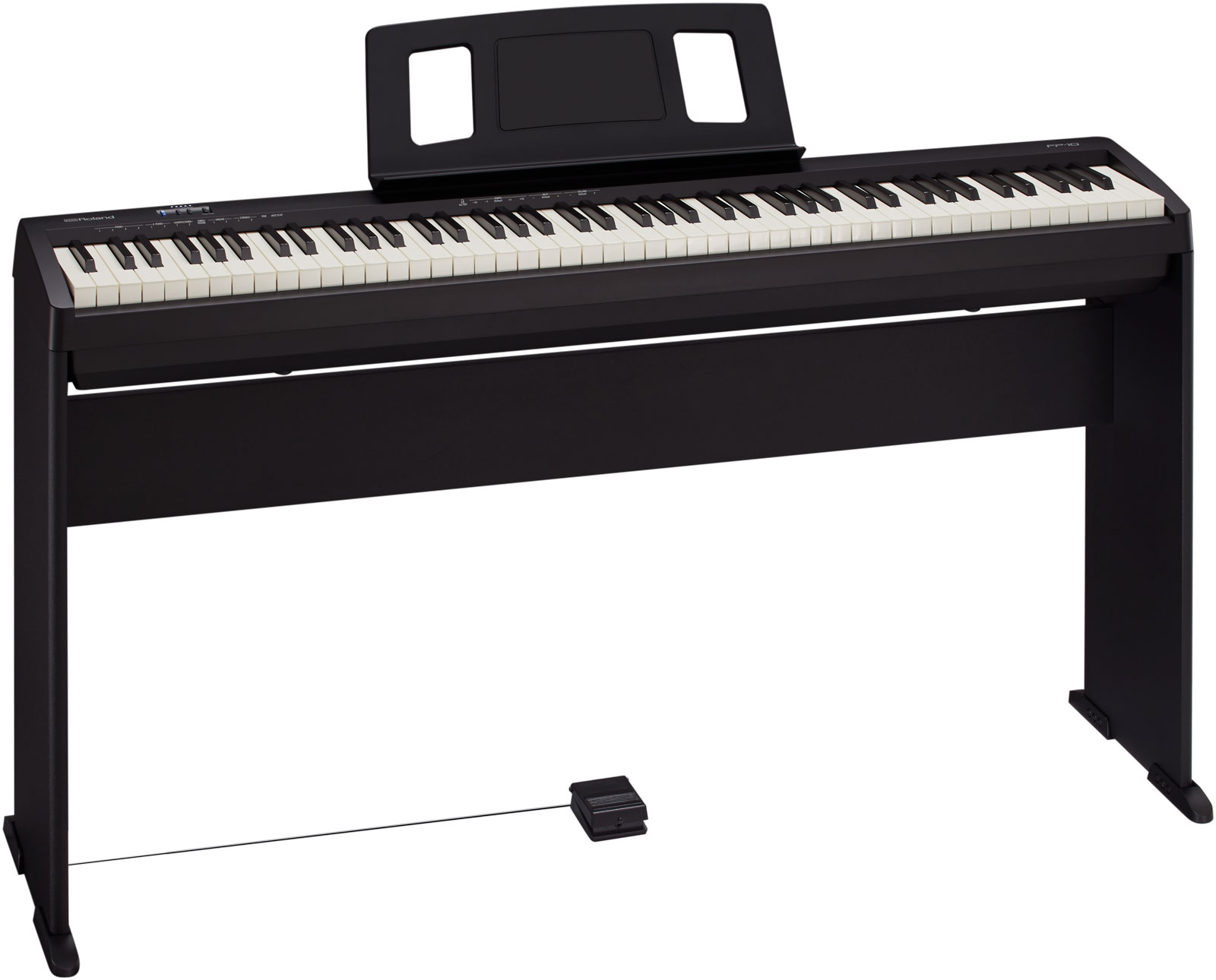 | 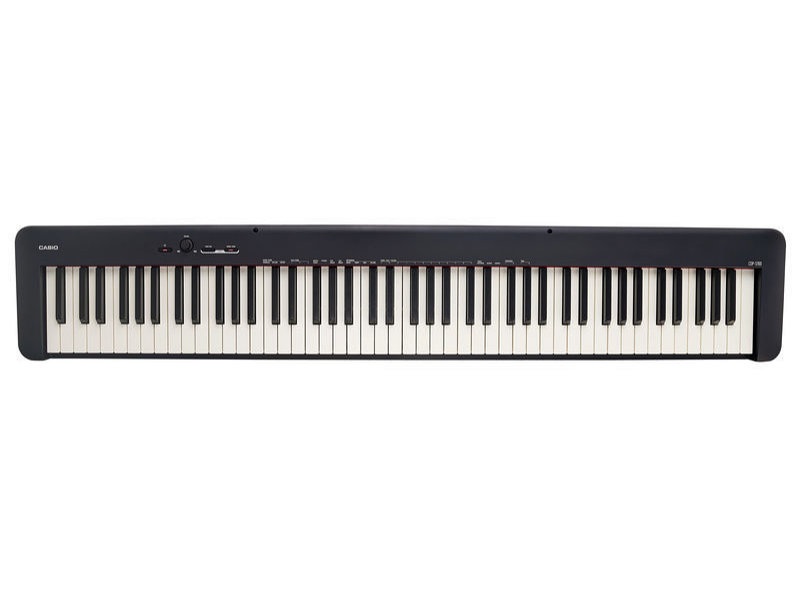 | |
| Check the best price on Amazon | Check the best price on Amazon | |
| Keys | 88 keys | 88 keys |
| Key Action | PHA-4 Standard (Progressive Hammer Action) | Scaled Hammer Action |
| Escapement Simulation | Yes | No |
| Ivory Feel Key Texture | Yes | No (smooth plastic) |
| Touch Sensitivity | Adjustable (multiple curves) | Adjustable (multiple curves) |
| Sound Engine | SuperNATURAL Piano | Casio Stereo Sampled Piano |
| Polyphony | 96 notes | 64 notes |
| Number of Tones | 15 | 10 |
| Speaker System | 2 × 6W | 2 × 8W |
| Bluetooth MIDI | Yes | No |
| USB MIDI | Yes (USB-B) | Yes (USB Micro-B) |
| Audio Outputs | Headphone out (no dedicated line out) | Headphone out (no dedicated line out) |
| Headphone Jacks | 1 | 1 |
| Pedal Included | Yes (basic sustain) | Yes (basic sustain) |
| Half-Pedal Support | Yes (with compatible pedal) | Limited / No true half-pedaling |
| Layer Mode | Yes | Yes |
| Split Mode | Yes | Yes |
| Metronome | Yes | Yes |
| Transpose Function | Yes | Yes |
| Recording Function | No onboard audio recorder | No onboard recorder |
| App Integration | Roland Piano Partner 2 (via Bluetooth) | Casio Music Space (via USB cable) |
| Dimensions (W × D × H) | Approx. 1284 × 258 × 140 mm | Approx. 1322 × 232 × 99 mm |
| Weight | Approx. 12.3 kg | Approx. 10.5 kg |
| Power Supply | AC Adapter | AC Adapter or optional batteries |
| Battery Operation | No | Yes (AA batteries supported) |
| My individual reviews | Roland FP-10 review |
Key Differences at a Glance
- Better Key Action & Escapement: Roland FP-10
- Higher Polyphony: Roland FP-10 (96 vs 64)
- Bluetooth MIDI: Roland FP-10
- More Portable & Battery Powered: Casio CDP-S110
- Lighter Weight: Casio CDP-S110
- Slightly More Powerful Speakers (on paper): Casio CDP-S110
- More Realistic Pedal Support: Roland FP-10
Design & Build Quality
When you’re shopping for a digital piano in this price range, design and build quality might not seem like top priorities at first. Most people focus on sound and key action, which makes sense. But the way an instrument is built affects how it feels to own, how long it lasts, and even how often you feel motivated to sit down and play. A piano that feels solid and thoughtfully designed tends to inspire more confidence than one that feels like a temporary gadget.
Both the Roland FP-10 and the Casio CDP-S110 aim to be compact, affordable, and practical. But once you spend time with them side by side, their design philosophies become pretty clear.
Overall Aesthetic and First Impressions
The Roland FP-10 has a slightly more traditional look. It’s simple and understated, but it carries a certain seriousness. The matte black finish helps reduce fingerprints and glare, which sounds minor but actually makes a difference in daily use. The edges are rounded just enough to feel smooth without looking bulky. It doesn’t try to be flashy. It looks like a musical instrument first, not a piece of consumer tech.
The Casio CDP-S110, on the other hand, feels more modern and minimal in a tech-forward way. It’s noticeably slimmer and lighter. The design language is cleaner and almost sleek, especially from the side profile. If space is tight, the CDP-S110 definitely wins in terms of footprint. It looks neat on a desk, slim stand, or even a shelf.
That said, the Casio’s minimalism comes at the expense of some visual weight. The Roland looks and feels more substantial. The Casio feels more like a lightweight device.
Dimensions and Portability
Portability is one of the Casio’s strongest selling points. The CDP-S110 is impressively slim and lighter than many other 88-key weighted pianos in its class. If you need to move your piano between rooms, take it to lessons, or store it away after playing, this matters. Carrying the Casio is easier and less awkward.
The Roland FP-10 is still compact, but it has more mass. It feels denser. That extra weight contributes to its stability when playing, but it also means it’s slightly less convenient to move around frequently.
If you plan to keep your piano on a dedicated stand in one place, the Roland’s added heft is actually a benefit. It feels planted. If you’re constantly repositioning it or transporting it, the Casio’s lighter build becomes more appealing.
Materials and Construction
Both pianos are primarily constructed from plastic, which is expected in this price range. However, not all plastic construction feels the same.
The Roland FP-10 feels more rigid. If you press down firmly on the top panel or along the sides, there’s minimal flex. The chassis doesn’t creak or bend easily. That solidity translates into confidence while playing, especially if you’re an expressive player who digs into the keys.
The Casio CDP-S110 is decently built, but there’s noticeably more flex in the body. Pressing down on the top surface produces slight movement. It’s not alarming, and it doesn’t feel like it’s going to break, but it doesn’t have the same reassuring stiffness as the Roland.
This difference becomes more noticeable over time. If you’re someone who plays energetically or practices daily for extended periods, the more rigid structure of the Roland feels more durable in the long run.
Key Bed Integration and Stability
The way the keyboard is integrated into the body also affects the overall impression of quality.
On the Roland FP-10, the key bed feels tightly integrated into the chassis. There’s minimal side-to-side wobble when pressing individual keys. The front lip of the keys aligns cleanly with the casing, and the whole assembly feels cohesive.
On the Casio CDP-S110, the keys are stable enough for normal use, but the overall assembly feels lighter. There’s slightly more movement in the key bed if you apply uneven pressure. For beginners this won’t matter much. For more advanced players, especially those working on dynamic control or classical repertoire, the difference is noticeable.
Control Panel and Buttons
The Roland FP-10 keeps things extremely simple. There’s a power button, a volume knob, and a handful of small buttons that handle functions like tone selection and Bluetooth. The buttons have a firm, tactile click. They feel intentional and well-made.
The minimal layout does mean you’ll rely on button combinations to access certain features. There’s no screen. But that simplicity contributes to a clean look.
The Casio CDP-S110 also uses a minimal control layout. The buttons are soft-touch and slightly flatter. They work fine, but they don’t feel quite as satisfying to press. The labeling is clear, and the interface is straightforward, but the tactile feedback is less pronounced than on the Roland.
Neither piano includes a display, which is expected at this price point. Both prioritize simplicity over visual feedback.
Finish and Surface Texture
The surface texture matters more than most people think. You’ll be touching this instrument constantly.
The Roland FP-10 uses a matte finish that feels smooth but not slippery. It resists fingerprints better than glossy surfaces and feels slightly more refined. The texture contributes to the overall sense of quality.
The Casio CDP-S110 also uses a matte surface, but it feels thinner and slightly more plastic-like. It’s not bad, just less premium in comparison.
These are subtle differences, but when you spend hours practicing, you start to notice small tactile details.
Included Accessories
Both pianos typically include a basic sustain pedal and a music rest.
The sustain pedals bundled with both models are entry-level switch-style pedals. They function properly but lack the weighted feel of a proper piano pedal. Most players eventually upgrade to a better sustain pedal, regardless of which piano they choose.
The music rests on both models are lightweight but stable enough for sheet music or a tablet. Roland’s rest feels slightly sturdier. Casio’s is thinner but does the job.
These accessories aren’t deal-breakers either way, but they align with the overall build quality theme: Roland feels a bit more substantial, Casio feels more minimal.
Long-Term Durability Expectations
In this category, long-term durability often comes down to how well the key mechanism and internal components hold up over time.
Roland has a strong reputation for durable key actions, even in entry-level models. The FP-10’s more robust chassis suggests it’s designed for consistent, long-term use.
Casio also has solid reliability overall, but the lighter build suggests it’s optimized more for portability and affordability than rugged longevity.
Neither instrument feels fragile, but the Roland inspires more confidence if you’re planning on years of daily practice.
Design Philosophy Comparison
The Roland FP-10 feels like it was designed with musical realism and durability as the top priorities. Everything about it leans toward creating a compact but serious instrument.
The Casio CDP-S110 feels designed around accessibility and portability. It’s slim, light, and easy to fit into small spaces. It feels like an approachable entry point.
Neither approach is wrong. It just depends on what matters more to you.
Final Thoughts on Design & Build Quality
If you want a digital piano that feels sturdy, grounded, and closer in spirit to a traditional instrument, the Roland FP-10 has the edge. Its heavier build, firmer construction, and slightly more refined finish give it a more premium feel in everyday use.
If your priorities are portability, slim design, and a lighter footprint, the Casio CDP-S110 makes a strong case. It’s easy to move, easy to store, and visually clean.
At the end of the day, both are well-designed for their price bracket. But if we’re being critical and objective, the Roland feels more durable and substantial, while the Casio feels more convenient and compact. Your choice comes down to whether you value solidity or portability more in your daily playing life.
Keyboard: Action and Feel
If there’s one category that truly defines a digital piano, it’s the keyboard action. You can upgrade speakers. You can use better headphones. You can connect to software for improved sound. But you cannot change how the keys physically feel under your fingers. That’s baked into the instrument. And in this price range, the differences in action are often more important than any other feature.
Both the Roland FP-10 and the Casio CDP-S110 offer fully weighted, 88-key hammer-action keyboards. On paper, that already puts them in “real piano” territory. But once you sit down and play them back-to-back, the experience diverges in meaningful ways.
Let’s break it down carefully.
Roland FP-10: PHA-4 Standard Action
The Roland FP-10 uses Roland’s PHA-4 Standard key action. This is the same action found in some of Roland’s more expensive models, which is impressive at this price.
The keys are weighted using a graded hammer system. That means the lower keys feel heavier and gradually become lighter as you move up the keyboard. This mirrors the behavior of an acoustic grand piano, where longer, heavier bass strings require more force to move.
From the first few notes, the FP-10 feels substantial. There’s resistance. Not heavy in a tiring way, but firm enough to feel realistic. If you’re used to acoustic pianos, this immediately feels familiar.
One thing that stands out is the key return speed. When you play repeated notes quickly, the keys reset cleanly and predictably. There’s no sluggishness. That matters for faster passages, trills, and expressive dynamic playing.
Key Surface and Texture
Roland adds a subtle textured finish to the white keys, sometimes referred to as ivory-feel. It’s not dramatic, but it provides just enough grip to prevent your fingers from slipping during longer practice sessions.
This becomes especially noticeable if your hands get slightly sweaty. Smooth, glossy keys can feel slippery. The FP-10 avoids that problem.
The black keys also feel solid and slightly textured, not overly glossy. Overall, the tactile experience feels thoughtfully designed.
Dynamic Control and Expression
This is where the Roland really pulls ahead.
When you play softly on the FP-10, the sound responds delicately. When you dig in, it opens up naturally. There’s a wide dynamic range available. You don’t feel like you’re fighting the keyboard to access quieter or louder layers.
For beginners, this means you can grow into expressive playing. For intermediate players, it means the keyboard won’t hold you back when you start exploring nuance in phrasing.
The action encourages dynamic contrast. It rewards control.
Casio CDP-S110: Scaled Hammer Action
Casio equips the CDP-S110 with its Scaled Hammer Action keyboard. Like the Roland, it’s graded, meaning bass keys are heavier and treble keys are lighter.
The immediate difference is weight. The Casio feels lighter overall. There’s less resistance when pressing down the keys.
For absolute beginners, this can feel comfortable. It’s less intimidating and requires slightly less finger strength. Younger players or those transitioning from non-weighted keyboards might find it easier to adapt.
However, when compared directly to the Roland, the action feels simpler and less refined.
Key Resistance and Depth
The Casio keys have a slightly shallower feel and less pronounced resistance curve. When pressing down slowly, the weight transition isn’t as smooth as the Roland.
It’s not that it feels bad. It just feels more entry-level. The sensation is closer to a well-weighted keyboard than a convincing acoustic piano simulation.
The key travel distance is comparable, but the mechanical feedback at the bottom of the key press feels lighter and less substantial.
Repetition and Speed
For faster passages, the Casio performs adequately. But if you play rapid repeated notes, you may notice slightly less defined key return behavior compared to the Roland.
Advanced classical techniques, such as repeated-note passages or delicate pianissimo repetitions, feel more controlled on the Roland. The Casio handles basic repertoire fine but feels less precise under demanding pieces.
Key Surface Feel
The Casio keys are smoother than the Roland’s. There’s less texture. For short practice sessions, this doesn’t matter much. For longer sessions, the difference becomes noticeable.
The smoother surface isn’t inherently negative. Some players prefer it. But it doesn’t add that subtle realism that Roland’s textured keys provide.
Noise and Mechanical Feel
Both keyboards produce some mechanical noise when played without sound, which is normal for weighted actions. The Roland’s action feels slightly quieter and more dampened.
The Casio produces a bit more audible mechanical movement. Again, not a deal-breaker, but noticeable in quiet rooms when practicing without headphones.
Realism Compared to Acoustic Pianos
Neither of these instruments perfectly replicates a grand piano action. That’s simply not realistic at this price point.
However, the Roland FP-10 gets closer. The weight distribution, resistance curve, and tactile feedback collectively create a more convincing piano-like experience.
The Casio CDP-S110 feels like a solid beginner hammer-action keyboard. It teaches proper finger strength and technique. But if you’re training specifically to transition to acoustic piano exams or performances, the Roland gives you a more accurate preparation platform.
Fatigue and Comfort Over Time
Interestingly, the slightly heavier action of the Roland can initially feel more demanding. Beginners might notice their hands getting tired faster.
But that’s not necessarily a negative. Developing finger strength is part of piano technique.
The Casio’s lighter action can feel easier during longer beginner sessions. However, players coming from acoustic pianos might feel underwhelmed by the lighter resistance.
It comes down to your background. If you’re completely new to piano, the Casio feels friendly. If you’ve played acoustic before, the Roland feels more satisfying.
Consistency Across the Keyboard
On the Roland, the transition from heavy bass keys to lighter treble keys feels smooth and gradual.
On the Casio, the grading is present, but the overall feel is more uniform and less nuanced. The difference between bass and treble weight is slightly less pronounced.
For expressive classical repertoire, that nuance matters. For pop chords and beginner exercises, it matters less.
Long-Term Growth Potential
This is an important point that many buyers overlook.
As you improve, you start demanding more from your instrument. You want better control over dynamics, smoother legato transitions, more nuanced pianissimo passages.
The Roland’s action is more likely to support that growth. It doesn’t feel like something you’ll outgrow quickly.
The Casio works perfectly well for the first stages of learning. But some players may feel limited once they reach intermediate levels.
Head-to-Head Summary
Roland FP-10:
- Heavier, more realistic resistance
- Better dynamic control
- Textured key surface
- Smoother grading
- More convincing acoustic simulation
Casio CDP-S110:
- Lighter and easier for beginners
- Comfortable and accessible
- Adequate for learning fundamentals
- Slightly less refined and expressive
Final Verdict on Action and Feel
If keyboard realism is your top priority, the Roland FP-10 clearly takes the lead. Its PHA-4 action feels closer to an acoustic instrument, offers better dynamic control, and provides more long-term value for developing players.
The Casio CDP-S110 is not a bad action by any means. It’s perfectly serviceable and far better than non-weighted keyboards. But it feels more entry-level in refinement and nuance.
In practical terms, if you sit down at both instruments, most players will immediately notice the Roland feels more “serious” and more piano-like. The Casio feels lighter and more approachable.
If you plan to study piano seriously or want the most realistic feel within this budget range, the Roland is the stronger choice.
If you want something comfortable, lightweight, and beginner-friendly without spending extra, the Casio will still get the job done.
Sound Quality
Sound is where a digital piano either inspires you or quietly disappoints you over time. You can have great keys and solid build quality, but if the sound feels flat, thin, or artificial, your motivation to play will slowly fade. On the other hand, a rich and responsive piano tone can make even simple scales feel satisfying.
In this category, the Roland FP-10 and the Casio CDP-S110 take slightly different approaches. Both are designed to deliver a convincing acoustic piano experience at an affordable price. But once you listen closely, especially through good headphones, the differences become clear.
Let’s break it down carefully.
Roland FP-10: SuperNATURAL Sound Engine
The Roland FP-10 uses Roland’s SuperNATURAL Piano sound engine. This isn’t just a basic sample playback system. It blends high-quality piano samples with modeling elements that help smooth out transitions between dynamic layers.
What does that mean in real-world terms?
It means when you play softly and gradually increase pressure, the sound doesn’t jump abruptly from one volume layer to another. Instead, it feels continuous. There’s a natural progression from pianissimo to fortissimo.
Right away, the main grand piano tone sounds warm and full. The bass has depth without becoming muddy. The midrange is clear and rounded. The higher notes are bright but not piercing.
It doesn’t sound like a cheap keyboard. It sounds like a scaled-down version of a proper digital piano from a higher tier.
Tonal Character
The Roland’s default piano tone leans slightly warm and balanced. It’s not overly bright. It doesn’t exaggerate high frequencies. That makes it pleasant for longer practice sessions.
If you’re playing classical pieces, especially romantic repertoire, the warmth works well. Chords feel rich and layered. Sustained notes blend smoothly.
For pop or contemporary music, the tone still holds up. It’s clear enough to cut through when needed, but never harsh.
One thing I appreciate is how the Roland handles softer dynamics. When you play quietly, the tone doesn’t collapse into thinness. It still carries body and detail. That’s something entry-level digital pianos often struggle with.
Dynamic Range and Expression
This is where the FP-10 really shines in its price category.
When you press a key gently, you get a delicate, airy tone. When you play aggressively, the sound opens up and becomes more powerful. The transition feels natural.
You can shape phrases. You can build crescendos that feel gradual and controlled. The instrument responds to your touch instead of feeling like it’s locked into a few preset volume layers.
Through headphones, the experience becomes even better. You hear more of the subtle resonance and detail that the built-in speakers can’t fully reproduce.
Polyphony and Note Handling
The FP-10 offers high polyphony for its class, which means it can handle many notes sounding at once without cutting them off prematurely.
In practical terms, this matters when:
- You use the sustain pedal heavily
- You play complex chords
- You layer sounds
- You perform fast passages with overlapping notes
The Roland handles these situations gracefully. Notes decay naturally without sudden drop-offs.
Casio CDP-S110: Sound Engine and Sampling
The Casio CDP-S110 uses Casio’s own sound sampling technology. It delivers a clean and clear acoustic piano tone, especially impressive given the slim body of the instrument.
The first impression of the Casio’s main piano sound is brightness. It has a crisp, slightly sharper tone compared to the Roland.
For some players, this brightness is appealing. It can make pop songs and modern pieces feel lively. The tone cuts through well, especially at moderate volumes.
However, compared side-by-side with the Roland, the Casio’s sound feels simpler. There’s less depth in the bass and less complexity in sustained notes.
Tonal Character
The Casio leans brighter and slightly more digital in character. That doesn’t mean it sounds bad. In fact, for casual playing or beginner practice, it sounds perfectly pleasant.
But when you hold down sustained chords and really listen, the harmonic richness isn’t as pronounced as on the Roland. The decay of notes feels more linear and less organic.
Soft playing on the Casio can sometimes feel a bit thinner. It doesn’t collapse completely, but it doesn’t maintain the same fullness at low volumes that the Roland does.
Dynamic Response
The CDP-S110 responds to touch sensitivity, and you can control dynamics reasonably well. But the gradation between very soft and very loud feels less detailed.
There are moments when you can sense the transition between dynamic layers. It’s subtle, but compared directly to the Roland, it’s there.
For beginners, this likely won’t be noticeable. For intermediate players working on expressive phrasing, it may feel slightly limiting.
Through Speakers vs Headphones
Both instruments benefit significantly from good headphones.
On the Roland, headphones reveal more depth, stereo imaging, and resonance. The sound becomes more immersive and spacious.
On the Casio, headphones also improve clarity, but the fundamental tonal character remains simpler. It’s clean and precise, but not as layered.
If you primarily practice with headphones, the gap narrows slightly. If you rely on built-in speakers, the Roland’s richer sound engine stands out more clearly.
Additional Sounds and Variety
Neither of these pianos is designed to be a massive sound library workstation. They focus mainly on delivering a strong acoustic piano tone.
The Roland includes a small selection of additional tones like electric pianos, organs, and strings. They are usable and generally well-voiced, though not extensive.
The Casio also includes a modest set of additional sounds. They’re functional and fine for experimenting, but they don’t compete with dedicated stage pianos or synthesizers.
In both cases, the acoustic piano tone is the primary focus, and that’s what most buyers in this category care about.
Resonance and Realism
The Roland’s SuperNATURAL engine incorporates elements that simulate string resonance and natural decay behavior. While it’s not as advanced as higher-end Roland models, it adds subtle realism.
When you use the sustain pedal, the blend of tones feels more organic.
The Casio simulates resonance in a simpler way. It works, but the effect feels less complex and slightly more static.
If you play pieces with heavy pedal usage, such as Debussy or Chopin, you may notice that the Roland creates a more immersive wash of sound.
Long-Term Listening Comfort
This is an underrated aspect of sound quality.
A slightly harsh or overly bright tone can become fatiguing over time. The Roland’s balanced warmth makes it comfortable for extended practice sessions.
The Casio’s brightness is appealing at first, but some players may find it a bit sharp at higher volumes over longer sessions.
This ultimately depends on personal preference. Some players actually prefer a brighter tone because it feels more lively.
Recording and External Use
When connected via MIDI to a computer and used with virtual instruments, both pianos essentially become controllers. In that context, internal sound quality becomes less important.
But if you’re relying on the built-in sound engine for daily practice and performance, the Roland delivers a more refined experience overall.
Head-to-Head Summary
Roland FP-10:
- Warmer, richer tonal character
- Smoother dynamic transitions
- Better depth in bass and sustain
- More natural decay
- More immersive through headphones
Casio CDP-S110:
- Brighter, clearer tone
- Clean and pleasant sound
- Slightly simpler layering
- Adequate for beginner and casual use
Final Verdict on Sound Quality
Both pianos sound good for their price range. Neither sounds cheap or toy-like. But if we’re being critical and objective, the Roland FP-10 delivers a more expressive and musically satisfying piano tone.
It feels layered. It responds naturally to touch. It handles dynamics with more subtlety.
The Casio CDP-S110 sounds clear and bright. It’s absolutely usable and enjoyable, especially for beginners. But compared directly to the Roland, it feels less complex and slightly more digital.
If your goal is to get as close as possible to an acoustic piano experience within this budget, the Roland takes the lead in sound quality.
If you want a clean, straightforward piano tone and you prefer a brighter sound signature, the Casio will still serve you well.
Speakers and Volume
When people shop for an entry-level digital piano, they often overlook the speaker system. The assumption is simple: “I’ll mostly practice with headphones anyway.” And while that’s true for many players, the built-in speakers still matter a lot. They shape your everyday playing experience. They determine how the piano feels in the room. They affect how inspiring it is to sit down and just play casually without plugging anything in.
The Roland FP-10 and the Casio CDP-S110 both include built-in speaker systems designed for home practice. Neither is meant to replace a stage amp or fill a concert hall. But there are meaningful differences in how they project sound, how they handle volume, and how satisfying they feel at different listening levels.
Let’s look at them in detail.
Roland FP-10 Speaker System
The Roland FP-10 uses a dual-speaker setup with built-in amplification designed for small to medium rooms. On paper, the wattage is modest, which is expected in this price range. But wattage numbers rarely tell the full story. What matters more is tuning, clarity, and how efficiently the speakers use the internal sound engine.
The first thing you notice when playing the FP-10 through its speakers is balance. The tone feels centered and controlled. The bass frequencies are present without overwhelming the midrange. The treble notes cut through clearly but don’t become shrill.
At moderate volumes, the Roland feels surprisingly full for such a compact instrument. It doesn’t sound boxy or hollow. The low notes have a bit of body, which adds realism when playing left-hand-heavy pieces or bass lines.
Projection and Room Presence
The FP-10 projects sound forward and slightly upward, depending on how it’s positioned. On a proper stand at seated height, the sound reaches the player clearly. In a small living room or bedroom, it easily fills the space.
If you’re playing for yourself or one or two listeners nearby, the volume is more than sufficient. You won’t feel like the piano is struggling.
In larger rooms, the limitations start to show. The sound doesn’t carry deeply across wide spaces. It’s still audible, but it loses some richness as distance increases. That’s normal for a compact digital piano.
For casual home use, though, the FP-10’s speakers are more than adequate and even impressive considering its size.
Volume Range and Clarity
The FP-10 has a good usable volume range. At low volumes, the sound remains clear and detailed. It doesn’t collapse into a thin whisper. This is important for late-night practice when you don’t want to disturb others.
As you increase the volume, the sound grows naturally without distorting quickly. At very high levels, you can hear some compression, but it remains controlled.
There’s enough headroom for energetic playing without feeling like you’re pushing the speakers to their limit immediately.
Casio CDP-S110 Speaker System
The Casio CDP-S110 also features a dual-speaker system designed for compact home use. Given how slim the instrument is, it’s impressive that Casio managed to include built-in speakers at all without significantly increasing the thickness.
The immediate impression of the Casio’s speakers is clarity. The midrange and treble are crisp and clean. The piano tone comes through clearly, especially at moderate volumes.
However, compared directly with the Roland, the Casio’s speakers sound slightly thinner. The bass response is more limited. Low notes are audible but don’t carry the same fullness or warmth.
Bass Response and Depth
This is one of the more noticeable differences between the two instruments.
The Roland’s speakers produce more low-end presence. When you play deep bass notes, you feel a bit more weight in the room.
The Casio’s low frequencies feel more restrained. This isn’t surprising given its ultra-slim body design. There’s simply less internal space for acoustic resonance and speaker enclosure depth.
For simple beginner pieces, this may not matter. But for repertoire that relies heavily on bass accompaniment, the Roland feels more grounded.
Volume Handling and Headroom
The CDP-S110 performs well at moderate volume levels. It’s perfectly fine for practicing in a bedroom, small apartment, or quiet house.
As you increase the volume, clarity remains decent, but you’ll start to notice limitations sooner than with the Roland. At higher volumes, the sound can feel slightly compressed and less dynamic.
It’s not that it distorts aggressively. It just doesn’t expand with the same authority.
For most home users, the maximum volume is still adequate. But if you plan to occasionally play for small gatherings or use the piano in a larger shared space, the Roland has a slight advantage in projection and fullness.
Sound Dispersion
Speaker placement affects how the sound spreads through the room.
The Roland’s slightly larger chassis allows for a bit more space in the internal speaker design. As a result, the sound disperses more evenly across the front.
The Casio’s ultra-slim body means the speakers are more compactly housed. The sound feels more focused and slightly narrower in dispersion.
When seated directly in front of both instruments, the difference is subtle. When standing off to the side, the Roland tends to maintain presence better.
Playing Without Headphones
This is an important real-world scenario. Many players don’t want to constantly use headphones. They want to sit down, turn the piano on, and play.
With the Roland FP-10, that experience feels more satisfying. The sound fills your immediate space with enough warmth to feel immersive.
With the Casio CDP-S110, the experience is still enjoyable, but slightly less enveloping. It feels more like a compact keyboard projecting sound rather than a small acoustic instrument simulation.
Again, this is relative. The Casio is far from bad. It just doesn’t have quite the same depth.
Using Headphones
When you plug in headphones, the internal speakers are bypassed, and the difference between the two narrows significantly.
Through headphones, both pianos reveal more detail than their speakers can deliver. The Roland still maintains a richer internal sound engine, but speaker limitations become irrelevant.
If you plan to practice almost exclusively with headphones, speaker quality may matter less in your buying decision.
However, if you enjoy open-air practice or playing casually without extra gear, the speaker system becomes more important.
Small Performances and Casual Sharing
Neither piano is designed for stage performance without amplification. But for small informal settings, like playing for friends or family in a living room, both can function independently.
The Roland feels slightly more confident in this role. It maintains fullness and clarity at higher output levels.
The Casio works fine for quiet environments, but it reaches its ceiling a bit earlier.
Long-Term Listening Comfort
Speaker tuning also affects fatigue over time.
The Roland’s warmer tonal balance pairs well with its speakers, resulting in a sound that feels easy on the ears.
The Casio’s brighter tonal character combined with its compact speakers can feel slightly sharper at higher volumes.
Some players prefer a brighter tone, but over extended sessions, the Roland tends to feel more relaxed and balanced.
Practical Considerations
It’s worth remembering that both instruments allow you to connect to external amplification if needed. If you plan to use studio monitors or a keyboard amp regularly, the built-in speaker differences become less critical.
But many buyers in this price range want simplicity. They don’t want extra equipment. In that context, speaker quality becomes more meaningful.
Head-to-Head Summary
Roland FP-10:
- Fuller bass response
- Better room projection
- Higher usable volume range
- Warmer, more immersive sound
- More satisfying for open-air practice
Casio CDP-S110:
- Clear and clean midrange
- Adequate for small rooms
- Slightly thinner bass
- Reaches volume ceiling sooner
- Works well for personal practice
Final Verdict on Speakers and Volume
Both the Roland FP-10 and the Casio CDP-S110 offer perfectly usable built-in speakers for home practice. Neither is designed for large-scale performance, and neither replaces a proper amplification system.
That said, the Roland delivers a more balanced and room-filling sound. Its speakers handle bass frequencies better, maintain clarity at higher volumes, and provide a slightly more immersive playing experience.
The Casio’s speakers are competent and surprisingly good given the piano’s slim design. But they feel more limited in depth and projection.
If you plan to play mostly through headphones, this category may not strongly influence your decision.
If you want the most satisfying open-speaker experience within this price range, the Roland FP-10 has the edge.
Functions and Features
When comparing entry-level digital pianos, it’s easy to assume that features don’t matter much. After all, most buyers in this category primarily want a realistic keyboard and a good piano sound. But once you start using the instrument daily, the small functional details can make a big difference in convenience, learning potential, and overall satisfaction.
The Roland FP-10 and the Casio CDP-S110 both aim to keep things simple. Neither is overloaded with flashy extras, touchscreens, or hundreds of sounds. That’s intentional. These instruments are designed to feel like pianos first, not workstations. Still, there are meaningful differences in how they approach features and usability.
Let’s break them down carefully.
Core Philosophy
The Roland FP-10 feels like a stripped-down version of a higher-end digital piano. It prioritizes realism, then adds a handful of modern conveniences like Bluetooth MIDI.
The Casio CDP-S110 feels like a streamlined, ultra-portable piano that focuses on accessibility and simplicity. It keeps the feature set basic and easy to understand.
Neither approach is wrong. It just depends on what you value more: deeper integration and long-term flexibility, or lightweight simplicity.
Number of Sounds (Tones)
Both pianos offer a limited but usable set of built-in sounds.
The Roland FP-10 includes a small collection of tones beyond its main acoustic piano. You get a few electric pianos, organs, strings, and possibly a harpsichord depending on region and firmware version. The selection is modest but thoughtfully chosen.
Importantly, the main acoustic piano tone is clearly the centerpiece. The additional sounds feel like useful bonuses rather than gimmicks.
The Casio CDP-S110 also includes a small set of tones. Like the Roland, you get variations of piano plus some electric pianos and basic instrument sounds. The selection is comparable in size, though the overall sound quality of these secondary tones tends to feel slightly simpler.
If you’re primarily buying either instrument to practice piano seriously, the limited tone library is not a problem. If you’re looking for variety and experimentation, neither is designed to be a full production keyboard.
Layer and Split Modes
Both instruments allow basic sound layering and keyboard splitting.
On the Roland FP-10, you can layer two sounds together, such as piano and strings. This is useful for adding subtle texture to ballads or contemporary pieces. The layering is easy to activate using button combinations, though there’s no display screen to visually confirm settings.
Split mode allows you to divide the keyboard into two sections with different sounds assigned to each half. This is helpful for certain practice exercises or simple performance setups.
The Casio CDP-S110 also supports layer and split functionality. The implementation is similarly straightforward, accessed through button combinations.
Neither instrument offers advanced control over layer balance or split points beyond basic settings. But for the price, the inclusion of these functions is practical and useful.
Metronome and Practice Tools
A built-in metronome is essential for practice, especially for beginners and intermediate players.
The Roland FP-10 includes a metronome that’s easy to activate. You can adjust tempo and time signature, though you’ll rely on button combinations and possibly an app for more detailed control.
The Casio CDP-S110 also includes a metronome with adjustable tempo. Like the Roland, it keeps things simple.
Neither piano includes advanced onboard practice features like built-in lesson songs or guided tutorials directly on the instrument. That’s where external app integration becomes important.
Recording Capability
One notable limitation of both pianos is the absence of built-in audio recording functionality.
You cannot directly record and playback performances internally without connecting to external software.
For some users, this isn’t a major issue. Many people connect their piano to a computer or tablet and record via music software.
However, beginners sometimes appreciate a simple onboard recording feature for reviewing their playing. In that sense, both instruments leave a small gap.
App Integration
This is where the Roland FP-10 clearly pulls ahead.
The FP-10 includes Bluetooth MIDI connectivity. This allows you to wirelessly connect to apps on your smartphone or tablet.
Roland offers its Piano Partner 2 app, which expands access to settings, tone selection, and practice tools. You can adjust parameters more easily through the app interface than using physical buttons alone.
Bluetooth MIDI also means you can use popular learning apps like Simply Piano, Flowkey, or GarageBand without a cable. That convenience matters, especially for beginners who rely heavily on interactive learning platforms.
The Casio CDP-S110 does not include Bluetooth. It supports USB MIDI connectivity via cable. You can still connect it to apps and software, but you’ll need a USB cable and possibly an adapter depending on your device.
For some users, this isn’t a big deal. For others, the freedom of wireless connectivity makes a noticeable difference in daily use.
Transpose and Tuning Functions
Both instruments allow you to transpose the keyboard. This means you can shift the pitch up or down without changing your hand position. It’s useful when accompanying singers or playing with other instruments.
Fine tuning adjustments are also available on both models, allowing slight pitch calibration if needed.
These functions are accessed through button combinations rather than dedicated controls.
Touch Sensitivity Settings
Both pianos allow adjustment of touch sensitivity. You can select between different response curves to suit your playing style.
For example, if you prefer a lighter touch that produces louder sound with less force, you can adjust the sensitivity accordingly.
The Roland offers a few preset touch settings. The Casio does as well.
While neither offers extremely detailed customization, the available options are sufficient for most players.
Pedal Support
Both instruments include support for sustain pedal input and ship with a basic pedal.
The Roland FP-10 supports half-pedaling when used with a compatible upgraded pedal. This allows more nuanced sustain control, closer to an acoustic piano experience.
The Casio CDP-S110 generally supports basic sustain functionality. Depending on region and pedal compatibility, half-pedaling may be more limited compared to Roland.
If expressive pedaling matters to you, Roland has a slight edge here.
Interface and Ease of Use
Both pianos use button combinations to access advanced features. There are no LCD screens on either model.
The Roland’s interface feels slightly more refined and cohesive, especially when paired with the companion app.
The Casio keeps things simple but offers less digital integration overall.
For players who prefer minimal distractions and just want to turn on and play, both work well.
Educational Use
For beginners, especially children, app compatibility is increasingly important.
The Roland’s Bluetooth MIDI support makes it more future-ready for interactive learning tools.
The Casio can still be used with learning apps, but the wired connection adds a layer of inconvenience.
In classroom settings or private lessons, both are perfectly usable as practice instruments.
Head-to-Head Summary
Roland FP-10:
- Bluetooth MIDI connectivity
- App integration via Piano Partner 2
- Layer and split modes
- Metronome and touch sensitivity adjustments
- Half-pedal support with compatible pedal
- More future-proof feature set
Casio CDP-S110:
- USB MIDI connectivity (wired)
- Layer and split modes
- Metronome and touch sensitivity options
- Simpler, more minimal setup
- Lightweight and straightforward operation
Final Verdict on Functions and Features
Neither the Roland FP-10 nor the Casio CDP-S110 is packed with advanced production features. They’re designed to be focused digital pianos rather than multi-purpose workstations.
However, the Roland offers a more modern and flexible feature set, primarily because of its Bluetooth MIDI connectivity and better app integration. It feels slightly more future-proof and adaptable to different learning and recording setups.
The Casio keeps things clean and minimal. It provides the essentials without complexity. For players who don’t care about wireless connectivity and just want a straightforward piano experience, that simplicity can actually be appealing.
If connectivity and long-term versatility matter to you, the Roland FP-10 clearly has the advantage.
If you value simplicity and portability over expanded digital features, the Casio CDP-S110 still covers the basics well.
Connectivity
Connectivity might not be the first thing you think about when buying a digital piano, but in 2024, it plays a bigger role than ever. Even if you consider yourself a “just sit down and play” kind of person, chances are you’ll eventually want to connect your piano to something. That might be a learning app, recording software, a tablet, a computer, external speakers, or even a DAW for music production.
This is where the Roland FP-10 and the Casio CDP-S110 start to separate more clearly. On the surface, both are entry-level digital pianos with simple connectivity. But the way they approach modern integration is noticeably different.
Let’s go step by step.
USB MIDI Connectivity
Both the Roland FP-10 and the Casio CDP-S110 include USB-to-host connectivity. This allows you to connect the piano directly to a computer using a standard USB cable.
Once connected, the piano functions as a MIDI controller. This means:
- You can control virtual instruments (VSTs)
- You can record MIDI data into recording software
- You can use online learning platforms
- You can integrate the piano into music production setups
In practical terms, both instruments perform this task reliably. If your primary goal is to connect to a laptop and use software like GarageBand, Logic, or a free piano VST, both will do the job.
The difference is not in whether they can connect, but how conveniently they can connect.
Bluetooth MIDI: Roland’s Major Advantage
The Roland FP-10 includes built-in Bluetooth MIDI. This is a significant advantage in this price category.
With Bluetooth MIDI, you can connect the piano wirelessly to a smartphone or tablet. No cables. No adapters. No USB hubs. You simply pair the device, open your app, and start playing.
This becomes especially useful if you use:
- Learning apps like Simply Piano or Flowkey
- Music notation apps
- Mobile recording apps
- iPad-based music production setups
The convenience factor is hard to overstate. Beginners especially benefit from the simplicity of wireless pairing.
Instead of worrying about cable compatibility or adapters, you can focus on playing.
The Casio CDP-S110 does not include Bluetooth connectivity. If you want to connect it to a tablet or phone, you’ll need:
- A USB cable
- Possibly a USB-C or Lightning adapter
- Sometimes a powered USB hub depending on your device
It’s absolutely doable. But it’s less seamless.
For some users, this doesn’t matter at all. For others, especially those who value a clean, cable-free setup, Bluetooth makes a meaningful difference.
App Integration
Roland offers its Piano Partner 2 app, which works with the FP-10. Through the app, you can:
- Access tone settings
- Adjust metronome parameters
- Manage internal settings more easily
- Explore additional features
Without the app, you have to use button combinations on the piano itself. That works, but it’s not intuitive. The app makes things easier and more visual.
The Casio CDP-S110 also has compatibility with Casio’s apps, but because it lacks Bluetooth, you must connect via USB cable.
In both cases, the app expands functionality beyond what the physical interface provides. But Roland’s wireless implementation makes it feel more modern and convenient.
Headphone Connectivity
Both pianos include headphone outputs for silent practice.
The Roland FP-10 features a standard headphone jack. When you plug in headphones, the internal speakers automatically mute. Sound quality through headphones is generally better than through built-in speakers, as you hear more detail and stereo imaging.
The Casio CDP-S110 also includes a headphone jack, functioning similarly.
Neither instrument includes dual headphone outputs for two simultaneous listeners. That’s something you might find in slightly higher price brackets.
For most solo practice situations, one headphone output is sufficient.
Sustain Pedal Connectivity
Both instruments include a sustain pedal input and typically ship with a basic switch-style pedal.
The Roland FP-10 supports half-damper functionality when used with a compatible upgraded pedal. This allows more nuanced sustain control, similar to an acoustic piano.
The Casio CDP-S110 supports standard sustain functionality. Depending on the pedal used and regional configuration, half-pedal support may be more limited compared to Roland.
If expressive pedaling matters to you, especially for classical repertoire, Roland’s expanded pedal capability gives it a slight edge.
Audio Outputs
This is an important limitation in both models.
Neither the Roland FP-10 nor the Casio CDP-S110 includes dedicated line outputs for direct connection to amplifiers or PA systems.
If you want to connect either piano to external speakers, you’ll typically use the headphone output as an audio source.
This works, but it’s not ideal compared to having dedicated line-out jacks.
For home use, this usually isn’t a problem. For small performances or studio integration, it’s something to keep in mind.
Higher-end digital pianos often include proper stereo line outputs. At this entry-level price point, it’s common for manufacturers to omit them.
Using External Speakers or Monitors
If you want to improve your sound experience, you can connect either piano to studio monitors or a keyboard amplifier.
With the Roland FP-10, you would use the headphone output to feed the external system. The sound engine quality is strong enough to benefit noticeably from better speakers.
With the Casio CDP-S110, you would do the same.
In both cases, you’ll need appropriate cables and possibly adapters depending on your speaker setup.
Because neither instrument has dedicated line outputs, you may need to adjust volume carefully to avoid distortion when using the headphone jack as a line source.
Recording and Production Use
When connected via USB MIDI, both pianos can act as MIDI controllers for music production.
In this scenario, the internal sound engine becomes less important. You can trigger high-end virtual piano libraries instead.
The Roland’s superior key action may provide a more satisfying experience when controlling external instruments. But strictly in terms of MIDI connectivity, both are functional.
If you plan to use your piano heavily in a home studio setup, either can serve as a capable controller.
The difference again comes down to convenience. Roland’s Bluetooth option allows direct wireless connection to certain setups, which can reduce cable clutter.
Compatibility With Modern Devices
Modern tablets and phones often require adapters for USB connections.
With the Casio CDP-S110, you will almost certainly need an adapter to connect to a tablet or smartphone.
With the Roland FP-10, Bluetooth bypasses that requirement entirely.
This makes the Roland feel more aligned with current technology trends.
For younger students or tech-savvy users who rely heavily on tablets, Bluetooth integration can make the experience smoother and more enjoyable.
Practical Everyday Scenarios
Let’s imagine a few real-life situations.
Scenario 1: A beginner using a learning app on an iPad.
Roland: Turn on Bluetooth, pair, open the app, play.
Casio: Connect USB cable, attach adapter, manage cable positioning, then play.
Scenario 2: A hobbyist recording MIDI into a laptop.
Both: Connect USB cable and record normally.
Scenario 3: Playing through external speakers for a small gathering.
Both: Use headphone output with appropriate cable.
In short, both are capable. Roland is simply more convenient in wireless scenarios.
Head-to-Head Summary
Roland FP-10:
- USB MIDI connectivity
- Bluetooth MIDI (wireless integration)
- App compatibility with easy pairing
- Headphone output
- Half-pedal support with compatible pedal
- No dedicated line outputs
Casio CDP-S110:
- USB MIDI connectivity (wired only)
- No Bluetooth
- App compatibility via cable
- Headphone output
- Standard pedal support
- No dedicated line outputs
Final Verdict on Connectivity
Both the Roland FP-10 and the Casio CDP-S110 offer the essential connectivity needed for modern digital piano use. You can connect to computers, use recording software, and practice with headphones on either instrument.
However, the Roland FP-10 clearly stands out because of its built-in Bluetooth MIDI. That single feature makes it more flexible, more convenient, and more future-ready.
The Casio CDP-S110 keeps things simple and wired. For players who don’t care about wireless integration, that may be perfectly fine.
If you value seamless integration with apps, tablets, and modern learning tools, the Roland FP-10 has a clear advantage.
If you’re comfortable using cables and want basic, functional connectivity without extras, the Casio CDP-S110 still covers the essentials.
Conclusion
At the end of the day, both the Roland FP-10 and the Casio CDP-S110 succeed at what they’re designed to do: offer an affordable, full-size, weighted digital piano for beginners and casual players. Neither is a bad choice. But they don’t deliver the same overall experience.
The Roland FP-10 feels more like a serious musical instrument. Its key action is more realistic and expressive, the piano tone is richer and more layered, and the speaker system feels fuller in a room. Add Bluetooth MIDI and better pedal support, and it becomes clear that Roland aimed to create something slightly more future-proof. It’s the model you’re less likely to outgrow as your playing improves.
The Casio CDP-S110, on the other hand, shines in simplicity and portability. It’s slim, lightweight, and easy to move around. The action is comfortable for beginners, the sound is clean and bright, and it covers the essentials without overcomplicating anything. If budget and space are your biggest concerns, it makes a lot of sense.
If you want the most realistic and musically satisfying experience in this comparison, the Roland FP-10 is the stronger overall investment. If you want an affordable, straightforward piano that gets you started without fuss, the Casio CDP-S110 does exactly that.
The best choice ultimately depends on how serious you are about playing and how long you plan to keep the instrument.