
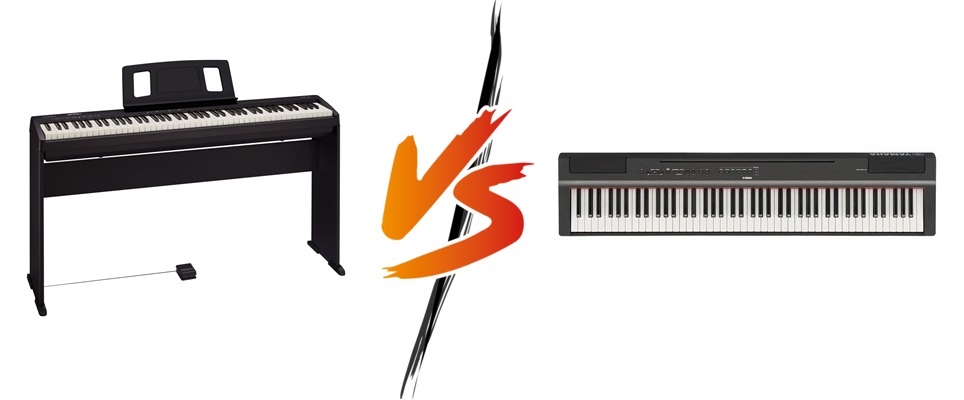
If you’re shopping for your first serious digital piano, or upgrading from a basic keyboard, the Roland FP-10 and Yamaha P-125 are probably already on your shortlist. They sit in that sweet spot where price, realism, and practicality overlap. Not dirt cheap, not professional-stage expensive either. Just solid instruments aimed at beginners, hobbyists, and even advancing players who want an 88-key weighted piano without draining their savings.
Both models come from brands with strong reputations in the piano world. Roland is known for its key action technology and digital modeling, while Yamaha has decades of acoustic piano expertise behind its digital lineup. On paper, they look similar. Same 88 weighted keys. Same portable slab design. Similar price range. But once you sit down and actually play them, the differences start to show.
This comparison digs into those differences in detail, so you can choose based on what truly matters to you.
Roland FP-10 vs Yamaha P-125 Comparison Chart
If you click the links below, under the product images, you will be redirected to Amazon.com. In case you then decide to buy anything, Amazon.com will pay me a commission. This doesn’t affect the honesty of this review in any way though.
| Feature | Roland FP-10 | Yamaha P-125 |
|---|---|---|
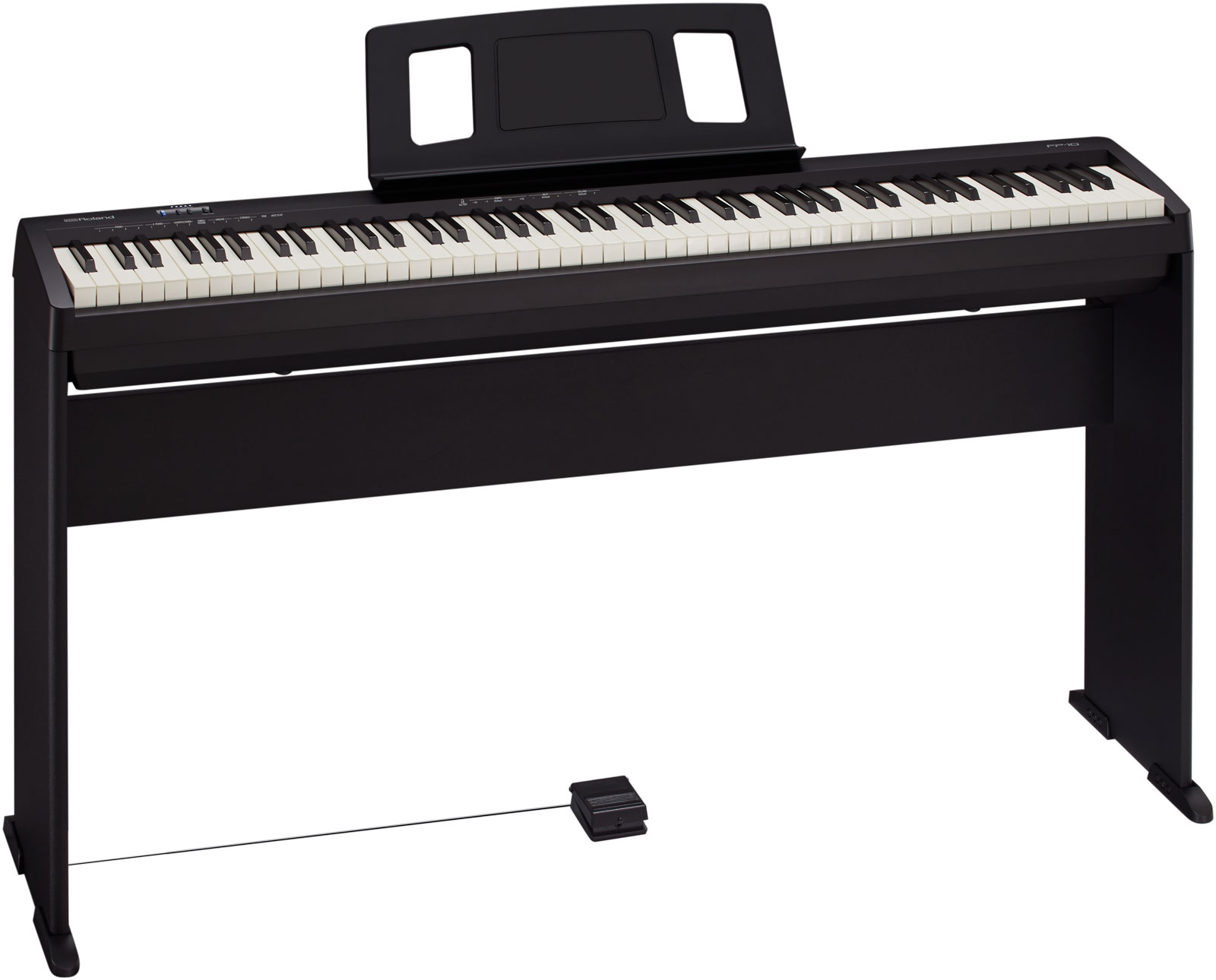 | 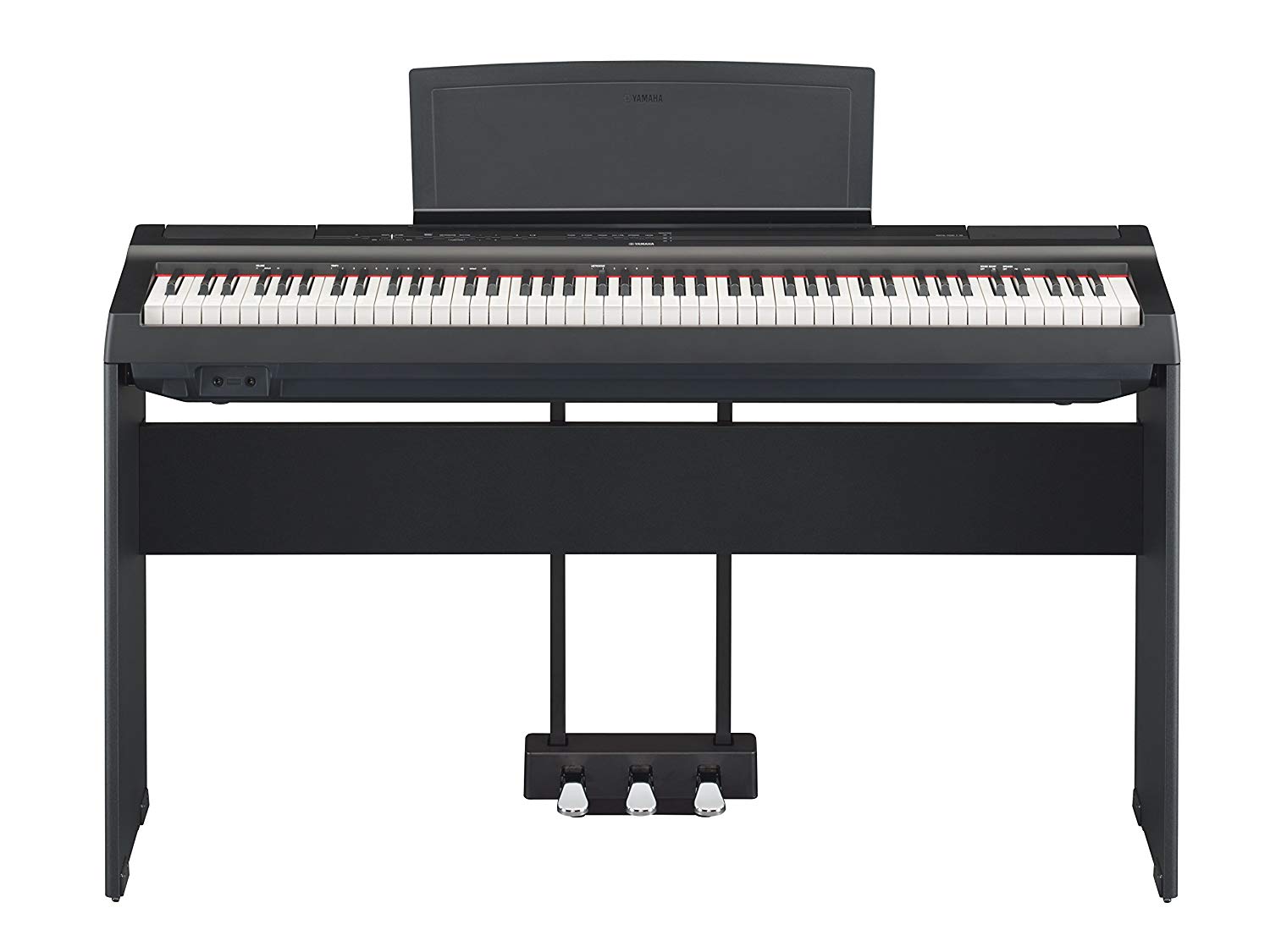 | |
| Check the best price on Amazon | Check the best price on Amazon | |
| Keys | 88 weighted keys | 88 weighted keys |
| Key Action | PHA-4 Standard | Graded Hammer Standard (GHS) |
| Escapement Simulation | Yes | No |
| Key Surface | Textured (ivory feel) | Smooth matte finish |
| Sound Engine | SuperNATURAL Piano | Pure CF Sound Engine |
| Polyphony | 96 notes | 192 notes |
| Number of Voices | 15 | 24 |
| Built-in Rhythms | No | Yes |
| Recording Function | Yes (MIDI) | Yes (MIDI) |
| Bluetooth MIDI | Yes | No |
| USB to Host | Yes | Yes |
| Audio Line Outputs | No (uses headphone out) | Yes (L/R line outputs) |
| Headphone Jacks | 1 | 2 |
| Speaker Power | 6W × 2 | 7W × 2 |
| Intelligent Volume/EQ | No | Yes (Intelligent Acoustic Control) |
| Dimensions (W × D × H) | Approx. 1284 × 258 × 140 mm | Approx. 1326 × 295 × 166 mm |
| Weight | Approx. 12.3 kg | Approx. 11.8 kg |
| Sustain Pedal Included | Yes (basic) | Yes (basic) |
| Half-Pedaling Support | Yes (with compatible pedal) | Yes (with compatible pedal) |
| My individual reviews | Roland FP-10 review | Yamaha P-125 review |
Quick Observations
- Best key realism: Roland FP-10
- Higher polyphony & more voices: Yamaha P-125
- Built-in rhythms & better speakers: Yamaha P-125
- Bluetooth MIDI convenience: Roland FP-10
- Dedicated line outputs for performance: Yamaha P-125
If your priority is action realism and wireless app integration, the FP-10 stands out.
If you want stronger speakers, more features, and better stage connectivity, the P-125 offers more flexibility.
Design & Build Quality
When people shop for a digital piano, they usually focus on sound and key feel first. That makes sense. But design and build quality matter more than you might think. You’re going to see this instrument every day. You’ll move it. You’ll rest your hands on it for hours. The way it’s built affects not only how it looks in your space, but how it holds up over time.
Both the Roland FP-10 and the Yamaha P-125 fall into the “portable slab” category. That means they’re long, slim keyboards designed to sit on a stand or desk, not furniture-style cabinets. From a distance, they look similar. Up close, the differences start to show.
Overall Aesthetic
The Roland FP-10 has a very clean, understated design. It’s minimal to the point of almost disappearing into a room. The top panel is mostly flat, with a subtle curve along the front edge that softens the look. There aren’t many visible controls, which gives it a streamlined appearance.
If you prefer a modern, almost Scandinavian simplicity, the FP-10 fits that vibe well. It doesn’t try to look like an acoustic piano. It accepts what it is: a compact digital instrument.
The Yamaha P-125 looks slightly more substantial. The edges are sharper and more defined. The control panel area is wider, and the buttons are clearly visible. It feels more like a traditional digital piano, something you’d see in a music school or rehearsal room.
Neither one is flashy. Both come in standard black (and sometimes white depending on the market). But the Roland leans minimalist and sleek, while the Yamaha feels more functional and familiar.
Dimensions and Weight
The Roland FP-10 is slightly more compact. It’s a bit shorter in depth and lighter overall. That makes it easier to place on a desk or move around an apartment. If you live in a small space or need to tuck it away after practice, those few centimeters and pounds actually matter.
The Yamaha P-125 is still portable, but it feels denser and a bit more planted. That added weight gives it a reassuring sturdiness when it’s on a stand. It doesn’t shift easily during energetic playing.
If portability is your priority, the FP-10 has a small edge. If stability during aggressive playing matters more, the P-125 feels slightly more grounded.
Materials and Finish
Both instruments use high-quality plastic chassis. At this price point, that’s expected. You’re not getting wood panels or metal casings. The question isn’t whether they’re plastic. It’s how good that plastic feels.
The Roland FP-10 has a smooth matte finish. It resists fingerprints reasonably well and feels solid when you press down on it. There’s minimal flex across the top panel. Even when you apply pressure near the center, it doesn’t creak or bend noticeably.
The Yamaha P-125 also uses matte plastic, but it has a slightly more textured surface. It feels durable and resistant to scratches. Over time, Yamaha’s finishes tend to hold up well, especially in teaching environments where instruments get heavy use.
In terms of pure durability, both are solid. Neither feels cheap. Neither feels premium either. They sit comfortably in that mid-range sweet spot where corners weren’t obviously cut.
Control Layout and Interface
This is where the design differences become more practical.
The Roland FP-10 keeps its physical controls to a minimum. You get a small set of buttons on the left side. Many functions are accessed through key combinations. That means holding down a button and pressing specific piano keys to change settings like touch sensitivity or transpose.
From a design perspective, this keeps the surface clean. But from a usability perspective, it can be frustrating. Unless you memorize the combinations or keep the manual nearby, you’ll forget which keys trigger which functions.
The Yamaha P-125 takes the opposite approach. It has clearly labeled buttons for voice selection, metronome, rhythm, and other features. You can glance down and understand what’s happening. For beginners especially, this is reassuring. There’s less guesswork.
If you like a tidy, minimal look and don’t mind learning button combinations, Roland’s approach works. If you prefer direct access and visible controls, Yamaha’s layout is easier to live with day to day.
Keybed Integration and Stability
The way the keybed is integrated into the chassis affects how the instrument feels when you play hard passages.
On the Roland FP-10, the keybed feels tightly fitted. There’s very little lateral movement. Even when playing aggressively, the keys don’t rattle or shift. Roland’s engineering here is impressive for the price.
The Yamaha P-125 also feels stable, but the action itself is slightly lighter, which changes the perception. The keys don’t feel loose, but because they require less force, the instrument feels a bit more responsive and less resistant under heavy playing.
Neither one produces excessive mechanical noise. Both are suitable for apartment practice. If you’re extremely sensitive to key noise, Roland’s action tends to feel slightly more dampened and controlled.
Speaker Grilles and Structural Design
The speaker placement affects both design and structural rigidity.
The Roland FP-10 has relatively subtle speaker grilles. They blend into the top panel and don’t dominate the look. This contributes to its clean aesthetic. However, the speaker system itself is more modest, which aligns with its understated appearance.
The Yamaha P-125 features more prominent speaker areas. They’re integrated into the top surface and visually signal that this instrument is meant to project sound into a room. The grille design adds a bit of visual texture to the otherwise simple body.
From a structural standpoint, both instruments feel solid around the speaker areas. There’s no obvious weak point or vibration when playing at moderate volumes.
Stand and Furniture Compatibility
Both models are designed to work with optional matching furniture stands and triple pedal units.
The Roland FP-10 pairs with a matching stand that gives it a more upright piano look. The fit is clean, but the FP-10 is often sold as a standalone slab, which reinforces its portable identity.
The Yamaha P-125 also has an optional matching stand and pedal unit. When installed, it looks slightly more integrated and traditional. Yamaha’s ecosystem feels a bit more mature in terms of accessories and compatibility.
If you plan to convert your portable piano into a semi-permanent home setup, both can do the job. Yamaha’s aesthetic may feel slightly more “furniture-like” once fully assembled.
Long-Term Durability
This is harder to judge without years of ownership, but based on brand reputation and construction:
Roland instruments are known for robust key mechanisms. The FP-10’s action is borrowed from higher-end models, which is reassuring. The chassis feels capable of handling daily practice without issue.
Yamaha has a long-standing reputation in both acoustic and digital piano durability. The P-125 is widely used in teaching studios, and that says something. It’s built to survive repeated use.
Neither feels fragile. Neither feels like a disposable budget keyboard. For the price range, both are built to last if treated reasonably well.
Final Thoughts on Design & Build
The Roland FP-10 is sleek, minimal, compact, and quietly solid. It’s designed for players who care more about the playing experience than visible features.
The Yamaha P-125 is slightly more traditional, slightly more feature-forward, and feels a bit more substantial on a stand. It’s designed for accessibility and ease of use.
In terms of pure build quality, they’re very close. You’re not sacrificing durability with either choice. The real difference lies in philosophy. Roland strips things back. Yamaha adds clarity and convenience.
So ask yourself a simple question: Do you want something that stays visually out of the way and focuses on feel, or something that feels immediately intuitive and a bit more all-in-one?
Your answer will likely tell you which design suits you better.
Keyboard Action and Feel
If there’s one area where a digital piano either wins you over immediately or completely loses you, it’s the keyboard action. You can forgive average speakers. You can work around limited features. But if the keys don’t feel right under your fingers, you’ll notice it every single time you sit down to play.
This is where the Roland FP-10 and the Yamaha P-125 start to separate themselves in a meaningful way.
Both have 88 fully weighted keys. Both use graded hammer action, meaning the lower keys feel heavier and the higher keys feel lighter, just like an acoustic piano. But beyond that shared concept, the experience is noticeably different.
Roland FP-10 – PHA-4 Standard Action
The Roland FP-10 uses Roland’s PHA-4 Standard action. This is one of the strongest selling points of the instrument. In fact, many players buy the FP-10 specifically because of the key action.
The first thing you notice when you play it is resistance. The keys feel properly weighted. Not stiff, not sluggish, but grounded. There’s a sense of mass behind each keypress. If you’re coming from an acoustic piano, the transition feels natural.
The grading across the keyboard is well balanced. The bass notes have a deeper, heavier feel, while the treble becomes lighter in a gradual, believable way. It doesn’t feel exaggerated. It feels controlled.
Roland also includes escapement simulation in this action. On an acoustic grand piano, when you press a key slowly, you feel a subtle notch near the bottom of the key travel. The FP-10 mimics that sensation. It’s subtle. Some beginners won’t even notice it. But intermediate and advanced players often appreciate it because it adds realism.
Another strong point is dynamic control. The FP-10 responds very well to different touch intensities. You can play extremely soft pianissimo passages, and the sound engine follows your touch accurately. Then you can dig in for fortissimo chords, and it responds with power. The transition between soft and loud feels smooth and predictable.
There’s also very little lateral wobble in the keys. When you press from the side or play fast passages, the keys stay stable. That contributes to the feeling of quality.
If I had to describe the FP-10’s action in one word, it would be “serious.” It feels like it wants to train your fingers properly.
Yamaha P-125 – GHS Action
The Yamaha P-125 uses Yamaha’s Graded Hammer Standard (GHS) action. This is Yamaha’s entry-level weighted action and has been used in several models over the years.
Compared to the Roland, the first thing you notice is that it’s lighter. The keys require less force to press down. For beginners, this can actually feel more comfortable at first. It’s less demanding on finger strength.
The grading from low to high notes is there, but it’s slightly more subtle. The bass keys are heavier than the treble, but the overall weight profile is lighter than the Roland.
The action feels smooth and consistent. Yamaha has refined GHS over time, and it doesn’t feel cheap. However, it doesn’t have escapement simulation like the Roland. The key press is straightforward from top to bottom.
In terms of dynamic response, the P-125 performs well, but it feels a bit less nuanced. You can play soft and loud, of course, but the range between very soft and very loud feels slightly compressed compared to the Roland.
That doesn’t mean it’s bad. It just feels less detailed under the fingers.
If I had to describe the Yamaha’s action in one word, it would be “accessible.” It’s friendly. Easy to play. Not intimidating.
Weight and Resistance Comparison
The difference in key weight is one of the most noticeable contrasts between these two pianos.
The Roland FP-10 feels closer to an acoustic upright in terms of resistance. It encourages proper finger strength and control. Over time, this can actually help build better technique, especially for classical players.
The Yamaha P-125 feels lighter and faster. Some players, especially those who play pop, rock, or worship music, may prefer this because it feels easier for repeated chords and quick transitions.
However, if you practice on a lighter action and then move to a heavier acoustic piano, you might feel a slight adjustment period. With the Roland, that adjustment tends to be smaller.
Repetition and Fast Playing
When it comes to playing fast passages, both instruments perform well for their price range.
The Roland’s slightly heavier action means it requires a bit more effort during very fast repeated notes. But it also gives you better control over articulation. Trills and dynamic phrasing feel deliberate.
The Yamaha’s lighter action makes quick repeated notes feel effortless. For some players, that’s a big advantage. But because the keys are lighter, you may occasionally trigger notes slightly louder than intended until you adapt.
Neither instrument has the rapid repetition speed of high-end digital or acoustic grands, but within this price category, both are more than capable.
Key Surface Texture
The Roland FP-10 features textured key surfaces that simulate ivory and ebony. They’re not dramatic, but they have a slight matte texture that helps prevent finger slipping during long practice sessions.
The Yamaha P-125 keys are smoother. They feel clean and consistent, but they don’t have as much texture. Some players prefer the smoothness. Others like the added grip of Roland’s finish.
Over long sessions, especially if your hands sweat, the Roland’s texture can feel a bit more secure.
Noise and Mechanical Feel
Both instruments produce some mechanical noise when played without headphones, which is normal for weighted digital actions.
The Roland tends to feel slightly more dampened. The key return is controlled, and the action noise is moderate.
The Yamaha is also quiet, but because the action is lighter, the keys sometimes feel slightly more spring-driven on release.
In an apartment setting, both are acceptable. If mechanical realism and solidity matter to you, Roland again has a slight edge.
Beginner vs Advanced Perspective
For beginners, the Yamaha P-125 may feel immediately comfortable. It doesn’t fight back. It allows you to focus on learning notes and coordination without feeling physically demanding.
For advancing players or those with classical training, the Roland FP-10 often feels more satisfying long term. It encourages proper technique and provides more expressive depth.
That said, preferences vary. Some advanced players still prefer Yamaha’s lighter touch for certain genres.
Fatigue Over Long Sessions
Over a one-hour practice session, the difference becomes clearer.
The Roland may cause slightly more finger fatigue at first because of its weight. But over time, your fingers strengthen, and the action feels natural.
The Yamaha feels easier during long casual sessions. If you’re mostly playing for relaxation rather than technical growth, that can be a real benefit.
Overall Impression of Action
This is one of the rare cases where the less expensive model often wins in one critical category.
Many players believe the Roland FP-10 has the best key action in its price class. It feels closer to higher-end instruments.
The Yamaha P-125 doesn’t have a bad action. It’s reliable, smooth, and beginner-friendly. But it doesn’t quite match the depth and realism of Roland’s PHA-4.
If your top priority is authentic piano feel and long-term skill development, the Roland FP-10 likely has the advantage.
If you prefer a lighter touch, easier playability, and a comfortable learning curve, the Yamaha P-125 might feel better to you.
In the end, this category comes down to what your fingers prefer. But from a purely objective standpoint, Roland delivers slightly more realism and refinement in the action department.
Sound Quality
If keyboard action is about how the instrument feels under your fingers, sound quality is about how it rewards you once you press a key. This is where emotion comes in. A digital piano can have a great action, but if the sound feels flat or artificial, you won’t stay inspired for long.
The Roland FP-10 and Yamaha P-125 approach sound generation differently. Both come from companies with deep experience in acoustic piano design, but they’ve taken slightly different paths in how they translate that into digital form.
Let’s break this down in a practical, real-world way.
Roland FP-10 – SuperNATURAL Piano Engine
The Roland FP-10 uses Roland’s SuperNATURAL sound engine. This combines high-quality samples with modeling elements. Instead of just playing back recorded piano samples at different velocities, it blends them in a way that aims to feel more continuous and organic.
What you hear when you play the FP-10 is a warm, rounded piano tone. It leans slightly toward the mellow side rather than bright. The bass notes are deep but controlled. The midrange feels full. The high notes are clear without being piercing.
One of the biggest strengths of the FP-10’s sound is its dynamic behavior. When you play softly, the tone becomes delicate and intimate. When you press harder, it opens up gradually rather than jumping abruptly between volume layers. That smooth transition is important. It makes the instrument feel expressive rather than mechanical.
The sustain is also well handled. Notes bloom naturally and decay in a convincing way. When using the damper pedal, the sympathetic resonance simulation adds realism. You can hear subtle interactions between notes, especially when playing chords in the middle register.
The overall character is slightly darker compared to Yamaha. Some players love that. It feels serious and classical. Others may find it a bit subdued for pop or contemporary styles.
Through good headphones, the FP-10 really shines. The detail becomes more apparent. You hear the nuance in the attack of each note and the gradual decay. Through the built-in speakers, some of that detail is less noticeable, but the core tone is still strong.
In short, the Roland’s piano sound feels refined and expressive, especially for solo practice.
Yamaha P-125 – Pure CF Sound Engine
The Yamaha P-125 uses the Pure CF sound engine, which is based on samples from a Yamaha concert grand piano. Yamaha is one of the largest acoustic piano manufacturers in the world, so they know how a real grand should sound.
The first impression when you play the P-125 is brightness and clarity. The tone cuts through more. The upper register sparkles a bit more than the Roland. The midrange is clear and well defined. The bass is strong but slightly less rounded compared to Roland’s deeper warmth.
The dynamic response is solid, but it feels slightly more layered. You can sometimes sense the transition between velocity layers more than on the Roland. It’s not dramatic, but if you’re listening closely, it’s there.
Where Yamaha excels is projection. The sound feels like it wants to fill a room. Even at moderate volumes, it has presence. For pop songs, worship music, and accompaniment playing, that brightness helps the piano sit well in a mix.
The sustain and resonance effects are good, though slightly less complex compared to Roland’s modeling approach. It still sounds convincing, especially at this price point.
Through headphones, the P-125 delivers a clean, polished piano tone. It feels slightly more produced and less intimate compared to Roland’s sound.
Tone Character Comparison
If we compare the core piano tone directly:
Roland FP-10
- Warmer
- Slightly darker
- Smooth dynamic transitions
- Feels intimate and expressive
Yamaha P-125
- Brighter
- Clearer attack
- Slightly more immediate
- Feels open and projecting
This difference alone may guide your choice.
If you mainly play classical music or want something that feels close to a traditional upright in tone, Roland’s warmth may appeal to you.
If you play contemporary music, gospel, pop, or anything that benefits from clarity and brightness, Yamaha’s sound may feel more inspiring.
Additional Sounds and Voices
While the primary piano tone matters most, additional sounds are also part of the experience.
The Roland FP-10 keeps things simple. You get a handful of additional voices: electric pianos, organs, strings, and a few others. They’re usable but not extensive. The focus is clearly on the main piano sound.
The Yamaha P-125 offers a slightly broader selection of voices. The electric pianos are particularly strong, with classic tine-style and FM-style tones that feel lively. The strings and layered combinations are also useful for practice or performance.
If you like layering piano and strings together for ballads, Yamaha makes that process straightforward.
Roland’s additional sounds are solid, but Yamaha feels more versatile out of the box.
Polyphony
Polyphony refers to how many notes the piano can produce at once. This matters when using sustain pedal or layering sounds.
The Roland FP-10 offers 96-note polyphony.
The Yamaha P-125 offers 192-note polyphony.
In practical terms, 96 notes are enough for most beginner and intermediate players. However, when using heavy sustain or layered sounds, the higher polyphony on the Yamaha provides extra headroom.
For advanced classical pieces with long pedal usage, Yamaha has the technical advantage here.
That said, most players will rarely hit the FP-10’s polyphony limit in normal practice.
Speaker Influence on Sound Perception
It’s important to separate raw sound engine quality from how it’s delivered through speakers.
The Yamaha P-125 has stronger built-in speakers, which enhances its brightness and presence. That makes it feel fuller straight out of the box.
The Roland FP-10’s speakers are more modest. The sound engine is strong, but the speakers don’t always showcase its full depth.
Through high-quality headphones or external speakers, the Roland often reveals more nuance than you initially notice.
So if you’re judging purely by in-store demo through built-in speakers, Yamaha may sound more impressive immediately. But through proper monitoring, Roland’s detail can stand out.
Emotional Response
This part is subjective, but important.
The Roland FP-10 feels like an instrument you sit down with quietly in the evening and lose yourself in. It encourages careful phrasing and dynamic control.
The Yamaha P-125 feels like an instrument you play confidently in front of friends or during rehearsal. It projects more boldly and feels a bit more energetic.
Neither is objectively better. They just evoke slightly different moods.
Long-Term Listening
Over long practice sessions, tone fatigue can become a factor.
Some players find that brighter pianos can become tiring over time, especially at higher volumes. In that sense, Roland’s warmer tone may feel more comfortable during extended sessions.
Others find darker tones less exciting and prefer Yamaha’s sparkle to keep things lively.
Again, this comes down to personal preference and musical style.
Final Thoughts on Sound Quality
Both the Roland FP-10 and Yamaha P-125 deliver impressive sound quality for their price range. You’re not getting concert grand realism, but you’re getting instruments that are more than capable of serious practice and performance.
Roland focuses on expressive depth and smooth dynamic realism. Yamaha focuses on clarity, projection, and versatility.
If you value subtle nuance and warm tone, the Roland FP-10 has the edge.
If you value brightness, room-filling presence, and a wider range of ready-to-use sounds, the Yamaha P-125 may suit you better.
In the end, both sound good enough to grow with you. The choice isn’t about good versus bad. It’s about which sound character feels more like home when you sit down and play.
Speakers and Acoustic Output
Speakers are one of the most underestimated aspects of a digital piano. Most buyers focus on action and sound engine first, which makes sense. But if you plan to play without headphones most of the time, the built-in speaker system will shape your entire experience.
Two digital pianos can have excellent sound engines, yet feel completely different simply because of how the sound is projected into the room. This is exactly what happens when you compare the Roland FP-10 and the Yamaha P-125.
Let’s talk about what really matters: volume, clarity, projection, balance, realism, and how the instrument feels in a real room.
Roland FP-10 Speaker System
The Roland FP-10 is equipped with a modest built-in speaker system rated at 6W per speaker. On paper, that doesn’t sound like much. And in practice, it behaves exactly as you’d expect from that rating.
At low to moderate volumes, the FP-10 sounds clean and controlled. For quiet practice in a bedroom or small apartment, it’s perfectly fine. The tone remains balanced and pleasant. The bass doesn’t distort, and the highs remain clear.
However, once you push the volume higher, the limitations become obvious. The sound begins to feel constrained. It doesn’t open up or fill the room in a convincing way. The bass loses some depth, and the overall output feels somewhat compressed.
This doesn’t mean it sounds bad. It just sounds small.
The FP-10 is clearly designed with headphone practice in mind. Through headphones, the sound engine reveals much more detail and dynamic nuance. Through the built-in speakers, you’re hearing a scaled-down version of what the engine can actually produce.
For casual practice at home, that’s acceptable. For small gatherings or informal performances without external amplification, it feels limited.
Yamaha P-125 Speaker System
The Yamaha P-125 uses a more powerful built-in system, rated at 7W per speaker. That one-watt difference per side might not seem significant on paper, but the overall acoustic design makes a noticeable difference.
The first thing you notice is volume. The P-125 simply gets louder without strain. It has more headroom before distortion. When you increase the volume, the sound expands instead of tightening.
Yamaha also incorporates what they call an “Intelligent Acoustic Control” system. This automatically adjusts the EQ balance at lower volumes so the tone remains full. That means when you play quietly, the bass and treble don’t disappear. The sound stays balanced even at bedroom levels.
The P-125 also uses speaker positioning and cabinet design to project sound more efficiently. The tone feels like it travels outward rather than staying trapped inside the instrument.
In a small to medium room, the P-125 can comfortably fill the space. It’s not a stage amplifier, but for home use, small rehearsals, or informal performances, it feels much more capable.
Volume and Projection Comparison
Let’s compare practical scenarios.
If you’re practicing alone in a quiet room at moderate volume, both pianos are fine. The difference isn’t dramatic at lower levels.
If you’re playing in a living room with family talking, or you want to perform for a few friends without external speakers, the Yamaha clearly has the advantage. It projects more confidently.
The Roland starts to feel slightly boxed-in at higher volumes. The Yamaha feels more open and expansive.
For teachers working with students in the same room, Yamaha’s stronger projection makes communication easier. The sound carries more clearly without having to max out the volume.
Bass Response
Bass response is critical for realism. Acoustic pianos have large soundboards that naturally amplify low frequencies. Digital pianos rely entirely on speaker design to simulate that.
On the Roland FP-10, bass notes sound accurate but restrained. They’re present, but they don’t rumble. In fact, some players might describe the low end as slightly polite.
On the Yamaha P-125, the bass feels fuller and more present. It doesn’t shake the room, but it has more body. When you play left-hand heavy pieces or strong octaves, the instrument feels more grounded.
That added bass presence contributes significantly to the feeling of realism.
Midrange and Treble Clarity
The midrange on both instruments is clear and well defined.
The Roland maintains a smooth midrange that blends nicely with its warmer sound character. It feels cohesive and balanced.
The Yamaha’s midrange feels slightly more forward. Combined with its brighter tone profile, the overall sound feels more energetic.
In the treble, the Yamaha sparkles more. High notes project with clarity. The Roland’s highs are slightly softer and more rounded.
This difference isn’t just about tone engine. The speaker system reinforces these characteristics. Yamaha’s speakers emphasize brightness and projection. Roland’s emphasize smoothness and control.
Stereo Imaging
Both pianos use stereo speaker configurations, but the Yamaha creates a slightly wider stereo image.
When you sit centered at the keyboard, the Yamaha feels more spatial. The sound spreads outward, giving a subtle sense of width.
The Roland’s stereo field feels narrower. It’s not mono, but it feels more compact.
Through headphones, this difference becomes less about speakers and more about sound engine design. But through onboard speakers, Yamaha’s wider projection contributes to a more immersive feel.
Speaker Placement and Resonance
Speaker placement affects how vibrations travel through the chassis.
The Yamaha P-125’s cabinet design allows some natural resonance through the body. It doesn’t replicate an acoustic piano’s soundboard, but it feels less isolated.
The Roland FP-10 has a more compact chassis. That contributes to its portability but limits acoustic resonance. The result is a more contained sound.
Neither instrument vibrates excessively or feels flimsy when played loudly. Both are structurally solid. But Yamaha’s design feels more acoustically intentional.
Real-World Usage Scenarios
Let’s consider a few practical situations.
Bedroom Practice
Both are sufficient. Roland works perfectly well for personal use.
Apartment with Thin Walls
Roland’s slightly lower maximum output might actually be an advantage. You’re less likely to disturb neighbors.
Small Living Room Performance
Yamaha performs better. It fills the space more naturally.
Accompanying a Singer
Yamaha’s projection and brightness help it cut through better.
Recording Through Line Output
Speaker system doesn’t matter here. You’d likely use external monitoring.
External Amplification
Both instruments allow connection to external speakers or PA systems.
If you plan to use external amplification regularly, the difference in built-in speakers becomes less important. In that case, the sound engine matters more than speaker power.
However, for many home players who won’t invest in external speakers, the built-in system becomes very important.
Long-Term Listening Comfort
One interesting point: stronger speakers can sometimes lead to harsher sound at high volumes if not balanced properly.
The Yamaha handles high volume well without becoming overly sharp, though its brighter tonal character can feel intense at maximum levels.
The Roland, while quieter, maintains a smooth tone even when pushed. It never feels aggressive. It simply feels limited in output.
Overall Speaker Verdict
This category has a clear technical winner.
The Yamaha P-125 offers:
- Higher usable volume
- Better projection
- Fuller bass response
- Wider stereo field
- More room-filling presence
The Roland FP-10 offers:
- Clean and controlled sound
- Adequate volume for practice
- Smooth tonal balance
- Compact and efficient design
If you plan to play mostly with headphones, the difference becomes much less important.
If you want an instrument that sounds satisfying straight out of the box in a room, Yamaha has the clear advantage.
In simple terms, Roland focused on action and tone realism, assuming many users would use headphones. Yamaha invested more in the acoustic output experience for everyday playing without extra gear.
Your choice depends on how and where you plan to play. But objectively speaking, in the speakers and acoustic output department, the Yamaha P-125 feels more complete and more powerful for the average home user.
Functions and Features
Once you move past key feel and sound, the next big question is this: what can the piano actually do?
For some players, a digital piano is meant to be simple. Turn it on, play, turn it off. For others, features matter. Practice tools, rhythms, layering, recording options, connectivity with apps, and customization can all make a difference in daily use.
The Roland FP-10 and Yamaha P-125 take noticeably different approaches here. Roland keeps things minimal and focused. Yamaha builds in more tools for versatility and learning.
Let’s break this down properly.
Overall Philosophy
The Roland FP-10 feels like a stripped-down piano with modern connectivity. It prioritizes key action and core piano tone. Everything else feels secondary.
The Yamaha P-125 feels more like a complete home instrument. It’s still simple compared to workstation keyboards, but it includes more built-in tools designed for practice and performance.
Neither approach is wrong. It just depends on what kind of player you are.
Sound Selection and Voice Variety
The Roland FP-10 includes a modest set of sounds. You get a handful of acoustic piano variations, electric pianos, organs, strings, and a few other essentials. The selection is practical but limited.
Switching between sounds requires using button combinations and key presses. There isn’t a large labeled panel with dedicated voice buttons. You often need the manual at first.
The Yamaha P-125 offers a broader and more immediately accessible selection of voices. You get multiple acoustic piano tones, electric pianos, organs, strings, basses, and more. The voices are labeled on the panel, making selection quick and intuitive.
If you like experimenting with different tones or layering sounds frequently, Yamaha makes that easier.
If you mostly plan to use one primary piano tone, Roland’s limited selection won’t bother you.
Dual Mode and Layering
Both instruments support dual mode, meaning you can layer two sounds together. A common example is piano and strings.
On the Roland FP-10, layering is possible but less intuitive to activate due to the minimal interface. It works well once configured, but it’s not as immediately accessible.
On the Yamaha P-125, layering feels more user-friendly. With labeled controls and clearer navigation, you can quickly create combinations like piano and pad or electric piano and strings.
For live performance or creative experimentation, Yamaha’s accessibility wins.
Split Mode and Duo Mode
Split mode allows you to assign different sounds to the left and right sides of the keyboard.
The Roland FP-10 supports split functionality through its control system, though again, it requires button combinations.
The Yamaha P-125 supports split mode as well and makes the process more straightforward.
Both instruments also offer duo mode, which splits the keyboard into two equal pitch ranges. This is extremely useful for teaching. Teacher and student can sit side by side and play in the same octave range.
Yamaha’s interface makes activating duo mode simple. Roland supports it too, but accessing it is less obvious.
For teachers, Yamaha’s ease of access is a practical advantage.
Built-In Rhythms and Accompaniment
This is one of the clearest differences between the two.
The Roland FP-10 does not offer built-in rhythm accompaniment patterns. It includes a metronome, but that’s about it in terms of timing tools.
The Yamaha P-125 includes built-in rhythm patterns across different styles. You can play along with basic drum and accompaniment grooves. These aren’t full arranger features, but they add a layer of fun and usefulness.
For players who enjoy practicing with rhythm backing, Yamaha provides more built-in inspiration.
If you’re strictly focused on traditional piano practice, this may not matter.
Recording Function
The Roland FP-10 includes a simple MIDI recording function. You can record your performance and play it back. This is useful for self-evaluation and practice.
The Yamaha P-125 also includes recording functionality, allowing you to capture performances for playback. It’s similarly basic but effective.
Neither instrument is a multi-track recording workstation. They’re simple practice recording tools.
Both perform adequately here.
Metronome and Practice Tools
Both instruments include adjustable metronomes with customizable tempo and time signatures.
Roland’s metronome is simple and functional. You control it through button combinations and key presses.
Yamaha’s metronome is easier to access thanks to dedicated panel controls.
Yamaha also includes Intelligent Acoustic Control, which adjusts EQ at low volumes. While technically part of the speaker system, it’s a functional feature that affects daily usability.
For beginners practicing scales and timing exercises, both pianos provide what’s needed. Yamaha just makes it slightly easier to control.
Touch Sensitivity Adjustment
Both instruments allow you to adjust touch sensitivity.
You can choose different response curves, such as soft, medium, or hard. This changes how the sound engine reacts to your playing dynamics.
Roland offers multiple sensitivity settings accessible through its system controls.
Yamaha also provides adjustable touch response settings via panel controls.
This feature is important if you want to customize the feel of the instrument based on your playing strength.
Both brands handle this well.
Transpose and Tuning Options
Both the Roland FP-10 and Yamaha P-125 allow you to transpose the keyboard up or down in semitone steps. This is useful for accompanying singers or playing in different keys without changing finger positions.
Both also allow fine tuning adjustments, useful when playing with other instruments.
These are standard features, and both models implement them reliably.
Polyphony
While technically related to sound, polyphony is also part of feature depth.
Roland FP-10 offers 96-note polyphony.
Yamaha P-125 offers 192-note polyphony.
In complex pieces with heavy pedal usage or layered sounds, Yamaha’s higher polyphony provides more headroom before notes start dropping off.
For beginners and intermediate players, Roland’s 96-note limit is rarely an issue. Advanced classical players may appreciate Yamaha’s larger buffer.
Bluetooth and App Integration
This is where Roland introduces a modern advantage.
The Roland FP-10 includes Bluetooth MIDI. That means you can connect wirelessly to learning apps, recording software, and tablets without cables.
For players who use apps like flow-based learning platforms or notation apps, this is a big convenience.
The Yamaha P-125 does not include Bluetooth MIDI. You need a USB cable connection for app integration.
If wireless connectivity matters to you, Roland clearly wins in this category.
Pedal Support
Both instruments support sustain pedals and optional triple pedal units when paired with matching stands.
The Roland FP-10 includes a basic sustain pedal in many bundles.
The Yamaha P-125 also includes a basic sustain pedal, with upgrade options available.
Both support half-pedaling functionality when using compatible pedals, adding realism for expressive playing.
User Interface Experience
This may not sound like a feature, but it affects how often you use the features.
Roland’s minimalist interface keeps the design clean but requires memorization or reference to the manual for less common functions.
Yamaha’s labeled buttons make features more immediately accessible.
If you like simplicity and don’t plan to tweak settings often, Roland’s approach is fine.
If you like experimenting and adjusting frequently, Yamaha feels more intuitive.
Overall Feature Verdict
The Roland FP-10 focuses on essential piano functionality with modern Bluetooth connectivity. It keeps distractions minimal and emphasizes playing experience.
The Yamaha P-125 provides more built-in versatility. More voices. More rhythms. Easier access to controls. Higher polyphony.
If you want a focused digital piano that does the basics well and integrates easily with apps, Roland delivers.
If you want a more feature-rich instrument straight out of the box, especially for teaching, casual performance, or stylistic variety, Yamaha offers more tools.
In short, Roland prioritizes depth in feel. Yamaha prioritizes breadth in functionality.
The better choice depends on whether you value simplicity or versatility.
Connectivity
Connectivity might not be the first thing you think about when buying a digital piano, but it quietly determines how flexible your instrument will be in the long run. Whether you want to use learning apps, record into a computer, connect to external speakers, or integrate into a home studio, the available ports and wireless options matter.
This is one area where the Roland FP-10 and Yamaha P-125 show clear philosophical differences. Roland leans into modern wireless integration. Yamaha sticks to traditional, reliable physical connections.
Let’s break it down properly.
USB to Host (Computer Connectivity)
Both the Roland FP-10 and Yamaha P-125 include USB to Host ports. This allows you to connect the piano directly to a computer or tablet using a USB cable.
Through USB-MIDI, both instruments can:
- Send MIDI data to recording software (DAWs)
- Work with notation software
- Connect to learning apps
- Function as a MIDI controller
For basic home studio setups, both pianos perform well. You can plug either into a laptop and use virtual piano instruments or record MIDI performances.
In terms of reliability, Yamaha’s USB implementation is extremely stable. Yamaha has long-standing compatibility with major operating systems.
Roland’s USB connection is also stable and works well with most platforms.
For wired computer use, both are equally capable.
Bluetooth MIDI
This is where Roland separates itself.
The Roland FP-10 includes built-in Bluetooth MIDI. That means you can connect wirelessly to compatible devices such as tablets, smartphones, or computers without using a cable.
In practical terms, this makes it very convenient to:
- Use learning apps without adapters
- Connect to notation apps like sheet music displays
- Record MIDI data into mobile music software
If you enjoy practicing with apps or composing on a tablet, Bluetooth MIDI is a major convenience. You simply turn on Bluetooth, pair the device, and start playing.
The Yamaha P-125 does not include Bluetooth MIDI. To connect to apps or software, you must use a USB cable and sometimes a camera adapter if using certain tablets.
This isn’t a dealbreaker, but it’s less convenient.
If wireless integration matters to you, Roland clearly has the advantage.
Audio Output Options
Audio outputs determine how easily you can connect your piano to external speakers, mixers, or PA systems.
The Yamaha P-125 includes dedicated line outputs. This allows you to connect directly to:
- Studio monitors
- Amplifiers
- PA systems for live performance
This makes the Yamaha more stage-friendly. If you plan to perform in small venues or connect to sound systems regularly, having proper line outputs is extremely useful.
The Roland FP-10 does not include dedicated line outputs. Instead, you must use the headphone jack as a line out. While this works, it’s not ideal. It can introduce additional noise or require special cables.
For casual home use, this limitation may not matter. For live performers or those with more complex setups, Yamaha’s dedicated outputs are more professional.
Headphone Connectivity
Both instruments include headphone outputs for silent practice.
The Roland FP-10 has a single headphone jack.
The Yamaha P-125 includes two headphone jacks. This is useful for:
- Teacher and student practicing together
- Parent and child learning side by side
- Silent duets
This small difference can matter significantly in teaching environments.
In terms of headphone sound quality, both deliver clear stereo output. Roland’s detailed sound engine shines particularly well through good headphones.
Yamaha also sounds excellent through headphones, with slightly brighter tonality.
Pedal Connectivity
Both pianos include sustain pedal inputs and support optional triple pedal units when used with compatible stands.
The Roland FP-10 supports half-pedaling with compatible pedals, which improves expressive control.
The Yamaha P-125 also supports half-pedaling when used with Yamaha’s compatible pedal units.
In terms of pedal connectivity, both are solid and suitable for serious practice.
Audio Input
Neither the Roland FP-10 nor the Yamaha P-125 includes a dedicated audio input for external devices like MP3 players. However, Yamaha’s USB audio capabilities allow limited integration through digital routing in certain setups.
If you want to play along with external audio through the piano’s speakers, you typically need to use a mixer or external speakers.
This is one area where both instruments remain fairly basic.
Home Studio Integration
If you plan to use your digital piano in a home studio, connectivity becomes more important.
With the Yamaha P-125:
- Dedicated line outputs simplify connection to audio interfaces
- High polyphony supports layered MIDI performances
- Stable USB-MIDI integration works well with DAWs
With the Roland FP-10:
- Bluetooth MIDI allows quick mobile integration
- USB-MIDI works reliably with DAWs
- Lack of dedicated line outputs may require adapters
If your setup includes studio monitors and audio interfaces, Yamaha’s dedicated outputs feel more streamlined.
If your setup is more casual or tablet-based, Roland’s Bluetooth feels more modern and convenient.
Mobile Device Compatibility
For players who rely heavily on apps, Roland’s Bluetooth MIDI reduces friction. You don’t need special adapters. You don’t need cables across your desk.
Yamaha requires wired connections. This isn’t complicated, but it does require extra equipment depending on your device.
In everyday use, Bluetooth feels simpler and cleaner. Fewer cables mean less clutter.
Live Performance Considerations
If you plan to perform outside your home, connectivity becomes critical.
The Yamaha P-125 is better equipped for live performance because of:
- Dedicated line outputs
- Stronger built-in speakers
- Clear physical controls
The Roland FP-10 can still be used live, but you’ll rely on the headphone output for external sound. That’s workable but not ideal for professional setups.
If live performance is part of your plan, Yamaha offers a smoother experience.
Future-Proofing
Technology changes quickly. Wireless integration is becoming more common. Roland’s inclusion of Bluetooth MIDI feels forward-thinking.
However, wired connections remain universal and reliable. Yamaha’s approach is traditional but dependable.
If you value modern convenience, Roland feels more future-oriented.
If you value proven stability and professional compatibility, Yamaha feels more established.
Cable Management and Practical Setup
In small apartments or minimalist workspaces, fewer cables make a difference.
Roland’s Bluetooth reduces clutter. One power cable and you’re ready to play with apps.
Yamaha requires USB cables for digital integration, plus audio cables if connecting to speakers.
If you dislike cable management, Roland’s simplicity may appeal to you.
Reliability and Stability
Bluetooth is convenient, but it can occasionally experience latency or pairing quirks depending on the device.
Wired USB connections, like those used by Yamaha, are generally more stable and latency-free.
For critical recording sessions, many users still prefer wired connections for reliability.
Overall Connectivity Verdict
Roland FP-10 excels in:
- Bluetooth MIDI convenience
- Clean wireless integration
- Minimal cable setups
Yamaha P-125 excels in:
- Dedicated line outputs
- Dual headphone jacks
- Stage-friendly connections
- Traditional reliability
If you’re a modern learner using apps and mobile devices, Roland’s Bluetooth is extremely appealing.
If you’re a performer, teacher, or home studio user who needs flexible audio routing, Yamaha provides more practical physical connectivity.
Neither instrument is poorly equipped. They simply prioritize different types of users.
Roland focuses on wireless simplicity. Yamaha focuses on professional practicality.
Your decision should reflect how you plan to use the instrument over the next few years, not just how you plan to use it today.
Conclusion
Choosing between the Roland FP-10 and the Yamaha P-125 really comes down to priorities. On paper, they sit in the same category: portable 88-key digital pianos from respected brands, aimed at beginners and intermediate players. In practice, they offer two slightly different experiences.
If your main focus is realism in key feel and expressive control, the Roland FP-10 stands out. Its PHA-4 action feels closer to an acoustic piano than most instruments in this price range. The tone is warm and nuanced, and Bluetooth MIDI adds modern convenience for app-based learning. It’s a focused instrument that puts playing experience first.
On the other hand, the Yamaha P-125 feels like a more complete all-in-one package. The speakers are stronger, the interface is more intuitive, and the built-in features offer more variety. It’s easier to use straight out of the box, especially for beginners, teachers, or casual players who want rhythms, layering, and accessible controls.
Neither piano is objectively “better.” They simply emphasize different strengths. Roland leans toward authenticity and minimalism. Yamaha leans toward versatility and usability.
If possible, try both in person. Your fingers and ears will tell you a lot in just a few minutes. If that’s not an option, think honestly about how you plan to use the instrument day to day. Quiet practice with headphones? Roland may suit you. Room-filling sound and built-in features? Yamaha might be the smarter pick.
Either way, you’re getting a solid digital piano that can support years of progress.