
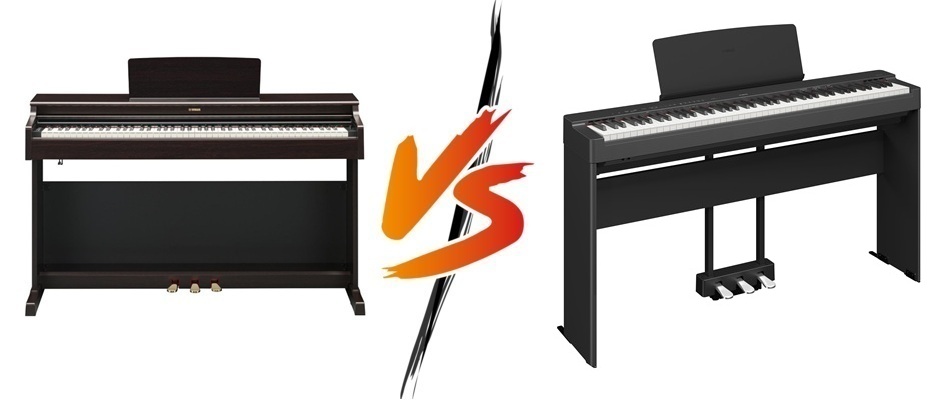
Choosing a digital piano today isn’t just about sound anymore. It’s about how it fits into your home, how it feels under your fingers, and whether it actually motivates you to sit down and play. Yamaha, as one of the most trusted names in the piano world, offers models that cater to very different types of players, even when the price range overlaps. The Yamaha YDP-165 and Yamaha P-225 are a perfect example of this. On paper, both promise authentic piano sound and weighted keys, yet in practice they aim to solve different problems. One is designed to be a permanent, furniture-style instrument that replaces an acoustic piano in your living room. The other is a slim, modern digital piano built for flexibility, portability, and contemporary features. In this review, I’ll break down how these two instruments really compare, where each one shines, and which type of player will get the most value from each option.
Yamaha YDP-165 vs Yamaha P-225 Comparison Chart
If you click the links below, under the product images, you will be redirected to Amazon.com. In case you then decide to buy anything, Amazon.com will pay me a commission. This doesn’t affect the honesty of this review in any way though.
| Specification | Yamaha YDP-165 | Yamaha P-225 |
|---|---|---|
 |  | |
| Check the best price on Amazon | Check the best price on Amazon | |
| Piano Type | Console / furniture-style digital piano | Portable digital piano |
| Keys | 88 keys | 88 keys |
| Key Action | Graded Hammer 3 (GH3) | Graded Hammer Compact (GHC) |
| Key Surface | Synthetic ebony & ivory | Smooth plastic |
| Escapement Simulation | Yes | No |
| Touch Sensitivity | Hard / Medium / Soft / Fixed | Hard / Medium / Soft / Fixed |
| Piano Sound Source | Yamaha CFX concert grand | Yamaha CFX concert grand |
| Polyphony | 192 notes | 192 notes |
| Voices | 10 | 24 |
| Virtual Resonance Modeling | VRM Lite | No VRM |
| Reverb / Effects | Reverb, brilliance | Reverb, Sound Boost |
| Speakers | 2 × 20 W | 2 × approx. 7 W (two-way system) |
| Speaker Placement | Cabinet-mounted | Body-mounted |
| Headphone Jacks | 2 | 2 |
| Bluetooth Audio | No | Yes |
| Bluetooth MIDI | No | Optional via adapter |
| USB to Host | Yes | Yes |
| USB Audio Interface | Yes | Yes |
| Line Out / Aux Out | Limited / region dependent | Yes (region dependent) |
| Built-in Songs | 353 lesson songs + demos | Fewer demo songs |
| Recording | 2-track MIDI recording | 1-track MIDI recording |
| Metronome | Yes | Yes |
| App Compatibility | Yamaha Smart Pianist | Yamaha Smart Pianist |
| Pedals Included | 3-pedal unit (soft, sostenuto, sustain) | Sustain pedal (3-pedal unit optional) |
| Stand | Built-in cabinet | Optional stand |
| Portability | Low | High |
| Dimensions (approx.) | Large, upright-style | Slim, compact |
| Weight (approx.) | ~42 kg | ~11.5 kg |
| Target Use | Home practice, long-term study | Home, studio, gigging, flexible use |
| My individual reviews | Yamaha YDP-165 review | Yamaha P-225 review |
Design & Build
Design and build quality are often overlooked when people shop for digital pianos, yet they play a huge role in how enjoyable the instrument is to live with long term. This is where the Yamaha YDP-165 and Yamaha P-225 immediately part ways, because they are built with very different priorities in mind. One is meant to stay put and become part of your home. The other is designed to adapt to your lifestyle, even if that means moving around.
Overall Concept and Philosophy
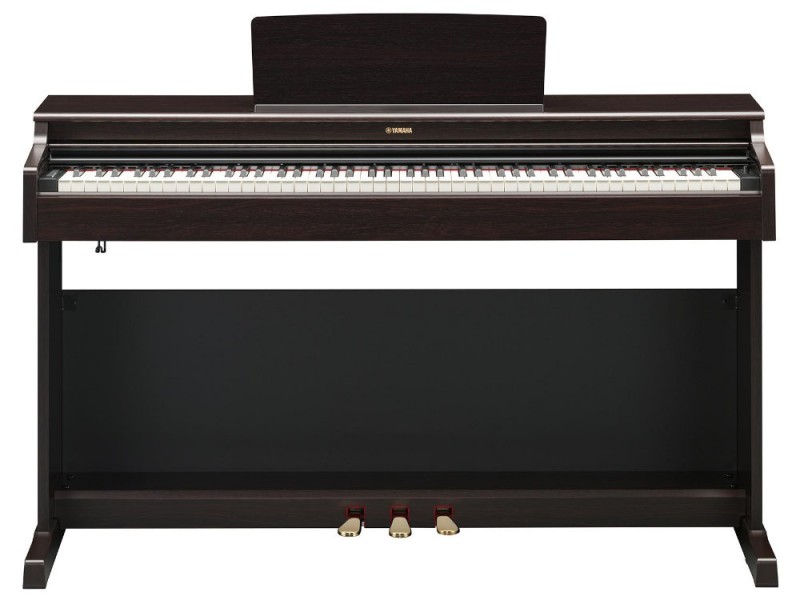
The Yamaha YDP-165 follows the classic console-style digital piano formula. Yamaha clearly intends it to replace an acoustic upright piano in a modern household. From the moment you see it assembled, it feels like a “real” instrument rather than a piece of gear. It’s substantial, it has visual weight, and it looks like it belongs in a living room or practice room without apology.
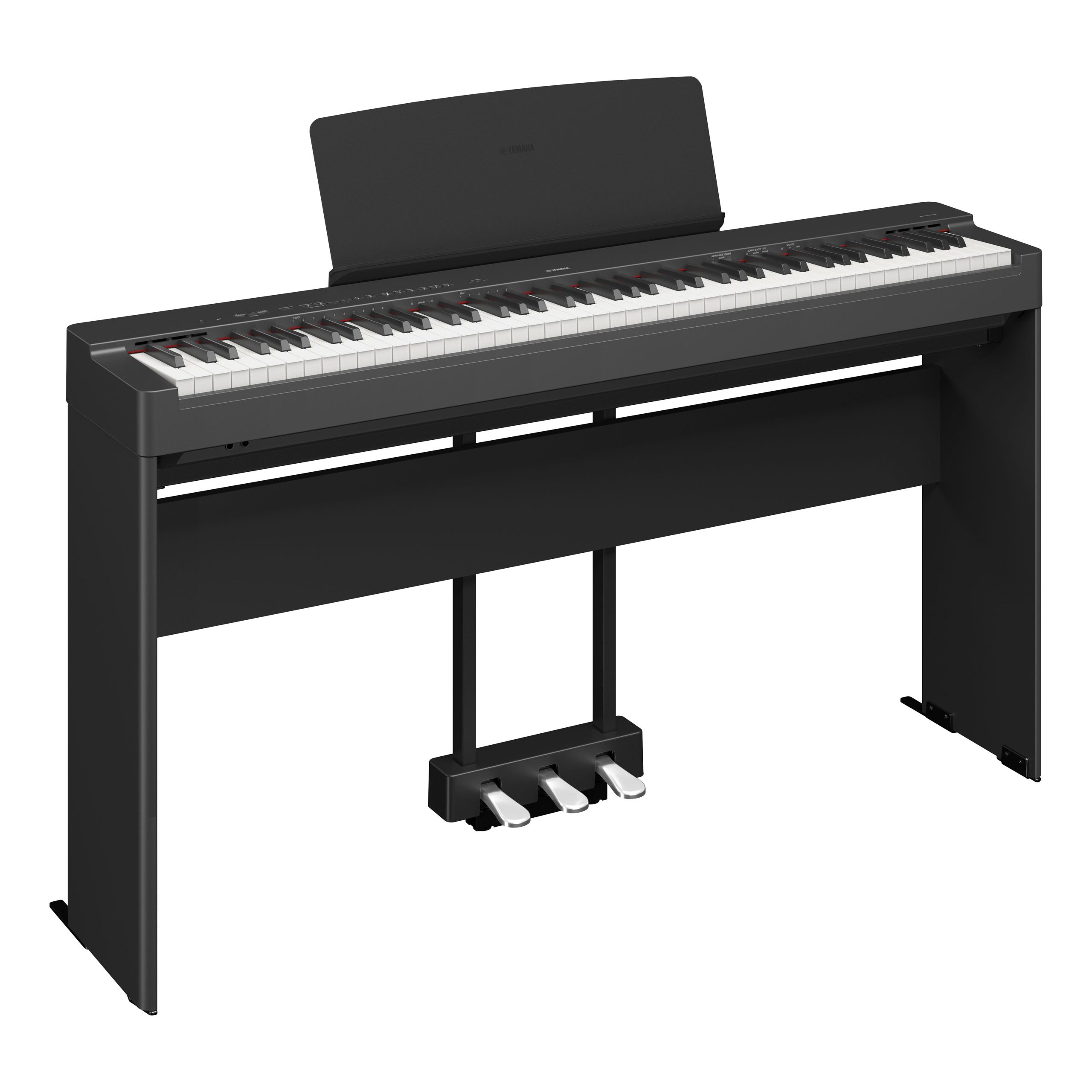
The P-225, on the other hand, is unapologetically modern and practical. Its design is minimal, slim, and functional. It does not try to look like an acoustic piano. Instead, it embraces the idea of being a compact digital instrument that fits into many environments. Bedroom, studio, rehearsal space, stage, classroom. It adapts rather than defines the room it’s in.
Neither approach is better by default, but they appeal to very different buyers.
Cabinet and Physical Presence
The YDP-165 has a full cabinet made from MDF panels, similar to what you’d expect from an upright digital piano. It has side panels, a rear panel, a built-in music rest, and an integrated pedal assembly. Once assembled, it feels solid and stable. There’s very little flex in the structure, and when you play with force, the piano doesn’t shift or wobble.
Visually, the cabinet gives the YDP-165 a sense of permanence. It looks like furniture. That can be a big advantage if you want the piano to blend naturally into your home. It doesn’t look like a temporary setup or something that needs to be put away after practice. Guests immediately recognize it as a piano.
The downside is obvious: it takes up space, and it’s not going anywhere easily. Once you’ve assembled it, moving it means disassembly or a careful two-person lift. This isn’t a piano you casually relocate from room to room.
The P-225 is the opposite. The instrument itself is just a slim slab with integrated speakers and controls. On its own, it looks almost understated. When placed on a simple stand, it can look a bit utilitarian. When paired with Yamaha’s optional furniture stand and pedal unit, it starts to resemble a compact home piano, but it still doesn’t have the same visual authority as the YDP-165.
That said, the compact footprint is a major advantage. The P-225 fits easily into smaller apartments, dorm rooms, or shared spaces. You can slide it against a wall, tuck it into a corner, or store it away when not in use. For many people, that flexibility outweighs the lack of a traditional piano look.
Materials and Finish Quality
Yamaha generally does a good job with materials at this price range, and both models reflect that, though in different ways.
The YDP-165’s cabinet is sturdy and well finished. The surfaces feel smooth and consistent, and the available finishes (typically black, white, or dark rosewood depending on region) look clean and understated. It’s not luxurious in a high-end furniture sense, but it’s tasteful and durable. The piano doesn’t creak or feel hollow when you play, which adds to the sense of realism.
The P-225 uses more plastic by necessity, especially for the casing. However, Yamaha’s plastics are well chosen. The surface feels solid rather than cheap, and the edges are cleanly finished. There’s no sense that corners were cut in a way that affects durability. For a portable digital piano, it feels reassuringly robust.
If you judge purely on materials and heft, the YDP-165 clearly feels more substantial. If you judge on practicality and weight-to-durability ratio, the P-225 holds its own surprisingly well.
Pedals and Playing Stability
Pedals are an important part of design that often get ignored.
The YDP-165 comes with a built-in three-pedal unit. This is a big deal if you care about realism. The pedals are fixed in place, properly spaced, and always exactly where you expect them to be. You don’t have to worry about pedals sliding away on the floor or cables getting in the way. This setup feels very close to an acoustic upright piano, especially for players working on classical repertoire.
The pedal assembly also contributes to overall stability. When you press the sustain pedal firmly, nothing moves. Everything feels anchored and predictable.
With the P-225, pedal experience depends heavily on what accessories you use. Out of the box, it may come with a basic sustain pedal, which works fine functionally but doesn’t feel luxurious. If you upgrade to Yamaha’s optional three-pedal unit and matching stand, the experience improves significantly, but it’s still a modular system. It’s good, but it never quite reaches the integrated, no-compromise feel of the YDP-165.
That said, modular pedals can be an advantage if you want to travel light or use the piano in different contexts.
Controls and Interface Design
The YDP-165 keeps things traditional and simple. Most controls are discreet and minimal. Buttons are usually placed out of sight or integrated subtly into the design. The idea is that once you start playing, nothing distracts you. This works well for focused practice, but it can feel limiting if you like to tweak settings often or experiment with sounds.
The P-225 embraces a more modern interface. Controls are clearly labeled and easy to access. Yamaha has streamlined the layout compared to older P-series models, making it intuitive even for beginners. The trade-off is that it looks more like a piece of electronic equipment than a traditional piano.
Neither approach is wrong. The YDP-165 prioritizes immersion. The P-225 prioritizes usability.
Portability and Practical Considerations
From a purely practical standpoint, the P-225 wins without question. It’s lighter, slimmer, and easier to move. If you need to transport it, store it, or share space with other activities, the design works in your favor. This is especially important for students, renters, or musicians who don’t have a dedicated music room.
The YDP-165, by contrast, demands commitment. You choose a spot for it, assemble it, and that’s where it lives. For some people, that’s actually a benefit. A permanent piano encourages regular practice. It becomes part of your daily environment rather than something you set up only when you feel like playing.
Final Thoughts on Design & Build
In terms of design and build, the Yamaha YDP-165 feels like a digital piano for someone who wants a stable, permanent instrument that behaves like an acoustic piano in everyday life. It’s solid, traditional, and visually reassuring.
The Yamaha P-225 feels like a digital piano for someone who values flexibility, modern design, and efficient use of space. It’s well built for its category and surprisingly durable, but it never tries to hide what it is: a portable digital instrument.
Your decision here isn’t about quality. It’s about lifestyle. If you want a piano that settles into your home and stays there, the YDP-165 makes more sense. If you want something that adapts to you, the P-225’s design philosophy is hard to beat.
Keyboard
The keyboard is the heart of any digital piano. You can forgive a lot of shortcomings if the keys feel right, but if they don’t, even the best sound engine won’t save the experience. This is one of the most important areas where the Yamaha YDP-165 and Yamaha P-225 differ in meaningful ways, especially for players who care about technique, control, and long-term development.
Key Action Philosophy
Yamaha approaches key action design with a strong acoustic piano heritage, and that shows in both instruments. However, the intent behind each action is different.
The YDP-165 uses Yamaha’s Graded Hammer 3 (GH3) action. This is one of Yamaha’s more established actions and has been used in many mid-range and higher-end digital pianos over the years. The goal here is to replicate the physical behavior of an acoustic grand or upright piano as closely as possible within a digital format.
The P-225 uses Yamaha’s newer Graded Hammer Compact (GHC) action. As the name suggests, this action is designed to be slimmer and lighter while still offering a weighted, graded feel. It exists primarily to make portable pianos more manageable without completely sacrificing realism.
Both are fully weighted, graded 88-key actions, but they feel quite different in practice.
Weighting and Resistance
The GH3 action on the YDP-165 feels noticeably heavier, especially in the lower register. Bass keys require more effort, just like on an acoustic piano, while the treble keys feel lighter and faster. This graded resistance encourages proper finger strength and hand development over time.
For beginners, this can feel challenging at first. There is a sense of physical work involved, especially if you’re coming from an unweighted keyboard. However, this resistance pays off as technique improves. Trills, repeated notes, and dynamic control all benefit from the more substantial feel.
The GHC action on the P-225 is lighter overall. The keys still have weight, and the grading is present, but the resistance is reduced. This makes the keyboard feel quicker and easier to play, especially for casual players or those who play a lot of pop, rock, or electric piano parts.
Some players enjoy this lighter feel because it reduces fatigue during long sessions. Others, particularly those focused on classical repertoire, may find it slightly lacking in depth compared to the GH3.
Key Travel and Depth
Another important difference is key travel, which refers to how far the key moves when pressed.
On the YDP-165, key travel is deeper and closer to what you’d expect from an acoustic piano. This gives you more physical feedback and helps with fine control at low velocities. Soft playing feels more intentional, and there’s a clearer sense of where the key “engages.”
The P-225’s keys have shallower travel. This is part of what allows the instrument to be so slim. While this doesn’t prevent expressive playing, it does change the feel. Very soft dynamics require a bit more finesse, and some players may feel slightly disconnected compared to a deeper action.
For many users, this difference won’t matter much. But for players who are sensitive to touch and phrasing, it’s noticeable.
Repetition and Note Control
The GH3 action includes a simulated escapement and triple-sensor detection. This allows for faster note repetition without fully releasing the key, similar to how an acoustic piano behaves. This is particularly useful for advanced techniques, repeated notes, and expressive phrasing.
In practical terms, this means you can play rapid passages more fluidly and maintain control over legato and staccato articulation. It’s one of the reasons GH3 is often recommended for serious students.
The GHC action in the P-225 is responsive, but it doesn’t offer the same level of repetition realism. For most styles, this is perfectly adequate. However, when playing fast classical passages or pieces that rely heavily on repeated notes, the difference becomes apparent.
Again, this doesn’t make the P-225 bad. It simply reflects its design priorities.
Key Surface and Texture
The YDP-165 features synthetic ebony and ivory keytops. These textured surfaces add subtle grip, which becomes especially useful during longer practice sessions. Sweaty or dry fingers are less likely to slip, and the overall experience feels more premium.
This detail also contributes to the illusion of playing an acoustic piano. It’s a small thing, but it adds up, especially for players who spend hours at the keyboard.
The P-225 typically uses smooth plastic keytops. They’re comfortable and durable, but they don’t provide the same tactile feedback. Some players prefer the smoother feel, particularly for faster or lighter playing styles. Others miss the texture.
Noise and Mechanical Feel
Another aspect often overlooked is mechanical noise.
The YDP-165’s heavier action produces a more solid, dampened mechanical sound when keys return. This makes the instrument feel quieter and more refined during practice, especially when playing without headphones.
The P-225’s lighter keys can produce slightly more noticeable mechanical noise, particularly in quiet rooms. This isn’t excessive or distracting, but it’s something sensitive players may notice during late-night practice.
Consistency Across the Keyboard
One area where Yamaha consistently performs well is key consistency.
On both models, the weighting across the keyboard is even and predictable. There are no strange dead spots or uneven keys. However, the YDP-165 feels more uniform in resistance and return speed, likely due to its larger internal action components.
The P-225 still performs well here, but extreme dynamic control requires a bit more adaptation from the player.
Adaptability for Different Skill Levels
For beginners, the P-225’s lighter action can be more approachable. It’s forgiving and less physically demanding, which can help new players focus on notes and rhythm rather than finger strength.
For intermediate and advanced players, the YDP-165 offers more room to grow. Its action rewards proper technique and makes the transition to an acoustic piano easier if that’s a future goal.
Teachers often favor heavier actions for students precisely because they build good habits early.
Long-Term Playing Experience
Over months and years, the keyboard feel becomes even more important.
The YDP-165 encourages disciplined practice. It feels like a real instrument that expects something from you. Many players find that this increases motivation and satisfaction, especially as they improve.
The P-225 feels more relaxed and versatile. It invites casual playing, experimentation, and variety. It’s easier to sit down and just play without feeling like you’re committing to a formal practice session.
Final Thoughts on the Keyboard
If keyboard feel is your top priority, the Yamaha YDP-165 has a clear edge. Its GH3 action, deeper key travel, textured keytops, and more realistic resistance make it better suited for serious piano study and expressive acoustic-style playing.
The Yamaha P-225’s GHC action is not inferior, but it is different. It trades some realism for portability and ease of use. For many players, especially those who value flexibility and modern features, this is a smart compromise.
In the end, the best keyboard is the one that makes you want to play. If you want a keyboard that feels demanding and authentic, choose the YDP-165. If you want one that feels friendly, light, and adaptable, the P-225 may be the better fit.
Sound Quality & Voices
Sound is where expectations tend to be highest with digital pianos, and it’s also where disappointment can creep in if marketing promises don’t match reality. Yamaha generally does a solid job here, and both the YDP-165 and the P-225 deliver high-quality sound for their respective categories. Still, they approach sound design with slightly different goals, and those differences matter depending on how and what you play.
Core Piano Sound
At the heart of both instruments is Yamaha’s CFX concert grand piano sample. This is Yamaha’s flagship acoustic grand, and it’s a strong foundation. The tone is clear, balanced, and controlled rather than overly bright or hyped. You get a solid low end, a present midrange, and a clean, singing treble.
On the YDP-165, the CFX sound feels tuned for realism and nuance. The dynamic range is wide, and the piano responds well to changes in touch. Soft playing stays warm and intimate, while harder playing opens up the sound without becoming harsh. There’s a sense of weight behind each note that complements the heavier key action.
The P-225 uses the same source material, but the presentation is slightly different. The sound is a bit more forward and immediate. This works well in a variety of contexts, especially if you’re playing with backing tracks or other instruments. The piano cuts through more easily, though it can feel a touch less organic in solo, intimate playing.
Dynamic Response and Expressiveness
Dynamic response is where digital pianos separate the good from the great.
The YDP-165 excels at translating subtle differences in touch into sound. Pianissimo passages are controlled and expressive, and crescendos feel natural. This makes it especially satisfying for classical pieces and expressive solo playing. You can lean into phrases and feel the sound bloom in response.
The P-225 is responsive, but the dynamic range feels slightly compressed by comparison. It’s still expressive enough for most music, but very soft playing requires more care, and the transition between dynamic layers can feel less smooth. For pop, jazz, and general playing, this isn’t a problem. For delicate classical work, it’s noticeable.
Resonance and Harmonic Complexity
One of the strengths of the YDP-165 is its use of Virtual Resonance Modeling Lite. This technology simulates sympathetic resonance between strings, the soundboard, and the cabinet of an acoustic piano.
In practice, this adds depth. When you hold the sustain pedal and play chords, you hear subtle interactions between notes. The sound feels less static and more alive. It’s not as advanced as Yamaha’s full VRM found in higher-end models, but it does enough to enhance realism.
The P-225 does not focus as heavily on resonance modeling. The sound is cleaner and more direct. This can actually be an advantage in some situations, such as recording or playing in a mix, where too much resonance can muddy the sound. However, when playing solo with headphones or in a quiet room, the YDP-165 feels more immersive.
Voice Selection and Variety
This is one of the clearest differences between the two models.
The YDP-165 keeps things simple. It offers a limited selection of voices, mainly variations of acoustic piano along with a few electric pianos, organs, and strings. The focus is clearly on piano playing rather than sound exploration.
For many players, this is perfectly fine. If you mostly play piano, you don’t need dozens of voices. The included sounds are well chosen and usable, even if they aren’t extensive.
The P-225 offers a much broader range of voices. In addition to acoustic pianos, you get multiple electric pianos, organs, strings, basses, and other supporting sounds. This makes the P-225 more versatile and fun to experiment with.
If you enjoy switching sounds, layering instruments, or playing different styles, the P-225 feels more rewarding. It encourages creativity beyond traditional piano playing.
Electric Pianos and Other Sounds
The electric piano sounds on the P-225 are particularly strong. They have character and respond well to touch, making them suitable for jazz, funk, and pop. These voices feel more refined and usable than the basic electric piano sounds found on many entry-level digital pianos.
The YDP-165 includes electric piano sounds, but they feel more like a bonus than a core feature. They’re usable, but not the reason to buy the instrument.
Organ and string sounds on both models are serviceable but not exceptional. They’re fine for basic accompaniment or practice, but they won’t replace a dedicated keyboard or synth if sound design is your priority.
Polyphony and Note Handling
Both instruments offer ample polyphony for realistic playing. You won’t easily run into dropped notes, even with sustain pedal use and layered sounds.
The YDP-165’s handling of sustained notes feels particularly natural, likely due to its focus on resonance modeling. Chords decay smoothly, and nothing feels abruptly cut off.
The P-225 handles polyphony well too, though its sound engine prioritizes clarity over complexity. This can make dense passages sound cleaner, but sometimes less rich.
Headphone Experience
Many players practice with headphones, and this is an area where sound design matters a lot.
The YDP-165 shines here. The combination of its sound engine and resonance modeling creates a convincing, immersive headphone experience. Notes feel placed in a realistic space rather than stuck inside your head.
The P-225 includes Yamaha’s Stereophonic Optimizer, which improves the headphone experience by simulating the sound of a piano in front of you. This works well and makes long practice sessions more comfortable. Still, the overall depth and warmth slightly favor the YDP-165.
Sound Customization
Neither piano offers deep sound editing, but there are basic options.
The YDP-165 allows adjustments to brilliance and reverb, keeping things simple and piano-focused. It’s enough to fine-tune the sound for your room or headphones.
The P-225 offers similar controls, along with features like Sound Boost. Sound Boost is useful if you need extra presence, but it can feel artificial in solo practice. It’s more of a performance feature than a realism feature.
Recording and Playback
Both instruments allow basic recording, but the P-225’s sound versatility makes it more fun to use for quick demos or ideas. You can sketch arrangements with different voices without external gear.
The YDP-165’s recordings feel more like piano practice recordings. They’re clean and accurate, but limited to the piano-centric sound palette.
Final Thoughts on Sound Quality & Voices
The Yamaha YDP-165 prioritizes realism, depth, and expressive nuance. Its piano sound feels mature and focused, especially for solo playing and classical music. It rewards careful touch and makes long practice sessions satisfying.
The Yamaha P-225 prioritizes versatility and immediacy. Its sound is clear, flexible, and well suited to modern playing styles. While it doesn’t quite match the YDP-165 in acoustic piano depth, it offers a wider creative palette.
If your main goal is to sit down and feel like you’re playing a real piano, the YDP-165 delivers a more convincing experience. If you want to explore different sounds and styles while still having a solid piano foundation, the P-225 gives you more options and a more playful sound environment.
Speakers
Speakers are one of those features that rarely get enough attention in digital piano reviews, yet they have a huge impact on how the instrument feels in daily use. You can have a great sound engine and a good keyboard, but if the speakers don’t translate that sound convincingly into the room, the overall experience suffers. This is an area where the Yamaha YDP-165 and Yamaha P-225 differ not just in power, but in philosophy.
Speaker System Design
The Yamaha YDP-165 uses a built-in stereo speaker system integrated into its cabinet. Because the piano has a full furniture-style body, Yamaha has more physical space to work with. The speakers are mounted inside the cabinet in a way that allows the sound to interact with the internal structure, much like an acoustic piano’s soundboard does.
This cabinet-assisted sound projection gives the YDP-165 a more enveloping presence. When you play, the sound doesn’t feel like it’s coming from a single point. Instead, it fills the room more naturally. This design choice aligns with Yamaha’s goal of making the YDP-165 feel like a substitute for an acoustic upright piano.
The P-225 takes a very different approach. Its speaker system is built into a slim, portable chassis, which limits how much air the speakers can move. Yamaha compensates for this with a carefully designed two-way speaker system that focuses on clarity and direction rather than sheer power.
The result is a more focused sound that projects forward. It’s efficient, modern, and surprisingly effective for such a compact instrument, but it doesn’t aim to recreate the physical presence of an acoustic piano in the same way the YDP-165 does.
Power and Volume
In terms of raw power, the YDP-165 has the advantage. Its amplifier and speaker setup is designed for home use in medium-sized rooms. You can play at higher volumes without the sound breaking up or becoming thin. This makes it suitable for living room performances, small gatherings, or teaching situations where multiple people are listening.
The P-225’s speakers are less powerful, which is expected for a portable instrument. They are more than adequate for personal practice, small rooms, and casual playing, but they reach their limits sooner. At higher volumes, the sound remains clear but lacks the depth and physical impact of the YDP-165.
That said, the P-225’s speakers are impressively loud for their size. Yamaha has clearly optimized them for efficiency, and they perform better than many older portable digital pianos in the same category.
Tone and Balance
The YDP-165’s speakers produce a warm, balanced tone. The low end has presence, the midrange feels full, and the high frequencies are smooth rather than sharp. This makes the piano sound pleasant even during long practice sessions. You’re less likely to experience listening fatigue.
This warmth complements the piano’s sound engine and key action. It encourages expressive playing and makes softer dynamics feel satisfying.
The P-225’s speakers emphasize clarity and articulation. Notes are clearly defined, which is helpful when playing fast passages or rhythmic music. However, the low end doesn’t have the same weight, and the sound can feel a bit leaner, especially when playing solo piano pieces.
For ensemble playing or practicing with backing tracks, this clarity can actually be an advantage. The sound cuts through without becoming muddy.
Directionality and Room Interaction
One subtle but important difference is how each piano interacts with the room.
The YDP-165’s cabinet allows sound to disperse more evenly. It feels less directional, meaning you don’t have to sit in a perfect “sweet spot” to enjoy the sound. This is especially noticeable when you’re playing with others in the room or when the piano is placed against a wall.
The P-225’s speakers are more directional. The sound is primarily aimed at the player or the audience in front of the instrument. This works well in practice settings and small performances, but it can feel less immersive if you’re moving around the room.
Placement matters more with the P-225. Using a proper stand and positioning it carefully can make a noticeable difference in sound quality.
Low-End Response
Bass response is one of the biggest challenges for compact digital pianos.
The YDP-165 benefits from its cabinet size, which allows the speakers to produce a fuller low end. Bass notes feel grounded and supportive, which is important for classical and jazz pieces that rely heavily on left-hand depth.
The P-225’s bass is present but more restrained. Yamaha does a good job of keeping it tight and controlled, but it doesn’t have the same physical impact. This is not a flaw so much as a limitation of size and design.
If you rely heavily on deep bass tones, the YDP-165 will feel more satisfying.
Volume Consistency
At low to moderate volumes, both pianos sound good. At higher volumes, differences emerge.
The YDP-165 maintains its tonal balance as volume increases. You can push it harder without the sound becoming harsh. This makes it suitable for dynamic practice and expressive playing.
The P-225 holds up well until you reach the upper end of its volume range. Beyond that, the sound can feel compressed. It’s still usable, but you’re aware of the speaker limitations.
Headphones vs Speakers
It’s worth noting how speakers compare to headphone use.
The YDP-165’s speaker system does a good job of approximating its headphone sound, though headphones still provide more detail. Switching between the two doesn’t feel jarring.
On the P-225, the difference between speakers and headphones is more noticeable. Headphones reveal more depth and nuance than the speakers can fully reproduce. This isn’t unusual for portable digital pianos.
External Amplification
Both pianos can be connected to external speakers or amplifiers, but the P-225 benefits more from this option. With external speakers, it can sound much bigger than its built-in system suggests.
The YDP-165 also improves with external amplification, but it’s less necessary. Its internal speakers are already designed to be the primary sound source.
Real-World Usage Scenarios
For home practice, the YDP-165’s speakers create a comfortable, immersive environment. You can play for hours without feeling like the sound is fighting you.
For mixed-use scenarios, such as practice, casual performances, and recording, the P-225’s speakers are versatile and efficient. They’re not as rich, but they’re practical.
Final Thoughts on Speakers
The Yamaha YDP-165 offers a speaker system that feels designed for long-term, home-based piano playing. It emphasizes warmth, fullness, and room-filling sound.
The Yamaha P-225’s speakers are a technical achievement given the piano’s size. They prioritize clarity, direction, and efficiency, making them well suited for modern, flexible use.
If you want your digital piano to sound and feel like a real instrument in the room, the YDP-165 has the advantage. If you value portability and versatility and are willing to accept some compromises in speaker depth, the P-225 performs admirably within its design limits.
Functions & Usability
Functions and usability are where digital pianos quietly make or break the day-to-day experience. It’s not just about how many features are listed on a spec sheet, but how easy they are to access, how often you actually use them, and whether they support or interrupt your practice. The Yamaha YDP-165 and Yamaha P-225 take noticeably different approaches here, reflecting their different target users.
Design Philosophy Behind the Features
The YDP-165 is designed with a “set it and forget it” mindset. Yamaha clearly expects this piano to be used primarily as a practice and learning instrument. Once you choose your sound and set your preferences, there’s little need to constantly adjust settings. The interface stays out of your way, allowing you to focus on playing.
The P-225 is designed to be interacted with more frequently. Yamaha assumes the user might switch sounds, connect devices, or change settings often. As a result, functions are more front-and-center and easier to access quickly.
Neither approach is better overall, but they suit different playing habits.
Control Layout and Interface
On the YDP-165, controls are minimal and discreet. Buttons are usually placed along the side or under the keyboard, often unlabeled in a way that blends into the cabinet. This keeps the piano looking clean and traditional, but it also means you’ll rely on memory or the manual at first.
Many functions are accessed through key combinations. For example, you hold down a function button and press specific keys to change voices or settings. This system is common on console digital pianos and works well once learned, but it’s not immediately intuitive.
The P-225 uses a much more visible and modern control layout. Buttons are clearly labeled, logically arranged, and easy to reach. Yamaha has simplified the interface compared to older P-series models, making it easier for new users to get comfortable quickly.
For players who like immediate feedback and clear controls, the P-225 feels more user-friendly.
Built-In Learning Tools
The YDP-165 includes a substantial collection of built-in songs, many of which are designed for learning and practice. These include classical pieces, exercises, and demo songs. When paired with Yamaha’s Smart Pianist app, these become even more useful, as the app can display scores and guide practice.
This makes the YDP-165 particularly appealing for beginners and students who are learning independently or with occasional teacher support. The built-in content provides structure and encourages regular practice.
The P-225 includes some practice tools such as a metronome and basic recording, but it does not emphasize built-in lesson content in the same way. It assumes that learning materials may come from apps, teachers, or external devices.
Metronome and Practice Aids
Both pianos include a metronome, and both implementations are solid.
On the YDP-165, the metronome is straightforward and reliable. It’s designed for consistent practice rather than creative experimentation. You set the tempo, choose a time signature, and play.
The P-225’s metronome offers similar functionality, but access is quicker thanks to the more visible controls. This small difference matters during practice, especially if you frequently adjust tempo.
Neither piano stands out dramatically here, but the P-225’s ease of access gives it a slight usability edge.
Recording and Playback
Recording functionality is basic on both models, but useful.
The YDP-165 allows simple song recording, mainly intended for self-evaluation. You can record a piece, listen back, and identify areas for improvement. It’s not designed for multi-track composition or production.
The P-225 offers similar recording capabilities, but its broader voice selection makes recording more fun and exploratory. You can sketch ideas, try different sounds, and quickly capture inspiration.
If you plan to record often, especially with different voices, the P-225 feels more flexible.
Connectivity with Apps
App integration is increasingly important, and both pianos support Yamaha’s Smart Pianist app.
With the YDP-165, the app compensates for the piano’s minimal interface. It gives you visual access to settings, voices, and learning content. This significantly improves usability, especially for beginners.
The P-225 also benefits from app integration, but it’s less dependent on it. The onboard controls already cover most needs. The app becomes more of an enhancement rather than a necessity.
Bluetooth and Wireless Features
This is one of the clearest functional differences.
The YDP-165 does not include Bluetooth audio. Connectivity is primarily via USB. This keeps things simple but limits convenience.
The P-225 includes Bluetooth audio, allowing you to stream music from a phone or tablet directly through the piano’s speakers. This is extremely useful for playing along with backing tracks, tutorials, or recordings. It makes practice more engaging and modern.
For many players, Bluetooth audio alone can be a deciding factor.
USB Audio and MIDI
Both pianos support USB connectivity for MIDI and audio, allowing you to connect to computers, tablets, or recording software.
The YDP-165 functions well as a USB audio interface, making it easy to record piano sound directly into a DAW without extra equipment. This is a strong feature for a home digital piano.
The P-225 also supports USB audio and MIDI, though its implementation focuses more on flexibility than on dedicated recording use.
Ease of Daily Use
Day-to-day usability depends heavily on how often you adjust settings.
If you mostly turn the piano on and play, the YDP-165’s simplicity is a strength. There’s very little to distract you.
If you like to experiment, change sounds, or connect devices frequently, the P-225 is more accommodating. Its controls and wireless features reduce friction.
Learning Curve
The YDP-165 has a slightly steeper learning curve at first, especially if you don’t use the app. Once learned, it becomes second nature.
The P-225 is easier to pick up immediately. Even without reading the manual, most players can navigate its features quickly.
Family and Shared Use
In households with multiple users, the P-225’s clear controls and Bluetooth features make it more accessible. Different users can quickly adjust settings without confusion.
The YDP-165 works well in family settings too, but it assumes a more focused, piano-centric approach.
Reliability and Stability
Both instruments are stable and reliable in daily use. There are no significant usability issues or bugs reported by users. Yamaha’s software implementation is conservative but dependable.
Final Thoughts on Functions & Usability
The Yamaha YDP-165 focuses on disciplined practice and traditional piano use. Its functions are supportive rather than flashy, and its usability improves significantly when paired with the Smart Pianist app.
The Yamaha P-225 focuses on convenience, flexibility, and modern usage. Its Bluetooth audio, accessible controls, and broader functionality make it more adaptable to different playing styles and environments.
If your priority is focused practice with minimal distractions, the YDP-165’s approach makes sense. If you want a digital piano that integrates easily into a modern, connected lifestyle, the P-225 offers a more user-friendly and versatile experience.
Connectivity
Connectivity is one of the areas where modern digital pianos quietly separate themselves from older designs and from each other. It affects how easily the piano fits into your broader musical setup, whether that includes apps, computers, recording software, headphones, or external speakers. While both the Yamaha YDP-165 and Yamaha P-225 offer solid connectivity for their intended users, they clearly prioritize different types of connections.
Overall Connectivity Philosophy
The YDP-165 treats connectivity as a supporting feature rather than a core selling point. Yamaha assumes this piano will mostly live in one place and be used primarily as a self-contained instrument. As a result, its connectivity options are functional and reliable, but not extensive.
The P-225, by contrast, is designed with modern, flexible use in mind. Yamaha expects users to connect it to phones, tablets, laptops, and external audio systems. Its connectivity options reflect that expectation and give it a more contemporary feel.
USB to Host
Both pianos include a USB to Host port, which is arguably the most important modern connection.
On the YDP-165, this port allows you to connect the piano directly to a computer or smart device using a single cable. It supports both MIDI and audio transmission, which means you can record the piano’s sound directly into recording software without an external audio interface. For home recording or online lessons, this is extremely convenient.
The P-225 also includes USB to Host, serving the same basic purpose. It works well with DAWs, notation software, and learning apps. Because the P-225 is often used in more varied setups, this port tends to get more use. The connection is stable and easy to set up on both models.
USB Audio Interface Capability
One of the strengths of the YDP-165 is its built-in USB audio interface functionality. You can record clean digital audio directly into a computer or mobile device. This makes it suitable for students who want to submit recordings, teachers who want to demonstrate remotely, or players who want to archive their practice sessions.
The P-225 also supports USB audio, but its implementation is more oriented toward convenience than studio-level use. It’s perfectly adequate for demos, practice recordings, and content creation, but serious producers may still prefer an external interface for greater control.
Headphone Connectivity
Both pianos include two headphone jacks, which is a small but important detail.
On the YDP-165, having dual headphone jacks is especially useful in teaching environments or shared practice situations. The placement is discreet, keeping the traditional look intact.
The P-225’s headphone jacks are easily accessible and practical. This suits its portable nature, allowing quick setup and teardown.
In terms of sound quality, both deliver clean, noise-free headphone output. However, the YDP-165’s sound engine and resonance modeling give it a slight edge in realism when using high-quality headphones.
Bluetooth Audio
This is one of the most significant differences between the two models.
The YDP-165 does not include built-in Bluetooth audio. If you want to play along with music or tutorials, you’ll need to use an external device or cable connection. This isn’t a dealbreaker for traditional players, but it does limit convenience.
The P-225 includes Bluetooth audio as standard. This allows you to stream music from your phone, tablet, or computer directly through the piano’s speakers. For many modern players, this feature quickly becomes indispensable. It simplifies practice, makes it easier to follow online lessons, and encourages creative play.
Bluetooth audio alone makes the P-225 feel more modern and connected.
Bluetooth MIDI
Neither piano includes native Bluetooth MIDI out of the box in the same way some newer models do.
The YDP-165 relies entirely on wired USB MIDI for communication with apps and software. This is stable and reliable, but less flexible.
The P-225 can support Bluetooth MIDI with an optional adapter. This gives it an advantage for users who want a wireless setup with tablets or smartphones. It’s not included by default, but the option exists.
Audio Outputs and External Speakers
The YDP-165 is primarily designed to use its internal speakers. Dedicated line outputs are limited or absent, depending on region. This reinforces its role as a self-contained home instrument.
The P-225 offers more flexibility. It can connect to external speakers, mixers, or PA systems, making it suitable for small performances or rehearsals. This is a natural extension of its portable design.
If you plan to play outside your home or amplify your piano regularly, the P-225 is the more practical choice.
Integration with Apps
Both pianos integrate with Yamaha’s Smart Pianist app, but the experience differs.
The YDP-165 relies more heavily on the app to access deeper settings and learning content. Connectivity via USB is stable, and once set up, the app greatly enhances usability.
The P-225 uses the app more as a convenience tool. Its onboard controls already cover most functions, so the app becomes optional rather than essential.
Use in Online Lessons
For online lessons, both pianos work well.
The YDP-165’s USB audio interface makes it easy to send high-quality sound to video conferencing software. This is a strong advantage for students and teachers.
The P-225 also performs well here, and its Bluetooth audio can be useful for receiving lesson audio, though wired connections are generally more reliable.
Multi-Device Use
The P-225 is better suited to environments where multiple devices are used. Switching between a phone, tablet, and computer is easier thanks to Bluetooth audio and accessible ports.
The YDP-165 assumes a more static setup, typically connected to one primary device.
Cable Management and Aesthetics
The YDP-165 hides cables well within its cabinet. This keeps the setup tidy and visually appealing.
The P-225, being portable, leaves cables more exposed. This isn’t a flaw, but it does affect aesthetics in permanent setups.
Reliability and Latency
Both pianos offer stable, low-latency connections via USB. Yamaha’s drivers and firmware are mature and reliable.
Bluetooth audio on the P-225 introduces slight latency, which is fine for practice and listening but not ideal for real-time playing along with fast passages. This is normal for Bluetooth audio.
Final Thoughts on Connectivity
The Yamaha YDP-165 offers connectivity that supports focused, home-based piano use. Its USB audio interface and stable wired connections are ideal for practice, learning, and recording.
The Yamaha P-225 offers broader, more modern connectivity. Bluetooth audio, flexible outputs, and optional wireless MIDI make it easier to integrate into a variety of setups.
If you want a clean, reliable, piano-centered setup, the YDP-165 delivers everything you need. If you want a digital piano that easily connects to the modern digital world, the P-225 is the more future-proof choice.
Conclusion
Choosing between the Yamaha YDP-165 and the Yamaha P-225 ultimately comes down to what role you want the piano to play in your life. Both instruments are well made, sound good, and reflect Yamaha’s long-standing experience in building digital pianos, but they are designed with very different priorities in mind.
The YDP-165 is best understood as a digital replacement for an acoustic piano. Its cabinet design, heavier key action, integrated three-pedal system, and warm, room-filling sound all point toward long-term, focused piano study. It encourages good technique, rewards expressive playing, and feels stable and serious in daily use. If your goal is to practice regularly, improve steadily, and have a piano that feels like a permanent part of your home, the YDP-165 makes a strong case. It is especially well suited for beginners who plan to progress, intermediate players, and anyone who values realism over flexibility.
The P-225 takes a more modern and adaptable approach. Its lighter action, compact design, broader sound selection, and Bluetooth audio make it easier to fit into a busy, connected lifestyle. It works well for players who enjoy different styles, like to play along with music, or need a piano that can move between rooms or locations. While it doesn’t quite match the YDP-165 in acoustic realism, it offers more versatility and convenience.
Neither piano is a compromise in quality. Instead, each represents a different answer to the same question: how should a digital piano fit into your daily life? Understanding that difference is the key to making the right choice.
Conclusion
Choosing between the Yamaha YDP-165 and the Yamaha P-225 ultimately comes down to what role you want the piano to play in your life. Both instruments are well made, sound good, and reflect Yamaha’s long-standing experience in building digital pianos, but they are designed with very different priorities in mind.
The YDP-165 is best understood as a digital replacement for an acoustic piano. Its cabinet design, heavier key action, integrated three-pedal system, and warm, room-filling sound all point toward long-term, focused piano study. It encourages good technique, rewards expressive playing, and feels stable and serious in daily use. If your goal is to practice regularly, improve steadily, and have a piano that feels like a permanent part of your home, the YDP-165 makes a strong case. It is especially well suited for beginners who plan to progress, intermediate players, and anyone who values realism over flexibility.
The P-225 takes a more modern and adaptable approach. Its lighter action, compact design, broader sound selection, and Bluetooth audio make it easier to fit into a busy, connected lifestyle. It works well for players who enjoy different styles, like to play along with music, or need a piano that can move between rooms or locations. While it doesn’t quite match the YDP-165 in acoustic realism, it offers more versatility and convenience.
Neither piano is a compromise in quality. Instead, each represents a different answer to the same question: how should a digital piano fit into your daily life? Understanding that difference is the key to making the right choice.