
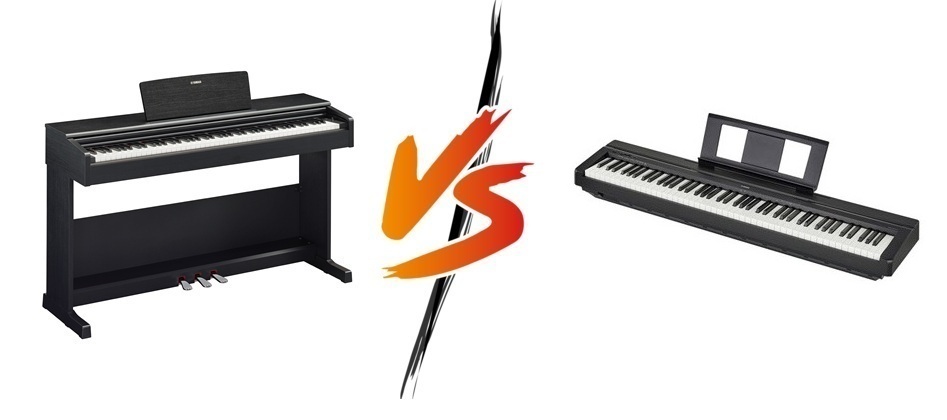
When people start shopping for their first digital piano, they usually run into the same dilemma: portable keyboard or console-style digital piano?
Two models that come up again and again in this discussion are the Yamaha YDP-105 Arius Digital Piano and the Yamaha P‑45 Digital Piano.
Both are entry-level Yamaha instruments. Both use Yamaha’s GHS weighted action. Both aim at beginners and casual players. And both deliver the reliability Yamaha is known for.
But they are not the same kind of instrument at all.
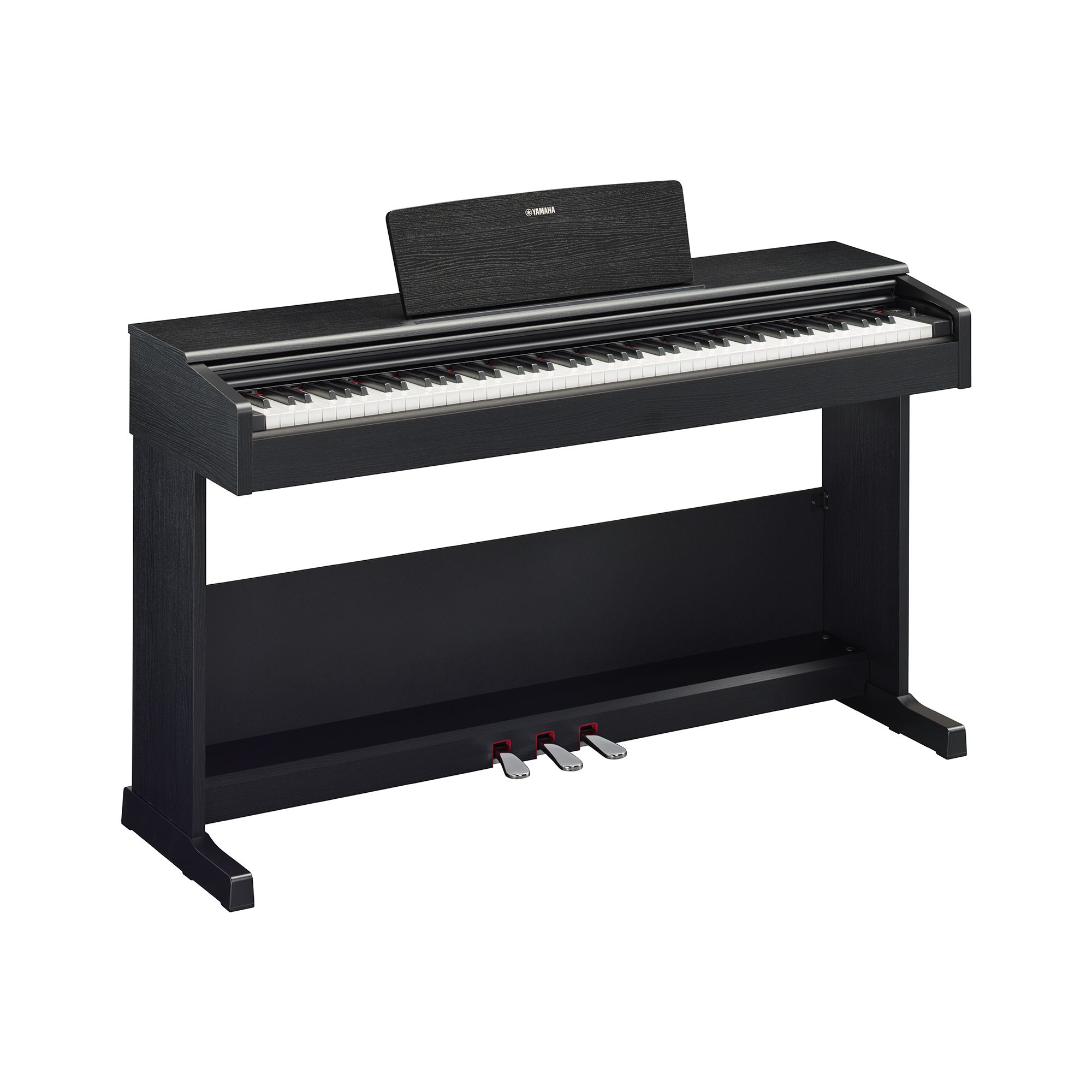
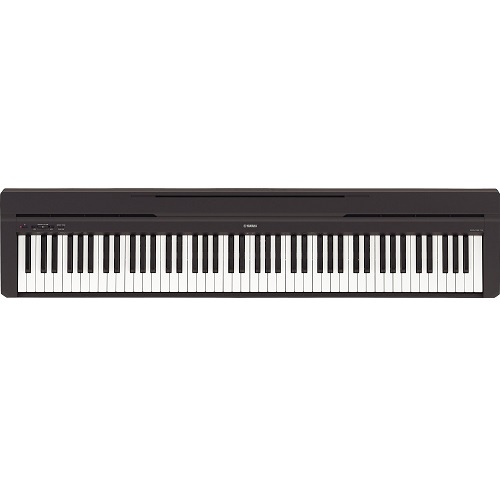
The YDP-105 is a furniture-style digital piano designed to sit permanently in your home. The P-45 is a lightweight portable keyboard you can move around easily.
That difference alone changes the entire experience of owning them.
In this review I’ll walk through everything that matters: design, keyboard feel, sound engine, speakers, functions, connectivity, portability, and the overall playing experience. I’ll also point out the strengths and weaknesses of each piano so you can decide which one actually makes sense for your situation.
Let’s get into it.
Yamaha YDP-105 vs Yamaha P-45 Comparison Chart
If you click the links below, under the product images, you will be redirected to Amazon.com. In case you then decide to buy anything, Amazon.com will pay me a commission. This doesn’t affect the honesty of this review in any way though.
| Feature | Yamaha YDP-105 | Yamaha P-45 |
|---|---|---|
 |  | |
| Check the best price on Amazon | Check the best price on Amazon | |
| Type | Console digital piano | Portable digital piano |
| Number of Keys | 88 | 88 |
| Key Action | GHS (Graded Hammer Standard) | GHS (Graded Hammer Standard) |
| Touch Sensitivity | Hard / Medium / Soft / Fixed | Hard / Medium / Soft / Fixed |
| Sound Engine | AWM Stereo Sampling | AWM Stereo Sampling |
| Polyphony | 64 notes | 64 notes |
| Number of Voices | 10 | 10 |
| Effects | Reverb | Reverb |
| Dual Mode (Layering) | Yes | Yes |
| Duo Mode | Yes | Yes |
| Metronome | Yes | Yes |
| Transpose | Yes | Yes |
| Tuning Adjustment | Yes | Yes |
| Pedals | 3 (Damper, Sostenuto, Soft) | 1 (Sustain pedal included) |
| Half-Pedal Support | Yes | No |
| Speakers | 2 x 12 cm | 2 x 12 cm |
| Amplifier Power | 2 x 6 W | 2 x 6 W |
| Headphone Jacks | 2 | 1 |
| USB Connection | USB-to-Host (MIDI) | USB-to-Host (MIDI) |
| App Compatibility | Yamaha Smart Pianist | Limited |
| Built-in Songs | Demo songs | Demo songs |
| Stand | Integrated cabinet stand | Optional stand required |
| Key Cover | Yes (sliding cover) | No |
| Weight | ~37.5 kg (82.7 lbs) | ~11.5 kg (25.4 lbs) |
| Dimensions (W x D x H) | 1357 x 422 x 815 mm | 1326 x 295 x 154 mm |
| Intended Use | Home practice / furniture piano | Portable practice / gigging |
| Mu individual reviews | Yamaha YDP-105 review | Yamaha P-45 review |
Quick Summary
| Category | Winner |
|---|---|
| Real piano feel & home setup | YDP-105 |
| Portability | P-45 |
| Pedal system | YDP-105 |
| Value for money | P-45 |
| Overall features | Very similar |
Bottom line:
The YDP-105 is better if you want a permanent home piano with a traditional feel, while the P-45 offers nearly the same core piano experience in a much more portable and affordable package.
Design & Build Quality
When comparing digital pianos, design and build quality often get less attention than sound or keyboard action. But in real life, these factors matter more than many buyers expect. The way an instrument is built affects not only how it looks in your home, but also how it feels to use day after day.
The Yamaha YDP-105 and Yamaha P-45 take very different approaches to design. One is meant to function as a permanent piano in your home, while the other is designed to be portable and flexible. Because of that, they feel like completely different products even though they share some internal technology.
Let’s break down how each one is designed and what that means in practical terms.
Yamaha YDP-105 Design
The YDP-105 belongs to Yamaha’s Arius line, which focuses on home digital pianos that resemble traditional acoustic instruments. From a design perspective, the goal is to create something that feels like a real piano rather than an electronic keyboard.
At first glance, the YDP-105 looks like a compact upright piano. It has a full wooden cabinet, a sliding key cover, and a three-pedal unit mounted to the base. The design is clean and understated, which makes it fit naturally into living rooms, practice rooms, or music studios.
One of the biggest advantages of a console digital piano like this is that it feels like a dedicated instrument. When you sit down to play, the height, pedal placement, and overall structure resemble an acoustic piano. That familiarity can make a big difference for beginners who are trying to develop proper technique.
The cabinet itself is made from engineered wood rather than solid hardwood, which is common for digital pianos in this price range. It still feels sturdy once assembled. The panels are thick enough to prevent flexing, and the instrument doesn’t wobble when you play more aggressively.
Assembly is required, but the process is fairly straightforward. Most people can put it together in about 30 to 60 minutes with basic tools. Once assembled, the piano feels solid and stable.
Another nice touch is the sliding key cover. This feature might seem minor, but it’s actually quite practical. It protects the keyboard from dust and gives the instrument a clean appearance when it’s not in use. Many portable keyboards skip this feature entirely.
The control panel on the YDP-105 is intentionally minimal. Instead of a screen or large set of buttons, Yamaha uses a small row of discreet controls on the left side of the keyboard. This keeps the instrument looking more like a traditional piano and less like a piece of electronic equipment.
Some players appreciate this simplicity because it keeps the focus on playing rather than navigating menus. Others may wish for more visible controls, especially when adjusting settings like voices or effects.
The integrated pedal system is another important design feature. The YDP-105 includes three pedals mounted directly to the cabinet: damper, sostenuto, and soft. The damper pedal also supports half-pedaling, which allows more nuanced control over sustain.
Having the pedals built into the instrument is more comfortable than using a separate pedal on the floor. The distance between the pedals and the keyboard feels natural, which helps maintain proper posture while playing.
The downside to this kind of design is portability. Once assembled, the YDP-105 weighs over 80 pounds. It’s not something you can easily move around the house or transport to another location.
In practice, most people set it up in one room and leave it there. If you move homes frequently or need to transport your instrument for lessons or performances, this could be a limitation.
Still, the design accomplishes its main goal: it creates the feeling of a real piano in your home.
Yamaha P-45 Design
The Yamaha P-45 takes the opposite approach. Instead of trying to replicate the look of an acoustic piano, it focuses on portability and simplicity.
At its core, the P-45 is a slim, lightweight keyboard that contains Yamaha’s weighted key action and sound engine in a compact chassis. It’s designed for players who want a realistic piano feel without the size and cost of a console instrument.
Visually, the P-45 is minimalistic. The entire instrument is essentially a long rectangular body with an 88-key keyboard and a small control area on the left side. There are very few buttons and no display screen.
This design keeps the instrument easy to use and reduces clutter on the control panel. However, it also means that many functions are accessed through keyboard shortcuts. For example, you might hold down a button while pressing a specific key to change voices or adjust settings.
Some players find this system convenient once they memorize the shortcuts. Others feel it’s less intuitive compared to pianos with dedicated controls.
One of the biggest advantages of the P-45 is its portability. At roughly 25 pounds, it’s light enough to carry without much effort. You can place it on a keyboard stand, desk, or table depending on your setup.
This flexibility makes it appealing for musicians who need to move their instrument frequently. For example, students can transport it to lessons, and gigging players can take it to rehearsals or small performances.
Because the P-45 doesn’t include a cabinet, it relies on external accessories. Most players eventually purchase a keyboard stand and a better sustain pedal to improve the playing experience.
Yamaha includes a basic sustain pedal with the instrument, but it’s fairly small and lightweight. It works well enough for basic use, though many players upgrade to a sturdier pedal later.
Another thing to note is that the P-45 doesn’t include a key cover. This isn’t unusual for portable keyboards, but it does mean the keys are exposed when the instrument isn’t in use. If dust or debris is a concern, some owners use a cloth cover to protect the keyboard.
The body of the P-45 is made primarily from durable plastic. While that might sound cheap, it actually helps keep the instrument lightweight while still maintaining good durability.
The chassis feels solid when playing, and the keys are well supported by the internal frame. There’s no noticeable flexing or rattling during normal use.
However, the overall aesthetic is clearly that of a keyboard rather than a piano. In a studio or practice space this might not matter much, but in a living room the instrument can look a bit utilitarian compared to a cabinet piano.
Design Philosophy Differences
The biggest takeaway from this comparison is that the two pianos are built with very different goals in mind.
The YDP-105 prioritizes the traditional piano experience. Its cabinet design, integrated pedals, and furniture-style appearance make it feel like a permanent instrument in your home.
The P-45 prioritizes portability and affordability. Its compact body and lightweight construction make it easy to move and adaptable to different setups.
Neither approach is inherently better. It really depends on how you plan to use the instrument.
If you want something that feels like a real piano and blends into your home décor, the YDP-105 clearly has the advantage. Its design encourages regular practice and creates a more authentic playing environment.
If you need something flexible that you can move easily or store away when not in use, the P-45 is the more practical option.
Both instruments are built with Yamaha’s typical attention to reliability, and neither feels poorly made. The difference lies mainly in how they fit into your lifestyle and playing habits.
Keyboard Action and Playing Feel
If there is one factor that matters more than anything else when choosing a digital piano, it is the keyboard action. Sound, speakers, and features are all important, but the way the keys respond under your fingers determines whether the instrument actually feels like a piano.
Both the Yamaha YDP-105 and the Yamaha P-45 use the same key mechanism: Yamaha’s GHS (Graded Hammer Standard) action. Because of this, the core playing feel of the two instruments is very similar. However, there are still subtle differences in how the experience comes across, partly due to the design of the instruments themselves.
In this section, we’ll look closely at the GHS action, how it performs in real playing situations, and whether it provides a convincing piano experience.
The Concept Behind Weighted Keys
To understand the keyboard action on these instruments, it helps to understand why weighted keys exist in the first place.
On an acoustic piano, pressing a key activates a complex mechanical system that throws a hammer against a string. The weight and resistance you feel come from this physical mechanism. The keys in the lower register are heavier because the hammers are larger, while the keys in the higher register are lighter.
Digital pianos try to replicate this experience through weighted key mechanisms. Instead of real hammers striking strings, internal weights and springs simulate the resistance of an acoustic piano.
Yamaha’s GHS action follows this concept by making the keys heavier in the bass and lighter in the treble. This graduated resistance helps players develop proper finger strength and control, especially if they plan to transition to an acoustic piano later.
For beginners, this kind of action is essential. Playing on unweighted keyboards can lead to poor technique and difficulty adjusting to real pianos.
Yamaha’s GHS Action
The Graded Hammer Standard action is Yamaha’s entry-level weighted key system. It appears in many of their affordable digital pianos, including both the YDP-105 and the P-45.
Despite being Yamaha’s most basic weighted action, it’s still well regarded for its reliability and consistency. Yamaha has been using variations of GHS for many years, and the mechanism is well tested.
The action is designed to strike a balance between realism and affordability. Higher-end Yamaha pianos use more advanced systems such as GH3 or NWX, which include additional sensors and wooden keys. GHS keeps things simpler in order to keep the price accessible.
When you press a key on either the YDP-105 or the P-45, you’ll notice a moderate level of resistance. The keys feel noticeably heavier than those on typical keyboards or synthesizers, which helps create a more authentic piano experience.
The weight distribution across the keyboard is also well balanced. Lower notes feel slightly heavier, while higher notes feel lighter, which mirrors the behavior of an acoustic instrument.
Key Surface and Materials
The keys themselves are made from durable plastic, which is standard for digital pianos in this price range.
However, Yamaha adds a small improvement on the YDP-105 by giving the black keys a matte finish. This textured surface provides a bit more grip, which can be helpful during long practice sessions when your fingers might become slightly sweaty.
The white keys remain smooth plastic, but they still feel comfortable to play.
On the P-45, both the white and black keys have a smooth finish. This doesn’t necessarily feel bad, but the keys can feel slightly more slippery compared to the textured black keys on the YDP-105.
These differences are subtle, and most players won’t notice them immediately. Still, over long periods of playing, small details like this can affect comfort.
Touch Sensitivity
Another important aspect of keyboard action is touch sensitivity. This refers to how the piano responds to different playing strengths.
Both the YDP-105 and the P-45 include multiple touch sensitivity settings that allow you to adjust how the instrument reacts to your playing.
The available settings include:
Soft – the piano produces louder notes even with gentle playing
Medium – the default response that balances soft and loud playing
Hard – requires stronger key presses to produce louder sounds
Fixed – disables touch sensitivity entirely
These options allow players to tailor the instrument to their playing style. Beginners with lighter finger strength might prefer the soft setting, while more experienced players may prefer the hard setting for greater dynamic control.
In practice, the default medium setting works well for most situations.
The dynamic range on these pianos is fairly respectable. You can play very soft passages and gradually build to louder notes without the instrument sounding unnatural.
That said, the response isn’t as detailed as higher-end digital pianos. More expensive models often include additional sensors that detect subtle movements of the keys. The GHS action is simpler, which means some extremely nuanced playing techniques may not translate as precisely.
For most beginners and casual players, though, the responsiveness is more than sufficient.
Key Return and Repetition
Another factor that affects playing feel is how quickly the keys return to their resting position after being pressed.
On acoustic pianos, the hammer mechanism allows for quick repetition of notes. Advanced digital piano actions try to replicate this behavior.
The GHS action handles normal playing quite well, but rapid note repetition can feel slightly less responsive compared to higher-end actions. If you play fast classical pieces that involve repeated notes, you might notice a small limitation.
For beginner and intermediate repertoire, however, this rarely becomes an issue.
The key return speed is still fast enough for most styles of music, including pop, jazz, and general piano practice.
Playing Feel on the YDP-105
Although both pianos share the same key action, the YDP-105 often feels slightly more stable during playing.
This is mainly due to the cabinet design. Because the keyboard is mounted inside a solid structure, there is less movement in the instrument when you play aggressively.
The entire piano stays firmly in place, which contributes to a more realistic playing experience. When practicing scales or performing dynamic pieces, the instrument feels secure and grounded.
The pedal setup also plays a role in the overall feel. Because the pedals are integrated into the cabinet, your feet stay in a comfortable and natural position.
This setup mimics the posture you would have at a real piano, which can be beneficial for students learning proper technique.
Playing Feel on the P-45
The P-45 provides the same basic key resistance and graded weighting as the YDP-105, but the overall playing experience can feel slightly different.
Because the instrument sits on a stand or table, the stability depends on your setup. A high-quality keyboard stand will provide good support, but lightweight stands can sometimes wobble during energetic playing.
This doesn’t affect the keyboard mechanism itself, but it can influence the overall feel of the instrument.
Another difference is the pedal setup. Since the sustain pedal is separate from the keyboard, it can occasionally slide on the floor unless you position it carefully.
Many players solve this by placing the pedal against a wall or using a pedal with a rubber base.
Despite these minor issues, the P-45 still offers one of the better keyboard actions in the entry-level portable piano category. Yamaha’s GHS mechanism remains a major advantage compared to many competing keyboards that use lighter or less realistic actions.
Overall Playing Experience
When comparing the keyboard action of the YDP-105 and the P-45, the similarities are far greater than the differences.
Both instruments provide a genuine weighted piano feel that allows beginners to build proper technique. The graded hammer action, touch sensitivity options, and consistent key resistance create a solid foundation for learning piano.
The YDP-105 gains a slight edge in overall playing experience because of its cabinet design and integrated pedal system. These elements make the instrument feel closer to a traditional piano.
However, the P-45 still delivers the same core keyboard performance in a portable format.
For many players, this means you can get essentially the same key action at a significantly lower price if portability is important.
In the end, both pianos succeed in providing a realistic and enjoyable playing feel, which is one of the main reasons Yamaha instruments remain so popular among beginners and casual players.
Sound Engine and Piano Tone
When people evaluate a digital piano, sound quality is usually one of the first things they care about. After all, the whole point of the instrument is to recreate the tone of a real piano as convincingly as possible.
Both the Yamaha YDP-105 and the Yamaha P-45 rely on Yamaha’s AWM Stereo Sampling sound engine. This means they share the same core sound technology, which is one reason the two instruments often feel very similar in terms of tone.
However, even though they use the same engine, the overall listening experience is not identical. Speaker design, cabinet structure, and acoustic projection all influence how the sound ultimately reaches the player.
In this section, we’ll take a closer look at how the sound engine works, how the piano tone performs in real-world playing situations, and where the strengths and limitations of these instruments lie.
Yamaha’s AWM Stereo Sampling Technology
AWM stands for Advanced Wave Memory, which is Yamaha’s long-standing digital sound reproduction system. The basic idea behind AWM is fairly simple: instead of synthesizing a piano sound from scratch, Yamaha records samples of real acoustic pianos and plays those recordings back digitally when you press a key.
These recordings capture the tonal character of a real instrument, including the subtle differences between soft and loud playing. Multiple recordings are typically taken at different dynamic levels so the sound changes naturally depending on how hard you press the keys.
The “stereo sampling” part refers to the fact that the sound is recorded using two microphones, which preserves the spatial character of the original piano. When played through stereo speakers or headphones, this helps create a more immersive listening experience.
AWM has been around for many years, but Yamaha has continuously refined it. Even in entry-level digital pianos like the YDP-105 and P-45, the samples are clear, balanced, and generally pleasing to the ear.
That said, this technology is not Yamaha’s newest sound engine. Higher-end digital pianos often use more advanced systems with larger sample libraries, physical modeling, and additional layers of realism. AWM is designed to keep costs low while still delivering a respectable piano sound.
The Main Piano Voice
The primary sound on both instruments is the standard acoustic grand piano voice. This is the sound most players will use the majority of the time, whether they are practicing scales, playing classical pieces, or performing modern songs.
The tone is clean and well balanced across the keyboard. Lower notes have a warm, rounded character, while higher notes are bright and clear without becoming harsh.
One of the strengths of Yamaha’s piano samples is their clarity. The notes remain distinct even when playing chords or dense passages. This makes the instruments suitable for a wide variety of musical styles, including classical, pop, and jazz.
The dynamic response is also reasonably convincing. If you play softly, the piano produces a gentle and mellow tone. As you play harder, the sound becomes brighter and more powerful.
While the transition between dynamic levels is smooth, it is not as detailed as what you would find in more expensive digital pianos. Higher-end instruments often include more velocity layers, which allow for finer gradations of tone as you vary your touch.
Still, for beginner and intermediate players, the sound quality is more than adequate.
Polyphony Limitations
Both the YDP-105 and the P-45 offer 64-note polyphony. Polyphony refers to the number of notes the piano can produce simultaneously.
At first glance, 64 notes may sound like a lot, and in many situations it is. If you are playing simple melodies or basic chords, you will never approach this limit.
However, polyphony can become more important when using the sustain pedal or layering multiple sounds together. Each sustained note continues to count toward the polyphony limit even after you release the key.
In complex passages with heavy pedal use, older notes may occasionally be cut off to make room for new ones. When this happens, the sound engine automatically removes the earliest notes to stay within the polyphony limit.
In practice, this limitation is rarely noticeable for beginners. Intermediate players might occasionally encounter it in more demanding pieces, but it is still manageable.
Many modern digital pianos now offer 128 or even 256 notes of polyphony, so the 64-note limit does reveal the entry-level nature of these instruments. Still, it does not significantly affect most everyday playing scenarios.
Additional Instrument Voices
Besides the main piano sound, both instruments include a small selection of additional voices. In total, there are ten different sounds available.
These typically include:
Two acoustic piano variations
Electric pianos
Organs
Strings
Harpsichord
Vibraphone
These voices add some versatility, allowing players to experiment with different musical styles.
The electric piano sounds are particularly enjoyable. They recreate the classic tone associated with vintage electric pianos used in jazz, pop, and R&B. The warm, slightly bell-like character of these sounds can be very expressive when paired with the weighted keyboard.
The organ voices are simple but usable, making them suitable for practicing or casual playing. The string sounds are more atmospheric and are often used for layering with the piano to create a fuller texture.
While these additional voices are not the main focus of the instrument, they provide enough variety to keep practice sessions interesting.
Sound Differences Between the Two Pianos
Even though both instruments use the same sound engine and sample library, they can sound slightly different in practice.
The YDP-105 often feels more immersive because of its cabinet design. The speakers are mounted inside the body of the piano, which allows the sound to resonate through the structure of the instrument.
This creates a slightly richer and more spacious sound compared to a portable keyboard. The cabinet also helps distribute the sound more evenly across the room.
Another feature that enhances the YDP-105’s sound is damper resonance. This effect simulates the sympathetic vibration of strings in an acoustic piano when the sustain pedal is pressed.
On a real piano, pressing the damper pedal lifts all the dampers off the strings, allowing them to vibrate freely. Even strings that are not directly struck by the hammers can resonate in response to other notes being played.
The YDP-105 recreates this effect digitally, adding a subtle layer of realism to sustained passages.
The P-45, on the other hand, does not emphasize this effect as strongly. Its sound engine focuses mainly on the basic piano samples without as much additional resonance modeling.
Listening Through Headphones
One interesting aspect of these instruments is that their sound differences become less noticeable when using headphones.
Because both pianos share the same core samples, the audio signal sent to the headphone output is extremely similar. When listening this way, the tonal character of the two instruments becomes almost identical.
This is good news for players who practice primarily with headphones. In that situation, you are essentially getting the same piano tone from both instruments.
Headphone practice also eliminates any limitations of the built-in speakers, allowing you to hear the samples more clearly.
Overall Piano Tone Quality
When evaluating the sound engine and piano tone of the YDP-105 and P-45, it’s important to keep their price range in mind.
These instruments are designed as entry-level digital pianos. Their sound engines aim to provide a convincing piano tone without the advanced modeling or massive sample libraries found in premium instruments.
Within those limits, Yamaha has done a very good job. The piano tone is clear, balanced, and expressive enough for most beginners and casual players.
The YDP-105 has a slight advantage in overall listening experience due to its cabinet design and resonance effects. The P-45, meanwhile, offers essentially the same core sound in a much more portable format.
Neither instrument will completely replicate the complexity of a real acoustic grand piano. However, both deliver a pleasant and reliable piano tone that works well for practice, learning, and everyday playing.
For many players, the sound quality of these instruments will be more than sufficient for years of use.
Speakers and Amplification
The speaker system of a digital piano is one of those features that many buyers underestimate at first. When reading specifications, it is easy to focus on keyboard action, sound engines, or the number of instrument voices. But the speakers are what actually deliver the sound into the room, and they play a major role in shaping the overall playing experience.
Two digital pianos can technically use the same sound engine and samples but still sound noticeably different simply because of how their speakers are designed and positioned.
This is exactly the case with the Yamaha YDP-105 and the Yamaha P-45. On paper, their speaker specifications look very similar. However, the way the sound is projected into the room ends up being quite different because of the structural design of each instrument.
In this section, we will look closely at how the speaker systems work, how they affect the listening experience, and what you can realistically expect from each piano.
Speaker Specifications
Both the Yamaha YDP-105 and the Yamaha P-45 use a relatively simple amplification system designed for home practice.
Each instrument includes:
- Two speakers
- Two amplifiers rated at approximately 6 watts each
At first glance, this means the two pianos should sound almost identical in terms of volume and clarity. The total amplification power is roughly the same, and the speakers themselves are similar in size.
However, raw specifications rarely tell the full story. The way speakers are positioned inside the instrument and how the sound interacts with the physical structure of the piano can make a noticeable difference in real-world listening.
This is where the design differences between a console piano and a portable keyboard become important.
Speaker Design in the YDP-105
The Yamaha YDP-105 uses a cabinet-style design that houses the speakers inside the body of the piano. This setup allows the sound to travel through the structure of the instrument before reaching the listener.
Because the speakers are integrated into the cabinet, the sound tends to spread more naturally into the room. Instead of being directed straight downward or outward, the sound reflects slightly off the internal surfaces of the cabinet and disperses in a wider pattern.
This creates a listening experience that feels closer to what you would hear from an acoustic piano.
On an acoustic instrument, sound radiates in multiple directions as the wooden body resonates with the vibrating strings. While a digital piano cannot fully replicate this physical process, a cabinet design helps simulate it to some degree.
When sitting at the YDP-105, the sound appears to come from the instrument itself rather than from two small speaker points. This makes the experience feel more immersive.
Another advantage of the cabinet is that it can slightly reinforce lower frequencies. The body of the piano acts as a small acoustic chamber, giving the bass notes a bit more warmth and presence.
This does not mean the instrument produces powerful bass like a large speaker system, but it does help the piano sound fuller than many portable keyboards.
For casual home practice, the volume level of the YDP-105 is more than sufficient. Even at moderate volume settings, the piano can easily fill a small to medium-sized room.
Speaker Design in the P-45
The Yamaha P-45 takes a much more compact approach to its speaker system.
Because the instrument is designed to be portable, the speakers are mounted inside the slim keyboard chassis rather than in a large cabinet. They are typically positioned facing downward through small openings in the bottom of the instrument.
This design helps keep the keyboard lightweight and compact, but it also changes how the sound reaches the player.
Instead of projecting outward from the front of the instrument, the sound travels downward toward the surface or stand supporting the keyboard. From there, it reflects outward into the room.
This method works reasonably well, but it can make the sound feel slightly less direct compared to a cabinet piano. Some players describe the tone as feeling a bit more focused or narrow.
The difference becomes more noticeable if the keyboard is placed on a soft surface such as a padded stand or tablecloth. In those situations, some of the sound energy can be absorbed rather than reflected.
A solid keyboard stand generally provides the best results because it allows the sound to bounce naturally into the room.
Despite these limitations, the P-45 still delivers respectable volume for practice and casual playing. It can easily fill a bedroom, practice room, or small apartment.
However, if you are hoping to perform in larger spaces using only the built-in speakers, the P-45 may start to feel underpowered.
Volume and Room Projection
In terms of raw loudness, both pianos perform fairly similarly. Their amplifier systems provide enough power for everyday home use.
At typical practice levels, you will rarely need to turn the volume above the midpoint on either instrument.
The difference lies more in how the sound spreads through the room.
The YDP-105’s cabinet helps distribute sound more evenly, which can make the piano feel louder even when the volume level is technically the same. The sound fills the space in a broader way, creating a more natural listening environment.
The P-45, by contrast, projects sound in a slightly more directional pattern. This is not necessarily a flaw, but it does make the instrument feel a bit more like an electronic keyboard than a traditional piano.
For solo practice, the difference is relatively small. But when playing in a room with other people listening, the YDP-105 tends to create a more pleasant and room-filling sound.
Sound Clarity and Balance
Clarity is another important aspect of speaker performance.
Both pianos do a good job maintaining clear note definition across the keyboard. Even when playing chords or fast passages, the speakers reproduce the sound with minimal distortion.
The midrange frequencies, where most of the piano’s tonal character lies, are especially clear on both instruments.
Higher notes remain bright without becoming harsh, and lower notes maintain enough body to sound convincing.
The YDP-105 has a slight advantage in perceived depth. Because the sound resonates within the cabinet, the overall tone can feel a bit richer and more spacious.
The P-45 sounds slightly more direct and compact, which is typical for portable keyboards.
Neither instrument produces the kind of deep bass or powerful projection you would expect from a professional stage piano or high-end home digital piano. But within their price range, the sound quality is quite respectable.
Playing with Headphones
One interesting aspect of speaker systems is that their influence disappears completely when using headphones.
Both the YDP-105 and the P-45 include headphone outputs that allow for silent practice. When headphones are connected, the built-in speakers are bypassed and the sound is delivered directly from the internal audio system.
Because both instruments share the same sound engine and samples, the listening experience through headphones becomes almost identical.
In fact, some players prefer practicing this way because it allows them to hear the piano samples in greater detail without any influence from room acoustics.
Headphone practice is also ideal for situations where you need to keep the volume low, such as late-night practice or living in an apartment with thin walls.
Using External Amplification
If you ever need more volume or better sound projection, both pianos can be connected to external audio systems through their headphone outputs.
For example, you can connect them to:
- Studio monitors
- Keyboard amplifiers
- Home stereo systems
- Recording interfaces
Using external speakers can dramatically improve the overall sound experience, especially for the P-45. A pair of good studio monitors can make the piano sound far more powerful and detailed than the built-in speakers allow.
This flexibility is one of the advantages of digital pianos in general. You are not limited to the onboard speakers if you want a more robust sound.
Overall Speaker Performance
When comparing the speakers and amplification systems of the YDP-105 and the P-45, the differences are mostly related to design rather than raw power.
The YDP-105 benefits from its cabinet structure, which helps distribute sound more naturally throughout the room. This makes the instrument feel closer to an acoustic piano in terms of presence and projection.
The P-45, on the other hand, prioritizes portability. Its compact speaker system still delivers clear sound for practice, but the projection is slightly more limited.
For personal practice, both instruments perform well. The speakers are loud enough, the sound remains clear across the keyboard, and the overall tone is pleasant.
If you value a fuller and more immersive room sound, the YDP-105 has the edge. If portability and flexibility matter more, the P-45 still offers perfectly usable speaker performance in a much lighter and smaller package.
Functions and Features
When it comes to digital pianos, functions and extra features can vary dramatically from one instrument to another. Some modern digital pianos include large displays, built-in lesson programs, rhythm accompaniments, recording systems, and even Bluetooth connectivity.
The Yamaha YDP-105 and the Yamaha P-45 take a very different approach.
Both instruments are intentionally simple. Yamaha designed them primarily as pianos for practice and learning, rather than feature-packed workstations. Instead of overwhelming beginners with dozens of options, the focus is on delivering the core piano experience with just a handful of useful tools.
Because of that design philosophy, the feature sets on these two instruments are fairly similar. However, there are still some small differences in how these features are accessed and how convenient they are to use.
In this section, we’ll look at the main functions included on both pianos and how they contribute to everyday playing and practice.
Instrument Voices
Both the YDP-105 and the P-45 include a selection of ten different instrument voices. These voices allow you to play sounds other than the main acoustic piano.
The available voices typically include:
- Two acoustic piano variations
- Two electric piano sounds
- Two organ sounds
- Harpsichord
- Vibraphone
- Strings
- A layered piano-and-strings combination
The acoustic piano voices are naturally the most important, since these instruments are designed primarily for piano playing. However, the additional voices can be surprisingly useful.
For example, electric piano sounds are often used in jazz, pop, and R&B music. They have a softer, more mellow tone that works well in modern styles. The vibraphone and harpsichord voices can also add variety during practice sessions, especially for students who enjoy experimenting with different sounds.
The string voice is particularly interesting because it can be layered with the piano sound to create a fuller texture. This combination is often used for cinematic or emotional pieces, where the sustained string sound adds depth behind the piano notes.
While ten voices may not seem like a large number, it is actually enough for most beginner and intermediate players. These instruments are not meant to replace a synthesizer or arranger keyboard. Their goal is simply to offer a few useful variations without complicating the interface.
Dual Mode (Layering Sounds)
One of the most useful features on both pianos is Dual Mode, which allows you to layer two different sounds together.
In this mode, pressing a key triggers both voices simultaneously. For example, you could combine the acoustic piano sound with the string voice to create a richer and more atmospheric tone.
Layering is especially popular for slow ballads, film music, or ambient pieces where a fuller sound is desirable.
Even though this feature is simple, it adds a lot of creative flexibility. It allows players to experiment with different combinations and discover new textures without needing additional equipment.
The layering process is straightforward once you learn the key commands. Since both instruments have minimal control panels, this function is usually activated by holding down a button and pressing specific keys on the keyboard.
Duo Mode
Another helpful feature included on both the YDP-105 and the P-45 is Duo Mode.
Duo Mode splits the keyboard into two identical sections, each with the same pitch range. In other words, the left and right halves of the keyboard become two separate pianos.
This feature is mainly designed for teaching situations. A student and teacher can sit side by side and play the same notes in the same octave range.
This makes it much easier for beginners to follow demonstrations and imitate the instructor’s playing. Instead of watching from across the keyboard, both players can work within identical key ranges.
Duo Mode can also be useful for parents practicing with their children or for duet practice in general.
Although it’s a simple feature, it adds significant value for educational settings.
Metronome
Every serious piano student eventually learns the importance of practicing with a metronome.
Both the YDP-105 and the P-45 include a built-in digital metronome that helps players maintain a steady tempo.
The metronome produces a series of regular clicks that guide your timing while practicing scales, exercises, or pieces of music. You can usually adjust the tempo to match the speed of the music you are learning.
Practicing with a metronome helps develop rhythmic accuracy and consistency, which are essential skills for any musician.
Having the metronome built directly into the piano is very convenient. It eliminates the need for a separate device or smartphone app.
On both pianos, the metronome is activated using a button and controlled through keyboard shortcuts.
Transpose Function
The transpose function is another practical feature included on both instruments.
Transposing allows you to shift the pitch of the entire keyboard up or down without changing your finger positions.
For example, if a piece of music is written in a difficult key, you could transpose the keyboard so that it plays in an easier key while keeping the same fingering patterns.
This feature can also be useful when accompanying singers or other instruments. If the original key of a song is too high or too low for a vocalist, you can quickly adjust the pitch without relearning the entire piece.
Although transposition is not something beginners use every day, it becomes very helpful once you start playing with other musicians.
Tuning Adjustment
Both pianos allow you to make small adjustments to the instrument’s overall tuning.
The standard pitch for most modern music is A=440 Hz. However, in some situations you may need to match a slightly different tuning standard.
For example, if you are playing along with another instrument that is slightly sharp or flat, adjusting the tuning of the digital piano can help everything sound more cohesive.
This feature is also useful in recording situations where precise pitch matching is important.
The tuning adjustment range on both pianos is fairly small, but it is more than enough for practical purposes.
Reverb Effects
Digital pianos often include built-in effects to simulate different acoustic environments. Both the YDP-105 and the P-45 feature a basic reverb effect.
Reverb creates the illusion that the sound is occurring in a larger space, such as a concert hall or cathedral. It adds a sense of depth and atmosphere to the piano tone.
Without reverb, digital piano sounds can feel a bit dry or direct. A small amount of reverb helps make the sound more natural and spacious.
The available reverb settings are fairly simple compared to more advanced instruments, but they still enhance the overall playing experience.
For everyday practice, most players leave the reverb on a moderate setting to simulate the acoustics of a performance space.
Demo Songs
Both instruments also include a small collection of demo songs.
These recordings are built into the piano and showcase the different instrument voices available. They are not primarily meant for serious listening, but they can be useful for quickly hearing how each voice sounds.
For beginners, demo songs can also serve as a source of inspiration. Listening to them may encourage new players to explore the instrument and experiment with different sounds.
Simplicity as a Feature
One of the most notable things about the YDP-105 and the P-45 is how intentionally simple their feature sets are.
There are no large screens, no complex menus, and no overwhelming arrays of buttons. Yamaha clearly designed these pianos with the idea that the player should focus on playing rather than navigating technology.
For beginners, this simplicity can actually be an advantage. The instrument feels approachable and easy to understand.
More advanced players might wish for additional features such as recording functions, rhythm accompaniment, or Bluetooth connectivity. Those capabilities are typically found in higher-end digital pianos.
However, for the target audience of these instruments, the included features are more than sufficient.
Overall Feature Set
When comparing the functions and features of the YDP-105 and the P-45, the two pianos are remarkably similar.
Both include the essential tools needed for piano practice:
- A selection of instrument voices
- Layering capability
- Duo mode for teaching
- A built-in metronome
- Transpose and tuning adjustments
- Reverb effects
- Demo songs
The main difference lies not in the features themselves but in how the instruments are used. The YDP-105 is designed as a permanent home piano, while the P-45 focuses on portability.
From a functionality standpoint, however, both pianos provide everything a beginner or casual player needs to learn, practice, and enjoy playing music without unnecessary complexity.
Connectivity
Connectivity is one of the areas where digital pianos differ most from traditional acoustic instruments. While acoustic pianos are entirely mechanical, digital pianos can interact with computers, mobile devices, recording software, and other electronic equipment.
For many modern musicians, this connectivity opens up a wide range of possibilities. You can record your performances, use virtual instruments, follow interactive lessons, or integrate the piano into a home studio setup.
The Yamaha YDP-105 and Yamaha P-45 are both entry-level instruments, so their connectivity options are fairly simple compared to more advanced digital pianos. However, they still include the essential connections needed for practice, recording, and basic integration with digital devices.
In this section, we will explore the connectivity features of both instruments and how they can be used in real-world situations.
USB-to-Host Connection
The most important connectivity feature on both the YDP-105 and the P-45 is the USB-to-host port.
This connection allows the piano to communicate directly with a computer, tablet, or smartphone. When connected via USB, the piano sends MIDI data, which represents information about the notes you play, how hard you press the keys, and when the keys are released.
MIDI does not transmit actual audio. Instead, it sends digital instructions that software can interpret.
For example, if you connect the piano to a music production program, the software can record your playing as MIDI data. You can then edit the notes, change the instrument sound, or adjust the timing.
This capability is extremely useful for musicians who want to compose music, produce recordings, or experiment with different virtual instruments.
Even beginners can benefit from MIDI connectivity. Many educational apps and software programs use MIDI input to track your playing and provide feedback.
Using the Piano with Music Software
When connected to a computer, both pianos can function as MIDI controllers. This means the keyboard can control sounds generated by external software.
Popular music production programs such as digital audio workstations allow you to load virtual instruments that replicate pianos, orchestras, synthesizers, and more.
Once connected, pressing a key on the piano triggers the corresponding note in the software. This effectively turns the digital piano into a control interface for a huge library of digital sounds.
For example, a player could connect the piano to a computer and access high-end piano sample libraries that offer greater realism than the built-in sounds.
This setup is especially useful for musicians who record music at home. The piano provides a full 88-key weighted keyboard for playing parts, while the computer handles sound generation and recording.
Connecting to Mobile Devices
Both instruments can also connect to tablets or smartphones using the USB port.
With the appropriate adapter, the piano can communicate with music apps designed for practice, composition, or learning.
Yamaha offers its own companion application called Smart Pianist, which is compatible with the YDP-105. This app allows users to control certain piano functions directly from a mobile device.
Instead of remembering keyboard shortcuts, you can adjust settings through a visual interface on your phone or tablet. This makes it easier to change voices, modify settings, and explore different features.
The Smart Pianist app can also analyze songs stored on your device and display chord progressions, making it easier to play along with your favorite music.
While the P-45 can also connect to mobile devices via USB MIDI, it does not integrate with the Smart Pianist app in the same way as the YDP-105. However, it still works with many third-party apps designed for music learning and practice.
These apps can provide interactive lessons, real-time feedback, and structured exercises that help beginners improve their skills.
Headphone Connections
Another important connectivity feature is the headphone output.
Both pianos allow you to plug in headphones for silent practice. When headphones are connected, the built-in speakers automatically mute, and the sound is delivered directly through the headphones.
This feature is extremely valuable for people living in apartments, shared housing, or homes where others might be disturbed by loud practice sessions.
It allows you to practice at any time of day or night without worrying about noise.
The YDP-105 includes two headphone jacks, which can be particularly useful in teaching environments. A teacher and student can both wear headphones and listen to the piano simultaneously.
This setup allows the instructor to demonstrate techniques without disturbing others nearby.
The P-45 typically includes a single headphone output. While this is sufficient for most individual practice situations, it may require a headphone splitter if two listeners want to connect at the same time.
Connecting to External Speakers
Although both pianos include built-in speaker systems, there are situations where you may want more powerful audio.
For example, you might want to perform in a larger room or connect the instrument to a home audio system.
Both the YDP-105 and the P-45 allow you to connect to external speakers or amplifiers using the headphone output.
By using a standard audio cable, you can route the piano’s sound to:
- Studio monitor speakers
- Keyboard amplifiers
- Home stereo systems
- Recording interfaces
This significantly increases the volume and overall sound quality compared to the built-in speakers.
Many home studio setups rely on this type of connection. The piano sends its audio signal to studio monitors, which provide a more accurate and powerful sound reproduction.
While dedicated line outputs would provide a cleaner signal path, the headphone output works perfectly well for most casual and semi-professional applications.
Recording and Production Applications
Connectivity also allows these pianos to be used in music recording environments.
When connected to a computer, the instrument can transmit MIDI data to recording software. This makes it possible to capture performances and edit them later.
For example, you could record a piano part and then adjust the timing or change the instrument sound without replaying the entire performance.
This flexibility is one of the biggest advantages of MIDI recording.
In addition to MIDI, the headphone output can send audio directly into a recording interface. This allows you to capture the actual sound of the piano as an audio track.
While the built-in piano sounds are relatively simple compared to high-end sample libraries, they are still perfectly usable for many recording situations.
Limitations of the Connectivity
While both pianos offer useful connectivity features, it is important to understand their limitations.
First, neither instrument includes Bluetooth connectivity. Many newer digital pianos support wireless MIDI or audio streaming, but the YDP-105 and P-45 rely entirely on wired connections.
This means you will need a USB cable and possibly additional adapters when connecting to mobile devices.
Second, the connectivity options are fairly minimal compared to higher-end instruments. There are no dedicated MIDI input and output ports, no audio line outputs, and no built-in recording functions.
These omissions are not unusual for entry-level digital pianos, but they are worth noting if you plan to build a more complex music production setup.
Overall Connectivity Experience
Despite their simplicity, both the Yamaha YDP-105 and the Yamaha P-45 provide the essential connectivity needed for modern digital piano use.
The USB-to-host connection allows the instruments to interact with computers, tablets, and music software. This opens up opportunities for recording, learning, and experimenting with virtual instruments.
Headphone connections make silent practice easy, while the ability to connect external speakers adds flexibility for different playing environments.
The YDP-105 has a slight advantage because of its compatibility with Yamaha’s Smart Pianist app and its dual headphone outputs. However, the P-45 still offers the same core USB MIDI functionality in a portable and affordable package.
For most beginners and casual players, the connectivity features on both instruments will be more than sufficient to support learning, practice, and basic music production.
Conclusion
Choosing between the Yamaha YDP-105 and the Yamaha P-45 ultimately comes down to what kind of piano experience you want in your daily life. While these two instruments share several core technologies, they are designed for very different situations.
From a technical standpoint, the similarities are quite noticeable. Both pianos use Yamaha’s GHS weighted keyboard action, both rely on the AWM stereo sampling sound engine, and both offer the same 64-note polyphony and basic selection of instrument voices. Because of this, the fundamental playing feel and core piano sound are remarkably similar.
Where the two instruments really start to diverge is in their design and intended use.
The YDP-105 is built to function as a permanent home piano. Its cabinet design, integrated pedal system, and furniture-style appearance make it feel closer to an acoustic upright. Sitting down at it feels like sitting at a real instrument, and the speaker system projects sound in a more immersive way. For families, students taking formal lessons, or anyone who wants a dedicated practice instrument in their home, the YDP-105 offers a more traditional piano experience.
The P-45, on the other hand, focuses on portability and affordability. It provides the same essential keyboard action and sound engine in a much lighter and more compact package. This makes it a great choice for beginners on a budget, players with limited space, or musicians who need to move their instrument frequently.
Neither option is objectively better than the other. They simply serve different needs.
If you want a digital piano that looks and feels like a piece of furniture and stays in one place, the YDP-105 is likely the better fit. If you prefer something more flexible, portable, and budget-friendly while still offering a realistic piano feel, the P-45 is an excellent alternative.
In the end, both pianos deliver what Yamaha does best: reliable instruments that make learning and playing the piano enjoyable.