
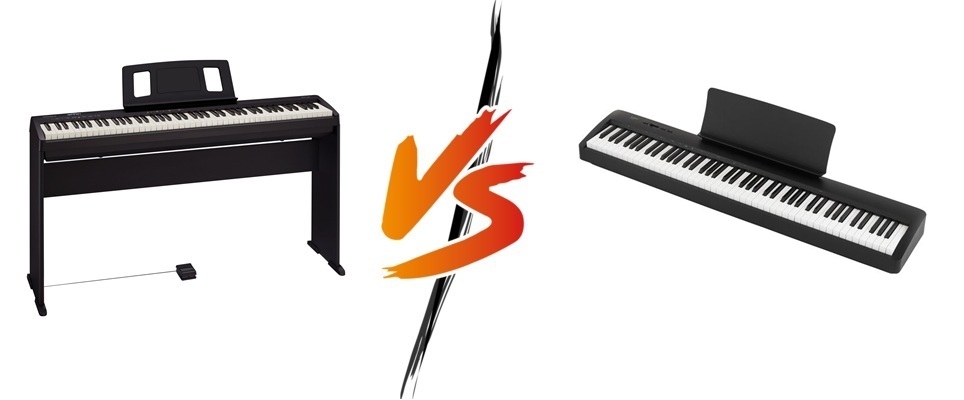
If you’re in the market for an affordable digital piano, chances are you’ve come across the Roland FP-10 and the Kawai ES60. These two models sit right at the entry-level sweet spot, where price meets performance, and where most beginners and casual players start their search. They’re often recommended for the same audience, and on paper, they seem very similar. Both offer fully weighted 88-key keyboards, compact designs, and the promise of a realistic piano experience without the cost or space requirements of an acoustic instrument.
But once you look a little closer, the differences start to matter. These aren’t just two versions of the same idea. Roland and Kawai take noticeably different approaches in how they balance key feel, sound quality, features, and usability. The FP-10 leans toward simplicity and a more traditional playing experience, while the ES60 aims to give you a broader set of tools in a slightly more flexible package.
This review breaks down those differences in detail, focusing on what actually affects your playing experience. The goal is simple: help you figure out which one makes more sense for your needs, not just which one looks better on paper.
Roland FP-10 vs Kawai ES60 Comparison Chart
If you click the links below, under the product images, you will be redirected to Amazon.com. In case you then decide to buy anything, Amazon.com will pay me a commission. This doesn’t affect the honesty of this review in any way though.
| Feature | Roland FP-10 | Kawai ES60 |
|---|---|---|
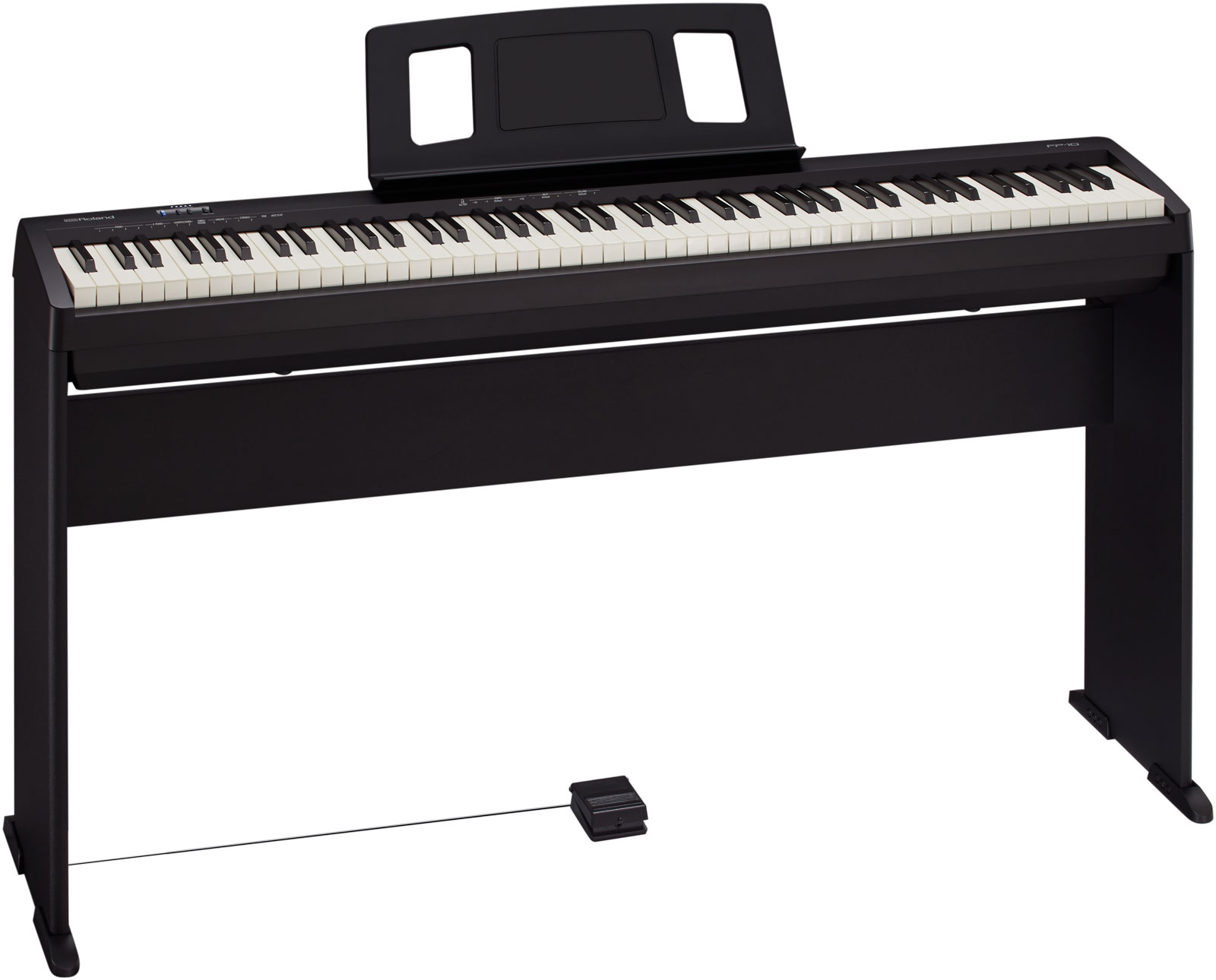 | 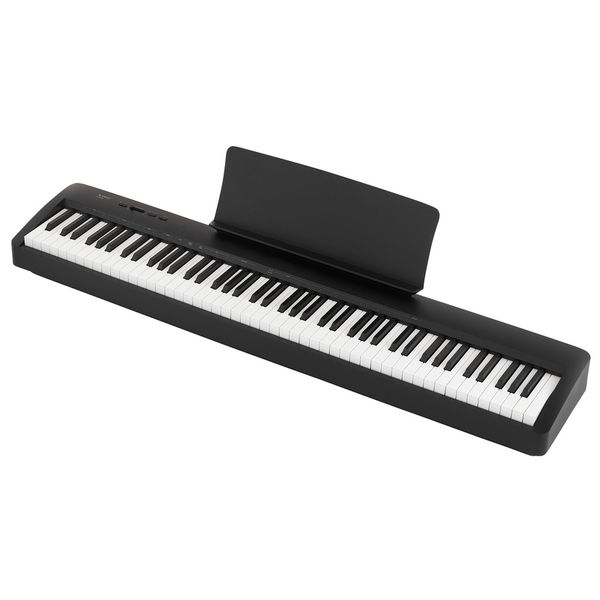 | |
| Check the best price on Amazon | Check the best price on Amazon | |
| Keyboard Action | PHA-4 Standard (graded hammer, escapement, ivory feel) | Responsive Hammer Compact (RHC) |
| Keys | 88 keys, fully weighted | 88 keys, fully weighted |
| Touch Sensitivity | 5 levels | 5 levels |
| Sound Engine | SuperNATURAL Piano | Harmonic Imaging |
| Polyphony | 96 notes | 192 notes |
| Number of Sounds | 15 tones | 17 tones |
| Built-in Speakers | 2 × 6W | 2 × 10W |
| Speaker Size | 12 cm × 2 | 12 cm × 2 |
| Bluetooth | Yes (MIDI only) | Yes (MIDI + Audio) |
| USB | USB to Host | USB to Host |
| Audio Outputs | Headphones (doubles as output) | Dedicated Line Out (L/Mono, R) |
| Pedal Included | Yes (basic switch pedal) | Yes (F-10H sustain pedal with half-pedaling) |
| Pedal Support | Damper (half-pedal supported with upgrade) | Damper (half-pedal supported included) |
| Recording Function | Yes (basic MIDI recorder) | Yes (lesson + recorder functions) |
| Metronome | Yes | Yes |
| Twin Piano Mode | Yes | Yes |
| Dimensions (W × D × H) | 1284 × 258 × 140 mm | 1290 × 260 × 150 mm |
| Weight | 12.3 kg | 11.5 kg |
| App Support | Roland Piano App | Kawai PianoRemote App |
| Power Supply | External adapter | External adapter |
| My individual reviews | Roland FP-10 review |
Quick takeaway
- The FP-10 focuses on key action and simplicity, with fewer extras but a very solid playing feel.
- The ES60 offers more features, stronger speakers, higher polyphony, and better connectivity, making it more versatile overall.
If you’re comparing purely on specs, the ES60 looks more complete. But as always with digital pianos, the feel and sound matter just as much as the numbers.
Design & Build Quality
When you’re buying a digital piano in this price range, design and build quality might not seem like the most important factors at first. Most people focus on key action or sound, which makes sense. But once you actually start using the instrument every day, these physical aspects begin to matter more than expected. How the piano feels under your hands, how easy it is to move, how intuitive the controls are, and even how it looks in your space all contribute to the overall experience.
The Roland FP-10 and the Kawai ES60 take slightly different approaches here. Neither is trying to be flashy or premium, but they reflect different design philosophies that are worth understanding before you choose.
Overall Design Philosophy
The Roland FP-10 is built around simplicity. It strips things down to the essentials and avoids adding anything that isn’t strictly necessary. There’s no screen, very few buttons, and almost no visual clutter. It’s the kind of instrument that disappears into the background and lets you focus entirely on playing.
The Kawai ES60, on the other hand, feels more like a complete instrument right out of the box. It still keeps things simple, but it includes a few more physical controls and visual cues that make it easier to interact with. It doesn’t rely as heavily on external apps or memorizing key combinations.
This difference becomes obvious within minutes of sitting down at each piano. The FP-10 feels minimal to the point of being slightly restrictive, while the ES60 feels a bit more accommodating and user-friendly.
Size, Weight, and Portability
Both models are designed to be portable, but they don’t feel identical when you actually move them.
The Roland FP-10 weighs around 12 kg (roughly 27 lbs), which makes it relatively easy to carry. It’s slim, compact, and doesn’t take up much space, whether you place it on a stand or store it away. If you live in a small apartment or need to move your piano frequently, this matters more than you might think.
The Kawai ES60 is in a similar range on paper, though in practice it can feel slightly heavier and more substantial. The difference isn’t huge, but you’ll notice it if you’re carrying it up stairs or transporting it regularly. It also feels a bit wider and less compact, which can make a difference in tighter setups.
If portability is a priority, the FP-10 has a small but noticeable advantage. It’s simply easier to live with in smaller or more flexible spaces.
Materials and Construction
At this price point, both instruments rely primarily on plastic construction. That’s expected, and neither tries to pretend otherwise. The question is how well that plastic is used.
The Roland FP-10 feels solid and well put together. The casing doesn’t flex much, the buttons feel firm, and nothing rattles or shifts when you play. Roland has a reputation for consistent build quality, even in their lower-end models, and the FP-10 reflects that. It doesn’t feel premium, but it does feel reliable.
The Kawai ES60 is also well built, but the experience is slightly different. The plastic feels a bit lighter, and in some areas, the instrument doesn’t feel quite as dense or rigid as the FP-10. That doesn’t mean it’s fragile, but it does give off a slightly less robust impression overall.
Where the ES60 makes up for this is in how the instrument is laid out. The controls, panel, and overall structure feel thoughtfully arranged, even if the materials themselves aren’t as solid-feeling as Roland’s.
In everyday use, both are perfectly durable for home practice and casual gigging. But if you’re particularly sensitive to build quality, the FP-10 has a slight edge in perceived sturdiness.
Control Layout and Usability
This is one of the biggest practical differences between the two.
The Roland FP-10 keeps physical controls to a minimum. You get a power button, a volume knob, and that’s about it. Everything else is handled through key combinations or the companion app. Want to change sounds? Adjust settings? Enable features? You’ll need to either memorize combinations or connect your phone.
This approach has a clear upside: it keeps the interface clean and uncluttered. But it also creates friction, especially for beginners or casual players who just want to sit down and play without thinking about menus or shortcuts.
The Kawai ES60 takes a more traditional approach. It includes dedicated buttons for sound selection and basic functions, along with a proper volume slider. This makes it much easier to navigate without relying on external tools.
In practice, this means:
- The FP-10 feels cleaner but less intuitive
- The ES60 feels slightly busier but more accessible
If you’re comfortable using apps and don’t mind a minimal interface, the FP-10 works fine. But if you prefer having direct control over your instrument, the ES60 is clearly more convenient.
Aesthetic and Visual Appeal
Looks are subjective, but they still matter, especially if the piano is going to sit in your living space.
The Roland FP-10 has a very modern, understated look. It’s matte black, low-profile, and blends easily into almost any environment. It doesn’t draw attention to itself, which can be a good thing if you prefer a clean, minimal setup.
The Kawai ES60 leans slightly more toward a traditional aesthetic. It still looks modern, but the layout and design feel closer to what people expect from a digital piano. The visible controls and slightly more detailed panel give it a bit more presence.
Neither one is particularly stylish or luxurious, but both look appropriate for their purpose. The choice comes down to whether you prefer minimalism or a slightly more “instrument-like” appearance.
Stand and Home Setup Compatibility
Both pianos can be used with standard X-stands or furniture-style stands, but there are small differences in how they integrate into a more permanent setup.
The Roland FP-10 pairs well with its dedicated stand and optional pedal unit, turning it into something closer to a home piano. However, because of its minimal interface, it still feels somewhat like a portable instrument even when mounted.
The Kawai ES60 also supports a dedicated stand and triple pedal unit, and when set up this way, it feels more like a complete home instrument. The additional onboard controls help reinforce that impression.
If you’re planning to keep the piano in one place long-term, the ES60 tends to feel slightly more at home in that role.
Durability Over Time
Both Roland and Kawai are reputable brands with solid track records, so there’s no major concern about long-term reliability with either model.
That said, the FP-10’s slightly more solid casing and tighter construction may give it a small advantage in terms of wear and tear, especially if you move it around frequently.
The ES60 should still hold up well under normal use, but it may require a bit more care during transport due to its slightly lighter-feeling construction.
Final Thoughts on Design & Build
Neither of these pianos is trying to impress with luxury materials or high-end design. That’s not the point of this category. What matters is how they feel and function in real use.
The Roland FP-10 stands out for its simplicity, compactness, and solid build. It’s easy to move, feels sturdy, and keeps distractions to a minimum. But that same simplicity can also make it less convenient to use, especially if you want quick access to features.
The Kawai ES60 offers a more balanced experience. It’s slightly less minimal, but more user-friendly and better suited to players who want a bit more control without relying on apps or memorization.
In the end, this comes down to preference:
- Choose the FP-10 if you value minimalism, portability, and a solid, no-nonsense build
- Choose the ES60 if you want a more accessible interface and a design that feels closer to a complete instrument
Neither approach is wrong. They just serve different kinds of players.
Keyboard Action
If there’s one area where you should slow down and pay close attention, it’s this one. Keyboard action is the single most important part of a digital piano. You can adjust to different sounds, you can work around limited features, and you can always upgrade speakers later. But the way the keys feel under your fingers directly affects how you play, how you learn, and how much you enjoy sitting down at the instrument.
This is also where the Roland FP-10 and the Kawai ES60 diverge in a meaningful way. Both offer fully weighted hammer actions, but they aim for slightly different experiences.
The Role of Keyboard Action
Before getting into specifics, it’s worth clarifying what “good” keyboard action actually means.
A digital piano is trying to replicate the feel of an acoustic piano. That includes:
- The weight of the keys
- The resistance when you press them
- The way they respond to soft vs hard playing
- The speed at which they return
- The subtle “click” or notch you feel when playing softly (escapement)
In a real acoustic piano, all of this is handled by a complex mechanical system of hammers and levers. In a digital piano, it’s simulated through weighted keys and sensors.
At this price point, you’re not getting a perfect recreation. But some actions get closer than others.
Roland FP-10: PHA-4 Standard Action
The FP-10 uses Roland’s PHA-4 Standard action, which has built a strong reputation over the years. It’s often considered one of the best actions available in entry-level digital pianos.
On paper, it includes:
- Fully weighted, graded hammer action
- Triple sensor key detection
- Escapement simulation
- Ivory-feel textured key surfaces
What matters more is how that translates in practice.
When you sit down at the FP-10, the first thing you notice is the weight. The keys feel solid and slightly heavier than what many beginners expect. There’s a clear resistance when you press down, especially in the lower register. This mimics the feel of an acoustic upright reasonably well.
That resistance does a couple of important things. First, it encourages proper finger strength and control. You can’t just lightly tap your way through passages. You have to engage with the keys. Second, it gives you more dynamic control. Playing softly versus loudly feels more intentional and easier to manage.
The triple sensor system also plays a role here. It allows the piano to detect repeated notes more accurately, even if you don’t fully release the key. This is especially useful for more advanced playing techniques, where speed and repetition matter.
The escapement simulation is subtle but noticeable. When playing very softly, you can feel a slight notch in the key travel, similar to what you’d experience on a grand piano. It’s not a game-changer at this level, but it adds a layer of realism.
Overall, the FP-10’s action feels:
- Firm and controlled
- Slightly heavier than average
- Focused on realism over comfort
For many players, especially those coming from or aiming toward acoustic pianos, this is a big plus.
Kawai ES60: Responsive Hammer Lite (RHL)
The ES60 uses Kawai’s Responsive Hammer Lite (RHL) action. Kawai is known for prioritizing realistic piano feel, even in their entry-level instruments, and the RHL reflects that approach in a more accessible form.
Like the Roland, it offers:
- Fully weighted, graded hammer action
- Different key weights across the keyboard
- A focus on natural response
But the feel is noticeably different.
The first thing you notice is that the keys are lighter. Not unweighted or cheap-feeling, just easier to press. There’s less resistance, which makes the instrument feel more approachable, especially for beginners or players who don’t have much finger strength yet.
The action is also smooth and quick. The keys return quickly after being pressed, which makes fast passages feel easier to execute. This can be a big advantage for certain styles of music or for players who prioritize fluidity over resistance.
However, there are trade-offs. The lighter action can make it slightly harder to control dynamics at a very fine level, especially if you’re used to heavier keys. It’s also a bit less demanding, which means it doesn’t build finger strength in quite the same way as the FP-10.
Another point that comes up in discussions is pivot length. Without getting too technical, this affects how the key feels when you press it closer to the back instead of the front. The ES60’s action is good for the price, but it’s not as refined in this area as higher-end models, and some players may notice a slight difference in leverage.
In practical terms, the ES60’s action feels:
- Lighter and more forgiving
- Smooth and responsive
- Easier to play for longer sessions
It’s less about strict realism and more about playability.
Side-by-Side Feel
Putting the two side by side makes the differences clear.
The FP-10 feels closer to an acoustic piano in terms of resistance and control. It pushes back a bit more, which can feel satisfying if you like that grounded, physical connection to the instrument.
The ES60 feels more relaxed. It invites you to play without effort and doesn’t demand as much from your hands. For some people, that makes it more enjoyable, especially during long practice sessions.
Neither is objectively better. They’re just tuned differently.
Impact on Learning and Technique
This is where your choice can have long-term effects.
If you’re a beginner, the FP-10’s heavier action can help you build proper technique from the start. It trains your fingers to handle resistance and gives you a clearer sense of dynamics. When you eventually play an acoustic piano, the transition will likely feel more natural.
On the flip side, that same weight can be discouraging if you’re just starting out. It can feel tiring, and it may slow you down in the early stages.
The ES60 is more forgiving. It lets you focus on learning notes, rhythm, and basic coordination without fighting the keys. This can make the learning process more enjoyable and less physically demanding.
However, if you stick with piano long-term, you might eventually notice the limitations of the lighter action and start wanting something more realistic.
Fatigue and Comfort
This is something people don’t always think about until it becomes an issue.
The FP-10’s heavier action can lead to more hand fatigue during long sessions, especially if your technique isn’t fully developed. This isn’t necessarily a flaw, but it’s something to be aware of.
The ES60 is easier on the hands. You can play for longer periods without feeling as much strain. For casual players or those who play frequently for extended periods, this can make a noticeable difference.
Noise and Mechanical Feel
Both actions produce some mechanical noise when played, which is normal for digital pianos.
The FP-10 tends to feel slightly more solid and controlled in this regard. The key movement is firm, and the overall mechanism feels tight.
The ES60 is still quiet enough for home use, but the lighter action can feel a bit more “hollow” in comparison. It’s not a major issue, but it’s part of the overall tactile experience.
Final Thoughts on Keyboard Action
This is the area where your personal preference matters most, and it’s also where these two pianos make their strongest case.
The Roland FP-10 offers a more realistic, resistance-based playing experience. It’s better suited for players who want to develop proper technique and who value a closer connection to the feel of an acoustic piano.
The Kawai ES60 offers a more comfortable, accessible action. It’s easier to play, less fatiguing, and more forgiving, especially for beginners or casual players.
If you had to simplify it:
- FP-10 focuses on realism and control
- ES60 focuses on comfort and playability
If possible, this is the one area where trying both in person would make the biggest difference. Specs and descriptions can only go so far. Your hands will tell you very quickly which one feels right.
Sound Quality
Sound is the other half of the piano experience. You can have the best key action in the world, but if the sound doesn’t respond in a satisfying way, the whole thing falls apart. This is also where personal taste plays a big role. Two people can sit at the same instrument and come away with completely different impressions.
Between the Roland FP-10 and the Kawai ES60, the differences in sound are noticeable, even if you’re not an experienced player. They’re not night and day, but they’re distinct enough that most people will naturally prefer one over the other after a few minutes of playing.
Sound Engines and Approach
Each brand takes a different approach to how sound is generated.
Roland uses its SuperNATURAL sound engine in the FP-10. This is a blend of sampling and modeling, meaning it doesn’t just play back recorded notes but also simulates how a piano behaves. The goal is consistency and smooth transitions between dynamics.
Kawai uses its Harmonic Imaging technology in the ES60, based on samples from one of its acoustic grand pianos. This approach leans more heavily on detailed recordings of real instruments, focusing on capturing the natural tone and character of a concert piano.
In simple terms:
- Roland aims for precision and consistency
- Kawai aims for warmth and realism
Both approaches work, but they create different listening experiences.
Core Piano Tone
The first thing you notice when playing each instrument is the character of the main piano sound.
The FP-10 has a clean, focused tone. Notes are clearly defined, and there’s a certain clarity that makes everything feel controlled and balanced. It’s a sound that cuts through easily and doesn’t get muddy, even when you play complex chords.
However, that clarity can sometimes come across as slightly clinical. The tone is a bit more “produced,” almost like it’s been polished to remove imperfections. Some players like this because it feels predictable. Others find it lacks a bit of personality.
The ES60, by contrast, sounds warmer and more organic. There’s more depth in the lower register and a richer set of overtones across the keyboard. Chords feel fuller, and the sound has a bit more natural variation to it.
It’s not as tight or controlled as the Roland, but it feels closer to what people expect from an acoustic piano. There’s a sense of air and resonance that makes the sound feel less confined.
If you play the same piece on both instruments, the FP-10 will sound more precise, while the ES60 will sound more expressive.
Dynamic Range and Expression
Dynamic range refers to how well the piano responds to different playing intensities, from very soft to very loud.
The FP-10 does a solid job here. Thanks to its sound engine, transitions between soft and loud playing are smooth and consistent. You don’t get sudden jumps in volume or tone, which makes it easy to control your dynamics.
However, the range itself feels slightly compressed compared to higher-end instruments. You can play softly and loudly, but the difference doesn’t feel as dramatic or nuanced as it could.
The ES60 has a slightly wider and more noticeable dynamic range. When you play softly, the tone becomes more delicate and nuanced. When you play harder, it opens up more, with a stronger sense of power and resonance.
This gives the ES60 a more expressive feel overall. It reacts in a way that feels more connected to your playing, especially when combined with its lighter key action.
That said, the FP-10’s consistency can be an advantage for beginners, as it makes it easier to control volume without accidental spikes.
Resonance and Harmonics
One of the key elements of a realistic piano sound is resonance. On an acoustic piano, when you press a key, it doesn’t just produce a single note. Other strings vibrate in sympathy, creating a complex web of overtones.
The FP-10 simulates this to a degree, but it’s relatively subtle. The focus is more on clarity than on building a rich harmonic environment. As a result, the sound can feel a bit “contained,” especially when playing with the sustain pedal.
The ES60 does a better job of creating a sense of space and resonance. When you hold down the pedal and play chords, the sound expands more naturally. Notes blend together in a way that feels closer to an acoustic instrument.
This is particularly noticeable in slower pieces or anything that relies on sustained tones. The ES60 simply feels more alive in those moments.
Sound Through Headphones
Headphone performance is often overlooked, but it’s important if you practice at home.
With headphones, the differences between these two pianos become more apparent.
The FP-10 sounds clean and detailed. Every note is clearly defined, and there’s very little noise or muddiness. It’s a very controlled listening experience, which some people prefer for focused practice.
The ES60 sounds fuller and more immersive. There’s more depth, and the stereo image feels wider. It’s easier to get lost in the sound, which can make practice more enjoyable.
If you spend a lot of time playing with headphones, the ES60 has a slight edge in terms of overall listening experience.
Built-in Sounds Beyond Piano
Both instruments include additional sounds like electric pianos, organs, and strings, but this isn’t their main focus.
The FP-10 keeps things very simple. It offers a small selection of sounds, and they’re generally decent but not particularly inspiring. They’re there if you need them, but you probably won’t use them much.
The ES60 includes a slightly broader and more varied set of sounds. They’re still not the main attraction, but they feel a bit more polished and usable. This can be useful for beginners who want to experiment with different tones.
Speaker Translation vs Raw Sound
It’s important to separate the raw sound engine from how that sound is delivered through the speakers.
Even though the ES60 has a stronger speaker system, the core sound itself is also more complex. When you combine the two, the ES60 tends to sound more impressive right out of the box.
The FP-10’s sound engine is solid, but its weaker speakers can make it feel less impactful unless you’re using headphones or external speakers.
This can influence your perception. If you only try both in a store without headphones, you might automatically prefer the ES60 simply because it sounds bigger.
Genre Suitability
Different sound profiles suit different styles of music.
The FP-10’s clean and focused tone works well for:
- Pop
- Rock
- Practice and exercises
- Situations where clarity is important
The ES60’s warmer and richer tone suits:
- Classical
- Jazz
- Ballads
- Expressive solo playing
This isn’t a strict rule, but it gives you an idea of how each instrument tends to feel in different contexts.
Long-Term Listening Experience
This is something that only becomes clear over time.
The FP-10’s sound is reliable and consistent, but some players find it a bit fatiguing or uninspiring after long periods. It doesn’t change much, and that can make it feel slightly flat over time.
The ES60’s sound has more variation and depth, which can make it more enjoyable to come back to day after day. It feels less repetitive and more engaging, especially as your playing improves.
Final Thoughts on Sound Quality
Both pianos sound good for their price range. There’s no major flaw in either one, and you can absolutely learn and enjoy playing on both.
That said, they lean in different directions.
The Roland FP-10 offers a clean, controlled, and consistent sound. It’s reliable, easy to manage, and works well for focused practice.
The Kawai ES60 offers a warmer, richer, and more expressive sound. It feels more like an acoustic piano and responds in a more dynamic way to your playing.
If you had to simplify the difference:
- FP-10 focuses on clarity and control
- ES60 focuses on depth and musicality
For many players, especially those who care about tone and expression, the ES60 has the edge. But if you prefer a more straightforward, predictable sound, the FP-10 still holds its own.
Speakers and Audio Output
Speakers don’t always get the attention they deserve when people compare digital pianos. It’s easy to assume that sound quality is just about the sound engine, but how that sound is delivered matters just as much. In fact, for a lot of players, especially beginners, the built-in speakers are the instrument. You sit down, press a key, and what you hear in the room shapes your entire impression of the piano.
This is an area where the Roland FP-10 and the Kawai ES60 differ more than you might expect from two similarly priced models. On paper, the differences seem small. In practice, they have a noticeable impact on how each instrument feels to play.
Speaker Configuration and Power
Let’s start with the basics.
The Roland FP-10 is equipped with a pair of 6-watt speakers. That’s fairly typical for an entry-level digital piano, and it’s enough for personal practice in a small room. The speakers are built into the chassis and are designed to project sound upward and slightly outward.
The Kawai ES60 steps things up with a pair of 10-watt speakers. That may not sound like a huge jump, but in this category, it’s significant. More power means more headroom, which translates to higher volume without distortion and a fuller sound overall.
In real-world use, the difference is immediately noticeable. The ES60 simply sounds bigger. It fills the room more easily, and it doesn’t feel like it’s working as hard to do it.
Volume and Headroom
Volume isn’t just about how loud a piano can get. It’s also about how it behaves as you approach that maximum level.
The FP-10 can reach a decent volume for home use, but it starts to feel a bit strained as you push it higher. At lower to mid volumes, it sounds fine. Clean, controlled, and clear. But once you try to fill a larger room or play with more intensity, the limitations of the speaker system become more obvious.
The ES60 handles volume more comfortably. You can turn it up without the sound feeling compressed or harsh. There’s more headroom, which means the piano can handle louder passages without losing clarity or depth.
This becomes especially important if you’re playing more dynamic music. When you go from soft to loud, the ES60 maintains its character better, while the FP-10 can start to feel slightly boxed in.
Clarity and Balance
Clarity is one of the FP-10’s strengths. Even with its smaller speakers, it delivers a very clean and focused sound. Notes are well defined, and there’s very little muddiness, even when playing complex chords.
This works well for practice. You can clearly hear what you’re playing, which makes it easier to identify mistakes and refine your technique.
However, that clarity can come at the expense of fullness. The sound doesn’t spread out as much, and it can feel a bit narrow, especially in the lower register.
The ES60 takes a different approach. It still maintains good clarity, but it adds more body to the sound. The bass feels deeper, the midrange is richer, and the overall balance is more natural.
When you play chords or use the sustain pedal, the ES60 creates a more blended, cohesive sound. It feels less like individual notes and more like a unified musical texture.
Bass Response
Bass is one of the areas where speaker limitations become most obvious.
On the FP-10, the bass is present, but it’s somewhat restrained. Lower notes don’t have the same weight or depth you’d expect from an acoustic piano. They’re audible and clear, but they don’t resonate in the room in the same way.
The ES60 does a better job here. The additional power and tuning of the speakers allow for a fuller low-end response. Bass notes feel more grounded, and there’s a stronger sense of presence when you play in the lower register.
This doesn’t mean the ES60 has earth-shaking bass. It’s still a compact digital piano. But within its limits, it delivers a more satisfying low-end experience.
Projection and Room Fill
Another key difference is how each piano projects sound into the room.
The FP-10 tends to feel more localized. The sound stays close to the instrument, which is fine for personal practice but less ideal if you want to fill a space or play for others.
The ES60 projects more effectively. The sound spreads out and fills the room more naturally, making it better suited for small performances or playing in shared spaces.
This also affects how the piano feels to the player. With the ES60, the sound surrounds you a bit more, which can make the experience feel more immersive.
Playing Experience at Different Volumes
At low volumes, both pianos perform well. The FP-10’s clarity actually works in its favor here, as it maintains definition even when played quietly.
The ES60 still sounds good at low levels, but its strengths become more apparent as you increase the volume. That’s when the extra power and fuller sound really start to shine.
At higher volumes, the gap widens. The FP-10 begins to feel limited, while the ES60 continues to deliver a more balanced and dynamic sound.
Headphone Experience
While this section focuses on speakers, it’s worth touching on headphones because many players rely on them.
Both pianos offer a solid headphone experience, but the ES60 again has a slight edge in terms of depth and immersion. The FP-10 remains clean and precise, while the ES60 feels more spacious.
The important point here is that headphones bypass the built-in speakers entirely. So if you plan to play mostly with headphones, the differences in speaker quality become less critical.
Audio Outputs and External Amplification
This is where things shift from sound to flexibility.
The FP-10 has a fairly basic output setup. It includes a headphone jack that can double as a line out, but it doesn’t have dedicated line outputs. This means that if you want to connect it to external speakers or a sound system, you’ll need to work around that limitation.
It’s doable, but not ideal. You may run into issues with volume control or signal quality depending on your setup.
The ES60 offers a more flexible approach. It includes proper line outputs, making it much easier to connect to external speakers, amplifiers, or recording equipment.
This makes a big difference if you plan to:
- Perform in small venues
- Record your playing
- Use external speakers for better sound
With the ES60, you can treat it more like a full instrument in a broader setup. With the FP-10, it feels more like a self-contained practice tool.
Use in Real-World Scenarios
Let’s look at how these differences play out in actual use.
If you’re practicing alone in a small room, both pianos will do the job. The FP-10’s speakers are perfectly adequate for this, and its clarity can even be an advantage.
If you’re playing in a larger room, with other people around, or in a more open space, the ES60 starts to pull ahead. It simply has more presence and can handle the environment better.
If you plan to connect to external gear, the ES60 is the easier and more flexible option. The FP-10 can still work, but it requires more effort and compromise.
Long-Term Considerations
Over time, speaker quality can influence how much you enjoy playing your instrument.
The FP-10’s speakers are functional, but they may start to feel limiting as your expectations grow. Many players end up using headphones or external speakers to compensate.
The ES60’s speakers are more satisfying on their own, which means you may feel less need to upgrade or add extra equipment.
This doesn’t mean the FP-10 is a bad choice. It just means you should be aware of what you’re getting.
Final Thoughts on Speakers and Audio Output
Both the Roland FP-10 and the Kawai ES60 deliver solid performance for their price range, but they prioritize different things.
The FP-10 offers:
- Clean, focused sound
- Adequate volume for personal use
- A simple, no-frills setup
The ES60 offers:
- More powerful speakers
- Fuller, richer sound
- Better projection and room presence
- More flexible audio output options
If you mainly play at home, at moderate volumes, and don’t plan to connect external gear, the FP-10 will do the job just fine.
But if you want a more immersive sound, better performance at higher volumes, and more flexibility for different setups, the ES60 is the stronger choice.
In simple terms:
- FP-10 is enough
- ES60 gives you more to work with
And in this category, that extra headroom can make a bigger difference than you might expect.
Features and Functions
When you look at entry-level digital pianos, features can either feel like a bonus or a distraction. Some players want a simple instrument that does one thing well. Others appreciate having extra tools for learning, experimenting, or expanding how they use the piano over time.
This is another area where the Roland FP-10 and the Kawai ES60 take clearly different approaches. The FP-10 keeps things minimal and leans heavily on external apps, while the ES60 builds more functionality directly into the instrument.
Neither approach is wrong, but they lead to very different user experiences.
Overall Feature Philosophy
The FP-10 follows a “less is more” philosophy. It gives you the essentials and expects you to handle anything beyond that through a connected device. The idea is to keep the piano itself clean and focused.
The ES60 takes a more traditional route. It includes a broader set of built-in features so you can do more directly from the instrument without needing anything else.
In practice, this means:
- FP-10 feels streamlined but limited
- ES60 feels more complete and self-sufficient
Which one is better depends on how you like to interact with your instrument.
Sound Selection and Variety
Both pianos include multiple sounds beyond the main acoustic piano, but the depth and accessibility differ.
The FP-10 offers a small selection of tones, including a few electric pianos and basic sounds like organ or strings. The quality is decent, but the variety is limited, and switching between them isn’t particularly intuitive without using the app or remembering key combinations.
The ES60 includes a larger set of built-in sounds, typically around 15–20 depending on the configuration. These include:
- Multiple acoustic piano variations
- Electric pianos
- Organs
- Strings and pads
More importantly, these sounds are easier to access. Dedicated buttons or simple controls make it straightforward to switch between them without breaking your flow.
For players who like to experiment or use different sounds in their practice, the ES60 is clearly more accommodating.
Playing Modes: Layer and Split
Playing modes are another area where the ES60 has an advantage.
The FP-10 does support basic modes like dual (layering two sounds) and twin piano (splitting the keyboard into two identical ranges for teaching). However, accessing these modes often requires key combinations or the app, which makes them less convenient to use on the fly.
The ES60 offers similar modes but makes them easier to access and control. You can layer sounds or split the keyboard more intuitively, which encourages you to actually use these features rather than ignore them.
For example, layering a piano with strings can add depth to your playing, especially for slower or more expressive pieces. On the ES60, this feels like a natural extension of the instrument. On the FP-10, it feels more like a hidden feature you might forget exists.
Built-in Recorder
This is one of the most practical features for learning and improvement.
The FP-10 does not include a built-in recorder. If you want to record your playing, you’ll need to connect it to a smartphone, tablet, or computer and use external software.
The ES60 includes a simple onboard recorder, allowing you to capture your playing directly on the instrument. This is incredibly useful for:
- Tracking your progress
- Listening back to identify mistakes
- Sharing recordings with teachers or friends
It’s not a professional recording system, but it’s more than enough for everyday use.
This is one of those features that doesn’t seem essential until you have it. Once you start using it, it becomes part of your routine.
Metronome and Practice Tools
Both pianos include a metronome, which is essential for developing timing and rhythm.
The FP-10’s metronome is functional but basic. Adjusting it often requires key combinations or app interaction, which can slow things down if you’re trying to make quick changes.
The ES60 offers a more accessible metronome with easier controls. You can adjust tempo and settings more directly, which makes it more practical during practice sessions.
The ES60 may also include additional practice features, such as rhythm patterns or drum accompaniments. These aren’t necessary for learning piano, but they can make practice more engaging, especially for beginners.
Lesson Features
For beginners, built-in lesson features can be helpful.
The FP-10 relies mostly on external apps for this. Roland’s companion apps provide structured lessons and exercises, but you need a device to access them.
The ES60 includes basic lesson functions directly on the piano. These might include demo songs or simple exercises that you can play along with.
Again, the difference is convenience. The FP-10 offers more potential through apps, but the ES60 gives you something immediately usable without extra setup.
App Integration
This is where the FP-10 starts to catch up.
Roland has strong app support, and the FP-10 integrates well with their ecosystem. When connected to a smartphone or tablet, you can:
- Access additional sounds
- Adjust settings more easily
- Use learning apps and tools
This expands the functionality of the FP-10 significantly, but it also creates a dependency. Without the app, the piano feels quite limited.
The ES60 also supports app connectivity, but it doesn’t rely on it as heavily. Most core functions are available directly on the instrument, which makes it more flexible in situations where you don’t want to use a device.
Ease of Use
Ease of use is where the difference in feature design becomes most obvious.
The FP-10 can feel unintuitive at times. Because it lacks dedicated controls, you often need to remember combinations or refer to a manual. This can interrupt your playing, especially if you’re still getting familiar with the instrument.
The ES60 is more straightforward. Buttons and controls are laid out in a way that makes sense, and you can access most features quickly without thinking too much about it.
This might seem like a small detail, but it has a big impact on how often you actually use the features available to you.
Flexibility for Different Users
Different players will value features differently.
If you’re a beginner, the ES60’s built-in tools can make learning easier and more engaging. You don’t need to set up apps or external devices to get started.
If you’re more experienced or tech-savvy, the FP-10’s app integration might be enough. You can customize your setup and use external tools for recording, learning, and sound selection.
The key difference is whether you want everything in one place or are comfortable building your own system around the piano.
Limitations to Consider
Both pianos have limitations, as expected at this price point.
The FP-10’s biggest limitation is its reliance on external apps. Without them, it feels stripped down and somewhat restricted.
The ES60’s limitation is that, while it offers more features, they are still relatively basic compared to higher-end models. You’re not getting advanced editing or deep customization.
However, for most users in this category, these limitations are reasonable.
Long-Term Use
Over time, features can influence how much you grow with the instrument.
The FP-10 may feel limiting if you want to explore beyond basic playing without relying on external tools.
The ES60 offers more built-in flexibility, which can make it feel like it grows with you a bit more, especially in the early and intermediate stages.
Final Thoughts on Features and Functions
This is one of the clearest contrasts between the two pianos.
The Roland FP-10 focuses on simplicity and external expansion. It gives you the basics and expects you to use apps for anything more advanced.
The Kawai ES60 focuses on completeness. It includes more features directly on the instrument, making it easier to use on its own.
If you prefer a clean, minimal setup and don’t mind using apps, the FP-10 works well.
If you want an instrument that does more right out of the box, without relying on external devices, the ES60 is the better choice.
In simple terms:
- FP-10 keeps things simple
- ES60 gives you more to work with
And for many players, especially beginners, having those extra tools readily available can make a real difference in how enjoyable and productive practice feels.
Connectivity
Connectivity might not be the first thing you think about when choosing a digital piano, but it becomes increasingly important the longer you own the instrument. At the beginning, you might just plug in headphones and play. But over time, you may want to connect to apps, record your playing, use virtual instruments, or even plug into external speakers for better sound.
This is where the Roland FP-10 and the Kawai ES60 start to separate themselves in a practical, real-world way. Both cover the basics, but the ES60 offers a more flexible and future-proof setup, while the FP-10 keeps things simple but slightly limited.
Basic Connectivity Overview
At a minimum, a digital piano should allow you to:
- Connect headphones for silent practice
- Connect to a computer or mobile device via USB
- Send MIDI data for use with software
Both the FP-10 and ES60 meet these requirements. You’re not missing anything essential with either model. But once you move beyond the basics, differences start to show.
USB MIDI Connection
Both pianos include USB MIDI functionality, which allows you to connect them to a computer, tablet, or smartphone.
This is one of the most important features for modern players. It lets you use your piano as a controller for software instruments, recording programs, and learning apps.
On both the FP-10 and ES60, the USB connection is class-compliant, meaning you don’t need to install drivers for most devices. You can plug it in, open your preferred software, and start playing.
In practical terms, this means you can:
- Use virtual piano software for better sounds
- Record MIDI tracks in a DAW
- Follow lessons in apps that respond to your playing
In this area, both instruments perform equally well. There’s no meaningful difference in how they handle USB MIDI.
Bluetooth MIDI
Both models also support Bluetooth MIDI, which allows for wireless connection to compatible devices.
This is especially useful if you’re using apps on a tablet or smartphone. You can place your device on a stand, connect wirelessly, and avoid dealing with cables.
The FP-10 integrates smoothly with Roland’s app ecosystem, making it easy to adjust settings and access additional features.
The ES60 also supports Bluetooth MIDI and works well with third-party apps. The experience is similarly stable and straightforward.
In everyday use, Bluetooth MIDI is convenient, but not essential. It’s a nice feature to have, especially for casual practice or learning, but most serious recording setups still rely on a wired connection for stability.
Audio Outputs: A Key Difference
This is where the biggest gap appears.
The FP-10 does not include dedicated line outputs. Instead, it relies on its headphone jack for audio output. While this can technically be used to connect to external speakers or recording equipment, it’s not ideal.
Using a headphone output as a line out can lead to:
- Lower signal quality
- Less control over volume levels
- Potential noise or distortion depending on the setup
It works, but it feels like a workaround rather than a proper solution.
The ES60, on the other hand, includes dedicated line outputs. This makes a big difference if you plan to connect the piano to:
- External speakers or amplifiers
- A PA system for small performances
- Audio interfaces for recording
With proper line outputs, you get a cleaner signal, more consistent volume, and a more professional setup overall.
This is one of those features that you might not need right away, but once you do, you’ll be glad it’s there.
Headphone Connectivity
Both pianos support headphone use, which is essential for practicing without disturbing others.
The FP-10 typically includes a single headphone output. It works well, but it’s basic. If you want to connect two pairs of headphones, you’ll need an adapter.
The ES60 often includes dual headphone outputs, which is useful for lessons or playing with another person. You can both listen at the same time without additional equipment.
This is a small detail, but it adds to the overall usability, especially for beginners working with a teacher.
Pedal Connections
Both instruments support sustain pedals, and both can be expanded with optional triple pedal units for a more complete piano experience.
The FP-10 supports a basic sustain pedal out of the box, with the option to upgrade to a more advanced pedal unit if you purchase a compatible stand.
The ES60 offers similar functionality, but its integration tends to feel a bit more flexible, especially when used in a home setup with a dedicated stand and pedal board.
For most players, both will cover your needs, but the ES60 again leans slightly toward a more complete, ready-to-expand setup.
Integration with External Gear
As your setup grows, you may want to integrate your piano with other equipment.
This could include:
- Studio monitors for better sound
- Audio interfaces for recording
- MIDI controllers or additional keyboards
The FP-10 can be part of this kind of setup, but it requires a bit more effort. The lack of dedicated outputs means you’ll need to think more carefully about how you connect everything.
The ES60 fits more naturally into these setups. Its line outputs and straightforward connectivity options make it easier to plug into a wider range of gear without complications.
If you see yourself expanding beyond a simple practice setup, this is worth considering.
Recording Possibilities
Recording is another area influenced by connectivity.
With the FP-10, recording audio directly requires external equipment, and you’ll likely use the headphone output to feed into an interface. This works, but again, it’s not the cleanest solution.
With the ES60, you can use its line outputs for a more direct and reliable connection to recording gear. This results in better audio quality and a smoother workflow.
Both pianos can send MIDI data easily, so if you’re recording using virtual instruments, the difference is less significant. But for recording the piano’s own sound, the ES60 has a clear advantage.
App Ecosystem and Software Use
The FP-10 leans more heavily on apps to extend its functionality. Roland’s software allows you to control settings, access additional features, and interact with the piano in ways that aren’t possible through the onboard interface alone.
This can be a strength if you like using apps and want a more modern, connected experience.
The ES60 also works well with apps, but it doesn’t depend on them. You can use it as a standalone instrument without feeling like you’re missing out.
This difference reflects a broader design philosophy:
- FP-10 assumes you’ll use external devices
- ES60 assumes you might not
Real-World Usage Scenarios
Let’s look at how these differences play out in everyday situations.
If you’re a beginner practicing at home, both pianos will meet your needs. You can use headphones, connect to apps, and learn without any issues.
If you want to use learning apps on a tablet, both models work well, especially with Bluetooth MIDI.
If you plan to record your playing or connect to external speakers, the ES60 becomes the easier and more practical choice.
If you want a simple, self-contained instrument with occasional app use, the FP-10 still works, but it feels more limited as your needs grow.
Long-Term Flexibility
Connectivity is one of those areas where future-proofing matters.
At first, you may not care about line outputs or external gear. But as you improve and your interests expand, these features can become more important.
The FP-10 covers the essentials but doesn’t leave much room beyond that.
The ES60 offers more flexibility, making it easier to adapt to new use cases without needing to upgrade your instrument.
Final Thoughts on Connectivity
Both the Roland FP-10 and the Kawai ES60 provide solid basic connectivity. You can connect to devices, use apps, and integrate them into a modern setup without major issues.
The difference lies in how far you can take that setup.
The FP-10 keeps things simple and functional but relies on workarounds for more advanced connections.
The ES60 offers a more complete and flexible set of options, making it easier to expand your setup over time.
In simple terms:
- FP-10 covers the basics
- ES60 gives you more room to grow
If you plan to keep your setup simple, either will work. But if you think you might explore recording, external speakers, or more advanced configurations, the ES60 is the safer long-term choice.
Conclusion
Choosing between the Roland FP-10 and the Kawai ES60 really comes down to what you value most in a digital piano, because these two instruments get the fundamentals right in different ways.
The FP-10 is all about focus. It puts most of its effort into delivering a solid, realistic key action and a clean, controlled sound. It doesn’t try to do too much beyond that. If your main goal is to build proper technique and you want something that feels closer to an acoustic piano under your fingers, it’s a strong choice. It’s also compact, reliable, and straightforward, even if that simplicity sometimes turns into limitation.
The ES60 takes a more balanced approach. It offers a warmer, more expressive sound, stronger speakers, and a more complete set of features right out of the box. It’s easier to use without relying on apps, more flexible in terms of connectivity, and generally more accommodating for a wider range of players. It may not match the FP-10 in key realism, but it makes up for it in overall usability and versatility.
For most beginners and casual players, the ES60 will likely feel like the better long-term value. It gives you more to explore and fewer reasons to upgrade quickly.
But if you’re more focused on developing your playing technique and don’t mind a stripped-down experience, the FP-10 still has a clear edge where it matters most.
There’s no wrong choice here. Just a better fit for how you want to play.