
When you’re shopping for a digital piano, things can get surprisingly complicated. On the surface, many models look similar: weighted keys, built-in speakers, a handful of sounds, and maybe some extras like Bluetooth or lesson modes. But the differences underneath can hugely impact how the instrument feels, sounds, and ultimately, whether you enjoy playing it.
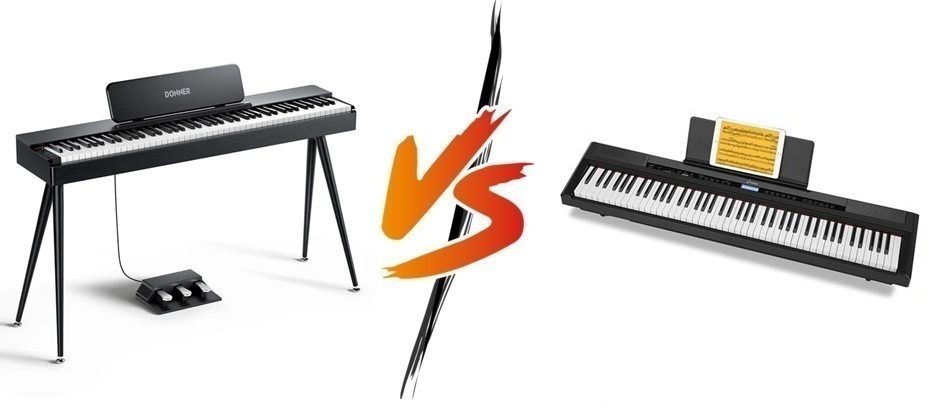
Today we’re looking at two digital pianos from Donner — the OURA S100 and the DEP-20. Both are budget-friendly options aimed at beginners or hobbyists who want good feel and realistic sound without spending big. But they aren’t identical, and depending on what you prioritize — feel, features, connectivity, or speakers — one might be a much better fit for you.
Donner OURA S100 vs Donner DEP-20 Comparison Chart
If you click the links below, under the product images, you will be redirected to Amazon.com. In case you then decide to buy anything, Amazon.com will pay me a commission. This doesn’t affect the honesty of this review in any way though.
| Category | Donner OURA S100 | Donner DEP-20 |
|---|---|---|
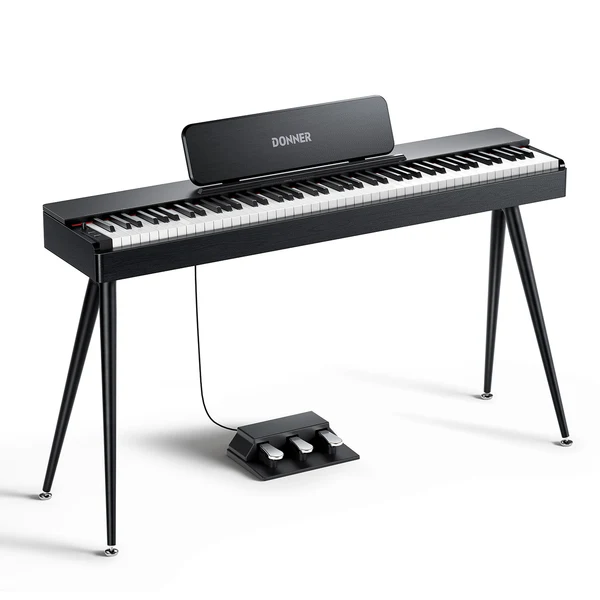 | 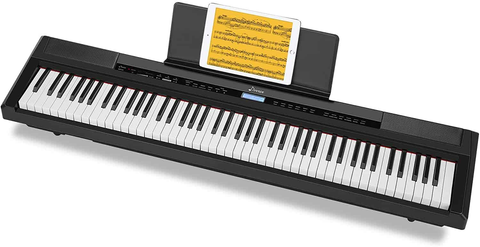 | |
| Check the best price on Amazon | Check the best price on Amazon | |
| Piano Type | Digital upright-style piano | Digital upright-style piano |
| Keys | 88 full-size keys | 88 full-size keys |
| Key Action | Fully weighted, graded hammer action | Fully weighted, graded hammer action |
| Key Feel | Lighter, less refined | More consistent, closer to acoustic feel |
| Touch Sensitivity | Multiple preset levels | Multiple levels, more nuanced response |
| Polyphony | Lower (sufficient for beginners) | Higher (better for pedal-heavy playing) |
| Main Piano Sound | Basic sampled acoustic piano | Higher-quality sampled acoustic piano |
| Sound Character | Warm but somewhat flat | Richer, more dynamic, more detailed |
| Additional Voices | Limited selection | Larger selection |
| Layer Mode (Dual) | Yes | Yes |
| Split Mode | Yes | Yes (more flexible) |
| Built-in Rhythms | Basic patterns | Wider variety, better integration |
| Metronome | Yes | Yes (more configurable) |
| Recording Function | Basic, limited memory | More robust recording capability |
| Built-in Speakers | Yes | Yes |
| Speaker Power | Modest, practice-focused | Stronger, better room fill |
| Bass Response | Weak to moderate | Fuller and more balanced |
| Headphone Outputs | 1 | 2 |
| Sustain Pedal Input | Yes | Yes |
| Pedal Support | Basic sustain | Slightly more expressive sustain |
| USB MIDI | Yes | Yes |
| Bluetooth MIDI | Limited or model-dependent | More commonly included |
| Bluetooth Audio | Usually not | Often included |
| Line Out / Audio Out | Typically no | Sometimes included |
| App Compatibility | Yes (via USB) | Yes (USB + Bluetooth) |
| Stand Included | Yes | Yes |
| Dust Cover | Yes | Yes (better fit/finish) |
| Assembly Required | Yes | Yes |
| Build Quality | Adequate, lighter construction | More solid, sturdier feel |
| Best For | Beginners on a tight budget | Beginners to intermediate players |
| Long-Term Growth | Limited | Strong |
| Typical Price Range | Lower | Slightly higher |
| My individual reviews | Donner OURA S100 review | Donner DEP-20 review |
Design & Build Quality
Design and build quality are easy to overlook when shopping for a digital piano, especially at the budget end of the market. Most people focus on keys and sound first, which makes sense. But how a piano is built, how it looks in your space, and how it holds up to daily use all affect long-term satisfaction more than you might expect. With the Donner OURA S100 and Donner DEP-20, the differences aren’t dramatic, but they are meaningful once you spend time with both instruments.
Overall Design Philosophy
The Donner OURA S100 and the DEP-20 clearly come from the same design family, but they aim at slightly different buyers. The OURA S100 leans toward a safe, conservative look. It’s the kind of digital piano that blends quietly into a living room, bedroom, or practice space without drawing attention to itself. The DEP-20, on the other hand, feels like Donner tried to add a bit more personality and presence, while still keeping things practical and uncluttered.
Neither piano is flashy or luxurious. You’re not getting polished wood finishes or sculpted cabinetry. These are modern digital instruments designed to be affordable, functional, and visually neutral. That said, subtle choices in materials, panel layout, and proportions give the DEP-20 a slight edge in perceived quality.
Cabinet and Materials
Starting with the OURA S100, the cabinet is mostly made of MDF and plastic components, which is typical for this price range. The surfaces are smooth, and the finish is consistent, but it doesn’t try to mimic real wood very convincingly. The texture is flat and clean, which works fine if you want something unobtrusive. However, up close, it’s clear this is a budget instrument. The edges are squared off, and the panels are functional rather than elegant.
The DEP-20 uses similar materials, but the execution feels just a bit tighter. The panels fit together more cleanly, and there’s less flex when you apply pressure to the sides or top. This doesn’t mean the OURA S100 feels flimsy, but the DEP-20 gives off more confidence when you rest your hands on it or lean slightly forward while playing.
Both pianos are sturdy enough for regular home use, but neither is designed to be moved around frequently. If you plan to relocate the piano often or transport it between rooms, you’ll want to be careful with either model.
Size, Weight, and Stability
In terms of dimensions, both pianos follow the standard 88-key digital piano footprint. They take up about as much space as you’d expect, and neither one feels oversized or awkward in a typical room.
The OURA S100 is slightly lighter, which can be a positive if you need to move it during setup. However, that lighter weight comes with a small tradeoff. When playing aggressively or using heavy pedal work, the S100 can feel a bit less planted, especially if the floor surface isn’t perfectly even.
The DEP-20 feels marginally heavier and more grounded. Once it’s assembled and placed, it stays put. This extra stability matters more than you might think, especially for intermediate players who play with stronger dynamics or faster passages. There’s less sense of the instrument shifting or resonating through the stand.
Stand and Assembly
Both models require some assembly, and the process is straightforward. Donner includes clear instructions, and most people can put either piano together in under an hour.
The OURA S100’s stand does its job, but it’s fairly basic. The support beams are adequate, though not particularly thick, and there’s a slight amount of flex if you push laterally. It’s not something you’ll notice while playing normally, but it’s there if you look for it.
The DEP-20’s stand feels more robust. The side panels are thicker, and the overall structure feels better balanced. Once assembled, the DEP-20 gives the impression of a single, unified piece rather than a keyboard sitting on a frame. This contributes to its more “serious” feel, especially if you’re upgrading from a portable keyboard.
Control Panel and Button Quality
The control interface is one area where design and build quality intersect directly with usability.
On the OURA S100, the buttons are small and fairly soft. They respond reliably, but they don’t offer much tactile feedback. You sometimes have to glance down to confirm a button press, especially when switching modes or voices. The labeling is clear, though a bit cramped, which can make the panel feel busier than it needs to be.
The DEP-20 improves on this in subtle ways. The buttons feel firmer and slightly more responsive. The layout is cleaner, with better spacing and more intuitive grouping of functions. This doesn’t make the DEP-20 dramatically easier to use, but it does reduce friction during everyday tasks like changing sounds or activating split mode.
Neither piano has premium knobs or sliders, and neither aims to feel like a stage instrument. But for home use, the DEP-20’s interface simply feels more polished.
Keybed Housing and Finish
The area around the keys is another place where build quality becomes noticeable over time.
On the OURA S100, the keybed housing is functional but plain. The plastic trim around the keys is smooth but lightweight, and there’s a slight hollow feel if you tap the surface. Again, nothing is broken or poorly assembled, but it reminds you of the piano’s budget origins.
The DEP-20’s keybed housing feels more solid. The plastic is thicker, and there’s less flex when you apply pressure. This contributes to a more convincing “instrument” feel, especially when paired with the slightly better key action.
Dust Cover and Practical Details
Both pianos include a basic dust cover, which is an often-overlooked but important detail. The OURA S100’s cover does the job but feels thin. It protects the keys, but it doesn’t add much to the overall sense of quality.
The DEP-20’s cover feels marginally better finished. It closes more smoothly and aligns better with the edges of the keyboard. It’s a small thing, but over months or years of use, small things like this affect how much you enjoy owning the instrument.
Long-Term Durability
Neither piano is built to last decades like a high-end digital or acoustic piano. However, with normal home use, both should hold up well.
The OURA S100 is best suited for gentle practice and casual playing. If you’re a beginner or light user, its build quality is perfectly adequate. For heavier daily use, the lighter construction may show wear sooner.
The DEP-20 feels better suited for long-term ownership. Its sturdier stand, tighter assembly, and more solid feel suggest it will age more gracefully, especially if used regularly by someone progressing beyond beginner level.
Design & Build Quality Verdict
In isolation, the Donner OURA S100 is not poorly built. It’s clean, simple, and functional. But when compared directly to the Donner DEP-20, its limitations become more noticeable. The DEP-20 doesn’t revolutionize design at this price point, but it refines it. Everything feels just a little more solid, a little more intentional, and a little more durable.
If design and build quality matter to you beyond basic functionality, the DEP-20 is the better choice. If your priority is simply having an affordable digital piano that looks fine and works reliably, the OURA S100 will do the job.
Keyboard Action and Feel
Keyboard action and feel are where a digital piano either earns your trust or quietly works against you every time you sit down to play. You can forgive a basic speaker system or a limited sound library, but if the keys don’t respond the way your fingers expect, practice becomes frustrating and progress slows down. This is especially important for beginners, because the feel of the keyboard shapes technique from day one. When comparing the Donner OURA S100 and the Donner DEP-20, the differences in key action aren’t dramatic on paper, but they become clear once you spend real time playing both instruments.
Weighted Keys and Graded Action
Both the OURA S100 and the DEP-20 use fully weighted, graded hammer action keyboards. This is a crucial baseline requirement for anyone who wants to learn proper piano technique. Graded action means the keys feel heavier in the lower register and gradually become lighter as you move toward the higher notes, mimicking the mechanical behavior of an acoustic piano.
On the OURA S100, this grading is present and noticeable. Bass notes require more effort, while treble notes are lighter and quicker. For beginners, this is more than sufficient to build hand strength and coordination. However, the transition between weight zones is not perfectly smooth. You can sometimes feel subtle changes as you move up the keyboard, especially during scales or arpeggios that cross multiple octaves.
The DEP-20 handles this more gracefully. The weight progression feels smoother and more natural, with fewer noticeable jumps between registers. This makes fast passages, broken chords, and repeated patterns feel more consistent under the fingers. While still not indistinguishable from an acoustic piano, the DEP-20 does a better job of creating a cohesive playing experience across all 88 keys.
Key Weight and Resistance
Key resistance plays a huge role in how a digital piano feels during extended practice sessions. Too light, and the instrument feels toy-like. Too heavy, and it can lead to fatigue, especially for beginners.
The OURA S100 sits somewhere in the middle. The keys offer enough resistance to feel “real,” but they are slightly on the lighter side compared to a traditional upright piano. This can be a positive for beginners who are still developing finger strength, but intermediate players may find the action a bit lacking when it comes to control at higher dynamic levels.
The DEP-20’s keys feel marginally heavier and more deliberate. This extra resistance makes it easier to control dynamics, particularly when playing softly. Pianissimo passages feel more intentional, and fortissimo playing feels grounded rather than abrupt. Over long practice sessions, the DEP-20 feels more forgiving on technique, because it encourages controlled finger movement instead of relying on velocity alone.
Key Travel and Return
Key travel refers to how far the key moves from top to bottom, while key return affects how quickly the key comes back up after being pressed. These two factors are critical for fast playing, trills, and repeated notes.
On the OURA S100, key travel is fairly standard, but the return is slightly springy. This can make repeated notes feel a bit bouncy, especially at faster tempos. For slow pieces or basic practice, this isn’t a problem. But when you start working on more advanced repertoire, the action can feel less predictable.
The DEP-20 improves on this with a more controlled return. Keys come back up smoothly without feeling sluggish or overly spring-loaded. This makes repeated notes, ornaments, and fast transitions feel more natural. The difference isn’t massive, but it’s enough that experienced players will notice and appreciate it.
Velocity Sensitivity and Dynamic Control
Velocity sensitivity determines how accurately the piano translates your finger pressure into volume and tone changes. Both pianos support multiple levels of touch sensitivity, allowing you to adjust how responsive the keyboard is to your playing style.
On the OURA S100, velocity sensitivity works well within a limited range. Soft playing is possible, but it requires a more conscious effort to avoid triggering louder samples. This can make expressive playing slightly harder, especially for beginners who haven’t yet developed refined touch control.
The DEP-20 offers a wider and more forgiving dynamic range. It responds more smoothly to subtle changes in finger pressure, making it easier to shape phrases and control volume. This is particularly noticeable when playing classical music or expressive ballads, where dynamics are a key part of the performance.
Surface Texture and Grip
Key surface texture is often overlooked, but it affects comfort and control, especially during long practice sessions.
The OURA S100’s keys have a smooth plastic finish. They’re not slippery, but they don’t offer much grip either. In warm environments or during longer sessions, fingers can sometimes feel less secure, particularly during fast passages.
The DEP-20’s keys feel slightly more textured. While they’re still plastic, the surface provides a bit more resistance, which helps with control. This small difference can make the DEP-20 more comfortable for extended practice, especially for players who sweat easily or practice for hours at a time.
Noise and Mechanical Feel
Key noise is another aspect that becomes noticeable over time. Both pianos produce some mechanical noise when played without amplification, which is normal at this price point.
The OURA S100’s action is a bit louder acoustically. You can hear the keys bottoming out, especially during aggressive playing. This isn’t a deal-breaker, but it can be distracting during quiet practice sessions with headphones.
The DEP-20 is quieter mechanically. The action feels more damped, resulting in less audible thumping. This contributes to a more refined playing experience and makes it better suited for late-night practice or shared living spaces.
Pedal Interaction
While pedal quality itself is a separate topic, how the keyboard interacts with sustain pedal input matters for realism.
On the OURA S100, pedal response is basic. Sustain works as expected, but the interaction between pedal and key action feels slightly binary. Notes are either sustained or not, with less nuance in between.
The DEP-20 offers a more natural pedal response. While still not fully continuous like higher-end models, it allows for more expressive sustain control. This pairs well with the improved key action and makes the instrument feel more cohesive as a whole.
Adaptability for Different Skill Levels
For beginners, both keyboards are usable and educational. The OURA S100 provides a forgiving platform that won’t overwhelm new players. However, as skills improve, its limitations become more apparent.
The DEP-20 scales better with the player. Beginners can grow into it, and intermediate players will appreciate the extra control and realism. It’s the kind of keyboard action that doesn’t get in the way as your technique develops.
Keyboard Action Verdict
Both the Donner OURA S100 and Donner DEP-20 meet the minimum requirements for serious piano learning. However, the DEP-20 consistently feels more refined, responsive, and closer to an acoustic piano experience. The differences are subtle, but they matter, especially over long-term use.
If you’re just starting out and want something approachable, the OURA S100 will serve you well. But if keyboard feel is a priority, and you want an instrument that will continue to feel satisfying as you improve, the DEP-20 is the stronger choice.
Sound Quality and Piano Voices
Sound quality is where expectations and reality often collide with budget digital pianos. On paper, many instruments list impressive numbers: dozens of voices, polyphony counts, sampled acoustic pianos, and layered tones. In practice, what matters is far simpler. Does the main piano sound inspire you to play? Does it respond naturally to your touch? And does it hold up over time, or does it start to feel flat and artificial once the novelty wears off?
When comparing the Donner OURA S100 and the Donner DEP-20, sound quality is one of the clearest areas of separation. Both are usable, both are competent for the price, but they aim at slightly different levels of realism and musical depth.
Core Piano Tone
The primary acoustic piano voice is what most players will spend 90 percent of their time using, so this is where any digital piano should be judged first.
The OURA S100’s main piano sound is pleasant and inoffensive. It’s tuned to be warm and slightly rounded, avoiding the overly bright or metallic character that plagues some low-cost digital pianos. For beginners, this is a smart choice. Notes don’t sound harsh, and there’s nothing fatiguing about practicing scales or simple pieces.
However, once you listen more critically, the limitations become apparent. The tone lacks complexity in the midrange, where much of the piano’s character lives. Chords sound clean, but somewhat two-dimensional. When you hold sustained notes, especially in the lower register, the sound decays faster than it would on an acoustic piano, and the tail of the note can feel a bit abrupt.
The DEP-20’s main piano voice feels more alive. There’s more harmonic detail, especially when playing chords or layered textures. The sound has better separation between registers, so bass notes feel fuller without overpowering the mids, and the treble has more clarity without becoming brittle. Even at moderate volumes, the DEP-20 gives a stronger impression of an actual piano rather than a sampled approximation.
Dynamic Range and Expression
One of the biggest differences between these two instruments lies in how they handle dynamics.
On the OURA S100, dynamic response is present but compressed. Soft playing is possible, but the range between very soft and medium-loud is narrower than it should be. This can make expressive phrasing more difficult, especially in classical or jazz pieces that rely heavily on subtle dynamic shifts.
When you play louder on the S100, the sound gets louder, but it doesn’t necessarily get richer. Instead of opening up, the tone can feel slightly constrained, as if the sound engine is hitting a ceiling.
The DEP-20 handles dynamics far more gracefully. Soft notes retain clarity without disappearing, and louder playing feels more expansive rather than just louder. There’s a sense that the sound breathes with your touch. This makes a noticeable difference in expressive pieces, where crescendos and decrescendos feel more natural and satisfying.
Sample Quality and Note Decay
Sample quality isn’t just about how a note starts, but how it ends.
On the OURA S100, note attacks are clean and consistent, which is good. But the decay phase is where realism suffers. Long notes tend to fade out too quickly, and there’s less variation in how different notes decay. This can make sustained chords feel a bit artificial, especially when using the sustain pedal.
The DEP-20 improves significantly in this area. Notes linger longer and fade more naturally. While it still doesn’t fully replicate the complex resonance of an acoustic piano, the decay feels smoother and more believable. When using the sustain pedal, chords blend together more convincingly, creating a fuller and more immersive sound.
Polyphony and Layering
Polyphony determines how many notes can sound at once, which matters for pedal-heavy playing and layered voices.
The OURA S100 offers sufficient polyphony for basic practice and beginner repertoire. You’re unlikely to hit its limits during simple pieces, but dense chord passages with heavy sustain can occasionally cause notes to drop out.
The DEP-20 typically offers higher polyphony, and it shows. You can layer sounds, use sustain liberally, and play more complex passages without worrying about notes disappearing. This adds to the overall sense of stability and realism, especially for intermediate players.
Additional Piano Voices
Beyond the main acoustic piano, both instruments include alternate piano voices.
The OURA S100 usually offers a brighter piano and a softer, mellower variation. These are useful for variety, but they feel more like EQ adjustments than truly distinct instruments. They’re fine for casual use but don’t add much depth.
The DEP-20’s alternate piano voices are more distinct. A brighter piano actually feels brighter without becoming thin, and softer voices have a gentler attack that suits ballads or background playing. These voices aren’t just cosmetic; they’re genuinely useful for different musical contexts.
Electric Pianos and Other Instruments
Both pianos include electric piano sounds, organs, strings, and other basic instruments.
On the OURA S100, these voices are serviceable but forgettable. The electric pianos lack bite, and the organs sound flat. They’re usable for practice or simple arrangements, but they won’t inspire much creativity.
The DEP-20 handles secondary voices better. Electric pianos have more character, with clearer attack and decay. Organs sound fuller, and string voices are smoother and more usable for layering. These sounds won’t replace a dedicated synth or workstation, but they’re good enough to expand what you can do musically.
Consistency Across the Keyboard
Another subtle but important factor is how consistent the sound feels across all 88 keys.
The OURA S100 can feel slightly uneven, with some notes sounding stronger or clearer than others. This is most noticeable when playing scales slowly or holding long chords across multiple octaves.
The DEP-20 maintains better consistency. The tonal balance across the keyboard feels more even, which contributes to a more professional and polished sound overall.
Headphones vs Speakers
Sound quality changes depending on whether you’re using headphones or the built-in speakers.
On the OURA S100, the piano sound improves noticeably with good headphones. Through the speakers, it can feel thin, but headphones reveal more detail and balance.
The DEP-20 sounds good through speakers and even better through headphones. With headphones, the improved sampling and dynamic range really shine, making late-night practice more enjoyable.
Sound Quality Verdict
The Donner OURA S100 delivers a perfectly acceptable piano sound for beginners and casual players. It’s warm, non-fatiguing, and easy to live with, but it lacks depth, dynamic range, and long-term realism.
The Donner DEP-20 takes a clear step forward. Its piano voices are richer, more expressive, and more satisfying to play over time. The difference may not jump out in a quick demo, but it becomes obvious during extended practice sessions.
If sound quality is high on your priority list, and you want a digital piano that continues to feel rewarding as your ears and skills develop, the DEP-20 is the stronger and more musically convincing option.
Onboard Speakers and Amplification
Onboard speakers are one of those features people tend to underestimate when choosing a digital piano. Many assume they’ll just use headphones, or that any built-in speaker system will be “good enough.” In reality, speakers and amplification play a huge role in how inspiring a piano feels day to day. The way sound fills a room, how bass frequencies are handled, and how the instrument responds at different volume levels all affect how connected you feel to the music. When comparing the Donner OURA S100 and the Donner DEP-20, differences in speaker design and amplification are subtle on paper but very noticeable in real-world use.
Speaker Configuration and Power
The Donner OURA S100 is equipped with a modest built-in speaker system designed primarily for personal practice. The speakers are positioned to project sound forward, which works well if you’re sitting directly in front of the instrument. The overall power output is adequate for a small room, such as a bedroom or practice space, but it doesn’t have much headroom beyond that.
At lower and moderate volumes, the S100’s speakers perform reasonably well. Notes are clear, and there’s enough presence to follow melodic lines and chords without strain. However, as you push the volume higher, the limitations become apparent. The speakers start to sound compressed, and the low end loses definition. Bass notes don’t bloom; instead, they flatten out, which can make the piano feel smaller than it actually is.
The DEP-20 takes a noticeable step forward in this area. Its speaker system is more powerful and better tuned. While it’s still not designed to replace external monitors or a PA system, it fills a room more convincingly. There’s more headroom, meaning you can turn the volume up without immediately running into distortion or harshness.
Bass Response and Low-End Presence
Bass response is one of the hardest things to get right in a compact digital piano, especially at a lower price point. Small speakers simply struggle to move enough air to reproduce the low frequencies of an acoustic piano.
On the OURA S100, bass notes are present, but they lack weight. The lowest octaves sound audible but not physical. You hear the note, but you don’t feel it. This isn’t surprising given the speaker size, but it does affect the realism of the instrument. Left-hand accompaniment and lower-register chords can feel underpowered, especially when playing alone without headphones.
The DEP-20 handles bass frequencies better. While it still can’t fully replicate the depth of an acoustic piano, it gives low notes more body. There’s a sense of fullness that helps anchor the sound, making the instrument feel more substantial. This makes a big difference when playing styles that rely heavily on the left hand, such as jazz, blues, or classical accompaniment patterns.
Midrange Clarity
The midrange is where most of the piano’s character lives, and it’s also where many budget speaker systems struggle.
The OURA S100 does an acceptable job here, but the midrange can feel a bit recessed. Chords sound clean, but they don’t always project with clarity, especially in busier passages. When playing with rhythm accompaniment or layered voices, the sound can feel slightly congested.
The DEP-20 offers better midrange definition. Individual notes within chords are easier to distinguish, and melodic lines stand out more clearly. This clarity makes the piano more enjoyable to play for longer sessions, because your ears don’t have to work as hard to separate sounds.
High Frequencies and Detail
High frequencies are crucial for articulation and realism, especially in the upper register.
On the OURA S100, the highs are smooth but somewhat muted. This avoids harshness, which is good, but it also means the sound lacks sparkle. Fast passages and staccato playing can feel a bit dull, especially at lower volumes.
The DEP-20 strikes a better balance. High notes have more presence and clarity without becoming piercing. This adds realism and makes expressive playing more rewarding, particularly when playing solo piano pieces.
Volume Range and Control
Volume control is another area where the two pianos differ in practice.
The OURA S100’s volume curve is somewhat narrow. Small adjustments can lead to noticeable changes, making it harder to fine-tune the output for a specific room or time of day. At very low volumes, detail is lost, and at high volumes, distortion creeps in.
The DEP-20 offers a wider usable volume range. You can play quietly without losing clarity, and you can turn it up enough to fill a medium-sized room without pushing the speakers to their limits. This flexibility makes the DEP-20 easier to live with in different environments, whether you’re practicing late at night or playing for others.
Speaker Placement and Sound Projection
Speaker placement affects how sound interacts with the room.
The OURA S100’s speakers are positioned in a straightforward, forward-facing manner. This works well if you’re sitting directly in front of the piano, but the sound doesn’t spread very widely. If you’re standing off to the side or sitting farther back, the sound can feel thin.
The DEP-20’s speaker placement and cabinet design help project sound more evenly. The sound spreads better throughout the room, creating a more immersive experience. This makes the DEP-20 feel more like a piece of furniture-grade instrument rather than a simple practice keyboard.
Playing Without Headphones
For players who prefer to play without headphones, speaker quality becomes even more important.
On the OURA S100, playing without headphones is fine for short practice sessions, but the limitations of the speakers can make longer sessions less enjoyable. The sound lacks depth, and you may find yourself wishing for external speakers or headphones.
The DEP-20 is much more satisfying as a standalone instrument. Its speakers deliver enough depth and clarity that you can enjoy playing without feeling like you’re missing something. This makes it better suited for casual performances, family gatherings, or simply enjoying music in your living space.
Headphones vs Speakers
Both pianos sound better through headphones, as expected. However, the difference between headphone and speaker sound is more pronounced on the OURA S100. The DEP-20’s speakers are closer in quality to what you hear through headphones, which speaks to better tuning and amplification.
Amplification Stability and Noise
Neither piano produces noticeable hiss or electronic noise at normal volumes, which is good. However, the OURA S100 can introduce slight distortion at higher volumes, especially in bass-heavy passages. The DEP-20 remains cleaner across its usable volume range.
Onboard Speakers Verdict
The Donner OURA S100’s onboard speakers are functional and suitable for basic practice. They do the job, but they don’t elevate the playing experience. For beginners who plan to use headphones most of the time, this may be perfectly acceptable.
The Donner DEP-20’s speakers are a clear upgrade. They’re louder, clearer, and more balanced, making the instrument more enjoyable to play on its own. While still not professional-grade, they significantly enhance the overall experience and make the DEP-20 feel like a more complete and satisfying digital piano.
If you value playing without headphones and want an instrument that sounds good filling a room, the DEP-20 is the stronger choice.
Functions & Features
Functions and features are where digital pianos tend to reveal their priorities. Some instruments focus almost entirely on replicating the feel and sound of an acoustic piano, while others try to be all-in-one music stations packed with rhythms, accompaniments, and learning tools. The Donner OURA S100 and Donner DEP-20 both land somewhere in the middle, but they lean in different directions. Neither piano overwhelms you with complexity, yet one clearly offers more depth and flexibility for long-term use.
Overall Feature Philosophy
The OURA S100 takes a minimalist approach. Its feature set is built around core practice needs: selecting voices, using a metronome, playing along with simple rhythms, and making basic adjustments. This makes it approachable for beginners who don’t want to navigate complicated menus or learn a lot of button combinations.
The DEP-20, while still beginner-friendly, feels more ambitious. It offers a wider range of functions aimed at players who want more variety, more control, and more ways to interact with the instrument. Importantly, it manages to do this without feeling cluttered or confusing, which is not always easy at this price point.
Voice Selection and Sound Management
Both pianos offer multiple voices beyond the main acoustic piano, but how those voices are managed matters.
On the OURA S100, voice selection is straightforward but limited. You typically cycle through sounds using buttons, and while the selection covers the basics, it doesn’t invite exploration. The voices feel like extras rather than integral tools.
The DEP-20 offers more voices and makes them easier to access. Switching between sounds feels quicker and more intuitive, which encourages experimentation. This is especially useful for beginners who are still discovering what styles of music they enjoy.
Split and Layer Modes
Split and layer functions allow you to assign different sounds to different sections of the keyboard or combine multiple sounds at once.
The OURA S100 includes basic split and dual modes. You can, for example, play bass in your left hand and piano in your right, or layer piano with strings. These features work reliably, but adjustments are limited. You don’t have much control over balance or split points, which can make the feature feel somewhat rigid.
The DEP-20 handles split and layer modes more gracefully. You have more flexibility in adjusting balance and configuration, making these modes more musically useful. Layering sounds feels smoother, and splits feel more natural, especially for accompaniment styles or teaching scenarios.
Rhythm and Accompaniment Features
Rhythms and accompaniments can be incredibly useful for practice, especially for beginners learning timing and coordination.
The OURA S100 includes a selection of basic rhythm patterns. These are simple and functional, but they sound generic. They’re useful as a metronome replacement but don’t add much musical interest.
The DEP-20 offers a wider variety of rhythm styles and better-sounding accompaniments. While still not on par with full arranger keyboards, they’re more engaging and better integrated with the piano sounds. This makes practicing more enjoyable and helps develop a sense of groove and timing.
Metronome and Practice Tools
Both pianos include a built-in metronome, which is essential for structured practice.
On the OURA S100, the metronome is basic but effective. You can adjust tempo and time signature, but options are limited. It does the job, but it’s clearly a utility feature.
The DEP-20’s metronome offers more flexibility, including finer tempo control and better integration with other practice modes. This makes it easier to tailor practice sessions to specific goals.
Recording and Playback
Recording features can be invaluable for tracking progress or reviewing practice sessions.
The OURA S100 typically offers basic recording functionality. You can record a short performance and play it back, which is helpful but limited in scope. Storage is minimal, and editing options are essentially nonexistent.
The DEP-20 provides more robust recording options. You can record longer pieces, store multiple recordings, and sometimes even record separate tracks. This makes it more useful for self-evaluation and creative experimentation.
Lesson and Learning Support
Neither piano replaces a dedicated learning app or teacher, but both include basic learning aids.
The OURA S100’s lesson features are simple and limited. They’re helpful for absolute beginners but don’t offer much beyond basic guidance.
The DEP-20 integrates better with learning workflows, especially when paired with external apps. Its features support structured practice and gradual progression more effectively.
Touch Sensitivity and Customization
Both pianos allow you to adjust touch sensitivity, but the depth of customization differs.
The OURA S100 offers a few preset sensitivity levels. This is sufficient for most beginners but doesn’t allow for much fine-tuning.
The DEP-20 provides more nuanced control, letting you tailor the keyboard response more precisely to your playing style. This becomes increasingly valuable as your technique develops.
Interface and Ease of Use
Ease of use is critical, especially for beginners.
The OURA S100’s interface is simple but can feel slightly cramped. Some functions require remembering button combinations, which can interrupt practice flow.
The DEP-20’s interface is cleaner and more intuitive. Functions are easier to access, and the layout feels more logical. This reduces friction and makes the piano more enjoyable to use day-to-day.
Expandability and Long-Term Use
The OURA S100 is designed primarily as a starter instrument. Its features are sufficient for early learning but may feel limiting as you progress.
The DEP-20 is better suited for long-term use. Its broader feature set and greater flexibility allow it to grow with the player, reducing the need for an early upgrade.
Functions & Features Verdict
The Donner OURA S100 offers a solid set of basic features that cover essential practice needs. It’s simple, approachable, and easy to use, making it a good entry-level option.
The Donner DEP-20 clearly goes further. Its expanded feature set, better usability, and greater flexibility make it a more capable and future-proof instrument. If you want a digital piano that offers room to explore and grow without becoming overwhelming, the DEP-20 is the stronger choice.
Connectivity and Extras
Connectivity is one of those areas that doesn’t seem important until it suddenly is. At first, you may just want to sit down and play. But as you start practicing more seriously, experimenting with apps, recording ideas, or using headphones regularly, the way a digital piano connects to the outside world starts to matter a lot. The Donner OURA S100 and Donner DEP-20 both offer the essentials, but the depth and flexibility of those connections differ in ways that can meaningfully affect your experience.
Core Connectivity Overview
At a basic level, both pianos cover the fundamentals. You get headphone outputs for silent practice, a sustain pedal input, and USB connectivity for linking the piano to a computer or mobile device. This baseline makes both instruments usable for learning, practice, and simple recording.
However, the way these connections are implemented, and how well they integrate into modern workflows, separates the two models.
Headphone Outputs
Headphone connectivity is essential for anyone practicing at home, especially in shared living spaces.
The OURA S100 typically offers a single headphone output. It works as expected and mutes the onboard speakers automatically. Sound quality through headphones is decent, and the output level is generally strong enough for most headphone types. However, the lack of a second headphone jack limits its usefulness for lessons or shared practice sessions.
The DEP-20 usually includes dual headphone outputs. This small addition makes a big difference for teachers, parents, or anyone practicing with another person. Both players can hear the piano clearly without external splitters, making lessons or duet practice more convenient.
Sustain Pedal and Pedal Support
Both pianos include a sustain pedal input, and both usually ship with a basic sustain pedal.
On the OURA S100, pedal support is straightforward. The pedal works reliably, but functionality is basic. There’s no support for half-pedaling or advanced pedal behavior, which limits expressive control.
The DEP-20 improves slightly here. While it still doesn’t fully replicate the complexity of acoustic piano pedaling, it often supports more nuanced pedal response. This pairs well with its more expressive sound engine and keyboard action.
USB MIDI Connectivity
USB MIDI connectivity allows the piano to communicate with computers, tablets, and smartphones.
The OURA S100 supports USB MIDI, enabling connection to DAWs, notation software, and learning apps. This is one of its strongest features, as it allows the piano to function as a MIDI controller. However, setup can sometimes feel a bit clunky, especially for beginners. Driver compatibility and app integration may require some trial and error.
The DEP-20 also supports USB MIDI, but the experience tends to be smoother. It’s more consistently recognized by devices, and latency feels slightly lower. This makes it easier to use with apps like Simply Piano, Flowkey, or recording software.
Bluetooth Connectivity
Bluetooth is increasingly important for modern digital pianos, especially for casual players and learners.
The OURA S100 may include Bluetooth MIDI in some versions, but support can be limited. Audio streaming over Bluetooth is not always available, which means you can’t easily play backing tracks through the piano’s speakers.
The DEP-20 more often includes Bluetooth functionality, and when implemented properly, it’s a significant advantage. Bluetooth MIDI allows wireless connection to learning apps, and Bluetooth audio lets you stream music directly through the piano’s speakers. This makes practicing with backing tracks or play-along videos far more convenient.
Audio Outputs and Expansion
External audio outputs are useful if you want to connect the piano to speakers, mixers, or recording equipment.
The OURA S100 generally lacks dedicated line outputs. This limits its expandability. If you want better sound, you’re usually stuck using headphones or relying on the built-in speakers.
The DEP-20 is more flexible. Some versions include line outputs, making it easier to connect to external amplification or recording gear. This makes it more suitable for small performances or home studio setups.
Integration with Learning Apps
Learning apps are a major reason people choose digital pianos today.
The OURA S100 works with many popular apps via USB MIDI, but the experience can feel basic. App compatibility depends heavily on the device and software you’re using.
The DEP-20 integrates more smoothly with learning apps, especially when Bluetooth MIDI is available. Wireless connectivity reduces setup friction and encourages regular practice, which is a big plus for beginners.
Recording and Home Studio Use
For home recording, connectivity matters.
The OURA S100 can function as a MIDI controller, which is useful, but audio recording requires additional equipment. This limits its appeal for users interested in music production.
The DEP-20’s better connectivity options make it more attractive for home recording. While still not a professional studio instrument, it’s more adaptable and easier to integrate into a basic recording setup.
Cable Management and Port Placement
Port placement affects day-to-day usability.
The OURA S100’s ports are functional but can feel cramped, making cable management slightly awkward.
The DEP-20’s port layout is generally more thoughtful, with easier access and better spacing. This makes setup and maintenance simpler, especially if you use multiple connections.
Extras and Practical Add-Ons
Extras like dust covers, benches, or bundled accessories vary by package.
The OURA S100 usually includes minimal extras, focusing on essentials.
The DEP-20 often comes with more complete bundles, adding value and convenience.
Long-Term Connectivity Considerations
As your needs evolve, connectivity becomes more important.
The OURA S100 meets basic needs but may feel limiting over time.
The DEP-20 is better prepared for future use, offering more ways to connect, expand, and adapt.
Connectivity and Extras Verdict
The Donner OURA S100 provides essential connectivity for beginners and casual players. It covers the basics but doesn’t go much further.
The Donner DEP-20 offers a more modern, flexible connectivity experience. Its additional ports, better Bluetooth support, and smoother integration with apps and external gear make it the stronger choice for most users, especially those who plan to grow beyond basic practice.
Other Important Characteristics
Beyond the obvious categories like keyboard feel, sound, and features, there are a number of smaller but still important characteristics that influence how enjoyable a digital piano is to live with. These details don’t always show up in spec sheets, but they shape your day-to-day experience in subtle ways. When comparing the Donner OURA S100 and the Donner DEP-20, these “secondary” factors often reinforce the same overall pattern seen elsewhere: both are competent, but one feels more refined and better thought out.
Ease of Daily Use
One of the most underrated aspects of any digital piano is how easy it is to use on a daily basis. This includes how quickly you can turn it on, adjust settings, and get back to playing without breaking concentration.
The OURA S100 is simple and direct. Power it on, select a sound, and you’re ready to go. For beginners, this simplicity is comforting. There’s very little to distract you, and it’s hard to accidentally change settings in a way that causes confusion.
The DEP-20 is nearly as simple, but because it offers more options, there’s a slightly steeper learning curve at first. That said, once you’re familiar with the layout, it becomes just as quick to use, if not quicker, because commonly used functions are easier to access. Over time, the DEP-20 actually feels smoother in everyday operation, especially if you frequently change sounds or modes.
Noise and Mechanical Feel During Practice
Mechanical noise doesn’t matter much until you practice late at night or in a quiet room. Then it becomes very noticeable.
The OURA S100’s keys produce a modest amount of mechanical sound when played with force. You’ll hear a soft thump as keys bottom out, particularly during louder passages. It’s not excessive, but in very quiet environments it can be distracting.
The DEP-20 is quieter mechanically. The key action feels better damped, and the overall construction absorbs impact more effectively. This makes it more comfortable for silent practice with headphones, especially in shared living spaces.
Latency and Responsiveness
Latency refers to the delay between pressing a key and hearing the sound. Even small amounts of latency can affect how connected you feel to the instrument.
Both pianos perform well here. Neither exhibits noticeable delay during normal playing. However, when connected to external devices or apps, the DEP-20 tends to feel more responsive, particularly over USB or Bluetooth MIDI. This makes it better suited for interactive learning apps or software instruments.
Consistency Over Long Sessions
Some instruments feel fine for short sessions but become tiring or annoying over longer practice periods.
The OURA S100 is comfortable enough for casual use, but over long sessions, its lighter action and more limited sound dynamics can feel a bit monotonous. The instrument does its job, but it doesn’t always invite you to keep playing.
The DEP-20 holds up better over time. Its more expressive sound and refined key action make extended practice sessions more engaging. This can have a real impact on motivation, especially for learners who practice daily.
Aesthetic Longevity
A piano sits in your home for years, not weeks. How it looks over time matters.
The OURA S100’s design is neutral and unobtrusive. It doesn’t draw attention, which can be a positive if you want it to blend into your space. However, its plain appearance may start to feel a bit generic after a while.
The DEP-20’s slightly more polished design gives it better aesthetic longevity. It feels more like a permanent piece of furniture rather than a temporary practice tool. This may not affect how it plays, but it can influence how much you enjoy having it in your home.
Adaptability to Different Playing Styles
Not all players have the same goals. Some focus on classical repertoire, others on pop, jazz, or songwriting.
The OURA S100 works best for straightforward piano practice. It handles basic styles well but doesn’t offer much flexibility beyond that.
The DEP-20 adapts more easily to different styles. Its broader sound palette, better dynamics, and stronger speakers make it more versatile for experimentation and creative playing.
Use in Teaching and Learning Environments
If the piano will be used for lessons, either formal or informal, certain characteristics become more important.
The OURA S100 is fine for solo learning, but its limited connectivity and single headphone output can make teaching scenarios less convenient.
The DEP-20 is more lesson-friendly. Dual headphone outputs, better app integration, and clearer sound projection make it easier to use with a teacher or parent present.
Maintenance and Reliability
Neither piano requires much maintenance beyond basic care.
The OURA S100’s simpler construction means there’s less that can go wrong, but its lighter build may show wear sooner if used heavily.
The DEP-20’s sturdier construction suggests better long-term reliability, especially for daily use. Buttons, keys, and connections feel more durable.
Emotional Response and Inspiration
This may sound subjective, but it’s important. An instrument should make you want to play.
The OURA S100 feels like a tool. It’s useful, reliable, and does what it’s supposed to do. For some players, that’s enough.
The DEP-20 feels more like an instrument. It responds more musically, sounds richer, and invites expression. This difference can have a real impact on how often and how long you practice.
Other Important Characteristics Verdict
Taken individually, these characteristics might seem minor. Together, they shape the overall ownership experience. The Donner OURA S100 is practical, simple, and approachable, making it a solid choice for beginners with modest expectations.
The Donner DEP-20 consistently feels more refined and rewarding. Its quieter action, better responsiveness, stronger adaptability, and more inspiring feel make it the better long-term companion for most players. If you value comfort, motivation, and room to grow, these “extra” characteristics tip the scale clearly in favor of the DEP-20.
Conclusion
Choosing between the Donner OURA S100 and the Donner DEP-20 ultimately comes down to how seriously you plan to pursue piano and how much you value refinement over simplicity. Both instruments succeed in delivering an affordable, full-size digital piano experience, and neither is a bad choice in isolation. The difference lies in how long each piano remains satisfying as your skills and expectations grow.
The OURA S100 is clearly designed as a straightforward entry point. It offers weighted keys, a usable piano sound, and just enough features to support early learning. For complete beginners, casual players, or those working with a strict budget, it provides a reliable foundation. It doesn’t overwhelm, it doesn’t complicate, and it does what it promises. However, its limitations become more noticeable over time. The lighter action, simpler sound engine, modest speakers, and limited connectivity mean that many players may outgrow it sooner than expected.
The DEP-20, by contrast, feels like a more complete instrument. Its keyboard action is more consistent, its piano voices are richer and more expressive, and its speakers do a better job of filling a room. Add in stronger connectivity options and a more flexible feature set, and you get a piano that adapts better to different learning paths and musical interests. It’s not just better on paper; it’s more enjoyable to live with day after day.
If your goal is to dip your toes into piano without a big investment, the OURA S100 makes sense. But if you want an instrument that encourages progress, supports exploration, and stays rewarding over the long term, the Donner DEP-20 is the wiser and more satisfying choice for most players.