
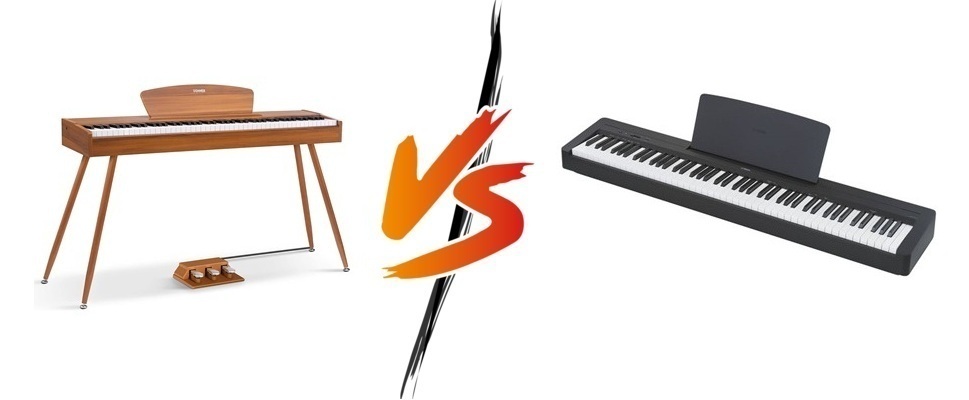
If you’re shopping for a digital piano and you’ve narrowed your choice down to the Donner DDP-80 and the Yamaha P-145, you’re probably facing a pretty typical dilemma: a value-oriented Chinese brand versus a long-established Japanese maker with a serious reputation in keyboards.
Both of these instruments sit in the budget to mid-range portable piano category, appealing to beginners, intermediates on a budget, and even some experienced players who need a second piano for home or light gig use. Yet, despite being positioned in roughly the same price tier, they have different strengths and weaknesses.
In this review I’ll look closely at design, feel, sound quality, built-in speakers, functionality, connectivity, and overall value, and give you honest, practical comparisons. I’ve either played or studied both instruments in detail, and I’ll talk about what matters most as you’re deciding which to buy.
Whether you care most about piano feel, sound quality, features, or long-term reliability, this review should help you choose confidently.
Donner DDP-80 vs Yamaha P-145 Comparison Chart
If you click the links below, under the product images, you will be redirected to Amazon.com. In case you then decide to buy anything, Amazon.com will pay me a commission. This doesn’t affect the honesty of this review in any way though.
| Specification | Donner DDP-80 | Yamaha P-145 |
|---|---|---|
 |  | |
| Check the best price on Amazon | Check the best price on Amazon | |
| Piano Type | Digital piano | Digital piano |
| Keys | 88 full-size keys | 88 full-size keys |
| Key Action | Fully weighted hammer action | Graded Hammer Standard (GHS) |
| Graded Weighting | Basic / limited | Yes (clearly graded) |
| Touch Sensitivity | Yes (multiple levels) | Yes (multiple levels) |
| Key Surface | Smooth plastic | Smooth plastic |
| Polyphony | 128 notes | 64 notes |
| Main Piano Sound | Sample-based | Yamaha acoustic grand samples |
| Total Voices | ~10–15 (varies by version) | 10 |
| Effects | Reverb, basic effects | Reverb |
| Built-in Speakers | Yes (stereo) | Yes (stereo) |
| Speaker Power | Modest (budget-level) | Slightly stronger, better tuned |
| Speaker Placement | Downward-firing | Downward / internal |
| Headphone Outputs | Yes | Yes |
| Line Out | Yes | Yes |
| USB MIDI | Yes (USB to Host) | Yes (USB to Host) |
| Bluetooth Audio | No | No |
| Bluetooth MIDI | No | No |
| Recording Function | Yes (basic) | Yes (basic) |
| Metronome | Yes | Yes (more configurable) |
| Layer Mode | Yes | Yes |
| Split Mode | Yes | Yes |
| Pedals Included | 3-pedal unit (sustain, soft, sostenuto) | 3-pedal unit (sustain, soft, sostenuto) |
| Half-Pedaling | Limited / basic | Better implementation |
| Stand Included | Yes | Yes |
| Dimensions (approx.) | Compact upright-style footprint | Compact slab-style footprint |
| Weight | Lighter overall | Slightly heavier, sturdier |
| Target Skill Level | Beginner to early intermediate | Beginner to intermediate |
| My individual reviews | Donner DDP-80 review | Yamaha P-145 review |
First Impressions and Overall Design
First impressions matter more than we sometimes like to admit, especially with an instrument that’s going to live in your home, studio, or practice space for years. A digital piano isn’t just a tool you play for an hour and then put away. It becomes part of your environment. You see it every day. You touch it every day. And whether consciously or not, the way it looks and feels can affect how often you sit down and play.
The Donner DDP-80 and the Yamaha P-145 take noticeably different approaches here. Neither is trying to be flashy or luxurious, but each reflects the philosophy of its brand and the audience it’s trying to reach.
Donner DDP-80: Modern, Minimal, and Budget-Conscious
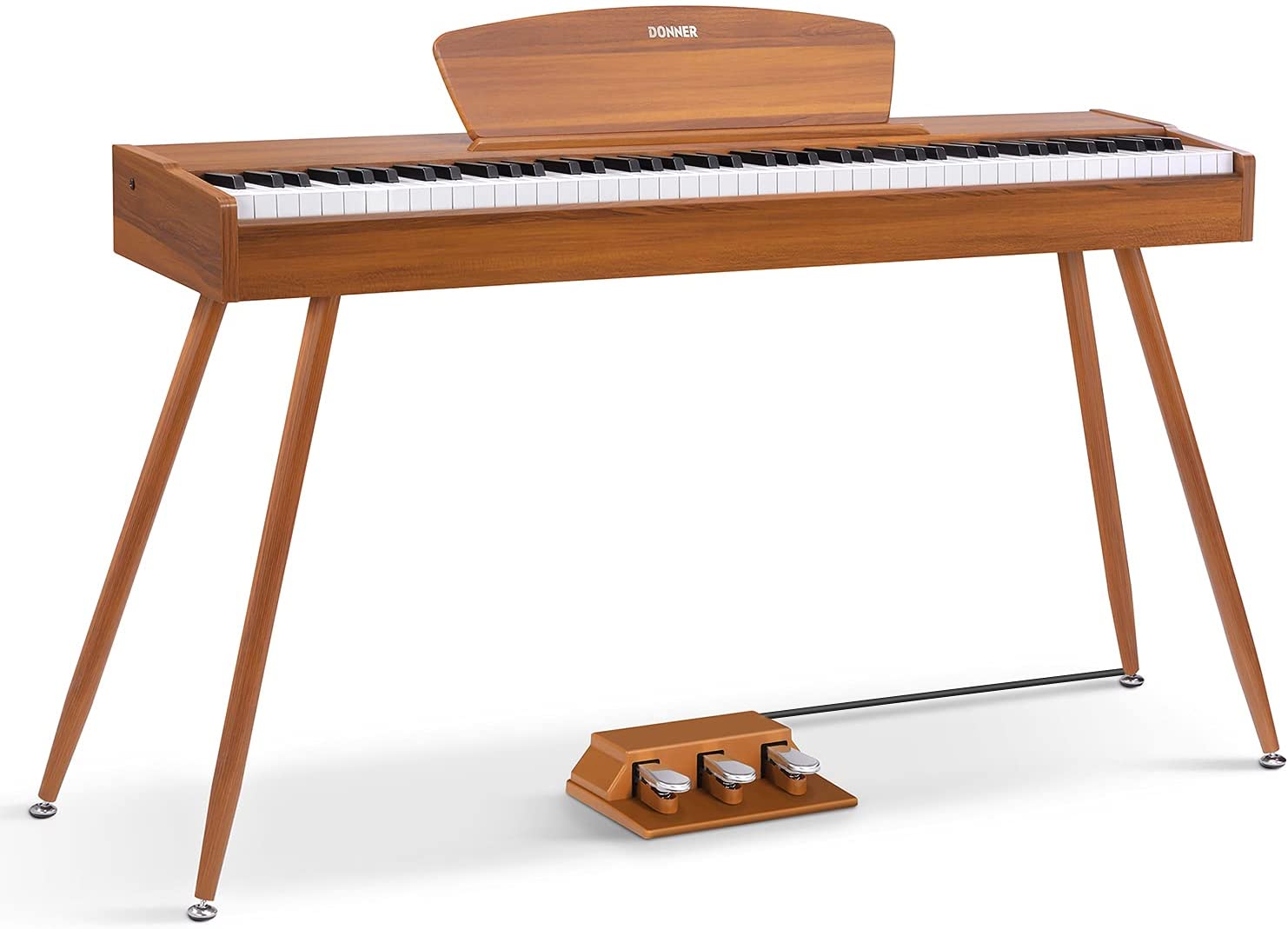
The first thing you notice about the Donner DDP-80 is that it tries to look more “furniture-like” than many entry-level digital pianos. Donner clearly understands that a lot of buyers are putting this piano in a living room or bedroom, not a rehearsal space or stage. The design leans toward clean lines, a matte finish, and a restrained, modern aesthetic that doesn’t scream “cheap keyboard.”
The cabinet has a rectangular, slightly slab-like look, but it avoids feeling bulky. The matte black finish (the most common version) does a good job of hiding fingerprints and dust, which is a small but important detail if you don’t want to constantly wipe it down. From a distance, it looks neat and understated. Up close, you can tell it’s a budget instrument, but Donner does a respectable job of keeping that impression subtle.
The control panel is minimal to the point of being almost invisible. Buttons are small, flat, and usually placed discreetly along the top surface. There’s no large screen, no bright LEDs, and no visual clutter. This can be a double-edged sword. On the one hand, it keeps the piano looking clean and modern. On the other hand, it can make the interface feel a little unintuitive, especially for beginners who rely on visual feedback. Without a screen, many functions require button combinations or memorization, which isn’t ideal for everyone.
In terms of physical build, the DDP-80 feels reasonably solid for its price. The top panel and sides are made of composite materials rather than wood, but they don’t feel flimsy. There is some flex if you press down firmly on the casing, particularly near the edges, but during normal playing this isn’t noticeable. It doesn’t feel fragile, just clearly designed with cost efficiency in mind.
One of the DDP-80’s strongest design points is what comes in the box. Donner includes a matching stand and a three-pedal unit as standard. This is a big deal. Many budget digital pianos either ship as bare slabs or include only a basic sustain pedal. Having a full pedal unit immediately makes the instrument feel more “real piano-like,” especially for beginners who want to practice proper pedaling from day one. Visually, the stand and pedals also help the DDP-80 feel more like a permanent fixture rather than a temporary keyboard setup.
That said, the pedal unit itself feels light. It works, and it’s functional, but it doesn’t have the heft or resistance of an acoustic piano’s pedals. The pedals do their job, but they don’t add much to the illusion of playing a traditional upright or grand.
Overall, the Donner DDP-80 makes a good first impression for its price. It looks modern, tidy, and more expensive than some no-name budget pianos. It doesn’t try to pretend it’s something it’s not, but it does try to avoid looking like a toy. For many buyers, especially beginners and casual players, that’s more than enough.
Yamaha P-145: Conservative, Functional, and Built to Last
If the Donner DDP-80 aims to blend into your living space, the Yamaha P-145 feels more like a traditional instrument that happens to be digital. Yamaha doesn’t chase trends with its design here. Instead, it sticks closely to a familiar formula that has worked for decades.
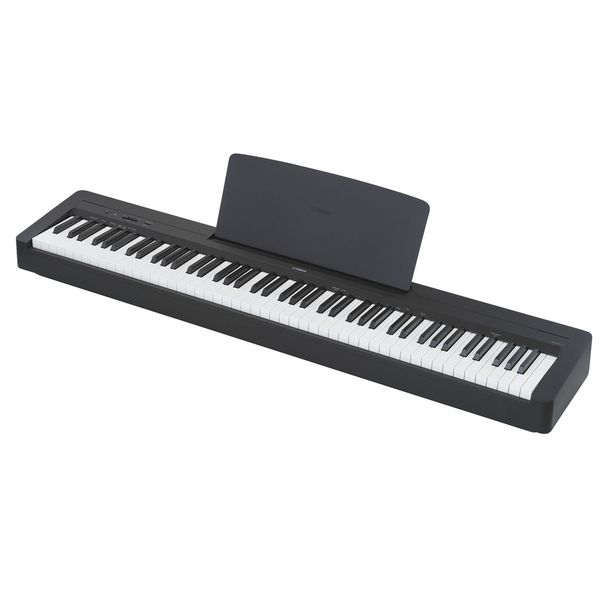
The P-145 has a classic slab-style digital piano look. Clean, straight lines. A simple black finish. Clearly labeled buttons. Nothing fancy, nothing decorative. At first glance, it might even seem a bit plain. But there’s a quiet confidence in that simplicity. Yamaha isn’t trying to impress you visually. It’s assuming you’re buying this piano because you care about how it plays and sounds.
Build quality is where the Yamaha immediately stands out. The casing feels denser and more rigid than the Donner’s. There’s less flex, tighter seams, and a general sense that everything fits together precisely. Even the plastic has a higher-quality feel. It’s the kind of build that makes you think the instrument will still be working fine years down the line, even with daily use.
The control panel is more visible than on the Donner, but still restrained. Buttons are clearly marked and logically arranged. There’s no touchscreen or large display, but Yamaha makes up for that with a very intuitive layout. Even if you’ve never used a Yamaha digital piano before, it’s easy to guess what most buttons do. That familiarity is one of Yamaha’s biggest strengths, especially for beginners and teachers.
Like the Donner, the P-145 often comes bundled with a matching stand and a three-pedal unit. Yamaha’s stand feels sturdier, with better weight distribution and less wobble. Once assembled, the whole setup feels more like a permanent piece of furniture rather than something you might take apart and move often.
The pedal unit on the Yamaha also feels more convincing. The pedals have better resistance and a more solid mounting. They’re still not acoustic-level, but they’re closer. For players who are sensitive to pedaling technique, this difference matters more than it might seem at first.
Visually, the Yamaha P-145 doesn’t try to hide what it is. It looks like a digital piano, not a piece of modern decor. Some people will prefer that honesty. Others may find it a bit boring. But there’s no denying that it looks professional and purpose-built.
Side-by-Side Design Impressions
When you put these two pianos next to each other, the difference in design philosophy becomes clear. The Donner DDP-80 is trying to appeal emotionally. It wants to look friendly, modern, and accessible. It’s designed to fit into everyday spaces without drawing too much attention to itself.
The Yamaha P-145, by contrast, is all about function and reliability. It doesn’t care whether it looks trendy. It wants to feel solid, familiar, and dependable. It’s the kind of instrument you buy when you want something that just works and doesn’t get in the way.
Neither approach is wrong. If you care about aesthetics and want a piano that blends nicely into a modern home, the Donner may actually appeal to you more at first glance. If you care about build quality, longevity, and a more traditional instrument feel, the Yamaha makes a stronger impression once you spend a few minutes with it.
In the end, first impressions aren’t just about looks. They’re about how an instrument makes you feel before you even play a note. The Donner DDP-80 feels welcoming and budget-friendly. The Yamaha P-145 feels serious and trustworthy. Which one resonates more depends on what you value most when you sit down at the piano.
Keyboard Action & Feel
If there’s one area where a digital piano truly proves its worth, it’s the keyboard action. You can live with basic speakers. You can even forgive a limited feature set. But if the keys don’t feel right under your fingers, the instrument becomes something you tolerate rather than enjoy. For beginners, a poor action can slow down progress and teach bad habits. For intermediate and advanced players, it can be a constant source of frustration.
The Donner DDP-80 and Yamaha P-145 both advertise fully weighted, hammer-style actions, but they approach the feel of an acoustic piano in noticeably different ways. On paper, they might look similar. In practice, the experience at the keyboard tells a different story.
What “Weighted Action” Really Means at This Price
Before diving into each model, it’s worth setting expectations. At this price point, no digital piano is perfectly recreating the complex mechanical behavior of a real acoustic piano. True acoustic actions involve wooden keys, escapement mechanisms, counterweights, and subtle variations that budget digital pianos simply can’t replicate.
What you’re really looking for here is a convincing approximation: keys that offer resistance, respond to dynamics, and feel consistent across the keyboard. Smooth transitions between notes, predictable behavior when playing fast passages, and enough weight to build proper finger strength all matter far more than marketing terms.
With that context in mind, let’s look at how each piano performs.
Donner DDP-80: Respectable Weight, Limited Refinement
The Donner DDP-80 uses a fully weighted hammer action keyboard designed to simulate the resistance of an acoustic piano. When you first sit down and play it, the weight is immediately noticeable, especially if you’re coming from an unweighted or semi-weighted keyboard. This is a good thing. The keys push back enough to encourage proper hand positioning and finger control.
For beginners, this alone is a big step up from cheaper keyboards. You can practice scales, chords, and simple pieces without feeling like the keys are collapsing under your fingers. There’s enough resistance to make practice feel purposeful.
That said, the action doesn’t feel especially refined. While Donner advertises a graded feel, the difference between the heavier bass keys and lighter treble keys is subtle and not always consistent. Some keys feel slightly stiffer or looser than their neighbors, particularly if you play slow, deliberate passages and pay attention to how each key responds.
This inconsistency isn’t dramatic, but it’s there. For casual players, it may never be an issue. For players who are developing technique or already have some experience on acoustic pianos, it becomes more noticeable over time.
The key travel on the DDP-80 is fairly standard for a budget digital piano. Keys don’t feel shallow, which is good, but they also don’t have the depth or resistance curve of a real piano. There’s a fairly abrupt bottoming-out when you press a key fully, which can make heavier playing feel a bit “hard” on the fingers during longer sessions.
The surface of the keys is smooth plastic. There’s no textured or matte coating to mimic ivory or ebony. Under dry conditions, this isn’t a problem. But if your hands tend to get sweaty, the keys can feel a bit slippery, especially during faster passages.
In terms of responsiveness, the DDP-80 does a decent job translating touch into sound. Soft playing registers reliably, and louder playing responds as expected. However, the dynamic range feels somewhat compressed. There’s less distinction between very soft and medium-soft playing than you’d find on higher-end instruments.
Overall, the Donner’s keyboard action is good for the price, but it clearly prioritizes affordability over refinement. It’s usable, functional, and perfectly fine for learning, but it doesn’t quite disappear under your fingers the way a better action can.
Yamaha P-145: Consistency and Familiarity Done Right
Yamaha has decades of experience designing keyboard actions, and that experience shows immediately in the P-145. It uses Yamaha’s Graded Hammer Standard (GHS) action, which has become something of a benchmark in the entry-level digital piano world.
From the first few notes, the action feels more cohesive and predictable than the Donner’s. The keys offer resistance without feeling stiff, and the transition from one key to the next is smooth and consistent. There’s a clear sense that the action has been carefully balanced across the entire keyboard.
The graded weighting is more convincing here. Lower keys feel noticeably heavier, encouraging proper technique in the left hand, while higher keys feel lighter and more agile. This matters more than it might seem, especially for classical repertoire and technical exercises where hand independence is crucial.
Key travel on the Yamaha feels slightly more natural. The keys move smoothly through their full range and bottom out with less of a hard stop. This makes long practice sessions more comfortable and reduces finger fatigue. The action also rebounds quickly, which helps when playing repeated notes or fast passages.
The key surfaces on the P-145 are still plastic, but they have a slightly more refined finish. They don’t feel premium, but they’re less slippery than the Donner’s keys and more comfortable under varying conditions.
Where the Yamaha really pulls ahead is in dynamic control. The GHS action does a better job of translating subtle differences in touch into audible differences in volume and tone. Pianissimo playing feels easier to control, and crescendos feel smoother and more musical. This is especially noticeable when practicing expressive pieces or working on touch sensitivity.
For beginners, this means the instrument responds more predictably as they learn how touch affects sound. For intermediate players, it means you’re less likely to feel limited by the keyboard as your technique improves.
How Each Action Feels Over Time
Short tests can be misleading. Almost any weighted keyboard can feel “fine” for five minutes in a store. The real test is how it feels after weeks or months of regular practice.
With the Donner DDP-80, many players report that the action starts to feel a bit fatiguing over longer sessions. The combination of slightly uneven weighting and harder bottoming-out can make extended practice feel more physically demanding than necessary. It’s not painful, but it’s not as forgiving as a more refined action.
The Yamaha P-145, by contrast, tends to disappear under your fingers over time. That’s a good thing. You stop thinking about the keyboard and focus more on the music. The consistency of the action helps build muscle memory, which is crucial for developing technique.
Suitability for Different Skill Levels
For complete beginners, both keyboards offer a huge improvement over unweighted options. The Donner is perfectly acceptable as a first digital piano and will support basic technique development. If budget is tight, it does the job.
For students who plan to take lessons or progress seriously, the Yamaha’s action is a better long-term companion. It encourages proper finger strength and control in a way that feels closer to an acoustic piano.
For intermediate players, the gap becomes more obvious. The Yamaha remains satisfying, while the Donner may start to feel limiting, especially in expressive or technically demanding pieces.
Final Thoughts on Keyboard Action & Feel
When it comes to keyboard action, both the Donner DDP-80 and Yamaha P-145 deliver what they promise on a basic level: fully weighted keys that resemble a real piano more than a keyboard. But the quality of that resemblance is different.
The Donner offers a good entry point. It’s playable, responsive, and far better than many budget alternatives. But it lacks the refinement and consistency that make a keyboard truly enjoyable over the long term.
The Yamaha P-145, on the other hand, benefits from Yamaha’s experience and attention to detail. Its action feels more natural, more consistent, and more expressive. It’s the kind of keyboard that supports growth rather than merely accommodating it.
If keyboard feel is high on your priority list, and for most piano players it should be, the Yamaha P-145 has a clear and meaningful advantage.
Sound Quality & Piano Voices
Sound is where a digital piano either inspires you to play more or quietly pushes you away. You can forgive a plain design or a limited feature set, but if the piano tone doesn’t feel rewarding, practice becomes a chore. This is especially true once you move past the beginner stage and start caring about dynamics, tone color, and musical expression.
The Donner DDP-80 and Yamaha P-145 both aim to deliver a convincing acoustic piano experience at an accessible price, but they go about it in very different ways. The difference isn’t just about “better” or “worse.” It’s about realism, depth, and how the sound responds to your playing.
What to Expect from Piano Sound at This Level
At this price range, you’re not getting multi-gigabyte sample libraries, advanced physical modeling, or deeply layered velocity samples. What you are getting is a simplified snapshot of a real piano’s sound, carefully compressed and processed to fit into affordable hardware.
That means compromises. The key question isn’t whether the sound is perfect, but whether it feels musical, expressive, and enjoyable over long periods of playing. A good digital piano sound should encourage nuance, not flatten everything into the same tone.
With that in mind, let’s look at how each instrument performs.
Donner DDP-80: Clear and Functional, but Limited in Depth
The Donner DDP-80’s main acoustic piano voice is serviceable and clean. When you first play it, the sound is clear and present, with a noticeable brightness that helps notes cut through, even at lower volumes. This can be appealing to beginners, because it makes mistakes and correct notes equally obvious. There’s no muddiness, and chords sound defined.
However, as you spend more time with it, the limitations start to show. The tone lacks depth, particularly in the lower register. Bass notes don’t have the weight or resonance you’d expect from a real acoustic piano. Instead of feeling grounded, the low end can sound thin or slightly hollow.
The midrange is decent but somewhat flat. Chords sound correct, but they don’t bloom or evolve after the initial attack. This is where the digital nature of the sound becomes more apparent. Notes tend to start and stop cleanly without much complexity in between.
In the upper register, the tone becomes brighter and more brittle. This isn’t necessarily unpleasant, but it can be fatiguing over time, especially if you play a lot of higher-register melodies or fast passages. There’s also less variation in tone when playing softly versus loudly. You can hear changes in volume, but changes in tone color are more limited.
The DDP-80 does include basic reverb settings, which help add a sense of space. With reverb engaged, the sound feels less dry and more forgiving. Still, the reverb feels like an effect layered on top rather than an integrated part of the piano’s voice.
Beyond the main acoustic piano, Donner includes a handful of additional voices: electric piano, organ, strings, and a few others. These are usable but clearly secondary. The electric piano sounds thin, the organ lacks character, and the strings are more pad-like than expressive. They’re fine for casual experimentation but not something you’d choose for serious playing.
Overall, the DDP-80’s sound is practical and functional. It does what it needs to do for practice and learning. But it doesn’t invite you to explore tone or expression in a deep way.
Yamaha P-145: More Natural, More Musical
The Yamaha P-145 takes a noticeably different approach. Yamaha bases its piano sound on samples from its acoustic grand pianos, and even at this entry-level tier, that heritage shows.
The first thing you notice is warmth. The piano tone feels fuller and more balanced across the entire keyboard. Bass notes have more body and presence, giving left-hand parts a stronger foundation. They don’t just sound louder; they sound heavier and more resonant.
The midrange is where the Yamaha really shines. Chords feel richer and more complex. There’s a subtle sense of harmonic interaction between notes that’s missing from the Donner. When you hold a chord, it feels like it breathes a little rather than just sitting there.
The treble is clear without becoming harsh. High notes sing instead of piercing. This makes melodic playing more enjoyable and less tiring over long sessions.
Dynamic response is another strong point. The P-145 does a better job translating differences in touch into changes in both volume and tone. Play softly, and the sound becomes gentler and rounder. Play harder, and it opens up without turning brittle. This makes expressive playing more intuitive and rewarding.
Yamaha’s reverb is also more convincing. It feels more integrated into the sound, giving the impression of playing in a real space rather than applying a digital effect. Even simple reverb settings add depth without washing out the tone.
The additional voices on the P-145 are limited, but they’re well done. The electric piano has warmth and character. The organ is simple but usable. Yamaha clearly focuses on quality over quantity here. You don’t get dozens of voices, but the ones you do get are polished.
Consistency Across the Keyboard
One of the biggest differences between these two instruments is consistency. On the Donner, the tone can feel uneven across registers. Certain ranges sound better than others, which can be distracting once you notice it.
On the Yamaha, the sound feels cohesive from the lowest bass note to the highest treble. This matters more than it might seem. When you practice pieces that move across the keyboard, a consistent tone helps maintain musical flow and makes transitions feel natural.
How the Sound Holds Up Over Time
Initial impressions can be deceptive. A bright, clear sound like the Donner’s can be appealing at first, especially if you’re new to digital pianos. But over time, that brightness can become tiring. The lack of tonal variation means the sound doesn’t reward expressive playing as much as it could.
The Yamaha’s sound tends to age better. The warmth and depth make it more enjoyable for longer practice sessions. You’re more likely to experiment with dynamics, phrasing, and touch because the instrument responds in a musically satisfying way.
Headphones vs Speakers
It’s also worth noting that these sound differences become even more noticeable when using headphones. Through headphones, the Yamaha’s superior sampling and processing really stand out. The Donner’s sound becomes flatter and more obviously digital by comparison.
This matters if you plan to practice silently most of the time, which many players do.
Suitability for Different Players
For beginners, the Donner’s sound is perfectly acceptable. It’s clear, straightforward, and won’t confuse or overwhelm. If you’re mostly playing simple pieces and focusing on basic skills, it does the job.
For players who care about musicality, expression, and realism, the Yamaha is clearly more satisfying. It supports growth rather than simply accommodating it.
Final Thoughts on Sound Quality & Piano Voices
Both the Donner DDP-80 and Yamaha P-145 deliver usable piano sounds, but they aim at different standards.
The Donner’s sound is functional, clean, and good enough for practice. It’s a solid option if budget is the primary concern and sound quality is secondary.
The Yamaha P-145’s sound is warmer, richer, and more expressive. It feels closer to an acoustic piano and rewards nuanced playing. Over time, this makes a real difference in how enjoyable the instrument is to play.
If sound quality is a top priority, and for most piano players it should be, the Yamaha P-145 has a clear and meaningful advantage.
Speakers & Amplification
Speakers are often overlooked when people compare digital pianos, but in day-to-day use they matter a lot. Unless you plan to play exclusively with headphones or external speakers, the built-in amplification system is what you’ll hear most of the time. Even a great sound engine can fall flat if the speakers can’t reproduce it properly. On the flip side, a well-tuned speaker system can make a modest sound engine feel more satisfying than you’d expect.
The Donner DDP-80 and Yamaha P-145 both include built-in speakers designed for home practice, but the difference in how they handle amplification is noticeable, especially once you spend real time playing them.
What Built-In Speakers Can and Can’t Do
Before comparing the two directly, it helps to set expectations. Compact digital pianos in this price range are working with limited space, limited power, and cost constraints. You’re not going to get deep, room-shaking bass or the wide stereo image of a real acoustic piano. The goal here is clarity, balance, and enough volume to comfortably fill a small to medium room without distortion.
The best built-in speakers should make the piano sound natural at low to moderate volumes, stay clean when you turn things up, and avoid obvious frequency problems like boomy bass or piercing highs.
With that in mind, here’s how each piano performs.
Donner DDP-80: Adequate for Practice, Limited in Presence
The Donner DDP-80 comes equipped with a pair of built-in speakers that are clearly designed with cost and size in mind. For quiet practice in a bedroom or small living space, they get the job done. Notes are audible, chords are intelligible, and the overall sound is serviceable.
At low volumes, the speakers sound reasonably clear. The midrange, where most piano notes live, is present and easy to hear. This makes the DDP-80 perfectly usable for beginners practicing scales, simple pieces, or exercises.
However, as soon as you start pushing the volume higher, the limitations become obvious. The low end lacks weight and definition. Bass notes don’t feel grounded; they sound thin and slightly disconnected from the rest of the sound. This is partly due to the speaker size and partly due to how the sound is tuned.
The high end, meanwhile, can become sharp and brittle at higher volumes. Fast passages in the upper register can sound harsh, especially in reflective rooms. There’s also a tendency for the sound to lose clarity when you play dense chords or complex passages.
Another factor is speaker placement. The DDP-80 uses downward-firing speakers, which is common in this price range. While this helps keep the top panel clean, it also means the sound tends to project downward and disperse unevenly. Much of what you hear is reflected sound bouncing off the floor rather than direct sound aimed at your ears.
This can make the piano feel quieter and less immediate, even when the volume is turned up. The sound seems to sit below you instead of surrounding you, which can reduce immersion.
At higher volumes, some compression and mild distortion creep in. It’s not extreme, but it’s enough that you’re unlikely to enjoy playing loudly for long periods. The speakers feel like they’re working hard to keep up.
In short, the DDP-80’s speakers are fine for basic home practice, but they don’t elevate the instrument’s sound. They reveal the limitations of the sound engine rather than enhancing it.
Yamaha P-145: Better Balance and More Confidence
The Yamaha P-145 takes a more refined approach to built-in amplification. While the speakers are still compact and modestly powered, they’re tuned more carefully and work better with the piano’s sound engine.
At low volumes, the Yamaha sounds clear and balanced. Notes are distinct, and the tone feels more natural. There’s less of the thin, papery quality that budget speakers sometimes produce. This makes quiet practice more enjoyable, especially in the evening or when others are nearby.
As you increase the volume, the P-145 holds together better than the Donner. The bass remains controlled and present, giving left-hand parts a sense of weight even without external amplification. You won’t feel chest-thumping low frequencies, but you do feel a clear foundation.
The midrange is where the Yamaha really benefits. Chords sound fuller and more cohesive. Individual notes blend more naturally, which helps when playing expressive or harmonically rich music.
The high end stays smoother at higher volumes. There’s less harshness and less listener fatigue. Fast passages and bright melodies remain clear without becoming piercing.
Speaker placement also plays a role. Yamaha’s design allows the sound to project more evenly into the room. While some sound is still reflected, the overall presentation feels more direct and immediate. You feel closer to the sound, which improves the playing experience.
The P-145 also handles dynamic playing better. When you play softly, the speakers don’t lose detail. When you play loudly, they don’t collapse or distort as quickly. This dynamic range makes the instrument feel more responsive and musical.
Room Filling Ability
Neither of these pianos is designed to fill a large room or compete with other instruments acoustically. That said, the Yamaha does a noticeably better job in small to medium spaces.
In a typical living room, the P-145 can comfortably reach volumes that feel satisfying without strain. The Donner can reach similar volume levels, but the sound quality drops off more quickly as you turn it up.
If you plan to play for small gatherings, informal performances, or lessons without external speakers, the Yamaha is the safer choice.
Long-Term Listening Comfort
One of the biggest differences between these two speaker systems shows up over time. Short demos don’t always reveal this, but long practice sessions do.
The Donner’s brighter, less controlled speaker output can become tiring. Your ears work harder to process the sound, especially at moderate to high volumes. This doesn’t mean it’s painful, but it’s less pleasant over long sessions.
The Yamaha’s smoother, more balanced sound is easier to listen to for extended periods. This matters if you practice daily or play for an hour or more at a time.
Headphones vs Speakers
It’s also worth noting that many players use headphones often, especially in shared living spaces. Through headphones, the difference between these two pianos’ speakers becomes irrelevant, but it’s still important because you won’t always be wearing headphones.
When switching back to speakers, the Yamaha maintains a more consistent experience. The transition feels natural. With the Donner, the drop in sound quality from headphones to speakers is more noticeable.
When External Speakers Make Sense
If you plan to use external speakers or an amp most of the time, the built-in speakers matter less. In that case, the gap between these two pianos narrows somewhat. However, many buyers don’t invest in external amplification right away, and some never do.
For players relying on built-in speakers for daily use, the Yamaha offers a clearly better experience.
Final Thoughts on Speakers & Amplification
The Donner DDP-80’s speakers are adequate but unremarkable. They allow you to practice and hear what you’re playing, but they don’t add depth or realism. At higher volumes, their limitations become clear.
The Yamaha P-145’s speakers are still modest, but they’re better balanced, clearer, and more pleasant to listen to over time. They complement the sound engine instead of exposing its weaknesses.
If built-in speakers matter to you, and for most home players they do, the Yamaha P-145 delivers a more satisfying and confidence-inspiring experience.
Functions & Features
Functions and features are where digital pianos often reveal what kind of player they’re really designed for. Some instruments are packed with modes, voices, and tools that appeal to experimentation. Others take a more focused approach, offering just enough functionality to support serious piano practice without distractions.
The Donner DDP-80 and Yamaha P-145 both fall into the second category, but they interpret “essential features” differently. Neither piano is trying to compete with full-featured keyboards or workstations. Still, the way each brand implements its features can significantly affect how useful the instrument feels in everyday use.
Setting Expectations at This Price Level
At this price point, you shouldn’t expect advanced sequencing, hundreds of voices, or deep sound editing. What you should expect are practical tools that support learning, practice, and basic performance. That includes things like a usable metronome, simple recording, layering or splitting sounds, and intuitive controls.
How well these features are implemented often matters more than how many there are.
Donner DDP-80: More Options, Less Refinement
The Donner DDP-80 offers a fairly typical set of features for a budget digital piano, and on paper, it actually looks quite generous.
You get multiple built-in voices beyond the main acoustic piano. These usually include electric piano, organ, strings, and a few other standard sounds. There are also basic reverb and effect settings to add space and depth to the sound.
Layer and split functions are included, allowing you to combine two voices or divide the keyboard between different sounds. This can be fun for experimentation and useful for certain styles of music.
There is also a basic recording function. This allows you to record your playing and listen back, which can be valuable for practice. Hearing yourself objectively is one of the best ways to improve timing and dynamics.
However, the way these features are accessed and used is where the DDP-80 starts to feel less polished. Without a display, many functions rely on button combinations or cycling through modes. This can be confusing, especially for beginners. You often have to remember which button does what, and there’s limited visual feedback to confirm what mode you’re in.
The metronome, while present, is fairly basic. It does the job, but it lacks customization options like different time signatures or clear, adjustable accents. For simple tempo practice, it’s fine. For more advanced rhythmic work, it feels limited.
Another issue is that some features feel like they’re there to pad the spec sheet rather than to genuinely improve the playing experience. The extra voices, for example, are usable but not particularly inspiring. You might try them once or twice, but most players will spend the majority of their time on the main piano sound.
In practice, the DDP-80’s feature set works best if you approach it as a simple practice instrument rather than a creative tool. The features are available when you need them, but they don’t invite frequent use.
Yamaha P-145: Fewer Features, Better Execution
The Yamaha P-145 takes a more restrained approach. It doesn’t try to impress with a long list of features. Instead, it focuses on doing a smaller number of things very well.
You get a handful of high-quality voices, with the acoustic piano clearly being the star of the show. There are electric piano and organ sounds, but the emphasis is on realism and playability rather than variety.
Layer and split functions are included and are easier to access than on the Donner. Yamaha’s interface design makes it clearer what mode you’re in, even without a large display. This makes experimentation less frustrating and more intuitive.
The metronome on the P-145 is a standout feature, not because it’s flashy, but because it’s genuinely useful. It’s easy to turn on, easy to adjust, and consistent. For students and teachers, this matters a lot. A reliable metronome encourages disciplined practice.
The recording function is simple but effective. You can record your performance and play it back without fuss. There’s no deep editing or multi-track layering, but for practice purposes, that’s often all you need.
What really sets the Yamaha apart is how seamlessly these features integrate into the playing experience. Nothing feels awkward or bolted on. You don’t have to fight the interface to get what you want.
Learning and Practice Support
For beginners and students, features that support structured practice are more important than novelty. Both pianos offer basic tools, but the Yamaha makes them easier to use consistently.
On the Donner, it’s easy to forget about certain features simply because accessing them feels inconvenient. On the Yamaha, you’re more likely to actually use the metronome or recording function regularly because they’re right where you expect them to be.
Neither piano offers built-in lesson modes or guided learning features. If you’re looking for interactive lessons on the instrument itself, you’ll need to connect to external apps. This makes connectivity and MIDI support more important than internal learning tools.
Interface and User Experience
The user interface plays a huge role in how features are perceived. The Donner’s minimalist design looks nice, but it comes at the cost of usability. Without clear labels or feedback, the feature set can feel more complicated than it really is.
Yamaha’s interface is also minimal, but it’s designed around decades of user feedback. Button placement, labeling, and function combinations are logical and familiar to anyone who has used a digital piano before.
This difference becomes especially important if multiple people use the piano, such as in a household with a student and a teacher or parent. The Yamaha is easier for different users to pick up and use without constant reference to the manual.
Creative vs Practical Features
If your goal is creative exploration, neither of these pianos is ideal. That’s not a flaw; it’s a design choice. They’re meant to be digital pianos, not synthesizers.
That said, the Donner’s broader range of voices might appeal slightly more to players who enjoy experimenting with sounds. The Yamaha, by contrast, is unapologetically focused on piano realism.
Reliability and Long-Term Use
Another aspect of features that often gets overlooked is reliability. A feature that works perfectly every time is far more valuable than a dozen features you rarely use.
Yamaha has a long track record of stable firmware and predictable behavior. Features work as intended and rarely cause frustration. Donner, while improving rapidly as a brand, doesn’t yet have the same reputation for long-term consistency.
Final Thoughts on Functions & Features
The Donner DDP-80 offers a broader feature set on paper, with more voices and options to explore. However, the implementation feels basic, and the interface can make those features less enjoyable to use.
The Yamaha P-145 takes a more focused approach, offering fewer features but executing them better. Everything feels purposeful, intuitive, and aligned with the needs of serious piano players.
If you value simplicity, reliability, and practice-oriented tools, the Yamaha P-145 is the stronger choice. If you want more options to play with and don’t mind a less refined interface, the Donner DDP-80 can still be a perfectly workable instrument.
In the end, features should support your playing, not distract from it. And in that regard, Yamaha’s restraint works in its favor.
Connectivity
Connectivity is one of those areas that doesn’t feel important until you need it. When you’re just starting out, a digital piano that turns on and makes sound is enough. But as you spend more time playing, learning, or recording, the ability to connect your piano to other devices becomes increasingly valuable. Whether it’s headphones for silent practice, a computer for recording, a tablet for learning apps, or external speakers for better sound, connectivity shapes how flexible your instrument really is.
Both the Donner DDP-80 and Yamaha P-145 cover the basics, but there are subtle differences in how practical and reliable those connections feel in everyday use.
Core Connectivity Expectations for a Digital Piano
At a minimum, a modern digital piano should offer:
- A headphone output for silent practice
- A way to connect to a computer or tablet for MIDI
- Outputs for external speakers or amplification
- Pedal connections that support realistic playing
Neither the Donner nor the Yamaha goes beyond this baseline with features like Bluetooth audio or Bluetooth MIDI. That’s worth stating upfront. These are traditional digital pianos, not tech-heavy smart instruments. For some buyers, that’s a drawback. For others, it’s actually a plus.
Donner DDP-80: Covers the Basics, Nothing More
The Donner DDP-80 offers a standard set of physical connections that will satisfy most beginner and casual users.
You get a headphone output, which is essential for quiet practice. The sound through headphones is clean and clear, and for many players it’s actually the best way to hear the DDP-80. The internal speakers are its weakest link, so headphones help bypass that limitation.
There’s also a line output, allowing you to connect the piano to external speakers, an amplifier, or a PA system. This is useful if you want more volume or better sound quality than the built-in speakers can provide. In this context, the DDP-80 performs better than you might expect. When paired with decent external speakers, its sound becomes more convincing and less constrained.
USB-to-host connectivity is included, allowing the piano to send MIDI data to a computer or tablet. This opens the door to a wide range of possibilities: recording MIDI in a DAW, using virtual instruments, or connecting to learning apps. For a budget piano, this is a crucial feature, and Donner gets it right.
That said, Donner’s USB-MIDI implementation can sometimes feel a bit less polished. It generally works, but depending on your operating system or software, you may encounter occasional hiccups such as driver recognition issues or the need to reconnect the device. These problems aren’t constant, but they do happen more often than with more established brands.
Pedal connectivity is straightforward. The included three-pedal unit connects easily and works as expected. Sustain, soft, and sostenuto functions are supported, though half-pedaling sensitivity is limited. For most players at this level, that won’t be a deal-breaker.
What’s missing is wireless connectivity. There’s no Bluetooth audio for playing along with music wirelessly, and no Bluetooth MIDI for cable-free connections to apps. If wireless convenience matters to you, you’ll need adapters or a different piano.
Yamaha P-145: Conservative but Rock-Solid
The Yamaha P-145 offers a very similar set of connections on paper, but the experience of using them is where the difference shows.
Headphone output on the Yamaha is excellent. The sound through headphones is rich, balanced, and consistent. Yamaha’s internal amplification and sound processing translate very well to headphones, making silent practice genuinely enjoyable rather than a compromise.
Line output is also included, and like the Donner, this allows you to bypass the built-in speakers entirely. When connected to external speakers or an amp, the P-145 sounds significantly better than it does on its own speakers, and better than the Donner in the same setup. The cleaner sound engine benefits more from quality amplification.
USB-to-host MIDI is where Yamaha really shines. Yamaha has years of experience ensuring compatibility with music software, operating systems, and learning apps. Plug the P-145 into a computer or tablet, and it’s usually recognized immediately without fuss. MIDI data is stable, latency is low, and compatibility is broad.
This reliability matters more than it might seem. If you plan to use apps for learning, notation software, or DAWs for recording, a stable MIDI connection saves time and frustration. Yamaha’s ecosystem support gives it a quiet but meaningful advantage.
Pedal connectivity on the Yamaha is also better implemented. The three-pedal unit feels more solid and offers better sustain control. While it’s still not fully equivalent to an acoustic piano, half-pedaling response is more consistent than on the Donner.
Like the Donner, the P-145 does not include Bluetooth audio or Bluetooth MIDI. Yamaha reserves those features for slightly higher-end models. This might disappoint some buyers, but it also keeps the instrument focused and reliable.
Using Learning Apps and Software
Many modern piano learners rely on apps like Flowkey, Simply Piano, or various notation programs. Both pianos can work with these tools through USB-MIDI.
The Donner works well enough for this purpose, but you may need to spend a little time setting things up. Some users report needing to adjust MIDI settings or troubleshoot initial connections.
The Yamaha generally works right out of the box. This ease of integration makes it more attractive for students and teachers who want a predictable setup.
Recording and Home Studio Use
If you’re planning to use your digital piano as a MIDI controller for virtual instruments, both models can do the job. However, the Yamaha’s more stable MIDI performance makes it a better choice for recording sessions.
Neither piano includes audio-over-USB, meaning you’ll need an audio interface if you want to record the actual sound of the piano rather than MIDI data. This is normal at this price point, but it’s something to keep in mind if you plan to record frequently.
Connectivity in Everyday Life
In daily use, connectivity isn’t about specs; it’s about convenience. Plugging in headphones without noise, connecting to a laptop without troubleshooting, and switching between setups easily all contribute to a smoother experience.
The Donner provides the essentials, but occasionally reminds you that it’s a budget instrument. The Yamaha, by contrast, fades into the background. Connections just work, which lets you focus on playing instead of problem-solving.
Future-Proofing Considerations
As your needs grow, you may want to connect your piano to more devices or integrate it into a more complex setup. Neither of these pianos is future-proof in a high-tech sense, but the Yamaha’s reliability makes it easier to build around.
If you eventually add external speakers, recording gear, or advanced software, the Yamaha will likely integrate more smoothly.
Final Thoughts on Connectivity
Both the Donner DDP-80 and Yamaha P-145 provide the essential connectivity features expected from a modern digital piano. They allow for silent practice, external amplification, and MIDI-based learning or recording.
The Donner does the job at a basic level and offers good value for casual users. The Yamaha, however, delivers a more reliable, polished, and frustration-free connectivity experience.
If you value stability, compatibility, and ease of use, especially with software and learning tools, the Yamaha P-145 has a clear advantage.
Conclusion
Choosing between the Donner DDP-80 and the Yamaha P-145 ultimately comes down to what you value most in a digital piano and how you see yourself using it over time. Both instruments aim to make piano playing accessible, affordable, and practical, but they do so with different priorities and levels of refinement.
The Donner DDP-80 makes a strong case as a budget-friendly, all-in-one solution. It looks modern, includes a stand and three-pedal unit, and offers fully weighted keys along with a decent set of features. For beginners on a tight budget, casual players, or those who simply want a piano for basic practice at home, the DDP-80 delivers solid value. It’s easy to recommend if affordability is the main concern and expectations are realistic. You get a functional digital piano that covers the essentials without major compromises for its price.
The Yamaha P-145, on the other hand, feels like a more serious instrument from the moment you sit down to play. Its keyboard action is more consistent, the piano sound is richer and more expressive, the speakers are better balanced, and the overall user experience is smoother and more reliable. It doesn’t overwhelm you with features, but the ones it includes are thoughtfully implemented and genuinely useful. Over time, this refinement matters. The P-145 is less likely to feel limiting as your skills improve, making it a better long-term companion for students and committed players.
In short, the Donner DDP-80 is a sensible, cost-effective entry point into weighted digital pianos. The Yamaha P-145 costs a bit more, but that extra investment buys you better feel, better sound, and a more polished experience overall. If you can stretch your budget, the Yamaha is the safer and more satisfying choice in the long run.