
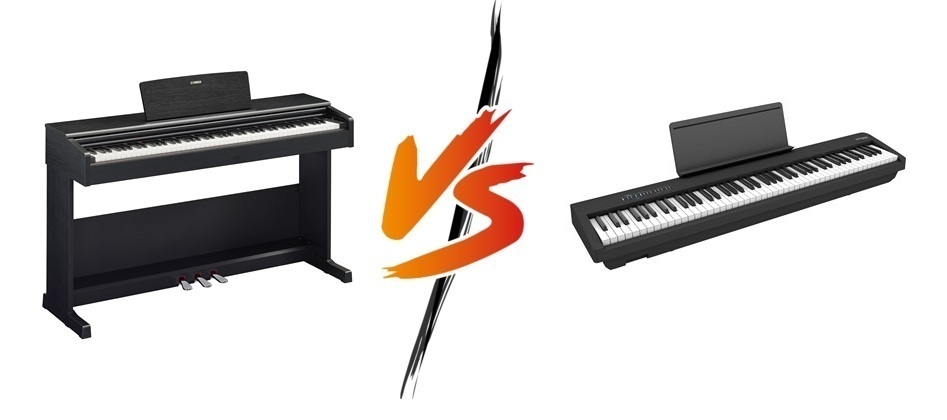
Choosing a digital piano today can feel overwhelming, especially when two well-known brands like Yamaha and Roland offer instruments that seem equally popular and well reviewed. The Yamaha YDP-105 and the Roland FP-30X are a perfect example of this dilemma. On paper, both sit in the entry-to-intermediate price range, both have 88 weighted keys, and both are widely recommended for beginners and advancing players alike. But once you look closer, it becomes clear that these two pianos are built with very different users in mind.
The YDP-105 is a console-style digital piano designed to live permanently in your home, offering a traditional look and a straightforward playing experience. The FP-30X, on the other hand, is a modern, portable instrument packed with connectivity options and performance-oriented features. In this comparison, I’ll break down where each piano shines, where they fall short, and which type of player will get the most value from each one.
Yamaha YDP-105 vs Roland FP-30X Comparison Chart
If you click the links below, under the product images, you will be redirected to Amazon.com. In case you then decide to buy anything, Amazon.com will pay me a commission. This doesn’t affect the honesty of this review in any way though.
| Category | Yamaha YDP-105 | Roland FP-30X |
|---|---|---|
 |  | |
| Check the best price on Amazon | Check the best price on Amazon | |
| Piano Type | Console / furniture-style digital piano | Portable digital piano |
| Keys | 88 keys | 88 keys |
| Keyboard Action | Graded Hammer Standard (GHS) | PHA-4 Standard |
| Key Surface | Smooth plastic | Ivory-feel textured keys |
| Escapement | No | Yes |
| Sensors | Dual sensor | Triple sensor |
| Touch Sensitivity | 3 levels + fixed | Multiple adjustable curves |
| Sound Engine | AWM Stereo Sampling | SuperNATURAL Piano |
| Polyphony | 192 notes | 256 notes |
| Number of Voices | 10 | 56 onboard (300+ via app) |
| Main Piano Character | Warm, mellow, traditional | Rich, dynamic, modern |
| Built-in Speakers | 2 × 6 W | 2 × 11 W |
| Speaker Placement | Cabinet-mounted, forward projection | Downward-facing |
| Built-in Recorder | No (external only via USB) | Yes (MIDI recording) |
| Metronome | Yes | Yes |
| Duo / Twin Mode | Yes | Yes |
| Split Mode | No | Yes |
| Layer Mode | Yes | Yes |
| Bluetooth MIDI | No | Yes |
| Bluetooth Audio | No | Yes |
| USB to Host (MIDI/Audio) | Yes | Yes |
| USB Flash Drive Support | No | Yes |
| Line Outputs | No | Yes |
| Headphone Outputs | 2 × 1/4″ | 1/4″ + 1/8″ |
| Pedals Included | 3 (integrated unit) | 1 sustain pedal |
| Half-Pedaling | Yes | Yes (with compatible pedal) |
| Stand Included | Yes (fixed cabinet) | No (optional) |
| Weight | Approx. 37 kg / 82 lbs | Approx. 14.8 kg / 32.6 lbs |
| Portability | Very low | High |
| Best Use Case | Permanent home practice piano | Home, studio, and performance use |
| My individual reviews | Yamaha YDP-105 review | Roland FP-30X review |
First Impressions and Design
First impressions matter a lot with digital pianos, maybe more than we like to admit. These instruments often sit in very visible places in our homes, and they’re usually something we interact with every day. Before you even play a single note, the look, footprint, and overall presence of a digital piano already start shaping your experience. This is one area where the Yamaha YDP-105 and the Roland FP-30X immediately reveal how different their philosophies are.
Yamaha YDP-105: Traditional, Furniture-Style Presence
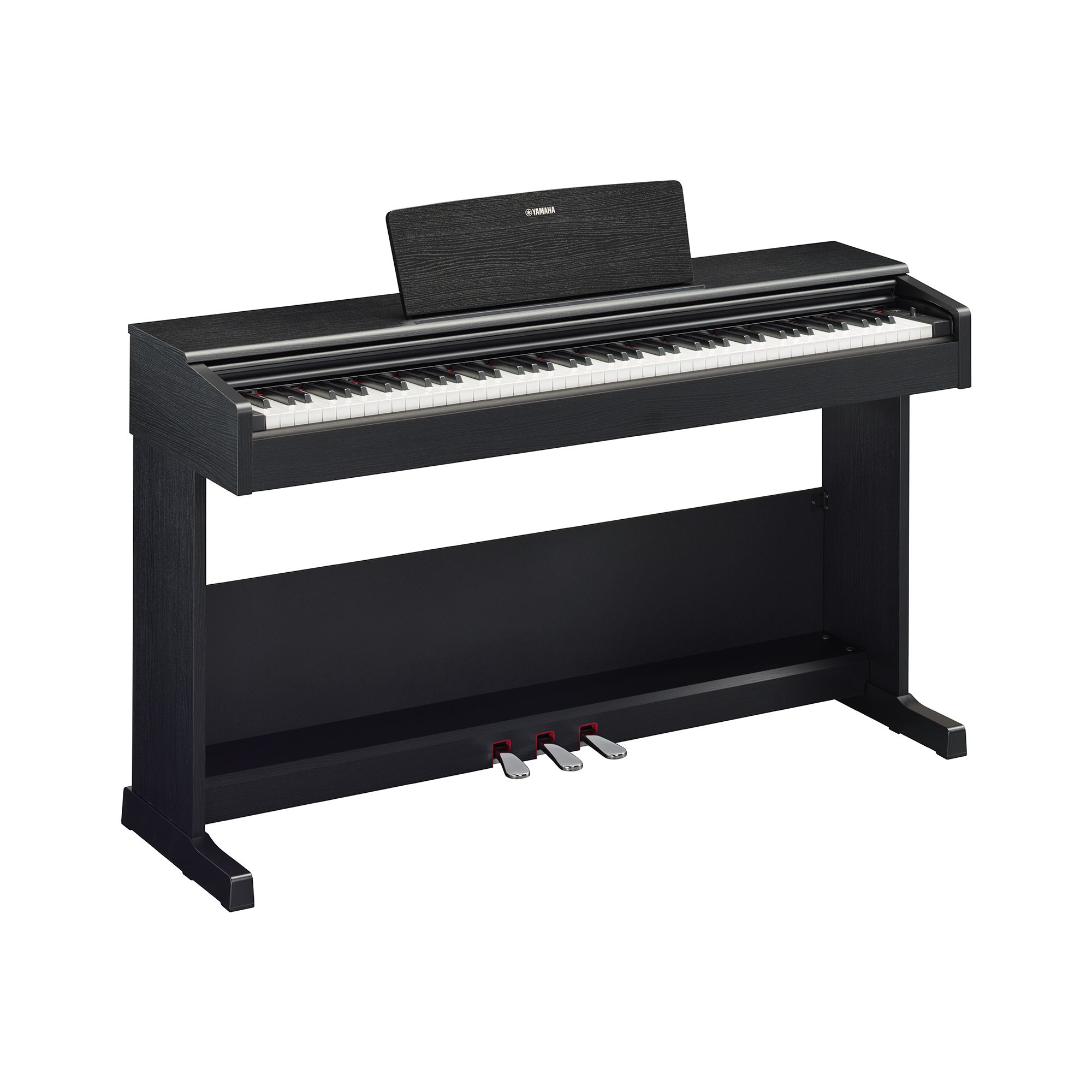
The Yamaha YDP-105 is designed to look and feel like a real piece of furniture, not just an instrument. When you see it assembled, it’s clearly meant to resemble an upright acoustic piano. It has a full cabinet, a fixed stand, a sliding key cover, and a built-in three-pedal unit. This makes it feel permanent, stable, and intentional. You don’t feel like you’re setting up a keyboard every time you want to play. Instead, you sit down, open the key cover, and it’s ready.
This design choice makes the YDP-105 especially appealing for living rooms, studies, or teaching spaces where you want the piano to visually belong in the room. It doesn’t scream “electronic instrument.” If you’re used to acoustic pianos, the transition feels natural. The bench placement, pedal spacing, and key height all feel familiar, which helps beginners and returning players feel at ease.
The cabinet itself is fairly simple, but that’s not a bad thing. Yamaha didn’t try to over-style it with unnecessary curves or flashy accents. The finish options are neutral and conservative, which helps it blend into most interiors. It’s the kind of piano that doesn’t demand attention, but quietly earns its place in the room.
That said, the furniture-style design also means commitment. Once assembled, the YDP-105 is not something you casually move around. It’s heavy, bulky, and awkward to relocate without partially disassembling it. If you’re someone who frequently rearranges your space, or you live in a small apartment where flexibility matters, this can become a drawback. Yamaha clearly assumes the buyer has a dedicated spot in mind.
Roland FP-30X: Minimalist and Modern
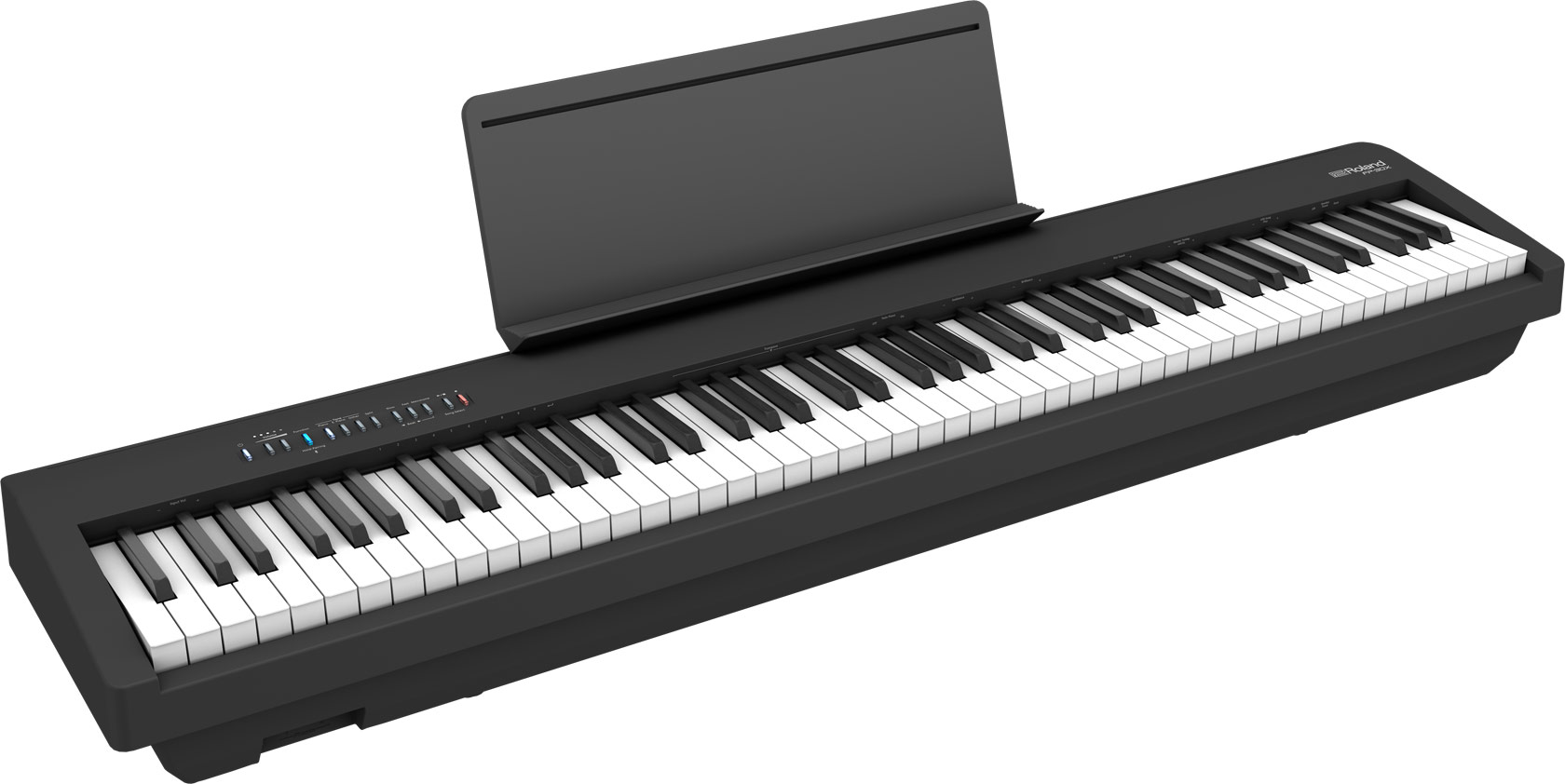
The Roland FP-30X couldn’t feel more different in its first impression. It’s a slim, portable digital piano that looks more like a modern keyboard than a traditional piano. Out of the box, you’re getting just the instrument itself. No stand. No pedals beyond a basic sustain pedal. No cabinet. This immediately signals that Roland expects users to customize their setup.
Visually, the FP-30X is clean and understated. The control panel is minimal, with buttons integrated subtly above the keys. There’s no large display, no clutter, and no attempt to imitate acoustic piano aesthetics. Instead, it embraces a modern, almost studio-style look. This works especially well in contemporary homes, home studios, or performance environments.
One of the biggest advantages of this design is flexibility. You can place the FP-30X on a simple X-stand, a furniture-style stand, a desk, or even mount it into a live rig. Roland offers matching stands and pedal units if you want a more traditional setup, but those are optional rather than mandatory. This modular approach gives you freedom, but it also means additional costs if you want a full “piano” feel.
From a size and weight perspective, the FP-30X is much easier to handle. You can move it between rooms, take it to rehearsals, or pack it up for a gig without much trouble. This portability fundamentally changes how you might use the instrument. It’s not just a home piano, it’s a tool you can take with you.
Build Quality and Materials
Both instruments feel well built, but again, in different ways. The Yamaha YDP-105’s strength lies in its solidity. Once assembled, it feels sturdy and planted. There’s very little flex or wobble, even when playing energetically. The pedals feel firmly mounted, and the overall structure inspires confidence. This is the kind of instrument that can survive years of daily practice by students without feeling flimsy.
The Roland FP-30X, while lighter, doesn’t feel cheap. The chassis is solid, and the keys are well supported. However, the experience depends heavily on what stand you use. On a cheap stand, the piano may wobble slightly during aggressive playing. On a quality stand or Roland’s official furniture stand, it feels much more stable. So part of the build quality experience with the FP-30X is actually outsourced to your accessory choices.
Button layout and physical controls are also worth mentioning. Yamaha keeps everything very discreet. Many functions are accessed through key combinations or via the companion app, which keeps the panel visually clean but can feel slightly unintuitive at first. Roland’s buttons are clearly labeled and easy to access, making on-the-fly adjustments simpler, especially in non-practice situations.
Key Cover and Practical Touches
One small but important design detail is the key cover. The Yamaha YDP-105 includes a sliding key cover that protects the keys from dust and adds to the acoustic piano illusion. It’s a practical feature, especially in households with children or pets. It also subtly encourages a ritual: open the cover, play, close it when you’re done.
The Roland FP-30X does not include any kind of key cover. If you care about protecting the keys, you’ll need a separate dust cover. This is common for portable pianos, but it’s still something to factor in if the instrument will live in a shared space.
Pedals are another practical difference. Yamaha’s integrated three-pedal unit feels natural and visually cohesive. Roland’s included sustain pedal is functional but basic. To get a proper three-pedal experience with the FP-30X, you’ll need to invest in an additional pedal unit and compatible stand.
Visual Identity and Emotional Impact
Beyond pure practicality, there’s also an emotional component to design. Sitting down at the Yamaha YDP-105 feels closer to sitting at a “real piano.” That can be motivating, especially for beginners or children. It signals seriousness and tradition. Parents often appreciate this, because it visually reinforces the idea of learning an instrument rather than playing with a gadget.
The Roland FP-30X, on the other hand, feels like a modern musical tool. It’s inspiring in a different way. It suggests creativity, flexibility, and experimentation. If you enjoy connecting to apps, recording, playing with backing tracks, or moving between classical practice and modern music production, its design aligns well with that mindset.
Design Verdict
In the end, neither design approach is objectively better. The Yamaha YDP-105 excels as a permanent home piano that blends seamlessly into traditional environments and supports focused practice. The Roland FP-30X shines as a versatile, modern instrument that adapts to different spaces and use cases.
If you want your digital piano to feel like furniture and stay put for years, Yamaha’s design will likely make you happier. If you value portability, customization, and a contemporary look, Roland’s approach is hard to beat.
Keyboard Action and Feel
If there’s one area where a digital piano truly earns or loses its value, it’s the keyboard action. Sound, features, and design all matter, but if the keys don’t feel right under your fingers, the instrument quickly becomes frustrating to play. This is especially true for beginners developing technique and for intermediate players who want their digital piano to respond more like an acoustic instrument. The Yamaha YDP-105 and the Roland FP-30X take two distinct approaches here, and the differences are noticeable the moment you sit down and start playing.
Yamaha YDP-105: Graded Hammer Standard (GHS)
The Yamaha YDP-105 uses Yamaha’s Graded Hammer Standard, commonly known as GHS. This is one of Yamaha’s most widely used key actions and has been a staple in their entry-level and mid-range digital pianos for years. The concept behind GHS is straightforward: the lower keys feel heavier, and the higher keys feel lighter, mimicking the basic weight distribution of an acoustic piano.
In practice, the GHS action feels immediately familiar to anyone who has played other Yamaha digital pianos in this range. The keys offer moderate resistance, and the downweight is neither overly stiff nor overly light. For beginners, this can be a good thing. The action doesn’t fight you, and it doesn’t demand excessive finger strength early on. Scales, basic chords, and simple classical pieces feel comfortable and predictable.
That predictability is really the defining characteristic of GHS. It’s consistent across the keyboard and forgiving of uneven technique. If you’re just starting out or returning to piano after a long break, the YDP-105 doesn’t make the learning curve steeper than it needs to be. The keys respond reliably, and dynamic control is clear enough to understand the basics of playing soft versus loud.
Where GHS starts to show its limitations is in nuance. While you can control dynamics reasonably well, the action doesn’t offer the same level of fine-grained response at very soft playing levels. Pianissimo passages can feel a bit compressed, and fast repetitions don’t always register as distinctly as they would on an acoustic piano or a more advanced digital action. For casual players, this might never be an issue. For more demanding repertoire, it becomes noticeable.
Another thing to be aware of is the surface of the keys. Yamaha uses smooth plastic keytops on the YDP-105. They’re perfectly functional, but they can feel a little slippery during long sessions or when your hands get warm. There’s no simulated ivory or textured coating here. Again, this is typical for this price range, but it’s worth mentioning.
Stability and Pedal Interaction on the Yamaha
One advantage the YDP-105 has, indirectly, is how its action interacts with the rest of the instrument. Because it’s built into a fixed cabinet with an integrated pedal unit, the whole playing experience feels stable and grounded. When you press into the keys, the instrument doesn’t move or shift. This contributes to a sense of control, even if the action itself isn’t the most advanced.
The sustain pedal feels solid underfoot, and half-pedaling support adds another layer of realism. While the keyboard action may be entry-level, the overall physical setup helps compensate by reinforcing good posture and consistent technique.
Roland FP-30X: PHA-4 Standard Action
The Roland FP-30X uses the PHA-4 Standard action, and this is where Roland clearly pulls ahead in terms of raw keyboard technology. PHA-4 is designed to deliver a more expressive and acoustic-like playing experience, and it shows.
First, the weight of the keys feels slightly heavier and more substantial than Yamaha’s GHS. This isn’t a night-and-day difference, but it’s enough that experienced players will notice it immediately. The resistance feels more evenly distributed and more refined, especially during slow, controlled passages.
One of the key advantages of PHA-4 is its triple-sensor system. Without getting too technical, this allows the piano to more accurately track repeated notes and fast playing without requiring the key to fully return to its resting position. In real-world playing, this translates to better responsiveness when trilling, repeating notes, or playing fast passages. The keyboard simply feels more alive under your fingers.
Roland also includes escapement simulation in the PHA-4 action. This creates a subtle notch-like sensation near the bottom of the keystroke, mimicking the mechanical feel of an acoustic grand piano. It’s not exaggerated, and beginners might not even consciously notice it, but it adds to the realism for players who are sensitive to these details.
The key surfaces on the FP-30X also deserve mention. Roland uses a slightly textured, ivory-style finish that provides better grip than smooth plastic. This becomes more noticeable during longer practice sessions. Your fingers feel more planted, and there’s less chance of slipping, especially during dynamic or expressive playing.
Expressiveness and Dynamic Control
This is where the difference between the two actions becomes most apparent. The FP-30X offers a wider dynamic range and more detailed control over how hard or soft a note is played. Subtle changes in finger pressure are translated more clearly into sound, making expressive playing easier and more rewarding.
On the Yamaha YDP-105, dynamics are still present and usable, but they feel slightly compressed. You can play quietly and loudly, but the transition between those extremes is less nuanced. For simple practice and learning, this is perfectly fine. For advanced repertoire or expressive performance, the Roland simply gives you more room to shape the music.
This also affects how forgiving each piano is. The Yamaha’s action can actually be easier for absolute beginners because it smooths out some inconsistencies in touch. The Roland, being more sensitive, will expose uneven technique more readily. Whether that’s a positive or negative depends on where you are in your piano journey.
Repetition, Speed, and Advanced Techniques
Fast passages, repeated notes, and techniques like tremolo or rapid staccato playing highlight the strengths of the FP-30X. The PHA-4 action keeps up without feeling sluggish, and the keys rebound quickly and consistently. This makes the piano feel responsive even under demanding conditions.
The YDP-105 can handle moderate speed playing without problems, but it doesn’t encourage pushing the limits. At higher tempos, the action can feel a bit less precise, especially when repeating the same note quickly. Again, this won’t matter for many users, but it’s something intermediate and advanced players will notice.
Portability vs Permanence and Its Effect on Feel
An often-overlooked aspect of keyboard feel is how the instrument’s form factor affects the experience. The Yamaha YDP-105 benefits from being a permanent, furniture-style piano. Everything about the setup encourages consistency. The bench height, pedal placement, and key height remain fixed, which helps build muscle memory.
The Roland FP-30X’s feel can vary depending on your setup. On a solid stand with a proper pedal unit, it feels excellent and very close to a traditional digital piano experience. On a lightweight stand with a basic pedal, it can feel less convincing. This isn’t a flaw of the keyboard action itself, but it does mean that the overall experience depends on your choices.
Keyboard Action Verdict
If we’re judging purely on keyboard action quality and realism, the Roland FP-30X is the clear winner. Its PHA-4 action is more expressive, more responsive, and closer to an acoustic piano in feel. It’s better suited for players who want to grow, explore expressive playing, and eventually tackle more demanding repertoire.
The Yamaha YDP-105, however, shouldn’t be dismissed. Its GHS action is reliable, approachable, and well suited to beginners and casual players. Combined with its stable cabinet and integrated pedals, it offers a comfortable and confidence-inspiring playing experience.
In short, if you value expressiveness and long-term growth, Roland has the edge. If you prioritize ease of use, stability, and a forgiving feel, Yamaha remains a very solid choice.
Sound Engines and Tone Quality
Sound is the emotional core of any piano. You can forgive a lot of shortcomings in features or connectivity if the instrument sounds inspiring and reacts naturally to your playing. At the same time, digital piano sound is one of the most subjective areas to evaluate. What feels warm and expressive to one player may sound dull or artificial to another. Yamaha and Roland have very different sound philosophies, and the YDP-105 and FP-30X reflect those differences clearly.
Yamaha YDP-105: AWM Stereo Sampling
The Yamaha YDP-105 uses Yamaha’s AWM Stereo Sampling sound engine. In simple terms, this means the piano sound is based on high-quality recordings of real Yamaha acoustic pianos, captured at different dynamic levels and mapped across the keyboard. Yamaha has decades of experience doing this, and it shows in how familiar and balanced the YDP-105 sounds.
The main piano voice on the YDP-105 has a warm, slightly mellow character. The midrange is smooth, the highs are controlled rather than bright, and the bass has enough body without being overpowering. This kind of voicing works especially well for classical practice, pop ballads, and general home playing. It doesn’t try to impress you with dramatic brightness or exaggerated resonance. Instead, it aims to be pleasant and non-fatiguing over long sessions.
One thing Yamaha does particularly well is consistency across the keyboard. As you move from low to high registers, the tone transitions smoothly. There are no sudden jumps in character, which helps maintain a sense of realism. Beginners often appreciate this because it makes the instrument feel predictable and stable.
However, because AWM is sample-based, there are inherent limitations. The sound doesn’t evolve as much over time compared to more advanced modeling engines. When you hold a note or sustain a chord, the decay is natural but somewhat static. You don’t get the same sense of complex overtones interacting as you would on a high-end digital piano or an acoustic instrument.
Dynamic Response and Expression on the Yamaha
The YDP-105 responds well to basic dynamics. Play softly and you get a gentle tone; play harder and the sound opens up. For most learning and casual playing situations, this is more than adequate. You can clearly practice dynamic contrast, phrasing, and articulation.
That said, the dynamic range feels slightly compressed at the extremes. Very soft playing can sometimes feel a bit too similar in tone, and very hard playing doesn’t produce dramatically different timbral changes. This ties back to both the sound engine and the GHS action. The instrument is designed to be forgiving and approachable rather than brutally honest.
Yamaha also includes damper resonance simulation, which adds a sense of depth when using the sustain pedal. It’s subtle, not overdone, and helps chords feel fuller. You won’t hear individual string interactions the way you might on more advanced instruments, but the effect adds just enough realism to avoid sounding dry.
Limited Voices, Focused Experience
One of the defining characteristics of the YDP-105 is its limited selection of sounds. You get around 10 voices in total, including a couple of acoustic piano variations, electric pianos, strings, and a few other basics. Yamaha’s philosophy here is clearly “quality over quantity.”
For players who only care about piano and perhaps one or two additional sounds, this simplicity can be a plus. You’re not distracted by endless presets or menu diving. Everything is focused on practicing and playing piano.
However, if you enjoy experimenting with different tones or playing a wide variety of styles, the YDP-105 may start to feel restrictive. The electric piano sounds are usable but not particularly inspiring, and the non-piano voices feel more like bonuses than fully developed instruments.
Roland FP-30X: SuperNATURAL Sound Engine
The Roland FP-30X uses Roland’s SuperNATURAL sound engine, which blends sample-based playback with behavior modeling. The goal is to make the sound respond more organically to how you play, rather than simply switching between recorded samples.
The first thing many players notice is how lively the FP-30X sounds. The main acoustic piano tone is rich, detailed, and full of character. There’s a noticeable sense of movement in the sound, especially when using the sustain pedal. Overtones bloom and fade in a way that feels more organic, particularly through headphones or good speakers.
Roland’s piano sound tends to be a bit brighter and more present than Yamaha’s. This doesn’t mean it’s harsh, but it does cut through a mix more easily. It’s well suited for modern styles, pop, jazz, and situations where the piano needs to stand out rather than blend into the background.
Dynamic Depth and Player Interaction
This is where the FP-30X really shines. The dynamic range is wide, and the tone changes noticeably depending on how you play. Soft playing produces a delicate, intimate sound, while harder playing brings out more bite and harmonic complexity. This makes expressive playing feel more rewarding.
The SuperNATURAL engine also handles note decay and sustain in a more complex way. When you hold a chord with the pedal down, the sound doesn’t just fade evenly. There’s a sense of interaction between notes, which gives the impression of real strings vibrating together. While it’s still a digital piano, the illusion is convincing for this price range.
Another advantage is polyphony. The FP-30X offers 256-note polyphony, which is more than enough for dense chords, layering sounds, and heavy pedal use without note dropouts. This is particularly useful if you use the piano for recording or complex arrangements.
Sound Variety and Tone Library
One of the biggest differences between the two instruments is the sheer number of sounds available. The FP-30X offers dozens of onboard tones, and when paired with the Roland Piano App, that number expands significantly. You get multiple acoustic piano variations, electric pianos, organs, strings, pads, and more.
The quality of these sounds is generally very good. The electric pianos are especially strong, with plenty of character and depth. This makes the FP-30X a much more versatile instrument for players who enjoy different genres or want to use the piano in a band or production context.
In contrast, the Yamaha YDP-105 feels intentionally limited. It’s not trying to be a do-it-all instrument. It’s trying to be a dependable piano. Whether that’s a strength or a weakness depends entirely on your needs.
Headphones and Listening Experience
Both pianos sound noticeably better through headphones, but the FP-30X again has an edge. Roland’s headphone sound feels more immersive and detailed, making late-night practice sessions more enjoyable. Yamaha’s sound remains pleasant and balanced, but it doesn’t have the same sense of depth or space.
Yamaha does include features like Stereophonic Optimizer to make headphone playing more comfortable, which helps reduce listening fatigue. It works well, especially for long practice sessions.
Sound Engine Verdict
If your priority is a traditional, warm piano sound that’s easy on the ears and ideal for focused practice, the Yamaha YDP-105 delivers exactly that. It doesn’t overwhelm you with options, and it maintains a consistent, reliable tone that works well for learning and everyday playing.
If you want a more expressive, dynamic, and versatile sound, the Roland FP-30X is clearly ahead. Its SuperNATURAL engine offers greater depth, realism, and variety, making it a better choice for players who want their digital piano to feel alive and responsive.
In short, Yamaha plays it safe and refined, while Roland aims for expressiveness and flexibility. Both approaches are valid, but they serve different types of players.
Speakers and Audio Output
Speakers are one of those aspects of digital pianos that don’t get much attention until something feels off. You can have a great keyboard action and a solid sound engine, but if the speakers don’t deliver that sound in a convincing way, the whole experience suffers. This is especially important for players who mostly practice without headphones and rely on the built-in speakers for day-to-day use. The Yamaha YDP-105 and the Roland FP-30X approach amplification very differently, largely because one is a console-style home piano and the other is a portable instrument.
Yamaha YDP-105: Built-In Home Speaker System
The Yamaha YDP-105 is designed first and foremost as a home piano, and its speaker system reflects that. It uses a pair of built-in speakers mounted inside the cabinet, rated at 6 watts per side. On paper, that doesn’t sound particularly powerful, but the cabinet itself plays an important role in how the sound is projected.
Because the speakers are enclosed within a solid wooden cabinet, the YDP-105 benefits from natural resonance and a sense of body that you often don’t get from portable pianos. The sound feels anchored and grounded, with a pleasant warmth that fills a small to medium-sized room comfortably. For solo practice, casual playing, or accompanying singing in a living room, the volume and presence are more than adequate.
The speaker placement is also worth noting. Yamaha positions the speakers in a way that projects sound forward and slightly upward, rather than directly at your legs. This helps create a more natural listening position when you’re sitting at the piano. The sound doesn’t feel like it’s coming from a specific point source; instead, it feels like it’s emerging from the instrument as a whole.
At moderate volumes, the YDP-105 sounds smooth and balanced. The midrange is clear, which helps melodies and harmonies come through cleanly, and the bass has enough depth to support left-hand parts without becoming boomy. High frequencies are present but not overly bright, which makes long practice sessions less fatiguing.
Volume, Headroom, and Limitations of the Yamaha
Where the YDP-105 starts to show its limits is at higher volumes. If you push the speakers close to their maximum, the sound can lose some clarity and definition, particularly in the bass. This isn’t surprising given the modest power rating, and it’s not really a flaw as much as a design choice. Yamaha didn’t build this piano to act as a performance amplifier.
For most home users, this won’t be an issue. You’re unlikely to need extreme volume in a living room or apartment. But if you imagine using the piano in a larger space or playing with other acoustic instruments, the built-in speakers won’t be enough on their own.
Another limitation is the lack of dedicated line outputs. The YDP-105 does not include standard line-out jacks for connecting to external speakers or PA systems. You can still route audio out through the headphone jack using adapters, but this is a workaround rather than an ideal solution. It works, but it’s not as clean or convenient as having proper outputs.
Roland FP-30X: Portable but Surprisingly Powerful
The Roland FP-30X takes a very different approach. As a portable digital piano, it doesn’t have the benefit of a large resonant cabinet. Instead, Roland focuses on efficient speaker design and power. The FP-30X features two built-in speakers rated at 11 watts each, nearly double the output of the Yamaha on paper.
These speakers are positioned facing downward, which might sound counterintuitive at first. In practice, this allows the sound to reflect off the surface the piano is placed on, creating a more diffused and spacious effect. When the FP-30X is on a solid stand or table, the sound spreads evenly and feels surprisingly full for a slim instrument.
At typical practice volumes, the FP-30X sounds clear and articulate. The extra power gives it more headroom, meaning the sound stays cleaner as you increase the volume. Bass notes have more punch, and the overall sound feels more dynamic compared to the Yamaha’s softer presentation.
This extra power also makes the FP-30X more suitable for small performances, rehearsals, or playing with other musicians. While it’s still not a replacement for a proper PA system, it holds its own better than many portable digital pianos in this class.
Clarity, Projection, and Playing Feel
One thing that becomes apparent when switching between these two pianos is how speaker design affects perceived playing feel. On the Yamaha YDP-105, the sound feels stable and contained. Notes bloom gently, and the instrument encourages controlled, relaxed playing. It’s a very comfortable experience, especially for classical practice.
On the Roland FP-30X, the sound feels more immediate and responsive. Notes seem to “jump” out of the instrument a bit more, which pairs well with its more expressive keyboard action. This can be energizing, particularly for modern music styles or rhythmically driven playing.
Neither approach is inherently better, but they suit different preferences. If you like a calm, blended sound that stays in the background, Yamaha’s speakers deliver that. If you want a sound that feels lively and present, Roland’s system has the edge.
External Audio Output and Connectivity
This is one area where the FP-30X clearly outclasses the YDP-105. Roland includes dedicated line output jacks, allowing you to connect directly to external speakers, mixers, audio interfaces, or PA systems. This opens up a lot of possibilities.
If you plan to perform live, record with external gear, or integrate the piano into a home studio setup, having proper line outputs makes life much easier. You get a clean signal without relying on headphone outputs or adapters.
The FP-30X also allows you to route Bluetooth audio through its speakers, meaning you can play backing tracks or music from your phone and hear it through the piano’s speaker system. This is incredibly convenient for practice and casual playing.
The Yamaha YDP-105, by comparison, feels more closed off. It’s designed as a self-contained instrument. While this simplicity has its appeal, it does limit flexibility for more advanced or performance-oriented users.
Headphone Performance
Both pianos support headphone use, and this is where digital pianos often shine. The Yamaha YDP-105 offers a pleasant, balanced headphone sound, with features designed to reduce listening fatigue. It’s well suited for long practice sessions, especially in shared living spaces.
The Roland FP-30X’s headphone output feels more immersive and detailed. The wider dynamic range and richer sound engine come through more clearly when using good headphones. If you frequently practice late at night, this difference becomes more noticeable.
Both models include dual headphone jacks, which is great for lessons or duet practice.
Speakers and Audio Output Verdict
If your primary use case is home practice in a dedicated space, the Yamaha YDP-105’s speaker system does exactly what it needs to do. It sounds warm, natural, and balanced, and it benefits from the resonance of its cabinet. Its limitations only become apparent when you push beyond typical home use.
The Roland FP-30X, despite being portable, offers more power, better clarity at higher volumes, and vastly superior connectivity options. It’s more flexible, more performance-friendly, and better suited to modern playing environments.
In short, Yamaha prioritizes comfort and simplicity, while Roland prioritizes power and versatility. Your choice should depend on whether you see your digital piano as a permanent home instrument or as something that might grow beyond the living room.
Built-In Features and Functions
Built-in features often determine how flexible and future-proof a digital piano feels over time. While sound and keyboard action define the core playing experience, features shape how you practice, learn, record, and interact with the instrument on a daily basis. This is another area where the Yamaha YDP-105 and the Roland FP-30X reveal very different priorities. Yamaha focuses on simplicity and a traditional practice experience, while Roland leans into versatility and modern functionality.
Yamaha YDP-105: Focused and Practice-Oriented
The Yamaha YDP-105 keeps its feature set intentionally simple. It’s designed primarily as a practice and learning instrument, not a performance workstation. This approach has its advantages, especially for beginners and players who prefer a distraction-free environment.
At its core, the YDP-105 includes the essentials you’d expect: a metronome, transpose function, tuning adjustment, and touch sensitivity settings. These are accessed either through key combinations or via Yamaha’s Smart Pianist app. Once you’re familiar with the layout, it’s easy enough to use, though it does rely heavily on the app for deeper control.
One of the most useful built-in features is Duo Mode. This splits the keyboard into two identical pitch ranges, allowing a teacher and student to sit side by side and play in the same register. For lessons or parent-child practice sessions, this is genuinely valuable and something many console-style digital pianos include for good reason.
The YDP-105 also supports Dual Mode, which lets you layer two sounds together, such as piano and strings. This can be inspiring for simple arrangements or just adding a bit of texture to your playing. However, with a limited sound library, the usefulness of this feature is somewhat constrained.
Smart Pianist App Integration
Yamaha leans heavily on its Smart Pianist app to extend the functionality of the YDP-105. When connected to a smartphone or tablet, the app gives you a visual interface for selecting sounds, adjusting settings, and controlling effects. It also includes features like chord display, score viewing, and accompaniment analysis for compatible songs.
For tech-comfortable users, this app-based approach works well. It keeps the piano itself visually clean and uncluttered, which fits Yamaha’s traditional design philosophy. However, it does mean that some functions feel hidden if you’re not using the app regularly.
Another limitation is recording. The YDP-105 does not include a built-in recorder that allows you to easily capture performances directly on the piano. You can record MIDI or audio via a connected device using USB, but that requires external software. For beginners, this might not matter much. For players who want to track progress or share recordings easily, it’s a noticeable omission.
Roland FP-30X: Feature-Rich and Flexible
The Roland FP-30X takes a much more feature-forward approach. While it still avoids overwhelming the user with complex menus, it offers a broader range of built-in functions that make it adaptable to different playing styles and environments.
Like the Yamaha, the FP-30X includes a metronome, transpose, tuning, and touch sensitivity settings. It also supports Split Mode, which allows you to assign different sounds to the left and right hands. This is useful for bass and piano combinations, organ setups, or educational purposes.
Roland also includes Dual Mode and Twin Piano (Roland’s version of Duo Mode), making the FP-30X equally capable in teaching scenarios. These features are easy to access directly from the instrument, which is helpful if you prefer not to rely on apps.
Built-In Recording and Playback
One of the FP-30X’s standout features is its built-in recorder. You can record your playing directly on the piano and play it back without any external devices. This is incredibly useful for practice, self-evaluation, and capturing ideas.
Recording encourages more mindful practice. Being able to listen back to your playing often reveals things you don’t notice in the moment. For intermediate players, this feature alone can justify choosing the Roland over the Yamaha.
In addition to recording, the FP-30X includes a range of internal demo songs and exercises. While these aren’t a substitute for proper lessons, they add value for beginners and casual players.
Bluetooth and App Integration
The FP-30X includes both Bluetooth MIDI and Bluetooth audio. This significantly expands how you can use the instrument. Bluetooth MIDI allows seamless connection to learning apps, notation software, and DAWs without cables. Bluetooth audio lets you stream music from your phone or tablet through the piano’s speakers.
This is especially useful for practicing along with backing tracks, YouTube lessons, or play-along apps. You can control the volume balance between your playing and the external audio, creating a smooth and integrated practice experience.
Roland’s Piano App provides access to deeper settings, sound selection, and customization options. Unlike Yamaha’s app dependency, Roland’s app feels more like an enhancement than a requirement. You can use the FP-30X comfortably without it, but it’s there if you want more control.
Sound Customization and Control
Another area where Roland pulls ahead is sound customization. The FP-30X allows you to adjust parameters like reverb depth, brilliance, and other tonal characteristics. This lets you fine-tune the instrument to your taste or adapt it to different rooms and styles.
The Yamaha YDP-105 offers basic reverb and effect control, but it’s more limited. Again, this reflects Yamaha’s philosophy of keeping things simple and consistent.
Learning and Growth Potential
When you look at built-in features through the lens of long-term use, the FP-30X feels more future-proof. As your skills grow, you’re more likely to appreciate features like recording, sound variety, Bluetooth connectivity, and deeper customization.
The YDP-105, by contrast, is very comfortable within its defined role. It’s excellent for focused practice, especially in a home environment where simplicity is valued. But it doesn’t evolve much with you. If your needs expand beyond basic practice and learning, you may start to feel its limitations sooner.
Ease of Use and User Experience
Despite having more features, the FP-30X remains user-friendly. Roland does a good job of keeping core functions accessible and intuitive. Yamaha’s interface is also straightforward, but the reliance on key combinations and apps can feel less transparent at times.
Neither piano is overly complicated, but Roland gives you more options without dramatically increasing complexity.
Built-In Features Verdict
The Yamaha YDP-105 offers a clean, focused set of features that support learning and everyday practice without distraction. It’s a great fit for players who want a digital piano to behave like a traditional instrument.
The Roland FP-30X, however, clearly offers more value in terms of built-in functionality. Recording, Bluetooth, broader sound control, and flexible modes make it a more versatile and adaptable instrument.
If you want simplicity and tradition, Yamaha delivers. If you want features that support creativity, experimentation, and growth, Roland is the stronger choice.
Connectivity and Expandability
Connectivity is one of those aspects of a digital piano that might not seem important at first, but often becomes crucial over time. Many players start out simply wanting a piano to practice on, but later find themselves wanting to record, use learning apps, connect to speakers, or integrate the instrument into a home studio or live setup. This is where the Yamaha YDP-105 and the Roland FP-30X differ dramatically in philosophy. One is designed to be mostly self-contained, the other to be part of a broader musical ecosystem.
Yamaha YDP-105: Simple and Self-Contained
The Yamaha YDP-105 takes a very traditional approach to connectivity. It includes the basics needed for modern digital piano use, but not much beyond that. At the back of the instrument, you’ll find a USB to Host port, which allows you to connect the piano to a computer, tablet, or smartphone.
This USB connection supports both MIDI and audio, meaning you can send note data to software instruments or record the piano’s sound directly into a DAW without needing an audio interface. For home recording and basic composition, this is very convenient. Plug in a cable, select the YDP-105 as your input device, and you’re ready to go.
In addition to USB, the YDP-105 includes two headphone jacks. This is useful for shared practice, lessons, or simply having a backup if one jack wears out over time. For a home-focused instrument, this covers most practical needs.
However, that’s essentially where the connectivity ends. There is no Bluetooth of any kind, no dedicated line outputs, and no USB-A port for flash drives. Yamaha’s intention is clear: the YDP-105 is meant to live in one place and operate mostly on its own.
Practical Implications of Yamaha’s Connectivity
For many users, especially beginners and casual players, this simplicity is not a drawback. In fact, it can be refreshing. There are fewer cables to manage, fewer settings to configure, and fewer opportunities for things to go wrong. You sit down, turn it on, and play.
If you want to use learning apps, Yamaha’s Smart Pianist app connects via USB. This works reliably, but it does mean physically tethering your device to the piano. For some users, that’s fine. For others, especially those used to wireless setups, it can feel dated.
The lack of dedicated audio outputs is more limiting. If you ever want to connect the YDP-105 to external speakers or a PA system, you’ll need to use the headphone output with an adapter. This works, but it’s not ideal. Volume control becomes more finicky, and the signal isn’t as clean as a true line-level output.
This makes the YDP-105 less suitable for live performance, ensemble playing, or advanced recording setups. It’s not that these things are impossible, but the piano clearly isn’t designed with them in mind.
Roland FP-30X: Designed for Integration
The Roland FP-30X takes the opposite approach. Connectivity is one of its strongest selling points, and it’s clear that Roland expects users to connect this piano to other devices regularly.
First, the FP-30X includes both USB-B and USB-A ports. The USB-B port functions similarly to Yamaha’s USB to Host, allowing MIDI and audio communication with computers and mobile devices. The USB-A port lets you connect flash drives for data storage and playback, adding another layer of flexibility.
Bluetooth is another major advantage. The FP-30X supports Bluetooth MIDI and Bluetooth audio. Bluetooth MIDI allows wireless connection to apps, notation software, and DAWs. This is incredibly convenient for practice and composition, as it eliminates cables entirely. Bluetooth audio lets you stream music from your phone or tablet through the piano’s speakers.
This wireless functionality changes how you interact with the instrument. You can play along with songs, follow video lessons, or use interactive learning apps without any physical connection. For modern users, this feels natural and intuitive.
Line Outputs and External Gear
One of the most important differences between these two pianos is the presence of dedicated line outputs on the FP-30X. These allow you to connect directly to amplifiers, mixers, audio interfaces, or PA systems.
For live performance, this is essential. You get a clean, consistent signal that’s independent of the piano’s internal speaker volume. For recording, it means better sound quality and easier integration into professional workflows.
The FP-30X also includes multiple headphone outputs in different sizes, which is convenient for various setups. Whether you’re using studio headphones or consumer earbuds, you’re covered.
Expandability Through Accessories
Expandability isn’t just about ports; it’s also about how the instrument can grow with you. The Yamaha YDP-105 is largely fixed in its configuration. The cabinet, pedals, and bench setup are all part of the package. This is great if you like consistency, but it doesn’t leave much room for customization.
The Roland FP-30X, by contrast, is highly modular. You can choose different stands, pedal units, benches, and carrying cases depending on your needs. You can start with a simple setup and gradually build a more traditional or performance-oriented rig over time.
This modularity extends to software as well. Roland’s compatibility with a wide range of third-party apps and DAWs makes it easier to integrate the FP-30X into different musical contexts.
Studio and Performance Use Cases
In a home studio environment, the FP-30X is clearly the more capable instrument. Its connectivity options allow it to function as a MIDI controller, a sound source, and an audio interface all in one. You can record, edit, and produce without much friction.
The YDP-105 can still be used in a studio, but it feels more limited. It works well as a MIDI controller and basic audio source, but the lack of outputs and wireless options makes it less flexible.
For live performance, the difference is even more pronounced. The FP-30X is portable, easy to connect, and designed to integrate with sound systems. The YDP-105, being a heavy console piano, is simply not meant for this role.
Future-Proofing and Long-Term Use
When thinking about connectivity, it’s worth considering where you might be in a few years. If you’re confident that your digital piano will remain a home practice instrument, the YDP-105’s limited connectivity may never bother you.
If you think you might explore recording, collaboration, teaching, or performance, the FP-30X’s connectivity gives you room to grow. It adapts to changing needs rather than locking you into a single use case.
Connectivity Verdict
The Yamaha YDP-105 offers just enough connectivity to support learning and basic recording while maintaining a clean, traditional experience. It’s simple, reliable, and intentionally limited.
The Roland FP-30X, on the other hand, excels in connectivity and expandability. Bluetooth, line outputs, multiple USB options, and modular accessories make it far more versatile and future-proof.
If you value simplicity and permanence, Yamaha’s approach makes sense. If you value flexibility and integration with modern tools, Roland is the clear winner in this category.
Conclusion
Choosing between the Yamaha YDP-105 and the Roland FP-30X really comes down to how you plan to use your digital piano, both now and in the future. These two instruments may sit in a similar price range and target a similar skill level, but they are built around very different ideas of what a digital piano should be.
The Yamaha YDP-105 is at its best when it’s treated as a permanent home instrument. Its furniture-style cabinet, integrated pedals, and straightforward feature set create an experience that feels close to owning an upright acoustic piano. It’s calm, stable, and focused. For beginners, families, or players who want a dedicated practice piano that looks good in a living room and doesn’t require much setup or technical know-how, the YDP-105 makes a lot of sense. It encourages consistent practice and keeps distractions to a minimum.
The Roland FP-30X, on the other hand, is built for flexibility. Its superior keyboard action, more expressive sound engine, powerful speakers, and modern connectivity options make it a more versatile instrument overall. It adapts easily to different roles, whether that’s home practice, recording, learning with apps, or even small performances. While it may require additional accessories to fully replicate a traditional piano setup, it rewards that investment with room to grow.
In simple terms, the Yamaha YDP-105 is about commitment and simplicity, while the Roland FP-30X is about freedom and expansion. Neither is objectively better for everyone, but one will almost certainly fit your lifestyle and goals better than the other. Understanding those priorities is the key to making a choice you’ll be happy with long after the novelty wears off.