
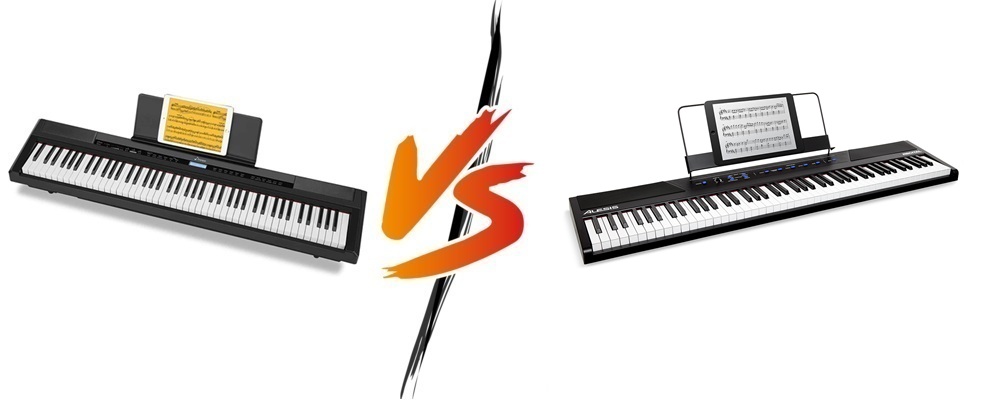
Shopping for a digital piano in the budget range can feel overwhelming fast. On paper, many models promise weighted keys, realistic sounds, and enough features to keep you motivated, but the real differences only show up once you actually sit down and play. The Donner DEP-20 and the Alesis Recital are two popular options that come up again and again for beginners and casual players, largely because they offer full-size 88-key keyboards at relatively affordable prices. At a glance, they seem to target the same audience, yet they take noticeably different approaches in design, sound, and overall playing experience. One leans heavily into features and bundled accessories, while the other focuses on simplicity and playability. In this comparison, I’ll break down how these two digital pianos stack up in real-world use, highlight where each one shines or falls short, and help you decide which is the better fit for your space, skill level, and musical goals.
Donner DEP-20 vs Alesis Recital Comparison Chart
If you click the links below, under the product images, you will be redirected to Amazon.com. In case you then decide to buy anything, Amazon.com will pay me a commission. This doesn’t affect the honesty of this review in any way though.
| Feature | Donner DEP-20 | Alesis Recital |
|---|---|---|
 |  | |
| Check the best price on Amazon | Check the best price on Amazon | |
| Keyboard | 88 fully weighted hammer-action keys (graded) | 88 semi-weighted keys (graded touch) |
| Key Surface | Smooth, slightly glossy | Matte finish |
| Sound Engine | Sample-based, 300+ voices | Sample-based, 5 voices |
| Piano Tones | Several acoustic and electric piano samples | 2 acoustic piano voices (Classic and Modern) |
| Polyphony | 128 notes | 128 notes |
| Built-in Speakers | 25W x 2, larger cabinet | 20W x 2, slim portable design |
| Pedal Unit | Full 3-pedal unit included (sustain, soft, sostenuto) | Sustain pedal included or optional, no 3-pedal unit |
| Display | LCD screen | No display |
| Voices & Effects | 300+ voices, multiple effects (reverb, chorus, etc.) | 5 voices, basic effects (reverb, chorus) |
| Accompaniment Styles | Yes, multiple rhythm and accompaniment styles | No accompaniment styles |
| Layer/Split Modes | Yes | Yes |
| Recording | Onboard recording function | No onboard recording |
| Connectivity | USB-MIDI, 2 headphone outputs, audio outputs, pedal ports | USB-MIDI, 1 headphone output, sustain pedal input |
| Power Options | AC adapter only | AC adapter or battery powered |
| Weight | Approx. 27 kg (with stand) | Approx. 12.3 kg (keyboard only) |
| Dimensions (L×W×H) | Approx. 132 × 39 × 83 cm (with stand) | Approx. 113 × 29 × 11 cm (keyboard only) |
| Portability | Not portable (furniture-style setup) | Lightweight and portable |
| Price Range | Mid-budget | Mid-budget |
| My individual reviews | Donner DEP-20 review | Alesis Recital review |
Design & Build
Design and build quality are often overlooked when people shop for a budget digital piano, but they matter more than you might think. You’ll be touching this instrument every day, looking at it in your living space, and possibly moving it around. The Donner DEP-20 and the Alesis Recital take very different approaches here, and those differences say a lot about who each piano is really for.
Overall Design Philosophy
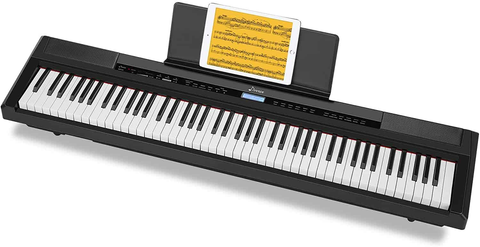
The Donner DEP-20 is clearly designed to feel like a traditional home piano. From the moment you see it assembled with its included furniture-style stand, it’s obvious Donner wants this instrument to live in one place, not bounce between bedrooms or rehearsal spaces. It has a wide footprint, squared-off edges, and a more substantial presence that mimics an entry-level digital upright. Whether you like the look or not, it feels intentional. This is meant to be a “set it up and leave it there” piano.
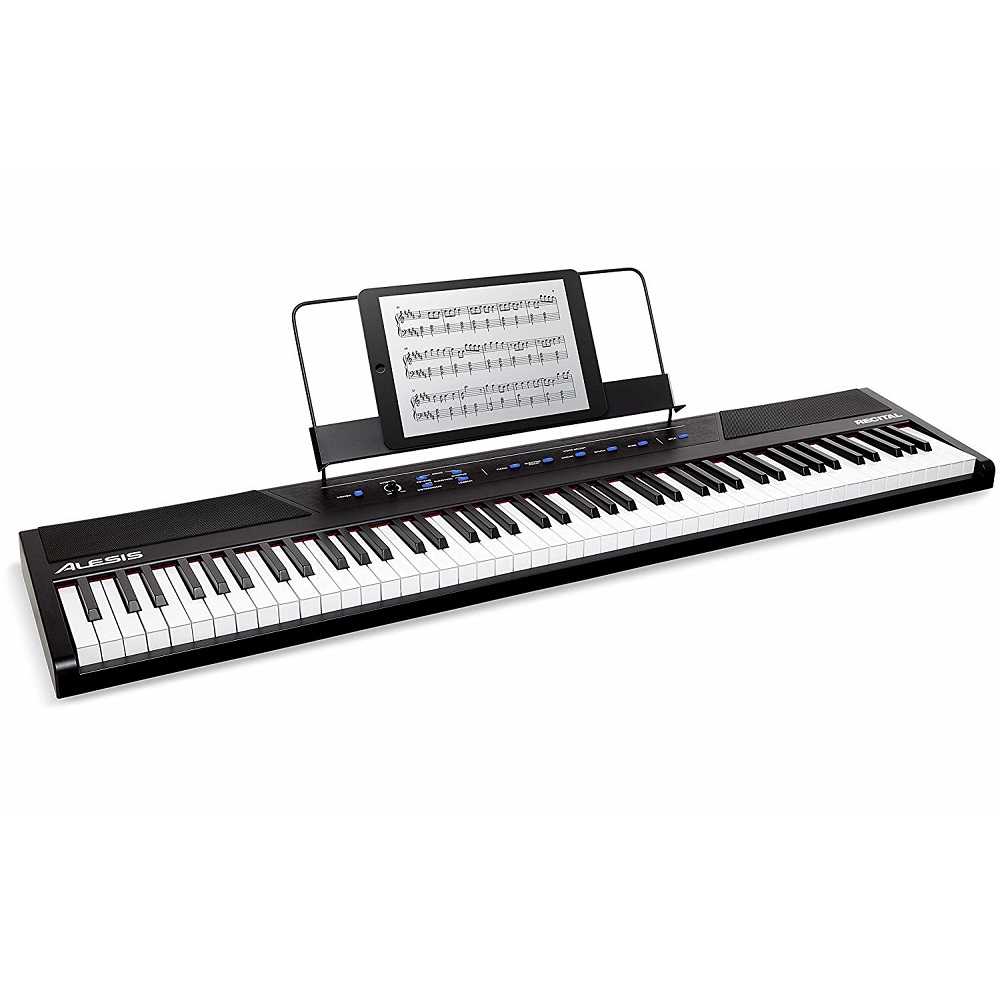
The Alesis Recital, on the other hand, is unapologetically minimalist. It looks like a portable keyboard, because that’s exactly what it is. The body is slim, lightweight, and clean, with very little visual clutter. There’s no attempt to dress it up as furniture. Instead, Alesis leans into practicality and portability. This makes the Recital easier to fit into smaller apartments, bedrooms, or shared spaces where a bulky stand-based piano might feel intrusive.
Neither approach is objectively better. It really comes down to whether you want your digital piano to blend into your home like furniture or disappear when you’re not using it.
Materials and Construction
Both pianos are made primarily of plastic, which is expected at this price point. You won’t find wooden keybeds or premium finishes here. That said, there’s a noticeable difference in how that plastic is used.
The Donner DEP-20 feels thicker and more rigid overall. The casing doesn’t flex much when pressed, and the instrument has a reassuring heft once it’s fully assembled on the stand. This contributes to a sense of stability, especially when playing with both hands or using the pedals aggressively. It doesn’t feel fragile, and that’s important for beginners who may not always play gently.
However, the finish itself is fairly basic. The plastic has a slightly matte, utilitarian look that won’t impress anyone aesthetically. It doesn’t look cheap in a fragile way, but it does look budget-conscious. The seams are visible, and the edges aren’t particularly refined.
The Alesis Recital uses thinner plastic and a lighter frame. If you pick it up, it’s immediately obvious that portability was a priority. There is a bit of flex if you press down firmly on the casing, but nothing alarming. It doesn’t creak or rattle, and it generally feels well-assembled for its size and price.
Where the Recital wins is in consistency. The finish is clean and uniform, with fewer awkward seams or bulky sections. It looks modern and tidy, even if it lacks visual personality. It won’t fool anyone into thinking it’s a premium instrument, but it also won’t look out of place in most environments.
Size, Weight, and Footprint
This is one of the biggest practical differences between the two.
The Donner DEP-20 is large and heavy, especially once you factor in the stand and three-pedal unit. While the keyboard itself is technically removable, most owners will treat it as a permanent setup. It takes up real floor space and needs a dedicated spot. If you’re working with a small room or shared living area, that can be a deal-breaker.
The upside is stability. Once assembled, the DEP-20 doesn’t move around. You can play with confidence without worrying about wobble, even during louder or more energetic sessions.
The Alesis Recital is the opposite. It’s light enough to carry under one arm, and it can sit on a desk, table, or X-style keyboard stand with no issues. This makes it ideal for students, renters, or anyone who needs to move their piano frequently. It’s also much easier to store when not in use.
That said, portability comes with trade-offs. If you use a cheaper stand, the Recital can wobble slightly during intense playing. This isn’t the piano’s fault, but it’s something to consider when building your setup.
Control Layout and Interface
The control layout on the Donner DEP-20 is busier, thanks largely to its LCD screen and expanded feature set. You get multiple buttons for voices, rhythms, modes, and settings. The screen helps you keep track of what’s selected, which is useful given how many options there are.
However, this also means a steeper learning curve. New users may find themselves flipping through the manual more often, especially when navigating layered sounds or accompaniment features. The buttons themselves are functional but not particularly satisfying to press. They do the job, but they don’t feel premium or especially responsive.
The Alesis Recital keeps things simple. There’s no screen, and the control panel is stripped down to the essentials. Buttons are clearly labeled, easy to reach, and intuitive. You won’t get lost trying to change sounds or modes.
This simplicity is one of the Recital’s biggest design strengths. It encourages you to sit down and play instead of tinkering with settings. For beginners, that’s often a good thing.
Pedals and Stand Integration
The Donner DEP-20 includes a full three-pedal unit, which is rare at this price point. Visually and functionally, this is a big plus. The pedals are mounted securely to the stand, giving you a more authentic piano-like experience. Sustain, soft, and sostenuto pedals are all present, even if their responsiveness isn’t on par with higher-end digital pianos.
The pedal unit itself feels basic but usable. It won’t impress advanced players, but beginners will appreciate having all three pedals available from day one.
The Alesis Recital usually ships with no stand and no pedals, or at most a simple sustain pedal depending on the bundle. This means additional cost and setup time. On the flip side, it gives you freedom to choose accessories that match your space and budget.
Durability and Long-Term Use
In terms of long-term durability, both pianos should hold up well for home use, assuming reasonable care. The Donner’s heavier build and fixed setup may give it an edge if it’s never moved, while the Alesis Recital’s lighter design makes it more vulnerable to drops or rough handling during transport.
That said, Alesis has a longer track record in the digital keyboard market, and their quality control tends to be consistent. Donner, while improving rapidly as a brand, can be a bit more hit-or-miss depending on the batch.
Design & Build Verdict
The Donner DEP-20 feels like a budget attempt at a traditional home digital piano. It’s sturdy, stable, and visually substantial, but also bulky and visually plain. The Alesis Recital feels like a modern, practical instrument designed for flexibility and ease of use, even if it sacrifices that “real piano” presence.
If you want something that looks and feels like a permanent fixture in your home, the DEP-20 makes sense. If you value portability, clean design, and adaptability, the Recital is the smarter choice.
Keyboard Action & Playability
If there’s one area where a digital piano either earns your trust or slowly pushes you away, it’s the keyboard action. Sound matters, features matter, but the way the keys respond under your fingers is what determines whether you actually enjoy playing day after day. This is also where the Donner DEP-20 and the Alesis Recital differ the most in philosophy and execution.
What “Action” Really Means in Practice
Before getting into the specifics, it’s worth clarifying what keyboard action actually affects. Action determines how heavy or light the keys feel, how they respond to different playing dynamics, and how closely the experience resembles an acoustic piano. For beginners, a good action helps develop finger strength and control. For more experienced players, it’s about nuance, expression, and consistency.
On paper, the Donner DEP-20 seems to have the upper hand with fully weighted hammer-action keys, while the Alesis Recital uses semi-weighted keys. In reality, things aren’t quite that simple.
Donner DEP-20 Keyboard Feel
The Donner DEP-20 uses a graded hammer-style action that’s intended to mimic the resistance of an acoustic piano. The keys are heavier in the lower register and slightly lighter in the higher register, at least in theory. When you first sit down at the DEP-20, the weight is noticeable. This is not a light keyboard, and for some players that immediately feels reassuring.
For absolute beginners, that heavier resistance can feel like a double-edged sword. On one hand, it encourages proper finger strength and discourages lazy playing. On the other hand, it can feel tiring during longer practice sessions, especially for younger players or those with smaller hands. Chord-heavy pieces or fast passages can feel more demanding than expected.
One common criticism of the DEP-20’s action is consistency. Some keys feel slightly stiffer or looser than others, especially when playing quickly across octaves. This isn’t unusual at this price point, but it becomes noticeable over time. The return speed of the keys also isn’t particularly fast, which can make repeated notes and trills feel a bit sluggish.
Another issue is how the action interacts with the sound engine. The DEP-20 doesn’t always translate subtle differences in touch into meaningful dynamic changes. You can press harder or softer, but the resulting volume steps sometimes feel abrupt rather than smooth. This limits expressive playing and can make it harder to control phrasing, especially in slower, more emotional pieces.
That said, not everyone will find this problematic. If your main goal is basic practice, learning scales, or building finger strength, the DEP-20’s heavier action can actually be helpful. It forces you to commit to each note and can make lighter keyboards feel easier by comparison later on.
Key Surface and Physical Comfort on the DEP-20
The key surfaces on the Donner DEP-20 are smooth and slightly glossy. They don’t attempt to replicate the textured feel of real ivory or ebony, but they’re comfortable enough for extended use. The downside of the glossy finish is that fingers can slip slightly during sweaty practice sessions, especially in warmer rooms.
The key length is fairly standard for a budget digital piano, but shorter than on an acoustic instrument. This means leverage decreases the further back on the key you play. Advanced players who rely on deep key control may notice this limitation quickly.
Alesis Recital Keyboard Feel
The Alesis Recital uses semi-weighted keys, and that alone might make some buyers dismiss it outright. However, the actual playing experience is more refined than the spec sheet suggests.
The keys feel lighter than the Donner’s, but they’re consistent across the entire keyboard. There’s no noticeable unevenness, and the keys return quickly after being pressed. This makes fast passages, repeated notes, and dynamic articulation feel more natural and less fatiguing.
The Recital also benefits from adjustable touch sensitivity settings. You can choose how responsive the keyboard is to your playing strength, which goes a long way toward compensating for the lack of full hammer action. Softer settings are forgiving for beginners, while harder settings require more deliberate playing and offer better control.
What stands out most is how predictable the Recital feels. When you press a key, you know exactly what you’re going to get. That reliability makes practice more enjoyable and helps build confidence, especially for learners who are still developing coordination.
Expressiveness and Dynamic Control
This is where the Alesis Recital quietly pulls ahead. Even though its keys are lighter, the Recital translates touch into sound more smoothly. Soft playing actually sounds soft, and harder playing ramps up naturally without sudden jumps in volume.
On the Donner DEP-20, dynamics exist, but they feel compressed. There’s less space between pianissimo and fortissimo, which can make expressive pieces feel a bit flat. You can still practice dynamics, but the instrument doesn’t always reward nuance.
For players interested in classical music, expressive ballads, or emotional solo pieces, this difference becomes noticeable very quickly. The Recital simply feels more cooperative in this regard.
Learning Curve and Long-Term Development
For beginners, the DEP-20’s heavier action can be beneficial in the early stages, but it may also cause frustration. Fatigue sets in faster, and beginners sometimes mistake physical difficulty for lack of progress.
The Recital’s lighter, more forgiving action makes it easier to focus on musical concepts rather than fighting the keyboard. This can lead to more enjoyable practice sessions and better consistency, which matters more than raw difficulty early on.
For intermediate players, the picture shifts slightly. Those planning to move to an acoustic piano later may appreciate the DEP-20’s weight, even if it’s imperfect. The Recital won’t fully prepare your hands for a real piano’s resistance, though its dynamic control helps bridge that gap somewhat.
Noise and Mechanical Feel
Both keyboards are relatively quiet mechanically, but the Alesis Recital has a slight edge here. The key movement feels smoother and produces less audible thumping when played forcefully. The Donner DEP-20’s keys are a bit louder mechanically, especially during fast or heavy playing.
This might not matter if you’re practicing with headphones, but in quiet environments it’s something you’ll notice.
Keyboard Action & Playability Verdict
The Donner DEP-20 offers heavier, fully weighted keys that aim to replicate an acoustic piano but fall short in consistency and expressiveness. It’s physically demanding and better suited for players who prioritize resistance over finesse.
The Alesis Recital, despite its semi-weighted design, delivers a more enjoyable and predictable playing experience. Its responsive dynamics, adjustable sensitivity, and smoother action make it easier to play musically and comfortably.
If your priority is building finger strength and having a heavier feel under your hands, the DEP-20 may appeal to you. If you want an instrument that encourages expressive playing and long practice sessions without fatigue, the Alesis Recital is the more satisfying choice overall.
Sound Quality
Sound quality is where expectations often collide with reality in the budget digital piano world. Marketing language tends to promise “rich,” “realistic,” or “concert-style” tones, but the truth is that every instrument at this price point makes compromises. What matters is how noticeable those compromises are and whether they get in the way of enjoying and improving your playing. The Donner DEP-20 and the Alesis Recital approach sound in very different ways, and those choices shape the entire playing experience.
Core Piano Tone
Let’s start with the most important sound on any digital piano: the acoustic piano voice.
The Donner DEP-20 uses sampled piano tones that aim to sound bold and full, especially through its built-in speakers. At first listen, the main piano voice can feel impressive, particularly if you’re coming from a cheaper keyboard or no instrument at all. There’s a decent amount of low-end presence, and the sound fills a room easily.
However, once you spend more time with it, the limitations become clearer. The piano sample lacks depth and detail, especially in the midrange. Notes don’t bloom naturally after being struck, and sustain feels somewhat artificial. When holding chords, the sound tends to flatten out rather than evolve. This makes longer, expressive passages feel less alive than they should.
There’s also a noticeable sameness across the keyboard. While the lower notes are heavier and the higher notes brighter, the tonal transition between registers doesn’t feel as organic as it does on better digital pianos. For beginners, this might not be obvious, but intermediate players will notice it quickly.
The Alesis Recital takes a more restrained approach. Its main piano sound isn’t as immediately punchy as the Donner’s, but it’s more balanced and musical. The tone has a warmer character, and while it’s still clearly a digital sample, it reacts more naturally to changes in touch.
Sustain on the Recital feels smoother, and chords decay in a more believable way. There’s still a lack of harmonic complexity compared to higher-end instruments, but the overall impression is more cohesive. The piano sound doesn’t try to impress you with sheer volume or brightness. Instead, it stays out of the way and lets your playing speak.
Dynamic Range and Expression
Sound quality isn’t just about the raw sample. It’s also about how that sample responds to your playing.
On the Donner DEP-20, dynamics exist, but they’re somewhat compressed. Soft playing is possible, but it doesn’t feel truly delicate. Harder playing gets louder quickly, sometimes too quickly, which can make controlling volume a challenge. This ties directly into the keyboard action, which doesn’t always communicate subtle differences in touch effectively.
As a result, expressive control feels limited. You can practice dynamics in a basic sense, but the piano doesn’t reward nuanced phrasing. Crescendos feel abrupt, and the emotional arc of a piece can get lost.
The Alesis Recital performs better here. Its dynamic response feels smoother and more predictable. You can ease into a note quietly and build volume gradually, which makes expressive playing more satisfying. This is especially noticeable in slower pieces, ballads, and classical music where dynamic shading matters.
Even though the Recital has fewer sounds overall, the main piano voice is more responsive and forgiving, making it easier to develop musical sensitivity.
Additional Voices and Variety
This is where the Donner DEP-20 clearly outclasses the Alesis Recital in terms of quantity.
The DEP-20 offers hundreds of voices, including electric pianos, organs, strings, brass, synths, and various novelty sounds. For players who enjoy experimenting, composing, or just having fun, this can be appealing. You can layer sounds, split the keyboard, and explore styles far beyond traditional piano playing.
That said, many of these additional voices are average at best. Some are usable, others feel thin or dated. They’re fine for casual use, but few stand out as truly inspiring. The large number of sounds can also feel overwhelming, especially when many of them don’t see regular use.
The Alesis Recital takes the opposite approach. It includes only a handful of voices: typically acoustic piano, electric piano, organ, synth, and bass. Each one is reasonably polished, but none are particularly deep or customizable.
For most learners, this limitation is actually a benefit. You’re less likely to get distracted by novelty sounds and more likely to focus on playing. The electric piano and organ sounds are pleasant enough for variety, but the Recital clearly prioritizes its core piano voice.
Effects and Sound Shaping
Both pianos offer basic effects like reverb and chorus, but implementation matters.
The Donner DEP-20 includes multiple reverb and chorus options, and you can tweak them to some extent. However, the effects often feel heavy-handed. Reverb can sound artificial if pushed too far, and subtle settings are harder to dial in. This can make the piano sound washed out rather than spacious.
The Alesis Recital keeps effects simple and restrained. Reverb is gentle and adds a sense of space without overwhelming the sound. Chorus works well on electric piano tones without making them feel synthetic. You won’t get deep sound design options, but what’s there is usable and musical.
Speaker Interaction and Sound Projection
Sound quality is inseparable from the speakers that deliver it.
The Donner DEP-20’s stronger speakers give its sound more physical presence. Bass notes feel bigger, and the piano fills a room more easily. This can make the instrument feel impressive at first, especially in a living room setting.
However, louder doesn’t always mean better. At higher volumes, the DEP-20’s sound can become harsh, particularly in the upper registers. Distortion isn’t severe, but clarity suffers.
The Alesis Recital’s speakers are less powerful, but they’re better balanced. The sound stays clear at moderate volumes, and the tonal balance remains intact. You won’t get the same room-filling impact, but what you hear is more accurate and pleasant.
Headphone Experience
Both pianos support headphone use, which is critical for practice.
Through headphones, the differences in sound quality become even more apparent. The Donner DEP-20’s piano tone feels flatter and less detailed, while the Alesis Recital benefits from its smoother dynamics and cleaner sample.
If you plan to practice mostly with headphones, the Recital offers a more enjoyable and less fatiguing listening experience.
Sound Quality Verdict
The Donner DEP-20 emphasizes power, volume, and variety. Its sound can be fun and impressive in short bursts, especially if you enjoy experimenting with different voices. However, its core piano tone lacks depth and expressive nuance.
The Alesis Recital focuses on musicality and balance. Its piano sound is warmer, more responsive, and easier to shape dynamically, even if it lacks sheer power and variety.
If sound quality and expressive playing matter most to you, the Alesis Recital is the better choice. If you value loudness and lots of tonal options over realism, the Donner DEP-20 will likely keep you entertained.
Built-In Speakers & Volume
Built-in speakers are one of those features people tend to underestimate until they actually live with a digital piano. On paper, wattage numbers and speaker counts look straightforward, but in practice, how a piano sounds in a room depends on speaker placement, tuning, cabinet design, and how well the sound engine works with the amplification system. The Donner DEP-20 and the Alesis Recital both include onboard speakers, but they deliver very different listening experiences.
Speaker Configuration and Power
The Donner DEP-20 comes equipped with a pair of relatively powerful speakers, rated at around 25 watts per side. That’s a lot for a digital piano in this price range, and it shows the moment you turn it on. The sound projects outward with confidence, and there’s enough volume on tap to fill a medium-sized room without needing external amplification.
This makes the DEP-20 feel more like a home piano than a practice keyboard. You can sit several feet away and still hear the sound clearly, which is useful if you’re playing for others or practicing without headphones in a shared space.
The Alesis Recital uses a more modest speaker setup, typically rated at about 20 watts per side. While that’s still respectable, it doesn’t deliver the same immediate punch as the Donner. The Recital is clearly designed for personal practice rather than performance or room-filling sound.
However, raw wattage only tells part of the story.
Speaker Placement and Cabinet Design
The Donner DEP-20 benefits from its larger cabinet and furniture-style stand. The speakers are integrated into a structure that allows the sound to resonate more freely. Bass frequencies in particular feel fuller, partly because there’s simply more physical space for the sound to develop.
That said, the cabinet design also introduces some drawbacks. The sound projection is very direct, which can make the piano feel loud and forward, especially when you’re sitting close to it. In smaller rooms, this can become fatiguing over long practice sessions.
The Alesis Recital’s speakers are housed in a slim, portable body. There’s less resonance and less low-end extension, but the sound is more controlled. The speakers project upward and outward in a way that feels balanced, especially at moderate volumes.
This design favors clarity over impact. You won’t feel the bass as much, but individual notes are easier to distinguish, and the overall sound remains cleaner as you turn the volume up.
Volume Range and Control
The Donner DEP-20 has a wide volume range. At low settings, it’s quiet enough for late-night practice in a private room, and at high settings, it can easily overpower a small space. This flexibility is useful, but it also highlights some tuning issues.
At higher volumes, the DEP-20’s sound can become harsh, particularly in the upper midrange. Bright piano passages can start to feel piercing, and complex chords lose definition. The speakers are clearly being pushed close to their limits, and while they don’t completely break down, they stop sounding refined.
The Alesis Recital has a narrower volume range, but it’s more usable throughout. Even near its upper limit, the sound stays relatively clean. You don’t get the same sheer loudness, but you also don’t encounter the same level of distortion or tonal imbalance.
This makes the Recital easier to live with in everyday situations. You’re less likely to feel like you need to constantly adjust the volume to avoid harshness.
Bass Response and Low-End Presence
Bass response is one area where the Donner DEP-20 clearly outperforms the Alesis Recital. Lower notes have more weight and physical presence, which can make piano pieces feel more grounded. This is especially noticeable when playing left-hand-heavy arrangements or simple chord progressions.
However, the bass isn’t particularly tight or detailed. It tends to blur slightly at higher volumes, which can muddy the overall sound. It’s satisfying in a casual sense, but not particularly accurate.
The Alesis Recital’s bass response is lighter and less impactful. Low notes are audible, but they don’t have the same body. This can make the instrument feel thinner, especially if you’re used to acoustic pianos or larger digital models.
On the flip side, the lighter bass helps maintain clarity. The sound doesn’t get muddy, even when playing dense chords or fast passages. For practice and learning, this clarity can actually be more helpful than raw power.
Treble Clarity and Note Definition
In the higher registers, the differences become even more pronounced.
The Donner DEP-20’s treble can sound bright and somewhat brittle at higher volumes. Softer playing is fine, but when you dig in, the sound loses warmth. This can make certain styles, like classical or jazz, feel less natural.
The Alesis Recital handles treble frequencies more gracefully. Notes remain clear without becoming sharp or piercing. While the tone still lacks the complexity of a high-end instrument, it’s easier on the ears during long sessions.
Listening Position and Player Perspective
Another subtle but important factor is how the sound reaches the player.
The Donner DEP-20’s speakers project forward, which means the sound often travels past the player rather than toward them. This can create a slight disconnect between touch and sound, especially if you’re sitting close to the keyboard.
The Alesis Recital’s speakers are positioned in a way that feels more immediate to the player. You hear the sound as you play, not a split second later bouncing off the room. This improves the sense of control and responsiveness, even if the overall volume is lower.
Speaker Performance with Headphones vs Speakers
Both pianos sound better through headphones, but the gap between headphone sound and speaker sound is wider on the Donner DEP-20. Through speakers, its sound feels less refined than it does through headphones.
The Alesis Recital’s speaker sound is closer to its headphone sound, which suggests better overall tuning between the sound engine and amplification system.
Built-In Speakers & Volume Verdict
The Donner DEP-20 prioritizes power and presence. Its speakers are loud, bass-heavy, and capable of filling a room, making it suitable for home environments where volume matters. However, that power comes at the cost of clarity and refinement at higher levels.
The Alesis Recital takes a more restrained approach. Its speakers are quieter and less bass-heavy, but they’re clearer, more balanced, and easier to listen to over long periods.
If you want a digital piano that can sound big and impressive without external speakers, the Donner DEP-20 has the advantage. If you value clean, comfortable sound for daily practice, the Alesis Recital offers the more pleasant and consistent listening experience.
Functions & Features
Functions and features are where budget digital pianos often try to stand out. Since sound engines and key actions are limited by cost, manufacturers tend to add extra modes, voices, and tools to make their instruments feel more capable and exciting. The Donner DEP-20 and the Alesis Recital take very different approaches here, and understanding those differences can help you decide which one better fits your playing style and goals.
Overall Feature Philosophy
The Donner DEP-20 is clearly designed to impress on a spec sheet. It offers a long list of features, a built-in display, hundreds of sounds, accompaniment rhythms, and multiple performance modes. It wants to be a do-it-all keyboard as much as it wants to be a piano.
The Alesis Recital goes in the opposite direction. Its feature set is intentionally limited and focused on learning, practice, and straightforward playing. Rather than trying to do everything, it concentrates on doing a few things well.
Neither approach is wrong, but they serve different types of players.
Voices and Sound Selection
The Donner DEP-20 includes a very large number of voices. Beyond the main piano sounds, you’ll find electric pianos, organs, strings, brass, woodwinds, guitars, basses, synths, and various novelty sounds. For players who enjoy experimenting or composing, this can be fun and inspiring.
However, navigating these voices requires patience. The LCD screen helps, but scrolling through dozens or hundreds of options can feel tedious. Many of the sounds are variations of the same idea, and not all of them are useful in practice.
The Alesis Recital limits its voice selection to a small handful. While this may feel restrictive at first, it keeps the instrument focused. Switching sounds is quick and intuitive, and each voice feels distinct. You’re unlikely to spend time hunting for a sound you’ll never use.
Layer and Split Modes
Both pianos support layer and split modes, but their implementations differ.
On the Donner DEP-20, layering two voices allows you to create richer textures, such as piano and strings combined. Split mode lets you assign different sounds to each hand, which is useful for practice or accompaniment. These modes are fairly flexible, but setting them up requires navigating menus and remembering button combinations.
The Alesis Recital also supports layer and split modes, but in a more streamlined way. You won’t get as much customization, but you can activate these modes quickly without consulting the manual. For many users, this simplicity is a plus.
Accompaniment and Rhythm Features
This is an area where the Donner DEP-20 clearly stands out.
It includes a large number of built-in rhythms and auto-accompaniment styles. These can be useful for beginners who want to practice timing or for players who enjoy playing along with a backing band. You can choose styles, adjust tempo, and experiment with different grooves.
That said, the quality of these accompaniments is mixed. Some styles sound decent, while others feel dated or artificial. They’re fun for casual use, but unlikely to replace proper backing tracks or real musicians.
The Alesis Recital does not include accompaniment rhythms. This reinforces its identity as a practice-focused instrument rather than an all-in-one keyboard workstation.
Learning and Practice Tools
Both pianos include features aimed at learners, but they take different approaches.
The Donner DEP-20 includes built-in demo songs and basic recording functions. You can record your playing and listen back, which is helpful for self-evaluation. However, the learning tools are fairly basic and don’t offer structured lessons.
The Alesis Recital includes a dedicated lesson mode that splits the keyboard into two identical ranges. This allows a student and teacher to sit side by side and play the same notes, or for a learner to practice along with a guide. For beginners taking lessons, this is genuinely useful.
The Recital also includes adjustable touch sensitivity, which can be thought of as both a keyboard and learning feature. It allows beginners to start with a forgiving response and gradually increase difficulty as their technique improves.
Recording and Playback
The Donner DEP-20 includes an onboard recording function that allows you to capture your performances. This is useful for tracking progress or experimenting with ideas. The recordings are basic and limited in storage, but they serve their purpose.
The Alesis Recital does not emphasize onboard recording. Instead, it assumes you’ll use external devices or software if you want to record. This aligns with its minimalist design philosophy but may disappoint users who want a self-contained practice tool.
Interface and Ease of Use
Interface design has a huge impact on how often you actually use an instrument’s features.
The Donner DEP-20’s LCD screen gives you more information but also adds complexity. You’ll spend more time navigating menus, especially when exploring advanced features. For tech-savvy users, this may be fine. For beginners, it can feel intimidating.
The Alesis Recital’s button-based interface is far simpler. There’s less to learn and fewer ways to get lost. You sacrifice depth, but you gain immediacy.
Customization and Control
The Donner DEP-20 allows for more customization overall. You can adjust effects, experiment with sounds, and tweak various parameters. This makes it more appealing to users who enjoy shaping their sound.
The Alesis Recital offers limited customization. You can adjust touch sensitivity and apply basic effects, but that’s about it. The focus remains on playing rather than tweaking.
Functions & Features Verdict
The Donner DEP-20 is feature-rich and flexible. It offers a wide range of tools that encourage exploration and experimentation, but those features come with added complexity and uneven quality.
The Alesis Recital is streamlined and purpose-driven. Its features support learning and practice without distractions, but advanced users may find it limiting.
If you enjoy exploring sounds, using accompaniments, and having lots of options at your fingertips, the Donner DEP-20 will feel more exciting. If you want a focused instrument that supports consistent practice and musical growth, the Alesis Recital is the better choice.
Connectivity & Expandability
Connectivity is one of those areas that doesn’t seem exciting until you actually need it. Whether you want to practice silently with headphones, record into a computer, use virtual instruments, or expand your setup with external speakers and pedals, the available connections can either make life easy or quietly limit what you can do. The Donner DEP-20 and the Alesis Recital both cover the basics, but they differ in flexibility and long-term expandability.
Core Connectivity Expectations
At a minimum, a modern digital piano should allow for headphone use and MIDI connectivity. Both instruments meet these requirements, but how they implement them reveals their intended audience.
The Donner DEP-20 positions itself as a more fully featured home instrument, offering multiple input and output options. The Alesis Recital keeps things simple, prioritizing ease of use and portability over a wide range of connections.
Headphone Outputs
Headphone connectivity is essential, especially for players who practice at night or in shared living spaces.
The Donner DEP-20 typically includes two headphone outputs, often in different sizes. This is surprisingly useful. You can practice with another person, share a lesson, or switch between headphones without unplugging cables. The headphone outputs also mute the internal speakers automatically, which is standard but still worth noting.
Sound quality through headphones on the DEP-20 is decent, though the character of the piano tone remains the same. You won’t suddenly unlock a dramatically more realistic sound, but you do get a cleaner signal compared to the built-in speakers.
The Alesis Recital includes a single standard headphone output. This is enough for most users, but it does limit flexibility. If you want to practice with someone else using headphones, you’ll need a splitter.
Headphone sound on the Recital is one of its strengths. The cleaner sound engine and smoother dynamics come through more clearly, making headphone practice more enjoyable and less fatiguing.
USB and MIDI Connectivity
Both pianos include USB-MIDI connectivity, which allows them to connect directly to a computer, tablet, or smartphone. This is arguably the most important modern feature for expandability.
The Donner DEP-20 functions well as a MIDI controller. You can use it to trigger virtual instruments, record MIDI data in a DAW, or practice with learning apps. Latency is minimal, and the connection is generally stable.
However, the DEP-20’s heavier key action and less refined dynamics mean that while it works technically, it may not feel ideal for expressive MIDI performance.
The Alesis Recital also works well as a MIDI controller and arguably feels better in this role. Its consistent action and smoother velocity response translate nicely into virtual instruments. If you plan to use software pianos or learning apps extensively, the Recital integrates more naturally.
Neither instrument offers Bluetooth MIDI, which is a slight disappointment, especially for tablet users. Wired connections are reliable, but less convenient.
Audio Outputs and External Speakers
This is one of the areas where the Donner DEP-20 pulls ahead.
The DEP-20 usually includes dedicated audio outputs, allowing you to connect it to external speakers, amplifiers, or audio interfaces. This is useful if you want better sound quality than the built-in speakers can provide. With decent external speakers, the DEP-20’s sound improves noticeably.
This also makes the DEP-20 more viable for small performances or group settings, where you need more volume and clarity.
The Alesis Recital, by contrast, does not typically include dedicated line outputs. You’re limited to the headphone jack for sending audio out. While this can work with the right cable, it’s not ideal. Volume levels can be tricky, and the signal isn’t optimized for external amplification.
If you plan to use external speakers regularly, this limitation on the Recital is worth considering.
Pedal Connectivity and Expandability
Pedals are a critical part of piano playing, and how a digital piano handles them matters.
The Donner DEP-20 includes a three-pedal unit out of the box, connected via a dedicated port. This gives you sustain, soft, and sostenuto pedals from day one. While the pedals themselves are basic, the fact that they’re included and integrated is a major advantage.
You’re not limited to a simple sustain pedal, and the overall setup feels more complete for traditional piano playing.
The Alesis Recital typically supports a single sustain pedal, which is often sold separately. This is sufficient for beginners, but it limits expressive possibilities as you progress. There’s no native support for a three-pedal unit, which may matter to more advanced players.
Input Options and Audio Playback
The Donner DEP-20 often includes an audio input that allows you to play music from an external device through the piano’s speakers. This is useful for playing along with backing tracks, recordings, or lessons. It turns the piano into a simple practice hub.
The Alesis Recital usually does not include a dedicated audio input. If you want to play along with external audio, you’ll need separate speakers or headphones, which adds complexity.
Integration with Learning Software
Both pianos work with popular learning apps via USB-MIDI. The Alesis Recital tends to shine here because of its consistent key response and lesson-friendly features. Apps that rely on velocity detection feel more accurate.
The Donner DEP-20 works fine, but its dynamics can feel less precise in software environments, which may affect advanced learning tools.
Long-Term Expandability
If you think of your digital piano as part of a growing setup, connectivity becomes more important over time.
The Donner DEP-20 offers more physical connections and bundled accessories, making it feel like a more complete, self-contained system. It’s easier to integrate into a home audio setup or expand with external gear.
The Alesis Recital is more limited but also more flexible in a different way. Its portability and clean MIDI implementation make it a good controller for software-based setups, even if it lacks physical outputs.
Connectivity & Expandability Verdict
The Donner DEP-20 offers more connectivity options and better support for traditional piano setups. Multiple headphone jacks, audio outputs, and a full pedal unit make it feel more complete as a standalone instrument.
The Alesis Recital keeps connectivity minimal but effective. Its strength lies in USB-MIDI integration and ease of use with software, even if it lacks advanced physical connections.
If you want a digital piano that can grow into a larger home setup, the Donner DEP-20 has the edge. If you plan to rely on software and value simplicity and portability, the Alesis Recital remains a strong and practical choice.
Portability & Power Options
Portability and power options might not be the first things you think about when choosing a digital piano, but they can become surprisingly important depending on how and where you plan to use the instrument. Whether you need to move your piano between rooms, take it to lessons, or simply avoid being tied to a wall outlet, these factors can have a real impact on day-to-day convenience. The Donner DEP-20 and the Alesis Recital are aimed at very different use cases in this regard.
Overall Portability
The Donner DEP-20 is not designed to be portable in any meaningful sense. Once assembled with its furniture-style stand and three-pedal unit, it becomes a stationary instrument. It’s large, heavy, and awkward to move, especially through doorways or up stairs. While the keyboard itself can technically be removed from the stand, doing so isn’t something most users will want to repeat often.
This isn’t necessarily a flaw. The DEP-20 is meant to live in one place, much like an upright piano. For users who want a dedicated practice instrument that stays put, this sense of permanence can actually be reassuring. It feels stable under your hands and doesn’t shift or wobble during energetic playing.
The Alesis Recital is at the opposite end of the spectrum. It’s lightweight, slim, and easy to carry. You can move it from room to room without effort, pack it into a car, or store it in a closet when not in use. This makes it a good fit for students, renters, or anyone with limited space.
Setup and Breakdown
Setting up the Donner DEP-20 takes time and commitment. Assembling the stand and pedal unit is a one-time process that requires some space and patience. Once set up, it’s not something you’ll want to disassemble casually.
The Alesis Recital requires minimal setup. Place it on a table or stand, plug it in or insert batteries, and you’re ready to play. This ease of setup encourages spontaneous practice and makes the instrument more flexible overall.
Power Options
Power supply is another major difference.
The Donner DEP-20 relies entirely on an AC adapter. You need a nearby power outlet at all times, which reinforces its identity as a stationary home piano. There’s no battery option, so outdoor playing or use in spaces without power isn’t possible.
The Alesis Recital, by contrast, can run on batteries as well as AC power. This opens up a range of possibilities. You can practice outdoors, play at locations without outlets, or simply avoid trailing cables across a room. For teachers and students, this flexibility can be extremely useful.
Battery life isn’t endless, but it’s sufficient for casual practice sessions. Just be aware that speaker volume and sound quality may drop slightly when running on batteries.
Stability vs Flexibility
Portability often comes at the cost of stability, and that trade-off is clear here.
The Donner DEP-20, once assembled, feels rock-solid. The stand and pedal unit are integrated, and the piano doesn’t shift during play. This stability contributes to a more traditional playing experience.
The Alesis Recital’s stability depends heavily on the stand you use. On a quality stand, it’s perfectly playable. On a cheaper stand or table, it can wobble slightly, which may be distracting during intense playing.
Who Portability Matters Most To
If you plan to keep your piano in one location and treat it as a permanent fixture, portability isn’t a concern, and the DEP-20’s limitations here won’t matter.
If you need flexibility, whether for lessons, gigs, moving homes, or limited space, the Alesis Recital’s portability and battery power are clear advantages.
Portability & Power Verdict
The Donner DEP-20 is built for permanence. It offers stability and a traditional setup but sacrifices mobility and power flexibility.
The Alesis Recital is designed for movement and adaptability. Its lightweight design and battery option make it far easier to live with in dynamic environments.
Choose the DEP-20 if you want a stationary home piano. Choose the Recital if you need freedom to move and play anywhere.
Conclusion
Choosing between the Donner DEP-20 and the Alesis Recital ultimately comes down to what you expect from a digital piano and how you plan to use it day to day. While they sit in a similar price range and both offer full 88-key layouts, they are built around very different priorities, and those priorities become obvious the longer you spend with each instrument.
The Donner DEP-20 is best understood as a feature-heavy home piano. It gives you a furniture-style setup, a full three-pedal unit, loud built-in speakers, and a wide range of sounds and accompaniments. For players who like having lots of options to explore, or for households that want a piano-like presence in a shared living space, the DEP-20 delivers a lot for the money. Its weaknesses lie in refinement. The keyboard action, sound realism, and overall polish fall short of what more serious players may want in the long run.
The Alesis Recital takes a more focused approach. It strips away excess features and concentrates on playability, sound balance, and ease of use. The keyboard feels more consistent, the piano tone is more musical, and the instrument is simply easier to live with. It’s especially well suited to beginners, students, and anyone who values regular, comfortable practice over experimentation and volume.
Neither piano is perfect, and both make compromises to hit their price point. The key is choosing the set of compromises that aligns with your goals. If you want a stationary, all-in-one home setup with plenty to explore, the Donner DEP-20 makes sense. If you want a reliable, portable instrument that supports musical growth without distractions, the Alesis Recital is the smarter and more satisfying choice.